Illinois’ Best Panfish Species: A Complete Guide
There's nothing quite like the simple pleasure of reeling in a feisty panfish, but for many new anglers, or even seasoned veterans visiting Illinois, trying to tell the difference between a bluegill, a crappie, or a redear sunfish can be a real head-scratcher. It's easy to feel overwhelmed by the sheer variety, wondering which ones are truly "best" to target and how to even begin distinguishing them. This comprehensive guide is here to untangle the panfish puzzle, introduce you to Illinois's most beloved species, and equip you with the knowledge to identify and catch them, making your next fishing trip a truly rewarding one.
What Makes a Fish a "Panfish" in Illinois?
Before we dive into the specific species, let's talk about what a "panfish" actually is. The term itself is wonderfully descriptive: these are fish generally small enough to fit in a frying pan, making them a fantastic table fare. In Illinois, "panfish" usually refers to a group of smaller, prolific freshwater fish that are relatively easy to catch, often found in large numbers, and don't typically grow to immense sizes like a largemouth bass or a muskie.
The Appeal of Panfishing
The universal appeal of panfishing lies in its accessibility and consistent action. You don't need fancy, expensive gear or a huge boat to enjoy a successful day of panfishing. A simple cane pole, a spinning rod, or even a lightweight fly rod can be incredibly effective. This makes panfish an excellent target for beginners, families, and anyone looking for a relaxing day on the water with plenty of bites. They're often found close to shore, making them ideal for bank fishing or when taking kids out for their first angling adventure. The sheer abundance of panfish means you're rarely left waiting long for a tug on your line, which is a huge motivator, especially for impatient young anglers. The fact that they're delicious to eat is just the icing on the cake!
Panfish Families Found in Illinois
In Illinois, the term "panfish" primarily encompasses several members of the sunfish family, as well as crappie, yellow perch, and white bass. While they share some characteristics – like their generally smaller size and schooling behavior – each species has unique traits, habitats, and feeding preferences. Understanding these differences is key to becoming a more successful panfish angler. We'll explore these distinctions in detail, from the common bluegill you'll find in nearly every pond to the often-overlooked redear sunfish that puts up a surprising fight. Knowing which species you're after can help you select the right bait, target the correct areas, and ultimately, fill your cooler with some of Illinois's finest eating fish.
The Ubiquitous Bluegill: Illinois's Everyday Delight
If there's one fish that truly embodies the spirit of panfishing in Illinois, it's the bluegill. Found in almost every pond, lake, and slow-moving river throughout the state, bluegill are often the first fish a child ever catches, and for good reason. They're abundant, aggressive, and incredibly fun to reel in on light tackle.
Identifying and Locating Bluegill
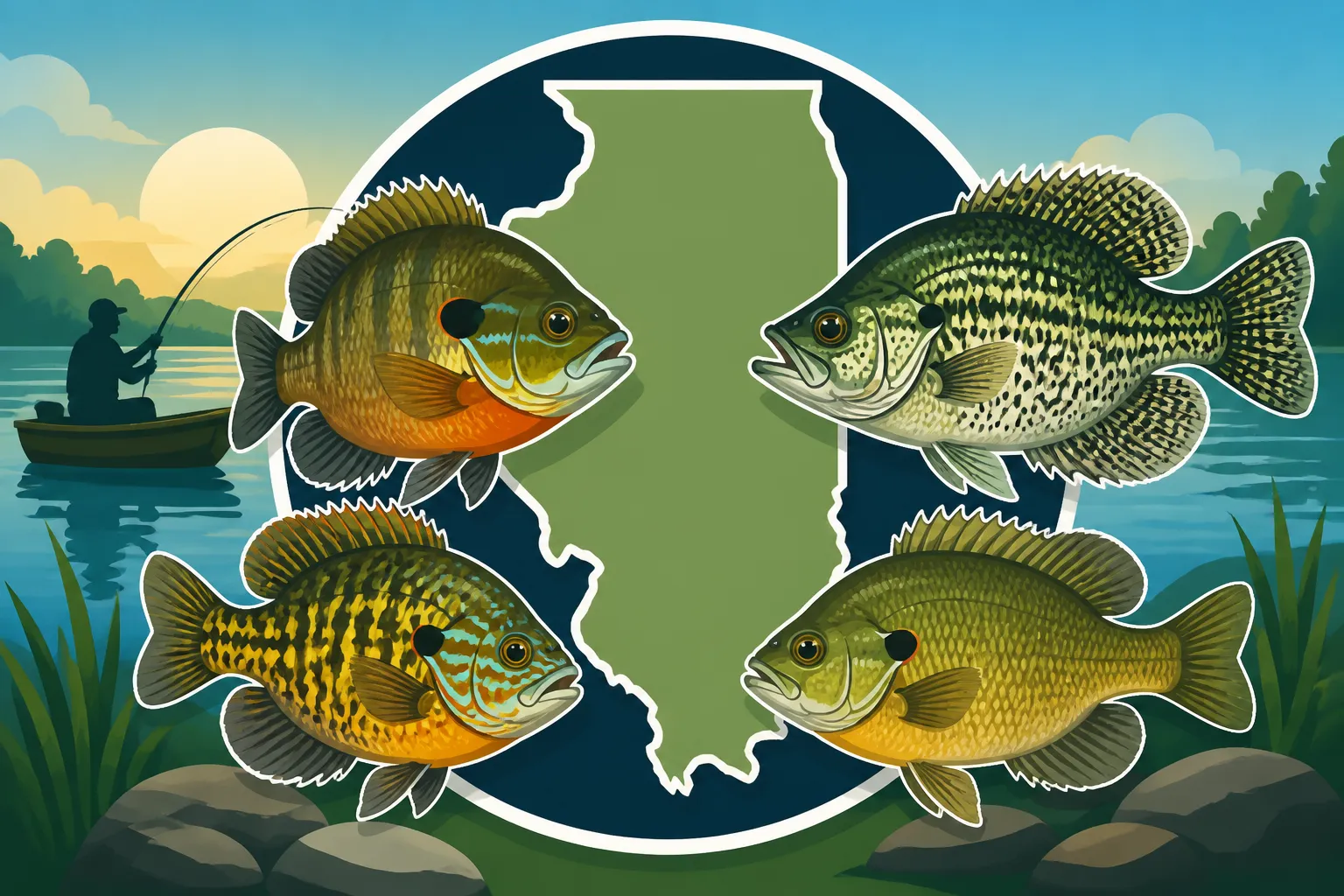
Bluegill are easily recognizable by their deep, disc-shaped bodies, small mouths, and the prominent black "ear flap" on their gill cover, which often has a distinct blue-black margin. Their bodies can range from olive-green to dark blue on the back, fading to a yellowish belly, often adorned with faint vertical bars. What's truly charming about bluegill is the vibrant orange or yellow on their breast, especially during spawning season, giving them a beautiful, jewel-like appearance.
When it comes to location, bluegill are creatures of structure and cover. You'll find them congregating around submerged logs, weed beds, lily pads, docks, and brush piles. They love shallow, warmer waters, particularly during the spring and early summer when they move to construct their distinctive circular spawning beds in colonies. Look for these "shellcracker" nests in clear, sandy or gravelly bottom areas in just a few feet of water. Even outside the spawn, thick vegetation offers both food and protection, making it a prime target for anglers. You can find them in virtually any body of water, from tiny farm ponds to massive reservoirs like Rend Lake, which is particularly known for its Rend Lake's Best Spots for Trophy Bluegill Over a Pound.
Fishing Techniques and Baits for Bluegill
Catching bluegill is about as straightforward as fishing gets, making it perfect for beginners and kids. A small hook (size 8 or 10), a bobber, and a piece of natural bait are often all you need. Worms (like red wigglers or pieces of nightcrawlers) are universally effective, as are crickets, grasshoppers, and even small bits of corn or bread. For artificials, tiny jigs (1/32 to 1/16 oz) tipped with a small plastic grub or a wax worm can be deadly, especially when fished under a bobber. Try bright colors like chartreuse, pink, or white.
The key technique for bluegill is often keeping your bait suspended just above or within the cover they inhabit. When you see a bobber dip and dance, set the hook with a gentle flick of the wrist. For more advanced anglers, fly fishing with small poppers, wet flies, or nymphs can provide an exhilarating challenge, with the bluegill's feisty tug feeling magnified on delicate gear. Remember that bluegill often school, so if you catch one, there are likely many more nearby. This makes for fast-paced action and a great way to introduce new anglers to the sport. Best Bait for Bluegill Fishing offers even more detailed tips on what to use.
Crappie Kings: Black and White Crappie
When it comes to panfish that draw a serious following, crappie are at the top of the list in Illinois. These delicious, silvery fish are renowned for their schooling behavior and willingness to bite, especially during certain times of the year. Illinois is home to two primary species: the black crappie and the white crappie. While similar, they have distinct preferences that can help you target them more effectively.
Identifying Black and White Crappie
Distinguishing between black and white crappie is a common challenge for many anglers, but there are a few key features to look for.
Black Crappie typically have a darker, more mottled appearance with irregular black blotches scattered over their silver-green bodies. The easiest way to tell them apart, however, is by counting the spines on their dorsal fin. Black crappie usually have 7 or 8 dorsal spines. They tend to have larger eyes and a slightly deeper body profile.
White Crappie are generally lighter in color, with more distinct, vertically arranged dark bars along their sides, although these can sometimes be faint. The most reliable identifier is their dorsal fin, which almost always has 6 spines. White crappie also tend to have a more elongated body shape.
Both species can grow to impressive sizes for a panfish, with trophy crappie weighing over a pound being a prized catch. They are highly sought after for their delicate, flaky white meat, making them one of the most popular eating fish in the state. For a deeper dive, check out Black Crappie vs White Crappie: How to Tell Them Apart.
Habitat and Seasonal Patterns
Crappie are schooling fish, which means if you find one, you've likely found a whole school. Their preferred habitat often includes submerged timber, brush piles, fallen trees, bridge pilings, and dense weed beds. They prefer deeper water than bluegill for much of the year, often suspending over structure.
The crappie spawn is arguably the most anticipated season for crappie anglers. In early spring, as water temperatures rise into the 50s and low 60s Fahrenheit, crappie move into shallower water, often near brush or submerged vegetation, to build nests and spawn. This is when they are most accessible and aggressive, offering incredible fishing opportunities. After the spawn, they retreat to deeper, cooler waters, often suspending over brush piles or around deeper structure. During summer, they might be found in cooler thermoclines, moving shallower again in the fall as waters cool.
Big reservoirs like Lake Shelbyville, Rend Lake, and Carlyle Lake are renowned for their crappie populations. Best Crappie Fishing Lakes in Illinois can give you an idea of where to start your search.
Effective Crappie Fishing Techniques
Crappie fishing often involves slightly different techniques than bluegill. Because they frequently suspend, presentations that target varying depths are crucial.
- Jigging: Small jigs (1/32 to 1/8 oz) tipped with a soft plastic grub, tube, or minnow imitation are incredibly effective. You can fish them vertically under a bobber, casting and retrieving with a slow, erratic retrieve, or even "spider rigging" with multiple poles from a boat, slowly trolling over structure. Bright colors like chartreuse, pink, and white are popular.
- Minnows: Live minnows are a crappie's weakness. Hooked through the lips or back and fished under a bobber or slowly trolled near structure, they are a tried-and-true method.
- Trolling: From a boat, slow trolling with small crankbaits or jigs can be very productive, especially when crappie are spread out over a large area or suspended at a specific depth.
- Slip Bobbers: These allow you to adjust your bait depth easily, crucial for finding crappie that might be suspending 10, 15, or even 20 feet down.
Whether you're fishing from the bank near a brush pile or slowly working a jig from a boat, patience and careful depth presentation are key to consistent crappie catches. Consider checking out Best Bait for White Crappie Fishing for more specific bait recommendations.
The Mighty Sunfish Clan: Beyond Bluegill
While bluegill are the undisputed champions of the sunfish family in terms of sheer numbers and popularity, Illinois waters are home to several other fantastic sunfish species that offer unique challenges and rewards. These often-overlooked panfish can provide thrilling action and add exciting variety to your cooler.
Redear Sunfish: The Shellcracker
Redear sunfish, often affectionately called "shellcrackers," are a true gem among panfish. They share the deep, compressed body shape of bluegill but can be distinguished by their more pointed snout and, most notably, the bright red or orange margin on the edge of their gill flap (which looks like an "ear"). They also tend to have a slightly more muted, olive-green to brownish coloration without the distinct vertical bars often seen on bluegill.
Their "shellcracker" nickname comes from their unique diet: they love to eat snails, mussels, and other mollusks. They have specialized pharyngeal teeth in their throats designed to crush shells, giving them a distinct feeding preference. This often means they're found in areas with firmer bottoms, clearer water, and abundant aquatic vegetation where their food sources thrive. Look for them in lakes with good water clarity and healthy weed growth.
Fishing for redear often involves presenting bait directly on or near the bottom. Worms, especially red wigglers, are excellent. Small jigs or tiny Beetle Spins can also tempt them. Since they primarily feed on the bottom, a simple paternoster rig with a small weight to keep your bait down can be very effective. They put up a surprisingly strong fight for their size, making them a favorite among experienced panfish anglers.
Green Sunfish: The Aggressive Cousin
The green sunfish is another common, yet often underappreciated, member of the sunfish family in Illinois. These hardy little fish are incredibly adaptable and can be found in a wide variety of habitats, from pristine lakes to muddy farm ponds and sluggish streams. They're often mistaken for bluegill, but a closer look reveals some key differences.
Green sunfish typically have a more elongated body than bluegill, with a larger mouth that extends back to or past the middle of their eye. Their coloration is usually olive-green with iridescent blue-green spots on their sides, and they often have a bright orange or yellow margin on their fins, particularly the pectoral fins. Their "ear flap" is often dark with a light orange or yellow trim, but it lacks the prominent blue-black margin of a bluegill. They also possess a small, dark spot at the base of their dorsal and anal fins.
Green sunfish are known for their aggressive nature and willingness to bite almost anything. They are opportunistic feeders and can be a nuisance when targeting other species, but their feisty attitude makes them great fun for kids. They thrive in areas with cover, such as rip-rap, rocky shorelines, submerged brush, and around docks. Almost any small bait, from worms to crickets, tiny jigs, or even small pieces of hot dog, will attract a green sunfish. They're a fantastic species to introduce children to the joys of fishing because they're almost guaranteed to get bites.
Hybrid Sunfish: The Best of Both Worlds
Hybrid sunfish, often a cross between a bluegill and a green sunfish, are becoming increasingly popular in stocked ponds and small lakes across Illinois. These hybrids often grow faster and larger than either parent species, and they inherit the aggressive feeding habits of the green sunfish while retaining some of the fighting spirit of the bluegill.
They typically exhibit a mix of characteristics from their parent species, making identification a bit more challenging. You might see the deeper body of a bluegill combined with the larger mouth and iridescent blue-green spots of a green sunfish. Their "ear flap" might be dark with an orange or yellow margin, reminiscent of a green sunfish, but their overall shape often favors the bluegill.
Hybrid sunfish are often stocked because of their rapid growth and eagerness to bite, making them ideal for recreational fisheries. They respond well to the same baits and techniques as bluegill and green sunfish – worms, crickets, small jigs, and even tiny spinners. Because they tend to be larger, they can put up a surprisingly strong fight on light tackle, offering a rewarding experience for anglers looking for a bigger panfish. When you're searching for Easiest Fish to Catch for Beginners, hybrid sunfish are certainly a top contender!
Yellow Perch and White Bass: Northern Illinois Favorites
While bluegill and crappie dominate much of Illinois, especially in the central and southern parts of the state, certain other panfish species hold a special place in the hearts of anglers, particularly in Northern Illinois and along the larger river systems. Yellow perch and white bass offer exciting fishing opportunities and distinct culinary delights.
Yellow Perch: Lake Michigan's Gold Standard
Yellow perch are a highly prized panfish, particularly in the cooler, deeper waters of Northern Illinois, with Lake Michigan being their most famous stronghold. These striking fish are easily identified by their golden-yellow to brassy-green bodies, adorned with 6 to 8 prominent dark vertical bars on their sides. They have two dorsal fins, the first of which is spiny, and their fins often have a reddish-orange hue, especially the pectoral and pelvic fins. They typically grow to 6-12 inches but can reach larger sizes in ideal conditions.
Yellow perch thrive in cool, clear waters with moderate vegetation and structured bottoms. In Lake Michigan, they are often found in harbors, around piers, and over sandy or rocky bottom areas, especially during spring and fall. They are schooling fish, so where you find one, you'll often find many. Their delicate, flaky white meat is considered a gourmet treat by many anglers, making them a highly sought-after species. Illinois Yellow Perch Fishing: Where and When to Go is a great resource for more detailed information.
Fishing for yellow perch often involves small, subtle presentations. Live bait like small minnows, fathead minnows, or pieces of nightcrawlers fished on a small hook (size 6-10) under a bobber or on the bottom with a split shot rig are very effective. Small jigs (1/32 to 1/8 oz) tipped with a grub, plastic, or a piece of cut bait can also entice them. Ice fishing for yellow perch is also incredibly popular in Northern Illinois, with anglers drilling holes and jigging tiny spoons or jigs tipped with wax worms or spikes. Patience and keeping your bait near the bottom are often key to success with these schooling bottom-feeders.
White Bass: The Freshwater Striper
White bass are a fantastic, hard-fighting panfish that offer thrilling action, particularly during their spring spawning runs in larger rivers and reservoirs. They belong to the temperate bass family, giving them a more streamlined, silvery body similar to their larger cousin, the striped bass. They are easily identified by their silvery-white sides with several dark horizontal stripes, usually broken or discontinuous, especially below the lateral line. They have two dorsal fins, the first being spiny, and a distinct hump on their back. White bass can grow quite large for a panfish, often reaching 10-15 inches and weighing over a pound.
White bass are found in larger rivers and impoundments throughout Illinois, including the Mississippi, Illinois, and Rock Rivers, as well as large reservoirs like Lake Shelbyville and Carlyle Lake. They are highly migratory and schooling fish. Their most famous period for anglers is the spring spawning run, when massive schools move upstream in rivers or into shallow feeder creeks in lakes to spawn. This is when the action can be furious, with anglers catching dozens in short order. During summer, they often school in open water, chasing baitfish on the surface, creating exciting "jumps" where they smash schools of shad.
Fishing for white bass is all about finding the schools and matching the hatch. During the spring run, small jigs (1/8 to 1/4 oz) with white, chartreuse, or silver grub bodies are incredibly effective. Small spinners (like Beetle Spins or Rooster Tails) and shallow-diving crankbaits that imitate baitfish also work wonders. When they are schooling and chasing bait on the surface in open water during summer, topwater lures, spoons, or fast-retrieved jigs can lead to explosive strikes. Because they are aggressive and school in large numbers, white bass provide some of the most consistent and exciting panfishing opportunities in Illinois. Their firm, white meat is also excellent table fare. Consider checking Best Bait for White Bass During the Spring Run for more information on catching them.
Comparing Panfish: What's Best for Your Cooler or Kid?
With such a diverse array of panfish in Illinois, it's natural to wonder which ones are truly "best" for different purposes. Are you looking for the tastiest fillets for dinner? The most active fight? Or the easiest catch for a child's first fishing experience? Let's break down the comparisons to help you choose your next target.
Taste and Culinary Appeal
When it comes to putting fish on the table, Illinois panfish are universally praised. However, there are subtle differences in their meat quality and texture that make some more sought after than others.
- Crappie (Black and White): Widely regarded as the king of the panfish for eating. Their meat is delicate, flaky, and has a mild, sweet flavor. It's fantastic fried, baked, or broiled. A platter of crispy fried crappie fillets is a staple of many Illinois fish fries.
- Yellow Perch: Another top-tier eating fish, especially famous in the Great Lakes region. Their meat is firm, flaky, and has a rich, sweet flavor. Many compare it to walleye in terms of quality. Fried perch fillets are incredibly popular.
- Bluegill: Excellent eating, especially the larger specimens. Their meat is firm, white, and has a distinct, sweet flavor. Some find smaller bluegill to have a slightly "fishier" taste than crappie, but when properly cleaned and cooked, they are delicious. They're a staple for home frying.
- Redear Sunfish: Similar to bluegill, with firm, white meat and a good flavor. Often considered slightly superior to bluegill by some aficionados due to their larger average size and potentially cleaner diet (snails).
- White Bass: Good eating, with firm, white meat. They have a stronger, more "fishy" flavor than crappie or perch, which some people love and others find less appealing. Proper cleaning, especially removing the red meat along the lateral line, can reduce any strong flavors. They're great fried, but also hold up well to grilling or baking with bolder seasonings.
- Green Sunfish: While edible, they are generally considered the least desirable table fare among the panfish due to their smaller size and often muddier flavor, especially from stagnant waters. They're still fine when cleaned well, but most anglers release them unless specifically targeting them for a meal.
Fight and Sporting Challenge
For anglers who enjoy the tug of war, panfish can offer surprisingly strong battles, especially on light tackle.
- White Bass: These are arguably the hardest fighting panfish pound-for-pound. Their streamlined bodies and schooling nature mean they hit hard and pull with surprising strength, making for exhilarating battles, particularly during their open-water feeding frenzies or spring runs.
- Crappie: While not as powerful as white bass, a large crappie (especially a black crappie) can put up a decent fight, with sharp head shakes and short, strong runs. On ultralight gear, they are a lot of fun.
- Redear Sunfish: Often called "shellcrackers" for their fighting ability, redear can provide a surprisingly strong, determined pull. They fight harder than bluegill of similar size, making them a rewarding catch.
- Bluegill: Known for their characteristic "plink-plink" fight, bluegill are feisty and pull hard for their size. While not long-distance runners, their bulldog tenacity on light tackle is what makes them so much fun.
- Yellow Perch: Perch offer a respectable fight, often with a good head shake. They're not the strongest fighters, but their consistent willingness to bite and schooling behavior makes up for it in terms of action.
- Green Sunfish: Despite their aggressive nature, green sunfish don't offer a particularly strong fight due to their smaller size. They're more about the immediate bite than the prolonged battle.
Best for Kids and Beginners
Introducing children to fishing is one of life's great joys, and panfish are unequivocally the best species for this purpose in Illinois.
- Bluegill: The absolute champion for kids. They are abundant, found almost everywhere, aggressively bite small baits, and are relatively easy to handle. Catching multiple bluegill keeps kids engaged and excited. Best Fishing Spots for a Kid's First Fish in Illinois often feature bluegill-rich waters.
- Hybrid Sunfish: A close second to bluegill. Their slightly larger size and equally aggressive nature make them a great target for children, offering a bit more of a challenge without being too difficult.
- Green Sunfish: While smaller, their sheer eagerness to bite is perfect for keeping a child's attention. They're often found in very shallow water, making them accessible.
- Crappie: Can be good for older kids or those with a bit more patience. During the spawn, when crappie are shallow and numerous, they can offer fast action. Otherwise, finding them suspended can be a bit more challenging for very young anglers.
- Yellow Perch: Good for kids, especially in areas where they are abundant and actively feeding. Similar to bluegill in terms of bite readiness, but often require slightly more specialized locations.
- White Bass: While fun, their powerful fight might be a bit much for very young children, and their open-water habits can be harder to predict for beginners. They're better for slightly older, more experienced kids.
For specific guidance, consider How to Teach a Kid to Fish for Panfish.
Essential Gear and Techniques for Illinois Panfishing
One of the greatest aspects of panfishing in Illinois is that you don't need a boatload of expensive equipment to get started. Simple, effective gear, combined with basic techniques, will put you on plenty of fish.
The Basic Panfish Setup
For most panfish species, less is truly more when it comes to tackle.
- Rods and Reels:
- Ultralight Spinning Combo: This is your go-to. A 5 to 6-foot ultralight or light-action spinning rod paired with a small spinning reel (size 500-1000) spooled with 4-6 lb monofilament or fluorocarbon line is perfect. This setup allows for accurate casting of light lures and maximizes the fight of even a small bluegill. You can find a great selection of ultralight spinning rods and reels on Amazon that are perfect for panfishing, offering good quality at various price points.
- Cane Pole/Telescopic Rod: For very young children or simple dock fishing, a telescopic pole or traditional cane pole is unbeatable. It eliminates casting concerns and allows for direct presentation of bait.
- Line: 4 to 6 lb test monofilament is ideal. It's strong enough for most panfish, has good knot strength, and is thin enough to not spook wary fish. Fluorocarbon can also be used for its low visibility.
- Hooks: Small, sharp hooks are crucial. Size 6, 8, or 10 Aberdeen or baitholder hooks are standard. Aberdeen hooks are thin, making them easy to remove from a fish's mouth without causing too much damage, and they bend easily if snagged.
- Bobbers:
- Clip-on/Spring Bobbers: Classic, easy to attach, and highly visible.
- Slip Bobbers: Essential for fishing deeper water, as they allow your bait to fall freely to a set depth, which is great for suspended crappie or deep-holding perch.
- Weights: Small split shot weights are all you need to get your bait down. A few small split shots crimped a foot or so above your hook are usually enough.
Baits and Lures That Always Work
Panfish are rarely picky, but some baits and lures are undeniably more effective than others.
- Live Bait:
- Worms: Red wigglers, mealworms, and pieces of nightcrawlers are universal panfish magnets. Keep them wiggling!
- Crickets/Grasshoppers: Especially deadly for bluegill and other sunfish in warmer months.
- Minnows: Essential for crappie and yellow perch, particularly larger specimens. Fathead minnows are a popular choice.
- Wax Worms/Spikes: Great for crappie, perch, and bluegill, especially in colder water or for ice fishing.
- Artificial Lures:
- Small Jigs: 1/32 to 1/8 oz jigs tipped with small plastic grubs, tubes, or single-tail plastics are incredibly versatile. Colors like chartreuse, white, pink, and black are highly effective.
- Spinnerbaits/Inline Spinners: Tiny versions (e.g., Beetle Spins, Rooster Tails) can attract aggressive bluegill, crappie, and white bass.
- Small Spoons: Especially effective for perch and white bass, particularly when jigged vertically or trolled.
- Small Crankbaits: Shallow-diving crankbaits can entice larger crappie and white bass, especially when fished around cover or during active feeding periods.
Stock up on small jigs and bobbers, easily ordered from Amazon, to ensure you're ready for any panfish bite throughout the season.
Common Panfishing Techniques
- Bobber Fishing: The classic and most popular method. Cast your bait (live or jig) under a bobber, letting it suspend at a depth where fish are likely to be. Watch the bobber for any movement!
- Bottom Fishing: For redear sunfish and yellow perch, fishing your bait directly on the bottom with a small weight can be very productive.
- Vertical Jigging: From a boat or pier, drop a jig straight down to the desired depth and impart small lifts and drops with your rod tip. This is deadly for suspended crappie and perch.
- Casting and Retrieving: Cast small jigs, spinners, or crankbaits and retrieve them slowly, varying your speed and adding pauses to entice bites. This works well for active bluegill, crappie, and white bass.
- Fly Fishing: For an added challenge, a lightweight fly rod with small poppers, nymphs, or wet flies can be incredibly rewarding for bluegill and other sunfish.
Your Illinois Panfish Tackle Setup is incomplete without these essentials! Remember to always check the Illinois Fishing Season and Catch Limit Rules for specific regulations on the waters you plan to fish.
| Panfish Species | Key ID Features | Preferred Habitat | Best Baits/Lures | Culinary Appeal |
|---|---|---|---|---|
| Bluegill | Deep, disc-shaped body, small mouth, black "ear flap" | Weed beds, docks, submerged brush, shallow spawn beds | Worms, crickets, small jigs, wax worms, small poppers | Excellent |
| Black Crappie | Deep body, irregular black blotches, 7-8 dorsal spines | Submerged timber, brush piles, deeper cover, shallow spawn | Minnows, small jigs (grubs/tubes), small crankbaits | Outstanding |
| White Crappie | Elongated body, vertical bars, 6 dorsal spines | Similar to black crappie, more tolerant of turbid water | Minnows, small jigs (grubs/tubes), small crankbaits | Outstanding |
| Redear Sunfish | Deep body, pointed snout, red/orange margin on "ear flap" | Clearer waters, firmer bottoms, dense vegetation | Worms, small jigs, pieces of nightcrawler (bottom) | Excellent |
| Green Sunfish | Elongated body, large mouth, iridescent blue spots, small dark spots on fins | Wide range, very hardy, rocky areas, muddy ponds | Worms, crickets, tiny jigs, almost anything! | Fair to Good |
| Yellow Perch | Golden-yellow, 6-8 dark vertical bars, spiny dorsal fin | Cool, clear waters, harbors, piers, structured bottoms | Small minnows, wax worms, small jigs/spoons | Outstanding |
| White Bass | Streamlined, silvery, broken horizontal stripes | Large rivers, reservoirs, open water, upstream runs | Small jigs, spinners, spoons, shallow crankbaits | Good |
Conservation and Enjoyment: Keeping Illinois Panfish Healthy
As anglers, we have a responsibility to protect and preserve the incredible panfish resources that Illinois offers. While panfish are generally abundant and prolific breeders, understanding and practicing good conservation habits ensures that future generations can enjoy the same fantastic fishing experiences we do.
Understanding Catch Limits and Regulations
Every panfish species in Illinois has specific daily creel (catch) limits and sometimes size limits. These regulations are set by the Illinois Department of Natural Resources (IDNR) to manage fish populations and prevent overharvesting. It's absolutely crucial to familiarize yourself with these rules before you hit the water. These limits can vary by species, and even by specific lake or river. For example, a particular lake might have a more restrictive crappie limit or a length limit on bluegill to encourage the growth of larger fish. Always check the current Illinois Fishing Information Guide Covers April 2026 Through March 2027 for the water body you intend to fish. Fishing without knowing the rules can lead to penalties, which is never a fun way to end a fishing trip.
Selective harvest is a key part of responsible panfish management. While it might be tempting to keep every fish you catch, especially if the bite is hot, consider keeping medium-sized fish for the table and releasing the largest ones. These larger, older fish are often the best breeders and contribute significantly to the health and genetics of the population. Releasing them helps ensure a healthy, thriving fishery for years to come.
Practicing Responsible Angling
Beyond regulations, there are several simple practices that every panfish angler should adopt:
- Handle Fish Gently: If you plan to release a fish, handle it as little as possible. Wet your hands before touching the fish to protect its protective slime coat. Use a dehooker or needle-nose pliers to quickly remove hooks, especially if the fish has swallowed the bait. Avoid dropping fish or allowing them to flop around on hot surfaces.
- Dispose of Waste Properly: Never leave trash, fishing line, or old bait behind. Fishing line, in particular, can be incredibly dangerous for wildlife. Pack out everything you pack in.
- Respect Private Property and Other Anglers: Be mindful of where you're fishing. Obtain permission before fishing on private lands. When fishing in public areas, be courteous to others, giving them space and keeping noise to a minimum.
- Use Appropriate Gear: While panfish are tough, using tackle that's too heavy can make the experience less enjoyable and, paradoxically, can sometimes lead to more harm to the fish if it's over-stressed. Ultralight gear is generally appropriate and allows for a good fight without overly tiring the fish.
- Know When to Keep and When to Release: For eating, keep fish that are within the legal size and bag limits and that are of a good "eating size." Often, this means selecting those middle-of-the-road fish that are abundant, rather than the true trophy specimens or the smallest juveniles.
By following these simple guidelines, you're not only ensuring fantastic fishing for yourself, but you're also contributing to the long-term health and vitality of Illinois's panfish populations. Enjoy the thrill of the bite and the delicious rewards, all while being a steward of our precious aquatic ecosystems.
Disclaimer
This article is for general informational purposes only and does not constitute professional advice. Laws, prices and regulations vary by location and change over time. Consult a qualified professional for guidance on your specific situation.