Best Lures for Smallmouth Bass in Spring
Trying to dial in on the perfect lure for spring smallmouth bass in Illinois can feel like searching for a needle in a haystack, especially when those bronze beauties are transitioning from their cold-water havens to more active feeding grounds. This guide is going to cut through the confusion and equip you with the knowledge and specific lure choices you need to consistently hook into some feisty smallmouth as the Illinois spring unfolds.
Understanding Spring Smallmouth Behavior
Spring for smallmouth bass isn't a single, uniform period; it's a dynamic transition marked by fluctuating water temperatures and distinct behavioral phases. Understanding these phases is absolutely crucial to selecting the right lures and techniques. You wouldn't throw a topwater frog in March any more than you'd drag a jig super slowly in May, right? It's all about matching your presentation to their mood and location.
The Chill of Early Spring: Pre-Spawn Preparations
When the ice finally melts and water temperatures are still hovering in the 40s to low 50s Fahrenheit, smallmouth are generally still pretty lethargic. They’re starting to think about food, but they're not going to chase anything down with reckless abandon. At this stage, they're often found staging in deeper water adjacent to their eventual spawning grounds. Think deep points, channel swings, and rock piles. They're conserving energy, so a slow, subtle presentation is key. They're definitely looking for a meal, but it has to be presented right in front of them, almost like an easy snack delivered to their doorstep. This is a crucial time to remember that smallmouth are masters of ambush, and in cold water, their strike zones can be incredibly tight. Patience is your best friend.
The Warming Waters: Pre-Spawn Aggression
As water temperatures creep into the mid-50s to low 60s, a switch flips for smallmouth. This is the pre-spawn phase, and it's often heralded as one of the best times to target them. They're actively feeding, building up energy for the demanding spawning process. Smallmouth will start moving shallower, seeking out warmer water near spawning flats and gravel beds. You'll find them around rocky points, submerged timber, and along current breaks in rivers. They become much more aggressive, willing to chase down a bait, and their metabolism is kicking into high gear. This is when you can really start experimenting with a wider range of lures and retrieves, as they're not just looking for an easy meal, but actively hunting. Illinois Bass Pre-Spawn Fishing Patterns are a great read to deepen your understanding of this vital period.
Guarding the Nest: The Spawn and Post-Spawn Lull
Once water temperatures consistently hit the mid-60s, smallmouth will move onto their nests to spawn. During this time, they become incredibly territorial, guarding their eggs and fry. While they will strike lures, it's often out of aggression towards an intruder rather than hunger. Many anglers choose to avoid targeting bedding fish to ensure the successful reproduction of the species. Following the spawn, there's often a brief post-spawn lull where fish are recovering, similar to humans after a marathon. They might be a bit finicky, requiring some finesse. Illinois Bass Post-Spawn Fishing Patterns offers more insights into this stage.
Top Lure Categories for Spring Smallmouth
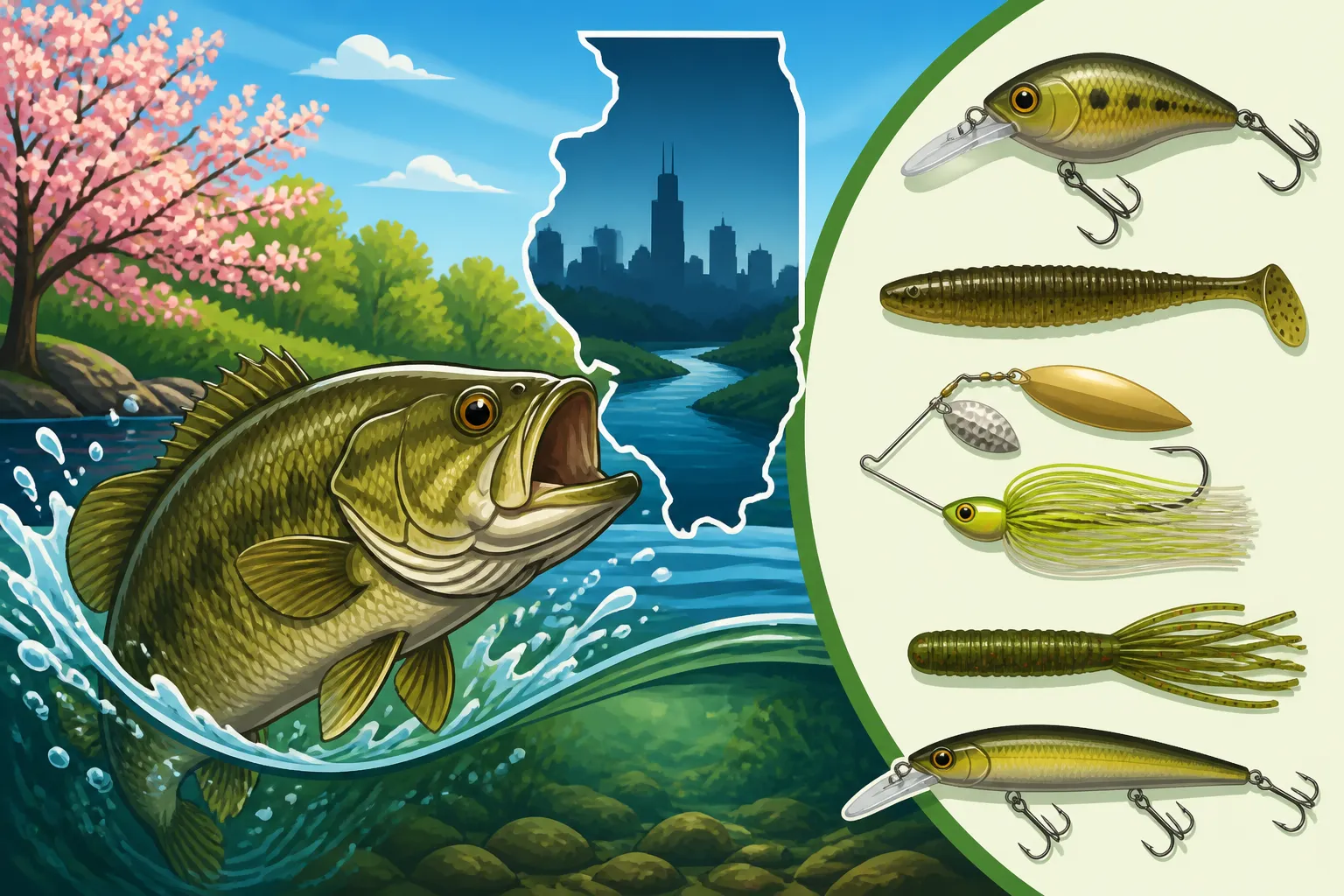
Now that we've covered the "when" and "where" of spring smallmouth, let's dive into the "what." The best lures for smallmouth in Illinois during the spring tend to fall into a few key categories, each designed to excel in specific conditions and phases of the season. It’s not just about having a few lures; it’s about having the right tool for the job.
Jerkbaits: The Cold Water Kings
Jerkbaits are absolute game-changers in cooler spring waters, especially when the smallmouth are still a bit sluggish. Their erratic, darting action mimics a wounded baitfish, and the ability to pause them for extended periods can be irresistible to a hesitant smallmouth. I've had countless days where a jerkbait was the only thing they would touch.
- Why they work: Jerkbaits allow you to create a lot of action with minimal forward movement. The long pauses are crucial; a smallmouth can sit and stare at a suspended jerkbait for what feels like an eternity before deciding to strike. This is particularly effective when the fish are holding in deeper pockets or along drop-offs, conserving energy. The flash and vibration can draw them in, and the stillness seals the deal.
- Best conditions: Ideal for early to mid-spring, when water temperatures are between 45-58 degrees Fahrenheit. They shine in clear to slightly stained water, where visibility allows the fish to track the lure. Think rocky rivers or clear reservoirs like those in northern Illinois.
- Retrieval tips: The key is to experiment with your cadence. Start with a "twitch, twitch, pause" retrieve, with the pauses lasting anywhere from 5 to 15 seconds. As the water warms, you can shorten those pauses. Sometimes, a single twitch followed by a very long pause is all it takes. Brands like Rapala and Lucky Craft offer excellent jerkbait options that you can find on Amazon.
Jigs: Versatility on the Bottom
Jigs are perhaps the most versatile lure in a smallmouth angler's arsenal, effective throughout the entire spring season. From hair jigs to football jigs, they can imitate everything from crawfish to baitfish, making them a staple. When it comes to Where to Catch Smallmouth Bass in Rivers and Streams, jigs are often the first thing I tie on.
- Why they work: Jigs offer a natural, subtle presentation. They can be fished slowly along the bottom, mimicking a crawfish scurrying for cover, or hopped and dragged to imitate an injured baitfish. The compact profile makes them less intimidating to finicky fish. When a smallmouth is hugging the bottom structure, a jig presented accurately is often their undoing.
- Best conditions: Excellent in all spring conditions, from cold early spring to the warmer pre-spawn. They are particularly effective when smallmouth are relating to bottom structure like rocks, gravel, and submerged wood. Jigs excel in both clear and stained water, depending on your color choice.
- Retrieval tips: In colder water, a slow drag or slight hop is best. Let the jig sit for several seconds between movements. As temperatures rise, you can impart more aggressive hops and even swim the jig through the water column. Pair jigs with soft plastic trailers, like craws or grubs, to add bulk and action. Green pumpkin, brown, and black are always reliable colors for jigs.
Crankbaits: Covering Water and Triggering Bites
Crankbaits are fantastic for covering a lot of water quickly and locating active smallmouth, especially during the more aggressive pre-spawn phase. The vibration and deflecting action of a crankbait can be a huge trigger.
- Why they work: Crankbaits create a lot of commotion, drawing attention from a distance. The deflection off rocks and timber often triggers an instinctive strike. They're excellent for simulating a fleeing baitfish, and in slightly stained water, their vibration can be key for fish to locate them. They are particularly effective when smallmouth are spread out and actively roaming.
- Best conditions: Best in mid to late spring, when water temperatures are in the mid-50s and climbing. They perform well in both clear and stained water. Look for square bills in shallower, rocky areas and medium-diving crankbaits for deeper points and ledges.
- Retrieval tips: A steady retrieve is often all it takes, but don't be afraid to incorporate pauses or speed changes. The most effective retrieve is often one that makes the crankbait "contact" the bottom or structure. When it hits something, pause for a second, then continue reeling. This sudden change in direction can induce a strike. For fishing in clear water, consider natural baitfish patterns. For murkier conditions, chartreuse or fire tiger patterns can be highly effective.
Swimbait: Realistic Presentations
Soft plastic swimbaits, either on a jig head or rigged weedless, offer an incredibly realistic baitfish imitation that can be deadly for smallmouth, particularly when they are keying in on larger prey.
- Why they work: Swimbaits have a natural swimming action that perfectly mimics various baitfish species. Their subtle vibration and visual appeal can fool even the wariest smallmouth. They are particularly effective when smallmouth are actively feeding on schools of shad or other forage fish.
- Best conditions: Excellent throughout mid to late spring, especially as water temperatures rise and smallmouth become more active. They are effective in clear to moderately stained water. Use lighter jig heads for shallower water and heavier ones for deeper presentations.
- Retrieval tips: A slow, steady retrieve is usually all that's needed to get the swimbait's tail kicking. You can also incorporate slight twitches or pauses to add more erratic action. Experiment with different sizes and colors to match the local forage. A good selection of swimbaits can easily be found on Amazon.
Matching Lures to Spring Conditions
The real secret to consistently catching spring smallmouth isn't just knowing what lures to use, but when and where to use them. Illinois' varied waters, from small creeks to big reservoirs, demand adaptability.
| Water Temperature | Lure Type | Retrieval Speed | Typical Location | Best Conditions |
|---|---|---|---|---|
| 40s – Low 50s F | Jerkbaits, Jigs | Very Slow | Deep rock piles, channel swings, drop-offs | Clear water, subtle |
| Mid 50s – Low 60s F | Jerkbaits, Jigs, Crankbaits, Swimbaits | Slow to Medium | Rocky points, current breaks, spawning flats | Clear to stained |
| Mid 60s+ F | Crankbaits, Swimbaits, Topwaters | Medium to Fast | Spawning flats, shallow cover, post-spawn areas | Various clarity |
Water Temperature and Clarity
These two factors are arguably the most critical in determining which lures will be most effective. Smallmouth are cold-blooded, so their metabolism and activity levels are directly tied to water temperature. How Water Temperature Affects Fish Activity is a fascinating dive into this topic.
- Cold Water (40s-low 50s): As discussed, this is jerkbait and jig territory. Smallmouth are lethargic. Focus on suspending jerkbaits with long pauses and jigs fished slowly on the bottom. Natural colors are usually best in clear water, while a touch of chartreuse or orange can help in stained conditions. The idea is to make the lure appear as a slow, easy meal that requires minimal energy to capture.
- Warming Water (mid 50s-low 60s): This is when smallmouth really start to get active. Crankbaits and swimbaits become incredibly effective for covering water. You can still use jerkbaits, but shorten your pauses. Jigs can be hopped more aggressively. This is often the time when you might start seeing some explosive strikes as they are actively foraging. Experiment with brighter colors in stained water, but stick to more natural tones in clear conditions.
- Clear vs. Stained Water: In clear water, natural colors (shad, crawfish, sunfish patterns) and subtle presentations are often best. Fish can see better and might be spooked by overly bright or erratic lures. For Best Bass Lures for Clear Water, think finesse. In stained or murky water, vibration and darker or brighter colors (chartreuse, orange, black-blue) help fish locate your bait. Scent can also play a larger role here.
Matching the Forage
Smallmouth bass are opportunistic predators, but they often key in on specific prey available in their environment. In Illinois, common forage includes crawfish, shad, minnows, and smaller panfish.
- Crawfish Imitations: Jigs with craw trailers (like the ubiquitous Strike King Bitsy Bug) are perfect for this. When you're fishing rocky bottoms or areas with plenty of gravel, you can bet crawfish are present. Smallmouth love to ambush crawfish, so a slow, bottom-bouncing retrieve is often deadly.
- Baitfish Imitations: Jerkbaits, crankbaits, and swimbaits excel at mimicking various minnows and shad. Pay attention to the size and color of baitfish present in the water you're fishing. If you see schools of silver shiners, a silver or white jerkbait is a good bet. If the water has gizzard shad, a larger swimbait might be the ticket.
- Panfish Imitations: In some lakes, smallmouth will key in on small bluegill or sunfish. Swimbaits with a panfish profile or certain crankbaits can mimic these perfectly.
Essential Techniques for Spring Smallmouth Lures
Having the right lure is only half the battle; knowing how to present it effectively is the other. Smallmouth fishing, particularly in spring, demands attention to detail and a willingness to adapt.
Slow and Steady Wins the Race (Early Spring)
In those initial cold weeks, patience is paramount. Think ultra-slow.
- Jerkbait Discipline: When water temperatures are in the low 40s to low 50s, your jerkbait retrieve should be painfully slow. Cast it out, let it sit for a moment to reach its depth, then give it two quick, soft twitches. Now, count to five… ten… sometimes even fifteen seconds before your next twitch. This gives the smallmouth ample time to approach, inspect, and finally commit to the lure. It also allows the jerkbait to suspend naturally in the water column, a tempting target for a lethargic fish.
- Bottom-Contact Jigs: For jigs, keep them on the bottom. A slow drag-and-pause retrieve, mimicking a crawfish, is often deadly. Cast to your target, let the jig sink, and then slowly drag it a foot or two with your rod tip, reel down the slack, and pause. Repeat. You're not trying to make it bounce; you're just crawling it along the lakebed. The strikes can be incredibly subtle – sometimes just a heavy feeling or a slight tick.
Bump, Grind, and Deflect (Mid-Spring)
As water warms, smallmouth become more aggressive and reactive. This is when you can start to get a little more frisky with your retrieve.
- Crankbait Contact: When using squarebill or medium-diving crankbaits, the goal is often to make them crash into cover. Cast your crankbait to a rocky point, submerged log, or gravel bar. As it dives and contacts the structure, the deflection often triggers an immediate reaction strike. The lure suddenly changes direction, often appearing like a confused or injured baitfish. Experiment with retrieve speeds; sometimes a fast grind, other times a stop-and-go retrieve will be more effective.
- Hop-and-Fall Swimbaits: While a steady retrieve works for swimbaits, during the pre-spawn, a subtle hop-and-fall retrieve can also be deadly. Cast your swimbait, let it sink to your desired depth, then give your rod a gentle lift, allowing the swimbait to swim up a foot or two, then let it fall back on a semi-slack line. Many strikes will occur on the fall, so watch your line for any twitch or jump.
Reading the Water and Adapting
The beauty of spring smallmouth fishing is that no two days are exactly alike. You might start the morning with a jerkbait in deep water and finish the afternoon with a crankbait bumping rocks in the shallows.
- Current Situations: If you're fishing rivers like the Kankakee or Fox in Illinois, current is a major factor. Smallmouth will orient themselves facing upstream, often sitting in eddy pockets or behind current breaks. Casting upstream and letting your lure drift naturally with the current, then retrieving, can be highly effective. Jigs and small swimbaits are excellent in these scenarios. Where to Catch Smallmouth Bass in Rivers and Streams goes into detail on this.
- Sunny vs. Cloudy: On bright, sunny days, smallmouth might retreat to deeper water or seek shade under docks or overhanging branches. On cloudy days, they'll often venture shallower and be more willing to chase. Adjust your lure depth and retrieval speed accordingly.
- Windy Conditions: Wind can be your friend! It breaks up the water surface, making it harder for fish to see you and often pushing baitfish closer to shore. Windy points and shorelines can be prime smallmouth real estate. Consider using a crankbait or a jig that can cut through the wind and maintain contact with the bottom.
Ultimately, the best lures for smallmouth bass in spring aren't just one type; they're a carefully selected arsenal matched to the ever-changing conditions of the season. By understanding the smallmouth's behavior, adapting your lure choices, and refining your techniques, you'll be well on your way to enjoying some incredible spring fishing in Illinois.
Disclaimer
This article is for general informational purposes only and does not constitute professional advice. Laws, prices and regulations vary by location and change over time. Consult a qualified professional for guidance on your specific situation.