How to Identify a Yellow Perch
There's nothing quite like the thrill of a fish on the line, but sometimes, after reeling in your catch, you might find yourself scratching your head, wondering exactly what species you've landed. This can be especially true with some of Illinois's panfish, where a few species bear a striking resemblance to each other. If you've ever pulled in a yellow-striped beauty and thought, "Is this a perch? Or something else entirely?", you're not alone. This guide is here to clear up that confusion, offering clear, actionable tips to help you confidently identify a yellow perch in Illinois waters. Knowing your catch is not just about bragging rights; it's crucial for adhering to local regulations and ensuring you're enjoying your time on the water responsibly.
What Makes a Yellow Perch Stand Out?
When you pull a yellow perch from the water, there are a few unmistakable characteristics that, once you know them, will make identification a breeze. These aren't subtle hints; they're bold, natural markers that set the yellow perch apart from its cousins and other species.
The Distinctive Yellow and Green Stripes
Imagine pulling a fish from the cool, clear waters of Lake Michigan or one of our state's many reservoirs. The first thing that often catches your eye on a yellow perch is that vibrant, almost brassy yellow, fading into a deeper olive or even greenish hue along its back. It's not a uniform yellow, mind you; think of it more as a golden shimmer under the water, especially when the light hits it just right. This yellowish or brassy base color is a strong indicator, giving the fish its common name.
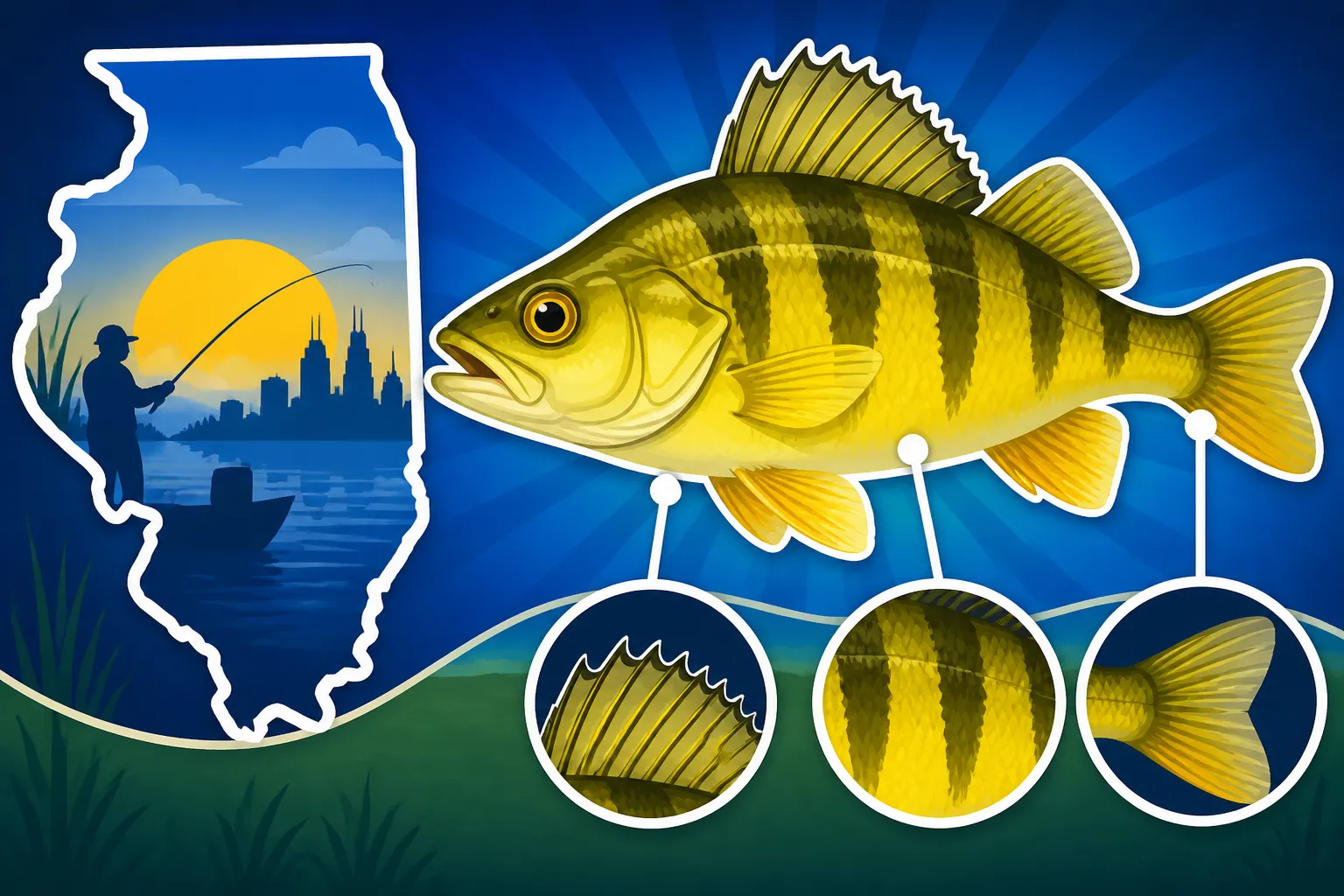
But the true hallmark, the fingerprint of a yellow perch, are those bold, dark vertical bars. Picture six to eight distinct stripes, like nature's own camouflage, starting high on its back and tapering down its sides. These aren't just faint smudges; they're often quite pronounced, offering a stark contrast against the brighter body. Sometimes, on smaller fish or those from less clear waters, these bars might be a bit muted, but they're almost always there, a reliable signature that differentiates them from many other panfish that might have spots, blotches, or horizontal lines.
These vertical bars are the most critical visual cue. If you see a fish with a yellowish body and distinct, dark vertical bars running down its sides, you're almost certainly looking at a yellow perch. Pay attention to how many bars there are and how sharply defined they appear. This pattern is far more organized and vertical than the broken, horizontal lines you might see on a yellow bass or the random mottling of a small walleye.
Fin Features and Body Shape
Beyond the striking color and stripes, the yellow perch also possesses specific fin structures and a unique body shape that further cement its identity. These features, though sometimes overlooked in the excitement of a catch, are scientifically accurate ways to distinguish between species.
One of the most crucial distinguishing features is the yellow perch's dorsal fins. They have two of them, and critically, they are distinctly separated. The first dorsal fin is spiny, meaning it has sharp, rigid rays, while the second dorsal fin is soft-rayed, appearing more flexible and rounded. When you gently run your finger along the fish's back, you'll feel a clear gap between these two fins. This separation is a huge giveaway and immediately rules out many other panfish species like crappie or most sunfish, which have dorsal fins that are either connected or very close together.
Look closely at the lower fins as well. The pectoral and pelvic fins, which are located on the sides and underside of the fish, often sport a yellowish or even orangish tint. This coloration can be particularly vibrant on males during the spawning season, adding another splash of color to their already distinctive appearance. While not as definitive as the separated dorsal fins or vertical bars, this fin color can be a helpful supporting detail.
Finally, consider the overall body shape. A yellow perch is typically described as elongated, but it's also quite robust or stout, almost cylindrical. It's not as thin or compressed (like a crappie, which looks like a pancake) nor as thick and heavy-set as a largemouth bass. Its mouth is relatively small and terminal, meaning it's located at the very end of its snout, perfectly suited for snatching up small insects, minnows, and crustaceans. If you hold a yellow perch in your hand, you'll feel its firm, slightly rounded body, a clear contrast to the flattened profile of other panfish.
Common Look-Alikes: Avoiding Confusion
Sometimes, even with the best intentions, it's easy to mistake a yellow perch for another species, especially if you're new to Illinois fishing or if the fish is a juvenile. Here's how to tell the difference between yellow perch and their most common doppelgängers.
Yellow Perch vs. Walleye and Sauger
The confusion between yellow perch, walleye, and sauger is understandable; they are all members of the Percidae family, sharing a certain "perch-like" quality in their general appearance. However, there are some very clear differences that will help you tell them apart. Illinois Walleye Fishing: The Complete Guide offers a deep dive into those larger cousins.
Walleye are significantly larger and more elongated than yellow perch, with a more streamlined, cigar-shaped body. Their coloration tends to be duller, often olive-brown or golden-brown, with a mottled pattern rather than distinct vertical bars. The crucial identifying mark for a walleye is a prominent dark spot at the base of the spiny dorsal fin, a feature completely absent on a yellow perch. Additionally, walleye have a distinct white tip on the lower lobe of their tail fin, another characteristic a yellow perch lacks. If you catch a fish over, say, 15 inches with these features, it's almost certainly a walleye, not a perch.
Sauger are even more similar to walleye but are typically smaller and have a more spotted appearance on their dorsal fins. Instead of the single dark spot at the base of the spiny dorsal fin like a walleye, a sauger will have distinct dark spots spread across the entire spiny dorsal fin, giving it a speckled look. Like walleye, they also lack the strong vertical bars of a yellow perch and don't usually have the white tip on the tail. The size difference alone is often enough to distinguish them from perch – sauger and walleye generally grow much larger.
Yellow Perch vs. Yellow Bass
This is perhaps the trickiest comparison, as yellow bass share both the "yellow" in their name and a striped appearance. Many anglers, especially those new to identifying fish, often confuse the two. But fear not, there are definitive ways to tell them apart, as detailed in Yellow Bass vs Yellow Perch in Illinois: How to Tell Them Apart.
The absolute key difference lies in their stripes. While yellow perch have vertical bars, yellow bass have horizontal stripes that run the length of their body. On a yellow bass, these stripes are often unbroken and continuous from head to tail, though some may be slightly broken or irregular, particularly towards the belly. In contrast, the yellow perch's stripes are like distinct, dark ribbons draped vertically over its sides. This is the first thing you should check when you see a yellow, striped fish.
Their body shape also gives them away. Yellow bass are typically deeper-bodied and more compressed (taller than they are wide) compared to the more rounded, cylindrical body of a yellow perch. If you look at them head-on, a yellow bass would appear flatter, while a perch would seem more robust and rounded. The dorsal fins are another indicator: yellow bass have two dorsal fins, but they are typically connected or very close together, unlike the distinctly separated dorsal fins of the yellow perch. If you can slide a thin piece of paper between the two dorsal fins, it's likely a perch; if they're fused or nearly touching, it's probably a yellow bass.
Other Panfish and Juvenile Species
Illinois waters are teeming with panfish, and several can cause momentary confusion, especially when they are young. However, a closer look at their key characteristics will quickly help you confirm or deny if it's a yellow perch.
Consider crappie, both black and white varieties. While they are also excellent panfish, their body shape is a dead giveaway: crappie are much more compressed, appearing very thin or "pancake-like" from the side. They also typically have dark blotches or a speckled pattern, not the distinct vertical bars of a perch. Crucially, their dorsal fins are connected, forming one continuous fin, unlike the perch's separated fins. Similarly, sunfish species like bluegill or green sunfish are also deep-bodied and compressed. They have different, often vibrant color patterns (bluegill might have an "ear flap" and blue spots, green sunfish might have iridescent green lines), and their dorsal fins are also connected, lacking the perch's clear separation. You can learn more about these fascinating fish in Panfish Species in Illinois: The Complete Guide.
Even juvenile bass (largemouth, smallmouth, or spotted bass) can sometimes cause confusion due to their often mottled patterns. However, bass have a much larger mouth, typically extending past the eye on a largemouth, and their dorsal fin is typically one continuous fin with a deep notch, rather than two distinctly separated fins. The overall body structure and head shape are also quite different from a yellow perch. Always check multiple features rather than relying on just one.
Here’s a quick summary of the key differences:
| Feature | Yellow Perch | Walleye | Yellow Bass |
|---|---|---|---|
| Coloration | Yellow/brassy, olive back | Olive/brown, sometimes mottled | Yellow/silvery, dark back |
| Body Markings | 6-8 distinct vertical bars | Faint mottling, no strong bars | 6-8 distinct horizontal stripes |
| Dorsal Fins | 2, distinctly separated | 2, separated, dark spot on spiny | 2, often connected or very close |
| Tail Fin Tip | No white tip | White tip on lower lobe | No white tip |
| Body Shape | Elongated, somewhat robust/cylindrical | Long, slender, streamlined | Deep-bodied, compressed |
Habitat and Behavior Clues to Identification
Beyond physical characteristics, understanding where and how yellow perch typically behave can offer powerful clues to their identity. Fish are creatures of habit and environment, and knowing their preferred hangouts can often help confirm your visual identification.
Preferred Waters and Depths
Yellow perch are incredibly adaptable, but they certainly have their favorite spots. They thrive in the cooler, clearer waters of larger lakes and impoundments across Illinois, though you'll also find them in some rivers and even larger farm ponds. Think about some of our prime fishing destinations like Lake Michigan or the larger reservoirs in central and southern Illinois; these are often hotbeds for perch. Illinois Yellow Perch Fishing: Where and When to Go is a great resource for pinpointing these locations.
They are structure-oriented fish. This means they love to hang out around submerged vegetation like weed beds, sunken brush piles, timber, and rock piles. These areas provide both cover from predators and ambush points for their prey. You'll often find them along drop-offs, where shallow water quickly plunges into deeper areas, using these depth changes as travel corridors and feeding grounds. If you're fishing a weed line or a rocky reef and start pulling up striped, yellowish fish, your odds of them being yellow perch go way up.
Another strong behavioral clue is their schooling nature. Yellow perch are notorious for traveling in schools, sometimes quite large ones. This means if you catch one yellow perch, there's a very good chance there are many more in the immediate vicinity. Anglers often find themselves in a "perch frenzy" where they can catch fish after fish from the same spot. This schooling behavior is less common or pronounced in some of their look-alikes, making it a valuable tip for identification. If you're consistently catching numerous fish with similar characteristics from a single spot, it adds weight to the yellow perch identification. You'll find them in these preferred habitats, often near some of the best Illinois State Park Fishing Spots.
Seasonal Movements and Feeding Habits
The yellow perch's movements and feeding habits change throughout the year, influenced by water temperature, spawning cycles, and food availability. Understanding these patterns can provide additional context for identification.
In spring, as water temperatures begin to rise, yellow perch will move into shallower areas, often near vegetation, to spawn. During this time, they can be found in relatively easy-to-reach spots, making them a popular target for early-season anglers. As summer progresses and water temperatures climb, perch often retreat to deeper, cooler waters during the brightest parts of the day, moving back into shallower feeding grounds at dawn and dusk. This diurnal pattern is typical for many fish species trying to escape the heat.
Fall sees a resurgence in activity, as perch become very active feeders, bulking up for the colder months ahead. This is often an excellent time to target them, as they again congregate in large schools and can be found shallower. Come winter, yellow perch are one of the most popular species for ice fishing. They congregate in predictable areas, often near deep water structures, making them a prime target for anglers bundled up on the ice. In fact, they are among the Best Ice Fishing Species for Panfish and Walleye. So, if you're catching a schooling, yellowish, vertically-barred fish through the ice, it's almost certainly a yellow perch.
Their diet is quite diverse; yellow perch are opportunistic feeders, meaning they'll eat just about anything they can get their mouths around. This includes aquatic insects, small crustaceans like crayfish, worms, and even smaller baitfish. Knowing their diet can also sometimes help confirm an identification. If you're catching fish on small minnows or a worm fished on the bottom, it aligns perfectly with perch feeding behavior. Remember, a good understanding of seasonal patterns is key to successful fishing and often helps narrow down species identification.
Practical Tips for On-the-Water Identification
Even with all the knowledge in the world, identifying a fish quickly while you're out on the water can be challenging. The fish might be flopping, the light might be bad, or you might just be in a hurry. Here are some practical tips to help you make an accurate identification every time.
Carry a Field Guide or App
One of the simplest yet most effective ways to ensure accurate fish identification is to always have a reliable reference at hand. There's no shame in looking it up! Many excellent physical field guides specifically for Illinois freshwater fish are available, and you can find a wide selection of them on platforms like Amazon. These guides often feature detailed illustrations or photographs, highlighting key identifying features of various species.
In today's digital age, fishing apps can be incredibly useful. Many apps offer comprehensive fish identification databases, often with high-resolution images and detailed descriptions that you can access right from your smartphone, even without an internet connection once downloaded. Having a physical book or a downloaded app means you can quickly compare your catch to the descriptions without having to guess or rely on a hazy memory. A good guide will also help you differentiate tricky juvenile fish that might not yet have their full adult coloration or markings. Some anglers even print out laminated, waterproof identification charts to keep in their tackle box for quick, on-the-spot reference, which you can also often find ready-made on Amazon. This makes for a great addition to any Tackle Box Setup for Illinois Panfish Trips.
Observe and Compare Carefully
When you've got a fish on the line, the excitement can make you rush, but taking a few extra seconds for careful observation can prevent misidentification. Don't just glance at the fish; really take a moment to look at all the features we've discussed.
Start with the most distinctive markers: Are there clear, dark, vertical bars on a yellowish body? This is your strongest initial clue for a yellow perch. Then, move to the fins: Are the two dorsal fins distinctly separated? Can you easily see a gap between them? This is another major differentiator from many other panfish. Check the color of the lower fins; are they yellowish or orange? Look for the presence or absence of a dark spot on the spiny dorsal fin (rules out walleye) or a white tip on the tail (also rules out walleye). Compare the overall body shape – is it robust and somewhat cylindrical, or is it very flat and compressed like a crappie? Is the mouth small or large? Each of these details, when considered together, paints a complete picture.
Practice makes perfect. The more fish you handle and identify, the quicker and more accurate you'll become. Each time you're unsure, take the time to go through this mental checklist. Even if you've caught dozens of yellow perch before, a quick confirmation of these features helps reinforce your knowledge and ensures you don't accidentally mistake a different species for one.
What to Do If You're Still Unsure
Let's be honest: sometimes, despite your best efforts, you might still be unsure about a fish's identity. Maybe it's a particularly oddly colored specimen, or perhaps it's a hybrid. In these situations, it’s always, always best to err on the side of caution, especially when regulations like size limits and daily creel limits are involved. After all, nobody wants to accidentally violate fishing rules or mistakenly keep a protected species. Illinois Fishing Regulations Overview highlights the importance of knowing what you've caught.
One of the best modern solutions is to take a clear photograph of the fish. Digital cameras on smartphones are a game-changer for anglers. Get a couple of good shots, ideally from the side, showing its full body, fins, and markings clearly. You can then release the fish quickly and safely, and identify it later at home using your guide or app. If you're still stumped, many local bait shops or seasoned anglers are more than happy to help identify a fish from a picture. There are also numerous online fishing forums and social media groups dedicated to Illinois fishing where you can post your photo and get expert opinions from fellow enthusiasts.
Remember, responsible angling means respecting the fish and the rules. If you're uncertain about a fish's identity and its legal status, the safest bet is to release it unharmed. This way, you ensure you're fishing within the law and doing your part to conserve fish populations. Learning to identify fish is a journey, not a destination, and every catch is an opportunity to learn something new about the amazing aquatic life in Illinois.
Disclaimer
This article is for general informational purposes only and does not constitute professional advice. Laws, prices and regulations vary by location and change over time. Consult a qualified professional for guidance on your specific situation.