How Big Do Illinois Blue Catfish Get?
For many anglers in Illinois, the dream of hooking into a truly massive blue catfish is a powerful one. You hear the whispers, see the photos, and wonder just how big these whiskered giants really grow in our waters. It's a common frustration to consistently catch smaller fish when you know there are absolute monsters lurking beneath the surface. This guide is going to pull back the curtain on the impressive size potential of Illinois blue catfish, diving into the records, the conditions that foster such growth, and where you might just find your own trophy.
The Giants Among Us: Understanding Blue Catfish Size Potential
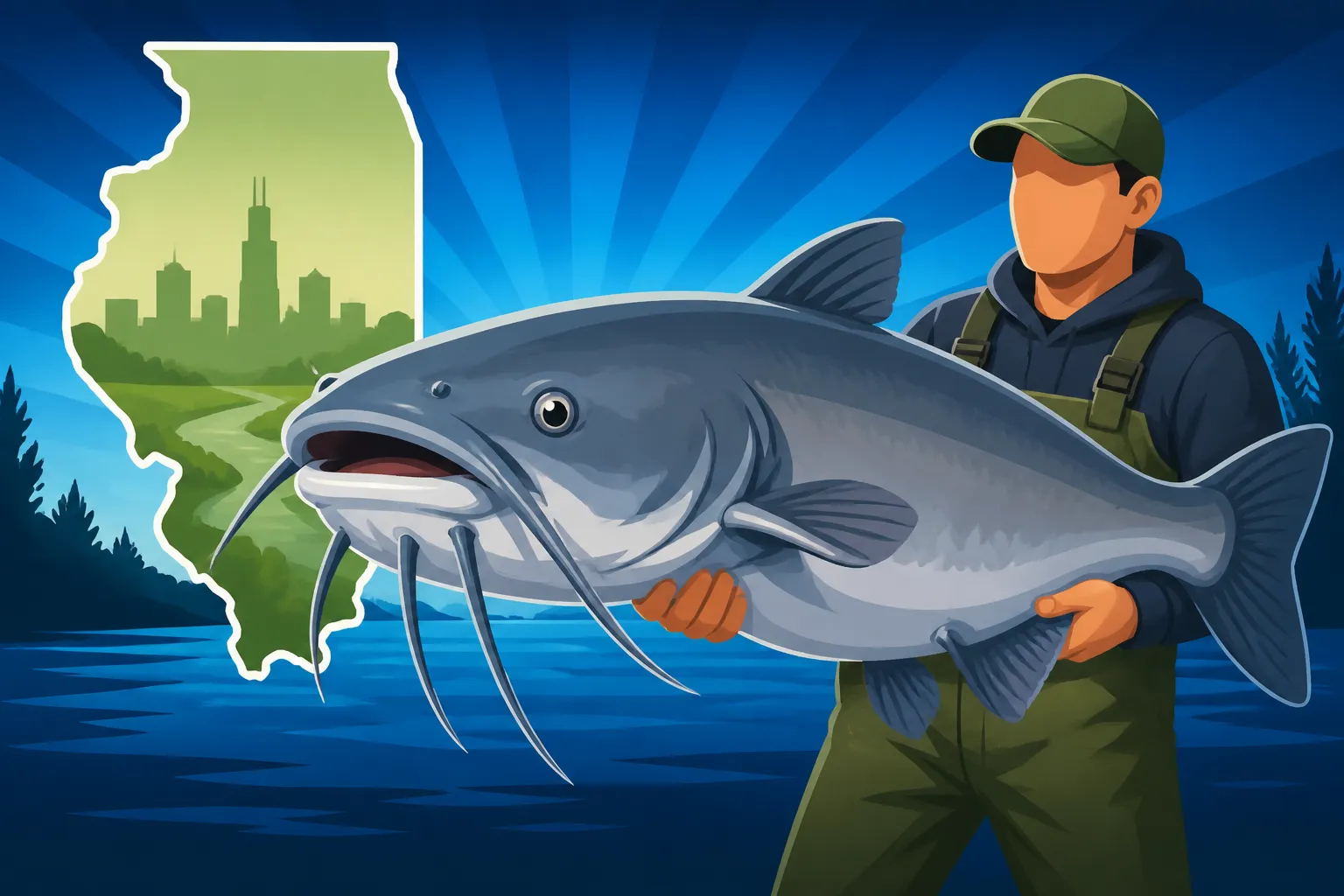
Blue catfish are the largest species of catfish in North America, and Illinois is home to some truly impressive specimens. When we talk about "how big do they get," it's not just about the average catch, but about their absolute biological potential, which can be staggering. Catching one of these titans is often a lifetime achievement for an angler.
The Illinois State Record Blue Catfish
Every state has its legends, and Illinois is no exception when it comes to blue catfish. The official state record for a blue catfish is a testament to the sheer size these fish can attain in our river systems. We're talking about a fish that tipped the scales at well over 100 pounds, a true behemoth that would make any angler's jaw drop. This particular fish was caught in the Mississippi River, which isn't a surprise given its reputation as a nursery for giant catfish.
Imagine the fight! Hauling in a fish that weighs more than a small person is no easy feat and requires incredible strength, patience, and the right gear. The record serves as a benchmark, a challenge, and proof that our waters hold truly world-class fish. It’s not just a number; it's a story of an epic battle and a reminder that every cast could be the one that connects you with such a creature. This record isn't just about one lucky catch; it's about the healthy ecosystem that allowed such a fish to thrive and grow to such an incredible size over many, many years.
Beyond the Record: How Big Do They Really Get?
While the state record is the ultimate benchmark, it's important to understand that many, many blue catfish are caught each year that are still incredibly large, even if they don't break records. Most anglers would consider a blue catfish weighing 30-50 pounds a trophy, and fish in the 60-80 pound range are certainly not unheard of, especially in prime habitats. These are the fish that truly test your tackle and your resolve.
The average size you encounter will vary greatly depending on where you're fishing. In smaller rivers or less productive systems, a 10-20 pound blue cat might be considered a good catch. However, in the vast expanses of the Mississippi, catching a 20-pounder might just be a warm-up act. The "real" size potential is dictated by a combination of genetics, food availability, and age. These fish can live for decades, accumulating mass year after year, slowly turning into the river monsters we all dream about. They don't just grow fast; they grow for a very long time, which is key to reaching those triple-digit weights.
What Makes a Monster? Factors Influencing Blue Catfish Growth
It's not just luck that creates a record-breaking blue catfish; it's a combination of ideal environmental conditions, a bountiful food supply, and the inherent biology of the species. Understanding these factors can give you an edge in targeting areas where larger fish are more likely to be found. Just like any other animal, a blue catfish needs the perfect environment to reach its maximum potential.
Habitat and Water Quality's Role
Blue catfish thrive in large, free-flowing river systems with deep channels, strong currents, and abundant cover. Think of the mighty Mississippi River, with its vast stretches of diverse habitat. These environments offer everything a growing blue cat needs: deep holes for refuge, current breaks for resting and ambushing prey, and plenty of room to roam. Good water quality, including stable oxygen levels and appropriate temperatures, is crucial for their health and growth. Pollution or drastic environmental changes can stunt growth or reduce overall population health.
While blue catfish can be found in some reservoirs, the consistent flow and immense scale of a river like the Mississippi are what truly allow them to reach epic proportions. Reservoirs can still hold respectable fish, but the sustained growth needed for those true giants often points back to big river systems. The sheer volume of water and the constant influx of nutrients and baitfish in a major river create an unparalleled growth environment.
Food Sources and Abundance
One of the biggest drivers of blue catfish growth is their diet and the abundance of protein-rich food. Blue cats are primarily piscivorous, meaning they eat other fish. Their preferred menu often includes schooling baitfish like gizzard shad and skipjack herring, which are incredibly abundant in large river systems. A ready supply of high-calorie forage allows them to pack on pounds rapidly. They are opportunistic feeders, however, and will also eat crayfish, mussels, and other invertebrates.
When you have a healthy population of baitfish, you naturally see larger predatory fish. This is why areas like the Mississippi, known for its incredible shad and herring runs, also produce such immense blue catfish. Without this consistent, rich food source, a blue cat simply wouldn't have the fuel to grow to those record-shattering sizes. It’s a classic food chain dynamic at play: abundant small fish mean giant big fish. Having a reliable source of bait is often what separates a good fishing spot from a truly exceptional one.
Age and Lifespan of Blue Catfish
Perhaps one of the most significant factors in a blue catfish's ability to reach immense sizes is its remarkable longevity. These fish can live for a very long time, often exceeding 20 years in ideal conditions, and some have been aged at over 30 years. This extended lifespan provides ample time for them to grow steadily, adding weight and length each year. Unlike some species with shorter lifespans, blue catfish have the luxury of slow, continuous growth.
A blue catfish doesn't just grow quickly; it grows consistently over many seasons. A fish that's pushing 100 pounds has likely been patrolling the river bottoms for a couple of decades, surviving countless floods, harsh winters, and angling pressures. Their survival over such a long period, combined with a rich diet, is the secret sauce behind their incredible size. It really puts into perspective the age of the fish you might encounter; catching a truly massive one means you're holding a piece of living history.
Illinois' Prime Hunting Grounds for Trophy Blue Cats
If you're serious about tangling with a genuinely massive blue catfish, you need to know where to focus your efforts. While smaller blue cats can be found in various spots across Illinois, the real trophy potential is concentrated in specific, nutrient-rich waterways. For more detailed insights, check out Illinois Blue Catfish: Where to Find the Biggest Ones.
The Mighty Mississippi River
Hands down, the Mississippi River is the undisputed champion when it comes to producing monster blue catfish in Illinois. Its immense size, deep channels, powerful currents, and incredible abundance of baitfish create the perfect environment for these giants to thrive. Anglers often target specific features like deep holes, outside bends, scour holes below wing dams, and vast mud flats. The river's southern stretches are particularly renowned for their trophy blue cat populations, as discussed in Mississippi River Catfish: Why Southern Illinois Waters Produce So Many.
Fishing the Mississippi requires specialized gear and a solid understanding of river dynamics. These aren't pond fish; they are true river dwellers built for powerful currents. You'll need stout rods, heavy lines, and a boat equipped for big water. While it can be intimidating, the reward of hooking into a truly massive blue cat on the Mississippi is an unparalleled experience. It’s a challenge, but one that countless anglers are willing to take on for the chance at a fish of a lifetime. Looking for durable, heavy-duty tackle? Many anglers find a good starting point for their equipment research by checking out extensive selections on Amazon.
Other Productive Illinois Waters
While the Mississippi takes the crown, other Illinois waterways can still produce respectable blue catfish, though perhaps not the same frequency of true giants. The Illinois River, particularly its lower stretches, does hold some blue catfish, often in deeper scour holes and along main channel edges. These fish might not reach the 100-pound mark as regularly as their Mississippi cousins, but they can still provide incredible fights.
Some larger reservoirs in Illinois, such as Carlyle Lake and Lake Shelbyville, occasionally report blue catfish catches, but they are not typically known for the trophy blue cat fishery found in major river systems. The primary catfish species in many of these lakes are channel catfish or flatheads. However, if blue cats are stocked or naturally migrate, they can certainly grow to decent sizes, especially if a good forage base is present. Always check local regulations and fish reports for specific lakes you plan to visit, as fishing conditions and species prevalence can change. Knowing the distinctions between species is crucial, as explored in Channel Catfish vs Blue Catfish vs Flathead Catfish in Illinois.
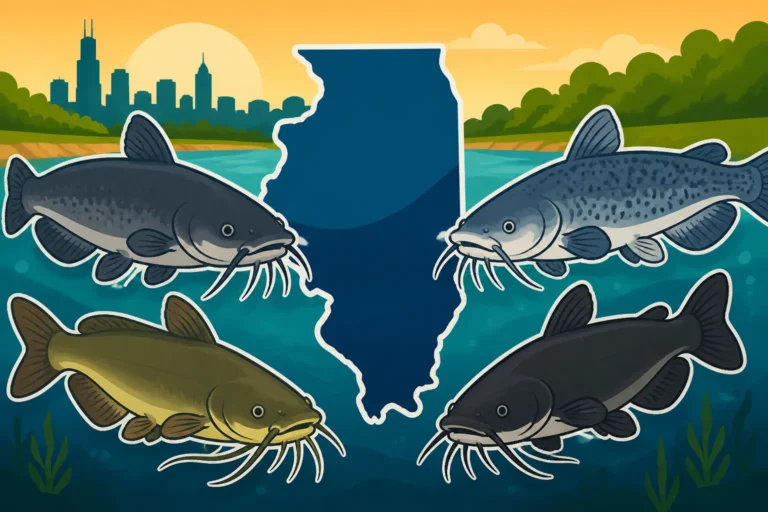
Here's a quick look at the size potential of different catfish species in Illinois:
| Catfish Species | Common Catch Size (lbs) | Trophy Size (lbs) | Illinois State Record (lbs) | Primary Habitat |
|---|---|---|---|---|
| Blue Catfish | 10 – 40 | 50 – 100+ | 100+ | Large Rivers (Mississippi) |
| Flathead Catfish | 5 – 30 | 40 – 80+ | 80+ | Rivers, Larger Lakes |
| Channel Catfish | 1 – 10 | 15 – 25 | 40+ | Rivers, Lakes, Ponds |
Note: These are general ranges; individual fish size depends on many factors.
Gearing Up for the Big Ones: Tackle and Techniques
Catching a truly massive blue catfish isn't about finesse; it's about power, durability, and a well-thought-out strategy. You can't bring a knife to a gunfight, and you certainly can't bring ultralight tackle when you're targeting a potential 80-pound river monster. Getting your gear right is the first step toward success.
Essential Heavy-Duty Tackle
When you're chasing these river giants, your tackle needs to be robust. You'll want heavy-action catfish rods, typically 7 to 10 feet long, capable of handling significant weight and absorbing powerful runs. Pair these with large, strong baitcasting or spinning reels designed for big game, spooled with 50 to 100-pound braided line, or heavy monofilament. The heavier line is not just for breaking strength; it also helps resist abrasion from underwater structures and the sharp fins of large catfish. Remember, these fish can pull like a freight train!
Your terminal tackle needs to match. Use heavy-duty swivels, strong leaders (often 60-100 pound test monofilament or fluorocarbon), and large, stout circle hooks (8/0 to 12/0 are common sizes). Circle hooks are fantastic for catfish because they typically hook the fish in the corner of the mouth, making for easier release and less harm to the fish, which is important when you're hoping to release these massive breeders. For weights, you'll need anything from 3 to 10 ounces or more, depending on the current, to keep your bait pinned to the bottom. For a wide variety of these specialized components, many anglers find great deals and selection when they shop on Amazon. This heavy tackle is crucial when dealing with the raw power of a large blue cat, especially in strong river currents. More on this can be found in Heavy Tackle for Mississippi River Catfish in Illinois.
Best Baits and Techniques
Blue catfish are primarily meat-eaters, so fresh cut bait is king. Gizzard shad, skipjack herring, common carp, and even large pieces of suckers are excellent choices. Freshness is key; the oilier and bloodier, the better. You want something that will put out a strong scent trail in the current. Live bait, such as large shad or sunfish, can also be effective, but cut bait often allows for a stronger scent and easier rigging. Need ideas for bait? Check out Best Bait for Blue Catfish.
The most common and effective technique is bottom fishing. This involves casting your weighted bait rig out into a prime location – a deep hole, a current seam, or along a bluff wall – and letting it sit on the bottom. Drift fishing is another highly effective method on rivers, where you allow your weighted bait to slowly drift along the bottom with the current, covering more water and enticing active fish. This requires careful boat control and a good understanding of the river's flow. Setting up multiple rods allows you to cover different depths or current breaks simultaneously, increasing your chances.
Patience and Persistence
Targeting trophy blue catfish is not for the faint of heart. It requires immense patience and persistence. You might spend hours, or even days, without a bite from a truly giant fish. These monsters didn't get big by being careless, and they can be finicky. The best anglers understand that success often comes from putting in the time, studying the water, and being prepared for that one electrifying strike. Don't get discouraged if you're not immediately hauling in triple-digit fish. Every small cat caught is a learning opportunity, helping you understand the patterns and preferences of the species in your chosen water.
When that big rod finally doubles over, and your reel starts screaming, all the waiting will be worth it. The fight will be epic, a true test of skill and endurance. Be prepared for long, powerful runs and a stubborn refusal to come to the boat. This is where your heavy-duty gear earns its keep. Landing and safely handling a giant blue catfish is an experience you won't soon forget, and it's why so many dedicated anglers tirelessly pursue these incredible fish in Illinois waters. Remember to be mindful of Illinois Fishing Regulations Overview and specific catch limits, like Illinois Flathead Catfish Limit of 10 Fish Per Day or Illinois Channel Catfish Daily Limit of 20 Fish, which are important for maintaining healthy populations.
Disclaimer
This article is for general informational purposes only and does not constitute professional advice. Laws, prices and regulations vary by location and change over time. Consult a qualified professional for guidance on your specific situation.