Catfish Species in Illinois: The Complete Guide
For many Illinois anglers, the thought of fishing immediately conjures images of reeling in a feisty bass or a schooling crappie. But there's a whole other world beneath the surface, a world dominated by powerful, hard-fighting, and incredibly tasty fish: catfish. If you've ever felt the undeniable pull of a truly big fish on your line and wondered what it takes to consistently land these whiskered giants, you've come to the right place. This guide is your deep dive into all the different catfish species found across Illinois, offering a detailed look at how to identify them, where they live, and the best strategies to catch them, whether you're a seasoned catfisherman or just looking to hook your first one.
The World of Illinois Catfish: Why They Matter to Anglers
Illinois waterways, from the mighty Mississippi River to countless smaller lakes and ponds, are teeming with a diverse array of catfish species. These aren't just bottom-feeders; they're vital components of our aquatic ecosystems and provide some of the most exciting and rewarding fishing experiences in the state. Anglers often overlook catfish, focusing on "glamour species," but those in the know understand the thrill of a powerful catfish run and the bounty they offer for the dinner table.
The Allure of Catfishing in the Prairie State
There's something uniquely satisfying about catfishing. Maybe it's the anticipation as you wait patiently for a bite, the sudden, powerful jolt that signals a hook-up, or the sheer brute strength these fish exhibit. Unlike some other species that might offer subtle nibbles, a catfish bite is often unmistakable, pulling your rod tip down with authority. It's a style of fishing that encourages patience and connection with the water, often leading to relaxed evenings on the bank with friends and family. From the smallest farm pond to vast reservoirs like Carlyle Lake and Rend Lake, catfish are accessible to almost every angler, regardless of whether you have a fancy boat or just a simple rod and reel. They thrive in a variety of conditions, making them a reliable target when other species might be finicky.
Moreover, catfish offer fantastic table fare. Many anglers swear by the firm, flaky white meat of a properly cleaned catfish, whether fried, grilled, or baked. There's a strong culinary tradition surrounding catfish in Illinois, especially in the southern parts of the state where it's a staple of local restaurants and fish fries. The satisfaction of catching your own dinner, knowing exactly where it came from, adds another layer of enjoyment to the pursuit. For those looking for an affordable and exciting outdoor activity, catfishing truly delivers.
Dispelling Common Catfish Misconceptions
Despite their popularity among a dedicated segment of anglers, catfish sometimes get a bad rap. Some believe they're "trash fish" or only eat garbage, which couldn't be further from the truth. While they are scavengers and opportunistic feeders, they play a crucial role in the aquatic food chain, often consuming baitfish, crustaceans, and even smaller game fish. Their diet varies greatly by species and environment, and many of the bigger specimens are impressive predators in their own right.
Another common misconception is that all catfish taste muddy. While water quality can certainly influence the flavor of any fish, properly caught and cleaned catfish from clean Illinois waters are absolutely delicious. The key is to know your fishing spots and to clean them quickly and correctly. Modern catfishing isn't just about throwing out a stink bait and waiting; it involves technique, understanding fish behavior, and selecting the right gear. Far from being a lazy person's sport, targeting big catfish can be a challenging and highly technical endeavor, requiring specialized knowledge and equipment. This guide aims to elevate your understanding and appreciation for these incredible fish, helping you dispel any old myths you might have held.
Understanding the Big Three: Channel Catfish
When most people in Illinois think of catfish, they're probably picturing the Channel Catfish. This is by far the most widespread and commonly caught species across the state, gracing everything from small creeks to large reservoirs and the major rivers. They are incredibly adaptable, relatively fast-growing, and offer a fantastic fight, making them a beloved target for countless anglers.
Identifying the Channel Cat
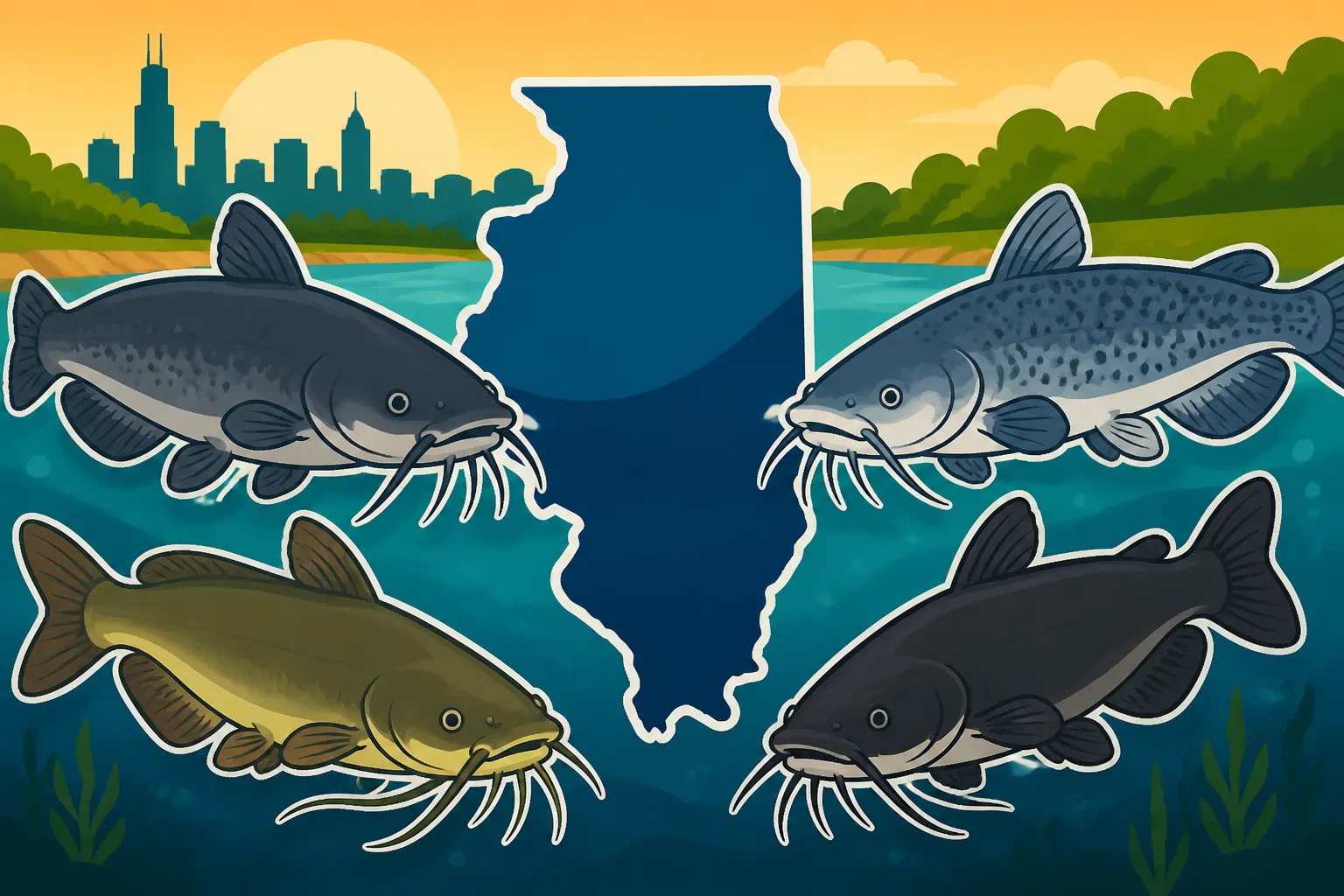
The Channel Catfish ( Ictalurus punctatus) is typically the easiest of the "big three" to identify. They have a sleek, elongated body that's often a grayish-green or olive color on the back, fading to white on the belly. Young Channel Cats, especially, are usually covered in distinct dark spots, which can sometimes fade as they grow older and larger. However, these spots are a dead giveaway. Their head is relatively small and pointed compared to the larger Blue or Flathead catfish.
Perhaps the most defining characteristic is their tail: it is deeply forked, almost like a swallow's tail. This unique tail shape is a key differentiator from the straight-edged or slightly notched tails of Blue and Flathead catfish. They also possess barbels, or "whiskers," around their mouth, which they use to taste and feel in murky waters. On average, you'll encounter Channel Cats in the 1-5 pound range, but they can grow much larger, with trophy fish exceeding 20 pounds not uncommon in some Illinois waters. Knowing how to quickly tell a Channel Cat from its cousins is the first step to becoming a more informed catfisherman.
Prime Habitats for Channel Catfish
Channel Catfish are incredibly adaptable and can be found in nearly every type of freshwater habitat throughout Illinois, making them a prime target for many anglers. They prefer waters with a decent current, so you'll find them in abundance in rivers like the Mississippi, Illinois, and Kankakee, especially around bends, submerged structures, and deeper holes where currents create eddies. In these environments, they often congregate in areas where food is washed downriver.
However, their adaptability means they also thrive in lakes and reservoirs. On large bodies of water such as Lake Shelbyville or Rend Lake, look for them around submerged timber, rock piles, drop-offs, and points that extend into deeper water. They're often found near feeder creeks, especially after a rain, as new food sources get washed into the main body of water. During warmer months, they might move into shallower areas to feed during low-light conditions, then retreat to deeper, cooler water as the sun climbs higher. Knowing the general layout of a lake – where the old creek channels run, where submerged structures lie – can give you a massive advantage when targeting these fish. You can often find great populations in farm ponds and smaller impoundments too, though they might not reach the same trophy sizes as their big-river brethren.
Fishing Strategies for Channel Cats
Catching Channel Catfish can be as simple or as complex as you want to make it, which is part of their appeal. For many, a classic bottom-fishing setup is all you need. A simple slip-sinker rig with a hook and a weight that allows the line to move freely is highly effective. You cast it out, let it sink to the bottom, and wait for that tell-tale tug. Common baits are varied but often include cut bait (like shad or bluegill), shrimp, chicken livers, nightcrawlers, and commercially prepared stink baits. Many anglers swear by a specific brand or homemade recipe, often found at your local bait shop or even on Amazon.
During the daytime, especially in rivers, current seams and deeper holes are excellent spots. If you're on a lake, points, old roadbeds, and submerged timber are prime real estate. As evening approaches or on overcast days, Channel Cats might move into shallower flats to forage. A medium-heavy spinning or baitcasting rod with 10-20 pound test line is usually sufficient for most Channel Cat encounters. Don't be afraid to experiment with different baits and depths; Channel Cats are opportunistic, and what works one day might not the next. The thrill of feeling a strong Channel Cat bend your rod is one of the quintessential Illinois fishing experiences. Always be sure to check the Illinois Catfish Daily Limits Explained before heading out.
The Mighty Blue Catfish: Illinois' True Giants
If you're looking to catch a truly massive freshwater fish in Illinois, the Blue Catfish is likely your ultimate target. These impressive fish are the largest species of catfish in North America, and Illinois's major rivers, particularly the Mississippi, are home to some absolute monsters. Hooking into a big Blue Cat is an experience you won't soon forget, often testing both your tackle and your endurance.
Spotting the Blue Catfish
The Blue Catfish (Ictalurus furcatus) shares some similarities with the Channel Catfish but generally grows much larger and has key distinguishing features. Their body color typically ranges from slate blue to gray on the back, fading to white on the belly, and they usually lack the distinct spots seen on Channel Catfish. Their head is also larger and broader than a Channel Cat's.
The most crucial identifier, however, is their tail. Like the Channel Cat, the Blue Catfish has a deeply forked tail. The key difference lies in the fin rays and the overall body shape. Blue Cats tend to have a more prominent hump on their back just behind the head when they get larger. If you're comparing a smaller blue cat to a channel cat, look for a more pronounced arch in the back and the lack of spots on the blue. When in doubt, count the anal fin rays – Blue Catfish have 30-36 rays, while Channel Catfish typically have 24-29. This might require a close inspection, but it's a surefire way to tell them apart. It's truly a magnificent fish to behold when you pull one into the boat, especially a trophy-sized one.
Where to Chase Giant Blue Cats
For serious trophy Blue Catfish anglers, Illinois's stretch of the Mississippi River is the undisputed champion. These enormous fish thrive in big, turbulent river systems, where they can grow to truly epic proportions. The lower Mississippi, in particular, offers some of the best opportunities, with populations that include fish weighing over 50 pounds. Look for them in the deepest holes, main river channels, scour holes below dams, and along strong current breaks. They often relate to large, submerged structures like fallen trees, rock ledges, and wing dams that divert current. These areas provide both ambush points and protection from strong flows.
While the Mississippi is prime territory, other large Illinois rivers like the Illinois River can also hold impressive Blue Catfish, though perhaps not in the same densities or sizes as the Mississippi. Large reservoirs with strong riverine influences can also be productive. Targeting these fish requires a good understanding of river hydrodynamics and often means fishing heavy current. If you're looking for Illinois Blue Catfish: Where to Find the Biggest Ones, the answer almost always involves a big river and plenty of patience. Understanding current, depth, and structure is paramount when pursuing these freshwater behemoths.
Tackling Trophy Blue Catfish
Landing a trophy Blue Catfish is not for the faint of heart, nor for light tackle. These fish are incredibly powerful and will test every piece of your gear. You'll need heavy-duty rods and reels, often rated for 30-50 pound test line, or even heavier braided line. A stout baitcasting setup with a good drag system is almost essential. Many anglers will use large circle hooks, typically 8/0 to 12/0, which are excellent for jaw-hooking fish and minimizing harm, especially if you plan to release them.
The bait choice for big Blue Cats is almost exclusively fresh cut bait. Shad, skipjack herring, bluegill, or even carp cut into chunks are highly effective. The fresher the bait, the better. You'll often use heavy sinkers, sometimes 6 ounces or more, to hold your bait on the bottom in strong currents. Popular techniques include anchoring upriver from a deep hole or current break and fanning out multiple lines, or using heavy three-way rigs. Night fishing is often very productive for Blue Cats, as they move more freely to feed under the cover of darkness. The key is to be prepared for a long, hard fight and to ensure your knots and gear are in top condition. This is serious business for serious anglers, and the rewards are absolutely worth the effort. For specific gear, consider checking options on Amazon, they have a wide range of heavy-duty rods and reels designed for big catfishing.
Flathead Catfish: The Apex Predator of the Bottom
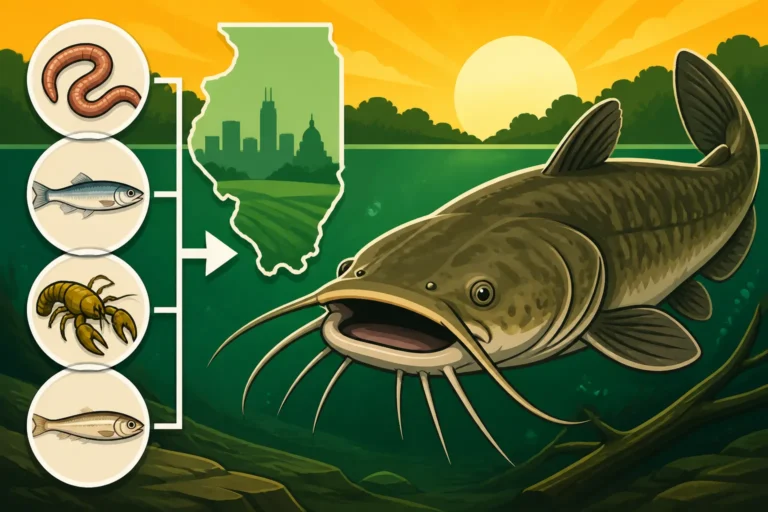
The Flathead Catfish offers a completely different challenge and experience compared to Channel or Blue Cats. These fish are true ambush predators, preferring live bait and often hiding in heavy cover. They are solitary by nature and possess a unique appearance that sets them apart, making them a fascinating target for dedicated catfishermen in Illinois.
Recognizing the Flathead
The Flathead Catfish (Pylodictis olivaris) is easily distinguished by its name and appearance. It has a distinctly broad, flattened head, which gives it a somewhat prehistoric look. Unlike the deeply forked tails of Channel and Blue cats, the Flathead's tail is square or only very slightly notched. Their body color is typically mottled brown or olive with darker blotches, providing excellent camouflage in woody debris and rocky bottom structures.
Their lower jaw protrudes beyond the upper jaw, another key identifier, giving them an almost bulldog-like appearance. This unique mouth structure is perfectly adapted for ambushing and swallowing live prey. They also have a stout, muscular body, which makes them incredibly strong fighters. While they might not reach the sheer weight of the largest Blue Catfish, Flatheads can still grow to impressive sizes, often exceeding 40 pounds in Illinois's prime river systems. Identifying a Flathead is usually straightforward once you know what to look for, and their unique physiology hints at their predatory lifestyle.
Flathead Haunts: Ambush Predators
Flathead Catfish are structure-oriented predators, and their preferred habitats reflect this. They are almost exclusively found in rivers and larger creeks, shunning lakes or ponds unless they are directly connected to a significant river system. Their prime real estate includes log jams, fallen trees, brush piles, submerged root wads, rock ledges, and undercut banks. Essentially, any place where they can hide in heavy cover, wait for unsuspecting prey to swim by, and then ambush it. They love slow-moving to moderate current areas that provide cover but still allow prey to drift past.
In the Illinois River and Mississippi River, you'll find them nestled deep within these snags. Targeting Flatheads often means getting your bait right into the heart of this heavy cover, which can be challenging and often leads to snags, but that's where the big ones live. They are less tolerant of murky, low-oxygen water than Channel Cats, preferring clearer, well-oxygenated sections of the river. Understanding their preference for ambush points is crucial to locating and catching these elusive fish. Knowing Illinois Flathead Catfish Limit of 10 Fish Per Day is also important before you plan your trip.
Specialized Flathead Tactics
Flathead Catfish are unique among the "big three" because they overwhelmingly prefer live bait. While a Channel Cat or Blue Cat might occasionally take a live bait, a Flathead actively hunts it. Sunfish, bluegill, small carp, bullheads, or even suckers are prime choices for Flathead bait. The fresher and livelier the bait, the better. You'll want to rig your live bait to stay active and appealing, typically using a large circle hook (6/0 to 10/0) through the back or lips, allowing the bait to swim naturally.
Because they hide in heavy cover, heavy tackle is a must. Stout rods, powerful baitcasting reels with strong drags, and braided line in the 50-80 pound range are common setups. You'll need to use enough weight to get your bait down and keep it near the structure without getting instantly snagged. Many Flathead anglers will fish directly on the bottom with a slip-sinker rig, or use a three-way swivel to keep their bait just off the bottom. Night fishing is incredibly popular for Flatheads, as they become more active hunters after dark. You might fish from an anchored boat or from the bank, casting into or near visible snags. It's a game of patience, persistence, and getting your bait into the "strike zone," but the reward of a powerful Flathead is truly special.
Smaller Catfish Species and Their Role
While the Channel, Blue, and Flathead Catfish get most of the attention in Illinois, our waters are also home to a variety of smaller, often overlooked, catfish species. These include several types of bullheads and the tiny madtoms. Though they might not reach the imposing sizes of their larger cousins, they play important ecological roles and can offer fun fishing, especially for beginners or those seeking a relaxed day on the water.
Bullheads: The Backyard Pond Favorite
Bullheads are the most common of the smaller catfish species in Illinois, and they are incredibly widespread and abundant. You'll typically encounter three main species: Black Bullhead, Yellow Bullhead, and Brown Bullhead. They are characterized by their relatively short, stout bodies, rounded or slightly notched tails (not deeply forked), and dark or mottled coloration. Unlike the larger catfish, bullheads typically grow to only 8-15 inches, though some can exceed that in prime conditions. Their smaller size makes them a perfect target for younger anglers or anyone looking for consistent action.
Bullheads are incredibly tolerant of poor water quality and low oxygen levels, which is why you'll often find them thriving in farm ponds, ditches, slow-moving creeks, and even urban impoundments where other game fish struggle. They are bottom-feeders, using their barbels to detect food in the muck and sediment. Their resilience and widespread distribution make them a fantastic gateway fish for new anglers, providing plenty of bites and the satisfaction of reeling in fish, even if they aren't giants.
Madtoms: Small but Mighty
Madtoms are the smallest members of the catfish family found in Illinois, often resembling tiny versions of their larger relatives but with a few key differences. There are several species of madtoms in Illinois, but they all share common characteristics: they are typically only a few inches long, have adipose fins (a fleshy fin between the dorsal and tail fin), and critically, their pectoral and dorsal fins possess a mild venom in their spines. While not dangerous to humans, a sting can be painful, similar to a bee sting, so handling them with care is advised.
Madtoms are primarily nocturnal and inhabit small to medium-sized clearwater streams and rivers, often hiding under rocks, logs, or in aquatic vegetation during the day. They are an important forage fish for larger game fish, playing a crucial role in the food web. While not typically targeted by anglers due to their small size, you might occasionally catch one inadvertently while fishing for panfish with small baits. They're a testament to the diversity of Illinois's aquatic ecosystems, showing that the catfish family extends far beyond the big whiskered giants that populate our major rivers.
Essential Catfish Fishing Techniques in Illinois
Successful catfishing in Illinois, regardless of the species you're targeting, often boils down to mastering a few fundamental techniques. These methods capitalize on the catfish's natural behaviors and preferred feeding styles, helping you get your bait in front of them effectively. From simple bank fishing to more advanced strategies, there's a technique for every angler and every situation.
Bottom Fishing Fundamentals
Bottom fishing is, without a doubt, the most popular and effective technique for catching catfish in Illinois. Catfish, by nature, are primarily bottom-feeders, using their keen sense of smell and touch (via their barbels) to locate food along the riverbed or lake bottom. The basic premise is simple: get your bait to the bottom and keep it there. A standard slip-sinker rig is a go-to setup. This involves threading your main line through a sliding sinker (like an egg sinker or coin sinker), then tying on a swivel, followed by a leader of about 12-24 inches, and finally your hook. The sliding sinker allows the fish to pick up the bait and move away without feeling the full weight of the sinker, providing a more natural presentation and reducing the chance of them dropping the bait.
When bottom fishing, look for depressions, channel edges, submerged timber, or anywhere current creates an eddy or washes food. In lakes, target creek channels, drop-offs, or brush piles. Cast your bait out, let it settle, and keep a watchful eye on your rod tip. Many anglers use rod holders to keep their rods secure while waiting for a bite. This technique is versatile enough for all three major catfish species, with adjustments made for bait and tackle size. It’s a patient game, but when that rod tip finally doubles over, the wait becomes entirely worth it. Practicing Catfish Bottom Fishing Techniques will certainly improve your chances.
Jug Fishing and Trotlines
For anglers looking to cover more water or target a larger number of catfish, especially Channel or Blue Catfish, jug fishing and trotlines are popular and often highly productive methods in Illinois. However, these techniques come with specific regulations, so it's absolutely crucial to check the current Illinois Fishing Regulations Overview before you even think about setting them. Both methods are considered passive fishing techniques, meaning you set your gear and let the fish come to it.
Jug fishing involves multiple floating devices (often repurposed milk jugs or custom-made foam floats) with lines and hooks attached. You bait each hook, set the jugs adrift in a suitable current or over a known catfish holding area, and then collect them later. When a fish bites, the jug will move or bob dramatically, signaling a catch. Trotlines consist of a long main line anchored at both ends, with multiple shorter lines (snoods) and hooks spaced along its length. These are typically set in rivers or large lakes, targeting deeper channels or current breaks. Both methods require significant preparation, proper baiting, and regular checking to ensure responsible fishing and adherence to regulations. They are not for the casual angler, but for those dedicated to harvesting catfish, they can be incredibly efficient. If you're considering this, definitely read up on a Catfish Trotline Setup Guide.
Reading the Water for Catfish
While good bait and solid tackle are essential, truly successful catfishing in Illinois often comes down to an angler's ability to "read the water." This means understanding how current, depth, structure, and even weather patterns influence where catfish will be and how they'll behave. In rivers, current is king. Catfish, especially the larger Blue and Flathead species, will position themselves out of the main current, often in eddies or behind structures, but close enough to ambush prey or pick up food drifting by. Look for current seams where fast water meets slow water, or scour holes below dams and bridge pilings.
On lakes and reservoirs, understanding the underwater topography is key. Catfish will often follow old creek channels, congregate on points that drop into deeper water, or hide within submerged timber and brush piles. Changes in depth, particularly sharp drop-offs or humps, can hold significant numbers of fish. Weather also plays a role; catfish often become more active feeders during low-light conditions, like dawn, dusk, or overcast days, and can be particularly aggressive before a storm front moves in. Learning to interpret these subtle cues in the water – where the current is weakest, where the structure is densest, what the fish are likely doing – will dramatically increase your success rate and transform you from a bait-soaker to a strategic angler.
Best Baits and Rigs for Illinois Catfish
Choosing the right bait and rig is paramount to consistent catfish success in Illinois. What works for a Channel Cat in a pond might not entice a Flathead in a river. Understanding the preferences of each species and having a few reliable rigs in your arsenal will make all the difference. This section will dive into the most effective baits and how to present them.
Choosing the Right Bait for Each Species
The old adage "different strokes for different folks" definitely applies to catfish bait. While some baits have universal appeal, tailoring your bait to the specific catfish species you're targeting will significantly improve your catch rate.
-
Channel Catfish: These are the most opportunistic eaters and will fall for a wide variety of baits.
- Stink Baits: Commercially prepared dough balls or dip baits (often available at bait shops and online retailers like Amazon) are incredibly effective due to their potent odor. They come in various forms, some designed to stick to treble hooks, others to sponges.
- Cut Bait: Freshly cut pieces of shad, bluegill, or other oily fish are excellent. The scent trail they leave is irresistible.
- Chicken Livers: A classic for a reason. They're bloody, smelly, and catfish love them, though they can be messy to work with and tend to fall off the hook easily.
- Nightcrawlers: A bundle of worms on a hook is a simple yet effective bait, especially for smaller channel cats and bullheads.
- Shrimp: Store-bought shrimp (raw, peeled, or unpeeled) can be a surprisingly effective and clean option.
-
Blue Catfish: As they get bigger, Blue Cats develop a strong preference for fresh cut bait.
- Fresh Cut Bait (Shad, Skipjack, Bluegill): This is the absolute king of Blue Cat baits. The fresher, the better. Cut bait from oily fish releases a strong scent that big Blues can't resist. Use larger chunks for larger fish.
- Whole Live Bait: Smaller live shad, bluegill, or perch can also be effective, especially if you're targeting truly giant fish, but cut bait is often preferred for its scent.
-
Flathead Catfish: These are unique among catfish in their strong preference for live, struggling bait.
- Live Bait (Sunfish, Bluegill, Suckers, Bullheads): A lively, healthy baitfish is crucial. The movement and vibrations of live bait are what trigger a Flathead's predatory instincts. Match the size of your baitfish to the size of the Flathead you expect to catch; bigger bait for bigger fish.
- No Stink Baits or Cut Bait: Generally, Flatheads will ignore prepared baits or dead cut bait. Stick to live offerings for these apex predators.
Remember, the quality and freshness of your bait, especially for cut and live options, can make a huge difference. You might want to refer to Best Bait for Illinois Channel Catfish for more specific tips on that species.
Essential Catfish Rigs for Illinois Waters
Having the right rig ensures your chosen bait is presented effectively and that you can handle the powerful fight of a catfish.
-
The Slip-Sinker Rig (Carolina Rig Variant): This is the most versatile and widely used rig for bottom fishing.
- Setup: Thread a sliding sinker (egg, bullet, or coin sinker) onto your main line, followed by a bead (to protect the knot). Tie on a sturdy barrel swivel. To the other end of the swivel, tie a monofilament or fluorocarbon leader (12-24 inches) and then your hook.
- Advantages: The sliding sinker allows the fish to take the bait without feeling immediate resistance, leading to more confident bites. It's excellent for presenting cut bait, stink baits, or live bait near the bottom in both current and still water.
- Hooks: Use appropriate size circle hooks (2/0 for bullheads, 4/0-8/0 for Channel Cats, 8/0-12/0 for Blue and Flatheads) or J-hooks if you prefer to set the hook manually. Circle hooks are highly recommended for jaw-hooking and easier release.
-
Three-Way Swivel Rig (Dropper Rig): Great for strong currents or when you want to suspend bait slightly off the bottom.
- Setup: Tie your main line to one eye of a three-way swivel. To a second eye, tie a short leader (6-12 inches) with a sinker on the end. To the third eye, tie a longer leader (18-36 inches) with your hook and bait.
- Advantages: Keeps your bait suspended above snags on the bottom while still presenting it in the strike zone. The heavier sinker holds the rig in place in strong currents. Ideal for live bait or cut bait in rivers.
-
Float Rig (Bobber Rig): Primarily for shallower water or when catfish are suspended.
- Setup: Attach a bobber (slip or fixed) to your main line, followed by a split shot or small sinker, and then your hook.
- Advantages: Keeps your bait off the bottom, preventing snags in heavy cover, and allows you to target specific depths. Great for bullheads, smaller Channel Cats, and sometimes larger cats feeding in shallower water at night.
When putting together your rigs, don't skimp on quality components. Strong swivels, durable line, and sharp hooks are crucial when dealing with powerful fish that live in abrasive environments. Many anglers find great deals on these tackle essentials through online retailers like Amazon, allowing them to stock up for their next big trip.
Conservation and Regulations for Catfish in Illinois
As passionate anglers, it's our responsibility to ensure the health and sustainability of Illinois's catfish populations for future generations. This means understanding and adhering to fishing regulations, practicing responsible catch and release, and generally being good stewards of our natural resources. Catfish are a robust species, but their populations can be impacted by overfishing or habitat degradation.
Illinois Catfish Limits and Regulations
The Illinois Department of Natural Resources (IDNR) sets specific regulations to manage fish populations, including catfish. These regulations dictate things like daily catch limits, possession limits, and sometimes even size limits, though statewide catfish size limits are less common than for species like bass or walleye. It is absolutely essential to consult the most current Illinois Fishing Information Guide before each fishing season, as rules can change annually. You can usually find this guide online on the IDNR website or at most bait and tackle shops.
Generally, for Channel Catfish and Blue Catfish, there is a statewide daily limit, but this can vary by specific body of water. For Flathead Catfish, there might be a different daily limit. For example, the Illinois Channel Catfish Daily Limit of 20 Fish might apply to most waters, but other specific lakes or rivers could have different rules. In some areas, there may be specific regulations on the use of trotlines or jug lines, including the number of devices allowed and marking requirements. Special regulations often apply to boundary waters like the Mississippi River, where rules can be reciprocal with neighboring states. Always double-check these site-specific rules, as they supersede general statewide regulations. Ignorance of the law is not an excuse, and game wardens do enforce these rules to protect our fisheries. Violating these regulations can result in fines and loss of fishing privileges.
Practicing Catch and Release Responsibly
While many anglers catch catfish for their culinary value, practicing responsible catch and release, especially for larger breeding-size fish, is vital for maintaining healthy populations. Trophy fish, particularly large Blue and Flathead Catfish, are often older, slower-growing, and crucial for successful spawning. Releasing these giants allows them to continue their reproductive cycle and contribute to the gene pool.
If you plan to release a catfish, take extra care during the fight and handling. Use appropriate heavy tackle to land the fish quickly, minimizing its stress. When bringing it into the boat or onto the bank, avoid dragging it over rough surfaces. If possible, keep the fish in the water while unhooking. If you must handle it, support its body horizontally, avoiding vertical hangs by the jaw that can damage internal organs. Use needle-nose pliers or a hook remover for deep-set hooks. Circle hooks are excellent for catch and release because they tend to hook in the jaw, reducing gut-hooking. Once unhooked, hold the fish gently in the water, facing into the current if in a river, until it regains its strength and swims away on its own. Taking a quick photo is fine, but prioritize the fish's health above all else. By employing these practices, we ensure that the thrill of catching a big Illinois catfish can be enjoyed by generations of anglers to come.
Catfish Species Comparison in Illinois
To help you quickly differentiate between the main catfish species you'll encounter in Illinois, here's a handy comparison table. This visual breakdown highlights their key physical characteristics, typical sizes, and primary dietary preferences.
| Feature | Channel Catfish | Blue Catfish | Flathead Catfish | Bullheads (Black, Yellow, Brown) |
|---|---|---|---|---|
| Scientific Name | Ictalurus punctatus | Ictalurus furcatus | Pylodictis olivaris | Ameiurus melas, nebulosus, natalis |
| Appearance | Gray-green body, distinct dark spots (younger), small head | Slate blue/gray body, no spots, larger head, distinct dorsal hump | Mottled brown/olive, broad flattened head, protruding lower jaw | Dark/mottled body, rounded/slightly notched tail, small size |
| Tail Shape | Deeply forked | Deeply forked (more pronounced than Channel) | Square or slightly notched | Rounded or slightly notched |
| Anal Fin Rays | 24-29 | 30-36 (key differentiator from Channel) | 15-17 | Variable, generally shorter |
| Typical Size (Illinois) | 1-10 lbs (can exceed 20 lbs) | 5-40 lbs (can exceed 100 lbs) | 10-50 lbs (can exceed 80 lbs) | 0.5-2 lbs (up to 15 inches) |
| Habitat Preference | Wide range: rivers, lakes, ponds, adaptable | Big rivers (Mississippi, Illinois), deep channels, strong current | Rivers, heavy cover (log jams, brush piles) | Ponds, slow creeks, ditches, tolerant of poor water |
| Primary Diet | Omnivorous (insects, crustaceans, small fish, prepared baits) | Predatory (fish, crustaceans, mussels), prefers fresh cut bait | Predatory (live fish, crawfish), prefers live bait | Omnivorous (insects, worms, vegetation, prepared baits) |
| Tackle Recommended | Medium-heavy | Heavy to extra-heavy | Heavy to extra-heavy | Light to medium |
| Best Bait | Cut bait, chicken liver, stink baits, worms | Fresh cut bait (shad, skipjack) | Live bait (bluegill, sunfish, suckers) | Worms, small cut bait, stink baits, corn |
Disclaimer
This article is for general informational purposes only and does not constitute professional advice. Laws, prices and regulations vary by location and change over time. Consult a qualified professional for guidance on your specific situation.