Largemouth Bass Fishing in Illinois: The Complete Guide
Many anglers in Illinois dream of reeling in that trophy largemouth bass, but sometimes it feels like these elusive fish have a secret handshake you're not privy to. The truth is, consistently catching largemouth bass, especially those big bucketmouths, requires more than just luck. It demands a deep understanding of their habits, preferred habitats, and the right techniques to fool them. This comprehensive guide is designed to unlock those secrets, helping you navigate the diverse waters of Illinois to successfully target and land largemouth bass, from bustling reservoirs to quiet backwater sloughs.
Understanding Largemouth Bass in Illinois Waters
Before you can truly master the art of catching largemouth bass, you need to understand the fish itself. They're more than just a target; they're a fascinating species with specific behaviors and preferences that, once understood, can dramatically increase your success rate.
Identifying Illinois Largemouth
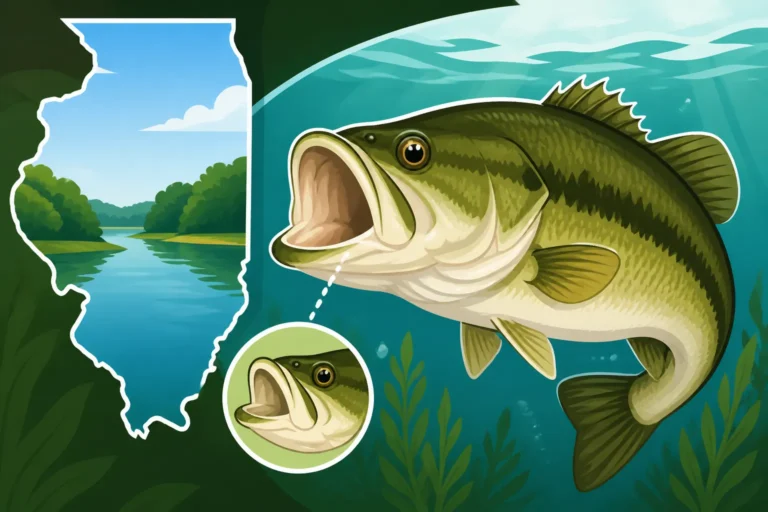
When you pull a bass out of the water, it's helpful to know exactly what you've got on the end of your line. In Illinois, we have a few different bass species, and while they share some family traits, the largemouth has distinct characteristics that set it apart. The most defining feature of a largemouth bass is its mouth – specifically, how far back its jaw extends. If the corner of its mouth goes beyond the rear edge of its eye, you're looking at a largemouth. They also typically have a prominent, dark, horizontal stripe running down the side of their body, though the intensity of this stripe can vary with water clarity and the fish's mood.
Their bodies are generally more robust and laterally compressed (taller than they are wide) compared to their smallmouth cousins. The dorsal fin is deeply notched, almost appearing as two separate fins, which is another helpful identifier. Recognizing these traits is not just for bragging rights; it's crucial for understanding the fish's behavior and applying the correct regulations. For a more detailed look at these differences, check out How to Identify a Largemouth Bass in Illinois Waters and Largemouth Bass vs Smallmouth Bass vs Spotted Bass: How to Tell Them Apart. Knowing your catch ensures you're following the right rules for each species.
Biology and Behavior of the Green Bass
Largemouth bass are incredible creatures, perfectly adapted to their freshwater environments. They thrive in warmer water, typically preferring temperatures between 65 and 75 degrees Fahrenheit, which is why they are often found in shallow, vegetated areas during the warmer months. These fish are true structure and cover lovers. Think about it: logs, stumps, weed beds, lily pads, rock piles, even man-made structures like docks and bridge pilings – if it offers shade or an ambush point, a largemouth bass will likely be nearby.
Their spawning rituals are particularly interesting and a key period for anglers to understand. When water temperatures consistently hit the mid-60s in late spring or early summer, male largemouth bass move into shallow, protected coves to fan out circular nests on the bottom, usually in gravel, sand, or firm mud. The female lays her eggs, and the male then guards the nest aggressively, protecting the eggs and fry from predators. This period, often called the "spawn," is a critical time to fish respectfully, as disturbing a nesting male can lead to the eggs or fry being consumed by other fish. Understanding Illinois Bass Spawn Timing Guide is vital not only for your fishing success but for the health of the bass population.
The activity level of largemouth bass is heavily influenced by water temperature and light conditions. In warmer water, their metabolism speeds up, making them more active and aggressive feeders. As temperatures drop, their metabolism slows, and they become more sluggish, seeking deeper, more stable thermal zones. Light also plays a huge role; largemouth prefer lower light conditions for feeding, making dawn, dusk, and cloudy days prime fishing times. To truly grasp this dynamic, a deeper dive into How Water Temperature Affects Fish Activity can give you an edge.
Diet and Foraging Habits
Largemouth bass are opportunistic predators, and they're not particularly picky when it comes to what they'll eat. If it fits in their mouth and looks edible, chances are they'll strike it. Their diet is incredibly varied, consisting primarily of smaller baitfish like shad, minnows, and sunfish. However, they also regularly consume crawfish, frogs, salamanders, large insects, and even small rodents or ducklings if the opportunity presents itself. This diverse diet is why so many different types of lures are effective for bass fishing; you're often trying to imitate one of these common food sources.
They are classic ambush predators, using their preferred cover and structure to their advantage. A bass will often sit perfectly still, camouflaged within a weed bed or beside a submerged log, waiting for an unsuspecting meal to swim by. Then, with a sudden burst of speed, they'll erupt from cover, engulfing their prey with that signature bucketmouth. Understanding this ambush behavior is key to lure presentation: you want to put your bait right in their strike zone, lingering just long enough for them to commit.
Their diet can also change seasonally. In the spring, after the long winter, they might target slower-moving prey like crawfish as they emerge. In the summer, with abundant baitfish, they become more agile hunters. And in the fall, before winter sets in, they often go on a major feeding frenzy, packing on weight by gorging on schools of baitfish, making them particularly aggressive and fun to catch. Mimicking these seasonal food patterns with your lure choice can be a game-changer.
Where to Find Largemouth Bass Across Illinois
Illinois is a diverse state when it comes to water bodies, offering everything from massive reservoirs to winding rivers and countless smaller ponds. Each type of water body presents unique challenges and opportunities for largemouth bass anglers.
Prime Illinois Lakes and Reservoirs
If you're looking for consistent largemouth bass action, Illinois's larger lakes and reservoirs are often the go-to spots. These expansive waters offer a variety of habitats and can hold impressive populations of bass, including some real lunkers. Rend Lake in southern Illinois, for example, is renowned for its excellent bass fishing, with vast areas of submerged timber and aquatic vegetation that provide ideal cover. Anglers often find success working spinnerbaits and jigs around these submerged structures. Lake Shelbyville, another central Illinois gem, boasts a great population of largemouth bass, particularly around its numerous points, creek channels, and riprap banks. Here, crankbaits and jigs are often productive choices, especially when targeting deeper structure.
Carlyle Lake, the largest man-made lake entirely within Illinois, is another incredible bass fishery. While known for its catfish and crappie, the largemouth population here is strong, with many anglers finding success flipping jigs and soft plastics into the extensive weed beds and submerged brush piles that dot the lake. Beyond these "big three," smaller state park lakes like Clinton Lake and Lake of Egypt also offer fantastic opportunities. Clinton Lake is known for its warm-water discharge area, which can hold active bass even in cooler months, while Lake of Egypt, with its clearer water and abundant cover, is a favorite for many southern Illinois bass enthusiasts. For a comprehensive look at where to begin, definitely check out Best Bass Fishing Lakes in Illinois. Remember, even within these popular lakes, finding the specific "spots" often comes down to identifying areas with good cover and structure, like dense weed lines, old stump fields, or rocky drop-offs.
River and Stream Hotspots
While lakes often get the most attention, Illinois's rivers and streams can be incredible, albeit different, bass fisheries. River bass behave a bit differently than their lake-dwelling counterparts; they are highly influenced by current. The backwaters of the Illinois River, for instance, are teeming with largemouth. These calmer sections, cut off from the main current, often feature abundant vegetation, downed trees, and lily pads, creating perfect ambush points. The Kaskaskia River and the Kankakee River also hold healthy populations of largemouth, particularly in slower-moving sections, oxbows, and tributaries.
When fishing rivers, focus on current breaks. Any feature that disrupts the flow of water – a large rock, a fallen tree, a bend in the river, or even a small eddy – can provide a resting spot for bass out of the main current, while still allowing them to dart out and ambush prey. Log jams, undercut banks, and brush piles along riverbanks are always prime targets. The challenges of river fishing often include navigating currents and identifying smaller, less obvious pockets of calm water, but the rewards can be substantial. Often, river bass are leaner and meaner, putting up a fantastic fight due to their constant battle with the current. This unique environment demands a slightly different approach than lake fishing, often favoring baits that can be worked precisely in tight cover or that mimic riverine forage.
Key Structures and Cover They Love
Largemouth bass are inextricably linked to structure and cover. These aren't just random preferences; they're essential for their survival, providing ambush points, protection from predators, shade from the sun, and sometimes even warmer or cooler water. Understanding what types of structure and cover to look for is paramount to finding bass.
- Weed Lines: Aquatic vegetation, like milfoil, coontail, hydrilla, and even lily pads, are bass magnets. They offer dense cover, shade, and a thriving ecosystem of baitfish and insects. Focus your efforts on the edges of these weed beds, where bass often patrol, or look for pockets and holes within the weeds where a bass might be waiting to ambush. Flipping and pitching jigs or soft plastics into these dense mats can be incredibly effective.
- Wood: Submerged logs, fallen trees (laydowns), standing timber, and old stump fields are classic bass haunts. Bass will often position themselves tight to the wood, using it for cover. Working crankbaits, jigs, or Texas-rigged worms parallel to a log or through the branches of a submerged tree can provoke explosive strikes.
- Rock: Riprap banks (rocky shorelines), natural rock outcroppings, rocky points, and submerged ledges are also excellent choices, especially in lakes with less vegetation. Rocks absorb and retain heat, attracting baitfish and crawfish, which in turn attract bass. Jigging spoons, crankbaits, or Carolina-rigged plastics are great for working these rocky areas.
- Docks, Bridges, and Human-Made Structures: Don't overlook the obvious. Docks provide shade and structure, especially on sunny days. Bass will often hang out under pontoons or near the pilings. Bridge pilings create current breaks and deep-water access, while artificial brush piles or fish attractors placed by anglers or the Illinois Department of Natural Resources (IDNR) can be goldmines. Skipping soft plastics or jigs under docks is a deadly technique, while working crankbaits or spinnerbaits around bridge pilings can yield great results.
The key is to remember that bass relate to these features in specific ways. They're usually not just randomly swimming around; they're positioned for feeding, comfort, or safety. Your goal is to identify these high-percentage areas and present your lure accordingly.
When to Target Largemouth Bass for Optimal Success
Timing is everything in fishing, and largemouth bass are no exception. Their behavior, feeding patterns, and locations change dramatically throughout the year and even throughout the day, influenced by environmental factors.
Seasonal Patterns and Spawning Periods
The year can be broadly divided into distinct bass fishing seasons, each requiring a different approach.
- Pre-Spawn (Early Spring): As ice melts and water temperatures begin to rise, typically into the high 40s and 50s Fahrenheit, bass shake off their winter lethargy. They move from deep wintering grounds towards shallower spawning areas, staging in transition zones like creek channel bends, secondary points, and old river channels. During this period, bass are focused on feeding aggressively to build energy for the upcoming spawn. This is a prime time for bigger baits like lipless crankbaits, spinnerbaits, and jigs. Many anglers look forward to Illinois Bass Pre-Spawn Fishing Patterns to learn how to capitalize on this feeding frenzy.
- Spawn (Late Spring/Early Summer): Once water temperatures hit the mid-60s, the bass move onto their shallow nests. Male bass aggressively guard the nests, making them highly protective. While some anglers target these fish, many practice catch-and-release to ensure the successful reproduction of the species. Sight fishing for bedding bass can be effective, but remember that the fish are vulnerable.
- Post-Spawn (Late Spring/Early Summer): After the rigors of spawning, bass are often exhausted and transition through a recovery period. Females may move to slightly deeper, cooler water to recuperate, while males may stay on the beds for a while longer. This can be a challenging period, but finesse techniques with lighter baits can be effective as fish recover and start feeding again. Understanding Illinois Bass Post-Spawn Fishing Patterns is crucial for continued success after the spawn.
- Summer: When water temperatures soar into the 80s, bass typically move to deeper, cooler water, often relating to thermoclines (layers of water with different temperatures). They become more active during low-light conditions (dawn, dusk, night) or seek deep cover and shade during the heat of the day. Topwater baits at first light, deep-diving crankbaits, and heavy jigs worked slowly in deep brush piles or submerged structure are common tactics.
- Fall: As water temperatures drop, baitfish school up in preparation for winter, and bass follow suit, often entering another major feeding period. They gorge themselves to build fat reserves for the colder months. This can be one of the most exciting times to fish, with aggressive strikes on crankbaits, spinnerbaits, and jerkbaits as bass chase baitfish.
- Winter: In colder water (below 45-50 degrees), bass become much less active. They retreat to deep, stable areas like main lake points, channel swings, and deep structure. Slow, deliberate presentations with jigs, spoons, or blade baits are often required to entice a strike, focusing on vertical fishing right over the fish. Ice fishing for bass is possible on some smaller, shallower Illinois lakes, offering a unique challenge.
Daily Timing: Dawn, Dusk, and Night Fishing
Beyond the broader seasonal shifts, the time of day can dramatically influence bass activity. Largemouth bass generally prefer lower light conditions for feeding, as their eyes are well-adapted for it, giving them an advantage over prey.
- Dawn: The first few hours after sunrise are often incredibly productive. The water is cooler, light levels are low, and bass are frequently on the prowl in shallower water, looking for an easy meal before the sun gets too high. This is prime time for topwater lures, spinnerbaits, and shallow crankbaits. For more tips on this magical time, see Dawn Fishing Techniques.
- Dusk: Similar to dawn, the period from late afternoon into twilight is another fantastic window. As the sun dips, bass move back into shallower feeding areas. The dropping light and cooling temperatures can trigger an aggressive bite. Again, topwater, spinnerbaits, and shallow-running lures shine. Delve deeper into Dusk Fishing Techniques to make the most of those evening hours.
- Night Fishing: Don't put your rods away when the sun goes down! Night fishing for largemouth bass can be incredibly productive, especially during hot summer months. Bass are less pressured, and their low-light vision gives them an edge. Dark-colored spinnerbaits, bladed jigs, large worms, and Jitterbugs or other noisy topwater baits are popular choices. Safety is paramount when night fishing; always go with a buddy and ensure you have proper lighting and navigation tools. More on this often-overlooked strategy can be found in Night Fishing Techniques.
- Mid-day: While more challenging, mid-day fishing can still be successful. You'll generally need to target deeper water, heavy cover, or shaded areas. Flipping and pitching jigs or heavy Texas-rigged plastics into thick mats, under docks, or into submerged brush can tempt lethargic bass seeking refuge from the sun. Vertical presentations with spoons or drop shots over deep structure also work.
How Weather and Water Conditions Impact Bass Behavior
Weather isn't just a nuisance; it's a critical factor that dictates bass behavior. Understanding how different conditions affect them can help you predict where they'll be and what they'll bite.
- Cold Fronts: These are notorious for shutting down a bass bite. After a cold front passes, skies are often clear, winds shift, and temperatures drop sharply. Bass typically move deeper, become less aggressive, and often relate tightly to cover. Your best bet is to slow down your presentation, use finesse baits, and target areas where fish can find stable conditions. Learning How to Catch Bass After a Cold Front can save many frustrating days.
- Warm Fronts/Stable Weather: Conversely, periods of stable, warm weather, especially a rising barometer, often correlate with active bass. Fish will move shallower and feed more aggressively. These are prime times for power fishing techniques with crankbaits, spinnerbaits, and faster retrieves.
- Rain and Cloudy Days: Overcast skies or light rain can be excellent for bass fishing. The reduced light penetration makes bass feel more comfortable feeding in shallower water throughout the day. Rain can also wash nutrients and bait into the water, stimulating activity. Look for active bass near cover and structure. Heavy downpours can muddy the water, in which case baits that create vibration or have bright colors can be more effective.
- Water Clarity: Clear water often calls for more natural colors, smaller baits, and lighter line (finesse presentations). Murky or stained water, on the other hand, allows for bolder colors (chartreuse, black/blue), larger baits, and baits that create a lot of vibration or noise to help fish locate them.
- Wind: While uncomfortable for anglers, wind can be a friend to bass fishing. A consistent chop on the water breaks up light penetration, allowing bass to move shallower. It also pushes baitfish into certain areas, concentrating them and, by extension, the bass. Fishing the windy side of a lake or a wind-blown point can often be very productive with reaction baits like crankbaits and spinnerbaits.
Essential Gear for Largemouth Bass Fishing in Illinois
Having the right tools for the job can make a world of difference when targeting largemouth bass. While you don't need the most expensive gear to catch fish, a thoughtful selection of rods, reels, lines, lures, and even your vessel can significantly improve your experience and success.
Rods, Reels, and Line Selection
Choosing the right rod, reel, and line is foundational to effective bass fishing. For largemouth, you'll generally be looking at a few different setups, depending on the techniques you plan to use.
- Rods: Most bass anglers carry multiple rods, each suited for a different application.
- Medium-Heavy (MH) Power, Fast Action: This is probably the most versatile rod for largemouth. It's great for Texas rigs, jigs, spinnerbaits, and medium-sized crankbaits. The fast action means the rod bends mostly at the tip, offering sensitivity and quick hook sets.
- Heavy (H) Power, Fast or Moderate-Fast Action: Ideal for punching through heavy cover, flipping heavy jigs, or throwing large swimbaits. The extra power helps you control big fish in thick vegetation.
- Medium (M) Power, Moderate Action: Better for treble hook baits like crankbaits and jerkbaits. The more parabolic bend (moderate action) allows the fish to engulf the lure better and reduces the chances of ripping the hooks out. Rod lengths typically range from 6'6" to 7'6", with longer rods offering more casting distance and leverage.
- Reels:
- Baitcasting Reels: These are the workhorses for most bass anglers. They offer superior power, casting accuracy, and control over heavier lures and larger fish. They come in various gear ratios; higher ratios (7.1:1 and up) are good for burning baits or quickly retrieving slack, while lower ratios (6.4:1 and below) are better for slower presentations like deep cranking or working jigs.
- Spinning Reels: Essential for lighter lures, finesse techniques (like drop-shotting or Ned rigging), and for handling lighter line. They are also much more forgiving for beginners learning to cast. Pair them with medium-light or medium power rods.
- Line:
- Fluorocarbon: Nearly invisible underwater, very sensitive, and sinks. It's excellent for jigs, worms, and crankbaits. The downside is it can be stiffer and more prone to memory.
- Monofilament: Affordable, stretches, and floats. Good for topwater lures (helps them float) and crankbaits (stretch helps prevent hooks from tearing out). It's less sensitive and more visible than fluorocarbon.
- Braided Line: Extremely strong for its diameter, no stretch, and highly sensitive. Excellent for heavy cover fishing (flipping/pitching), frog fishing, and as a main line with a fluorocarbon leader. Its visibility and lack of stretch can be a disadvantage in clear water with certain techniques. You can find a fantastic selection of these on Amazon, often with reviews from fellow anglers, which can help you decide what's best for your setup.
Go-To Lures and Baits for Illinois Bass
The world of bass lures is vast and sometimes overwhelming, but a few categories consistently produce in Illinois.
- Soft Plastics: These are arguably the most versatile and effective bass baits.
- Plastic Worms: From 4-inch finesse worms to 12-inch magnum worms, they can be Texas-rigged, Carolina-rigged, wacky-rigged, or weightless. They excel in all seasons and conditions. Check out Best Bait for Largemouth Bass Fishing in Spring for early season plastic ideas.
- Creature Baits: Imitate crawfish, bugs, or other critters. Great for flipping/pitching into heavy cover or as a jig trailer.
- Swimbaits: Soft plastic baits designed to imitate baitfish. Can be rigged weedless or on a jig head.
- Jigs: A lead head with a skirt, often paired with a plastic trailer. Football jigs for rocky bottoms, pitching/flipping jigs for heavy cover, and swim jigs for fishing through sparse vegetation. Extremely versatile and excellent for bigger bass.
- Crankbaits: Hard-bodied lures with a bill that causes them to dive.
- Squarebills: Shallow-running, great for deflecting off wood and rock.
- Medium/Deep Divers: Reach various depths, excellent for covering water and targeting deeper structure.
- Lipless Crankbaits: Vibrate and make noise, great for burning through grass or covering open water.
- Spinnerbaits and Chatterbaits (Bladed Jigs): These create flash and vibration, making them excellent search baits, especially in stained water or around sparse cover. They are fantastic when bass are aggressive or when fishing after a cold front.
- Topwater Lures: Designed to be fished on the surface.
- Frogs: Perfect for fishing over dense lily pads and matted vegetation.
- Poppers and Walkers: Create commotion on the surface, eliciting exciting blow-ups from aggressive bass, particularly during low light. Learn the nuances with How to Fish a Topwater Lure for Bass.
- Live Bait: While artificial lures dominate bass fishing, live bait like shiners, golden roaches, or crawfish can be incredibly effective, particularly when fish are finicky. Always check regulations regarding the use of live bait, as some areas may have restrictions.
Boats, Kayaks, and Shore Fishing Essentials
Your choice of fishing platform significantly impacts where and how you can target largemouth bass.
- Bass Boats: The ultimate tool for serious tournament anglers. Fast, powerful, equipped with livewells, advanced electronics, and powerful trolling motors. They allow anglers to cover vast amounts of water quickly and fish efficiently. For example, Best Boats for Rend Lake Fishing would typically detail specific bass boat features ideal for that large reservoir.
- Jon Boats/Utility Boats: More affordable and versatile, these smaller aluminum boats are great for accessing smaller lakes, rivers, and shallow backwaters. They can be rigged with trolling motors and depth finders for effective bass fishing.
- Kayaks and Canoes: Offer unparalleled stealth and access to extremely shallow or tight areas that larger boats can't reach. They're also a great workout! Kayak fishing for bass has exploded in popularity. Be sure to equip your kayak with a comfortable seat, rod holders, and a paddle or pedal drive system. Don't forget to check Amazon for compact fish finders or kayak accessories that can seriously up your game. For detailed tips, refer to Best Fishing Kayaks for Illinois Lakes.
- Shore Fishing: Accessible and often overlooked, shore fishing can be highly productive, especially in ponds, smaller lakes, and areas with good public access. Focus on areas that offer deeper water close to shore, visible cover (docks, fallen trees), or distinct points. A reliable spinning rod setup, a small tackle bag with versatile lures (worms, jigs, small crankbaits), and a pair of comfortable boots are key. For specific strategies and gear, see Bank Fishing Gear Checklist for Illinois Beginners.
No matter your chosen method, always prioritize safety. Ensure you have the necessary safety gear, especially life jackets, and inform someone of your plans when heading out.
Effective Largemouth Bass Fishing Techniques
Having the right gear is only half the battle; knowing how to use it is what truly brings success. Largemouth bass respond to a myriad of techniques, and becoming proficient in a few key presentations will put more fish in your boat or on the bank.
Casting and Presentation Strategies
The way you present your lure to a bass can be the difference between a strike and an ignored offering. It's about accuracy, stealth, and mimicking natural prey.
- Targeting Cover: Bass love cover. Your casts should be precise, landing your lure as close to, or even into, brush piles, submerged logs, weed edges, or lily pads as possible without getting snagged. This often requires practice, but pinpoint accuracy is crucial for getting your bait into the fish's strike zone. A slight overshoot can spook the fish, and an undershoot might not get its attention.
- Skipping Under Docks: One of the most effective techniques for dock fishing is skipping. Using a spinning rod or a well-tuned baitcaster, you can skip a soft plastic or jig across the water's surface, much like skipping a rock, to get it far back under docks or overhanging trees where bass often hide in the shade. It takes practice, but once mastered, it opens up a world of inaccessible spots.
- Quiet Entries and Controlled Falls: Bass are sensitive to disturbances. A loud "splat" when your lure hits the water can often spook them, especially in clear or shallow water. Aim for a soft, quiet entry. After the cast, pay close attention to the "fall" of your lure. Many strikes occur as the bait sinks, as it mimics a dying or injured prey. Watch your line for any twitch or sudden movement that indicates a bite before the lure even hits the bottom.
- Matching the Hatch: While bass are opportunistic, they are more likely to strike a lure that closely resembles the prevalent forage in the water you're fishing. If there are a lot of small shad, use a shad-imitating crankbait or swimbait. If crawfish are abundant, a brown or green jig with a craw-pattern trailer will be more effective. Observing the local baitfish and insects can give you a significant advantage.
Popular Rigs and Their Uses
Bass anglers have developed a variety of "rigs" – specific ways to hook and weight a soft plastic lure – each designed for different situations and presentations.
- Texas Rig: This is perhaps the most famous and versatile soft plastic rig. A bullet-shaped weight is threaded onto the line, followed by a bead (optional, for noise and knot protection), and then a hook is tied on. The worm or creature bait is then threaded onto the hook in a way that the hook point is embedded back into the plastic, making it virtually weedless. The How to Fish a Texas Rig for Bass is a must-read. This rig is fantastic for fishing through heavy cover, such as weeds, brush, or submerged wood, without snagging. It allows the bait to penetrate dense cover and presents a natural-looking profile.
- Carolina Rig: Designed for fishing deeper water or covering open, sparse bottom. It uses a heavier weight (often 3/4 to 1 ounce) slid up the main line, followed by a swivel, then a leader (usually 1 to 4 feet long), and finally a hook with a soft plastic bait. The weight drags on the bottom, kicking up dirt and attracting attention, while the lighter bait floats or glides enticingly above it. This is a great choice for tempting less active bass or for finding fish scattered across humps and points. To truly get the hang of it, exploring How to Fish a Carolina Rig for Bass is invaluable.
- Drop Shot: A finesse technique where the weight is tied to the very end of the line, and the hook (with a small soft plastic bait) is tied directly to the main line a foot or two above the weight. This rig keeps the bait suspended off the bottom, making it perfect for vertical fishing over deep structure, suspended fish, or when bass are finicky. It offers an incredibly subtle, natural presentation.
- Wacky Rig: Achieved by hooking a soft stickbait (like a Senko) directly through the middle. This allows both ends of the worm to wiggle and flutter enticingly as it sinks, creating a very natural, seductive fall. It's often fished weightless or with a small nail weight inserted into one end, and it's particularly effective in clear, shallow water around docks or sparse cover.
- Ned Rig: An ultra-finesse technique originating in the Midwest. It involves a small mushroom-shaped jig head paired with a short (2.5-3 inch) soft plastic stickbait. The light weight and buoyant plastic stand straight up on the bottom, mimicking a small foraging baitfish or crawfish. It's deadly for pressured fish or in tough conditions.
Retrieval Methods for Different Lures
Each lure has an optimal way it's meant to be retrieved to maximize its fish-catching potential.
- Spinnerbaits and Bladed Jigs: These are typically "slow rolled" or "burned" through the water. Slow rolling means retrieving just fast enough to keep the blades turning and the lure vibrating. Burning involves a fast, steady retrieve to cover water quickly and trigger reaction strikes. You can also "kill" the retrieve, letting it fall like an injured baitfish.
- Crankbaits: These are designed to be "cranked" down to their running depth. For squarebills, crank it to hit off submerged wood or rocks; the deflection often triggers a strike. For deep divers, a steady retrieve is common, but varying your speed or pausing can also be effective.
- Jerkbaits: These lures are meant to be "jerking" or "twitching." You make a series of short, sharp jerks of the rod tip, then pause the retrieve. The pause is critical, allowing the lure to suspend or slowly rise/fall, imitating a struggling baitfish.
- Topwater Lures: Poppers are "popped" or "chugged" across the surface, creating a splash. Walking baits (like a Zara Spook) are retrieved with a rhythmic "walk-the-dog" action, making them glide side-to-side. Frogs are often worked with short twitches and pauses, moving them enticingly over lily pads. Many anglers share their favorite lure modifications and retrieval tips in product reviews on Amazon, which can be super helpful for learning.
- Soft Plastics (Worms, Jigs, Creatures): These are often fished with a "drag and pause" or "hop and pause" retrieve. You drag or hop the lure a short distance, then let it sit on the bottom for a few seconds. Most strikes happen on the pause or as the bait falls. Subtle twitches of the rod tip can also impart lifelike action. The key with soft plastics is to maintain contact with the bottom and feel for the subtle "thump" or "tick" of a bite.
It's vital to experiment with different retrieval speeds and actions until you find what the bass are responding to on a given day. Don't be afraid to break from conventional wisdom; sometimes, an unusual retrieve is what it takes to trigger a strike.
Illinois Largemouth Bass Regulations and Conservation
As responsible anglers, understanding and adhering to Illinois's fishing regulations is not just a legal requirement but also a vital part of conservation, ensuring healthy fish populations for future generations.
Statewide Catch and Size Limits
For largemouth bass, Illinois has established clear rules to manage the fishery. Across most of the state's public waters, the statewide daily catch limit for largemouth bass is six fish. This means you can keep up to six bass per day. However, and this is a point that often surprises new anglers, there is no minimum size limit for largemouth bass statewide. This means that in many Illinois waters, you can keep a bass of any size, as long as you don't exceed the daily limit. For specific details on these statewide rules, you can refer to Illinois Statewide Bass Daily Catch Limit of Six Fish and No Minimum Size for Largemouth Bass in Illinois Waters.
It's crucial to understand that these are statewide rules. As you'll see, specific lakes and rivers often have their own, more restrictive regulations designed to manage their unique bass populations. Always consult the official Illinois Fishing Information Guide or check signage at the boat ramp for the specific body of water you intend to fish. These regulations are in place to help maintain a balanced ecosystem and to allow bass to reach reproductive maturity before being harvested, contributing to sustainable fishing. Compliance ensures that our cherished fishing spots remain productive. For a broader perspective on general regulations, review Illinois Fishing Regulations Overview.
Site-Specific Rules and Exceptions
This is where it gets a little more complex, but it's incredibly important. While the statewide rules provide a baseline, many individual lakes, reservoirs, and even sections of rivers in Illinois have site-specific regulations that supersede the general rules. These exceptions are put in place by the Illinois Department of Natural Resources (IDNR) to address the unique ecological conditions, fishing pressure, or management goals for that particular body of water.
For example, a lake might have a slot limit, meaning you can keep bass under a certain size and over another size, but fish within the "slot" must be released. A common slot limit might be "14 to 18 inch length limit, only one over 18 inches." This means you could keep bass shorter than 14 inches, and one bass longer than 18 inches, but any bass between 14 and 18 inches must be released. These limits are often implemented on "trophy lakes" to protect the prime breeding stock and allow fish to grow to larger sizes. Other lakes might have a catch-and-release only rule for bass during certain periods, or even year-round. These periods are particularly critical during the spawn to ensure successful reproduction. You might find specific information on Catch-and-Release Bass Seasons on Some Illinois Lakes.
It cannot be stressed enough: always check the signage at the boat ramp or the current Illinois Fishing Information Guide for the specific body of water you plan to fish. Failing to do so can result in fines and penalties. The IDNR website is also an excellent resource. These variations highlight Why Fishing Rules Vary by Lake and River and underscore the importance of local knowledge.
Licensing Requirements for Anglers
Before you even think about casting a line for largemouth bass in Illinois, you need to ensure you have the proper fishing license. It's a fundamental requirement for nearly all anglers, and the fees collected from licenses directly support fisheries management, conservation efforts, and stocking programs across the state.
Generally, anyone aged 16 and older needs an Illinois fishing license to fish in public waters. There are, however, some specific exemptions, such as during Illinois's annual Free Fishing Days, or for certain landowners fishing on their own property. For younger anglers, it's great news: Do Kids Need a Fishing License in Illinois? provides a clear answer, and often, children under a certain age can fish without a license, making it easier for families to introduce kids to the sport.
Illinois offers several types of licenses to accommodate different fishing needs:
- Annual Resident License: Valid for a full license year (typically from March 1 to February 28/29 of the following year).
- 24-Hour Resident License: Perfect for a short, spur-of-the-moment fishing trip.
- Non-Resident Licenses: Available in annual, 3-day, or 24-hour options for visitors to the state.
For a complete breakdown of what's available and pricing, refer to Illinois Fishing License Costs and Types. Remember, sometimes you'll need additional stamps, like a Trout and Salmon Stamp, if you're targeting those species, but for typical largemouth bass fishing, a general fishing license is usually all that's required.
Purchasing a license is straightforward. You can typically buy one online through the IDNR website, at many sporting goods stores, bait shops, or even certain department stores. For convenience, many anglers choose to use the online portal, as highlighted in How to Buy an Illinois Fishing License Online. While you can't buy your license on Amazon, you can find Illinois fishing regulation guides or books about specific lakes there, which can complement your official license purchase. Always carry proof of your license while fishing, either a physical copy or a digital image on your phone. Game wardens are authorized to check licenses, and fishing without one can lead to a citation.
Advanced Tips for Chasing Illinois Trophy Largemouth
Catching bass is fun, but landing that true trophy largemouth – the kind that makes your hands shake and leaves you with stories for years – requires a different level of dedication and strategy. It's about thinking like a big fish.
Targeting the Biggest Bass
Trophy largemouth bass are not like their smaller counterparts. They are older, wiser, and often more solitary. They've survived countless angler presentations and natural predators, making them incredibly wary. To target these giants, you often need to adjust your approach.
- Bigger Baits, Slower Presentations: Forget the small finesse worms. Large bass prefer a substantial meal that provides more calories for less effort. Think 8- to 12-inch plastic worms, large swimbaits, oversized jigs, or big topwater lures. The presentation often needs to be slower and more deliberate. A big bait worked slowly can often be more enticing than a fast-moving, smaller lure, especially for a wary fish that has seen it all. Don't be afraid to let a jig sit on the bottom for 30 seconds or more.
- Focus on Prime Feeding Windows: Big bass are less active throughout the day, often having specific feeding windows, typically during low light or when conditions are ideal (e.g., overcast, light rain). Concentrate your efforts during these times and be patient. It might mean fewer bites, but when they come, they're often the ones you're looking for.
- Understand Seasonal Movements of Large Fish: Trophy bass often have distinct seasonal patterns, moving between deep and shallow water, often using specific migratory routes or transition areas. Learning these patterns on your chosen lake is key. For example, large females might stage on deep points leading into spawning coves for an extended period in pre-spawn, or they might seek out the deepest, coolest cover during summer. Historical data or local knowledge can be invaluable here.
Electronics and Mapping for Success
In modern bass fishing, especially for larger lakes and reservoirs, advanced electronics are no longer a luxury but a crucial tool for locating productive water and understanding what's beneath the surface.
- Using Fish Finders (Sonar, Side Imaging, Down Imaging): Today's fish finders provide incredible detail. Traditional 2D sonar shows fish arches and bottom composition directly beneath your boat. Down imaging gives a photographic-like view directly below, clearly showing brush piles, stumps, and even individual fish. Side imaging expands your view dramatically, allowing you to scan hundreds of feet to either side of your boat, revealing hidden structure, brush piles, or weed lines that you might otherwise miss. This saves immense time and helps you locate potential bass hotspots efficiently. Learning how to interpret these images takes practice, but the rewards are immense. You can check out Fish Finders for Illinois Lake Fishing for a great overview of these essential tools.
- GPS and Contour Maps: Modern fish finders are almost always integrated with GPS and detailed contour maps. These maps show depth changes, creek channels, humps, points, and other bottom features that are invisible from the surface. You can mark waypoints on productive spots, follow old river channels, or navigate precisely to a submerged hump. This is crucial for understanding the "structure" bass relate to and helps you repeatedly hit precise spots.
- Understanding Thermoclines and Bait Ball Locations: On deeper lakes, especially in summer, a thermocline forms – a distinct layer where water temperature changes rapidly. Bass will often suspend right on top of or just below the thermocline because it contains the most oxygen and often concentrations of baitfish. Your fish finder can reveal this layer. Additionally, locating bait balls (schools of shad or other forage fish) on your sonar is a huge advantage, as bass are usually nearby, either actively feeding or waiting for an opportunity.
Adapting to Changing Conditions
The most successful bass anglers aren't those who have one secret spot or one magic lure; they're the ones who can adapt. Conditions on the water are constantly changing, and being able to read the signs and adjust your strategy accordingly is a hallmark of an advanced angler.
- Reading the Water: Pay attention to everything around you. What's the water clarity like? Is it clear, stained, or muddy? What's the surface temperature? Is there any current? Are there signs of baitfish (splashing, birds diving)? All of these factors provide clues about where the bass might be and what they might be willing to bite. For instance, if you're fishing muddy water after a heavy rain, you might opt for a loud, vibrating lure in a dark color.
- Adjusting Lure Color, Size, and Presentation: If what you're doing isn't working, change something! Don't be afraid to swap out lure colors, go up or down a size, or try a completely different retrieval speed or action. Sometimes a subtle shift, like switching from a bluegill-pattern crankbait to a shad-pattern, can make all the difference. Or, if you're getting short strikes, trying a jig with a smaller trailer might be the ticket.
- Staying Mobile and Willing to Experiment: Don't get stuck in a rut fishing the same five spots with the same lure. If an area isn't producing, move on. Explore new water, try different depths, and experiment with techniques you're less familiar with. The biggest breakthroughs often come from trying something outside your comfort zone. Consider picking up a water temperature gauge on Amazon; it's a small tool that makes a big difference in understanding why fish are acting a certain way and what adjustments you need to make. The ability to quickly analyze, adapt, and execute new plans is what separates good anglers from great ones.
Responsible Angling and Conservation for Largemouth Bass
As passionate as we are about catching largemouth bass, our responsibility extends beyond just the thrill of the catch. Practicing ethical angling and actively participating in conservation efforts ensures that Illinois's bass fisheries remain healthy and vibrant for future generations.
Best Practices for Catch and Release
While Illinois has generous harvest limits for largemouth bass, many anglers, especially those targeting larger fish, opt for catch and release. This practice is crucial for maintaining robust populations, particularly of the larger, more experienced breeding fish. When you decide to release a bass, follow these guidelines to maximize its survival chances:
- Minimize Handling Time: The less time a fish spends out of the water, the better. Have your camera ready if you want a photo, but make it quick.
- Use Knotless, Rubberized Nets: These types of nets are much gentler on a fish's slime coat, fins, and scales compared to traditional knotted nylon nets, which can strip away protective mucus and cause damage.
- Proper Unhooking Tools: Carry a good pair of long-nose pliers or a de-hooking tool. This allows you to quickly and safely remove hooks, especially if they are deep, minimizing stress and injury to the fish. Avoid tearing or ripping the fish's mouth.
- Support the Fish Properly: When holding a bass for a photo, support its body horizontally with one hand under its belly and the other gripping its lower jaw (bass thumb). Never hold a large bass vertically by just its jaw; this can cause severe damage to its internal organs and jaw structure.
- Revival Techniques: If a fish seems stressed or sluggish upon release, especially after a long fight or in warm water, gently hold it upright in the water by the tail, supporting its belly, and move it back and forth to force water over its gills. Only release it when it can swim away strongly on its own.
Protecting Illinois Largemouth Habitat
Healthy bass populations depend directly on healthy habitats. As anglers, we have a role to play in protecting these crucial environments.
- Avoid Littering: It sounds obvious, but it's astonishing how much trash accumulates around popular fishing spots. Pack out everything you pack in, and if you see litter left by others, consider picking it up. Monofilament line, especially, can be deadly to wildlife.
- Respect Private Property: Always be aware of property lines and gain permission before fishing on private land or accessing private docks. Unwanted trespassing can lead to restricted access for all anglers in the future.
- Understand the Importance of Aquatic Vegetation: While dense weeds can be challenging to fish, they are vital nursery grounds for baitfish, provide oxygen, and offer essential cover for juvenile and adult bass. Learn to appreciate these natural elements rather than view them as nuisances. Support efforts that protect natural shorelines and aquatic plant growth.
- Advocacy for Clean Water Initiatives: Support organizations and legislation that work to reduce pollution, prevent runoff, and maintain water quality in Illinois lakes and rivers. Clean water directly translates to healthy fish and more enjoyable fishing experiences.
Preventing the Spread of Invasive Species
Invasive species pose a significant threat to Illinois's native aquatic ecosystems, including our beloved largemouth bass. These non-native plants and animals can outcompete native species for food and habitat, introduce diseases, and drastically alter the environment. Anglers can be unwitting vectors for their spread, so vigilance is critical.
- "Clean, Drain, Dry" Protocol: This is the golden rule for preventing the spread of invasives.
- Clean: Inspect your boat, trailer, waders, and all fishing gear for any visible mud, plants, or animals before leaving the boat launch. Remove and dispose of them properly.
- Drain: Drain all water from your boat's bilge, livewells, and transom before leaving the ramp.
- Dry: Allow your boat and gear to thoroughly dry for several days before using them in another body of water. If drying isn't possible, a high-pressure wash or hot water rinse is recommended.
- Checking for Specific Threats: Be aware of common invasive species in Illinois, such as zebra mussels, quagga mussels, various species of Asian carp, Eurasian watermilfoil, and rusty crayfish. If you see them, report them to the IDNR.
- Never Release Bait: Do not release live bait from one water body into another, and never empty livewells containing non-native species. Dispose of unused bait in the trash.
- Educating Fellow Anglers: Share your knowledge with other anglers. A collective effort is required to protect Illinois's waters from the devastating impacts of invasive species.
By being mindful stewards of our natural resources, we can ensure that the joy of largemouth bass fishing continues to thrive in Illinois for generations to come.
Largemouth Bass Fishing Tactics Summary Table
To help consolidate some of the key strategies discussed, here's a handy table outlining common tactics based on the season and typical conditions for largemouth bass fishing in Illinois.
| Season/Condition | Typical Bass Location | Recommended Lure Types | Retrieval Style & Key Tactic |
|---|---|---|---|
| Early Spring (Pre-Spawn) | Deep points, creek channels, transition areas near shallow spawning flats | Lipless crankbaits, jigs, spinnerbaits, jerkbaits, large plastic worms | Slow rolling, yo-yoing jigs, long pauses with jerkbaits, covering water to locate active fish |
| Late Spring/Early Summer (Spawn) | Shallow, protected coves, hard bottom areas (nests) | Soft plastics (Texas/Wacky rigs), light jigs, small creature baits | Flipping/pitching to visible nests, subtle twitches, respectful observation |
| Summer (Hot Weather) | Deep cover (brush piles, submerged timber), thermocline, shade, low light | Deep-diving crankbaits, jigs, large worms, topwater (dawn/dusk), frog | Slow-dragging jigs, vertical presentations, fast retrieves during low light, skipping under docks |
| Fall (Cooling Water) | Creek mouths, main lake points, chasing baitfish schools | Crankbaits (squarebill/medium diver), spinnerbaits, jerkbaits, swimbaits | Aggressive retrieves, burning baits, imitating fleeing baitfish, targeting bait balls |
| Winter (Cold Water) | Deep main lake points, channel swings, stable deep structure | Jigs, blade baits, spoons, small finesse plastics | Slow vertical jigging, dead sticking, minimal movement, precise presentations |
| Cold Front | Tight to heavy cover, deeper water | Finesse jigs, drop shots, Ned rigs, small worms | Very slow, deliberate presentations, long pauses, precise target fishing |
| Rain/Overcast | Shallow water, weed lines, open water | Spinnerbaits, chatterbaits, topwater, shallow crankbaits | Faster retrieves, covering water, using noisy/vibrating baits in stained water |
| Clear Water | Deeper, natural colors, smaller baits | Finesse worms, drop shots, clear/natural crankbaits | Subtle presentations, longer leaders, precise casts to cover, fluorocarbon line |
| Murky Water | Closer to surface, vibration/noise | Dark/bright jigs, spinnerbaits, chatterbaits, noisy topwater | Fast retrieves, use baits with strong vibration/profile, focus on contrast |
Disclaimer
This article is for general informational purposes only and does not constitute professional advice. Laws, prices and regulations vary by location and change over time. Consult a qualified professional for guidance on your specific situation.