Smallmouth Bass Fishing in Illinois: The Complete Guide
If you've ever cast a line into an Illinois river or lake with dreams of a hard-fighting fish, you might have felt the unique thrill and frustration of pursuing the smallmouth bass. These bronze beauties are revered by anglers for their aggressive strikes and acrobatic battles, but they can be incredibly elusive, making every successful catch feel like a true victory. This comprehensive guide is dedicated to equipping you with the knowledge, techniques, and insights you need to confidently target and land more smallmouth bass across the diverse waters of Illinois.
The Allure of Illinois Smallmouth Bass: Why They're Worth the Chase
There's something incredibly special about a smallmouth bass. While their largemouth cousins get a lot of attention, the smallmouth offers a completely different kind of challenge and reward. They aren't just fish; they're intelligent, hard-fighting predators that demand skill, patience, and a deep understanding of their habitat. For many anglers, the smallmouth represents the pinnacle of freshwater fishing, especially when you consider the varied and often overlooked opportunities Illinois presents.
Understanding the Smallmouth Challenge
Let's be real, smallmouth bass aren't always easy. They often inhabit clearer, cooler water, and they can be incredibly wary. Unlike largemouth, which might hide in dense vegetation, smallmouth prefer rocky structures and current, making them feel more like a river fish, even when found in lakes. Their fight is legendary: once hooked, they're notorious for powerful runs, head shakes, and even leaping completely out of the water. This isn't a subtle tug; it's often a violent, rod-bending experience that tests your tackle and your nerves. That's precisely why so many anglers become obsessed with them. The satisfaction of finally feeling that aggressive strike after carefully working a piece of cover is truly unparalleled. They don't give up easily, which makes the victory all the sweeter.
Many anglers initially struggle because they approach smallmouth fishing with largemouth tactics. While there's overlap, a subtle shift in strategy can make all the difference. Smallmouth are often more visually oriented, relying on their keen eyesight in clear water. They also respond strongly to current and baitfish movement, which requires different presentations than pitching a jig into thick lily pads. Learning to "read" the water for smallmouth means looking for specific types of structure and understanding how current affects their feeding lanes, which we'll dive into throughout this guide.
The challenge also comes from their specific diet preferences. While they'll eat just about anything if hungry enough, smallmouth have a particular fondness for crayfish and baitfish like shiners or shad. Understanding these dietary habits helps you select the right lures and presentations, mimicking what they naturally feed on. This often means working your bait slowly along the bottom, bumping over rocks, or presenting a jerkbait in a way that imitates a wounded minnow. It's a game of observation and adaptation, but one that truly hones your angling skills.
The Natural Habitat of Illinois Smallies
Smallmouth bass are particular about where they live. They thrive in environments that offer cool, clear, and well-oxygenated water with plenty of rocky structure. Think about swift-flowing rivers with gravel bottoms, rocky riffles, and deep pools. In lakes, they'll gravitate towards rocky points, bluffs, submerged rock piles, and deep ledges where they can ambush prey and find refuge from warmer surface temperatures. They love current, often positioning themselves just out of the main flow, in eddies, or behind boulders, waiting for food to drift by. This preference for current also means they are less often found in stagnant, muddy ponds or lakes with soft, silty bottoms.
You'll rarely find smallmouth in the same thick, shallow weed beds or muddy backwaters where largemouth bass tend to dominate. Instead, picture crystal-clear stretches of river with visible rock formations, or deep, windswept lake points exposed to the elements. These areas provide the oxygen levels they need and the hard structure they use for cover, spawning, and hunting. When searching for smallmouth, shift your focus from green to brown and grey; from soft to hard. Look for areas where the bottom changes drastically, from sand to rock, or where a river bends and creates a deeper scour hole on the outside turn.
Understanding their preferred habitat is the absolute first step to success. If you're fishing a muddy, slow-moving ditch, you're likely in the wrong spot. If you're exploring a clear river with rocky banks and a noticeable current, or a deep, rocky lake with sharp drop-offs, you're on the right track. This knowledge will save you countless hours of unproductive casting and help you zero in on the areas where these magnificent fish truly thrive.
Illinois's Best Smallmouth Waters
Illinois might be known for its flat prairies and cornfields, but don't let that fool you into thinking it's not a smallmouth haven. We have some truly exceptional waters for these bronze battlers. The northern part of the state, especially, offers fantastic opportunities, largely due to its glacial history which left behind plenty of rocky substrate and clear flowing rivers.
One of the most celebrated smallmouth destinations in Illinois is the Kankakee River. This river is a gem, offering miles of prime habitat with its rock bottom, rapids, and deep pools. It’s a favorite for both wading anglers and those with small boats, especially from Kankakee upstream towards the Indiana border. You'll find fish here that love to smash topwater lures and aggressively attack jigs. Kankakee River Smallmouth Bass Spots are plentiful, and it's a place where you can genuinely spend days exploring different stretches.
Another fantastic option is the Rock River, particularly in its upper reaches. While it's a larger, slower river in some sections, many areas offer excellent smallmouth fishing around current breaks, bridge pilings, and rocky outcroppings. The Fox River, especially north of Elgin, also holds a good population of smallmouth in its clearer, rockier sections. It's a river that offers diverse fishing, and its smallmouth often get overlooked, providing a great opportunity for those willing to explore. Fox River Fishing Guide in Illinois will give you an idea of some productive areas. And, of course, for a truly unique smallmouth experience, don't forget Lake Michigan, particularly along its Illinois shoreline. The rocky breakwaters, harbors, and nearshore structure provide a prime environment for big smallmouth, offering a different kind of challenge in a vast, open water setting.
Identifying Illinois Smallmouth Bass: A Visual Guide
One of the most common questions I get is, "How do I know if it's a smallmouth?" It's easy to confuse them with largemouth or even spotted bass, especially for newer anglers. But once you know what to look for, their distinguishing characteristics become pretty clear. Understanding these differences isn't just for bragging rights; it's crucial for adhering to specific regulations that might vary between species.
Key Features to Look For
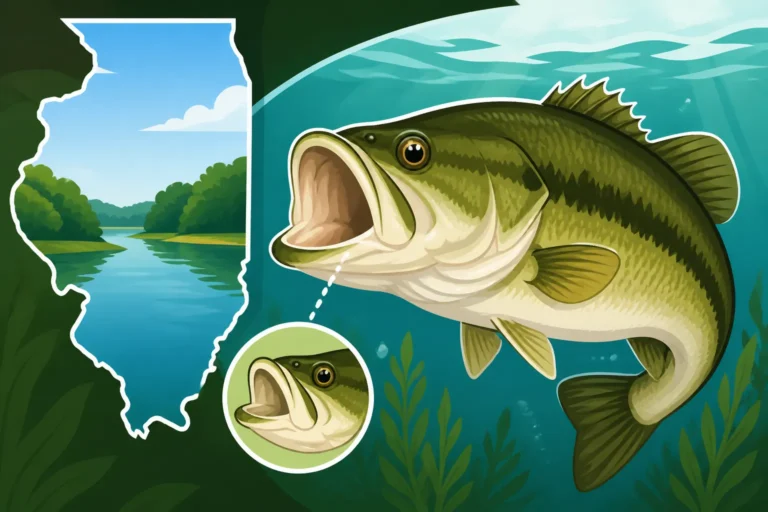
The easiest way to identify a smallmouth bass is by its mouth and coloration. When you catch a smallmouth, examine its jaw: the upper jaw (maxillary) typically does not extend past the back edge of its eye when the mouth is closed. This is a critical distinction from the largemouth, whose jaw extends noticeably beyond the eye. Smallmouth also tend to have a more uniform, bronze-brown coloration, often with faint, irregular vertical bars or blotches along their sides, which sometimes look like tiger stripes. These markings are not as distinct as the lateral line found on largemouth.
Their eyes are usually a reddish-orange color, adding to their distinct appearance. Another useful identification tip is their dorsal fin. Unlike the largemouth, which has a deeply notched dorsal fin that makes it look like two separate fins, the smallmouth's dorsal fin is less deeply notched, appearing more connected and continuous. This might seem like a minor detail, but it's a reliable indicator once you get your eye in. The body shape is also generally more compact and muscular, especially when compared to the longer, sleeker largemouth. They are built for fighting current and quick, powerful bursts of speed.
Pay close attention to these details the next time you land a bass. The vertical bars, the jawline relative to the eye, and the connected dorsal fin are your primary clues. Once you've seen a few smallmouth, you'll start to recognize them instantly. This quick identification will not only help you appreciate the species you've caught but also ensure you're following any specific size or catch limits that might apply uniquely to smallmouth in certain Illinois waters.
Smallmouth vs. Largemouth vs. Spotted Bass: How to Tell Them Apart Table
It’s truly a common dilemma, trying to figure out which bass species you've just landed, especially when you're excited. Illinois waters hold largemouth, smallmouth, and even some spotted bass, and they can look surprisingly similar at first glance. However, there are a few tell-tale signs that, once you learn them, make identification much easier. This isn't just about curiosity; different species often have different regulations, so knowing your catch is important for compliance.
Here’s a quick breakdown to help you distinguish between these fantastic game fish:
| Feature | Largemouth Bass | Smallmouth Bass | Spotted Bass |
|---|---|---|---|
| Upper Jaw | Extends noticeably beyond the eye | Does not extend beyond the eye | Extends to or slightly beyond the eye |
| Dorsal Fin | Deeply notched, appears almost separated | Shallowly notched, appears continuous | Shallowly notched, appears continuous |
| Lateral Line | Prominent dark, horizontal stripe | Faint, irregular vertical bars/blotches | Distinct dark spots below lateral line |
| Body Color | Green to dark green, lighter belly | Bronze, brown, or gold, lighter belly | Greenish-bronze, lighter belly, diamond-shaped pattern below lateral line |
| Tongue Patch | Absent | Absent | Rough patch of teeth on tongue (raspy feel) |
| Body Shape | Elongated, somewhat football-shaped | More compact, muscular, deeper body | Slimmer, more torpedo-shaped |
Let's expand on this table a bit. The jaw length is truly your number one indicator. Imagine a line dropped vertically from the back of the fish's eye. If the jaw goes past that line, it's a largemouth. If it stops before or right at it, it's either a smallmouth or a spotted bass. Then, look at the dorsal fin. Largemouth have that "split" appearance; it looks like two fins joined by a thin membrane. Smallmouth and spotted bass have a more united dorsal fin.
After that, body pattern is key. Largemouth have that distinct dark lateral line, sometimes broken, but always horizontal. Smallmouth have those unique vertical bands or blotches that almost resemble camouflage. Spotted bass, true to their name, will often have rows of distinct dark spots below their lateral line, which is typically unbroken like a largemouth's. If you ever catch a fish that has the jawline of a smallmouth but still has distinct spots and a continuous dorsal fin, feel its tongue. A small rough patch of teeth on the tongue is the definitive sign of a spotted bass, which can be found in some Illinois rivers like the Ohio and Wabash. Understanding these nuances will not only improve your angling knowledge but also ensure you're fishing responsibly. You can read more in-depth on this topic with our guide on Largemouth Bass vs Smallmouth Bass vs Spotted Bass: How to Tell Them Apart.
Size and Growth Patterns in Illinois
When it comes to smallmouth bass in Illinois, what can you realistically expect from a typical catch? While every angler dreams of a state record, most smallmouth you encounter will be in the 1 to 3-pound range. These are still fantastic fighters, packing a punch well above their weight class. They are incredibly muscular, making those 18-inch fish feel much heavier than their largemouth counterparts of the same length.
However, Illinois certainly produces trophy smallmouth. Fish exceeding 5 pounds are caught annually, particularly from Lake Michigan and the richer river systems. A 20-inch smallmouth is considered a true monster in many circles, and Illinois has the potential to yield such fish. Their growth rate is influenced heavily by water quality, food availability (especially crayfish!), and the length of the growing season. In optimal environments, they can reach impressive sizes, taking several years to grow into true lunkers.
Factors like habitat health play a huge role. Rivers with abundant crayfish populations and clear, cool water will support larger, healthier smallmouth bass. Lakes with vast rocky structures and a good forage base will also produce bigger fish. While an average day might see you catching fish in the 12-16 inch range, which are still incredibly fun to catch, always be prepared for that one special strike that could be a true Illinois giant. Knowing the potential for larger fish keeps you motivated and ensures you're using tackle capable of handling an unexpected behemoth.
Prime Seasons and Conditions for Illinois Smallmouth
Just like any other species, smallmouth bass behavior is heavily dictated by the seasons and environmental conditions. Understanding these cycles is critical to consistently finding and catching them. What works in spring won't necessarily work in fall, and neglecting weather patterns can lead to a frustrating day on the water.
Spring: Pre-Spawn and Spawn Aggression
Spring is arguably the most anticipated season for smallmouth anglers, and for good reason. As ice melts and water temperatures begin to climb, typically into the high 40s and 50s Fahrenheit, smallmouth start to emerge from their deeper wintering holes. This is the pre-spawn period, characterized by fish moving into shallower, rocky areas in preparation for spawning. They are hungry and aggressive, looking to bulk up on calories before the rigors of reproduction. This is a fantastic time for power fishing with crankbaits, jerkbaits, and spinnerbaits, as they'll readily strike at fast-moving baits.
As water temperatures reach the upper 50s and low 60s, the spawn begins. Smallmouth will typically fan out nests on gravelly or rocky bottoms in shallower water, often near current breaks or protected points. During this time, male smallmouth become incredibly territorial and protective of their nests. While sight fishing for bedding bass can be effective, many anglers prefer to target pre-spawn and post-spawn fish to avoid disturbing the spawning process. However, during the spawn, even a slight disturbance can trigger an aggressive strike from a protective male. They're not necessarily feeding out of hunger, but out of a fierce instinct to defend their future.
Post-spawn can also be excellent. After the spawn, female smallmouth are often recuperating and hungry, while males remain aggressive for a period. They'll linger around the spawning areas or move to nearby secondary points and drop-offs to feed heavily. This is a time when a slower, more deliberate approach with jigs, tubes, or soft plastics can be particularly effective. Keep an eye on local regulations, as some areas may have specific closures or catch-and-release only periods during the smallmouth spawn to protect the population. Illinois Fishing Seasons Guide provides a comprehensive overview of general seasonal patterns.
Summer: Deep Water and Nighttime Strategies
Summer brings a new set of challenges and opportunities for smallmouth anglers. As water temperatures soar into the 70s and 80s, smallmouth will generally retreat to deeper, cooler, and more oxygenated water. In rivers, this means focusing on deep pools, current seams where cooler water might be present, and areas with significant shade or underwater springs. In lakes, they'll move to deep rocky humps, offshore ledges, main lake points, and cool water near thermoclines. Finding these deeper holding patterns is key to summer success.
During the day, a finesse approach often becomes necessary. Drop shot rigs, Ned rigs, and shaky head jigs fished slowly along the bottom in deep water can be incredibly effective. Smallmouth might be less aggressive in the heat, but they'll still bite if a bait is presented right in front of them and looks natural. Keep an eye on your fish finder for baitfish schools and any bottom structure that looks promising. Early morning and late evening, when the sun is less intense, can also offer windows of increased activity in shallower areas, especially if there's good current.
Don't overlook night fishing in the summer, especially on clear, deep lakes. Smallmouth can become incredibly active after dark, moving shallower to feed on baitfish that are also moving up in the water column. Topwater lures, spinnerbaits, and even large jerkbaits can be surprisingly effective at night. It requires a different kind of patience and awareness, but the rewards can be substantial, often producing some of the largest smallmouth of the season.
Fall: Feeding Frenzy Before Winter
Fall is another prime time for smallmouth bass fishing in Illinois, often rivaling spring in terms of productivity and fish size. As air and water temperatures begin to drop, smallmouth sense the approaching winter and enter a frantic feeding period. They need to pack on fat reserves to sustain them through the colder months, making them incredibly aggressive and willing to chase down a meal. This is often when you'll encounter some of the biggest fish of the year.
During early fall, smallmouth will still be relatively shallow, congregating around rocky points, humps, and current breaks, actively pursuing baitfish. This is a fantastic time for "power fishing" techniques: throwing large crankbaits, spinnerbaits, and especially jerkbaits that imitate dying shad or shiners. They'll also hit tubes and football jigs bounced along the bottom. Look for schools of baitfish, as smallmouth will often be right below them, gorging themselves.
As fall progresses and water temperatures continue to drop, smallmouth will gradually transition to deeper wintering holes. They'll still be actively feeding, but might require a slower retrieve or presentation. Focus on steep drops, channel edges, and deep rocky structures where they can stage before winter. The key is to match the hatch – whatever baitfish are most prevalent, try to imitate them in size, color, and action. Fall offers a final burst of action before the cold settles in, so make the most of those crisp, cool days.
Winter: Cold Water Challenges and Opportunities
Smallmouth fishing in winter, particularly open water fishing, can be a real test of patience and skill in Illinois. Once water temperatures consistently drop below 45 degrees Fahrenheit, smallmouth metabolism slows down dramatically. They become much less active, moving to their deepest wintering holes, often congregating in large schools in deep water near current breaks, rock piles, or steep channel edges. They don't feed as actively, but they will still eat if a meal is presented directly to them, slowly and enticingly.
If you're ice fishing (where legal and safe), vertical jigging with small spoons, blade baits, or soft plastics can be effective. The key is subtlety and patience. Don't expect aggressive strikes; often, it will be a faint tap or just a feeling of pressure. Finesse is paramount. For open water fishing, focus on warm, sunny days following a cold snap, as these can sometimes trigger a brief feeding window. Using heavy jigs, spoons, or slow-moving Ned rigs in deep water can tempt lethargic fish. Heavy fluorocarbon line is often preferred for its sensitivity and reduced stretch in cold conditions.
Winter smallmouth fishing isn't for the faint of heart, but the rewards can be significant, often producing some of the largest fish of the season for those dedicated enough to brave the cold. It's a game of finding the fish and then presenting your bait with extreme patience. Always prioritize safety when fishing in cold weather or on ice, and be sure to check local regulations for any winter closures or special rules.
Essential Gear and Tackle for Illinois Smallmouth
Having the right tools for the job can make all the difference, especially when you're targeting a savvy predator like the smallmouth bass. You don't need a boatload of expensive equipment, but understanding what gear best suits smallmouth fishing will drastically improve your success rate and overall enjoyment.
Rods and Reels for Smallmouth
When it comes to smallmouth, you'll want a versatile setup that can handle their aggressive nature and varied habitats. Unlike largemouth, where heavy cover often dictates heavy rods, smallmouth fishing often calls for a blend of sensitivity and power.
For finesse presentations, which are frequently essential in clear smallmouth waters, a medium-light to medium power spinning rod, typically 6'6" to 7'2" in length, paired with a 2000 or 2500 series spinning reel, is ideal. This setup allows for long, accurate casts with lighter lures and provides the sensitivity needed to detect subtle bites. It also has enough backbone to handle a fighting smallmouth without overpowering your light line. A fast action tip is usually preferred for quick hook sets. For those looking to upgrade their spinning setup or find a solid starter, Amazon has a wide selection of reputable brands like Shimano, Daiwa, and Abu Garcia.
If you're primarily fishing rivers with heavier current or larger lures like jerkbaits and crankbaits, a medium to medium-heavy power baitcasting rod, around 6'8" to 7'6", with a matching low-profile baitcasting reel (6.4:1 to 7.1:1 gear ratio) will serve you well. This setup offers more power for pulling fish out of current or dense cover and excels at casting heavier, wind-resistant lures. For line, 8-12 pound fluorocarbon is a popular choice due to its low visibility and sensitivity, especially in clear water. Braid (10-20 lb) with a fluorocarbon leader is another excellent option, offering incredible casting distance and sensitivity, especially for jigs and soft plastics.
Lures and Baits That Smallmouth Can't Resist
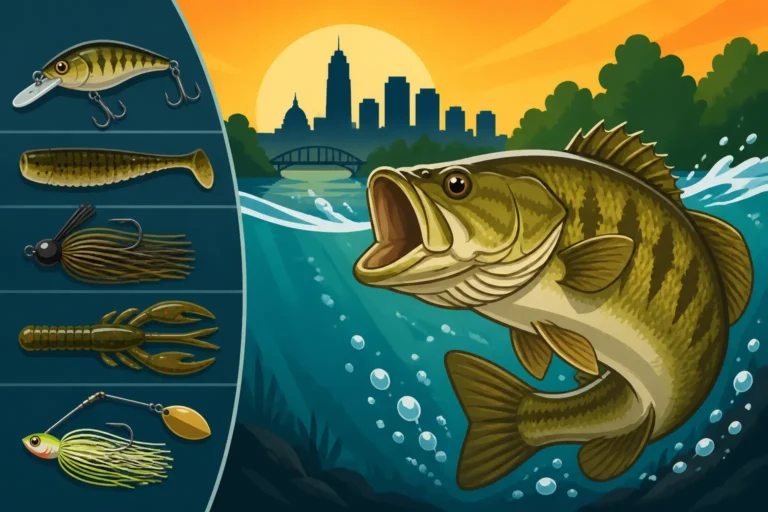
Smallmouth bass are opportunistic feeders, but they have some definite favorites. Mimicking their natural prey, especially crayfish and baitfish, is almost always a winning strategy. Understanding what bait to use and when to use it is a critical piece of the puzzle. Best Bait and Lures for Illinois Smallmouth Bass will offer even more in-depth advice.
Crayfish Imitations: If there's one bait smallmouth absolutely love, it's crayfish. Jigs with a plastic trailer (like a craw imitator) in brown, green pumpkin, or black and blue are deadly. Tubes, especially those jigged along the bottom to mimic a scuttling craw, are also incredibly effective. Weight them appropriately for the depth and current you're fishing. Work these baits slowly, letting them bounce and drag over rocks and gravel.
Jerkbaits and Crankbaits: For aggressive fish, particularly in spring and fall, jerkbaits are phenomenal. Suspending jerkbaits that can be twitched and paused, mimicking a wounded baitfish, often trigger violent strikes. Colors that imitate shad or shiners (silver, chrome, clear with a touch of blue or green) are typically best. Medium-diving crankbaits that bump off rocky bottoms are also very effective, as they cover water quickly and can elicit reaction strikes.
Soft Plastics: The finesse game is strong with smallmouth. Ned rigs, drop shots, and shaky heads rigged with small worms, craws, or minnow imitations are fantastic, especially in clear water or when fish are finicky. These require a lighter touch and slower presentation. Wacky-rigged Senkos or similar stick baits can also be surprisingly effective, slowly fluttering down rocky drop-offs. For topwater action, particularly in low light conditions or when fish are active, poppers, walking baits, and prop baits can be exhilarating. They often draw explosive strikes that get the adrenaline pumping.
Essential Accessories for River Anglers
For those brave souls who prefer to wade Illinois's smallmouth rivers, a few essential accessories will not only make your trip more comfortable but also safer and more productive. It's about being prepared for the elements and having your gear accessible.
First and foremost, waders are almost non-negotiable for river fishing. Breathable chest waders allow you to comfortably access prime water that's unreachable from the bank. Pair them with sturdy wading boots that offer good ankle support and traction on slippery rocks. Felt soles or rubber soles with studs are excellent choices for navigating rocky riverbeds. Investing in a good pair is worth it; cheap waders can lead to cold, wet, and miserable experiences. You can find highly-rated wading gear on Amazon from brands like Simms or Frogg Toggs.
Next, polarized sunglasses are not just for comfort; they're a critical tool. They cut glare off the water, allowing you to see submerged rocks, current breaks, and even cruising fish. This is invaluable for reading the water and identifying prime smallmouth holding areas. A good fishing vest or sling pack is also essential for carrying tackle, a small first-aid kit, and water, keeping your hands free for casting and navigating the current. You'll want easily accessible compartments for your go-to lures and a place to securely hold pliers or a line cutter.
Finally, consider a net with a rubberized mesh. This is gentler on the fish for catch and release and prevents treble hooks from getting tangled. A de-hooking tool is also a smart addition for quickly and safely removing hooks, minimizing stress on the fish. And always remember to carry water and snacks, especially on longer wading trips, as staying hydrated and energized is crucial for a successful and safe day on the water.
Techniques and Strategies for Catching Illinois Smallmouth
Smallmouth bass are incredibly smart and adaptable. This means you need a diverse set of techniques in your arsenal to consistently catch them across different conditions and habitats. It's about knowing when to slow down, when to speed up, and most importantly, how to present your bait naturally.
Finesse Fishing in Clear Water
When you're faced with clear water, calm conditions, or finicky smallmouth, finesse fishing is often the most effective approach. Smallmouth in clear water have excellent eyesight and can be easily spooked by heavy line or unnatural presentations. This is where patience and subtlety pay off big time.
One of the most popular finesse techniques is the Ned rig. This involves a small mushroom-shaped jig head paired with a short, buoyant stick bait (often 2-3 inches). The bait stands straight up off the bottom, imitating a small baitfish feeding or a dying critter. The key is to fish it slowly, dragging it a few inches, pausing, and letting it sit. The subtle action is irresistible to smallmouth. Similarly, a drop shot rig is fantastic for presenting a small plastic worm or minnow imitation suspended above the bottom. This allows the bait to flutter enticingly in the current or with tiny twitches of the rod, without moving far from the strike zone. It's particularly effective when fish are suspended or holding tight to structure.
Another excellent clear water tactic is a wacky rig or Neko rig. These involve hooking a stick bait through its middle, allowing both ends to wiggle and flutter on the fall. Fished weightless or with a small nail weight, they offer a very natural, seductive presentation. For all these finesse techniques, using light fluorocarbon line (6-8 lb test) and a sensitive spinning rod is crucial to detect those almost imperceptible bites. The goal is to make your bait look as natural and non-threatening as possible, allowing the smallmouth to confidently commit to the strike.
Power Fishing for Aggressive Bites
While finesse has its place, there are definitely times when smallmouth are aggressive and willing to chase down a meal. These are the moments for power fishing – techniques that cover water quickly and trigger reaction strikes. This is especially true during the pre-spawn and fall feeding frenzies.
Crankbaits are workhorses for covering water and finding active smallmouth. Medium-diving crankbaits that deflect off rocky bottoms or submerged timber are particularly effective. The erratic action created by bouncing off structure often triggers an instinctual strike. Look for crankbaits that imitate shad, shiners, or crawfish, matching their size and color to the local forage. Retrieving them at a steady pace, with occasional pauses or speed changes, can make a huge difference.
Jerkbaits are another power fishing staple. Suspending jerkbaits, twitched and paused, can be incredibly deadly, especially in cooler water. The key is the "pause" – often, the strike will come when the bait is completely still. Vary your retrieve: long pulls, short twitches, and extended pauses to see what the fish prefer. Spinnerbaits are excellent for covering rocky points and current seams, especially when there's some chop on the water or slightly stained conditions. The flash and vibration can draw smallmouth from a distance, and they can be retrieved quickly without snagging too easily. Pair them with a medium-heavy baitcasting rod and braided line for maximum control and hook-setting power.
Reading the Water: Current, Structure, and Cover
Catching smallmouth is less about blind casting and more about understanding where they live. Smallmouth are creatures of current and structure. Learning to "read the water" for these key elements is probably the most important skill you can develop. It’s all about identifying those high-percentage areas where a smallmouth is likely to be holding, waiting to ambush prey.
In rivers, always look for current breaks. These are areas where the flow of water is interrupted, creating a calmer zone behind an obstacle. This could be a large boulder, a downed tree, a bridge piling, or an eddy where the current actually reverses. Smallmouth will sit in these calmer areas, expending minimal energy, while still having access to food washing down the main current. The "seams" where fast water meets slow water are also prime feeding zones. Why Fishing Rules Vary by Lake and River is an excellent resource to understand the complexities of specific water bodies.
On both rivers and lakes, rocky structure is paramount. Smallmouth love rocks – gravel beds, rock piles, ledges, riprap, and bluffs. These provide cover, ambush points, and are often home to their favorite meal, crayfish. Look for transitions in bottom composition, from sand to rock, or areas where current has scoured out deeper pockets around hard structure. Submerged logs, stumps, and even docks can also serve as effective cover, especially if they are associated with deeper water or current. The more you pay attention to how the water moves and what's beneath the surface, the better you'll become at predicting where the smallmouth are hiding.
Shore Fishing vs. Boat Fishing
Illinois offers fantastic smallmouth opportunities for both shore-bound anglers and those with boats, but the approaches differ. Understanding these differences will help you maximize your success, regardless of your chosen platform.
Shore fishing for smallmouth, especially in rivers, often means wading. This is a highly effective and intimate way to fish, allowing you to quietly sneak up on prime current breaks and rocky riffles. You'll need good waders and wading boots for safety and comfort. When wading, focus on casting upstream and working your bait back down through current seams and eddies. Pay attention to the subtle changes in depth and current flow right in front of you. Often, the best spots are just a few feet from where you're standing. Backpacks or chest vests are great for keeping your essential tackle close at hand. Best Bank Fishing Spots in Illinois provides additional insight into accessible spots.
Boat fishing, whether from a bass boat, jon boat, or kayak, provides access to more water and often deeper, harder-to-reach spots. In rivers, a boat allows you to drift long stretches, targeting numerous current breaks, bridge pilings, and mid-river rock formations. For this, anchoring just upstream of a promising spot or using a trolling motor to hold position is key. On lakes, boats open up access to offshore humps, deep rocky points, and expansive ledges that shore anglers simply can't reach. Using a fish finder to locate schools of baitfish and smallmouth on these deeper structures becomes invaluable. Whether you're in a boat or on the bank, the principles of reading the water remain the same; you just have different tools to get your bait to where the fish are. For kayak anglers, specifically, it’s a wonderful way to quietly explore river stretches and even lake shorelines without the bulk of a larger boat.
Top Illinois Smallmouth Rivers and Lakes
Illinois might not have mountain streams, but our diverse waterways, from vast glacial lakes to winding rivers, provide incredible smallmouth opportunities. Knowing where to go is half the battle; the other half is understanding the unique characteristics of each location.
River Systems: The Heart of Smallmouth Country
When most Illinois anglers think "smallmouth," they think rivers, and for good reason. Our state is blessed with several river systems that provide ideal rocky, current-rich habitat for these bronze bombers.
The Kankakee River stands out as a premier smallmouth destination. Flowing through northeastern Illinois, it offers miles of diverse water, from shallow rocky riffles and rapids to deep pools and undercut banks. The smallmouth here are abundant and aggressive, readily hitting everything from crankbaits to tube jigs. Popular stretches can be found in Kankakee River State Park and further upstream towards Wilmington. Wading is a popular and effective method in many sections, but small boats can also access deeper pools and rapids. Understanding the specific nuances of fishing the Kankakee River Fishing Guide in Illinois can give you a significant edge.
The Rock River, particularly its northern sections, also offers excellent smallmouth fishing. While it's generally wider and slower than the Kankakee, it still features significant rocky areas, dam outflows, and bridge pilings that concentrate fish. Look for areas with current, especially below dams or around man-made structures that create current breaks. The Fox River, especially from Elgin north to the Wisconsin border, is another fantastic option. Its clearer waters and rock/gravel bottom in these upstream sections provide ideal smallmouth habitat. It can be a great place to wade or use a kayak, particularly in quieter stretches. You can get more details on Fox River Fishing Guide in Illinois for specific areas and techniques. These river systems are truly the backbone of Illinois smallmouth fishing.
Lake Michigan's Smallmouth Fishery
When people think of Lake Michigan fishing in Illinois, they often think of salmon and trout, but the smallmouth bass fishery is absolutely world-class and often overlooked. The southern end of Lake Michigan, particularly along the Illinois shoreline from Chicago up to the Wisconsin border, holds some truly giant smallmouth. These fish grow large on an abundant diet of alewives and round gobies.
The key to Lake Michigan smallmouth fishing is understanding its unique structure. Focus on rocky breakwaters, harbor mouths, rock piles, and deep ledges. Shore anglers can have great success casting jigs, drop shots, or even jerkbaits from piers and breakwalls in places like Chicago, Waukegan, and Winthrop Harbor. Lake Michigan Shore Fishing Access Near Chicago, Illinois is an excellent starting point for those looking to fish from shore. Boat anglers can target deeper offshore humps, rock piles, and transition zones where smallmouth congregate, especially during the colder months when they move to deeper water.
The clear, cold water of Lake Michigan means that finesse tactics are often critical, especially with light line and natural colors. However, during aggressive feeding periods, crankbaits and jerkbaits can also be highly effective. The smallmouth in Lake Michigan fight incredibly hard, often using their immense strength to dive deep and head-shake violently. Landing a 4 or 5-pound Lake Michigan smallmouth is a truly memorable experience and a testament to the quality of this overlooked fishery.
Lesser-Known Lake Gems for Smallmouth
Beyond the well-known rivers and Lake Michigan, Illinois also harbors a few lesser-known lake gems that offer fantastic smallmouth opportunities. These are typically clear, deeper lakes with significant rock or gravel components, often in the northern half of the state.
One example is Lake Geneva, which, while straddling the Illinois-Wisconsin border, has accessible parts from Illinois and offers excellent deep-water smallmouth fishing. Its clear water and ample deep structure make it a great place for drop-shotting and jigging. Similarly, some of the larger, deeper glacial lakes in Lake County and McHenry County can hold surprisingly good populations of smallmouth. These lakes often feature rocky shorelines, deep points, and submerged humps that provide ideal habitat.
The key to finding these lake gems is research and exploration. Look for lakes with excellent water clarity, good depth, and a historical presence of rocky bottom. Local bait shops are invaluable resources for current conditions and hot spots. Sometimes, these smaller lakes require a bit more legwork and boat control, but the reward of finding an unpressured smallmouth fishery can be immense. Don't be afraid to try new waters, especially those that might not be on every angler's radar; you might just discover your next favorite smallmouth spot.
Conservation and Regulations for Illinois Smallmouth Bass
As passionate anglers, it's our responsibility to ensure the health and sustainability of Illinois's smallmouth bass populations for future generations. This means understanding and adhering to regulations, practicing responsible catch-and-release, and doing our part to protect their vital habitats.
Understanding Catch and Release
Smallmouth bass are a valuable and often slow-growing game fish, especially the larger specimens. Practicing proper catch and release is paramount for maintaining healthy populations, particularly in rivers where fishing pressure can be significant. The goal is to minimize stress and injury to the fish, giving it the best chance of survival after being caught.
When you land a smallmouth, try to keep it in the water as much as possible. If you must remove it for a quick photo, do so quickly and support its body horizontally. Never hold a large fish vertically by its jaw, as this can damage its internal organs and spine. Use wet hands to handle the fish, as dry hands can remove the protective slime coat, making them vulnerable to disease. If a fish has swallowed the hook deeply, use a de-hooking tool to gently remove it. If removal is not possible without causing further harm, cut the line as close to the hook as you can.
Revive the fish by holding it gently in the water, facing into the current, until it regains its strength and can swim away on its own. Avoid tossing it back into the water forcefully. Education on proper fish handling techniques benefits everyone, ensuring that those magnificent smallmouth we release today can grow bigger and fight another day. It's a small effort that makes a huge difference in the long run.
Illinois Smallmouth Bass Regulations
Fishing in Illinois means being aware of the specific rules and regulations that govern each species and water body. Smallmouth bass are no exception, and their regulations can vary, so it's critical to check the most current Illinois Department of Natural Resources (IDNR) fishing guide before each trip. Illinois Fishing Regulations Overview covers the general aspects you should know.
Generally, statewide regulations apply to smallmouth bass, including minimum length limits and daily creel limits (the number of fish you can keep). However, many specific lakes and river sections in Illinois have their own unique site-specific regulations that supersede the statewide rules. For example, a particular river might have a different slot limit or a specific catch-and-release only period for smallmouth bass. This is often done to protect vulnerable populations or to promote the growth of trophy-sized fish.
It's your responsibility as an angler to know the rules for the specific body of water you're fishing. The IDNR website and their annual fishing guide are your best resources. Not knowing the regulations is not an excuse, and violations can result in fines and other penalties. Always purchase your Illinois Fishing License Guide for 2026 before hitting the water, and carry it with you. Adhering to these regulations is a crucial part of responsible angling and helps ensure that the smallmouth populations remain healthy and thriving for years to come.
Respecting Their Habitat
The quality of our smallmouth bass fishing directly correlates with the health of their habitat. Smallmouth rely on clean, clear water, rocky bottoms, and stable shorelines to thrive. As anglers, we have a vital role in protecting these environments.
This means practicing the "leave no trace" principle. Whatever you pack in, pack out. Don't leave behind fishing line, bait containers, or any other trash. Fishing line, in particular, can be incredibly harmful to wildlife. Be mindful of your impact on riverbanks and shorelines; avoid trampling vegetation unnecessarily. If you're wading, try to minimize stirring up silt and disturbing fish nests.
Beyond direct actions, understanding the broader environmental factors affecting smallmouth habitat is important. Sedimentation, pollution, and habitat degradation from development can severely impact smallmouth populations. Supporting conservation efforts and advocating for clean water policies benefits not only smallmouth bass but the entire aquatic ecosystem. By being responsible stewards of our waterways, we ensure that the challenging and rewarding pursuit of the Illinois smallmouth bass remains a cherished experience for generations to come.
Disclaimer
This article is for general informational purposes only and does not constitute professional advice. Laws, prices and regulations vary by location and change over time. Consult a qualified professional for guidance on your specific situation.