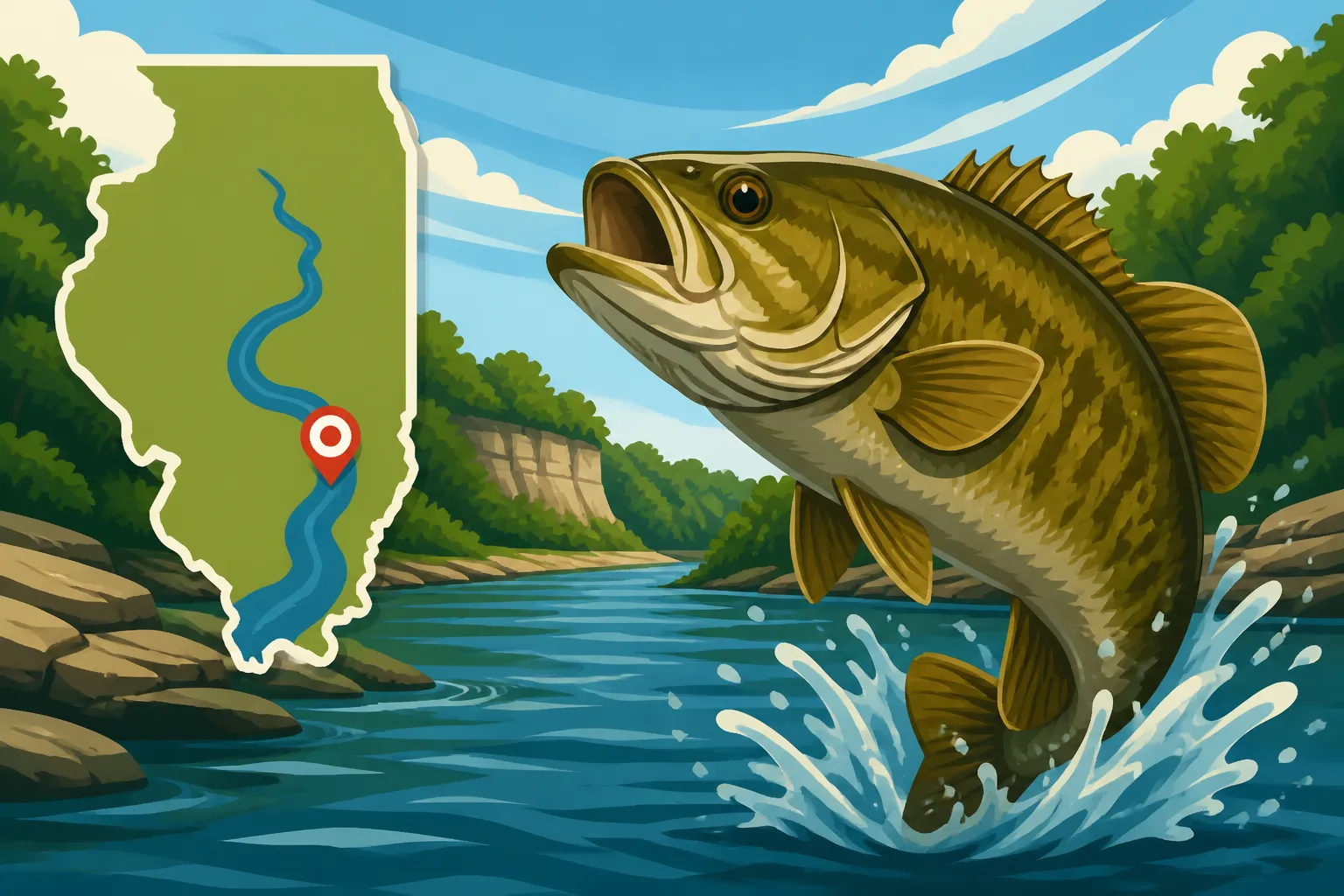
Kankakee River Smallmouth Bass Spots
Finding productive smallmouth bass spots on a dynamic river like the Kankakee can feel like searching for a needle in a haystack, especially with its diverse structure and seasonal changes. This comprehensive guide is designed to cut through the guesswork, offering seasoned insights and pinpointing key locations and techniques to help you consistently land those feisty bronze beauties on the Kankakee River.
Understanding Kankakee River Smallmouth Bass Behavior
The Kankakee River is a gem for smallmouth bass anglers, but understanding these fish is key to consistent success. Smallmouth are not just any bass; they're predators that thrive in specific environments and react strongly to changes in current, water temperature, and available forage. They are notoriously aggressive and put up an incredible fight, making them a highly sought-after species.
Prime Habitat Features for Smallmouth Bass
Smallmouth bass are particular about their living arrangements. On the Kankakee River, you'll typically find them congregating around areas that offer a combination of current breaks, structure, and ample ambush points. Think about sections of the river where the flow is interrupted by natural features or man-made structures. These fish love to tuck in behind large boulders, downed trees, log jams, and bridge pilings, using these features to conserve energy while waiting for prey to drift by. They also have a strong affinity for rocky bottom, gravel beds, and ledges where crayfish, their favorite meal, often reside. When you're scanning the river, look for changes in the riverbed — from soft mud to hard rock – as these transitions often hold fish. The river's varied landscape, from wide, slower sections to narrower, swifter runs, offers a smorgasbord of such micro-habitats.
The river's clear to moderately stained water also plays a role; smallmouth are visual predators, and clearer water allows them to spot their prey more easily. This is why you often find them holding on current seams, where slower, clearer water meets faster, perhaps slightly more turbid water, giving them a distinct advantage. Understanding these preferences helps narrow down your search area considerably, transforming a vast river into a series of predictable holding patterns. The best spots often have deeper pockets nearby, offering refuge during harsher weather or providing a retreat to cooler water during summer heat. These hidden depths, combined with overhead cover or submerged structure, create the perfect smallmouth haven.
Seasonal Movements and Feeding Patterns
Smallmouth bass on the Kankakee River are highly attuned to the seasons, and their movements and feeding patterns shift dramatically throughout the year. In spring, as water temperatures rise, smallmouth begin to shake off their winter lethargy and move into shallower, rocky areas for spawning. This is often an excellent time for anglers, as the fish are aggressive and actively feeding in preparation for the spawn. Once the spawn concludes, they might be a bit lethargic for a short period before resuming their active feeding, often transitioning to slightly deeper, but still structure-rich, areas. This phase is critical for understanding Illinois Bass Spawn Timing Guide and adjusting your approach accordingly.
During the warmer summer months, smallmouth will often move into deeper pools, around submerged logs, or under shady bank overhangs to escape the intense sun and seek out cooler water temperatures. They become more active during low light periods, like dawn and dusk, or on overcast days. Fall sees a resurgence in activity as smallmouth feed heavily to build up reserves for winter, often moving into shallower flats and channel edges, chasing baitfish. This "fall bite" can be incredibly productive, often referred to as a "feeding frenzy" by local anglers. Winter is when they become less active, often holding in deeper, slower pools, requiring a much more subtle approach to entice a bite. Understanding these seasonal shifts, outlined further in the Illinois Fishing Seasons Guide, is paramount to consistently finding and catching smallmouth bass on the Kankakee.
Key Smallmouth Bass Fishing Spots on the Kankakee River
The Kankakee River stretches for miles through Illinois, offering a variety of excellent smallmouth bass habitat. From its winding upper reaches to its more developed lower sections, each stretch presents unique opportunities and challenges for anglers. Knowing which areas consistently produce fish can save you valuable time and effort on the water.
Upstream Hotspots: Wilmington to Kankakee
The stretch of the Kankakee River from Wilmington down to the city of Kankakee is often considered prime smallmouth territory. This section is characterized by a mix of rapids, riffles, and deeper pools, creating an ideal environment for these current-loving fish. The river here often has a significant amount of exposed rock formations, which smallmouth use for cover and ambush points. Public access points like the Des Plaines Fish and Wildlife Area near Wilmington offer fantastic opportunities for wade fishing, especially during lower water levels. Anglers can often find smallmouth holding behind large boulders or in the seams created by the faster currents.
Further downstream, as you approach Kankakee, the river widens in some areas, but still maintains its rocky bottom and scattered structure. The areas around Kankakee River State Park are exceptionally popular. Here, numerous access points allow for bank fishing, wading, or launching smaller boats and kayaks. Look for sections where the river bends sharply, creating deeper outside turns, or where feeder creeks enter the main river, bringing in fresh forage. Bridge abutments and fallen timber are also reliable smallmouth magnets in this zone. The constant flow and diverse structure make it a consistent producer of quality fish throughout the fishing season.
Mid-River Action: Kankakee to Momence
The middle section of the Kankakee River, roughly from the city of Kankakee upriver towards Momence, changes character slightly but remains a powerhouse for smallmouth. Here, the river sometimes becomes a bit wider and, in places, slower, but the rocky bottom and abundant cover persist. This stretch is particularly known for its extensive beds of submerged vegetation, especially during late spring and summer, which can hold impressive numbers of smallmouth. Anglers often find success by targeting the edges of these weed lines or finding pockets within them. The smallmouth here use the weeds for ambush cover, darting out to strike at passing baitfish or crayfish.
Public parks and access sites in communities like Momence and Aroma Park provide convenient entry points. These areas often feature long stretches of wadeable water, provided the current isn't too strong. Focus on any distinct current breaks, such as those created by old bridge pilings or natural rock formations. Additionally, deeper runs and pools adjacent to shallower riffles are always worth exploring, as smallmouth will move between these zones for feeding and resting. If you’re utilizing a kayak or canoe, drifting this section allows you to cover a lot of prime water, hitting structure that might be inaccessible from the bank.
Downstream Challenges and Rewards
While the upper and mid-river sections are often lauded, the downstream areas of the Kankakee River, closer to its confluence with the Des Plaines River, can also offer fantastic smallmouth opportunities, albeit with a slightly different approach. This stretch tends to be wider, deeper, and more influenced by barge traffic and the Des Plaines River's flow. Here, smallmouth might relate more to deeper channel edges, submerged humps, and larger pieces of cover like extensive log jams or industrial structures. The fishing can be a bit more challenging due to the increased water volume and potential for heavier current, making boat or robust kayak fishing often the preferred method.
Access points are still available, particularly around communities like Wilmington and Channahon, offering boat ramps for larger craft. Anglers who venture here often find that while the numbers might not be as high as upstream, the average size of the smallmouth can be impressive. These fish are strong and healthy, often having access to a wider variety of forage in the deeper, more diverse waters. Look for submerged rock piles, deeper eddies, and current breaks around larger structures. This is also a good area to explore if you’re looking for a guided trip, as local experts can navigate these more complex waters effectively. Platforms like FishingBooker can be an excellent resource for finding experienced guides who specialize in the lower Kankakee River, ensuring you make the most of your time.
Essential Techniques and Gear for Kankakee Smallmouth
Catching smallmouth bass on the Kankakee River demands a blend of understanding fish behavior, employing the right techniques, and utilizing appropriate gear. These fish are known for their strong fights and acrobatic leaps, so having your setup dialed in is crucial for both hooking and landing them.
Top Lures and Baits for River Smallmouth
Smallmouth bass on the Kankakee River are opportunistic feeders, but they do have their preferences. When it comes to artificial lures, crayfish imitations are almost always a surefire bet. Jigs with soft plastic trailers that mimic crayfish, such as Ned rigs or football jigs, are incredibly effective when bounced along the rocky bottom. Colors like green pumpkin, brown, or black and blue tend to work well in the river's varied water clarity. Small crankbaits that dive to match the depth of the water you're fishing, particularly those with a tight wobble in natural crayfish or baitfish patterns, can also be deadly when retrieved parallel to current seams or structure.
Beyond crayfish, baitfish imitations like swimbaits, jerkbaits, and spinnerbaits are excellent choices, especially when smallmouth are actively chasing minnows. Topwater lures, such as poppers or walking baits, can provide explosive strikes during low-light conditions or on calm summer evenings, particularly around visible cover. For those who prefer live bait, small minnows, hellgrammites, and, of course, live crayfish are irresistible to Kankakee smallmouth. Presenting these on a simple hook-and-sinker rig or under a bobber can be incredibly effective, especially for beginners or when the bite is tough. For a deeper dive into specific options, check out our guide on the Best Lures for Smallmouth Bass in Spring.
Preferred Fishing Methods: Wading, Kayaking, or Boating
The Kankakee River's diverse character lends itself to various fishing methods, each offering distinct advantages. Wade fishing is incredibly popular and effective in the shallower, rockier upstream and mid-river sections. It allows anglers to move stealthily, pinpoint specific pieces of structure, and present lures with precision. When wading, safety is paramount; always wear appropriate footwear with good grip, use a wading staff for balance, and be aware of current strength and water depth. It’s an intimate way to experience the river, connecting you directly with the environment.
Kayak or canoe fishing provides an excellent balance of mobility and stealth. These smaller craft allow you to access stretches of the river that are too deep to wade but too shallow or obstructed for larger motorboats. You can quietly drift through prime smallmouth habitat, hitting numerous current seams, eddies, and submerged cover. Many of the Kankakee’s best smallmouth areas are perfectly suited for kayak fishing. For those considering this option, our Best Kayak Models for Illinois Fishing guide can help you choose the right vessel.
For the wider, deeper sections, particularly downstream, motorized boats (jon boats, bass boats, or even smaller tiller-steer boats) become more practical. They offer the ability to cover vast distances, carry more gear, and navigate stronger currents. However, even with a motorboat, understanding how to approach structure quietly and maintain boat control in current is key. Each method has its time and place on the Kankakee, and often, anglers will employ a combination of these approaches depending on the specific stretch of river and the season.
Recommended Rods, Reels, and Line
Having the right tackle can make a huge difference when battling a feisty Kankakee River smallmouth. For most smallmouth applications, a medium-light to medium power spinning rod, typically 6'6" to 7' in length, is an excellent all-around choice. This rod action offers enough backbone to handle strong fish in current, while still being sensitive enough to detect subtle bites and accurately cast lighter lures. For those throwing slightly heavier baits or targeting larger fish, a medium-heavy baitcasting setup can also be effective. Our guide on Best Rods for Illinois Largemouth Bass also offers insights that can be applied to smallmouth given their similar fighting characteristics.
Pair your spinning rod with a reliable 2000- to 2500-series reel, spooled with 8-10 pound test braided line. The no-stretch nature of braid offers superior sensitivity and casting distance, which is invaluable on a river. Always tie on a 6-8 pound test fluorocarbon leader of 3-5 feet. Fluorocarbon is nearly invisible underwater, providing a stealthy presentation, and its abrasion resistance is a huge advantage when fishing around rocky bottoms and submerged timber, where smallmouth often hide. For baitcasting setups, you might opt for slightly heavier braid (15-20 lb) with a similar fluorocarbon leader. A good quality reel with a smooth drag system is essential, as Kankakee smallmouth will make powerful runs in the current, and you'll want to be able to tire them out without breaking your line.
Planning Your Kankakee River Smallmouth Bass Trip
A successful fishing trip on the Kankakee River isn't just about knowing where the fish are; it's also about meticulous planning, understanding the river's rhythm, and respecting its rules. Taking the time to prepare properly can significantly enhance your experience and increase your chances of a memorable catch.
Best Times to Fish for Smallmouth
Timing is everything when chasing Kankakee River smallmouth bass. While these fish can be caught year-round, certain periods offer peak action. Spring, particularly from late April through June, is arguably the most productive season. As water temperatures rise into the 50s and 60s Fahrenheit, smallmouth move into shallower areas to spawn and feed aggressively, making them easier to locate and entice. The Spring Bass Fishing Patterns on the Kankakee are well-documented, often coinciding with prolific hatches of insects and crayfish emerging from their winter hideouts.
Fall also provides exceptional fishing, especially from September through October, when smallmouth embark on a feeding frenzy to bulk up for winter. During this time, they often congregate in predictable patterns, making them excellent targets. Summers can be good, but you'll generally find smallmouth moving to deeper, cooler water or becoming more active during low-light hours like dawn and dusk. Overcast days in summer can also provide excellent fishing, as the reduced light penetration makes the fish less wary. Winter fishing is possible but requires a much slower, more deliberate approach, often targeting deeper pools with vertical presentations. Always keep an eye on river levels and clarity, as heavy rains can blow out the river, making fishing tough for a few days.
Navigating Access and Regulations
Before you even wet a line, it's crucial to understand the access points and abide by all Illinois Fishing Regulations Overview. The Kankakee River offers numerous public access areas, including state parks, county parks, and municipal boat ramps. Kankakee River State Park, for example, has multiple access points suitable for bank anglers, waders, and kayak launches. Smaller towns along the river often have local parks with river access. However, some sections are privately owned, so always be mindful of trespassing signs and respect private property. A current Illinois fishing license is mandatory for all anglers 16 years of age and older. You can easily purchase one online through the Illinois Department of Natural Resources (IDNR) website or at various bait and tackle shops.
Beyond the general statewide regulations, the Kankakee River might have specific site-specific rules, especially concerning length limits or catch-and-release zones for certain species. It’s always a good idea to consult the most recent Illinois Fishing Information Guide published by the IDNR. This guide will provide up-to-date information on limits, species regulations, and any special conditions that apply to the Kankakee. Ensuring you’re compliant with all rules not only keeps you out of trouble but also helps preserve the health of the fishery for future generations. Don't forget that if you're planning on using any motorized craft, you'll need to understand Illinois Boater Education Card Requirements as well.
Hiring a Guide or Charter for the Kankakee
For anglers new to the Kankakee River or those looking to maximize their time on the water, hiring a local guide or charter can be an invaluable investment. A professional guide brings years of experience navigating the river's intricacies, understanding seasonal patterns, and knowing exactly where the smallmouth are holding. They can provide all the necessary gear, teach you specific techniques tailored to the Kankakee, and often put you on fish faster than you might find them on your own. This is particularly beneficial if you're targeting specific sections, like the more challenging downstream areas, or if you only have a limited amount of time to fish.
Many experienced guides on the Kankakee specialize in smallmouth bass, offering wade, kayak, or boat trips. They can help you understand the nuances of the river's currents, how to read the water for prime habitat, and the best lure presentations for the day's conditions. If you're coming from out of state or simply want to learn from the best, utilizing platforms like FishingBooker can help you easily find and book highly-rated local guides for the Kankakee River. This can transform a potentially frustrating exploratory trip into a highly educational and productive fishing adventure, significantly increasing your chances of catching quality smallmouth bass.
| Kankakee River Section | Typical Characteristics | Primary Fishing Methods | Target Smallmouth Behavior |
|---|---|---|---|
| Wilmington to Kankakee | Rapids, riffles, rocky bottom, varied depths | Wading, Kayak, Small Boat | Holding behind boulders, current seams, deeper pools |
| Kankakee to Momence | Wider, extensive weed beds, rock & gravel | Wading, Kayak, Canoe | Edges of weed lines, submerged structure, deeper runs |
| Downstream (Lower Kankakee) | Wider, deeper, larger structure, barge traffic | Motorized Boat, Robust Kayak | Deeper channel edges, submerged humps, log jams |
Disclaimer
The information provided in this guide is for general informational purposes only. Fishing conditions, regulations, and access points on the Kankakee River can change frequently. Always consult the latest Illinois Department of Natural Resources (IDNR) regulations and local advisories before heading out. Anglers are responsible for their own safety and for adhering to all applicable laws and regulations.