Illinois Boater Education Card Requirements
Navigating the waters of Illinois, whether you're chasing bass on Lake Shelbyville or enjoying a leisurely cruise on the Chain O'Lakes, comes with a set of responsibilities. One of the most commonly misunderstood, and sometimes frustrating, requirements for many boaters is the Illinois Boater Education Card. It's easy to feel overwhelmed by regulations, especially when you just want to get out on the water, but this guide is here to cut through the confusion and explain exactly who needs this card, why it's important, and how you can easily get yours.
Why Illinois Requires Boater Education: More Than Just a Card
When you think about taking a boating safety course, it might feel like just another hurdle to clear before you can enjoy your time on the water. However, the reasons behind Illinois' boater education requirements go far beyond simply checking a box. These rules are in place to ensure that everyone who operates a motorized vessel has a fundamental understanding of safety, navigation, and environmental responsibility, making our beautiful Illinois waterways safer and more enjoyable for all.
The Human Element: Safety on the Water
Imagine a busy summer weekend on Rend Lake. Boats are everywhere – fishing boats, pontoons, jet skis, pleasure cruisers. Without a common understanding of navigation rules, right-of-way, and how to react in an emergency, this vibrant scene could quickly turn dangerous. Boater education isn't about stifling your fun; it's about equipping you with the knowledge to prevent accidents, react calmly if something goes wrong, and ensure that you, your passengers, and other boaters return home safely. It covers everything from understanding buoys and markers to knowing how to handle your vessel in adverse weather conditions.
Every year, boating accidents occur that could have been prevented with proper education. These incidents often lead to injuries, property damage, and, tragically, sometimes even fatalities. The Illinois Department of Natural Resources (IDNR) implements these education requirements because they recognize that a knowledgeable boater is a safer boater. It's about fostering a culture of preparedness and respect on the water, similar to how we all learn traffic laws before getting behind the wheel of a car. Taking the time to understand these principles means you're contributing to a safer environment for everyone sharing the lake or river.
Protecting Our Natural Resources
Beyond immediate human safety, boater education also plays a critical role in safeguarding Illinois' precious aquatic ecosystems. Our lakes and rivers are fragile, and irresponsible boating practices can have long-lasting negative impacts. The courses often include segments on environmental protection, teaching boaters about the dangers of spreading invasive species, proper waste disposal, and minimizing wake to prevent shoreline erosion.
Consider the threat of invasive species like zebra mussels or Asian carp. These can hitch rides on boats and trailers, spreading from one body of water to another and wreaking havoc on native populations. A boater education course will teach you simple yet effective steps, like cleaning, draining, and drying your boat after each outing, to prevent such spread. It instills a sense of stewardship, reminding us that we are temporary visitors in these natural spaces and have a responsibility to preserve them for future generations. This aspect of the education isn't just a regulatory formality; it's a vital lesson in responsible recreation.
Who Absolutely Needs an Illinois Boater Education Card?
One of the biggest sources of confusion for Illinois boaters often revolves around who actually needs the Boater Education Card. It's not a blanket requirement for everyone, but there are specific criteria that determine if you, or someone you know, must complete the course. Understanding these rules upfront can save you a lot of hassle and potential fines down the road.
The Age Mandate: Born After a Key Date
The most significant factor determining whether you need an Illinois Boater Education Card is your birthdate. If you were born on or after January 1, 1998, and you plan to operate a motor-driven vessel with 10 horsepower or more, you are legally required to possess this card. This rule applies regardless of how experienced you might be or how long you've been around boats. The state has drawn a line in the sand, and anyone on the younger side of that line needs to comply.
Many seasoned boaters, particularly those who have been on the water for decades, sometimes find this requirement a bit puzzling or even frustrating. They might think, "I've been boating since before these rules existed, why do I need a card?" The intent isn't to question your experience but to ensure a consistent baseline of safety knowledge for newer generations of boaters. It creates a standardized level of understanding across the board, reducing ambiguities and promoting predictable behavior on the water. Even if you're an old hand, if your birthdate falls after that cutoff, it's time to get your card. This applies to everyone, whether you're driving a bass boat on the Illinois River or a pontoon on Lake Carlyle. You can find more details on this specific requirement in our guide on Illinois Boater Education Card Age Requirement.
Operating Specific Vessels
The type of vessel you operate is another crucial element in determining if a boater education card is necessary. The rule specifically targets motor-driven vessels with 10 horsepower or more. This means if you're paddling a canoe, kayaking a quiet backwater, or sailing a small dinghy without any auxiliary motor, you generally won't need the card. However, the moment you attach a motor that meets or exceeds the 10 HP threshold, the requirement kicks in, provided your birthdate falls within the mandate.
This applies to a wide range of boats that are popular in Illinois, from bass boats designed for speed and fishing to family-friendly pontoon boats that might have a larger outboard motor. Even personal watercraft (PWCs), often called jet skis, typically fall under this category because they almost always exceed the 10 horsepower limit. The horsepower rating isn't just an arbitrary number; it signifies a vessel with enough power to potentially cause significant harm or damage if not operated responsibly. For instance, if you're headed out to fish for walleye on the Mississippi River in a boat with a powerful outboard, you'll need that card. Our article Illinois Boater Education Card Requirement for Motors Over 10 HP offers further insight into this specific horsepower stipulation.
When a Boater Education Card is Not Required
It's just as important to understand when you don't need a boater education card, to avoid unnecessary effort or confusion. As mentioned, if you operate a non-motorized vessel, such as a kayak, canoe, rowboat, or a sailboat under sail power only, you are generally exempt from this requirement. The same goes for motorboats with engines under 10 horsepower. So, if you've got a little electric trolling motor on your jon boat for fishing bluegill in a quiet pond, you likely won't need a card, assuming the main engine is also under 10 HP or you don't have one at all.
Another key exemption applies to individuals who are operating a motorboat solely on private property, like a small, privately-owned pond where the public doesn't have access. However, this is a very narrow exception, and most of Illinois' popular fishing and recreational spots are public waters where the rules apply. Lastly, if you were born before January 1, 1998, you are not required to have the card, regardless of the vessel's horsepower. While not legally mandated for these groups, taking a safety course is always a good idea for anyone operating a boat. For more details on different boat types and registration, check out Illinois Boat Registration for Trolling Motors and Sailboats.
Understanding the Illinois Boater Education Course
Once you've determined that you need a boater education card, the next step is understanding what the course entails. It's more than just memorizing facts; it's about building a solid foundation of knowledge that will serve you well every time you hit the water. These courses are designed to be comprehensive, ensuring that graduates are well-prepared for a variety of situations.
What the Course Covers: Beyond the Basics
The Illinois Boater Education Course, typically approved by the IDNR and often recognized by the U.S. Coast Guard, is far from a simple quiz. It dives deep into critical topics that are essential for safe and responsible boating. You'll learn the "rules of the road" on the water, which include navigation laws, right-of-way protocols, and understanding marine aids to navigation like buoys and markers. Knowing whether to pass port-to-port or starboard-to-starboard can literally prevent a collision, especially on crowded waterways like the Fox River or Lake Michigan.
Beyond collision avoidance, the course covers important aspects of boat operation and maintenance, such as proper docking and anchoring techniques, understanding your boat's capacity and limitations, and basic engine care. You'll also learn about emergency procedures, like what to do in case of a fire, capsizing, or a person overboard situation, including basic first aid and distress signals. A significant portion is dedicated to personal safety equipment, particularly the proper use and storage of life jackets and other personal flotation devices. Our guide on Illinois Life Jacket and PFD Rules provides excellent supplementary information on this crucial topic. These lessons equip you with practical skills and knowledge that are directly applicable to real-world boating scenarios, rather than just abstract theories.
Online vs. In-Person Learning Options
Illinois offers flexibility when it comes to completing your boater education. You can choose between traditional in-person classroom courses or convenient online options. Each method has its own advantages, allowing you to select what best fits your learning style and schedule.
In-person courses are often conducted by experienced instructors, sometimes through local park districts, community colleges, or sporting goods stores like Bass Pro Shops. These classes typically involve lectures, group discussions, and sometimes even hands-on demonstrations. The benefit here is the direct interaction with instructors who can answer your specific questions, share real-world anecdotes, and clarify complex topics on the spot. It's a great option if you prefer a structured learning environment and enjoy engaging with others who share an interest in boating. However, these courses require you to adhere to a fixed schedule and location, which might not work for everyone's busy life.
Online courses, on the other hand, offer unparalleled flexibility. You can complete the material at your own pace, from the comfort of your home, and fit it around your work, family, and other commitments. These courses are typically self-guided, using interactive modules, videos, and quizzes to teach the material. Many reputable providers offer online courses that are approved by the IDNR. While you lose the direct, in-person interaction, the convenience factor is immense. You can often pause, review sections, and retake quizzes until you feel confident. Just make sure to choose an IDNR-approved provider to ensure your certification is valid. Many course materials and study guides can even be found on online retail platforms like Amazon, offering additional resources to aid your learning.
The Final Exam and Certification
Regardless of whether you choose an online or in-person course, all approved boater education programs culminate in a final exam. This exam is designed to test your understanding of the material covered throughout the course, ensuring you've grasped the essential knowledge for safe boating. Don't worry, it's not meant to trick you; it's a fair assessment of your learning.
For online courses, the exam is typically administered digitally and graded automatically. You'll usually need to achieve a certain passing score to complete the certification. If you don't pass on your first attempt, most providers allow for retakes, giving you the opportunity to review the material and try again. For in-person courses, the exam might be a written test, and the instructor will typically review it with you. Once you successfully pass the final exam, you will receive your official Illinois Boater Education Card. This card is your proof of compliance and should be carried with you whenever you operate a motor-driven vessel that requires it. The process for receiving the card can vary slightly between providers, but generally, it will be mailed to you, or you might be able to print a temporary certificate immediately.
Getting Your Boater Education Card: A Step-by-Step Guide
Securing your Illinois Boater Education Card doesn't have to be a complicated process. With a clear understanding of the steps involved, you can navigate the requirements smoothly and be ready to enjoy Illinois' beautiful waters responsibly.
Choosing the Right Course Provider
The first crucial step is selecting an approved boater education course. In Illinois, the Department of Natural Resources (IDNR) oversees and approves these programs. It’s absolutely essential to ensure that any course you choose is officially recognized by the IDNR; otherwise, your efforts won't count towards fulfilling the state's requirement. There are several reputable organizations and platforms that offer these courses.
You'll find options from national providers that specialize in boater safety, many of which are designed to be completed online for maximum convenience. Local community colleges, park districts, and even some recreational centers might also offer in-person courses at various times of the year. If you prefer a classroom setting, these local options can be great for direct instruction and peer interaction. While comparing options, you might notice that costs can vary. Our article on Boater Education Course Costs in Illinois can give you a general idea of what to expect, but remember to always check with the specific provider for their current fees and schedule. Researching a few options will help you find a course that fits your budget, learning style, and schedule, ensuring you get the most out of your safety education.
Enrollment and Course Completion
Once you've chosen an IDNR-approved provider, the enrollment process is typically straightforward. For online courses, you'll usually register through their website, create an account, and pay the course fee. You'll then gain access to the course modules, which are structured to guide you through all the necessary topics at your own pace. These modules often include interactive elements, videos, and practice quizzes to reinforce your learning. It's a great way to learn if you have a busy schedule, as you can log in and out as needed, picking up right where you left off.
If you opt for an in-person class, you'll register directly with the organizing institution. This usually involves signing up for a specific class schedule that might run over a few evenings or a weekend. You'll attend the sessions, participate in discussions, and work through the material presented by the instructor. Regardless of the format, dedication to completing all modules or attending all sessions is key. Take notes, ask questions, and make sure you truly understand the concepts rather than just rushing through to the end. The goal is not just to get the card, but to absorb the knowledge that will make you a safer boater for years to come.
Receiving Your Official Card
After you've successfully completed all the course material and passed the final exam, the provider will process your certification. For online courses, this often means that upon passing the final test, you'll immediately receive a printable temporary certificate. This temporary document allows you to legally operate your vessel while you await your official, physical Boater Education Card to arrive in the mail. This waiting period can vary, so it's a good idea to complete your course well in advance of your first planned outing of the season.
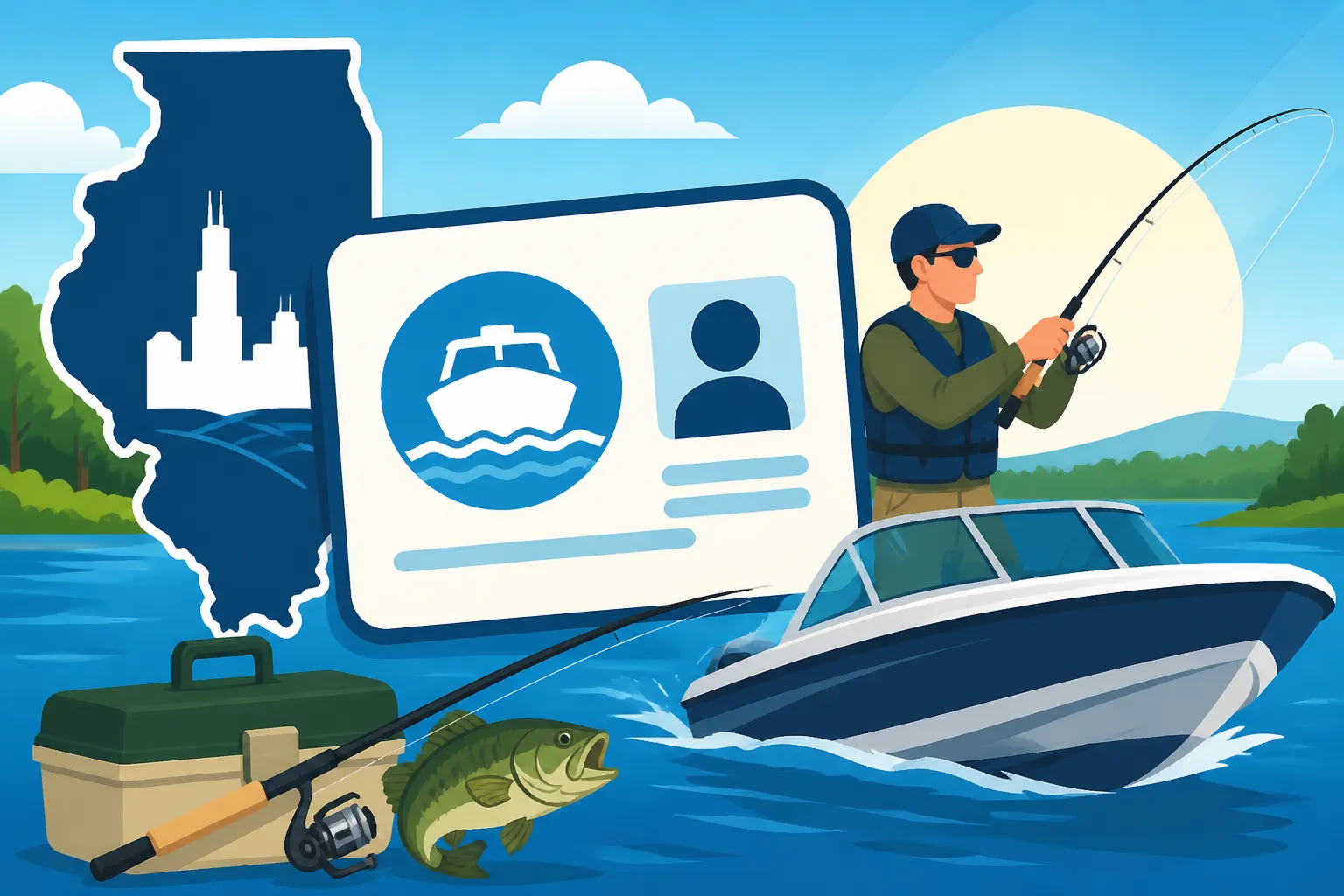
The permanent card is usually a durable, wallet-sized card issued by the Illinois Department of Natural Resources or a state-approved vendor. It will typically include your name, a unique certification number, and often your birthdate. This card serves as undeniable proof that you have met Illinois' boater education requirements. It’s imperative to keep this card with you, along with your Illinois Fishing License Guide for 2026 if you're fishing, whenever you're operating a boat where the card is required. Conservation officers conduct routine checks on the water, and having your card readily available will ensure a smooth interaction and prevent any potential issues.
Reciprocity and Out-of-State Boaters in Illinois
Illinois is a popular destination for anglers and recreational boaters from neighboring states and beyond. Whether you're coming from Wisconsin to fish Lake Michigan or crossing from Missouri on the Mississippi River, it's common to wonder if your home state's boating education credentials will be recognized here. The good news is that Illinois generally practices reciprocity, meaning a valid certificate from another state or approved organization is usually sufficient.
Recognized Out-of-State Certifications
If you've already completed a boater education course and received a certification card from another state, there's a good chance it will be honored in Illinois. Illinois recognizes boater education certificates issued by other states, U.S. territories, or by the U.S. Coast Guard Auxiliary and U.S. Power Squadrons, provided these courses meet the minimum requirements set by the National Association of State Boating Law Administrators (NASBLA). Most states adhere to these standards, making your existing card broadly accepted.
This reciprocity is a huge relief for visiting boaters, as it prevents the need to take a second, redundant course just to enjoy Illinois' waters. For instance, an angler from Iowa who has a valid Iowa boating education card can typically operate a motorboat on shared waters like the Mississippi River in Illinois without needing to acquire an Illinois-specific card. The key is that your out-of-state card must be valid and verifiable. Always carry it with you when boating in Illinois, just as you would in your home state, to present to a conservation officer if requested. For information on cross-state fishing rules, you might find our guide on Illinois Fishing License Reciprocity With Missouri helpful.
What if You Don't Have a Card from Another State?
While reciprocity is generally the rule, there might be situations where a visiting boater doesn't have an equivalent certification. Perhaps your home state doesn't have a similar age or horsepower requirement, or you simply haven't gotten around to taking a course yet. In such cases, if you meet Illinois' specific requirements – meaning you were born on or after January 1, 1998, and plan to operate a motor-driven vessel with 10 horsepower or more – you will need to comply with Illinois' regulations.
For a short visit, taking a full Illinois-approved boater education course might not be practical. However, if you plan to frequently boat in Illinois, or if your visit is extended, completing an online IDNR-approved course is often the most convenient solution. These courses are flexible and can typically be completed in a relatively short amount of time from anywhere with internet access. Always double-check Illinois' current regulations before your trip to avoid any surprises, as laws can occasionally change. The goal is safe boating for everyone, regardless of where your boat is registered or where you call home.
Penalties for Non-Compliance: Don't Risk It!
It’s easy to think that regulations are just suggestions or that you might slip under the radar, but when it comes to boater education in Illinois, non-compliance can lead to serious consequences. Conservation Police Officers are regularly patrolling Illinois waters, and they are well-versed in the laws. Ignoring the requirements can turn a pleasant day on the water into a frustrating and costly experience.
The Cost of Forgetting Your Card
Operating a motor-driven vessel with 10 horsepower or more, if you fall under the age mandate (born on or after January 1, 1998) without carrying your Boater Education Card, is a violation of Illinois law. The immediate consequence will likely be a citation. While I cannot provide specific fine amounts, these tickets can involve a significant financial penalty. It's not a trivial parking ticket; it's a legal offense that reflects the state's commitment to boating safety.
Beyond the immediate fine, receiving a citation can also mean valuable time lost on the water. Conservation officers may require you to cease operating the vessel until a properly certified operator can take over, potentially ruining your outing. Imagine being stopped on Lake of Egypt, enjoying a fishing trip, only to have your day cut short because you forgot your card. It's an easily avoidable headache. The hassle of dealing with the court system, paying the fine, and potentially impacting your boating record far outweighs the relatively simple process of taking the course and carrying your card. Remember, game wardens are there to enforce these rules to keep everyone safe. Our article on What Happens If You Fish Without a License in Illinois? gives a good overview of similar penalty structures, highlighting the state's seriousness about compliance.
Safety Implications of Uneducated Boating
The true "cost" of non-compliance isn't just financial; it's also a significant risk to safety. The boater education course covers vital information that can literally be the difference between a safe trip and a catastrophic accident. Without this knowledge, you might be unaware of basic navigation rules, how to respond to an emergency, or the proper use of safety equipment. This lack of understanding can put yourself, your passengers, and other boaters in grave danger.
Consider a scenario where you're approaching a channel marker but don't understand its meaning, or you're caught in a sudden storm without knowing how to properly secure your vessel or navigate back to shore. These are real-world situations covered extensively in boater education courses. By operating a boat without the required education, you're not just breaking a rule; you're actively increasing the risk of an accident. The state mandates this education because it has seen the consequences of unprepared operators, and they are working to mitigate those risks for everyone on the water. Taking the course is an investment in your safety and the safety of those around you.
How Game Wardens Check for Compliance
Illinois Conservation Police Officers have the authority to stop boats on public waters to conduct safety checks and verify compliance with state regulations, including boater education requirements. These checks are a routine part of their duties and are not necessarily indicative of wrongdoing. They often patrol popular areas like Carlyle Lake or the Chain O'Lakes, especially on busy weekends.
When an officer stops your boat, they typically request to see your documentation, which can include your boat registration, fishing license, and, if applicable, your Boater Education Card. They may also check for required safety equipment like life jackets, fire extinguishers, and throwable flotation devices. Having all your paperwork in order and readily accessible will make the stop quick and stress-free. If you cannot produce your Boater Education Card when required, you will likely face a citation. It’s important to remember that these officers are trained professionals, and interacting with them respectfully and cooperatively will always lead to the best outcome. They are on the water to ensure everyone's safety and the protection of natural resources, and checking for proper certification is a key part of that mission. Our Illinois Boating Safety Equipment Checklist provides a comprehensive list of what else they might be looking for.
Common Misconceptions and FAQs
Even with clear rules, boater education requirements often generate a lot of questions and sometimes persistent misconceptions. Let's tackle some of the most common ones to ensure you have all the facts straight before you launch your boat.
"I'm Just Trolling, Do I Need It?"
This is a very common question, especially among anglers who might use a small motor for quiet trolling to catch crappie or walleye. The key factor here isn't how you're using the motor, but its horsepower and your birthdate. If your motor is 10 horsepower or more, and you were born on or after January 1, 1998, then yes, you need the Boater Education Card, even if you're just trolling slowly.
The law focuses on the potential power of the vessel, not the specific maneuver it's performing. A 10 HP motor can still propel a boat at a reasonable speed and poses the same potential risks in terms of navigation and safety as a boat traveling at higher speeds. So, whether you're cruising at full throttle or just slowly working a weed line, the requirement stands. If you have a small electric trolling motor that's typically under 10 HP and no other gas engine, you're likely exempt. But if you have a larger outboard and are just idling, the rule still applies. Our article, Do Trolling Motor Boats Need to Be Registered in Illinois?, goes into further detail about different motor types and their regulations.
"My Child is Driving, Do They Need It?"
This question often comes up when families are introducing younger members to boating. The short answer is yes, if the child meets the age and horsepower criteria. In Illinois, if a person born on or after January 1, 1998, is operating a motorboat with 10 horsepower or more, they are required to have the Boater Education Card. There isn't an exemption for being a minor; the responsibility lies with the operator.
While there are minimum age limits for operating certain vessels (e.g., typically 10 years old to operate a motorboat alone, and anyone under 12 must be accompanied by an adult, though specific ages can vary by vessel type), if they're old enough to operate the boat and fall within the birthdate mandate, they need the card. This is about ensuring that even young operators have a foundational understanding of safety. It's a great way to instill good habits early on, creating responsible boaters for life. Many parents even take the course with their children to reinforce the lessons and set a good example.
"I've Been Boating for Years, Why Now?"
This sentiment is completely understandable, especially for seasoned boaters who've spent countless hours on Illinois' rivers and lakes. If you were born before January 1, 1998, you are not legally required to obtain the Boater Education Card, regardless of your vessel's horsepower. The "why now" for those who do need it relates to the state's ongoing efforts to enhance safety and standardize knowledge among new generations of boaters.
For those born before the cutoff, your years of experience are recognized. The law essentially grandfathers in older, experienced operators. However, even if you're exempt, periodically reviewing boating safety guidelines, perhaps through resources like those found on Bass Pro Shops' safety pages or informational websites, is always a wise idea. Regulations and best practices can evolve, and staying informed ensures you're always operating your vessel with the highest level of safety and awareness. The goal is a safer environment for everyone, and continuous learning benefits us all.
Here's a quick reference table to help clarify common scenarios:
| Scenario | Birthdate on/after Jan 1, 1998 | Motor HP 10 or more | Boater Ed Card Required? |
|---|---|---|---|
| Operating a Bass Boat | Yes | Yes | Yes |
| Operating a Pontoon Boat | Yes | Yes | Yes |
| Operating a PWC (Jet Ski) | Yes | Yes | Yes |
| Operating a Small Fishing Boat (e.g., Jon boat with 5 HP motor) | Yes | No | No |
| Paddling a Canoe or Kayak (no motor) | Yes | No | No |
| Operating a Sailboat (sail power only) | Yes | No | No |
| Operating any motorboat | No | Yes/No | No |
| Operating a Boat on a Private Pond (no public access) | Yes | Yes | No (Narrow Exception) |
| Operating a Trolling Motor (as primary propulsion, usually < 10 HP) | Yes | No | No |
Disclaimer
This article is for general informational purposes only and does not constitute professional advice. Laws, prices and regulations vary by location and change over time. Consult a qualified professional for guidance on your specific situation.