Illinois Boater Education Card Age Requirement
Navigating the rules and regulations for boating in Illinois can feel a bit like trying to read a tide chart in the dark – confusing, overwhelming, and potentially leading you astray if you're not careful. Many anglers just want to get out on the water, whether it's a quiet morning on a small lake or a lively afternoon on the Mississippi River, but they're often left scratching their heads wondering exactly what kind of permits and certifications they need. This guide is here to shed some much-needed light on one of the most common questions: the Illinois Boater Education Card age requirement, breaking down who needs it, why it matters, and how to make sure you're legally good to go before you even cast a line.
Understanding Illinois' Boater Education Mandate
The state of Illinois takes boating safety very seriously, and for good reason. Our beautiful lakes and rivers, from the sprawling waters of Carlyle Lake to the winding Illinois River, see countless boats every year. With so many people enjoying these waters, ensuring that everyone operates their vessel safely is paramount. This isn't just about avoiding fines; it's about preventing accidents, protecting our natural resources, and making sure everyone has an enjoyable time on the water.
Who Needs a Boater Education Card in Illinois?
This is usually the first question on everyone's mind, and it's a critical one. Illinois law is quite specific about who needs a Boater Education Card. Generally, if you were born on or after January 1, 1998, and plan to operate a motorboat with 10 horsepower or more, you're going to need this card. This includes everything from a small fishing boat with a modest outboard to a powerful bass boat, and even personal watercraft (PWCs) like jet skis. It doesn't matter if you're a resident or a visitor; if you meet these criteria and want to pilot a motor-driven vessel on Illinois public waters, the card is a must. The intent here is clear: newer generations of boaters need to be formally educated on safety rules before taking the helm.
Imagine a beautiful summer day on Lake Shelbyville, and you're ready to take your new boat out. If you're a younger angler, say 25 years old, and your boat has a 25 HP motor, pulling away from the dock without that education card could quickly lead to an interaction with a conservation police officer. It's not worth the risk, both for your wallet and for the safety of yourself and others. This requirement helps ensure a baseline level of knowledge across a significant portion of the boating population, contributing to a safer environment for everyone from kayakers to competitive anglers.
Why Illinois Requires Boater Education
The reasoning behind mandating boater education is quite straightforward: safety, responsibility, and conservation. Boating, while incredibly fun and relaxing, carries inherent risks. A lack of understanding of navigation rules, proper equipment, emergency procedures, or even basic weather awareness can turn a pleasant outing into a dangerous situation. The Boater Education Card program is designed to instill this fundamental knowledge. It teaches boaters about things like right-of-way rules, proper lookout procedures, how to respond to emergencies, and the importance of having proper safety gear on board. Illinois Boater Education Card Requirements go into more detail on the specifics of this mandate.
Beyond personal safety, there's a strong emphasis on responsible boating. This includes understanding the impact of your vessel on wildlife and sensitive habitats, knowing how to properly dispose of waste, and recognizing the dangers of operating a boat under the influence. It also touches on how to be courteous to other water users, whether they're swimmers, paddlers, or other boaters. Finally, education helps foster a sense of stewardship for Illinois's precious aquatic ecosystems. By learning proper boat handling and environmental awareness, boaters become active participants in protecting the very waters they enjoy.
What the Illinois Boater Education Card Proves
Your Boater Education Card isn't just a piece of plastic or a digital file; it's tangible proof that you've invested time and effort into understanding safe boating practices. It demonstrates to law enforcement that you've successfully completed an approved course covering essential topics, proving you have a foundational knowledge of Illinois boating laws and safety procedures. Think of it like a driver's license for the water – it indicates you've been tested and deemed competent to operate a vehicle responsibly.
When a conservation police officer asks for your boating credentials, presenting this card confirms you're aware of things like speed limits in no-wake zones, the necessity of personal flotation devices, and the protocols for navigating busy channels. It signals that you know how to react in an unexpected situation, like encountering severe weather or another boat in distress. This foundational understanding is crucial for preventing accidents and ensuring that our waterways remain enjoyable and safe for all. Without it, you could be sailing into uncharted waters regarding legal compliance, which nobody wants.
Specific Age Requirements for Illinois Boaters
The age requirements in Illinois for operating a motorboat can be a bit nuanced, and it's definitely not a "one size fits all" situation. Depending on your age and the horsepower of the boat you're operating, the rules change significantly. It's essential to know these distinctions to avoid any legal troubles and, more importantly, to ensure safety on the water.
The "Born After 1998" Rule Explained
This is the golden rule that catches many new or younger boaters. If you were born on or after January 1, 1998, and you wish to operate a motorboat with an engine of 10 horsepower or more on Illinois waters, you are legally required to possess an Illinois Boater Education Card. This rule was implemented to ensure that a significant portion of new boaters receive formal safety training. It doesn't matter if you're a seasoned angler who's been around boats your whole life; if your birthdate falls into this category, the card is non-negotiable for operating anything over that 10 HP threshold.
For example, a 20-year-old taking their dad's 15 HP fishing boat out on Rend Lake needs this card, even if their dad, born in 1970, does not. This generational cut-off aims to create a more uniformly educated boating population as time goes on. It's a proactive measure to enhance safety, reduce accidents, and ensure that those who are newer to independent boat operation have a solid understanding of the rules of the road – or, rather, the rules of the water.
Operating a Motorboat Under Age 10: Strict Limitations
Children under the age of 10 face very strict limitations when it comes to operating motorboats in Illinois. Simply put, they are generally not allowed to operate any motorboat with a 10 horsepower engine or greater, regardless of supervision. Even for boats with smaller engines (less than 10 HP), they must be under the direct on-board supervision of a parent, guardian, or an adult at least 18 years of age. This ensures that a responsible, knowledgeable adult is always present to guide and intervene if necessary.
This rule emphasizes the inherent dangers and responsibilities that come with operating a motorized vessel. A small child, even with the best intentions, may lack the physical strength, judgment, or quick reaction time needed to safely handle a boat in varying conditions, especially if an unexpected situation arises. The priority here is the child's safety and the safety of everyone else on the water. This also means that for younger children, any fishing trip involving a boat with an engine requires active adult supervision and a clear understanding of Illinois Life Jacket Rules for Children Under 13, which are also very stringent.
Boaters Ages 10 to 12: Supervised Operation
Once a child reaches their 10th birthday, the rules relax slightly, but supervision remains a key component. A person who is 10 or 11 years old may operate a motorboat with 10 horsepower or more, but only if they are under the direct on-board supervision of a parent, guardian, or an adult at least 18 years of age. This adult must also hold an Illinois Boater Education Card if they themselves fall under the "born after 1998" requirement.
This age bracket is often a fantastic time for kids to start learning the ropes of boat operation under a watchful eye. It's a chance to teach them about the nuances of steering, throttle control, and situational awareness in a controlled environment. However, the child themselves is not required to have the Boater Education Card at this stage; the adult supervisor is responsible for ensuring safe operation and compliance with all laws. It's a progressive learning stage designed to build confidence and skills before they're allowed to go solo.
Boaters Ages 12 to 18: Unsupervised Operation with Card
This is where the Boater Education Card truly comes into play for younger operators. If you are 12 to 17 years old, you may operate a motorboat with 10 horsepower or more, but only if you have successfully completed an approved boating safety course and possess your Illinois Boater Education Card. Without this card, you cannot legally operate such a vessel, even with adult supervision, if the adult isn't taking direct control.
This age group represents a crucial transition from supervised learning to independent operation. The state requires formal education to ensure that these young boaters have a comprehensive understanding of safety rules, navigation, and emergency procedures before they're given the responsibility of operating a motorboat by themselves. This also covers personal watercraft. Imagine a teenager excited to take friends out on a PWC on Lake Michigan; they absolutely need that card in hand. This rule is designed to empower young boaters with knowledge, making them safer operators and more responsible stewards of Illinois's waterways.
Here's a quick summary of the age and horsepower requirements for operating motorboats in Illinois:
| Age of Operator | Motorboat Horsepower (HP) | Boater Education Card Required? | Supervision Required? | Notes |
|---|---|---|---|---|
| Under 10 | Less than 10 HP | No | Yes, by 18+ adult | Cannot operate 10 HP or more. |
| Under 10 | 10 HP or more | N/A | N/A | Cannot operate. |
| 10-11 | Less than 10 HP | No | Yes, by 18+ adult | Adult needs card if "born after 1998". |
| 10-11 | 10 HP or more | No | Yes, by 18+ adult | Adult needs card if "born after 1998". |
| 12-17 | Less than 10 HP | No | No | Adult needs card if "born after 1998" to supervise. |
| 12-17 | 10 HP or more | Yes | No (can operate solo) | Must have card. |
| 18 and older | Less than 10 HP | No | No | |
| 18 and older | 10 HP or more | Yes (if born after Jan 1, 1998) | No |
Obtaining Your Illinois Boater Education Card
Getting your Illinois Boater Education Card isn't a complex process, but it does require dedication to learning the material. The state wants to make it accessible while still ensuring that you gain the necessary knowledge to be a safe boater. Thankfully, there are options to fit different learning styles and schedules.
Steps to Complete an Approved Boater Safety Course
The first step is enrolling in an approved boater safety course. Illinois offers several avenues for this, primarily through online courses or in-person classroom sessions. Many people find the flexibility of online courses appealing, allowing them to learn at their own pace from the comfort of their home. Providers like BoatEd or BoaterExam.com offer state-approved online curricula that cover everything from navigation rules to emergency preparedness. These courses are designed to be interactive, with modules and quizzes to reinforce your learning. You can usually access these directly from the Illinois Department of Natural Resources (IDNR) website or search for "Illinois boater safety course" on a platform like Amazon for study guides or directly on boating education provider sites.
Alternatively, if you prefer a more traditional learning environment, various organizations and local community groups often host in-person courses. These classroom settings provide opportunities for direct interaction with instructors and other students, which some find more engaging. You might find these courses offered through local park districts, marine dealers, or even some chapters of the U.S. Coast Guard Auxiliary or the U.S. Power Squadrons. Whichever method you choose, ensure the course is officially approved by the Illinois Department of Natural Resources (IDNR) to ensure your certification will be valid. Boater Education Course Costs in Illinois will give you a better idea of what to expect for fees.
What to Expect During the Boater Education Exam
After completing your boater safety course, whether online or in person, the final hurdle is passing the comprehensive exam. This test is designed to assess your understanding of the material covered throughout the course. You can expect questions on a wide range of topics, including basic navigation rules, buoy systems, safe operating practices (like maintaining a safe speed and avoiding reckless operation), state and federal boating laws, emergency procedures (what to do in case of capsizing, fire, or a person overboard), required safety equipment like Illinois Life Jacket and PFD Rules, and environmental responsibilities.
The exam typically consists of multiple-choice questions. For online courses, the exam is usually administered digitally at the end of the modules, with a specific passing score required. For in-person courses, the exam will be given by your instructor. Don't worry too much about it if you've paid attention during the course; the material is presented in an understandable way, and the exam simply confirms your comprehension. Many online providers allow you to retake the exam if you don't pass on your first attempt, giving you another chance to solidify your knowledge.
Receiving and Carrying Your Boater Education Card
Once you've successfully passed the exam, the process of receiving your Boater Education Card will vary slightly depending on whether you took an online or in-person course. For online courses, you'll usually be able to print a temporary certificate immediately. The official, durable card is then typically mailed to you within a few weeks. If you completed an in-person course, your instructor will guide you through the process, which often involves submitting your exam results to the IDNR, and your card will then be mailed to you.
It is absolutely crucial to carry proof of your Boater Education Card whenever you are operating a motorboat with 10 HP or more and fall under the age requirement. This means having the physical card with you, or at the very least, a clear digital copy on your phone or another device. Conservation police officers frequently patrol Illinois waterways, and they have the authority to stop and inspect vessels for proper registration, safety equipment, and operator credentials. Being unable to produce your card when asked could result in a citation, so always make sure it's accessible and valid.
Exemptions and Special Cases to Boater Education
While the "born after 1998" rule and the 10 HP threshold cover most scenarios, like any good set of regulations, there are a few specific exemptions and special cases that are worth understanding. Knowing these can save you unnecessary stress or, conversely, ensure you're not inadvertently breaking the law.
When You Might Not Need the Card
There are a few situations where an Illinois Boater Education Card is generally not required, even if you were born after 1998. The most common exemption is for operators of boats with motors under 10 horsepower. If your small fishing boat or kayak has an electric trolling motor or a very small gas outboard (e.g., a 7.5 HP motor), you usually won't need the card, regardless of your age. This is often a popular choice for anglers who prefer quiet waters or smaller ponds, and it's a great option for kids learning the basics of boat handling. Illinois Boater Education Card for a 10 HP Motor provides further details on this specific exemption.
Another exemption applies to those operating non-motorized vessels, such as canoes, kayaks, or stand-up paddleboards, which naturally don't have a horsepower rating. Additionally, if you're operating a boat on a private lake where public access is restricted, state boating laws regarding education cards may not apply, though it's always wise to check with the private lake's specific rules. Finally, if you're directly participating in an officially sanctioned regatta, race, or exhibition, temporary exemptions may be in place, but this is a niche scenario for most recreational anglers.
Out-of-State Boaters and Reciprocity
If you're visiting Illinois from another state and plan to operate a motorboat on our waters, you might be wondering if your home state's boating safety certification is valid here. The good news is that Illinois generally extends reciprocity to out-of-state boaters. This means that if you possess a valid boater education certificate or card issued by another state, and that certificate meets the requirements of your home state, it will typically be recognized as valid in Illinois.
This is a huge relief for many traveling anglers or those who live near state borders and frequently cross into Illinois to fish. For example, if you live in Wisconsin and have a Wisconsin boating safety certificate, you generally won't need to get an additional Illinois card to fish Lake Michigan off the Illinois shore or other Illinois waterways. However, it's always a good idea to carry your physical card with you, as well as a government-issued ID, to easily demonstrate compliance if questioned by law enforcement. Just like with Illinois Fishing License Reciprocity With Wisconsin, the goal is to facilitate enjoyment of shared resources without undue burden, while still ensuring safety standards are met.
Understanding How HP Limits Affect Requirements
The 10 horsepower (HP) threshold is a critical differentiator in Illinois boating regulations. As we've discussed, if you're born after January 1, 1998, and operate a motorboat, the need for a Boater Education Card hinges on whether that motor is 10 HP or greater. This specific power limit is chosen because motors of 10 HP and above are generally capable of higher speeds and can exert more force, thus requiring a higher level of operational skill and knowledge to ensure safety.
Boats with motors under 10 HP are often slower, smaller, and inherently less dangerous, especially when used on smaller, calmer bodies of water. This distinction allows casual anglers, kids learning to fish, or those using electric trolling motors on kayaks or small jon boats to enjoy the water without the added requirement of formal education. It's a pragmatic approach to regulation, targeting the vessels that pose a greater risk while allowing simpler, lower-power boating to remain accessible. Always double-check your motor's exact horsepower rating before assuming you're exempt from the education card requirement.
The Importance of Boater Safety Beyond the Card
While obtaining your Illinois Boater Education Card is a crucial step for many, it's just the beginning of a lifelong commitment to safety and responsibility on the water. The card certifies a baseline of knowledge, but true safety comes from continuous practice, awareness, and a proactive approach to protecting yourself, your passengers, and the environment.
Essential Safety Practices for All Anglers
Regardless of whether you need a Boater Education Card, there are fundamental safety practices that every angler should adhere to. First and foremost: wear your life jacket! While Illinois law mandates that children under 13 wear PFDs on boats, it's a smart habit for everyone. Accidents happen quickly, and a life jacket is your best chance of survival if you unexpectedly enter the water. Modern life jackets are comfortable and don't impede fishing. Additionally, always check the weather forecast before heading out and be prepared for sudden changes. Lake Michigan, for example, can go from calm to treacherous in a matter of minutes.
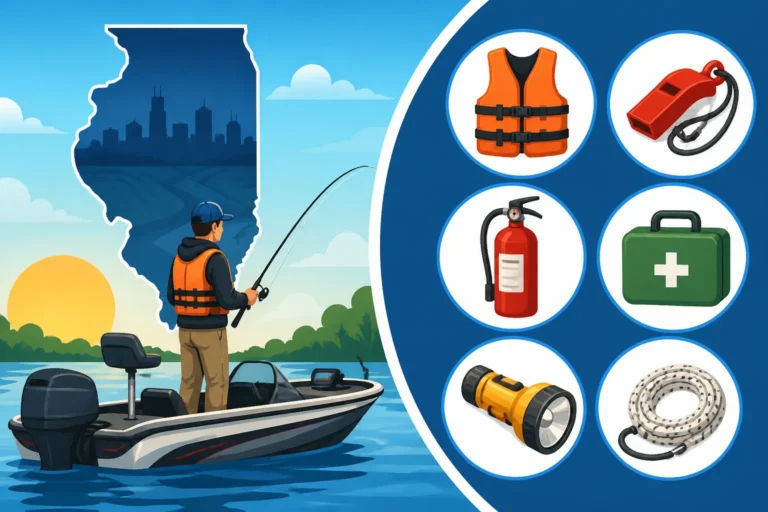
Another critical practice is filing a float plan. Let someone on shore know where you're going, what time you expect to return, and who is with you. This simple step can be a lifesaver if you encounter trouble. Carry a fully charged cell phone (in a waterproof bag), flares, a whistle, and a first-aid kit. Understanding basic navigation rules, like keeping a proper lookout and maintaining a safe speed, is also non-negotiable. These are all part of the Illinois Boating Safety Equipment Checklist that every responsible boater should review and adhere to before launching their vessel. You can often find great deals on essential safety gear like PFDs and first aid kits at retailers like Bass Pro Shops or on Amazon.
The Role of Responsible Boating in Protecting Illinois Waters
Our Illinois waterways are incredible natural resources, home to diverse fish species and wildlife, and enjoyed by countless recreational users. Responsible boating plays a huge part in preserving these environments for future generations. This means being mindful of your wake, especially in sensitive areas or near shorelines where erosion can be a problem. It also means properly disposing of all trash – packing out everything you pack in, and perhaps even picking up a bit extra if you see it.
Anglers, in particular, have a unique connection to these waters, and our actions directly impact their health. Practicing catch-and-release with certain species, knowing and adhering to Illinois Fishing Season and Catch Limit Rules, and preventing the spread of invasive species by cleaning your boat and gear are all facets of responsible stewardship. The Boater Education Card introduces these concepts, but it's up to each individual to embody them consistently. Our waters aren't just for us to enjoy today; they're a legacy we pass on.
Continuous Learning for Experienced Boaters
Even if you've been boating for decades and don't fall under the "born after 1998" requirement, there's always something new to learn. Boating technology evolves, regulations can change, and refreshing your knowledge can only make you a safer and more confident operator. Consider taking advanced boating courses offered by organizations like the U.S. Coast Guard Auxiliary or the U.S. Power Squadrons. These courses delve deeper into topics like navigation, seamanship, first aid, and marine electronics.
Staying updated on local regulations is also key, as rules for specific lakes or rivers can sometimes differ from statewide guidelines. Regularly reviewing the Illinois Fishing Information Guide (which you can often pick up at a bait shop or find online) will keep you informed. Think of it as investing in your passion: the more you know, the safer and more enjoyable your time on the water will be. After all, the goal isn't just to comply with the law, but to truly master the art of safe and responsible boating, ensuring many more years of successful fishing and cherished memories on Illinois's beautiful waters.
Disclaimer
This article is for general informational purposes only and does not constitute professional advice. Laws, prices and regulations vary by location and change over time. Consult a qualified professional for guidance on your specific situation.