Illinois Fishing License Reciprocity With Wisconsin
Navigating the nuanced world of fishing licenses can be a real headache, especially when you’re planning a trip that might cross state lines. One common point of confusion for many Illinois anglers, and those visiting our great state, is whether their Illinois fishing license covers them when they venture into waters bordering Wisconsin. It’s a completely valid frustration, and frankly, the rules aren't always crystal clear at first glance. This guide is here to untangle the specifics of Illinois fishing license reciprocity with Wisconsin, ensuring you understand exactly what you need to stay legal and enjoy your time on the water.
Understanding Fishing License Reciprocity
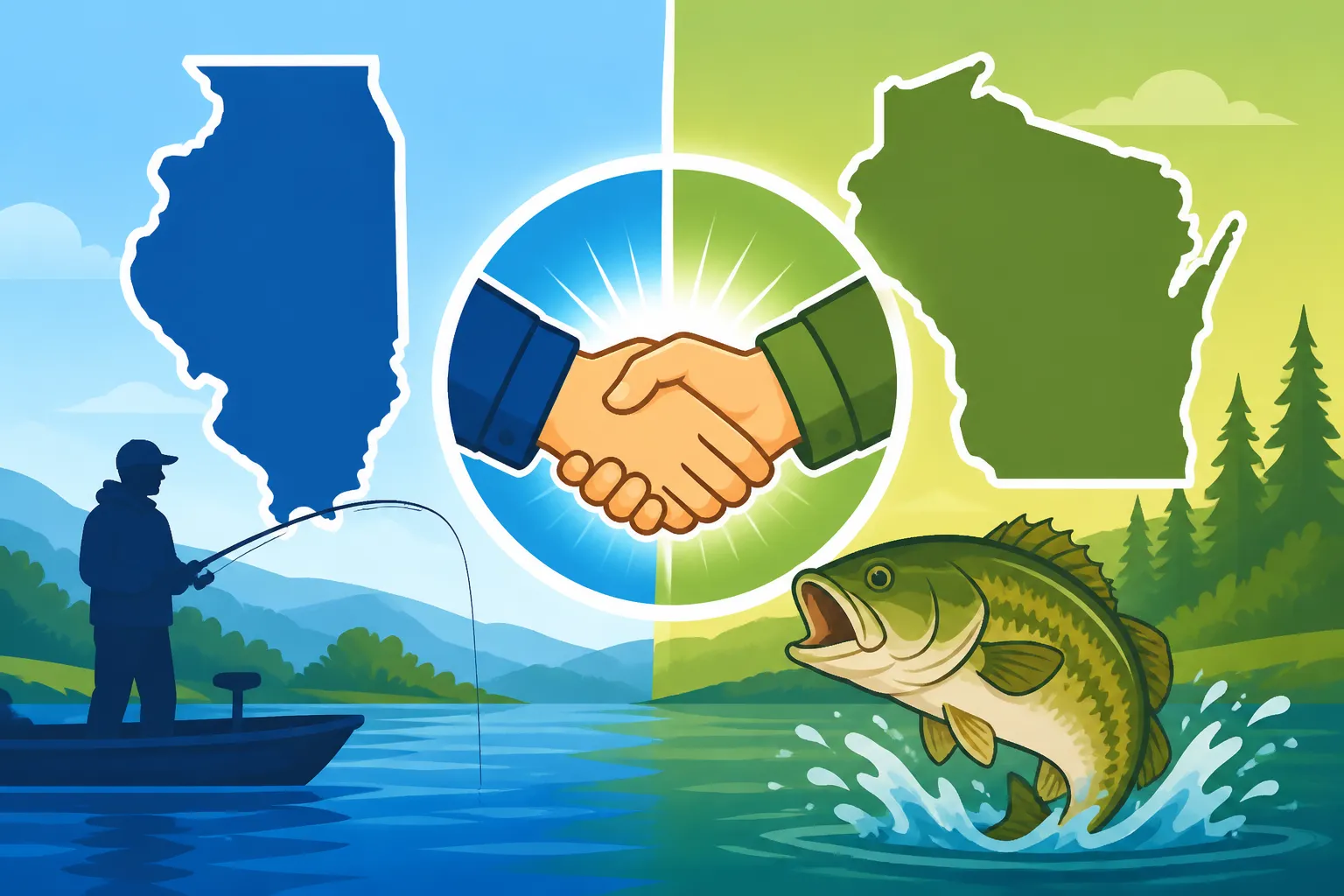
Reciprocity in fishing licenses sounds fancy, but at its heart, it’s a mutual agreement between states. Essentially, it means that one state recognizes the validity of another state’s fishing license under specific, predefined circumstances. Think of it as a handshake agreement that allows anglers to enjoy shared natural resources without needing to buy two separate licenses for the same stretch of water. Without these agreements, fishing on border rivers or lakes would be incredibly complex, requiring anglers to constantly know which side of an invisible line they were on.
The Purpose Behind Reciprocal Agreements
The primary goal of reciprocal agreements is to make fishing more accessible and less burdensome for anglers. Imagine trying to fish a large river like the Mississippi, which often forms the boundary between states. If every cast meant you had to worry about whether your line just landed in Illinois or Wisconsin waters, the joy of fishing would quickly disappear. These agreements aim to simplify things, particularly for those shared waterways where the exact boundary can be hard to discern, or for waters that naturally flow between jurisdictions. They prevent situations where an angler might inadvertently break the law by crossing into another state's waters for a few moments, even if they have a valid license from their home state or the state where they initially launched their boat.
How Reciprocity Works in Practice
When a reciprocal agreement is in place, it usually outlines very specific conditions. It might state that an angler holding a valid license from State A can fish in the boundary waters of State B, provided they don't venture too far into State B's internal waters. Sometimes, these agreements only apply to the main channel of a river, leaving backwaters and tributaries subject to the individual state's licensing rules. It’s rarely a blanket "your license works everywhere" deal, which is why it's so important to dig into the details. For instance, an Illinois resident fishing the Mississippi River might be covered on both sides of the main channel, but if they decide to explore a small bayou entirely within Wisconsin, they’d likely need a Wisconsin license. This precision is key to avoiding penalties for fishing without a license in Illinois or any other state.
Illinois and Wisconsin's Shared Waters
When we talk about Illinois and Wisconsin sharing waters, our minds immediately go to one of North America's most iconic rivers: the Mississippi. This mighty river serves as a significant boundary between these two states, offering incredible fishing opportunities, but also presenting unique challenges regarding licensing. Understanding which parts of the river fall under these agreements is crucial for any angler planning a trip to this region.
The Mississippi River Boundary
The Mississippi River forms the western border of Wisconsin and the northwestern border of Illinois. From Dubuque, Iowa, down to Cairo, Illinois, the river carves out distinct stretches that impact various state jurisdictions. For the purpose of Illinois and Wisconsin, the relevant stretch is roughly from the northern border of Illinois down to where Iowa becomes the western neighbor of Illinois. This vast expanse includes the main channel, numerous islands, backwater lakes, sloughs, and tributaries that flow into the Mississippi from both states. The very nature of a river as a dynamic ecosystem means that these boundaries, while legally defined, can feel fluid to an angler out on the water. It’s not like a static lake with clear property lines.
What "Border Waters" Really Mean
When the Illinois Department of Natural Resources (IDNR) or the Wisconsin Department of Natural Resources (WDNR) refer to "border waters" or "boundary waters," they're generally talking about the main stem of the Mississippi River and often, but not always, immediately adjacent waters that are contiguous with the main channel. This typically includes the navigation channel, side channels, and some backwater areas that are still directly connected to the river. However, it’s vital to understand that a small lake or pond that used to be connected to the Mississippi but has since been cut off due to natural processes or man-made structures might no longer be considered "border water" for licensing purposes, even if it's just a stone's throw from the main river. These nuances are what trip up many anglers, leading them to unknowingly fish in non-reciprocal waters. This is why checking site-specific rules before fishing an Illinois lake or river is always the safest bet.
| Fishing Location Scenario | Illinois License Only | Wisconsin License Only | Both Licenses Needed | Notes |
|---|---|---|---|---|
| Main Channel of Mississippi (IL/WI Border) | Yes | Yes | No | Anglers with either a valid Illinois or Wisconsin fishing license can fish the main channel and contiguous backwaters. |
| Contiguous Backwaters (Directly Connected) | Yes | Yes | No | Generally covered under reciprocity as long as they are freely accessible from the main channel without obstruction. |
| Illinois Side Tributaries/Inlets | Yes | No | No | Once you enter a tributary or an inlet entirely within Illinois's land boundaries, an Illinois license is specifically required, regardless of where the tributary connects to the Mississippi. |
| Wisconsin Side Tributaries/Inlets | No | Yes | No | Similarly, any waters entirely within Wisconsin's land boundaries, even if they connect to the Mississippi, require a Wisconsin license. |
| Landlocked Lakes (Former Backwaters) | Varies | Varies | Yes (Potentially) | If a lake was once connected to the Mississippi but is now completely cut off and fully within one state, its rules revert to that state's individual regulations. An angler might need both if they fish these waters frequently and cross state lines for other fishing. |
| Fishing from an Illinois Bank | Yes | No | No | When standing on the Illinois shore and casting into the Mississippi, only an Illinois license is required. |
| Fishing from a Wisconsin Bank | No | Yes | No | When standing on the Wisconsin shore and casting into the Mississippi, only a Wisconsin license is required. |
Specific Reciprocity Rules for Illinois and Wisconsin
Alright, let's get down to brass tacks. The burning question is: what does that reciprocity actually mean for your tackle box and wallet? While the idea of shared waters sounds simple, the specific rules between Illinois and Wisconsin regarding fishing licenses on the Mississippi River are quite distinct and very important to understand before you even think about casting a line.
Fishing the Mississippi River with an Illinois License
If you're an angler with a valid Illinois fishing license, whether you're a resident or have an Illinois Nonresident Fishing License Guide in hand, you are generally covered to fish the main stem of the Mississippi River where it forms a boundary with Wisconsin. This is fantastic news for folks who love to explore diverse stretches of the river without constant concern about state lines. Your Illinois license allows you to fish from either the Illinois or Wisconsin banks of the Mississippi River itself, as well as from a boat in the main channel and many of its contiguous backwaters.
However, and this is a big "however," this coverage is strictly limited to those waters that are part of the Mississippi River proper. This means the main navigational channel and those sloughs, bays, and backwater lakes that are directly and continuously connected to the main channel. Think of it this way: if you can easily navigate your boat from the main river into a backwater area without portaging or encountering any significant land barrier, it’s likely covered. But the moment you enter a stream, river, or lake that is completely within the territorial boundaries of Wisconsin, and is no longer considered part of the "Mississippi River proper" system, your Illinois license is no longer valid. You would need to purchase a Wisconsin fishing license to legally fish those internal Wisconsin waters. It's a subtle but critical distinction that often catches unsuspecting anglers off guard.
Fishing the Mississippi River with a Wisconsin License
Conversely, if you possess a valid Wisconsin fishing license, you enjoy the same reciprocal privileges on the shared stretch of the Mississippi River. Your Wisconsin license permits you to fish the main channel of the Mississippi, including its banks on both the Wisconsin and Illinois sides, and the directly connected backwater areas. This allows Wisconsin anglers to pursue the incredible bass, walleye, and catfish opportunities that the Mississippi offers without needing to buy an Illinois license just to drift a little too far south or explore a promising looking Illinois-side backwater.
Just like with the Illinois license holders, the same limitation applies. Your Wisconsin license does not extend to any waters that are entirely within the territorial boundaries of Illinois and are not considered part of the "Mississippi River proper" system. So, if you decide to explore a tributary like the Rock River in Illinois, or venture into a lake like Shabbona Lake (which is completely landlocked within Illinois), your Wisconsin license won't cut it. You'd need to secure an Illinois fishing license. It’s all about respecting the state lines once you leave the designated boundary waters.
Important Exceptions and Special Stamps
While reciprocity simplifies things, it’s never quite as simple as "one license for all fish." There are often specific regulations, size limits, and catch limits that vary even within shared waters, and sometimes, extra stamps are required depending on what you’re targeting. For instance, if you're fishing for certain species that require an additional stamp in Illinois, like trout or salmon in specific waters (though less common on the Mississippi compared to Lake Michigan), you'd still need that specific stamp, even if you’re fishing with a Wisconsin license in reciprocal waters.
Always make sure you’re familiar with the current Illinois Fishing Regulations Overview and Wisconsin's equivalent. Both states issue annual fishing information guides that detail statewide and site-specific rules. These guides are your best friends when planning a trip. They’ll clarify things like Illinois Walleye Size and Catch Limits or Illinois Catfish Daily Limits Explained, which might differ slightly from Wisconsin’s rules even on the same body of water. When in doubt, it's always better to consult the latest official guide or contact the respective state's DNR office. You can usually find these guides readily available at bait shops, sporting goods stores like those found on Amazon, or downloadable directly from the IDNR and WDNR websites.
Navigating Licensing Gaps and Exceptions
Even with reciprocal agreements in place, there are always scenarios that can leave anglers scratching their heads. The line between what's covered and what isn't can sometimes feel blurry, especially on dynamic water systems like the Mississippi River. Understanding these gaps and exceptions is key to avoiding an unwelcome conversation with a conservation police officer.
When Both Licenses Are Required
This is perhaps the most critical point of confusion. While reciprocity agreements are great for the designated "boundary waters," they rarely, if ever, cover all waters in both states. There are definite situations where you absolutely need both an Illinois and a Wisconsin fishing license.
The most common scenario for needing both licenses is when you plan to fish extensively in both the shared Mississippi River boundary waters and internal waters of the other state. For example, let's say you're an Illinois resident who loves fishing the Mississippi for walleye near Galena, Illinois, but you also frequently visit relatives near Madison, Wisconsin, and want to fish some of the excellent inland lakes there, like Lake Mendota. Your Illinois license covers you on the reciprocal Mississippi waters, but it won't allow you to fish Lake Mendota. For that, you'd need a valid Wisconsin fishing license.
Similarly, if you're a Wisconsin resident who enjoys the reciprocal privileges on the Mississippi but also wants to try your luck in some of Illinois's premier fishing destinations, such as Rend Lake or Lake Shelbyville, you would need to purchase an Illinois Nonresident Fishing License Guide. Reciprocity is about shared borders, not about granting full fishing rights across entire states. Always remember the primary rule: if you're fishing entirely within one state's non-boundary waters, you need that state's license.
Identifying Non-Reciprocal Waters
Identifying what constitutes "non-reciprocal waters" is paramount. As mentioned, any body of water that is wholly contained within a state and is not directly and continuously connected to the main channel of the Mississippi River typically falls into this category. This includes:
- Inland Lakes: Any lake or reservoir that is entirely within Illinois or Wisconsin, even if it's relatively close to the Mississippi, will require the respective state's license. For instance, in Illinois, lakes like Shabbona, Clinton, or the Chain O'Lakes are exclusively Illinois waters. In Wisconsin, lakes like Winnebago, Geneva, or any of the countless smaller lakes are exclusively Wisconsin waters.
- Tributary Rivers and Streams: Once you turn off the main Mississippi River channel and enter a tributary river or stream that flows entirely within Illinois or Wisconsin, your reciprocal license likely ceases to be valid. The Rock River in Illinois, for example, is entirely within Illinois, and fishing it requires an Illinois license. The Wisconsin River, entirely within Wisconsin, requires a Wisconsin license.
- Isolated Backwaters: This is the trickiest one. Backwaters that were once part of the main Mississippi but have become cut off or isolated over time due to natural siltation, levee construction, or other factors, might no longer be considered "contiguous" or "boundary waters." If the only way to access them is by dragging your boat overland or through a culvert that doesn't allow free fish passage, assume it's no longer reciprocal. It’s always safer to err on the side of caution and check the local regulations for specific areas, as these can change.
A good rule of thumb: if a body of water is not explicitly named in the reciprocity agreement as part of the shared border waters, assume it's not covered. The Illinois Fishing Information Guide Covers April 2026 Through March 2027 and Wisconsin's equivalent DNR publications are your definitive sources for this information. Don't rely on old maps or hearsay; regulations are updated periodically.
Practical Tips for Fishing Border Waters
Fishing border waters can be an incredible experience, offering diverse species and beautiful scenery. However, doing so responsibly and legally requires a bit of extra planning. Here are some practical tips to ensure your fishing trip on the Illinois-Wisconsin border is smooth and enjoyable.
Always Carry Your License and Relevant Stamps
This might seem obvious, but you'd be surprised how many anglers forget to bring their physical license or assume a photo on their phone is sufficient. While many states, including Illinois, now accept digital proof, having your official license readily available, whether printed or digitally, is paramount. Conservation police officers and game wardens have the authority to ask for your license, and not being able to produce it can lead to penalties for fishing without a license in Illinois or Wisconsin. Ensure you also have any required additional stamps, such as the Illinois Trout and Salmon Stamp Requirements for certain species or waters, even if you’re fishing reciprocal waters. You can purchase waterproof license holders at most sporting goods stores or easily from Amazon to keep your paper license protected.
Beyond your license, it's also a good idea to carry a copy of the current year's fishing regulations for both Illinois and Wisconsin, especially the sections pertaining to the Mississippi River. These can be downloaded to your phone or printed. This way, if there's any confusion about a specific rule, you have the official text right there.
Checking Current Regulations for Specific Locations
River systems, especially large ones like the Mississippi, are dynamic. Water levels change, siltation occurs, and sometimes, regulations are updated. Never assume that what was true last year is true today. Before any trip, make it a habit to check the most current regulations for the specific stretch of the Mississippi River you plan to fish. Both the Illinois Department of Natural Resources (IDNR) and the Wisconsin Department of Natural Resources (WDNR) have excellent websites where you can find the most up-to-date fishing guides and notices. Look for information on:
- Species-specific limits: Even within reciprocal waters, size and bag limits for certain species can vary slightly between states. For example, Illinois Statewide Bass Fishing Limits might have subtle differences from Wisconsin's.
- Special restrictions: Are there any catch-and-release only periods on some waters? Are there specific areas designated as refuges or closed to fishing during certain times of the year?
- Boundary definitions: While the main channel is generally clear, backwaters can be tricky. Look for maps or descriptions that clarify which backwaters are considered reciprocal.
A quick search on "Illinois Fishing License Reciprocity With Wisconsin" or navigating directly to the IDNR and WDNR fishing regulation pages will yield the latest information. Don't rely on old forum posts or advice from a buddy; go straight to the source.
Boating Safety and State-Specific Rules
If you're fishing from a boat on the Mississippi River, remember that boating safety rules and registration requirements can also have state-specific nuances. While fishing license reciprocity covers the act of fishing, it doesn't always automatically extend to boating regulations.
- Boat Registration: Ensure your boat is registered in your home state and that the registration is current. While your boat registration from Illinois is valid on Wisconsin waters (and vice versa for Wisconsin-registered boats on Illinois waters), you need to be compliant with your state's registration laws. Check out Illinois Boat Registration Requirements Explained for more details.
- Boater Education: Depending on your age and the horsepower of your boat, you might need a boater education card. For example, Illinois Boater Education Card Requirements stipulate that anyone born on or after January 1, 1998, who operates a motorboat with a 10 horsepower or greater engine, needs a valid safety certificate. Wisconsin has similar age-based requirements. It’s always wise to get certified if you’re unsure, regardless of your state.
- Life Jackets and Safety Gear: Always ensure you have the proper Illinois Life Jacket and PFD Rules compliant safety gear onboard, including enough life jackets for everyone on your vessel, a fire extinguisher, a sound-producing device, and navigation lights for dawn/dusk/night fishing. While federal regulations provide a baseline, states can add their own requirements.
These extra layers of regulation might seem like a lot, but they are in place for your safety and the preservation of our natural resources. Taking a few minutes to be thoroughly prepared will pay off with peace of mind on the water.
Common Misconceptions About Reciprocity
When it comes to fishing across state lines, myths and misunderstandings abound. It's easy to get caught up in old wives' tales or misinterpretations of the law, which can lead to unnecessary fines or, worse, missing out on some great fishing because you thought you weren't allowed. Let's clear up some of the most common misconceptions about Illinois and Wisconsin fishing license reciprocity.
"My License Works on Any Border Water"
This is perhaps the biggest and most dangerous misconception. Many anglers assume that if two states share any border, their fishing license automatically covers all waters adjacent to that border. This is absolutely not true. Reciprocity agreements are almost always highly specific, often limited to designated boundary waters like the main channel of a river, and sometimes only certain sections of that river.
For Illinois and Wisconsin, the reciprocity specifically applies to the Mississippi River where the two states share a border. It does not extend to other waters, even if they are geographically close to the border. For instance, an Illinois fishing license would not cover you if you decided to fish Lake Michigan off the coast of Wisconsin, nor would a Wisconsin license cover you if you fished the Chicago Lakefront. Lake Michigan itself has separate regulations and licensing requirements, and while Illinois and Wisconsin both border Lake Michigan, there isn't a general reciprocity agreement for the entire lake that allows a single state license to cover all parts of it. In fact, Lake Michigan Salmon and Trout Fishing in Illinois typically requires Illinois residents and non-residents alike to hold an Illinois fishing license and potentially a Lake Michigan Salmon Stamp Requirements for Anglers if targeting those species. Always confirm the exact waters covered by any reciprocal agreement, rather than making assumptions based on proximity.
"If I'm in a Boat, I'm Covered by My Home State's License"
This is another common fallacy. While being in a boat often makes it easier to navigate shared boundary waters covered by reciprocity, the boat itself doesn't grant you immunity from licensing requirements for non-reciprocal waters. The key isn't whether you're in a boat or on the bank; the key is where you are fishing.
If you launch your boat from Illinois and fish the reciprocal main channel of the Mississippi River, your Illinois license is valid. If you then motor your boat up into a tributary that is entirely within Wisconsin's territorial boundaries, your Illinois license becomes invalid for that tributary, and you would need a Wisconsin license. The boat provides mobility, but the fishing license rules apply to the water you're fishing, not the vessel you're in. This distinction is crucial and often misunderstood. The penalties for fishing without a license in Illinois can be steep, so it's vital to be sure of your location.
"Statewide Regulations Apply on Reciprocal Waters"
While reciprocity agreements simplify licensing, they don't necessarily unify fishing regulations like size limits, bag limits, or season dates. Often, both states maintain their own specific regulations for species caught on the shared waters, and anglers are typically required to adhere to the regulations of the state in which they are physically located when they catch the fish, or sometimes to the more restrictive of the two.
For example, Illinois Walleye Size and Catch Limits might be slightly different from Wisconsin's for walleye caught on the Mississippi River. If you catch a fish while your boat is positioned in what would technically be considered Illinois water, you should adhere to Illinois's regulations for that species. Conversely, if you're in Wisconsin waters, you follow Wisconsin's rules. This can get complicated, which is why many experienced anglers on border waters will carry the regulation guides for both states and try to apply the most conservative (restrictive) rule to avoid any issues. Always consult the official publications to understand any species-specific differences on the Mississippi River between Illinois and Wisconsin.
A Note on Local Ordinances and Private Property
Beyond state-level regulations and reciprocity, it's worth a quick mention that local ordinances and private property rules can sometimes add another layer of complexity. While not directly tied to state reciprocity, these are real-world factors that can impact your fishing trip.
Respecting Private Property Rights
Even on public waterways, access points, shorelines, and sometimes even adjacent submerged lands can be privately owned. Fishing from a pier, dock, or shoreline that is private property without permission is trespassing, regardless of whether you have a valid fishing license. Always look for signage, and if you're unsure, seek permission from the landowner or choose clearly designated public access points. This is especially true for bank fishing, where public access can be limited. While a fishing license covers your right to fish, it doesn't grant you the right to trespass.
Park and City-Specific Rules
Some state parks, forest preserves, or even municipal parks may have their own specific fishing regulations that are more restrictive than statewide rules, or they might require a separate permit in addition to your state fishing license. Always check for posted signs at your chosen fishing spot. For example, some city park ponds might have special catch-and-release rules or limits on bait types. These local rules usually apply to all anglers, regardless of whether they're fishing under a reciprocal agreement for a larger body of water that happens to pass through the locality. These rules can vary significantly by location, so it’s always best to be informed.
Disclaimer
The information provided in this guide is for general informational purposes only and does not constitute legal advice. Fishing regulations are subject to change, and while we strive to provide accurate and up-to-date information, it is the angler's responsibility to consult the official Illinois Department of Natural Resources (IDNR) and Wisconsin Department of Natural Resources (WDNR) regulations and publications before fishing. Always ensure you have the appropriate and valid licenses and stamps for the waters you intend to fish.