Illinois Fishing License Reciprocity With Indiana
There's nothing quite like the freedom of fishing, but that feeling can quickly turn to frustration when you're casting lines in border waters, wondering if your current fishing license is actually valid. Many anglers find themselves scratching their heads when fishing along the shared boundaries of Illinois and Indiana, unsure if they need one license, both, or neither. This comprehensive guide is here to clear up all that confusion, detailing the ins and outs of fishing license reciprocity between these two great Midwest states so you can spend less time worrying and more time reeling in your next big catch.
Understanding Fishing License Reciprocity Between States
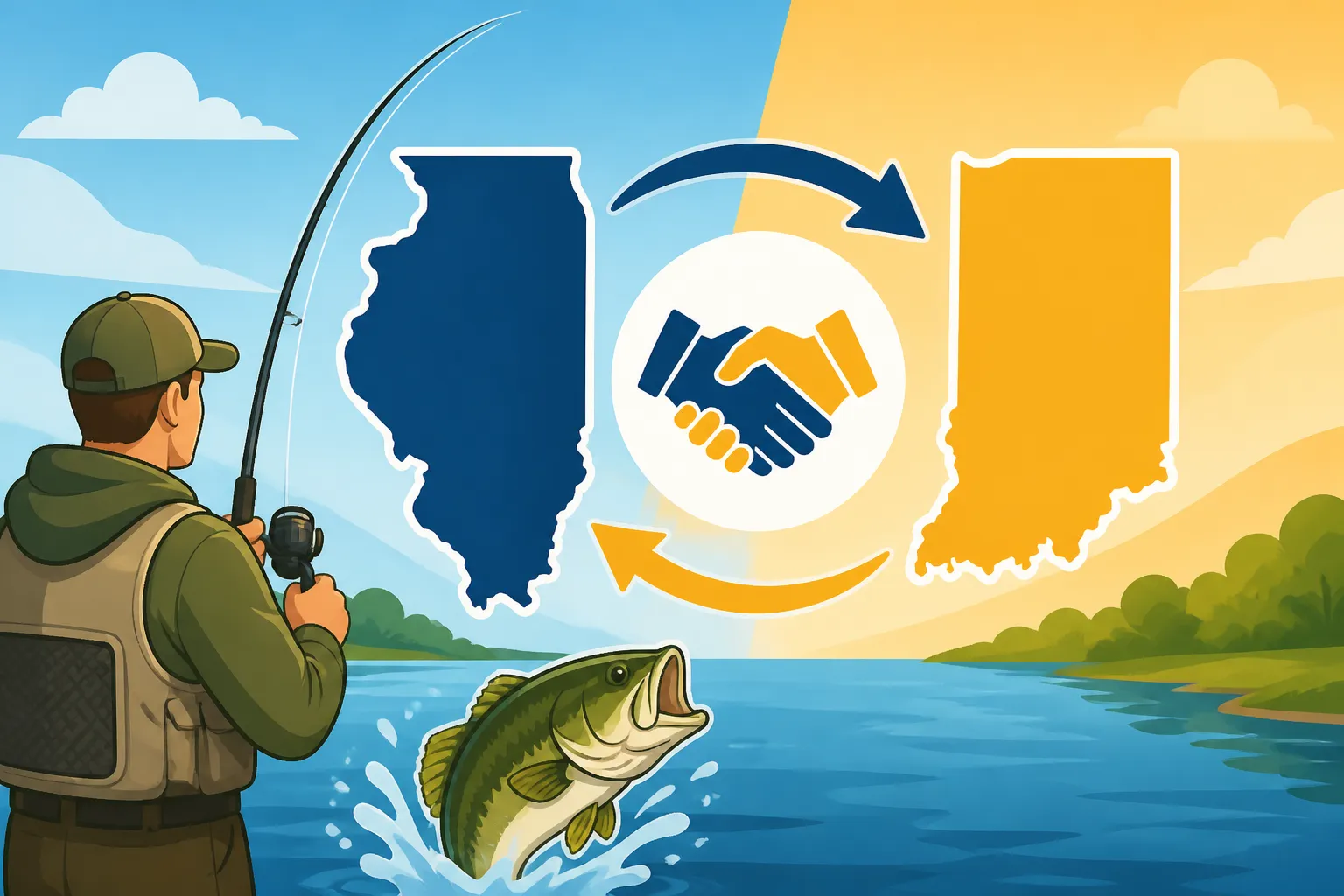
When you hear "fishing license reciprocity," it might sound like complex legalese, but at its heart, it's a wonderfully practical agreement between states. Essentially, it means that under certain specific conditions, a fishing license purchased in one state can be honored in another, usually only on shared boundary waters. This concept saves anglers the hassle and expense of buying multiple licenses just to fish a river or lake that serves as a state line. It’s designed to make life easier for us, the folks who just want to enjoy the water.
The Basic Idea Behind Border Water Agreements
Imagine you're standing on the Illinois side of the Wabash River, casting towards the Indiana bank. Without reciprocity, you’d theoretically need an Illinois license to cast from your spot and an Indiana license if your lure or boat drifted even an inch into Indiana waters. It’s an administrative nightmare, not to mention a significant deterrent for anyone wanting to explore these rich fishing grounds. To prevent this absurdity, state wildlife agencies work together to create special rules for these shared waterways. These agreements typically state that if you possess a valid fishing license from either bordering state, you're good to go, as long as you stay within the defined reciprocal waters. This simplicity allows seamless enjoyment of the entire river or lake, no matter which side you’re launching from or drifting through. However, it's critical to understand that these agreements almost always have specific limitations regarding which waters they apply to and what species might be exempt, so a little homework is always in order before you wet a line.
Why Reciprocity is Crucial for Illinois and Indiana Anglers
For those of us who live near the Illinois-Indiana border, or who frequently travel between the two states to find new fishing adventures, reciprocity isn't just a convenience; it's an absolute necessity. Without it, the administrative burden would be immense, and the cost could easily double for avid anglers. Think about the communities that straddle these borders, where residents might cross the river for groceries, work, or, yes, a good fishing spot. Reciprocity ensures that these natural resources are accessible to all residents of both states without unnecessary bureaucratic hurdles. It fosters a sense of shared stewardship over these vital ecosystems and promotes tourism and recreational activities for both states. Moreover, it encourages more people to get out and fish, which, in turn, helps support conservation efforts through license sales. It's a win-win, allowing anglers to focus on the joy of fishing rather than the anxiety of jurisdictional lines. You can learn more about general rules in our comprehensive guide on Illinois Fishing Regulations Overview.
Key Boundary Waters Shared by Illinois and Indiana
When we talk about Illinois and Indiana fishing license reciprocity, one major body of water immediately comes to mind: the Wabash River. But it's not the only shared waterway, and understanding where these agreements apply is half the battle. Knowing the specific boundaries ensures you're fishing legally and can fully enjoy your time on the water.
The Mighty Wabash River
The Wabash River is arguably the most significant boundary water between Illinois and Indiana, winding its way through diverse landscapes and offering fantastic fishing opportunities for various species. For much of its length, it forms a natural border, and it's here that the reciprocity agreement truly shines. If you hold a valid resident fishing license from either Illinois or Indiana, you are generally permitted to fish the reciprocal waters of the Wabash River from bank to bank, regardless of which state's side you launched from or where your boat happens to be.
This means if you're an Illinois resident with an Illinois Resident Annual Fishing License Cost, you can fish the entire width of the Wabash where it serves as the border. The same goes for an Indiana resident with their state's license. This agreement covers the main channel and any oxbows, backwaters, and tributaries that are directly connected to the main stem of the Wabash and lie within the designated boundary water area. It's truly a fantastic benefit for anglers who frequent this historic river, allowing them to chase everything from catfish and bass to crappie and various panfish without worrying about an invisible line in the water. We dive deeper into this in our guide on Fishing the Wabash River With an Indiana License.
Other Waterways and Their Specific Reciprocity Rules
While the Wabash River is the most prominent example, there are other, smaller waterways or situations where reciprocity might come into play, or, more importantly, where it does not. It’s crucial not to assume reciprocity applies everywhere a state line touches water. For instance, specific small lakes or impoundments that might technically be on the border might have their own unique regulations or might not be covered by a general reciprocity agreement. Some small creeks or tributaries that feed into the main Wabash might only be covered up to a certain point, or they might be entirely within one state's jurisdiction.
It's always best practice to consult the most current fishing regulations guide from both states if you're planning to fish any body of water other than the clearly defined reciprocal stretch of the Wabash. The Illinois Department of Natural Resources (IDNR) and the Indiana Department of Natural Resources (IDNR) publish detailed guides annually that outline these specific stipulations. Ignoring these details could lead to an unexpected citation, which is a sure way to ruin a good day on the water. For example, boundary water rules might differ from those on inland lakes like Carlyle Lake Fishing Guide, or even between stretches of the same river, depending on its specific designation.
Illinois and Indiana Fishing License Reciprocity Rules
The reciprocity agreement between Illinois and Indiana on boundary waters is pretty straightforward, but like all good rules, it has its nuances. Understanding who needs which license, and how your residency plays a role, is key to staying legal and enjoying your fishing trip.
Who Needs Which State's License on Boundary Waters
The fundamental rule for the designated reciprocal waters, primarily the Wabash River where it forms the boundary, is that a valid sportfishing license from either state is sufficient. This means:
- If you are an Illinois resident, a valid Illinois fishing license allows you to fish the entire width of the reciprocal portions of the Wabash River. You do not need an Indiana license.
- If you are an Indiana resident, a valid Indiana fishing license allows you to fish the entire width of the reciprocal portions of the Wabash River. You do not need an Illinois license.
This applies whether you are fishing from a boat that might cross the invisible state line, or if you are casting from the bank on either side. It’s designed for simplicity and ease of access. However, this reciprocity only extends to the general fishing license. Any specific stamps or permits required for certain species, like a salmon or trout stamp, must be purchased from the state in which you are fishing for that specific species or whose regulations you are following. For a comprehensive overview of Illinois licensing, check out our Illinois Fishing License Guide for 2026.
For those who are non-residents of both Illinois and Indiana but wish to fish the boundary waters, the rule generally states that you need a non-resident license from either state. For instance, a nonresident from Ohio could purchase an Illinois Nonresident Annual Fishing License Cost and fish the reciprocal waters of the Wabash, or they could purchase an Indiana non-resident license. The choice often comes down to convenience, cost, or where they primarily intend to fish if they venture into non-reciprocal waters. This flexibility is a great boon for traveling anglers.
Residency Status and Its Impact on Border Water Fishing
Your residency status is the cornerstone of fishing license requirements, even on reciprocal waters. Generally, to qualify for a resident license in Illinois or Indiana, you must have lived in that state for a continuous period of time, usually 30 to 60 days, depending on the specific state's definition. Proof of residency, such as a driver's license or state ID, is usually required at the time of purchase.
For example, if you reside in Danville, Illinois, you would purchase an Illinois resident license. With this license, you could fish the Wabash River without needing an Indiana license. However, if you're a long-term resident of Terre Haute, Indiana, you would get an Indiana resident license and also be covered on the Wabash. The key is that you must hold a valid resident license from one of the two bordering states to take advantage of the reciprocity.
If you do not meet the residency requirements for either Illinois or Indiana, you are considered a nonresident and must purchase a nonresident fishing license. As mentioned before, a nonresident from any other state can purchase a nonresident license from either Illinois or Indiana to fish the reciprocal waters. This means that a Wisconsin angler, for example, could buy an Illinois Nonresident Fishing License Guide and legally fish the Wabash River between Illinois and Indiana, following Illinois regulations while doing so. It’s a pretty flexible system, but always remember that while your license grants you access to the shared water, you are typically bound by the fishing regulations (size limits, creel limits, season dates) of the state from which you purchased your license, or sometimes, the state whose shore you are closest to, depending on the specific agreement. It's always best to check the current year's fishing handbooks for both states to avoid any ambiguity.
Navigating Specific Fishing Scenarios on Illinois-Indiana Borders
Fishing border waters isn't always as simple as "one license fits all." There are particular scenarios that can trip up even experienced anglers. Understanding how to handle these situations, from where you cast your line to what species you're targeting, is crucial for a smooth and legal fishing trip.
Shore Fishing Versus Boat Fishing Considerations
One of the most common questions regarding reciprocal waters is whether the rules change if you’re fishing from the bank compared to being in a boat. The general principle for the Illinois-Indiana boundary waters, especially the Wabash River, is that if you hold a valid fishing license from either state, you are permitted to fish the entire reciprocal body of water, regardless of whether you are fishing from shore or a boat.
However, there's a subtle but important distinction that often leads to confusion. While your license might be valid for the entire body of water, the land you are standing on is definitively in one state or the other. This means that if you are fishing from the Illinois bank of the Wabash River, you are physically in Illinois. If you happen to be an Indiana resident with an Indiana license, you're fine for fishing the water, but any activities on the bank (like setting up a campsite, parking your vehicle, or accessing the water) may be subject to the land-use laws and regulations of Illinois. The same applies in reverse. This usually isn't an issue for a simple day of fishing, but it's something to keep in mind if you're venturing beyond just casting a line. For boat anglers, the flexibility is even greater, as you can navigate the entire width of the river without concern for crossing an invisible line, as long as you adhere to the regulations of the state whose license you hold.
Nonresident Anglers and License Requirements
If you're visiting from outside Illinois or Indiana, say from Kentucky or Michigan, and want to fish the boundary waters like the Wabash River, you still benefit from the reciprocity agreement. You only need to purchase a nonresident fishing license from either Illinois or Indiana. You don't need both.
For example, if you're just passing through and plan a quick day trip, you could purchase an Illinois Nonresident 24-Hour Fishing License Cost or a similar short-term Indiana nonresident license. The state you choose to buy your license from will generally dictate which state's regulations (e.g., daily catch limits, size restrictions) you must follow while fishing the reciprocal waters. This is a vital point to remember. It’s not a pick-and-choose system where you can follow the looser regulation if one state has it; you must adhere to the rules of the state that issued your license. Always carry your license and identification with you. If you need a quick way to find the latest gear before your trip, many essential fishing items can be found on Amazon, including tackle boxes, fishing line, and portable chairs for bank fishing.
Trout and Salmon Stamps on Shared Waters
Here's where things can get a little more specific. While the general fishing license has reciprocity, special stamps often do not. Both Illinois and Indiana have specific stamp requirements for certain species, particularly trout and salmon. If you intend to fish for these species, even on reciprocal waters, you might need the appropriate stamp from the state whose regulations you are following, or whose specific waters you are in.
For instance, Illinois requires an Illinois Inland Trout Stamp Requirements to legally harvest trout from specially stocked waters. If you are an Indiana resident with an Indiana license, fishing the reciprocal Wabash, and decide to target trout in an area where Illinois regulations specifically require a trout stamp, you might need to acquire that Illinois stamp. The details here are critical and often depend on exactly where the trout are stocked and the specific language of the reciprocity agreement regarding species-specific endorsements. It's always safest to assume that if you're targeting a regulated species that requires a special stamp in either state, you should possess the correct stamp, usually from the state whose regulations you are operating under. This is one area where checking both state's current year regulation booklets is non-negotiable to avoid any misunderstandings.
Enforcement and Avoiding Common Pitfalls
Understanding reciprocity is one thing, but knowing how it's enforced and what can go wrong is just as important. Conservation Police Officers (CPOs) in both Illinois and Indiana are diligent in protecting natural resources, and knowing what they expect from you can prevent a great day of fishing from turning into a costly lesson.
What to Expect from Conservation Police Officers
When you're out on the water, whether it's the main channel of the Wabash or a quiet backwater, it's highly probable you'll encounter a Conservation Police Officer (CPO) from either Illinois or Indiana. Their job is to ensure everyone is adhering to fishing and boating regulations, and they have the authority to check your license, your catch, and your boat's safety equipment.
When a CPO approaches, they will typically identify themselves and ask to see your fishing license and photo identification. Be polite, cooperative, and have your documents readily accessible. If you're fishing under a reciprocal agreement, clearly state which state's license you hold. For example, "Officer, I have an Illinois resident fishing license, and I'm aware of the reciprocity agreement on these waters." They are familiar with these agreements, but it's your responsibility to know and follow the rules. They might also check your cooler to ensure you haven't exceeded any daily catch limits or harvested any fish outside of legal size limits. Remember, even with reciprocity, you must adhere to the regulations of the state whose license you are using (or sometimes, the state where you are physically located, if fishing from shore). This is where having the current fishing guide for that state, perhaps even downloaded to your phone, can be incredibly helpful for quick reference.
Understanding Penalties for Fishing Without Proper Licensing
Fishing without a valid license, or without the proper stamps for specific species, is a serious offense in both Illinois and Indiana. The consequences can range from a substantial fine to confiscation of your fishing gear, and in some cases, even court appearances and community service. These aren't minor infractions; they are violations of state law designed to protect wildlife and fund conservation efforts.
If you are caught fishing the Wabash River with an invalid or expired license, or no license at all, you will likely receive a citation. The amount of the fine can vary significantly depending on the severity of the offense and whether it's a first-time violation or a repeat offense. Additionally, you might also face charges for exceeding catch limits or keeping undersized fish, which carry their own separate penalties. Our article on Penalties for Fishing Without a License in Illinois details these consequences further.
For instance, a first-time offense for fishing without a license in Illinois can easily cost you hundreds of dollars in fines and court costs. It's simply not worth the risk. Always ensure your license is current and that you understand all the applicable regulations before heading out. The small cost of a fishing license, which often contributes directly to fish stocking programs and habitat restoration, is a far better investment than facing the financial and legal repercussions of a violation. If you ever have questions about license validity or regulations, don't hesitate to call the respective state's DNR office.
How and Where to Acquire Your Illinois or Indiana Fishing License
Getting your fishing license should be the easiest part of preparing for your trip, and thankfully, both Illinois and Indiana offer convenient options to ensure you're legal on the water. Whether you prefer the speed of online purchasing or the personal touch of a local shop, there's a way for everyone.
Online and Retail Purchase Options
Both the Illinois Department of Natural Resources (IDNR) and the Indiana Department of Natural Resources (IDNR) have made purchasing fishing licenses incredibly accessible.
For Illinois fishing licenses, your primary options are:
- Online: The IDNR's website offers a user-friendly portal where you can purchase and print your license from the comfort of your home. This is often the quickest and most convenient method, especially if you need a license last minute. You can find detailed steps in our guide on How to Buy an Illinois Fishing License Online.
- Authorized Retailers: You can also purchase licenses in person at hundreds of vendors across the state. This includes most major sporting goods stores like Bass Pro Shops or Cabela's, as well as many local bait shops, hardware stores, and even some county clerk offices. These locations can be great for getting local fishing advice along with your license.
- Phone: In some cases, you might be able to purchase or renew your license over the phone, though online and in-person are generally preferred.
For Indiana fishing licenses, similar options are available:
- Online: The Indiana DNR website also provides an online licensing system that is easy to navigate. You can purchase your annual or short-term licenses digitally.
- Authorized License Vendors: Just like Illinois, Indiana has numerous authorized agents where you can buy licenses in person. These include most sporting goods stores, bait shops, and some government offices.
It's always a good idea to check the specific state's DNR website for an up-to-date list of authorized vendors and the most current online purchasing instructions. Remember, while you can often keep a digital copy on your phone, having a physical printed copy or a photo of it in case of technological glitches is a wise backup. You might even find handy license holders on Amazon to keep your physical license safe and dry.
Essential Information and Documents for Licensing
When you're ready to purchase your fishing license, whether online or in person, you'll need to have some basic information and possibly documents ready. This typically includes:
- Proof of Identity: A valid driver's license or state-issued identification card is usually required. This helps verify your name, address, and residency status.
- Social Security Number: Both states typically require your Social Security Number for licensing purposes, primarily for compliance with federal regulations related to child support enforcement.
- Date of Birth: To verify age-specific license requirements or exemptions (e.g., for youth or senior licenses).
- Contact Information: Your current address, phone number, and email.
For online purchases, you'll need a valid credit or debit card. If purchasing in person, cash or card is generally accepted. The process is designed to be as smooth as possible, ensuring that you can quickly get your license and get out on the water. If you're renewing a license, sometimes you just need your previous license number or personal information. For Illinois, renewing your license is straightforward, as detailed in Renewing an Illinois Fishing License Online. Planning ahead is key, especially before peak fishing seasons, to avoid any last-minute rushes or technical difficulties that could delay your trip.
Here's a quick reference table to help visualize the reciprocity rules for the Wabash River:
| Angler's Residency Status | License Held | Valid on Wabash (IL/IN Border) | Notes |
|---|---|---|---|
| Illinois Resident | Illinois Resident | Yes | Must follow Illinois fishing regulations. |
| Indiana Resident | Indiana Resident | Yes | Must follow Indiana fishing regulations. |
| Nonresident (e.g., OH) | Illinois Nonresident | Yes | Must follow Illinois fishing regulations. Choose either IL or IN nonresident license. |
| Nonresident (e.g., OH) | Indiana Nonresident | Yes | Must follow Indiana fishing regulations. Choose either IL or IN nonresident license. |
| Illinois Resident | Indiana Resident | No | Not needed. IL resident license is sufficient. |
| Indiana Resident | Illinois Resident | No | Not needed. IN resident license is sufficient. |
| No License | None | No | Illegal to fish. Penalties apply. |
This table simplifies the main takeaway: on the reciprocal waters of the Wabash River, a valid resident license from either state is enough if you live in Illinois or Indiana. If you're from out of state, a nonresident license from either Illinois or Indiana will do the trick. Just make sure to know and follow the fishing regulations of the state whose license you're carrying! For instance, if you're an Indiana resident with an Indiana license, you'll need to consult the Indiana Fishing Guide for all your size and creel limits. You can usually find the most current regulations and even purchase licenses through the Amazon app if you have their website open.
Disclaimer
The information provided in this guide is for general informational purposes only and is not intended as legal advice. Fishing regulations, license requirements, and reciprocity agreements can change frequently. It is the responsibility of every angler to consult the most current official regulations published by the Illinois Department of Natural Resources (IDNR) and the Indiana Department of Natural Resources (IDNR) before engaging in any fishing activity. Failure to do so may result in penalties.