Illinois Fishing License Reciprocity With Kentucky
It's a common dilemma for anglers living near a state line: you're just looking to cast a line in that promising spot across the river, but suddenly you're bogged down in a maze of rules about which license you need. This confusion about Illinois fishing license reciprocity with Kentucky, especially along the mighty Ohio River, can be a real headache. No one wants a surprise ticket just for trying to enjoy a peaceful day on the water. This comprehensive guide is here to untangle those complexities, helping you understand exactly what permits are required so you can fish legally and confidently on the shared waters.
Understanding Fishing License Reciprocity
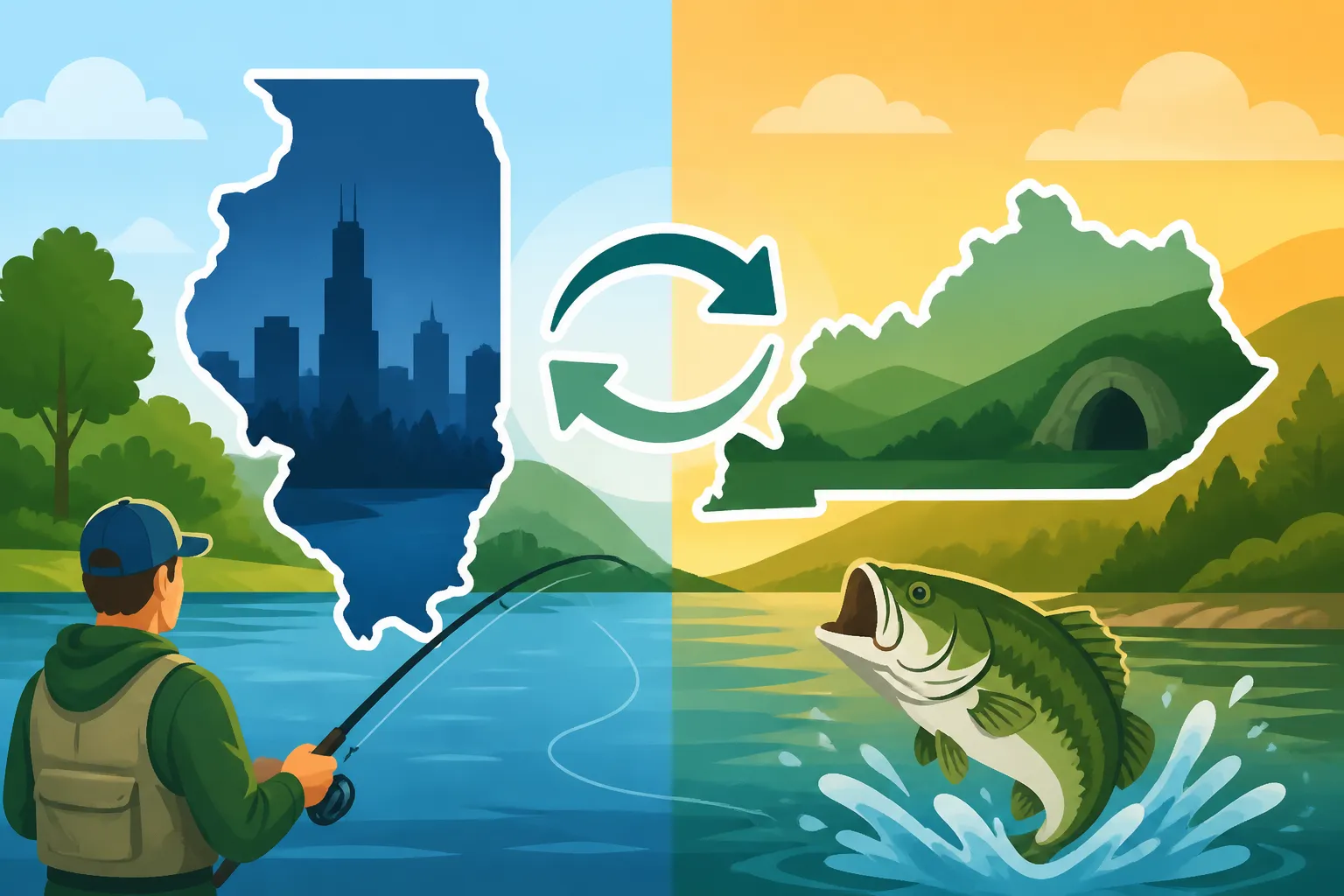
The idea of fishing license reciprocity might sound a bit like legal jargon, but it's actually a pretty straightforward concept designed to make life easier for us anglers who love to explore waters that happen to border another state. Essentially, it means that under specific conditions, a fishing license purchased from one state is recognized as valid when you’re fishing in the designated border waters of an adjacent state. It's a mutual agreement that acknowledges these shared natural resources and aims to prevent you from needing to buy two separate licenses for what feels like one continuous body of water.
The Concept of Reciprocity in Fishing Licenses
At its core, reciprocity is all about mutual recognition. Instead of states enforcing their invisible boundary lines down the middle of a river or lake, they agree to share the responsibility and allow licensed anglers from either side to fish without needing double permits. This isn't a blanket rule for every body of water, mind you. These agreements are usually forged for specific rivers or lakes that naturally form a border between states. The intent is to foster cooperation, encourage tourism, and simplify the outdoor experience, which is something every angler can appreciate when they're simply trying to enjoy the peace of the water.
Imagine you live in Cairo, Illinois, right where the Ohio River meets the Mississippi. If you want to fish the Ohio, and a good spot happens to be closer to the Kentucky bank, it would be incredibly inconvenient, not to mention costly, to have to purchase a new license every time you wanted to fish that particular stretch. Reciprocity aims to eliminate that burden, creating a more seamless experience for everyone involved.
Why Border States Have These Agreements
Border states enter into these reciprocity agreements for a few key reasons, all centered around convenience and sound resource management. First and foremost, it’s about practicality. Rivers like the Ohio don't have a fence down the middle, and fish certainly don't recognize state lines. It would be an enforcement nightmare and a constant source of frustration for anglers if every cast had to be scrutinized for its exact geographical landing point. These agreements simplify enforcement for conservation officers, allowing them to focus on true violations rather than jurisdictional disputes over a fishing line.
Secondly, it's about promoting recreational opportunities. Fishing is a huge draw for local economies, and states want to encourage participation. By making it easier for residents and even nonresidents from neighboring states to fish their shared waters, they indirectly boost local businesses, from bait shops to gas stations and restaurants. It also acknowledges that these shared waters are often part of a larger ecosystem, and managing them often requires cooperation anyway. For a deeper dive into the broader regulatory landscape, you might want to check out our comprehensive guide on Illinois Fishing Regulations Overview.
Illinois' General Approach to Reciprocity
Illinois, like many states, has a pragmatic approach to fishing license reciprocity, particularly with its neighbors that share significant waterways. Generally, Illinois participates in agreements that allow anglers to fish shared boundary waters with a valid license from either state. However, it’s vital to understand that this reciprocity almost always applies only to the specific border water itself. If you launch your boat in Illinois with an Illinois license and then decide to fish a small creek or lake that feeds into the Ohio River but lies entirely within Kentucky, your Illinois license will likely not cover you there. The same goes for the reverse situation.
These agreements are usually formalized through interstate compacts or specific memoranda of understanding between the state's natural resource departments, such as the Illinois Department of Natural Resources (IDNR) and the Kentucky Department of Fish and Wildlife Resources (KDFWR). It's always a good idea to remember that while the general rule might be reciprocity, the devil is often in the details, and those details can change.
Illinois and Kentucky Border Waters
When we talk about Illinois and Kentucky sharing a border, there's one body of water that immediately springs to mind for anglers: the magnificent Ohio River. This isn't just any river; it’s a vital artery for both commerce and recreation, and it forms the entire southern boundary of Illinois with Kentucky. Understanding the specifics of fishing on this river, and its direct tributaries, is crucial for anyone planning to cast a line in this region.
Identifying the Illinois-Kentucky Border
For all intents and purposes, the Illinois-Kentucky border is defined by the Ohio River. From the point where the Ohio River joins the Mississippi River at Cairo, Illinois, stretching eastward for hundreds of miles, the Ohio River serves as the natural divider between these two states. This isn't a subtle line drawn on a map; it's a massive, navigable waterway that presents unique challenges and opportunities for anglers. The boundary is generally understood to be the low water mark on the Kentucky side, meaning the entire river itself is often considered to be within Kentucky's jurisdiction, but reciprocity agreements are what allow Illinois anglers to fish it.
This particular arrangement is a historical quirk, dating back to original colonial land grants. However, for fishing purposes, modern reciprocity agreements effectively make it a shared resource for licensed anglers from both states. This means you don't need to worry about accidentally drifting a few feet into Kentucky waters if you possess a valid Illinois fishing license, provided you're on the main stem of the Ohio.
The Ohio River: The Primary Shared Waterway
The Ohio River is undoubtedly the primary shared water body between Illinois and Kentucky, and it's where reciprocity agreements truly shine. This river is a powerhouse fishery, known for its diverse populations of catfish, bass, sauger, and even some panfish. For those living in southern Illinois, towns like Paducah, Kentucky, are just a short drive across the bridge, opening up a whole new world of access to the river.
Under the prevailing agreements, if you have a valid Illinois fishing license, you are generally permitted to fish the main stem of the Ohio River along the shared border, provided you adhere to the fishing regulations of the state in which you are licensed. This is a huge benefit, as it allows for exploration of different stretches of the river without the added expense or hassle of purchasing a separate Kentucky license. However, anglers from Kentucky fishing the Ohio River are also covered by their state's license, operating under Kentucky's regulations. It's truly a two-way street designed to maximize angler access and enjoyment.
Navigating Tributaries and Their Unique Rules
Here's where things can get a little tricky, and it's where many anglers inadvertently run afoul of the rules. While your Illinois fishing license might cover you on the main stem of the Ohio River, it does not automatically extend to tributaries that flow into the Ohio River if those tributaries are entirely within Kentucky's borders. The same principle applies in reverse for Kentucky license holders venturing into Illinois tributaries.
For example, if you're fishing near Metropolis, Illinois, on the Ohio River, your Illinois license is good. But if you decide to motor a mile up a creek like Massac Creek that flows into the Ohio, and that creek is entirely within Illinois, you still need your Illinois license. Conversely, if you ventured up a Kentucky creek that feeds into the Ohio, you would need a Kentucky fishing license, even if you just came from the main river. This distinction is crucial and often overlooked. Always assume that once you leave the main channel of the border river and enter a waterway wholly contained within a single state, that state's license and regulations apply exclusively. This is a prime example of why understanding Why Fishing Rules Vary by Lake and River is so important.
Specific Reciprocity Agreements and Their Nuances
The Ohio River is governed by a long-standing framework of agreements, often referred to under the umbrella of the Ohio River Compact or similar interstate understandings. These aren't just informal handshakes; they are legally binding agreements designed to manage the shared resources of the river, including its fish populations and the recreational activities like fishing that depend on them. Understanding the specifics of these agreements is key to a smooth and legal fishing experience.
The Ohio River Compact and Its Impact
The Ohio River Valley Water Sanitation Commission (ORSANCO), established by the Ohio River Valley Water Sanitation Compact, has been instrumental in coordinating efforts among the basin states, including Illinois and Kentucky, for water quality and resource management. While ORSANCO primarily focuses on pollution control, the spirit of interstate cooperation it fosters extends to agreements regarding fishing. These state-level agreements clarify the terms of reciprocity, ensuring that anglers can enjoy the river without undue burden.
These agreements essentially formalize the "one license, one river" policy for the main channel. The impact is significant: it means that an angler doesn't need to stress about precisely where their bait lands relative to the imaginary state line. As long as you are fishing the primary flow of the Ohio River where it borders Illinois and Kentucky, your valid license from either state should suffice. This simplifies planning tremendously and encourages anglers to explore the entire breadth of the river.
What Your Illinois License Covers on the Ohio River
If you possess a valid Illinois Fishing License Guide for 2026, you're in good shape to fish the main stem of the Ohio River where it borders Kentucky. Your Illinois license allows you to fish from either the Illinois bank or from a boat on the river itself. This includes the entire width of the river from the Illinois shore to the Kentucky shore. The key here is the "main stem" caveat.
When fishing with your Illinois license, you are bound by Illinois's fishing regulations, including length limits, daily catch limits, and permitted fishing methods, for any fish you keep. So, if you're targeting catfish, make sure you're aware of the Illinois Catfish Daily Limits Explained. This can sometimes lead to slight differences in what you can legally harvest compared to someone with a Kentucky license fishing right next to you, but usually, the core species regulations are fairly harmonized for the Ohio River. Always carry your physical or digital copy of your license and a valid ID, as conservation officers from either state have the authority to check your credentials anywhere on the shared waters. You can easily purchase your Illinois license online or find locations via How to Get an Illinois Fishing License.
What Your Kentucky License Covers on the Ohio River
Similarly, if you hold a valid Kentucky fishing license, you are permitted to fish the main stem of the Ohio River where it forms the border with Illinois. This covers fishing from the Kentucky bank or from a boat anywhere on the river between the Kentucky and Illinois shores. Just like with the Illinois license, your Kentucky license means you must adhere to Kentucky’s fishing regulations for the fish you harvest.
The critical takeaway for both Illinois and Kentucky license holders is that while your license grants you access to the entire main river, the specific rules you must follow for species, sizes, and limits are those of the state that issued your license. This is a common point of confusion, but it’s a standard feature of most interstate reciprocity agreements. It's always wise to have a copy of both states' regulations if you anticipate crossing jurisdictions or have specific targets in mind. Many anglers find waterproof guides or apps helpful, and you can even pick up some essential gear like a durable tackle box or a quality PFD from retailers on Amazon before you head out.
What Happens If You Don't Follow Reciprocity Rules
Ignoring the rules of reciprocity or simply misunderstanding them can quickly turn a relaxing day of fishing into a stressful and expensive ordeal. While the aim of these agreements is to simplify things, they still have strict boundaries, and stepping outside those can lead to significant consequences. It's far better to be informed and prepared than to face the legal repercussions.
Potential Penalties for Non-Compliance
Fishing without a valid license or violating the terms of a reciprocity agreement is considered a violation of state law, and the penalties can range from minor fines to more serious charges. If caught fishing in Kentucky waters with only an Illinois license, and you're outside the scope of the reciprocity agreement (e.g., in an entirely Kentucky-owned tributary), you could be cited for fishing without a Kentucky license. Conversely, a Kentucky angler fishing an entirely Illinois waterway with only a Kentucky license would face similar charges in Illinois.
Penalties for fishing without a license in Illinois, for example, can include fines that quickly add up, court costs, and potentially even confiscation of your fishing gear. For a detailed look at the financial consequences, you can read more about Penalties for Fishing Without a License in Illinois. These aren't just slaps on the wrist; they are designed to deter unauthorized fishing and uphold the integrity of wildlife management. Repeat offenses can lead to even harsher penalties, including suspension of fishing privileges, so it's a risk simply not worth taking.
Enforcement on Border Waters
Conservation officers, or game wardens, from both Illinois and Kentucky have jurisdiction to enforce their respective state's fishing laws on the Ohio River. This means that an Illinois conservation police officer can check your license and ensure compliance with Illinois regulations, even if you're closer to the Kentucky bank. Similarly, a Kentucky conservation officer can do the same, enforcing Kentucky's regulations on Kentucky license holders.
This shared enforcement capability is vital for the effectiveness of reciprocity agreements. It ensures that the regulations are respected across the entire shared waterway. These officers are highly trained and familiar with the nuances of interstate agreements, so trying to plead ignorance usually won't work. They are there to protect the resource and ensure fair play for all anglers. They can also check for compliance with Illinois Fishing Season and Catch Limit Rules, making sure you're not exceeding your daily bag limit, regardless of which state's license you hold.
Common Misconceptions Leading to Violations
Many violations on border waters stem from common misunderstandings rather than malicious intent. One of the biggest misconceptions is believing that if your boat is registered in one state, your fishing license from that state covers you everywhere. Boat registration and fishing licenses are entirely separate requirements. Another common error is failing to distinguish between the main stem of the Ohio River and its tributaries or backwaters. As discussed, reciprocity typically stops at the mouth of a tributary.
Some anglers also mistakenly believe that if they are only "catch-and-release" fishing, they don't need a license. This is absolutely incorrect; a license is required to fish at all, regardless of whether you keep or release your catch. Lastly, not staying up-to-date with current regulations can also lead to trouble. Regulations, especially on shared waters, can change, so it's crucial to consult the official state fishing information guides regularly. Always check the current Illinois Fishing Information Guide Covers April 2026 Through March 2027 before your trip.
Practical Tips for Fishing the Border Waters
Fishing the Ohio River where it borders Illinois and Kentucky offers incredible opportunities, but a little preparation goes a long way in ensuring a legal, safe, and enjoyable trip. Taking the time to understand the nuances and equip yourself properly will make all the difference.
Always Double-Check the Latest Regulations
This cannot be stressed enough: regulations can and do change. Before every fishing trip to the Ohio River, make it a habit to check the most current fishing regulations for both Illinois and Kentucky, especially if you plan to target specific species or move between the main river and tributaries. Both the Illinois Department of Natural Resources (IDNR) and the Kentucky Department of Fish and Wildlife Resources (KDFWR) publish annual fishing guides that are available online and often at local bait shops.
Pay close attention to species-specific regulations, size limits, and daily creel limits. While reciprocity covers which license you need, the specific rules for what you can keep and how much can vary depending on whether you're following Illinois or Kentucky rules. For instance, if you have an Illinois license, you must follow Illinois' limits for crappie, while a Kentucky license holder might have slightly different limits. This diligence protects you from accidental violations and contributes to sustainable fishing practices.
Carrying Proof of License and ID
When fishing the Ohio River, it's absolutely essential to carry your valid fishing license and a form of photo identification. Whether it's a physical license or a digital copy on your smartphone, having it readily available is crucial. As mentioned, conservation officers from either Illinois or Kentucky can request to see your license. Fumbling around or claiming you left it at home won't cut it.
Many anglers prefer to print a physical copy even if they bought it online, just in case their phone battery dies or gets wet. Waterproof pouches, readily available on Amazon, are excellent for protecting both your license and ID. Being prepared not only avoids potential citations but also shows respect for the law enforcement officers doing their job. Remember, for those interested, there are various Illinois Fishing License Costs and Types to consider based on your residency and duration of fishing. Even for out-of-state anglers, understanding Illinois Nonresident Fishing License Guide is important before planning a trip.
Recommended Gear and Safety for River Fishing
Fishing a large river like the Ohio requires specific gear and a strong emphasis on safety. The currents can be powerful, and commercial barge traffic is common. A reliable boat with a good motor, strong anchoring system, and all required safety equipment is paramount. This includes life jackets for everyone on board (especially children, as per Illinois Life Jacket Rules for Children Under 13), throwable PFDs, a fire extinguisher, and a sounding device.
Beyond safety gear, consider your fishing tackle. The Ohio River can be rough on gear, so durable rods, reels, and heavier line are often a good idea, particularly if you're targeting larger species like catfish or hybrid striped bass. A well-stocked tackle box with a variety of baits and lures suitable for river conditions is also essential. Since the river is so vast, a good GPS unit or a detailed map can help you navigate and find promising fishing spots, especially if you're exploring new areas. For boat owners, be sure to check Illinois Boater Education Card Requirements to ensure you meet all necessary certifications.
Navigating the Ohio River: Illinois and Kentucky Regulations
When fishing on the Ohio River, while your license from either Illinois or Kentucky grants you access to the main channel, it's crucial to remember that the specific regulations you follow—creel limits, size restrictions, and permitted methods—are generally those of the state that issued your license. This is a subtle but incredibly important distinction that can save you a lot of trouble.
Understanding Creel and Size Limits
This is perhaps the most significant nuance of reciprocity on border waters. If you are an Illinois-licensed angler, when you're fishing on the Ohio River, you must abide by the Illinois Fishing Season and Catch Limit Rules for any fish you intend to keep. This applies even if you're technically closer to the Kentucky side of the river. Conversely, a Kentucky-licensed angler would follow Kentucky's specific creel and size limits.
These limits can sometimes differ between the two states, creating a situation where two anglers in the same boat, holding licenses from different states, might have different legal limits for the same species. It's rare for these differences to be drastically large, but they do exist. For example, Illinois might have a slightly different minimum size for a certain bass species or a different daily bag limit for crappie than Kentucky. Always consult the most current fishing guide from your licensing state and consider having a quick reference for the other state's rules, especially if you're fishing with someone holding an opposite-state license. This helps avoid confusion and ensures everyone is compliant.
Specific Gear and Methods Allowed
Just like creel and size limits, the types of gear and fishing methods permitted can also be tied to the regulations of your licensing state. While most common methods like rod and reel fishing are universally accepted, there can be subtle differences in specifics such as the number of lines you can fish simultaneously, whether trotlines or jug lines are allowed, or specific bait restrictions.
For Illinois anglers, you'd refer to the Illinois Fishing Information Guide for permissible methods. For instance, the rules about unattended lines or specific types of tackle might vary. While a single rod and reel is standard, if you're setting up multiple lines or using more advanced gear, confirm its legality under your licensing state's rules. This is another area where a quick check of both states' regulations can prevent misunderstandings with enforcement officers.
Ensuring Boating Safety Compliance
While fishing licenses are state-specific, many boating safety regulations are harmonized across states or dictated by federal (Coast Guard) standards, especially on navigable waterways like the Ohio River. However, there can still be state-specific requirements. For example, the age at which a boater education card is required, or specific requirements for personal flotation devices (PFDs), can sometimes differ.
When operating a boat on the Ohio River, you generally need to comply with the boating safety regulations of the state in which your boat is registered. So, if your boat is registered in Illinois, you must follow Illinois boating laws. This includes having all required safety equipment on board, such as fire extinguishers, horns, navigation lights, and correctly sized and accessible PFDs for all passengers. It's always best to be overly prepared and ensure your vessel meets both federal guidelines and the stricter of the two state requirements to avoid any issues.
Planning Your Trip: Resources and Preparation
A successful fishing trip on the Ohio River, especially when navigating interstate reciprocity, hinges on thorough planning and utilizing available resources. Don't leave things to chance; a little homework beforehand can greatly enhance your experience.
Official State Resources and Guides
The Illinois Department of Natural Resources (IDNR) and the Kentucky Department of Fish and Wildlife Resources (KDFWR) are your absolute best friends when it comes to understanding fishing regulations. Both agencies publish annual fishing handbooks or guides that detail license requirements, seasons, creel limits, size limits, and other essential rules. These guides are usually available for free online on their respective websites and at many state park offices, bait shops, and sporting goods stores.
Make it a point to download or pick up the latest versions of both the Illinois and Kentucky fishing guides. While you'll follow the rules of your licensing state, having the other state's guide can provide valuable context and help you understand what other anglers around you might be doing legally. These guides also often contain maps, public access points, and important contact information for reporting violations or asking questions. This is where you'll find the most accurate information on topics like Illinois Fishing License Reciprocity With Indiana or similar agreements with other border states.
Local Bait Shops and Their Insights
Don't underestimate the wealth of local knowledge found in bait and tackle shops along the Ohio River. These establishments are often run by passionate anglers who live and breathe fishing in the region. They can provide invaluable real-time information on what's biting, where the fish are, the best baits and techniques, and even subtle nuances of the local regulations that might not be explicitly written in the state guides.
When you visit a local bait shop in southern Illinois or western Kentucky near the river, don't just buy your bait and leave. Strike up a conversation! Ask about current river conditions, recent catches, and any specific areas to be aware of regarding reciprocity. They often hear about enforcement actions and can offer practical advice on how to stay compliant. They might even have local maps or insights into specific fishing spots that are less known to outsiders.
Preparing Your Boat and Tackle
Finally, ensure your boat and fishing tackle are ready for the unique demands of river fishing. The Ohio River is a substantial body of water, and having your equipment in top shape is crucial for both safety and success. Check your boat's engine, navigation lights, and all safety equipment before launching. Ensure your trailer is roadworthy and your launch procedures are efficient, especially at busy public ramps.
For your tackle, consider the strong currents and potential snags. Heavier sinkers might be necessary to hold bottom, and stronger lines are often preferred for fighting fish in current and navigating debris. Have a variety of lures and baits, as river conditions can change quickly. A quality fishing net, pliers, and a first-aid kit are also essential. Packing a cooler with plenty of water and snacks, and wearing appropriate sun protection, will also make your long day on the river much more comfortable. Many essential items, from tackle organizers to specialized river anchors, can be found conveniently online, even through retailers on Amazon, ensuring you're fully equipped for your adventure.
Disclaimer
The information provided in this guide is for general informational purposes only and is not intended as legal advice. Fishing regulations, license requirements, and reciprocity agreements can change. Always consult the official regulations and guides published by the Illinois Department of Natural Resources (IDNR) and the Kentucky Department of Fish and Wildlife Resources (KDFWR) before engaging in any fishing activities. It is the individual angler's responsibility to understand and comply with all applicable state and federal laws and regulations.