Illinois Tournament Angler License Rules
Many anglers diving into the competitive world of fishing tournaments in Illinois often find themselves scratching their heads, wondering if the standard fishing license they already hold is enough, or if there's some secret, special 'tournament angler license' they need to acquire. The truth is, navigating the Illinois Department of Natural Resources (IDNR) regulations can feel like trying to land a trophy bass on ultralight tackle – tricky, to say the least! This guide is here to clarify exactly what licenses and rules you need to be aware of when you're competing in Illinois waters, ensuring you stay compliant and focused on the fish.
Understanding the Basics for Tournament Anglers
The Core Question: Is There a "Tournament License"?
This is a common and completely understandable point of confusion for many competitive anglers in Illinois. You might hear discussions at the local bait shop, or read forum posts, where people debate the need for a separate, specific "tournament angler license" when participating in organized fishing events. Given the plethora of different permits, stamps, and regulations that exist for various fishing activities across different states, it's a fair assumption that competitive fishing might have its own unique requirements. However, let's set the record straight right away. The Illinois Department of Natural Resources (IDNR) does not issue a specific "tournament angler license" for individual participants.
What this fundamentally means for you as an angler is that while the tournament itself might operate under specific permits filed by the organizers with the IDNR, your personal obligation is simply to possess a valid standard Illinois fishing license. Your primary concern should be to ensure that your general fishing license is current, covers the dates you intend to fish, and is appropriate for your residency status. You won't find a special permit dedicated solely to competitive angling on the IDNR website or at authorized vendors. This clarification is key to dispelling a widespread misconception and allows you to focus your energy on preparing for the actual competition.
Why Anglers Get Confused About Tournament Rules
The roots of this confusion are multi-faceted, often blending elements of state-specific regulations with the unique operational aspects of fishing tournaments. Firstly, competitive fishing events frequently introduce their own set of rules, such as specialized length limits or creel restrictions that might differ slightly from the statewide daily limits, albeit almost always being more restrictive. These additional layers of rules can lead anglers to believe that a different type of license must also be in play to sanction such deviations.
Secondly, the overall complexity of Illinois's existing fishing license system can contribute to the misunderstanding. With various add-on requirements like the Illinois Trout and Salmon Stamp Requirements or the Illinois Inland Trout Stamp Requirements needed for specific species, it’s easy to imagine that an equivalent might exist for tournaments. Furthermore, anglers who participate in tournaments across state lines might encounter different regulatory frameworks in other jurisdictions, where specific competitive angling endorsements are sometimes required. When these anglers then fish in Illinois, they naturally look for a similar permit. Finally, the fact that tournament organizers must often apply for specific event permits with the IDNR can be misinterpreted by individual anglers as a requirement for their personal license, further fueling the misconception.
Standard Illinois Fishing License Requirements for All Competitors
Who Needs a License and What Type
Let's be absolutely clear: if you are 16 years of age or older and plan to engage in fishing activities in any public waters in Illinois, regardless of whether it's for leisure or for a competitive tournament, you are legally required to possess a valid Illinois fishing license. There are no special exemptions for tournament participation; the act of fishing itself is what triggers the license requirement. For residents of Illinois who fish regularly throughout the year, the most practical and cost-effective option is typically the Illinois Resident Annual Fishing License Cost, which provides coverage for the entire license year, usually running from April 1st through March 31st of the subsequent year.
However, recognizing that not every angler fishes year-round or lives in Illinois, the state offers various other options. If you're only planning to participate in a single tournament or a brief fishing trip, you might consider alternatives such as the Illinois Resident 24-Hour Fishing License Cost. For anglers visiting from out of state, there are similar short-term options like the Illinois Nonresident 3-Day Fishing License Cost or the even more flexible Nonresident 24-Hour Fishing License Cost. The fundamental takeaway is that whatever option you choose, it must be a legitimate, current, and appropriate Illinois fishing license. Conservation police officers regularly patrol tournament venues, and they have the authority to request proof of your license at any time. Carrying your license, whether as a physical card or a digital image on your smartphone, is essential for a smooth and compliant tournament experience.
Residency Status and License Options
Your residency status is a pivotal factor that influences both the type and the overall cost of the fishing license you'll need for an Illinois tournament. The state defines a resident by specific criteria, generally requiring proof of having lived in Illinois for a minimum of 30 consecutive days. If you meet these criteria, you qualify for the significantly lower resident license fees, which is a benefit intended for those who contribute to the state's tax base and economy.
Conversely, if you are not an Illinois resident, you will need to purchase a nonresident license. The Illinois Nonresident Annual Fishing License Cost is understandably higher than its resident counterpart, a common policy among states designed to ensure that those who primarily benefit from the state's natural resources help fund their conservation. When planning your tournament schedule, particularly if you travel frequently, it’s prudent to analyze the Illinois Fishing License Costs for Out-of-State Anglers. For a single weekend tournament, a 3-day nonresident license might suffice, but if you anticipate multiple visits or a longer stay that includes practice days, investing in an annual nonresident license could prove more economical in the long run. Always verify your residency status and the corresponding license requirements well before your trip to avoid any last-minute complications.
Required Stamps for Certain Species
Beyond the foundational fishing license, Illinois has regulations that mandate additional stamps for anglers targeting specific species, and these requirements absolutely apply to tournament participants as well. The most frequently encountered examples are the Inland Trout Stamp and the Salmon Stamp. If the tournament you're entering involves fishing for trout in any of Illinois's stocked inland lakes or streams, you are legally obligated to possess an Illinois Inland Trout Stamp Requirements. Similarly, if your competition takes you to the expansive waters of Lake Michigan with the goal of catching coho or Chinook salmon, then the Lake Michigan Salmon Stamp Requirements for Anglers is an indispensable addition to your basic fishing license.
It's a common oversight for anglers, particularly those who typically focus on bass or catfish, which don't require these supplemental stamps. However, overlooking these requirements can lead to the same legal repercussions as fishing without a primary license, including fines and potential confiscation of your catch. Before every tournament, especially if it involves species outside your usual targets or takes you to new waters, make it a point to consult the latest IDNR fishing regulations to confirm if any special stamps are necessary. Many experienced anglers find it most convenient to purchase their annual fishing license and all potentially relevant stamps simultaneously, often available through the IDNR's online portal or at various authorized vendors. Some even find specific fishing accessories and relevant information on Amazon that might indirectly prompt them to check stamp requirements.
Tournament-Specific Rules and Exceptions
Daily Catch Limits and Size Restrictions
One of the most significant areas where tournament rules often interact with, and sometimes even supersede, standard state fishing regulations is concerning daily catch limits and minimum size restrictions. While the IDNR meticulously establishes statewide daily bag limits and minimum size requirements for various species – such as the Illinois Statewide Bass Fishing Limits or the Illinois Walleye Size and Catch Limits – a specific fishing tournament might implement its own, often more stringent, set of rules. It is absolutely crucial for tournament anglers to understand that these tournament-specific rules can never be less restrictive than state law. Tournaments cannot legally allow you to keep more fish or smaller fish than what the state permits.
For instance, a bass fishing tournament on a lake with a statewide six-bass daily limit might impose a more conservative five-fish limit per boat and a 14-inch minimum length for weigh-in. These additional tournament rules are not arbitrary; they are meticulously crafted to promote fair competition, ensure the long-term health of fish populations, and frequently emphasize robust catch-and-release practices to minimize stress on the fish. Always, without exception, meticulously review the official rules packet provided by the tournament organizers before you even launch your boat. Assuming that state limits automatically apply without checking the tournament's specific guidelines can lead to penalties, disqualification, and an extremely frustrating experience.
Weigh-In Procedures and Livewell Requirements
In the realm of competitive fishing, particularly for prized game fish like bass, the success of a tournament often hinges on the live-release format. This means that meticulous rules are in place governing how fish are handled from the moment they are landed until they are safely weighed and released back into the water. As such, well-maintained and adequately sized livewells are practically a mandatory piece of equipment in most serious bass tournaments. These livewells must be properly aerated and monitored to ensure the fish remain healthy and viable, as the vitality of your catch at the weigh-in station can directly influence your final score, with severe penalties often imposed for dead fish.
Beyond the livewell, weigh-in procedures are often incredibly detailed and leave little room for error. This includes everything from the specific type of bags used to transport fish from your boat to the scales (often tournament-provided) to precise rules regarding culling—the practice of replacing smaller fish in your livewell with larger ones throughout the fishing day. These regulations are not mere suggestions; they are fundamental tenets of fair play, ethical angling, and fish conservation. Any failure to adhere to these exact procedures, such as presenting dead fish at weigh-in or being found with fish that violate state or tournament limits, can result in immediate disqualification from the event, potential forfeiture of winnings, and even fines from conservation officers if state laws were also violated.
Tournament Permits for Organizers, Not Anglers
One of the most persistent sources of confusion for individual tournament anglers revolves around the concept of a "tournament permit." When you hear that a fishing tournament "needs a permit," it is almost universally the tournament organizers or directors who are responsible for applying for and securing these permits from the Illinois Department of Natural Resources (IDNR). These are not permits for you, the individual angler, but rather for the event itself. The IDNR uses these organizational permits to manage and monitor large-scale fishing activities, assess potential impacts on local fish populations, and ensure that events don't unduly interfere with other recreational users of the waterways.
For instance, an organizer might be required to obtain an event permit if their competition involves a significant number of participants, utilizes public access points extensively, or involves any special considerations such as temporary partial closures of specific areas (though this is extremely rare for individual anglers). As a participant, your role is to worry about your personal compliance, not the event's administrative permits. Your primary responsibility remains to possess your valid personal Illinois Fishing License Guide for 2026 and any necessary species-specific stamps, in addition to adhering strictly to both the prevailing state fishing laws and the specific, often more stringent, rules laid out by the tournament director.
Common Misconceptions and Clarifications for Tournament Participation
"I'm Catch-and-Release Only, So I Don't Need a License, Right?"
This is perhaps one of the most widespread and potentially problematic misconceptions among anglers, and it is unequivocally false in Illinois. The idea that if you intend to practice catch-and-release exclusively, you are exempt from the legal requirement of purchasing a fishing license, is simply incorrect. In Illinois, and indeed in almost every other state, the requirement for a fishing license is intrinsically linked to the act of fishing itself, regardless of whether you ultimately keep any fish or release them all. The moment your hook is baited and your line enters public waters with the intent to catch fish, you must be properly licensed.
The revenue generated from fishing license sales is critically important. These funds are channeled directly into vital conservation efforts, including fish stocking programs, habitat restoration projects, scientific research into fish populations, and the enforcement of fishing regulations by conservation police. These benefits are enjoyed by all anglers, whether they fill their cooler or release every fish they catch. Therefore, even if your tournament operates under a strict 100% catch-and-release format, securing your basic Illinois fishing license is a non-negotiable legal obligation. Failing to do so could result in a hefty citation, instant disqualification from your tournament, and a completely avoidable disruption to your fishing day.
Border Waters and Reciprocity Agreements
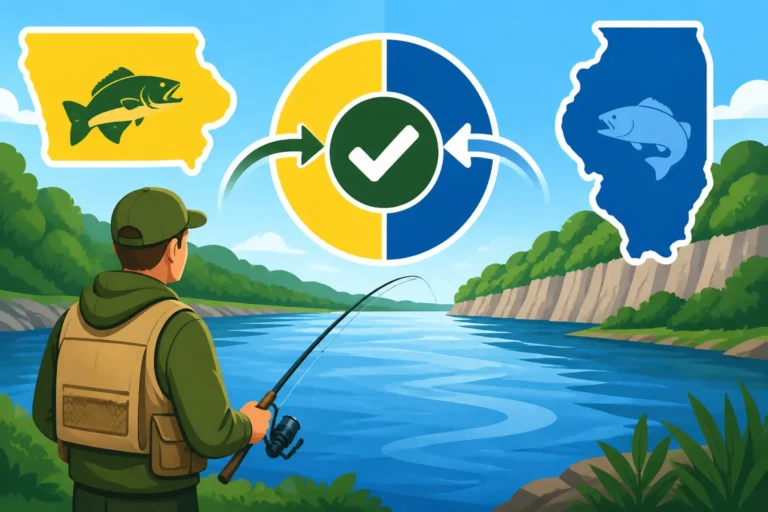
Illinois shares significant stretches of waterways with several neighboring states, most notably the Mississippi River bordering Iowa and Missouri, and the Wabash River forming a boundary with Indiana. This geographical reality frequently sparks questions about license reciprocity: "If I have an Illinois license, can I fish the Iowa side of the Mississippi?" or "Does my Kentucky license cover me on the Illinois side of the Ohio River?" The answer to these questions is complex and often conditional, making it imperative to understand the specifics of each agreement.
Illinois does indeed have reciprocity agreements with certain adjacent states for particular shared waters. For example, if you possess a valid Illinois fishing license, you are generally permitted to fish the shared boundary waters of the Mississippi River with Missouri, and vice versa for Missouri residents. Similar agreements exist for the Mississippi River with Iowa. However, these are not universal blanket agreements that cover all boundary waters or all species, nor do they necessarily extend to inland waters of the neighboring state. It is absolutely crucial to verify the precise details of these agreements. Resources such as Illinois Fishing License Reciprocity With Iowa or Illinois Fishing License Reciprocity With Missouri offer detailed information on the specific regulations that apply to these unique situations. While most inland tournaments within Illinois avoid these complexities, river tournaments that operate on or near border waters make understanding these nuances paramount for legal compliance. For the Wabash River, for instance, checking Illinois Fishing License Reciprocity With Indiana is critical.
Youth Anglers in Tournaments
It's truly inspiring to witness young anglers embracing the competitive spirit of fishing tournaments, and Illinois has made provisions to encourage their participation without unnecessary barriers. In Illinois, children who are under the age of 16 are generally exempt from the requirement to possess a fishing license when fishing in public waters. This exemption applies whether they are fishing purely for recreational enjoyment or actively participating in an organized tournament. This sensible policy aims to foster a love for fishing in the next generation by removing an initial financial hurdle for families.
However, parents, guardians, and tournament organizers should still be well-versed in the complete Illinois Fishing License Rules for Children. While the child themselves might not need a license, any adult aged 16 or older who is accompanying them and actively participating in the fishing process—such as casting for the child, baiting hooks, handling caught fish, or providing direct assistance that goes beyond passive supervision—will be required to possess a valid Illinois fishing license. Additionally, individual tournament organizers may have their own age categories, rules, or specific requirements for youth participants, so always review the tournament's guidelines. The overarching goal is to make it easy and enjoyable for younger competitors to learn and grow in the sport while ensuring that all adult participants remain compliant with state regulations.
Practical Advice for Every Tournament Angler in Illinois
Always Carry Proof of Your License
This piece of advice might seem incredibly obvious, yet it's astonishing how often even experienced tournament anglers either forget or misplace their essential fishing license. Whether your preference is a physical copy that you've printed, laminated, and keep in your wallet, or a digital version securely stored on your smartphone or a fishing app, having immediate and ready access to proof of your valid Illinois fishing license is absolutely non-negotiable. Conservation police officers (CPOs) are regularly on patrol across all Illinois waterways, including tournament venues, and they possess the full authority to request your license for inspection at any given moment.
Imagine the frustration of having a fantastic day on the water, only to have your success—and potentially your prize money—jeopardized by a preventable citation simply because your license was left on the kitchen counter at home. This scenario happens more frequently than you might think! Many savvy anglers utilize waterproof pouches, easily sourced from retailers like Amazon, to keep their fishing license, boat registration, and other critical documents protected from the elements and immediately accessible on their person or in a designated, dry compartment on their vessel. A quick, habitual check before you leave the launch ramp can save you immense stress, potential fines, and ensure your entire focus remains squarely on outsmarting the fish and competing effectively.
Reviewing Tournament-Specific Rules Beyond State Law
As we've firmly established, state fishing regulations serve as the fundamental legal framework for all angling in Illinois. However, competitive fishing tournaments invariably introduce their own, often more detailed and restrictive, set of operational rules. It is an angler's paramount responsibility to be intimately familiar with both layers of regulations. These tournament-specific rules can encompass a vast array of topics, including but not limited to, permissible bait and lure types, precise fishing boundaries or designated zones, strict weigh-in schedules, mandatory boat inspection protocols, and even regulations concerning communication with other competitors during the event. Neglecting to thoroughly read and understand these fine print details can lead to severe repercussions, including immediate disqualification from the tournament and the forfeiture of any potential prize money or entry fees.
Consider a practical example: a particular tournament might enforce a "no wake" speed limit within specific embayments or impose a strict ban on pre-fishing the tournament lake within a week of the event start. While these are not necessarily state laws, they are binding contractual rules within the context of the competition. Always download, print, and meticulously read the official rules packet well in advance of the tournament date. If any rule seems ambiguous or you require clarification, do not hesitate to proactively contact the tournament director or their designated representative. Thorough preparation not only guarantees your compliance but also provides a distinct competitive advantage by allowing you to strategize effectively without the looming anxiety of accidental rule infractions.
Keeping Up with IDNR Regulations
The regulatory landscape of fishing is not static; it is a dynamic environment where rules and guidelines are subject to periodic updates and modifications. The Illinois Department of Natural Resources (IDNR) regularly revises its regulations, which can include adjustments to daily catch limits, changes in minimum or maximum size restrictions, or even alterations to the Illinois Fishing Season and Catch Limit Rules for particular bodies of water. For a tournament angler, staying abreast of these ongoing changes is absolutely critical. A regulatory update that came into effect just last month could inadvertently transform a perfectly legal fishing tactic into a finable offense or a disqualifying infraction within a tournament.
An excellent and reliable method for remaining informed is to regularly visit the official IDNR website, particularly before the commencement of a new license year or whenever you plan to fish a new or unfamiliar body of water. The IDNR publishes a comprehensive annual guide, such as the Illinois Fishing Information Guide Covers April 2026 Through March 2027, which serves as an authoritative reference for all relevant state fishing regulations. Many local bait and tackle shops, as well as larger sporting goods stores where you might purchase new fishing gear (perhaps even some items you've previously researched or ordered from Amazon), also stock physical copies of these guides. Making it a consistent habit to review these publications annually, or whenever your fishing plans take you to a new area or involve targeting different species, is a fundamental practice for ensuring continuous compliance and preventing unwelcome surprises.
Enforcement, Penalties, and Staying Compliant
Game Wardens on the Water
Conservation Police Officers (CPOs), commonly known as game wardens, are the vigilant guardians of Illinois's natural resources and the primary enforcers of the state's intricate fishing and boating laws. These officers are highly trained law enforcement professionals who wield full police authority. This means they are fully empowered to stop your vessel, request identification, inspect your fishing license and any required stamps, examine your catch, and verify that your boat is equipped with all necessary safety gear. Their overarching mission is to safeguard Illinois's precious natural environment, ensure the sustainability of its fish populations, and maintain safe and fair recreational conditions for all users of the waterways.
It is a common practice for CPOs to actively patrol popular fishing tournament locations, especially during larger, high-profile events, precisely because these gatherings lead to a significant increase in angler activity and pressure on the fish populations. When encountered, CPOs are not solely focused on fishing violations; they also check for broader adherence to all state laws, including proper display of boat registration, the presence of sufficient and properly fitted Illinois Life Jacket and PFD Rules for every person on board, and compliance with regulations regarding alcohol consumption while operating a vessel. Always approach interactions with CPOs with courtesy and full cooperation; they are performing a vital public service to protect the integrity of the sport that we all cherish.
Consequences of Fishing Without a Proper License
The repercussions for fishing without a valid and proper license in Illinois are not to be taken lightly and can range from significant monetary fines to more serious legal penalties, particularly for individuals who are repeat offenders. If you are apprehended fishing without a current, valid license, or if you lack the specific species stamps required for the fish you are targeting, you will almost certainly be issued a citation. These fines are not trivial; they can easily amount to hundreds of dollars, transforming what should have been an enjoyable tournament day into a costly and deeply regretful experience.
Beyond the immediate financial penalty, fishing without a proper license can also lead to the confiscation of your catch, and in more egregious or repeated instances, your fishing equipment might also be seized. A history of multiple offenses can even result in the suspension of your fishing privileges for a defined period. The financial outlay for an Illinois fishing license is a comparatively modest investment that grants you legal, legitimate, and worry-free access to our state's diverse and beautiful fishing grounds, and the invaluable opportunity to participate in competitive events. You can easily purchase or renew your license through the IDNR's user-friendly online portal or at any of the hundreds of authorized vendors scattered throughout the state, thereby effortlessly avoiding the Penalties for Fishing Without a License in Illinois.
Impact on Tournament Disqualification
While a conservation officer has the authority to issue citations and enforce state law violations, the tournament director holds the ultimate responsibility for upholding and enforcing the specific rules of their organized competition. Any violation of state law that occurs during a tournament, such as fishing without a valid license, intentionally exceeding the state's daily bag limits, or possessing an undersized fish, will almost invariably result in your immediate and unequivocal disqualification from the event. This means you will forfeit all entry fees, any potential prize money you might have earned, and the competitive standing and bragging rights that come with success.
Furthermore, it's not just state law violations that lead to disqualification. Breaches of the tournament's own specific rules—such as improper use of your livewell, failure to make a weigh-in deadline, fishing outside designated boundaries, or using unauthorized baits—will also trigger disqualification. Tournament directors maintain a stringent adherence to their rulebooks to preserve the integrity and fairness of the competition for all participants. Therefore, being truly prepared for a tournament demands a comprehensive understanding of both sets of rules: the overarching state regulations and the finely detailed guidelines of the specific event. Do not let a preventable oversight or a lapse in judgment jeopardize your dedicated efforts and competitive aspirations.
| Feature | Standard IDNR State Regulations | Typical Tournament Rules (Example) |
|---|---|---|
| Fishing License | Required for ages 16+ (basic license + stamps if needed) | Required for ages 16+ (same as state law) |
| Daily Catch Limit | Varies by species and water body (e.g., 6 bass) | Often more restrictive (e.g., 5 bass) |
| Minimum Size Limit | Varies by species and water body (e.g., 14" walleye) | Can be more restrictive (e.g., 15" bass) |
| Possession Limit | Generally 2x daily limit, or as specified | Usually same as daily catch limit during event |
| Livewell | Not typically regulated for recreational fishing | Often mandatory, specified size/aeration, fish care rules |
| Culling | Permitted within limits | Specific rules for culling, often only during fishing hours |
| Boundaries | All legal Illinois waters (or reciprocal waters) | May be restricted to specific lake areas or zones |
| Weigh-In | N/A for recreational fishing | Strict procedures, penalties for dead fish |
| Permits | Angler needs personal license/stamps | Organizers need event permits, not individual anglers |
Disclaimer
The information provided in this guide is intended for general informational purposes only and does not constitute legal advice. While we strive to provide accurate and up-to-date information, fishing regulations and tournament rules can change frequently. It is always the angler's responsibility to consult the most current Illinois Department of Natural Resources (IDNR) regulations and the official rules of any specific fishing tournament before participating. Failure to do so may result in fines, penalties, or disqualification.