Why Fishing Rules Vary by Lake and River
It’s a tale as old as time for many Illinois anglers: you’re geared up for a fantastic day on the water, you’ve got your Illinois fishing license in hand, and then it hits you – the sinking feeling that the rules you know for your favorite lake might not apply to this new river or pond you’re exploring. This isn't just a minor inconvenience; it's a genuine source of confusion and frustration, making you wonder why it has to be so complicated. This guide is here to unravel that mystery, explaining exactly why fishing rules vary so much across Illinois’s diverse lakes and rivers and how you can stay on the right side of the law, no matter where your angling adventures take you.
The Core Reasons for Varied Regulations
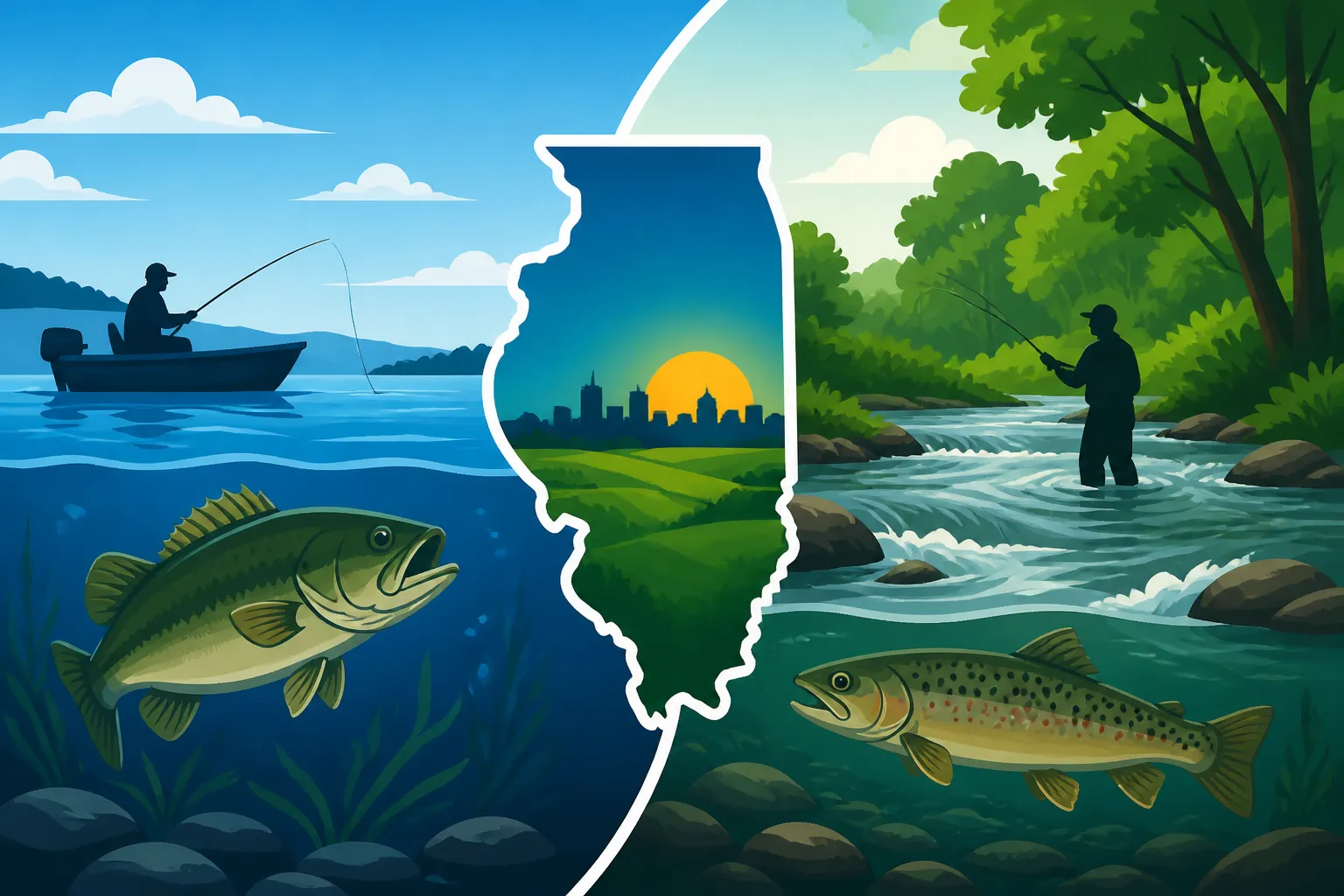
You might think that fishing rules should be simple and uniform across the state, but the reality is far more complex. Illinois is a state of incredible ecological diversity, from the sprawling waters of Lake Michigan and the mighty Mississippi River to countless smaller lakes, reservoirs, and winding streams. Each of these water bodies is a unique ecosystem, and managing them effectively requires a tailored approach. The Illinois Department of Natural Resources (IDNR) doesn't just create rules arbitrarily; they are designed with specific scientific and conservation goals in mind.
Ecological Diversity and Species Management
Think about it: a small, clear spring-fed lake in northern Illinois is going to be vastly different from a large, turbid reservoir in the southern part of the state, or a fast-flowing stretch of the Kankakee River. These differences translate directly to the types of fish species that thrive there, their population sizes, growth rates, and reproductive success.
For instance, a lake might have an overpopulation of smaller crappie, leading the IDNR to implement a no-size-limit rule with a generous daily bag limit to encourage harvest and thin the population, allowing the remaining fish to grow larger. Conversely, a river known for producing trophy smallmouth bass might have very strict size limits and reduced daily limits to protect those larger, older breeding fish. The goal isn't just to have any fish, but to maintain healthy, sustainable populations that offer quality fishing experiences. Different fish species also have different needs; a robust walleye population in one lake might require different management strategies than a thriving bass population in another. This often means that even when you understand the Illinois Walleye Size and Catch Limits, you still need to verify site-specific regulations.
Human Impact and Fishing Pressure
It's no secret that some fishing spots get a lot more attention than others. Waters close to major population centers, like those near Chicago or Springfield, naturally experience higher fishing pressure. More anglers on the water, day in and day out, can quickly deplete fish stocks if not properly managed.
Consider a popular spot like Lake Shelbyville or Rend Lake, which see thousands of angler visits annually. The IDNR might impose stricter daily catch limits or specific slot limits (where only fish within a certain size range can be kept) to distribute the harvest more evenly and prevent overfishing of certain size classes. On the other hand, a remote, lesser-known lake might have more relaxed rules simply because it doesn't experience the same level of angler pressure. It's all about balancing the desires of anglers with the biological capacity of the fish population to reproduce and sustain itself. High-pressure areas often need regulations that protect larger, breeding-size fish to ensure future generations. This is a key reason why you need to be aware of Statewide Rules Versus Lake-Specific Fishing Regulations.
Water Body Characteristics and Habitat
The physical characteristics of a lake or river also play a huge role in shaping fishing regulations. Deep, clear lakes with abundant weed beds offer different habitats than shallow, muddy rivers with strong currents or large reservoirs with extensive submerged timber. These environments influence fish behavior, spawning success, and vulnerability to angling.
For example, a lake with limited spawning habitat for largemouth bass might have a catch-and-release only period during the spring spawn to protect the fish while they are most vulnerable. Conversely, a river with abundant catfish spawning areas might have more lenient Catfish Limits Compared to Walleye Limits in Illinois because their populations can rebound more quickly. Water temperature, oxygen levels, water flow, and substrate type all contribute to a unique habitat that dictates which species thrive and how they should be managed. An understanding of these environmental factors is crucial for effective fisheries management, and it’s why a universal rulebook just wouldn't cut it.
Common Ways Rules Differ Across Illinois Waters
The variations in fishing regulations aren't just subtle nuances; they can be quite significant, impacting everything from how many fish you can keep to what kind of bait you're allowed to use. These differences are purposefully implemented to manage fish populations effectively at a localized level, recognizing that one size doesn't fit all in the diverse aquatic landscapes of Illinois.
Size and Creel Limits
Perhaps the most common and noticeable variations you'll encounter are in size and creel limits. A "creel limit" is simply the daily limit on the number of fish you can keep. A "size limit" dictates the minimum or maximum length of fish you're allowed to harvest. These aren't uniform across the state because fish populations behave differently in various waters.
Take largemouth bass, for example. While there is a statewide bass fishing limit, many lakes have their own specific rules. Some lakes might have a 14-inch minimum length limit for bass, meaning any bass shorter than that must be immediately released. Other lakes might implement a "slot limit," where you can keep fish under a certain size (say, 12 inches) and fish over another size (say, 16 inches), but fish within the slot must be released. This is often done to protect a crucial breeding stock of medium-sized fish. For crappie, you might find some lakes with a 10-inch minimum size and a 15-fish daily limit, while others have no size limit but a lower daily limit, or even a higher one. These variations directly reflect the health and structure of the fish population in that particular body of water, aiming to either protect specific size classes or encourage harvest to improve overall growth rates. This is why you need to consult site-specific rules, as the Illinois Statewide Bass Daily Catch Limit of Six Fish might be altered on your chosen lake.
Seasonal Restrictions and Catch-and-Release Zones
Beyond daily and size limits, fishing rules can also vary by season or even designate entire areas as catch-and-release only. These temporal and spatial restrictions are typically put in place to protect fish during vulnerable periods, such as spawning, or to establish areas where fish populations can serve as a reserve.
Many popular bass lakes, especially those managed for quality fisheries, will have designated catch-and-release only periods, particularly during the spring spawning season. This allows the fish to complete their reproductive cycle undisturbed, ensuring future generations. Certain areas of a river, like shallow backwaters or specific creek mouths, might be closed to fishing entirely during specific times to protect spawning activity for species like walleye or crappie. You might also find that specific species have open and closed seasons that vary from the general statewide rules in certain locations. For instance, some waters may have specific Catch-and-Release Only Periods on Some Waters for particular species like muskie or northern pike, ensuring their long-term health. These rules are critical for protecting fish when they are most susceptible and are a testament to the IDNR's commitment to sustainable fishing.
Gear and Bait Restrictions
While not as widespread as size or creel limits, some lakes and rivers have specific restrictions on the type of gear or bait you can use. These rules are often implemented to protect sensitive fish populations, prevent the spread of invasive species, or maintain the aesthetic and ecological integrity of certain waters.
For instance, fly-fishing-only waters are a classic example, where only artificial flies can be used, and often only with a fly rod. This is common in designated trout streams, providing a more challenging and purist angling experience while minimizing harm to the fish. Other waters might prohibit the use of live bait, especially minnows, to prevent the accidental introduction of non-native species or diseases that could harm the local ecosystem. Some regulations might even specify single-hook artificial lures only, or restrict the number of hooks on a line. For trotlines and jug fishing, especially for catfish, there are often very specific rules regarding the number of lines, hooks per line, and mandatory tagging. These restrictions are less about limiting your catch and more about controlling the method of fishing to ensure both fair chase and ecological protection. If you're planning a trip, it's always smart to check the local regulations – even something you bought on Amazon, like a specific type of bait or lure, might be restricted in certain areas.
Understanding Jurisdictional Complexity
The patchwork of fishing regulations in Illinois becomes even more intricate when you consider the different layers of authority that govern our waterways. It's not just the IDNR setting rules; sometimes, other entities, or even neighboring states, have a say. This jurisdictional complexity is another major reason why you can't assume a rule that applies to one lake will apply to another, even if they're just a few miles apart.
State vs. Local Regulations
While the Illinois Department of Natural Resources (IDNR) sets the overarching statewide fishing regulations, there are instances where local authorities or land managers impose additional, more restrictive rules. This is particularly true for waters managed by municipalities, county forest preserve districts, or even state parks that have unique management goals.
For example, a lake within a county forest preserve might have stricter boating regulations (e.g., electric motors only, no gasoline engines) or specific shore fishing access rules that aren't found on a public state-managed lake. Many urban ponds or smaller community lakes might have simplified "panfish only" regulations, or very strict catch-and-release policies enforced by park rangers, aiming to provide family-friendly fishing opportunities rather than trophy fishing. Some private lakes, while requiring an Illinois fishing license for public access, may also have their own set of rules, often posted prominently at the access point. It's crucial not to assume that just because you have your state license, you're exempt from these local rules. Always look for signage at boat ramps or access points, or check the specific website for the park or district managing the water body. This local oversight is a primary reason why Fishing Limits Depend on Which Lake You're On.
Interstate Waters and Reciprocity Agreements
Illinois is bordered by several major rivers – the Mississippi to the west, the Wabash to the east, and the Ohio to the south – which form boundaries with Iowa, Missouri, Indiana, and Kentucky, respectively. Fishing on these "boundary waters" introduces another layer of complexity: interstate reciprocity agreements.
These agreements are designed to simplify fishing for anglers who want to fish these shared waters without needing multiple state licenses. For instance, an Illinois resident fishing the Mississippi River might be allowed to fish portions of the river that technically border Iowa or Missouri, using only their Illinois fishing license, provided they adhere to the rules of the state in which they are fishing or the most restrictive rules if both states apply. However, these agreements are not universal and often have specific conditions. The exact terms of Illinois Fishing License Reciprocity With Iowa, or with Missouri, Indiana, Kentucky, or Wisconsin, will specify which waters are covered and which state's rules apply in different scenarios. For example, some agreements might only cover the main channel of the river, not tributaries or backwaters that extend solely into one state. It's vital to research these specific agreements before heading out to these border waters. Failing to understand these nuances can lead to citations, even if you genuinely believed your license covered you. These rules are in place to ensure cooperative management of shared fish resources and to make border fishing as straightforward as possible for responsible anglers, but the onus is on you to know the specifics.
How to Navigate and Find Site-Specific Rules
Feeling a bit overwhelmed by all these varying regulations? You're not alone. It can seem like a daunting task to keep track of every rule for every body of water. However, the good news is that the Illinois Department of Natural Resources (IDNR) and other resources provide clear, accessible ways for you to find the exact rules for your chosen fishing destination. It just takes a little proactive effort before you cast your line.
The Illinois Fishing Information Guide
Your absolute best friend in navigating Illinois fishing regulations is the annual Illinois Fishing Information Guide. This comprehensive publication is put out by the IDNR every year and details all statewide regulations, as well as crucial site-specific rules for hundreds of lakes, rivers, and ponds across the state.
Think of it as the ultimate almanac for Illinois anglers. It covers everything from general possession limits to specific size and creel limits for particular species in designated waters. For example, if you're planning a trip to Lake Carlyle, the guide will clearly list if there are any special regulations for catfish, bass, or crappie that differ from the statewide norms. It also provides important dates, such as the Illinois Fishing License Year Starts on March 1, and details about trout and salmon stamp requirements. You can usually pick up a physical copy of this guide at most bait and tackle shops, sporting goods stores like those found on Amazon, or IDNR offices. It's also readily available as a PDF download on the official IDNR website. Always make it a habit to check the most current guide, as regulations can change from year to year based on ongoing fisheries assessments. Keeping a digital copy on your phone or a printed one in your tackle box is a smart move.
Online Resources and Local Bait Shops
While the official guide is indispensable, there are other excellent resources to ensure you have the most up-to-date information. The IDNR website itself is a treasure trove of information, with dedicated pages for specific lakes and rivers that often include the latest fishing reports and regulatory updates.
Many county forest preserve districts, state parks, and even federal agencies managing larger reservoirs (like the U.S. Army Corps of Engineers for Lake Shelbyville, Carlyle Lake, and Rend Lake) also maintain their own websites with detailed information specific to the waters they manage. These sites can be particularly helpful for checking local boat ramp conditions, recent stocking efforts, or temporary closures. Furthermore, never underestimate the power of your local bait and tackle shop. These establishments are often run by seasoned anglers who live and breathe fishing in their area. They are usually the first to know about any recent regulation changes, local hotspots, and even subtle nuances that might not be explicitly written in the guide. They can provide invaluable, real-time advice on How to Find the Rules for a Specific Illinois Fishing Spot. Don't be shy about asking questions; they are a fantastic community resource for anglers of all skill levels.
The Angler's Responsibility and The Bigger Picture
At the end of the day, understanding and following these varying fishing rules isn't just about avoiding a ticket; it's about being a responsible steward of Illinois's natural resources. Every angler plays a critical role in the health and sustainability of our fisheries. When you choose to educate yourself and adhere to the regulations, you're contributing to a much larger effort that benefits everyone who loves to fish in the Prairie State.
Why Adherence Matters for Future Fishing
Ignoring site-specific regulations, whether intentionally or out of ignorance, can have significant negative consequences for fish populations. For example, if too many anglers harvest undersized bass from a lake with a minimum length limit, it can deplete the juvenile fish that are crucial for replenishing the adult population. Similarly, exceeding daily bag limits can quickly put a strain on fish stocks, especially for popular species in heavily fished waters.
When populations decline due to overharvest or improper management, the IDNR might be forced to implement even stricter regulations, reduce stocking efforts, or even close fisheries entirely. This harms everyone – current anglers lose opportunities, and future generations inherit depleted resources. Every fish caught, kept, or released has an impact. Adhering to the specific rules for each lake and river ensures that you're fishing sustainably, allowing those fish to reproduce and thrive. It means that when you go fishing again next year, or even a decade from now, there will still be healthy fish populations for you and your family to enjoy. Understanding the Penalties for Fishing Without a License in Illinois, or for violating catch limits, helps reinforce the importance of these rules.
Supporting Conservation Efforts Through Regulations
The regulations set by the IDNR are not designed to make fishing more difficult; they are carefully crafted tools based on scientific research and population assessments. They are a cornerstone of Illinois's broader conservation efforts, ensuring biodiversity and ecological balance.
By following these rules, you are directly supporting the hard work of fisheries biologists, conservation police officers, and countless volunteers who dedicate themselves to protecting our aquatic environments. Your compliance allows their management strategies to work as intended, preventing overfishing, protecting critical habitats, and ensuring the health of the entire ecosystem. Furthermore, the revenue generated from fishing license sales, which often includes specific stamp fees like the Illinois Inland Trout Stamp Requirements, directly funds these conservation programs. This money goes towards fish stocking, habitat restoration projects, research, and enforcement. So, every time you buy your license and follow the rules, you're not just buying the right to fish; you're investing in the future of Illinois fishing. It’s a shared responsibility, and every angler's choices contribute to the collective success of these vital conservation goals.
Disclaimer
Please note that fishing regulations can change frequently. While this guide provides comprehensive information, it is essential to always consult the most current Illinois Fishing Information Guide published by the Illinois Department of Natural Resources (IDNR) or check their official website before heading out to any specific body of water. Local bait shops and park offices are also excellent resources for the latest site-specific rules.