Does a Child Need a Life Jacket Below Deck in Illinois?
One of the most common questions I hear from parents taking their kids out on the water in Illinois is about life jackets, especially when you have a bigger boat with an actual cabin. It’s easy to understand the rule for open decks – kids under 13 need to have one on, right? But what about when your little one is tucked away safely below deck, perhaps napping in a bunk or playing with toys in an enclosed space? This can feel like a tricky gray area, and it's certainly a source of confusion for many of us who just want to make sure we're following the rules and, more importantly, keeping our families safe. This guide is going to dive deep into Illinois' specific regulations to clear up the confusion around life jackets for children below deck, so you can enjoy your time on the water with confidence.
The Basics of Illinois Life Jacket Law for Kids
Let's start with the fundamental rules because they really set the stage for understanding the nuances of "below deck" situations. The Illinois Department of Natural Resources (IDNR) has some clear guidelines, but like anything involving legal jargon, it can sometimes feel a little less than straightforward.
Understanding the "Underway" Rule
The primary rule in Illinois boating law, and really across most states, revolves around whether your vessel is "underway." What does "underway" actually mean in this context? Simply put, it means your boat is in motion, not docked, moored, or anchored. If your engine is on and you're moving through the water, or even if you're drifting without being anchored, your boat is considered underway. This distinction is crucial because the life jacket requirement for children applies specifically when the boat is operating in this mode.
For children under the age of 13, the Illinois law states they must wear a U.S. Coast Guard-approved life jacket whenever the vessel is underway. This isn't just about having one on board; it means it must be properly fastened and worn. So, if you're cruising across Lake Shelbyville or navigating the Illinois River, and you have a child under 13 on board, they need to be in their life jacket. This applies whether they're sitting in a seat, standing near the railing, or even if they're just walking around on an open deck. It's a blanket rule for their safety in case of an unexpected lurch, wave, or worse. You can learn more about these requirements in our Illinois Life Jacket Rules for Children Under 13 guide.
Why the "Below Deck" Clause Causes Confusion
Now, here's where the specific question about "below deck" comes into play and often throws people for a loop. Many boaters, especially those with larger vessels like cruisers or pontoon boats that have a small changing room or a fully enclosed cabin, wonder if this general rule still applies. You might think, "My child is inside, in a fully enclosed area, what's the difference between that and being at home?" It's a very fair thought, and it stems from a natural desire to balance safety with comfort, especially on a longer trip.
The frustration often comes from feeling like you're caught between a strict letter of the law and common sense. Is a child really safer wearing a life jacket while asleep in a bunk bed down in the cabin of a large cruiser, compared to simply being in the bed? The spirit of the law is undoubtedly about preventing drownings, but the application to these specific scenarios can feel a bit murky. We’ve all been there, trying to parse through regulations that seem written for one type of boat but not quite fit another. This is exactly why it's worth taking the time to understand the precise wording and intent behind these rules.
The Rationale Behind the Regulations
Every boating regulation, especially those concerning children, is steeped in a rationale of safety. When a child is on an open deck and the boat is underway, there's always a risk of an accidental fall overboard, sudden capsizing due to weather or a collision, or being thrown from the boat by a sharp turn or wake. In these situations, a life jacket can be the difference between life and death. Children, especially younger ones, may not have the swimming skills, strength, or presence of mind to stay afloat or find safety in an emergency.
Even in what seems like a "safe" enclosed space, unexpected events can occur. A collision with another boat, hitting a submerged object, or even a sudden malfunction could compromise the vessel's integrity quickly. While a life jacket might seem unnecessary inside a solid cabin, the regulations are designed to provide a layer of protection against the unforeseen. The goal is to maximize the chances of survival and rescue, recognizing that accidents on the water can escalate rapidly and leave little time for donning a life jacket. It's about preparedness, ensuring that the necessary safety equipment is already in place if the worst happens.
Interpreting "Below Deck" and Enclosed Cabins
Alright, let's get into the nitty-gritty of what Illinois law actually says about enclosed cabins and whether that changes the life jacket requirement for kids. This is the part that often clears up a lot of the confusion for boat owners with larger vessels.
What Constitutes an Enclosed Cabin?
First, it's vital to understand what Illinois considers an "enclosed cabin" or "below deck" area. This isn't just any covered space. We're talking about a structure that is substantially enclosed, typically with walls, a roof, and often a door or hatch that can be closed. Think of it like a small room on your boat.
Examples of areas that usually qualify as an enclosed cabin include:
- Cruiser Cabins: The main living space below the main deck of a cabin cruiser, where there are bunks, a galley, or a head. These areas are completely surrounded by the boat's hull and superstructure.
- Houseboat Interiors: The living quarters within a houseboat, which are essentially rooms on the water.
- Enclosed Pontoon Changing Rooms or Heads: Some larger pontoon boats have a dedicated, fully enclosed compartment, often used as a changing room or a portable toilet area. If it has solid walls and a door that latches, it might be considered an enclosed space.
What does not typically qualify as an enclosed cabin?
- Open Bow Sections: Even if the bow has seats and a cover, if it's open to the air and the rest of the boat, it's not enclosed.
- Bimini Tops or Canvas Enclosures: While these provide shade and some protection from the elements, they are generally not considered fully "enclosed" in the regulatory sense, as they can be easily compromised or don't offer the structural protection of a rigid cabin.
- Any area that is not fully sealed from the water or outside elements.
The key here is the degree of enclosure and protection offered by the structure itself. It needs to provide a significant barrier from the open water and the motion of the vessel.
The Specific Exemption for Enclosed Areas
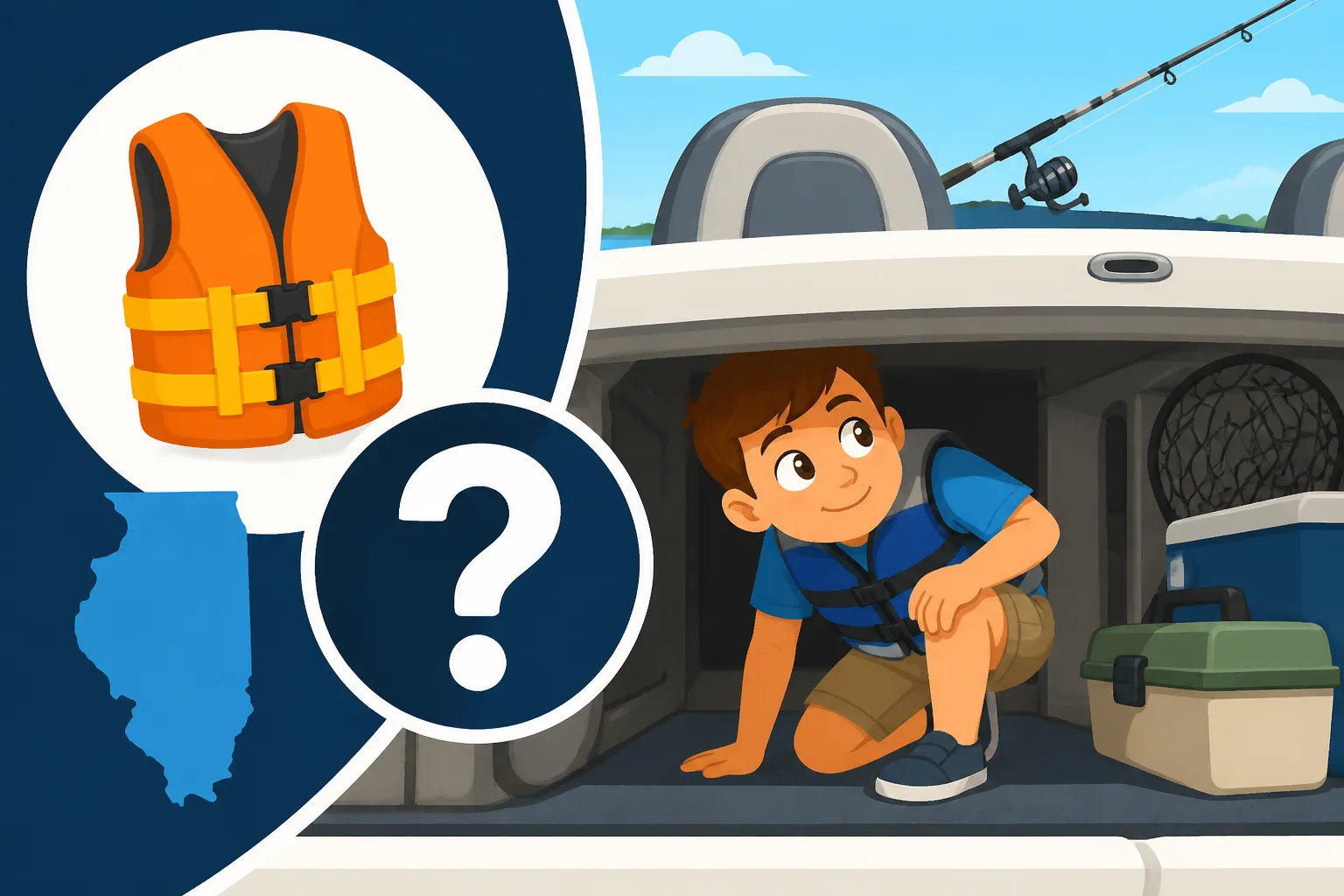
Here's the good news for those of you with boats featuring proper enclosed cabins: Illinois boating law does include a specific exemption. The law states that children under 13 are not required to wear a life jacket when they are below deck or within an enclosed cabin while the vessel is underway.
This exemption recognizes that these areas offer a different level of safety and containment compared to an open deck. If your child is truly inside a cabin, away from the immediate risk of falling overboard, the requirement to wear the life jacket is relaxed. However, it’s absolutely critical that a properly fitted, Coast Guard-approved life jacket for each child under 13 must still be readily accessible on board. This means it needs to be easy to grab and put on quickly in an emergency, not buried under a pile of gear in a locker. Our Illinois Boating Safety Gear Checklist goes into more detail about what other safety equipment you should have on board.
This exemption is a common-sense allowance for longer trips or when conditions are rough, and keeping a child indoors is the safest option. It acknowledges that the cabin itself provides a degree of protection and security.
Practical Scenarios: When to Wear, When Not to Wear Below Deck
Let's look at some real-life situations to illustrate this rule:
-
Scenario 1: Child Sleeping in a Cruiser's Bunk: Imagine you're on a multi-day trip on Lake Michigan in your cabin cruiser, and your 8-year-old is fast asleep in their bunk down in the forward cabin while you're cruising to your next destination. In this situation, because they are truly below deck in an enclosed cabin, they are not legally required to wear their life jacket. However, you should still have their life jacket within arm's reach, ready to be put on if an emergency arises.
-
Scenario 2: Child Playing in an Enclosed Pontoon Changing Room: You've got a spacious pontoon boat on Rend Lake, and your 6-year-old is playing with a tablet in the boat's enclosed changing room, which has a solid door that latches. While you're motoring across the lake, they are generally safe from falling overboard. Therefore, under Illinois law, they would not need to wear a life jacket in that specific, enclosed space. Again, their life jacket needs to be easily accessible.
-
Scenario 3: Child in a "Covered" Bow Section That Isn't Enclosed: Let's say you're on a runabout with an open bow section that has a canvas cover zipped over it to block the wind. Your 10-year-old is sitting in the bow, feeling cozy. Is this "below deck" or an "enclosed cabin"? Likely not. Even with the cover, an open bow section typically doesn't meet the definition of an enclosed, structurally protective cabin. In this case, your child would still be required to wear their life jacket while underway. It’s important to distinguish between a temporary weather cover and a permanent, structural cabin. When in doubt, it’s always better to put the life jacket on.
Beyond the Law: Prioritizing Child Safety
While understanding the letter of the law is crucial, as responsible boaters and parents, our primary goal is always the safety and well-being of our children. Sometimes, going beyond the minimum legal requirement is simply the best decision for peace of mind and true protection.
The "Always Wear It" Mentality
Many experienced boating families adopt an "always wear it" mentality for their children, regardless of whether they are legally required to or not. This means that from the moment they step onto the boat until they step off, the life jacket is on. Why do they do this? Because accidents don't check the law before they happen.
Think about it: an unexpected wake from a passing towboat, a sudden equipment malfunction, or even a simple slip and fall can happen in an instant. If your child is below deck without a life jacket, and an emergency happens that forces them out of the cabin quickly, valuable seconds are lost trying to retrieve and don a life jacket. Those seconds could be critical. Having them wear it constantly eliminates that scramble and ensures they are immediately buoyant if they enter the water. It’s a habit that fosters safety and removes any ambiguity about when it's "okay" to take it off. It offers a significant layer of protection that goes beyond just meeting the basic legal criteria.
Choosing the Right Life Jacket for Kids
If you're going to embrace the "always wear it" philosophy, or even just ensure compliance with the law, having the right life jacket is paramount. A life jacket is only effective if it fits properly and is comfortable enough to wear for extended periods.
Here's what to look for:
- U.S. Coast Guard Approval: This is non-negotiable. Always look for the USCG approval stamp.
- Proper Fit: This is perhaps the most important aspect. A child's life jacket should fit snugly. It shouldn't ride up over their ears when you lift it by the shoulders. Sizes are typically based on weight, not age, so always check the label. A poorly fitting life jacket can be more dangerous than none at all.
- Comfort: If it's uncomfortable, a child is less likely to wear it or will constantly try to take it off. Look for jackets with adjustable straps, soft materials, and designs that allow for freedom of movement. Some have crotch straps to prevent ride-up, which is excellent for active kids.
- Type II or Type III PFDs:
- Type II (Near-Shore Vest): These are good for calm, inland waters. They are designed to turn an unconscious person face-up in the water.
- Type III (Flotation Aid): These are also good for calm waters but offer more comfort and freedom of movement. They might not turn an unconscious person face-up, so they're best for situations where rescue is likely to be quick.
You can find a great selection of high-quality, comfortable life jackets at retailers like Bass Pro Shops, where you can try them on for fit, or browse a wide variety on Amazon with detailed size charts and reviews. It’s worth investing a bit more for a jacket that your child will actually wear happily. We have a detailed guide on Proper Life Jacket Fit for Kids Fishing in Illinois that can help you make the best choice.
Educating Children on Water Safety
Life jackets are a critical piece of the puzzle, but they're not the only one. Educating your children about water safety is an ongoing process that empowers them to be safer boaters.
Start young and make it fun. Teach them:
- "Boat Rules": Simple rules like "always hold onto a railing," "stay seated when the boat is moving," and "no running on deck."
- The Importance of Life Jackets: Explain why they wear a life jacket, not just that they have to. Use age-appropriate language about what it does and why it helps.
- Basic Swimming Skills: Even with a life jacket, swimming ability is an invaluable skill on the water.
- Emergency Procedures: What to do if someone falls overboard, how to call for help, or how to signal.
- Respect for the Water: Teach them about changing weather conditions, currents, and potential hazards.
By involving them in the safety process, they'll be more likely to understand and adhere to the rules. It creates a culture of safety that benefits everyone on board.
Common Misconceptions and Smart Practices
Navigating boating regulations can be a bit like trying to find your way through a new fishing spot in the dark – sometimes you hit a snag. Let's tackle some common misconceptions about life jackets for children and talk about smart practices to keep everyone safe and compliant.
Misconceptions About Age and Size
One of the biggest misconceptions I often hear is that once a child reaches a certain age or can swim really well, they no longer need to follow the life jacket rules. Parents might think, "My 12-year-old is practically a fish in the water, surely they don't need one while we're just slowly cruising along the shore?"
Fact: The Illinois law is quite clear: it applies to children under 13. This means that until their 13th birthday, that child is legally required to wear a life jacket when the boat is underway on an open deck. Their swimming prowess, their comfort level in the water, or their perceived maturity doesn't change the legal requirement. These age cutoffs exist for a reason – they provide a consistent, easily enforceable standard that accounts for general developmental stages and abilities. It takes the guesswork out of it for both parents and enforcement officers.
| Age Group | Underway (Open Deck) | Underway (Enclosed Cabin / Below Deck) | Life Jacket On Board |
|---|---|---|---|
| Under 13 | Required | Not Required | Required & Accessible |
| 13 and Older | Not Required | Not Required | Required & Accessible |
How Game Wardens Interpret the Rule
When a game warden or marine police officer pulls up alongside your boat for a safety check, their primary concern is, rightly so, safety. While they understand the nuances of the "below deck" exemption, they're always going to err on the side of caution.
If there's any ambiguity about whether an area truly constitutes an "enclosed cabin" or if a child is technically still in an open space, they will likely expect the child to be wearing a life jacket. For instance, if your pontoon has a privacy curtain that looks like a wall but isn't a solid, structural enclosure, a warden might not consider that "below deck."
It's always better to be overly cautious than to try and argue semantics on the water. If a child is observed on an open deck without a life jacket when the boat is underway, regardless of how briefly, you could face a citation. These penalties can range from warnings to fines, and no one wants to cut short a fun day on the water with a lecture and a ticket. Game wardens are doing their job to ensure everyone's safety, and compliance makes their job, and your day, much smoother. You can read more about what happens during these checks in Can Game Wardens Check Your Fishing License on the Water?.
Your Family's Safety Plan
Beyond just meeting legal requirements, the smartest practice for any boating family is to establish a comprehensive safety plan. This means more than just having life jackets; it means everyone on board understands their role and what to do in different situations.
Here are a few elements to consider for your family's safety plan:
- Life Jacket Protocol: Decide on a family rule. Will everyone under 13 wear it always, or only when on the open deck? Make it clear and consistent.
- Designated Safe Zones: Identify areas on the boat where kids can play safely, especially if the boat is moving.
- Emergency Drills: Periodically, run through simple scenarios. What if someone falls overboard? Where are the fire extinguishers? Who calls for help?
- Weather Awareness: Teach kids the importance of checking weather, and what to do if a storm rolls in.
- Buddy System: Encourage kids to watch out for each other.
- Communication: Keep lines of communication open. If a child feels unsafe, they need to know they can speak up without fear.
By integrating these practices, you're not just following the law; you're fostering a culture of safety that helps protect your most precious cargo. The waters of Illinois offer incredible fishing and boating opportunities, and with proper planning and adherence to safety, your family can enjoy them for years to come.
Disclaimer
This article is for general informational purposes only and does not constitute professional advice. Laws, prices and regulations vary by location and change over time. Consult a qualified professional for guidance on your specific situation.