Illinois Boat Registration for Trolling Motors and Sailboats
It's incredibly easy to get confused when it comes to Illinois boat registration, especially if you're venturing out onto the water with something a little less traditional than a big bass boat. Many folks assume that a small sailboat or a kayak with a little electric trolling motor might fly under the radar, but that's not always the case. This guide will cut through the confusion and clarify exactly when and why your trolling motor boat or sailboat needs to be registered in the Prairie State, helping you avoid unexpected headaches.
Demystifying Illinois Boat Registration: What You Need to Know
For many Illinois anglers and recreational boaters, the idea of boat registration conjures up images of larger vessels – speedboats, pontoon boats, or big fishing rigs. However, the Illinois Department of Natural Resources (IDNR) has a pretty broad definition of what constitutes a "watercraft" that requires registration, and it often surprises people how inclusive these rules are. Understanding the fundamental principles of Illinois boat registration is the first step to ensuring you're legally prepared for your next outing, whether it's on a quiet backwater slough or the vast expanse of Lake Michigan.
The Broad Strokes: What the Law Actually Says About "Vessels"
In Illinois, the core rule is that any vessel propelled by machinery must be registered. This is where many of the misconceptions begin, because "machinery" isn't limited to gasoline engines. It includes electric motors, too, regardless of their size or horsepower. So, if you've got anything from a 2.5 horsepower outboard on a small jon boat to a tiny electric trolling motor attached to your canoe, you're generally going to fall under the registration requirements. This definition is designed to ensure that all mechanically powered vessels, no matter how modest, are accounted for and that their operators adhere to basic safety and identification standards. It's not about how fast your boat can go, but simply how it's moving through the water if that movement is machine-assisted.
The law also specifies certain dimensions and types of vessels. For instance, sailboats over a specific length that are primarily wind-driven might have different considerations, which we'll dive into later. The intent behind these regulations is primarily for safety and identification. In an emergency, or if there's an incident on the water, having a registered vessel makes it much easier for authorities to track down owners and ensure accountability. It’s all part of the larger framework that helps keep our Illinois waterways safe and enjoyable for everyone. For a deeper dive into all the general requirements, check out our Illinois Boat Registration Requirements Explained guide.
Beyond the Obvious: Why Many Small Boats Get Overlooked
It's a common scenario: you see someone out on a lake in a small canoe, quietly fishing with a little electric trolling motor, and you might think, "Well, they probably don't need to register that." This is precisely where many boaters, even seasoned ones, make assumptions that can lead to unexpected fines or legal troubles. The sheer convenience and portability of small craft with electric motors can sometimes lead owners to believe they're exempt, blurring the lines between truly unpowered vessels and those that technically fall under the "powered machinery" umbrella.
One of the main reasons these small boats often get overlooked is that they don't feel like traditional "boats." A kayak or a canoe, even with an electric motor, still retains its primary identity as a paddle craft. The motor might feel like an accessory, not the primary means of propulsion that dictates registration. Yet, for the IDNR, the presence of that motor is the deciding factor. This distinction can be a real point of frustration for owners who just want a little extra help covering water without the hassle and expense of traditional boat ownership. It’s also why many people, in good faith, venture out without the proper documentation, only to be surprised when a conservation officer points out the omission.
Trolling Motors Aren't Exempt: Registering Powered Canoes, Kayaks, and Jon Boats
This is probably one of the biggest eye-openers for a lot of folks getting into fishing or leisurely paddling on Illinois waters. That quiet little electric motor that helps you sneak into a secluded cove or fight a current for easier casting? Yep, it usually means your craft needs a registration sticker. It’s not just about gasoline guzzlers; electric power counts just the same in the eyes of the law.
The "Powered Vessel" Trap: Electric Motors Count
Let's clear this up right now: in Illinois, if your watercraft is propelled by any kind of motor, whether it’s a roaring V8 outboard or a silent electric trolling motor, it's considered a "powered vessel" and needs to be registered. This is the "trap" many new and experienced anglers fall into. They might assume that because an electric motor is small, quiet, and typically used for slow speeds, it somehow doesn't count. But that assumption could land you in hot water. The IDNR isn't concerned with the type of fuel or the noise level; they're concerned with whether there's machinery moving the boat.
Think about it this way: a vehicle on the road, even an electric golf cart, still needs to be registered and licensed if it's operating on public roads. The same principle applies to Illinois waterways. The motor, regardless of its power source or horsepower rating, fundamentally changes the classification of your canoe, kayak, or small jon boat from a purely human-powered vessel to a machine-powered one. This distinction is crucial for law enforcement, safety patrols, and for identifying vessels in case of accidents or violations. So, before you click "add to cart" on that new trolling motor at your favorite outdoor retailer like Bass Pro Shops, make sure you're ready to tackle the registration process too. For more specific details on this, see Do Trolling Motor Boats Need to Be Registered in Illinois?.
Practical Scenarios: Kayaks, Canoes, and Jon Boats with Trolling Motors
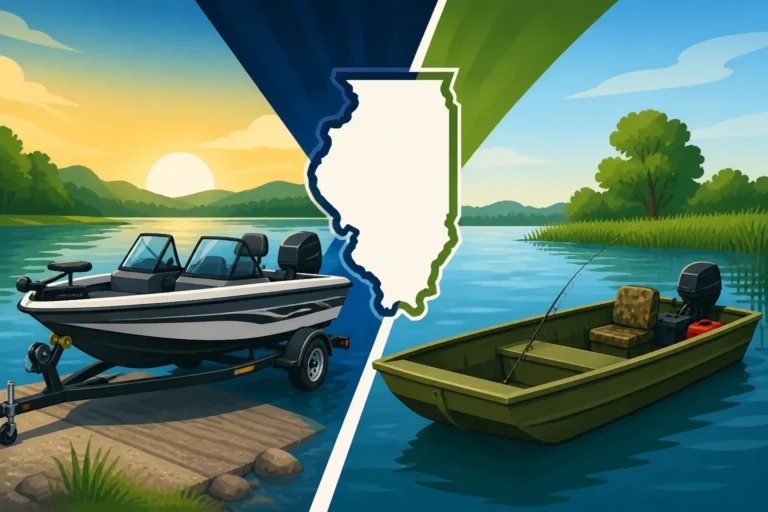
Let's get practical. Imagine you have a sturdy 14-foot aluminum jon boat that you use for fishing on local ponds and small rivers. You bought it specifically for its light weight and ease of transport. You only ever use a small 55-pound thrust electric trolling motor to get around, sometimes with a battery you picked up from Amazon. In this scenario, your jon boat absolutely requires registration. Even though you might only use the electric motor occasionally, its presence means it's a powered vessel. You'll need to apply for an Illinois watercraft registration, display the registration numbers on the bow, and affix the annual decal.
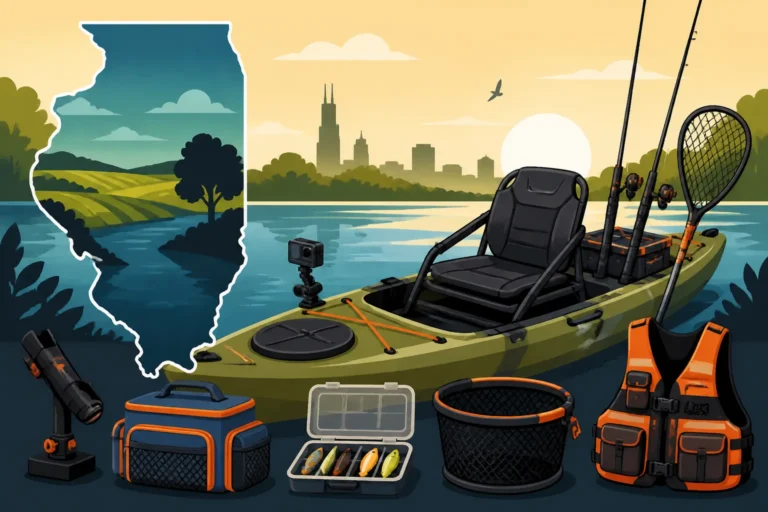
Similarly, if you've strapped a trolling motor to the back of your fishing kayak or a square-stern canoe, the same rules apply. While a standard paddle kayak or canoe is exempt, the moment you add that electric assist, you're now operating a motorized vessel. This means you'll need to go through the full registration process. It's not uncommon to see kayakers or canoers receive citations because they were unaware of this requirement. It's always better to be safe than sorry and ensure your vessel is properly documented. This includes understanding the nuances of Kayak Registration Rules in Illinois before heading out.
Navigating the Waters: Illinois Registration for Sailboats
Sailboats present their own unique set of considerations when it comes to Illinois boat registration, often creating confusion because their primary means of propulsion is wind. However, much like the trolling motor discussion, the presence of an auxiliary engine, even a tiny one, can completely change the registration requirements. It's not always as simple as "if it has sails, it's exempt."
Pure Sailboats: When Wind Power Alone Doesn't Require a Sticker
For sailboats that are purely wind-powered and do not have any mechanical means of propulsion whatsoever, the general rule in Illinois is that they are exempt from registration requirements if they are 12 feet in length or less. This means if you have a small dinghy or a Sunfish-style sailboat that relies solely on the wind and has no engine, no matter how small, you generally won't need to register it as long as it falls within that size limit. This exemption acknowledges the traditional nature of sailing and the minimal impact these smaller, unpowered vessels have on crowded waterways.
However, once a sailboat exceeds 12 feet in length, even if it's still solely wind-powered, it does need to be registered in Illinois. The length becomes the deciding factor at this point. This distinction is important for larger sailboats that might be operating on bigger bodies of water like Lake Michigan, where visibility and navigation are more critical. So, if you're thinking of getting a larger sailboat, whether it's a 15-foot day-sailer or a substantial keelboat, plan on going through the registration process, even if you never intend to install an engine. This is a common point of confusion, and it's essential to know if Does a 12-Foot Sailboat Need Illinois Boat Registration? applies to your vessel.
Auxiliary Engines Change Everything: Sailboats with Motors
Now, here's where things get interesting for sailboat owners: if your sailboat, regardless of its length, has any kind of auxiliary engine, it must be registered. This includes small outboards used for docking, getting in and out of harbors, or as emergency backup. Even a tiny electric motor tucked away for those calm days when the wind dies down will trigger the registration requirement. The moment you introduce a mechanical means of propulsion, your sailboat is no longer considered a "pure sailboat" under the exemption rules.
This applies even if the engine is rarely used or is very low horsepower. The law focuses on the capability of being mechanically propelled. For instance, a 20-foot sailboat with a small 9.9 horsepower outboard engine, primarily used for occasional maneuvering, absolutely needs to be registered. The engine fundamentally reclassifies the vessel, placing it squarely in the "powered watercraft" category. Many sailboat owners purchase small portable engines from places like Bass Pro Shops or even used models, assuming they won't impact their registration status. But ignorance of this rule can lead to fines and inconvenience on the water.
Common Exemptions and Overlooked Details in Illinois Boating Laws
While the general rule is "if it has a motor, register it," and larger sailboats also need attention, there are still some legitimate exemptions and nuanced details that every Illinois boater should be aware of. Understanding these can save you time, money, and potential legal issues, ensuring your time on the water is as enjoyable and hassle-free as possible.
Truly Unpowered Craft: The Hand-Propelled Exemption
The good news for many recreational users is that truly unpowered, hand-propelled vessels are generally exempt from registration in Illinois, regardless of their length. This includes classic canoes, kayaks without motors, paddleboards, rowboats, and inflatables that are moved solely by human effort. This exemption is straightforward and covers a vast array of popular watercraft used for exercise, casual recreation, and fishing on calm waters.
So, if you're planning a quiet day of paddling your canoe down the Fox River or exploring a local lake in your kayak, and you're not using any mechanical assistance, you're in the clear regarding registration. This makes these types of vessels a fantastic, low-barrier entry point for enjoying Illinois' beautiful waterways. However, even if your vessel is exempt from registration, remember that other boating safety rules still apply, such as Illinois Life Jacket and PFD Rules. Always prioritize safety, even on the smallest, most innocent-looking craft.
When Size and Power Intersect: Understanding the Nuances
The regulations can sometimes feel like a maze, especially when both the size of the vessel and the presence of a motor come into play. For instance, a purely wind-powered sailboat under 12 feet is exempt, but one over 12 feet requires registration even without a motor. The same logic doesn't apply to a canoe; a 17-foot canoe is exempt as long as it's only paddled, but a 10-foot canoe with a trolling motor is not. It truly boils down to the "powered by machinery" definition more often than not.
Another often overlooked detail is the difference between registration and other state requirements. Even if your small boat doesn't require registration, you might still need to carry certain safety equipment onboard. For example, a whistle or horn, a bailing device, and appropriate life jackets are often mandatory, regardless of whether your vessel has a registration number. This is why always keeping a current Illinois Boating Safety Equipment Checklist handy is a smart move. Always verify the specific rules for the waters you plan to navigate, as some local jurisdictions might have additional ordinances.
The Nitty-Gritty: How to Register Your Trolling Motor Boat or Sailboat
Once you've determined that your trolling motor boat or sailboat needs to be registered in Illinois, the next step is to understand the actual process. It's not overly complicated, but it does require attention to detail and ensuring you have all the necessary paperwork. Being prepared will make the experience smooth and quick, getting you out on the water sooner.
The Application Process: Paperwork and Proof of Ownership
To register your boat in Illinois, you'll typically need to submit an application to the IDNR. This application usually asks for detailed information about your vessel, including its type (e.g., jon boat, sailboat), length, hull identification number (HIN), and whether it has a motor, including its horsepower. You'll also need to provide proof of ownership, which could be a manufacturer's statement of origin (MSO) for a new boat, a bill of sale for a used boat, or a previous registration document if you're transferring ownership. For vessels purchased from a dealer, they often handle much of this initial paperwork for you, which is a huge convenience.
Additionally, if you're registering a boat that was previously registered in another state, you'll need those documents. It's crucial that all the information on your application matches your supporting documents to avoid delays. You can usually find the necessary forms on the Illinois DNR website, and many Secretary of State facilities or authorized vendors (like some larger Bass Pro Shops locations that offer IDNR services) can assist with the process. Always make sure to double-check every field before submitting!
Understanding Fees, Renewals, and Staying Current
Like vehicle registration, boat registration in Illinois comes with associated fees. These fees vary based on the class or length of your vessel. For smaller boats with trolling motors, the fees are generally on the lower end, but they are still a necessary part of legal operation. The IDNR uses these fees to help fund boating safety programs, waterway maintenance, and other conservation efforts across the state. It's an investment in the resources we all enjoy. For a detailed breakdown, you'll want to review Illinois Boat Registration Fees by Boat Class.
Once registered, your Illinois boat registration is valid for three years, expiring on September 30th of the third year. This means you'll need to renew it regularly to stay compliant. The IDNR typically sends out renewal notices, but it's ultimately your responsibility to ensure your registration is current. You can often renew online, which is a convenient way to keep your documentation up-to-date from the comfort of your home, perhaps while ordering new fishing gear from Amazon. Don't let your registration lapse, as operating with an expired sticker is just as much a violation as never registering at all. Keep an eye on the calendar for When Does Illinois Boat Registration Expire Each Year? so you don't miss that deadline!
Avoiding Trouble: Penalties and Best Practices for Compliance
It's tempting to think that "they won't notice" if your small boat isn't registered, especially if you're just using a trolling motor or sailing a small craft. However, conservation police officers and other law enforcement agencies patrol Illinois waterways specifically to ensure compliance with boating laws. The consequences of skipping registration or neglecting other requirements can range from inconvenient to financially painful.
The Cost of Non-Compliance: What Happens If You're Caught
Operating an unregistered, powered vessel or a sailboat over the length limit in Illinois can lead to citations and fines. The penalties can vary depending on the severity of the offense and whether it's a first-time violation or a repeat offense. Typically, it starts with a monetary fine, but in some cases, particularly with repeat violations or if other safety infractions are present, it could involve more significant legal repercussions. Enforcement officers have the authority to pull you over, inspect your vessel, and request proof of registration. If you cannot provide it, they can issue a ticket right there on the water.
Beyond the fines, there's the inconvenience and potential for your outing to be cut short. Imagine planning a relaxing day on the water, only to have to pack up and head home because your boat wasn't properly registered. It's not only a disruption but also a source of unnecessary stress. It's far better to spend a little time and money upfront to ensure you're compliant than to face a situation like this. Knowing the Penalties for Fishing Without a License in Illinois might give you an idea of the types of fines involved for similar violations in the outdoors.
Making Sure Your Next Trip is Worry-Free: Tips for Anglers
To ensure all your future Illinois fishing and boating adventures are worry-free, here are some best practices to adopt. First, always assume that if your boat has any kind of motor, it needs to be registered. When in doubt, call the Illinois DNR or check their official website. It's better to ask a question than to guess incorrectly. Second, keep all your registration documents, along with your Illinois Boater Education Card Requirements if applicable, easily accessible on your boat. Many anglers carry a waterproof pouch with their license and registration.
Lastly, make it a habit to do a quick check of your boat's registration and safety gear before each season, or even before each major outing. This includes verifying that your registration stickers are current and properly displayed, and that you have all required safety equipment on board. A little proactive planning goes a long way in ensuring you can focus on enjoying the beauty of Illinois' lakes and rivers, rather than worrying about legal compliance.
| Vessel Type | Primary Propulsion | Requires Registration (Illinois) | Notes |
|---|---|---|---|
| Canoe (any length) | Paddles (human power) | No | Must be only human-powered. |
| Canoe with electric trolling motor | Paddles AND Motor | Yes | Presence of any motor triggers registration. |
| Kayak (any length) | Paddles (human power) | No | Must be only human-powered. |
| Kayak with electric trolling motor | Paddles AND Motor | Yes | Presence of any motor triggers registration. |
| Sailboat (under 12 ft) | Sails (wind power) | No | Must be only wind-powered; no auxiliary engine. |
| Sailboat (12 ft or over) | Sails (wind power) | Yes | Length over 12 ft triggers registration, even if no motor. |
| Sailboat (any length) with auxiliary engine | Sails AND Motor | Yes | Presence of any auxiliary engine triggers registration. |
| Jon Boat (any length) with any motor | Motor | Yes | All motorized jon boats require registration. |
| Rowboat (any length) | Oars (human power) | No | Must be only human-powered. |
| Rowboat with electric trolling motor | Oars AND Motor | Yes | Presence of any motor triggers registration. |
Disclaimer
This article is for general informational purposes only and does not constitute professional advice. Laws, prices and regulations vary by location and change over time. Consult a qualified professional for guidance on your specific situation.