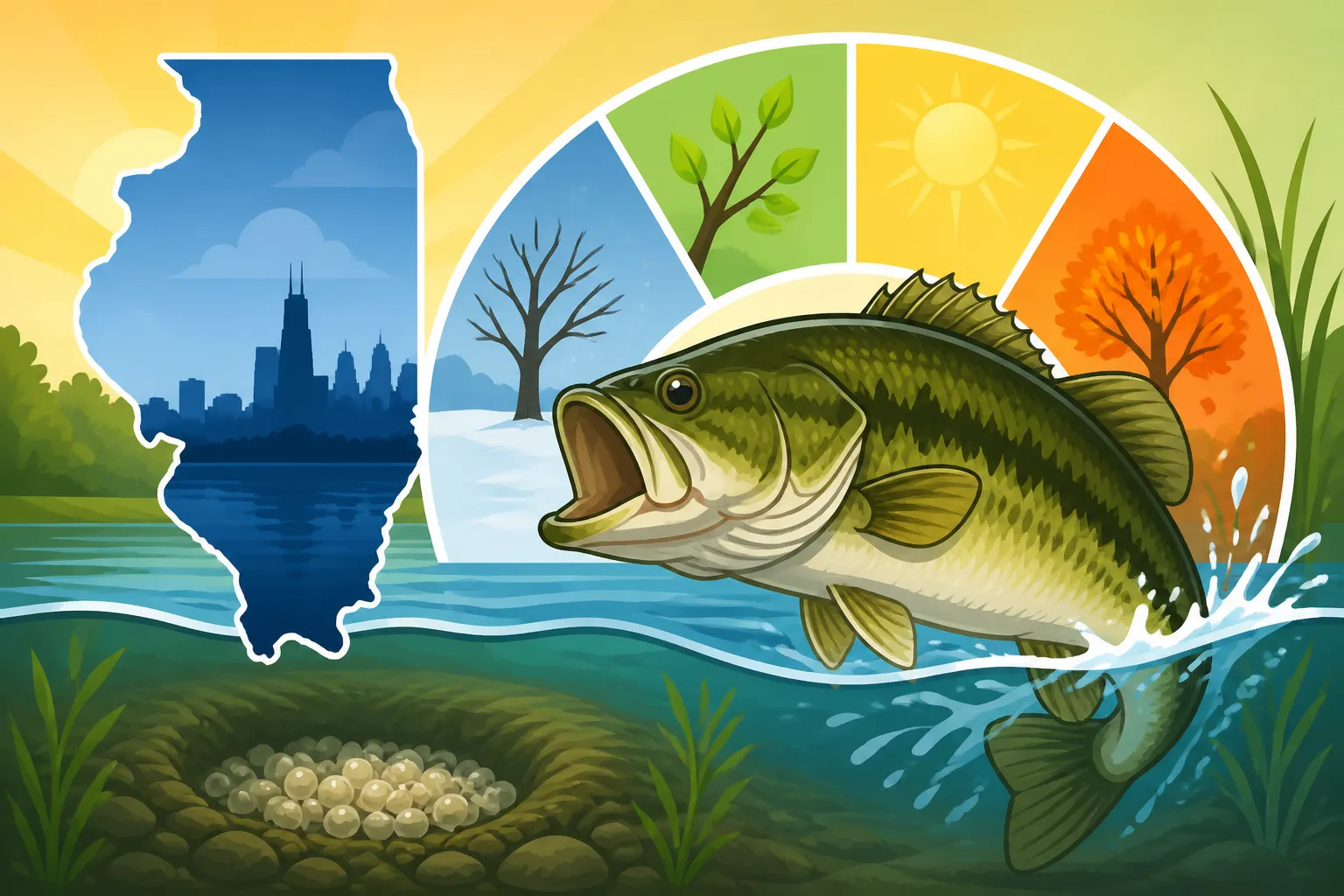
Illinois Bass Spawn Timing Guide
It's incredibly frustrating when you're out on the water, you know the bass should be biting, but they just aren't cooperating. Oftentimes, this comes down to not quite hitting that sweet spot in their annual spawn cycle. This comprehensive guide will pull back the curtain on the Illinois bass spawn timing, helping you understand when and why these elusive fish move into their reproductive phases across our diverse state.
Understanding the Illinois Bass Spawn Cycle
For any serious bass angler in Illinois, understanding the spawn cycle isn't just a good idea—it's absolutely essential. This isn't just about catching fish; it's about respecting the natural rhythms of the ecosystem and maximizing your chances when the fish are most active and vulnerable. The spawn is a multi-stage process, and each phase offers unique opportunities and challenges.
Why Bass Spawn Timing Matters for Anglers
Think about it: bass aren't just swimming around aimlessly all year. Their entire behavior, from where they hold to what they eat (or don't eat!), is largely dictated by their reproductive instincts as the seasons change. If you're throwing a deep-diving crankbait in four feet of water when they're actively spawning on beds, you're essentially just exercising your casting arm. Knowing when to target the pre-spawn staging areas, when to look for actual beds, and when they're recovering and ravenous post-spawn can make the difference between a frustrating day and a memorable one. It dictates your lure choice, presentation, and even the locations you choose to fish. It's the core knowledge that unlocks successful fishing trips, preventing those head-scratching moments where you know the fish are there, but they just won't bite.
The Stages of Bass Reproduction
The bass spawn isn't a single event, but a series of distinct stages, each driven primarily by water temperature and photoperiod (daylight length). First, you have the pre-spawn, where bass, fattened up from winter and sensing the warming waters, start moving from their deeper wintering holes to shallower staging areas. They're feeding heavily, building energy for the strenuous act of spawning. Then comes the spawn itself, when water temperatures hit that magical range, and the fish move onto beds to reproduce. This is often the most visible phase, but also one of the trickiest for anglers. Finally, there's the post-spawn, where exhausted bass retreat to nearby cover, recuperate, and then slowly begin to feed aggressively again as they recover. Each of these stages presents a different puzzle for the angler to solve.
Pre-Spawn Dynamics: Waking Up from Winter Slumber
The pre-spawn period is arguably one of the most exciting times to fish for bass in Illinois. The fish are hungry, aggressive, and often stacked up in predictable locations as they prepare for the big event. Catching a true lunker during this time is a real possibility.
Early Spring Movements and Temperature Triggers
As winter's grip finally loosens in late February and March, the water temperatures in Illinois lakes and rivers begin their slow, but steady, climb. Typically, when water temperatures reach the high 40s to low 50s Fahrenheit, bass really start to shake off their winter lethargy. They begin to move from deep creek channels and main lake basins towards shallower points, humps, and secondary creek arms that offer a quicker warm-up. These areas are often adjacent to their deeper wintering grounds, acting as temporary staging zones. The early spring sun, especially on sunny days, can warm up these shallow areas a few degrees faster, drawing bass in like a magnet. This is when you'll find those big females gorging themselves, building up the energy reserves they'll need for egg development. Finding these transition zones is key to success.
Preferred Pre-Spawn Locations and Depths
During the pre-spawn, bass are creatures of comfort and efficiency. They're looking for areas that offer both warmer water and easy access to deeper water should a cold front roll through, sending them retreating. Think about main lake points that extend into deeper water, the mouths of major creek arms, and submerged humps or roadbeds. Depths can vary, but generally, you're looking for bass in the 8-20 foot range, often relating to cover like stumps, brush piles, or rock formations in these staging areas. As the water warms further, they'll push shallower, often to the 4-8 foot range, closer to future bedding grounds. Keep an eye on any north-facing banks or dark-bottomed areas that absorb heat more quickly; these are often hot spots. Savvy anglers often use their electronics to scout these areas for schools of baitfish, as the bass won't be far behind.
Effective Lures and Techniques for Pre-Spawn Bass
This is the time to throw big baits that mimic a substantial meal. Bass are calorie-loading, so they’re not shy about hitting something hearty. Lipless crankbaits, like a Rat-L-Trap, are fantastic for covering water and triggering reaction strikes, especially in stained water. Jerkbaits are also incredibly effective, especially when worked with a long pause, imitating a struggling baitfish in the cooler water. For those still deeper staging areas, football jigs or bladed jigs like a ChatterBait can be deadly when fished slowly along the bottom or through submerged cover. If you're targeting specific pieces of structure, a Texas-rigged creature bait or a jig-and-trailer combo can often entice those sluggish, yet hungry, bass. Don't be afraid to experiment with retrieve speeds; sometimes a slow, deliberate presentation is what it takes, while other days, a faster, more erratic retrieve is the ticket. Make sure your tackle box is well-stocked, and you can find a huge variety of these essential pre-spawn lures on Amazon.
The Heart of the Action: Peak Bass Spawn in Illinois
This is what many anglers consider the "money time" for bass fishing. The bass are on their beds, protecting their eggs, and can be visible in clearer water. It's a challenging but rewarding phase.
Ideal Water Temperatures for Spawning Activity
The golden temperature range for the largemouth bass spawn in Illinois is typically between 62 and 68 degrees Fahrenheit. For smallmouth bass, it's often a little cooler, starting around 58 degrees and peaking in the low 60s. This window isn't a hard and fast rule, but rather a strong guideline. Once the water consistently stays within this range for a few days, you'll start to see bass moving onto their beds. A sudden cold snap can halt the spawn in its tracks, pushing fish back to deeper water until conditions stabilize again. This is why paying close attention to water temperature is absolutely paramount; a good thermometer is your best friend during this time.
Identifying Spawning Beds and Prime Locations
Spawning beds are typically circular, cleared-out depressions on the bottom, usually about 1-3 feet in diameter, which the male bass creates by fanning his tail. They'll typically be found in shallow water, anywhere from 1-6 feet deep, often protected from direct wind and current. Look for areas with a hard bottom composition like gravel, sand, or shell beds. Common locations include quiet coves, protected pockets, backwater areas, shallow points, and around stumps, docks, or other submerged cover. The male bass will aggressively guard the nest, chasing off anything that gets too close, which is exactly what makes them vulnerable to anglers. In clearer waters, you can often spot these beds visually from a distance, or even see the male bass hovering over them. Polaris sunglasses can be a huge help here, cutting glare and allowing you to see into the water better.
Techniques for Targeting Bedding Bass
Targeting bedding bass is a controversial topic among anglers, and it's important to approach it ethically, minimizing stress on the fish. Many anglers practice catch-and-release specifically for bedding fish to allow them to successfully reproduce. If you choose to fish for bedding bass, precision is key. You'll want to use smaller, more subtle baits that imitate intruders or pests. Soft plastics like lizards, tubes, or small creature baits, Texas-rigged or Carolina-rigged, are excellent choices. Present your bait directly into the bed and let it sit. The male bass will often pick it up to remove it from the nest, triggering a strike. Sometimes, a dropshot rig can be effective, allowing you to suspend a bait directly over the bed. Be patient, as it can take multiple casts and presentations to coax a strike. Remember, the goal isn't to necessarily make them eat, but to annoy them into moving the perceived threat.
Here's a quick reference for general bass spawn timing in Illinois:
| Region | Typical Pre-Spawn Water Temp | Peak Spawn Water Temp | General Timing Window | Key Behavior |
|---|---|---|---|---|
| Southern Illinois (e.g., Rend Lake, Carlyle Lake) | 48-55°F | 60-66°F | Late March – Mid-April | Early movements, heavy feeding |
| Central Illinois (e.g., Lake Shelbyville, Clinton Lake) | 50-58°F | 62-68°F | Mid-April – Late May | Staging, active bedding |
| Northern Illinois (e.g., Fox River, Lake Michigan tributaries) | 52-60°F | 64-70°F | Late April – Early June | Later start, prolonged spawn |
Remember, these are general guidelines, and local conditions can shift things earlier or later in any given year.
Post-Spawn Period: Recovery and Hunger
Just because the bass have spawned doesn't mean the fishing is over! In fact, the post-spawn can be an incredible time to catch numbers of fish, especially as they regain their energy.
The Exhaustion and Retreat from Beds
After the intense effort of spawning—building the nest, protecting the eggs, and fanning them until they hatch—both male and female bass are utterly exhausted. The females, especially, are depleted of energy, having put everything into egg production. They'll typically retreat first, moving to the nearest available cover to recover. This might be a weed line, a submerged brush pile, or the shade of a dock in slightly deeper water than the beds, usually 6-12 feet. The males might hang around the beds for a short period, guarding the fry until they disperse, but their focus eventually shifts to recovery as well. This immediate post-spawn phase can be tough fishing, as their metabolism is low and they're not actively feeding. It's a short lull before the feeding frenzy begins again.
Recuperation and Secondary Feeding Patterns
As the bass recuperate, their hunger slowly returns. This is often when they'll start moving to secondary points, offshore humps, and the edges of expansive weed beds. They're still looking for areas with access to deeper water and plenty of cover, but now they're also keenly focused on food. They're trying to regain all the weight and energy lost during the spawn. This means they'll often be found near schools of baitfish, ambushing them from cover. The fishing can be phenomenal during this recovery period, as the bass become less wary and more aggressive than during the spawn itself. You'll often find schools of bass grouped up, making for exciting multi-fish days. This stage is key to understanding Bass Post-Spawn Fishing Patterns.
Post-Spawn Lures and Where to Cast Them
During the post-spawn, versatility is your friend. As bass move from recovery to active feeding, their preferences can shift. Initially, while they're still recuperating, slower presentations with soft plastics like wacky worms or senkos can be effective. As they become more active, moving to weed lines and submerged cover, topwater lures like poppers or walking baits can be absolutely thrilling, especially in the early mornings or late evenings. Buzzbaits are also excellent for covering water over submerged grass. Spinnerbaits and chatterbaits are great search baits, allowing you to quickly locate active fish along weed edges or brush. Don't forget about crankbaits that dive to the 6-12 foot range, mimicking baitfish fleeing through offshore structure. For finding these specific lures quickly and easily, many anglers find a trip to their local tackle shop or even a quick search on Amazon for "post-spawn bass lures" to be incredibly helpful.
Regional Variations in Illinois Bass Spawn Timing
Illinois is a long state, stretching from the temperate south to the colder north. It's only natural that the bass spawn will follow different timelines depending on where you are.
Southern Illinois: Early Birds of the Bass World
Anglers in Southern Illinois get a head start on the bass spawn, often seeing signs of pre-spawn activity as early as late March, with the main spawn kicking off in mid-April. Lakes like Rend Lake and Carlyle Lake are prime examples of this earlier timing. The longer growing season and generally milder winters mean water temperatures warm up sooner and stay warmer longer. This means if you're eager to get on the water and target spawning bass, heading south is usually your best bet early in the season. However, even in the south, a late-season cold front can push the spawn back a week or two, making that reliable water temperature reading even more critical. Keep an eye on the forecast and local fishing reports, as conditions can change rapidly.
Central Illinois: The Mid-Season Rush
As you move into Central Illinois, covering popular spots like Lake Shelbyville and Clinton Lake, the bass spawn typically unfolds from late April through May. This region tends to be the sweet spot for many Illinois anglers, offering consistent weather and stable water temperatures. The pre-spawn here usually peaks in mid-April, with the full-blown spawn often hitting its stride by early to mid-May. This area experiences a more moderate climate than the extremes of the north or south, leading to a fairly predictable spawn window. It’s a fantastic time for anglers, but also means these lakes can get pretty crowded, especially on weekends, so plan your trips accordingly. For those wondering, the Illinois Bass Pre-Spawn Timing at Lake Shelbyville often aligns perfectly with this mid-season rush.
Northern Illinois: A Later, More Prolonged Spawn
Up in Northern Illinois, encompassing lakes closer to Chicago and the Wisconsin border, the bass spawn is a later affair. Pre-spawn activity might not really kick off until late April, with the main spawn often happening throughout May and even into early June. This is due to colder, longer winters and often deeper, slower-to-warm lakes. Places like the Fox River system or smaller natural lakes up north will see the spawn arrive later, but it can also be a more prolonged event, sometimes stretching out for several weeks as different sections of a large body of water warm at varying rates. If you missed the early action down south, Northern Illinois offers a fantastic second chance at hitting the spawn. This extended window can be a blessing, allowing anglers more opportunities to target fish in their various stages.
Environmental Factors Influencing the Bass Spawn
While water temperature is king, it's not the only factor that dictates when and how the bass spawn unfolds. Several other environmental cues play a significant role.
Impact of Water Temperature Fluctuations
We’ve talked about the ideal temperature range, but it’s crucial to understand how fluctuations affect the spawn. A steady rise in temperature is what triggers bass to move shallow and start bedding. However, a sudden, sharp drop in water temperature—a classic cold front—can shut down the bite completely and even cause bedding fish to abandon their nests temporarily, retreating to deeper, more stable water. It can be incredibly frustrating to be on a hot bite one day, only for a cold front to roll through and turn the fish completely off the next. Bass are highly sensitive to these changes, so always check the forecast. Stable weather, with consistent warm temperatures and minimal wind, provides the most favorable conditions for a strong, uninterrupted spawn. This is why knowing How Water Temperature Affects Fish Activity is vital.
Role of Daylight Length and Moon Phases
Beyond temperature, daylight length, or photoperiod, is a primary environmental cue that signals to fish that spring is truly here. As the days grow longer, the increase in light triggers hormonal changes in bass, signaling that it's time to begin their reproductive journey. While temperature is the immediate trigger for when they hit the beds, the increasing daylight hours set the stage for the entire process.
Additionally, many anglers swear by the moon phases, particularly the full and new moons, as having an influence on the timing of the spawn. While scientific evidence is mixed, many anecdotal reports suggest that major pushes of spawning activity often coincide with the full moon in spring. Some believe the increased gravitational pull or ambient light might play a role in fish activity and spawning urges. While not as critical as water temperature, it's another piece of the puzzle that experienced anglers often consider.
Water Clarity and Depth Preferences
Water clarity also plays a significant role in where bass choose to build their nests. In very clear lakes, bass will often seek out slightly deeper water to spawn, perhaps 4-8 feet, to offer their eggs some protection from predators and bright sunlight. They might also choose areas with more overhead cover like docks or thick weed mats. In stained or murky water, however, bass are much more comfortable spawning in very shallow water, sometimes less than two feet deep, as the low visibility provides natural camouflage. This means your approach needs to adapt. If you're fishing a clear lake, you'll need to be more stealthy, using longer casts and subtle presentations. In dirtier water, you can often get away with bolder lure colors and presentations closer to cover. Understanding these nuances can significantly improve your success during the spawn.
Adapting Your Tactics to Each Spawn Phase
Knowing when the spawn is happening is only half the battle. The real trick is knowing how to fish each distinct phase.
Pre-Spawn Strategies: Targeting Hungry Bass
During the pre-spawn, the bass are generally more aggressive and less wary than during the actual spawn. They're focused on feeding, so you can often cover a lot of water. Focus your efforts on those staging areas: main lake points, creek channel bends, and the edges of flats near deeper water. Use search baits like lipless crankbaits, spinnerbaits, and bladed jigs to locate active fish. Once you find them, slow down and work the area thoroughly with jigs or Texas-rigged plastics. Pay attention to structure and cover—a single stump or a rock pile can hold multiple fish. Remember, these fish are feeding up, so don't be afraid to throw larger baits that represent a substantial meal. Understanding Illinois Bass Pre-Spawn Fishing Patterns is crucial for this stage.
Spawning Period Strategies: Precision and Patience
Fishing during the actual spawn requires a much more precise and patient approach. Once you've identified a bed, you're not trying to trigger a feeding response but rather an aggressive, defensive reaction. Cast your bait (like a creature bait or jig) beyond the bed, then slowly retrieve it until it's directly on the nest. Let it sit there. Twitch it occasionally. The male bass will often nose the bait, push it, or eventually grab it to move it. This can take several minutes per bed, so patience is key. In clear water, you might be able to watch the fish's reaction, which can be incredibly helpful for timing your hook set. Consider using a lighter line and a spinning rod for more accurate casts and a more subtle presentation.
Post-Spawn Strategies: Chasing the Recovering Bite
After the spawn, as bass begin their recovery, your strategies need to shift again. Initially, right after they leave the beds, they'll be lethargic, so slow-moving baits around immediate cover (like docks or shallow weed lines) are best. As they recuperate and their hunger returns, they'll start moving to deeper offshore structure, points, and the edges of large weed beds. This is an excellent time for topwater lures in the mornings and evenings, as well as spinnerbaits, crankbaits, and jigs fished around cover. Look for schooling activity as bass group up to feed on baitfish. Pay attention to drop-offs and depth changes, as bass will often position themselves along these features to ambush prey. This is where understanding Fall Bass Fishing Patterns and Summer Bass Fishing Patterns can also provide clues, as these fish are transitioning into their regular feeding modes.
Common Misconceptions and Pro Tips
Even for seasoned anglers, the bass spawn can be full of surprises. Let's clear up some common misunderstandings and offer a few pro tips.
Myth Busting: "Bed Fishing is Easy"
One of the biggest misconceptions about the bass spawn is that "bed fishing is easy." While it's true that the bass are often visible and guarding a specific spot, actually getting them to bite can be incredibly challenging. They're not necessarily trying to eat your bait; they're trying to remove an intruder from their nest. This requires precise casting, impeccable bait presentation, and often a lot of patience. A fish that spooks easily or simply pushes the bait away without biting can be incredibly frustrating. Sometimes, they'll completely ignore everything you throw at them. It's not a guaranteed bite, and often requires more finesse and mental toughness than power fishing.
Pro Tip: The Importance of a Good Thermometer
If there's one piece of gear you absolutely must have for spawn fishing, it's a reliable water thermometer. While air temperature can give you a hint, it's the water temperature that dictates bass behavior. Even a two or three-degree difference can mean the difference between pre-spawn staging and active bedding. Many modern fish finders have built-in thermometers, but a simple, handheld model can be just as effective. Get in the habit of checking the water temperature in different areas of the lake—shallower coves, main lake points, and deeper channels. You’ll quickly start to notice patterns and understand why fish are positioned where they are. This small investment will pay dividends in helping you dial into the Bass Spawn Timing.
Pro Tip: Prioritize Stealth and Observation
During the spawn, especially in clearer waters, bass can be incredibly wary. Noise from your boat, heavy footsteps on the bank, or even a brightly colored shirt can spook fish. Minimize your presence by using your trolling motor sparingly, making long casts, and wearing neutral colors. Before you even cast, spend time observing the area. Look for subtle signs of fish activity: wakes, dark spots that might be beds, or even the flash of a tail. Pay attention to how the bass react to different presentations. Sometimes, moving just a few feet or changing the angle of your cast can make all the difference. This observational approach often yields more success than simply hammering every visible bed.
Pro Tip: Respect the Fish and Practice Conservation
Given the sensitive nature of the bass spawn, it's more important than ever to practice ethical angling and conservation. Catch-and-release is strongly encouraged for bedding bass to allow them to successfully complete their reproductive cycle. If you do keep fish, ensure you are well within the Illinois Fishing Season and Catch Limit Rules for the specific body of water you're on. Handle fish gently, minimize their time out of the water, and release them quickly. A healthy bass population ensures future generations of anglers can enjoy this incredible fishery. Remember, we’re guests in their home, and our actions impact the health of the entire ecosystem.
Disclaimer
Fishing conditions and regulations in Illinois can change frequently. Always consult the latest Illinois Department of Natural Resources (IDNR) fishing guide and local regulations before heading out. This guide is for informational purposes only and should not replace official sources.