Crappie Jigging Techniques
Few things are more frustrating than heading out to your favorite Illinois crappie spot, seeing fish on your sonar, but just not getting them to bite. It's a common story for many anglers, but mastering crappie jigging techniques can transform those slow days into memorable ones. This comprehensive guide will dive deep into everything you need to know about jigging for crappie, from understanding their behavior to selecting the perfect gear and executing advanced strategies, ensuring you’re well-equipped for success on the water.
Understanding Crappie Behavior and Habitat
Before you even tie on your first jig, truly understanding crappie—their preferences, habits, and where they love to hang out—is absolutely essential. Crappie aren't just swimming aimlessly; they have specific needs and patterns that, once deciphered, make them much easier to target.
Where Crappie Live and Why
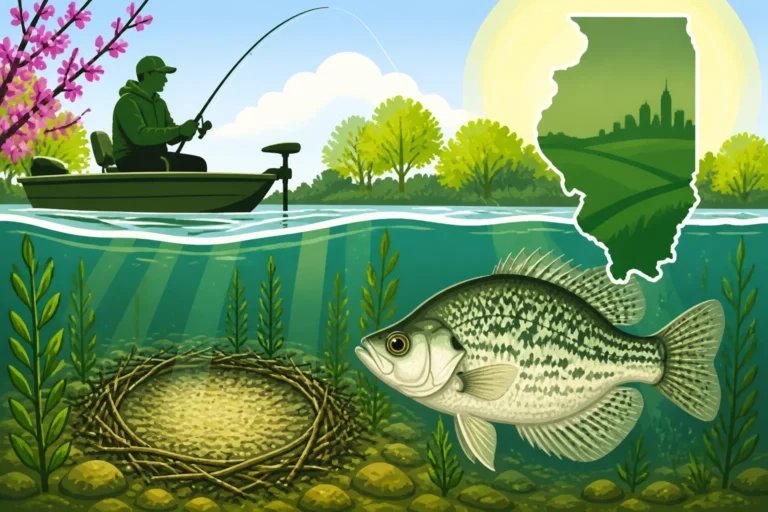
Crappie are masters of structure and cover, and that's usually where you'll find them. Whether you're talking about Black Crappie or White Crappie, these fish love to hide out in submerged timber, brush piles, fallen trees, dock pilings, rock piles, and even thick weed beds. These spots offer them dual benefits: ambush points for their prey (smaller fish, insects, crustaceans) and protection from larger predators like bass and northern pike. Think of it like a cozy, well-stocked pantry with a sturdy roof – why would they leave?
In Illinois, our lakes and rivers offer abundant cover. On a lake like Lake Shelbyville, you'll often find crappie holding tight to standing timber in old creek channels or congregating around man-made fish attractors. Along the Mississippi River, they'll seek out quieter backwater sloughs and oxbows, particularly around submerged logs and stumps. The "why" is simple: safety and food. They want to expend as little energy as possible while staying safe and eating well. This means your jigs need to get into these tight spots where crappie feel most comfortable. Knowing how to differentiate between Black Crappie vs White Crappie: How to Tell Them Apart can also give you clues, as white crappie tend to tolerate muddier water and less cover than their black crappie cousins.
Key Factors Influencing Crappie Location
Crappie location isn't static; it's a dynamic puzzle influenced by several critical environmental factors. Water temperature, depth, light conditions, and available forage all play significant roles in dictating where these fish will be and how deep they’ll hold. A slight change in one of these variables can send a school of crappie from a shallow flat to a deep channel edge in a matter of hours.
For instance, during the spring spawn, which you can learn more about in the Illinois Crappie Spawn Season Guide, crappie will move into very shallow water, sometimes only a foot or two deep, to lay their eggs. They’ll be near woody cover, but often in areas with firm bottoms. As water temperatures rise into summer, they'll retreat to deeper, cooler waters, often suspending over structure or congregating along thermoclines. Light conditions also matter: crappie have large eyes adapted for low light, so they're often more active during dawn, dusk, or on cloudy days. Bright, sunny conditions often push them deeper or tighter into dense cover. Understanding these nuances is crucial for pinpointing their location, which is the first step to successful jigging. When you're trying to figure out the Best Time of Year to Catch Crappie in Illinois, these factors are always at play.
Essential Crappie Jigging Gear
You wouldn't try to build a house with a butter knife, and you shouldn't try to consistently catch crappie with the wrong gear. Using appropriate rods, reels, line, and jigs makes a world of difference, allowing for better presentation, detecting subtle bites, and ultimately, landing more fish.
Rods, Reels, and Line for Jigging Success
For crappie jigging, finesse is the name of the game. This means you need sensitive, lightweight gear that lets you feel those incredibly light taps that crappie are famous for. A good crappie jigging rod is typically 5 to 7 feet long, ultra-light or light power, with a fast action tip. The fast action allows the rod tip to bend easily, indicating a bite, while the backbone helps you set the hook. Brands like St. Croix or Fenwick offer excellent crappie-specific rods that provide the sensitivity needed. For reels, a small spinning reel in the 500 to 1000 size range is perfect. These reels are lightweight, balance well with ultra-light rods, and offer smooth drag for fighting crappie without breaking your light line. You can find many reliable options on Amazon that fit this description perfectly.
When it comes to line, most crappie anglers opt for monofilament or fluorocarbon in the 2 to 6-pound test range. Monofilament is more forgiving due to its stretch, which can prevent hooks from tearing out of a crappie's soft mouth. Fluorocarbon, on the other hand, offers less stretch, higher sensitivity, and is nearly invisible underwater, making it a favorite for clear water conditions. Some anglers even use superline (braid) with a fluorocarbon leader for maximum sensitivity and strength, though braid can be less forgiving on crappie's soft mouths. The lighter the line, the more natural your jig's presentation, which is key for finicky crappie.
Choosing the Right Jigs and Baits
This is where the real fun begins – the sheer variety of crappie jigs available is mind-boggling, but understanding the basics will simplify your choices. Crappie jigs typically range from 1/32 to 1/8 ounce, though heavier jigs can be used in deep water or strong currents. Jig heads come in various shapes and colors; round heads are common, but dart heads, horse heads, and stand-up heads all have their place. The hook size is also important, usually ranging from a #8 to a #2, matched to the size of your soft plastic or live bait.
The soft plastic body attached to the jig head is often the most important part. Popular styles include small tubes, grubs (curly tails), minnow imitations, and paddle tails. Colors can be crucial, and it's always smart to have a variety. Chartreuse, white, black, pink, and various combinations (like black-chartreuse or blue-white) are consistent producers. For stained or murky water, brighter colors like chartreuse or hot pink often excel, as detailed in our guide on Best Crappie Jig Colors for Stained Water. Live bait, particularly minnows, can also be used on a jig head, often tipped with a small soft plastic for added attraction. Remember, sometimes a tiny twitch of a soft plastic is all it takes, mimicking a wounded baitfish, making it irresistible to hungry crappie.
Mastering Jigging Techniques
Jigging for crappie isn't a one-size-fits-all affair. Different situations call for different approaches. Whether you're fishing from a boat or the bank, understanding a few core techniques will drastically improve your catch rates.
Vertical Jigging for Suspended Crappie
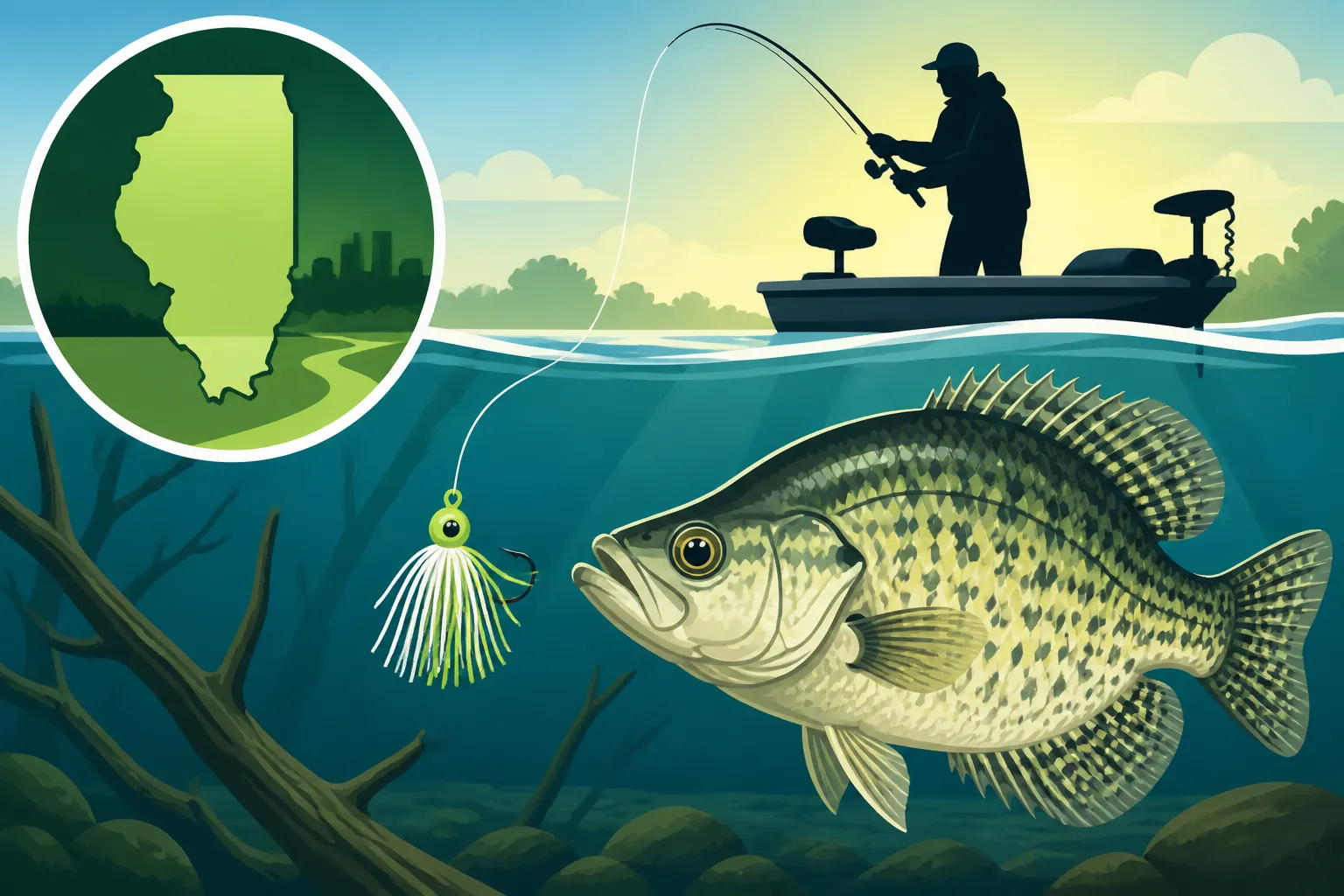
When crappie are suspended in the water column, often over deep structure or in open water following baitfish, vertical jigging is incredibly effective. This technique involves dropping your jig directly down to the depth where fish are holding, using your fish finder to pinpoint their exact location. Once your jig reaches the desired depth, you impart action with subtle rod tip movements. This could be a gentle lift-and-drop, a tiny quiver, or a slight shake. The key is to keep the jig in the strike zone for as long as possible.
Imagine you're on Rend Lake, looking at your sonar screen, and you see a school of crappie at 15 feet over a submerged brush pile. You precisely drop your 1/16 oz jig, perhaps a chartreuse tube, right into that school. Then, with tiny wrist movements, you gently lift the rod tip six inches and let it fall back, keeping tension on the line. Often, the bite comes on the fall, appearing as a slight tick or simply a feeling of weightlessness. It takes practice to distinguish a bite from the jig's natural movement, but that sensitivity in your rod and line will pay off. This precise presentation is particularly useful when crappie are holding tight to vertical structure.
Casting and Retrieving Jigs
This is probably the most common jigging technique, especially for anglers fishing from the bank or covering expansive flats. It involves casting your jig out and slowly retrieving it, imparting action as you go. The trick is to vary your retrieve speed and jigging motion until you find what the fish prefer on that particular day. A slow, steady retrieve with occasional twitches often works wonders.
When casting, aim your jig towards submerged cover, drop-offs, or any visible structure. Let the jig sink to your desired depth, then begin your retrieve. You can use a classic "lift and reel" motion, pulling the rod tip up a foot or two, letting the jig fall on a slack line, and then reeling in the slack before repeating. Alternatively, a steady retrieve with subtle twitches from your wrist can imitate a swimming baitfish. Experiment with different jig sizes and colors; sometimes, a slower fall rate of a lighter jig (like a 1/32 oz) is what triggers a bite. For those fishing from shore, mastering How to Catch Crappie From the Bank often involves perfecting this casting and retrieving technique.
Dock Shooting and Skipping for Structure
For crappie hiding under boat docks, piers, or other overhead structures, dock shooting and skipping are invaluable specialized techniques. These methods allow you to present your jig into hard-to-reach places where crappie feel safe and rarely see a bait. Dock shooting involves holding the jig in one hand, pulling the line back to load the rod, and then releasing both simultaneously, propelling the jig like an arrow under the dock. Skipping is similar but aims to make the jig "skip" across the water surface like a stone, allowing it to penetrate under low-hanging obstacles.
To perform a dock shot, grab your jig with your non-dominant hand, pull it back towards the reel, creating a bend in your rod. Aim the rod tip low, towards the gap under the dock, and release the jig while sweeping the rod forward. The jig will shoot horizontally. For skipping, use a similar motion, but try to keep the jig close to the water, letting it bounce across the surface. Both techniques require practice but are incredibly effective for reaching those untouched crappie. On a busy lake like Carlyle Lake, where docks are plentiful, these skills can make you a crappie catching machine. You can even find jigs specifically designed for shooting on Amazon, often with flat heads for better skipping.
Seasonal Strategies for Crappie Jigging
Crappie behavior changes dramatically with the seasons, driven primarily by water temperature and their spawning cycle. Adapting your jigging approach to these seasonal shifts is fundamental for consistent success.
Spring Crappie Jigging During the Spawn
Spring is arguably the most exciting time for crappie anglers in Illinois. As water temperatures rise into the mid-50s to low 60s Fahrenheit, crappie move from their deeper winter haunts into shallow waters to spawn. This is when they're most accessible and aggressive. During the Illinois Crappie Spawn Season Guide, you'll find them in coves, creek arms, and shallow flats, often in just 1-5 feet of water, seeking out submerged brush, weed beds, or even lily pad stems to lay their eggs.
During the pre-spawn, crappie stage in slightly deeper water near spawning areas. Target these transition zones with small jigs (1/32 to 1/16 oz) fished slowly. Once the spawn is in full swing, look for visible cover in the shallows. Vertical jigging around individual pieces of cover or casting small jigs and retrieving them slowly through these areas can be incredibly productive. A simple jig tipped with a minnow is often irresistible. When you're trying to How to Find Crappie Beds in Spring, remember to focus on those protected, shallow areas with good cover and a firm bottom. Fishing the same spots on consecutive days can be rewarding, as crappie will often return to the same areas.
Summer and Fall Patterns for Crappie
Once the spawn is over and water temperatures really heat up, crappie retreat to deeper, cooler water. In summer, look for them suspending over deep channels, around bridge pilings, or in the shade of large boat docks. They'll often relate to the thermocline, a layer of water where temperatures change rapidly, and oxygen levels are optimal. This is a prime time for vertical jigging directly over known submerged structures or using a boat to troll small jigs slowly through open water, mimicking baitfish.
As fall approaches and water temperatures begin to drop, crappie start to become more active again, often grouping up and feeding heavily in preparation for winter. They'll move shallower than summer but usually won't be as shallow as the spawn. Look for them congregating around creek channels, brush piles on secondary points, or on the edges of main lake flats. Both vertical jigging and casting techniques can be effective. Experiment with slightly larger jigs (1/8 oz) if you're targeting deeper fish, as they fall faster and are easier to control. The key is to match the hatch – identify what baitfish crappie are feeding on and select jigs that imitate them in size and color. This time of year, particularly on Rend Lake's Best Spots for Early Spring Crappie, the crappie are often feeding voraciously.
Winter Crappie Jigging
Don't let the cold deter you! Winter can be a fantastic time for crappie jigging, especially through the ice in northern Illinois or in deeper, slower parts of open water lakes and rivers further south. Crappie become lethargic in cold water, so presentation needs to be slow and subtle. They often school tightly in deep holes, along main lake points, or within dense brush piles, making them easier to locate with a good fish finder.
For ice fishing, tiny jigs (1/64 to 1/100 oz) are the norm, often tipped with a wax worm, minnow head, or small plastic. A delicate quiver or a very slow lift-and-drop is usually all it takes. For open water winter fishing, vertical jigging remains paramount. Use sensitive electronics to find those tight schools in deep water. Remember that crappie metabolisms are slow, so they won't chase a jig far. Keep your presentation subtle, directly in front of their faces, and be patient. The bites can be incredibly light, sometimes just feeling like a slight resistance or the line going slack. This is where the sensitivity of your ultra-light gear truly shines.
Advanced Jigging Tips and Troubleshooting
Even with the right gear and basic techniques, crappie can sometimes be notoriously finicky. Integrating advanced strategies and knowing how to troubleshoot common issues will keep you ahead of the game.
Reading Your Electronics for Crappie
Your fish finder is arguably your most valuable tool for crappie jigging, transforming guesswork into informed decisions. Modern sonar units, especially those with down imaging and side imaging, can show you not just fish, but also the structure they're relating to in incredible detail. Learning to interpret these images is crucial for finding those elusive schools.
Look for arcs or blobs clustered around submerged trees, brush piles, or along channel edges. Pay attention to the depth at which the fish are holding and adjust your jigging depth accordingly. If you see baitfish on the screen, crappie are likely nearby. Use your mapping features to pinpoint historical hotspots or areas with known structure. For example, on a reservoir like Lake of Egypt, knowing how to interpret your electronics can help you locate crappie suspended over deep timber. Don't just look for fish; look for the absence of fish in obvious spots, which can tell you where not to spend your time. Many anglers even use LiveScope or similar real-time sonar to watch their jig's interaction with the fish, allowing for immediate adjustments to retrieve style. You can find excellent portable fish finders, even some with advanced features, on Amazon.
Overcoming Common Jigging Challenges
Every crappie angler faces challenges, from light bites to adverse weather. One common issue is when crappie are "short striking" – meaning they nip at the tail of your jig without fully committing to the hook. This often indicates they're not aggressive, or your jig is slightly too large. Try downsizing your jig, switching to a more subtle color, or tipping it with a live minnow or a Crappie Nibbler for added scent and taste. Sometimes, a very slow, almost motionless presentation is required to coax these hesitant bites.
Another challenge is fishing in windy conditions, which makes boat control difficult and feeling light bites almost impossible. In these situations, try to position your boat so you're jigging with the wind, allowing for a slower, more controlled drift. Use heavier jigs if necessary to maintain contact with the bottom or the desired depth. Alternatively, switch to an area with natural wind breaks, like a protected cove. High fishing pressure can also make crappie wary; in such cases, try ultra-light line (2-pound test), natural colored jigs, and fish during off-peak hours, perhaps even trying Best Time of Day to Catch Crappie like dawn or dusk. Persistence and adaptability are your best friends in overcoming these challenges.
Common Mistakes and How to Avoid Them
Even seasoned anglers can fall into bad habits. Being aware of common crappie jigging mistakes can save you a lot of frustration and lead to more productive fishing trips.
Improper Jig Weight and Presentation
One of the most frequent errors anglers make is using a jig that's either too heavy or too light for the conditions. A jig that's too heavy falls too fast, passing by fish before they have a chance to react, and doesn't allow for a natural presentation. Conversely, a jig that's too light won't reach the desired depth in deep water or current, and it's nearly impossible to feel effectively. The goal is to use the lightest jig possible that still allows you to feel the bottom or stay in the desired strike zone. This might mean dropping down to a 1/32 or even a 1/64 oz jig in shallow, calm water, or bumping up to a 1/8 oz or more in deeper, current-laden areas.
Presentation is equally critical. Crappie bites are often incredibly subtle, so maintaining constant contact with your jig is vital. Many anglers let too much slack into their line, making it impossible to feel those gentle "ticks" or "mushy" bites. Always try to keep a slight bend in your rod tip or a little tension on the line, even on the fall. Don't be afraid to experiment with your retrieve: a slow, steady retrieve, a quick jerk, or even just letting the jig hang motionless for a few seconds can all trigger strikes. Remember, crappie often feed upwards, so letting your jig slowly fall through the water column can be highly effective. This finesse is what separates good crappie anglers from great ones.
Ignoring Water Conditions and Fish Behavior
It's easy to get tunnel vision, sticking with a favorite jig or technique even when it's clearly not working. However, crappie are highly sensitive to changes in their environment, and ignoring these signals is a surefire way to come home empty-handed. Water clarity, temperature, current, and even barometric pressure all influence how crappie behave and where they'll be. If the water is muddy after a heavy rain, switching to brighter colors or jigs that displace more water might be necessary. If the water is crystal clear, more natural colors and smaller jigs are often the ticket.
Similarly, fish behavior dictates your approach. If fish are scattered, covering water with casting techniques might be more effective. If they're tightly schooled, a vertical presentation directly over them is better. Don't forget that crappie will often relate to specific cover, so knowing How to Catch Crappie in Backwater Lakes and Sloughs means focusing on those brush piles and log jams. If you're not getting bites, don't keep doing the same thing. Change your jig color, size, depth, retrieve speed, or even move to a completely different spot. A common mistake is not switching to a different Best Bait for Crappie Fishing when your go-to isn't producing. Always be willing to adapt and experiment; that's the true spirit of a successful crappie angler.
Here's a quick comparison of common crappie jigging setups:
| Setup Component | Ultra-Light Finesse Jigging (Shallow/Clear Water) | Medium-Light Versatile Jigging (General Purpose) | Heavy Deep Water Jigging (Current/Deep Structure) |
|---|---|---|---|
| Rod | 5-6 ft, Ultra-Light Power, Fast Action | 6-7 ft, Light Power, Fast Action | 6.5-7.5 ft, Medium-Light Power, Moderate-Fast Action |
| Reel | 500-1000 size Spinning Reel | 1000-2000 size Spinning Reel | 2000-2500 size Spinning Reel |
| Line | 2-4 lb Mono/Fluorocarbon | 4-6 lb Mono/Fluorocarbon/Braid with Leader | 6-8 lb Braid with Fluorocarbon Leader |
| Jig Weight | 1/64 – 1/32 oz | 1/32 – 1/8 oz | 1/8 – 1/4 oz+ |
| Jig Style | Small tubes, micro grubs, soft plastics | Grubs, minnow imitations, paddle tails | Heavy tubes, larger minnow imitations |
| Target Depth | 1-10 ft | 5-20 ft | 15-40 ft+ |
| Common Use | Spawning flats, shallow cover, panfish | General lake/river fishing, docks | River channels, dam tailraces, large reservoirs |
This table provides a generalized overview, and individual preferences and specific conditions will always dictate the optimal setup. For example, if you're fishing from a boat, How to Catch Crappie From a Boat often involves using slightly longer rods to reach further from the boat.
Disclaimer
Fishing regulations and conditions can change. Always consult the latest Illinois Department of Natural Resources (IDNR) fishing guide for current rules, regulations, and advisories before heading out on the water. Stay safe and practice ethical angling.