Black Crappie vs White Crappie: How to Tell Them Apart
If you've spent any time on Illinois waters chasing crappie, you know the thrill of a bending rod when one of these panfish hits your bait. But have you ever paused to wonder, "Was that a black crappie or a white crappie?" It’s a common question, and sometimes, even seasoned anglers scratch their heads trying to pinpoint the exact species. Understanding the subtle yet significant differences between these two beloved fish can truly elevate your fishing game, helping you target them more effectively and comply with specific regulations that might vary between species or locations. This guide will walk you through everything you need to know to confidently identify and understand both black and white crappie in Illinois.
Why Distinguishing Crappie Species Matters for Anglers
It might seem like a minor detail to some, but knowing whether you've caught a black crappie or a white crappie can actually make a big difference in your fishing success and your adherence to local rules. Illinois fishing regulations are designed to protect fish populations and ensure healthy ecosystems, and sometimes, these rules can have nuances based on species. Beyond the legalities, understanding their distinct habits can help you find them, choose the right bait, and employ the best techniques.
Impact on Fishing Regulations and Limits
Imagine you're out on Lake Shelbyville, and you've had an incredible day, filling your livewell with what you believe are all the same type of crappie. You get back to the ramp, and a conservation officer performs a spot check. If you've misidentified your catch, you could unknowingly be in violation of a daily bag limit or a size restriction that applies specifically to one species but not the other. While many Illinois lakes have a combined crappie limit, there are nuances. For example, some specific water bodies might have site-specific rules that differentiate between crappie species to manage their populations. Always, and I mean always, double-check the current Illinois Fishing Information Guide for the specific body of water you're fishing. It's available online and in print, and it's your best friend for staying out of trouble. Ignoring these details isn't just a risk of a fine; it’s a missed opportunity to be a more informed and responsible angler.
Understanding Habitat Preferences and Behavior
Just like you wouldn't expect to find a largemouth bass in the same exact spot as a smallmouth bass all the time, black and white crappie, while often coexisting, do have their preferences. White crappie, for example, tend to tolerate more turbid or murky waters, and they often relate to open water structures like brush piles or submerged timber. Black crappie, on the other hand, are typically found in clearer water and are more often associated with thick vegetation, lily pads, and shaded areas. Knowing these tendencies helps you pinpoint your search. If you’re on a clearer lake with lots of aquatic growth, you might focus on techniques for black crappie. If it’s a muddier river backwater with sunken logs, you’d shift your focus to white crappie. This knowledge helps you fish smarter, not just harder.
Tailoring Your Techniques and Bait Choices
Once you understand their preferred environments and behaviors, you can adjust your presentation and bait selection. Since black crappie often hold tighter to cover in clearer water, a smaller, more subtle jig presented precisely can be incredibly effective. White crappie, being a bit more nomadic and tolerant of murky conditions, might respond better to slightly larger jigs, spinners, or even minnows that create more vibration and profile to get noticed. Think about it: a small, dark jig might get lost in stained water but shine in clear water, while a brightly colored lure with more action might be ignored in crystal-clear conditions but be a beacon in the murk. Selecting the right tackle from your Amazon shopping cart for each situation truly does make a difference. Knowing the crappie species you are targeting can also influence whether you opt for horizontal jigging, vertical presentations, or even a slow troll.
The Tale of Two Crappies: Key Visual Differences
Alright, let's get down to brass tacks. You've got a crappie in hand, and you want to know what it is. While they share a similar overall "crappie" shape, there are several distinct visual cues that, once you know them, make identification pretty straightforward. It's all about looking at the details.
Body Shape and Dorsal Fin Spines
This is often the first and most reliable indicator. Look at the fish's overall profile, specifically its dorsal fin, which is the fin on its back.
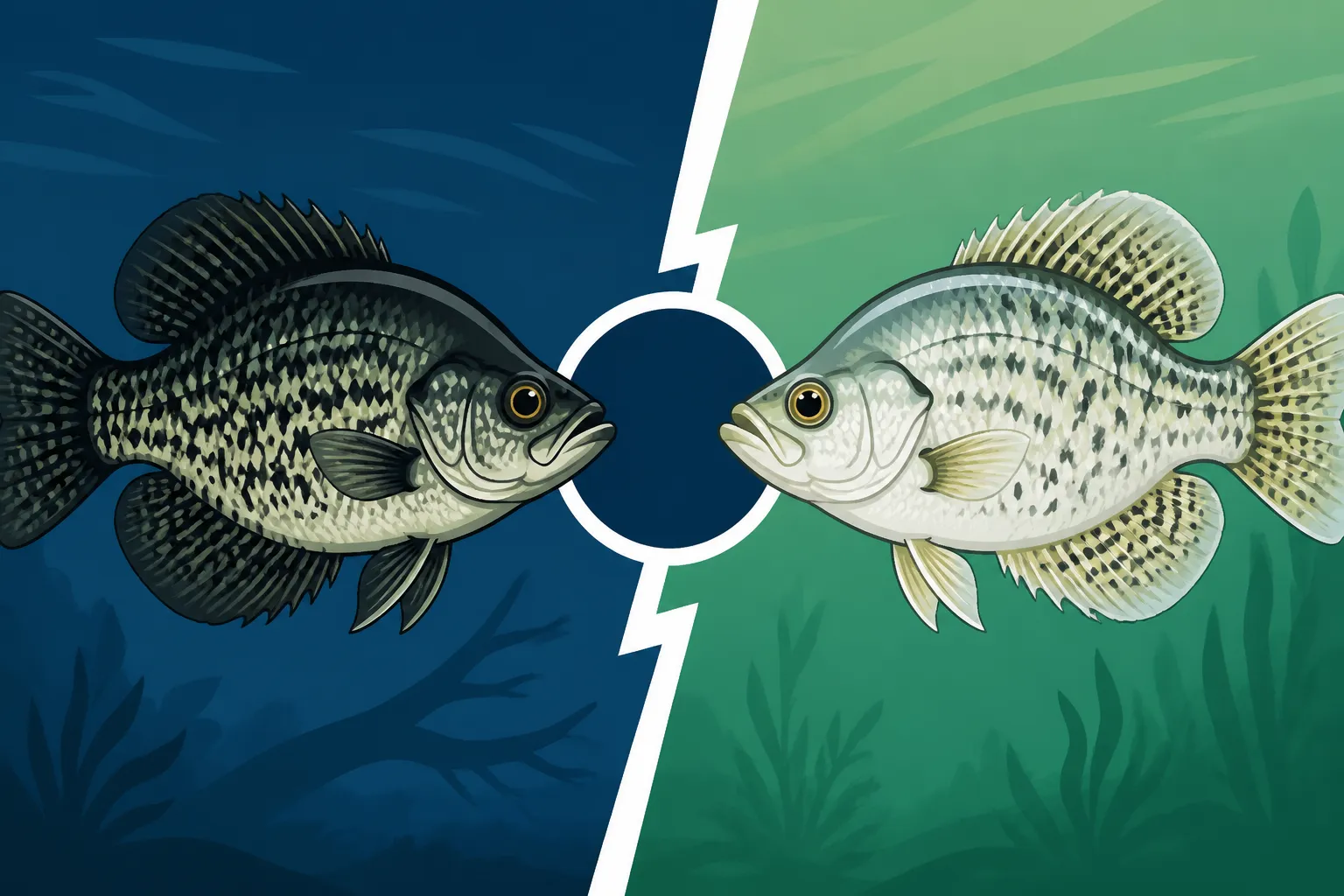
- Black Crappie: Typically, a black crappie has a more rounded, almost disc-like body shape, giving it a chunkier appearance. The real giveaway, however, is the number of spines in its dorsal fin. Count them carefully: a black crappie will almost always have 7 or 8 dorsal fin spines. This is a pretty solid rule of thumb. Their head might also appear a bit smaller in proportion to their body compared to a white crappie.
- White Crappie: In contrast, white crappie tend to have a more elongated or oval-shaped body. They often look a bit "taller" or more compressed side-to-side. When you count their dorsal fin spines, you’ll find that a white crappie usually has 6 dorsal fin spines. It's rare to see more than that. This difference in spine count is your golden ticket for identification. The longer body and fewer spines make them appear a bit more sleek.
So, next time you pull one out of the water, before anything else, do a quick spine count. It's often all you need.
Coloration and Pattern Markings
While color can be somewhat variable depending on water clarity, diet, and even breeding season, the pattern of markings on each species is usually quite distinct.
- Black Crappie: These fish often live up to their name with darker, more mottled coloration. Their sides are covered in an irregular pattern of dark spots and blotches that look almost random, scattered across their silvery-green or olive body. These spots often extend onto their fins, particularly the dorsal and caudal (tail) fins, creating a speckled appearance. During the spawn, male black crappie can become incredibly dark, almost black, especially around their throat and fins, making them even easier to identify.
- White Crappie: White crappie, while not truly "white," generally have a lighter, more silvery body. The key identifying feature here is the pattern of their dark markings: they tend to form distinct, often vertical, bars or stripes along their sides. These bands can be faint or quite pronounced, especially on fish from clearer water. It's less of a random scattering of spots and more of a structured, banded look. Their fins are usually clearer, with fewer dark markings than a black crappie.
Think of it this way: black crappie have "freckles and splotches," while white crappie have "stripes." This can be a great secondary indicator after checking the dorsal spines.
Mouth Size and Head Shape
While not as definitive as spine count or body pattern, there are subtle differences in their head and mouth that can further aid identification.
- Black Crappie: Their mouth tends to be a bit smaller, and when closed, the upper jaw often extends only to about the middle of the eye. Their head might also seem slightly shorter relative to their body depth.
- White Crappie: White crappie often have a proportionally larger mouth. When their mouth is closed, the upper jaw will typically extend past the middle of the eye, sometimes even past the back of the eye. Their head can also appear a bit more elongated and pointed.
This is a good detail to check if you're still uncertain, or if the fish is particularly dark or light, obscuring the spot patterns. It's also something you'll notice more easily once you've handled a few of each.
Here’s a quick comparison table to help you keep these key differences straight:
| Feature | Black Crappie | White Crappie |
|---|---|---|
| Dorsal Fin Spines | 7 to 8 (rarely 6 or 9) | 6 (rarely 5 or 7) |
| Body Shape | More rounded, disc-like, robust | More elongated, oval, compressed |
| Coloration/Pattern | Irregular dark spots/blotches (freckled look) | Distinct vertical bars/stripes (banded look) |
| Head/Mouth | Shorter head, upper jaw to middle of eye | Longer head, upper jaw often past middle of eye |
| Typical Habitat | Clearer water, dense vegetation, shaded areas | Turbid water, open water structures, brush piles |
Preferred Habitats and Typical Behavior
Understanding where these fish like to hang out is just as important as knowing what they look like. Their habitat choices are deeply intertwined with their survival strategies, influencing everything from feeding to spawning. This is where your ability to identify them becomes a huge advantage for locating them.
Water Clarity and Cover Preferences
The clarity of the water is a huge factor in where you'll find each species. Crappie are visual predators, but their tolerance for murkiness differs.
- Black Crappie: These guys are typically found in clearer water environments. Think of pristine Illinois lakes with good visibility and abundant aquatic vegetation. They love to associate with dense cover like submerged weed beds, lily pads, fallen trees, brush piles, and even docks and piers. They’re ambush predators that use this cover to hide and dart out to snatch passing minnows or insects. If you're fishing a lake with lots of coontail or milfoil, you're likely in black crappie territory. This preference means that sight fishing or using subtle presentations can be very effective. Look for them in shaded areas, especially on bright, sunny days, as the clear water doesn't offer much in the way of hiding from predators or the sun's glare.
- White Crappie: White crappie are more tolerant of turbid (murky or stained) water. This means you'll often find them in rivers, river backwaters, and reservoirs where the water might be less clear due to current, runoff, or bottom composition. While they still appreciate cover, they often relate to more open structures. We’re talking about standing timber, submerged brush piles on creek channels, bridge pilings, or even large rock piles. They might suspend in open water near these structures, especially during feeding periods. Their ability to thrive in stained water is why they're so common in many of the larger Illinois impoundments and river systems where water clarity fluctuates.
So, when you scout a new spot, take a good look at the water clarity and the type of cover available. It'll give you a big clue about which crappie species you're likely to encounter. This is also why you might find one species more prevalent in certain parts of a large lake or river system than the other.
Depth and Structure Association
Beyond just clarity and cover, the specific depth and type of structure they prefer can also vary, especially throughout the day and across seasons.
- Black Crappie: These crappie are often found in relatively shallower water, particularly when they're actively feeding or during the Illinois Crappie Spawn Season Guide. They love to relate to vertical structures that offer overhead cover and shade. Think about the tops of submerged brush piles, the outer edges of weed lines, or under boat docks. In deeper lakes, they might suspend over deep water but will still be associated with a thermocline or baitfish schools. During the colder months, they might retreat to slightly deeper water but will still often be found near significant cover.
- White Crappie: White crappie are more inclined to utilize deeper water and open-water structures. They're often found suspended over creek channels, along old roadbeds, or around submerged timber in the middle of a lake. Their schooling behavior can be quite pronounced, and a good fish finder can be invaluable for locating these schools. They'll move up into shallower water during the spawn but generally prefer a bit more depth during the rest of the year, especially in the heat of summer or the cold of winter. This tendency to suspend and follow baitfish can make them a great target for trolling or drift fishing techniques.
Understanding these preferences allows you to focus your efforts. If you're marking fish suspended over a deep channel, chances are good you're looking at white crappie. If your sonar is picking up fish tight to a dense brush pile in 8 feet of water, it could very well be a school of black crappie. Learning these habits is key to mastering Crappie Fishing: Black vs White Crappie in the Same Lake.
Fishing Strategies Tailored to Each Crappie
Since black and white crappie have different habits and preferred environments, it only makes sense that your fishing approach should adapt accordingly. What works wonders for one might be completely ignored by the other. This is where the detective work pays off with a full cooler.
Bait and Lure Selection
Crappie are notoriously finicky, but armed with knowledge, you can often crack the code. The right bait can make all the difference, and Amazon offers a vast selection to experiment with.
- For Black Crappie: Given their preference for clearer water and tighter cover, black crappie often respond well to smaller, more subtle presentations. Think about tiny marabou jigs, tube jigs, or soft plastic baits in natural colors like smoke, green pumpkin, or black and blue. These baits mimic the smaller forage they typically feed on in clear water. Live minnows, particularly smaller ones, fished under a bobber or lightly weighted, are also incredibly effective. Because they're often in dense cover, weedless presentations or small jig heads that don't snag easily can be advantageous. Don't be afraid to go with lighter line – say, 4-pound test fluorocarbon or monofilament – for a more natural presentation. The more sensitive you can make your setup, the better you’ll detect those subtle clear-water bites.
- For White Crappie: Due to their tolerance for murkier water and their tendency to suspend, white crappie often appreciate baits with a bit more flash, vibration, or profile. Slightly larger jigs (1/16 to 1/8 ounce) in brighter colors like chartreuse, white, or orange can be very effective, especially when tipped with a small minnow or scented soft plastic. Small crankbaits or spinnerbaits that run at the right depth can also entice a strike. Live minnows, perhaps a bit larger than those used for black crappie, fished on a tight line or trolled slowly, are consistently productive. Given the stained water, a slightly heavier line, maybe 6-pound test, might be perfectly acceptable and give you more confidence when pulling fish from brushy areas. For your tackle box, having a variety of jig colors and sizes, readily available from Amazon, can save the day.
The key is to match your bait to the conditions and the expected species. If you’re targeting Illinois Black Crappie Fishing in Backwater Sloughs, you might lean towards plastics, whereas if you're trying to find Illinois White Crappie: Where to Find Them in Spring in a river channel, live bait or brighter jigs could be your best bet.
Presentation Techniques and Retrieval Speeds
It's not just what you use, but how you use it. Crappie can be incredibly sensitive to your presentation.
- For Black Crappie: Precision is often the name of the game with black crappie. Since they relate tightly to cover in clear water, a gentle, vertical presentation is frequently best. Dropping a small jig directly into a brush pile, along a dock post, or into a pocket in a weed bed requires stealth and accuracy. A slow, subtle retrieve with minimal action often works best. Think jigging tiny plastics with slight twitches, or slowly reeling a minnow under a bobber just above the cover. Sometimes, just letting the bait sit still for an extended period is what it takes. Techniques like "spider rigging" (using multiple rods to cover a broad area with vertical presentations) can be very effective when searching for tightly schooled black crappie in specific cover.
- For White Crappie: Because white crappie often suspend and move in more open water, covering water effectively becomes more important. Trolling or slow-drifting jigs and minnows at specific depths can be incredibly productive for locating schools. When you find them, vertical jigging can work, but sometimes a steady, slow retrieve with a slightly larger jig or small crankbait is what triggers a strike. They might be more willing to chase a bait, especially in stained water where they rely more on lateral line senses. Therefore, a bit more action and a slightly faster retrieve might be warranted compared to their black crappie cousins. Don't be afraid to experiment with different speeds until you find what they're hitting. For those bigger waters, having the right electronics, perhaps a quality fish finder you sourced from Amazon, is paramount for locating those suspended schools.
Remember, crappie fishing is about observation and adaptation. Pay attention to what the fish are telling you. If they're hitting aggressively, try speeding things up. If they're just nipping, slow it down and go smaller.
When and Where You're Most Likely to Catch Each Type in Illinois
Knowing the best times and places to target each crappie species in Illinois can dramatically improve your chances of a successful outing. While crappie can be caught year-round, certain seasons and locations favor one species over the other.
Seasonal Patterns and Spawning Habits
Understanding the annual cycle of each species is key to being in the right place at the right time.
- Black Crappie: These crappie are often one of the first fish to really get active in spring. As water temperatures begin to climb into the upper 50s Fahrenheit, black crappie move into shallow, protected coves and backwaters to spawn. They prefer to build nests in hard-bottomed areas, often near dense cover like submerged logs, stumps, or thick vegetation, usually in 2-5 feet of water in clearer lakes. This makes them a prime target for anglers during the Best Time to Catch Black Crappie. After the spawn, they'll gradually move back out to deeper cover but often remain associated with structure in clearer main lake areas throughout summer and fall. During winter, they can be found suspending over deeper humps or channels, still relating to cover.
- White Crappie: White crappie also have a strong spring spawn, but they tend to prefer warmer water, often waiting until temperatures reach the low 60s Fahrenheit. They typically spawn in slightly more turbid water than black crappie and might choose different kinds of cover, such as brush piles, riprap, or standing timber in flooded areas. They also tend to move into these shallower spawning areas in larger schools. This means when you find them, you can often find a lot of them! Post-spawn, white crappie frequently move out to suspend over deeper creek channels or along major points and drops, often following schools of baitfish. They are excellent targets for trolling in summer and fall. During winter, like black crappie, they'll be in deeper water, often in large schools near structural features.
Knowing these patterns helps you anticipate where the fish will be. If it's early spring and the water is still chilly, you might focus on black crappie. If it's a bit later and warmer, white crappie could be the hot ticket. This seasonal knowledge is crucial for Illinois Crappie Spawn Season Guide.
Specific Illinois Hotspots and Water Body Characteristics
Illinois offers an incredible diversity of fishing opportunities, and certain lakes and rivers have reputations for one crappie species over another, though many hold both.
- Lakes Known for Black Crappie: Generally, lakes with clearer water, abundant aquatic vegetation, and good submerged timber tend to favor black crappie populations. Think about lakes like Kinkaid Lake in southern Illinois, or some of the clearer northern Illinois reservoirs and state park lakes. These waters often provide the ideal conditions for black crappie to thrive, offering both clear water and plenty of hiding spots. When you're searching for How Big Do Black Crappie Get in Illinois Lakes?, these clearer, more vegetated lakes are often your best bet.
- Lakes/Rivers Known for White Crappie: Larger flood-control reservoirs, river systems, and more turbid impoundments are often prime white crappie territory. Carlyle Lake, Rend Lake, and Lake Shelbyville, often referred to as Illinois's "Big Three" crappie lakes, are famous for their excellent white crappie fishing. The Mississippi River and Illinois River backwaters are also fantastic spots, offering the stained water and abundant woody cover that white crappie love. These bodies of water are where you'll want to focus your efforts if you're looking for Best Bait for White Crappie Fishing and want to fill a bucket.
Remember, many lakes, like Lake Shelbyville, hold both species in good numbers. Your ability to identify them, understand their preferred micro-habitats, and adapt your techniques will give you a significant edge, no matter which crappie you’re after. Being aware of the "general" tendencies will greatly improve your chances of success on any given Illinois waterway.
Beyond Identification: Why Understanding Matters
So, you can now tell a black crappie from a white crappie at a glance. That's a huge step! But the value of this knowledge goes far beyond simply naming your catch. It’s about becoming a more connected, effective, and responsible angler. This deeper understanding enriches your entire fishing experience.
Conservation and Responsible Angling
Knowing the species you're catching isn't just about avoiding a ticket; it's about being a good steward of Illinois's natural resources. Crappie populations, like all fish, are sensitive to environmental changes and fishing pressure. By understanding which species is more prevalent in a certain area or is experiencing a particularly strong year class, you can make more informed decisions about catch and release, or about how many fish to keep within legal limits. For instance, if you're on a lake where black crappie are struggling but white crappie are booming, you might choose to selectively harvest more white crappie, thereby helping to balance the ecosystem and ensuring healthy populations for future generations of anglers. It's about respecting the resource and playing your part in its longevity.
Sharing Knowledge and Mentoring New Anglers
As a seasoned angler, part of the joy is sharing your passion and knowledge with others. When you take a kid fishing, or introduce a friend to the sport, being able to confidently identify species and explain why you're fishing a certain way for a certain fish is incredibly empowering. It elevates the experience from just "catching fish" to "understanding an ecosystem." Imagine teaching a child how to count the dorsal spines on their first crappie, or explaining why a specific jig color might work better in murky water. These are the moments that create lifelong anglers and foster a deeper appreciation for the natural world. Best Beginner-Friendly Fish Species for Kids Fishing in Illinois often includes crappie, and what a great learning opportunity!
Enhancing Your Fishing Journal and Data Tracking
For the serious angler, keeping a detailed fishing journal is invaluable. Beyond just noting the date and location, imagine adding details like "predominantly black crappie caught in dense weeds" or "schools of white crappie suspended over main channel." This data, collected over time, can reveal patterns, seasonal migrations, and even show you how fish populations are changing in your favorite spots. It allows you to refine your techniques, predict future success, and truly become a crappie expert on your local waters. Tracking your catches, including species identification, will help you identify the Best Crappie Lakes in Illinois for a Full Cooler or the ideal conditions for a trophy fish. Every detail you can jot down, perhaps even making a quick sketch of the fish's pattern, adds to your personal wealth of knowledge.
Ultimately, whether you're a casual weekend angler or a dedicated crappie connoisseur, knowing the difference between black and white crappie enriches your entire experience. It sharpens your skills, deepens your connection to the water, and makes every catch a little more meaningful.
Disclaimer
This article is for general informational purposes only and does not constitute professional advice. Laws, prices and regulations vary by location and change over time. Consult a qualified professional for guidance on your specific situation.