Flathead Catfish Fishing Tips for Illinois Anglers
For Illinois anglers, the flathead catfish represents one of the ultimate freshwater challenges. These powerful, reclusive giants can be incredibly frustrating to track down, let alone hook and land, often leaving even experienced fishermen scratching their heads after a long, fishless night. If you've spent countless hours wondering why those big flatheads seem to elude you, this comprehensive guide is here to unravel their mysteries and equip you with the knowledge and tactics to consistently put these magnificent fish in your net.
Understanding the Elusive Flathead Catfish
Before you can hope to catch a flathead, you've got to understand what makes them tick. These aren't your typical bottom-feeding channel cats that will gobble up anything stinky you throw at them. Flatheads are predators, pure and simple, and their entire existence revolves around ambush hunting. Getting inside their heads, knowing how to identify them, and understanding their preferred habitat and feeding habits is the first crucial step to success.
How to Identify a Flathead Catfish in Illinois Waters
While many anglers lump all catfish together, distinguishing a flathead from its whiskered cousins, the channel and blue catfish, is quite simple once you know what to look for. The most obvious clue, as its name suggests, is its noticeably flattened, broad head. This feature helps it blend into the substrate and ambush prey. Beyond the head, flatheads have a distinctive body shape and coloration. Their bodies are typically mottled with shades of yellow, brown, and olive, often appearing darker on top and lighter on the belly, which provides excellent camouflage in murky river and lake bottoms. The lower jaw protrudes slightly, giving them a rather "bulldog" appearance, and their eyes are relatively small.
Another key identifier is their tail. Unlike the deeply forked tail of a channel catfish or the somewhat less-forked tail of a blue catfish, the flathead catfish has a squared-off or slightly rounded tail, with no significant fork at all. This stout, paddle-like tail is built for powerful bursts of speed when ambushing prey or fighting against strong currents. Knowing these visual cues means you won't mistake a hard-earned flathead for a more common channel cat, which is often a source of quiet pride among those who specifically target them. If you're curious about the differences between the main catfish species in Illinois, you can check out Flathead Catfish vs Channel Catfish: Key Differences.
Preferred Habitats and Hiding Spots
Flathead catfish are creatures of structure and current, preferring environments that offer both cover and a steady supply of unsuspecting prey. In Illinois, you'll most commonly find them in large river systems like the Mississippi, Illinois, and Ohio Rivers, but they also thrive in major reservoirs and deeper lakes. They are absolute masters of camouflage, and they love to hide in places where they can ambush a meal without being seen.
Think about deep holes, log jams, rock piles, submerged trees, old bridge pilings, and especially undercut banks. These areas provide current breaks where fish can rest without expending too much energy, but also offer excellent concealment. During the day, they are notoriously lethargic, often remaining tucked away in the densest cover, only emerging to feed as dusk settles. Identifying these prime structural elements is critical to finding them, so don't be afraid to use your electronics or even just a good old-fashioned depth finder to locate potential holding areas.
Flathead Diet and Feeding Behavior
This is where flatheads truly distinguish themselves from other catfish. While channel cats are opportunistic scavengers, flatheads are almost exclusively piscivorous, meaning they primarily eat other fish. They are ambush predators with a voracious appetite for live prey. Their diet consists of anything they can get their broad heads around, including bluegill, shad, suckers, carp, and even smaller catfish. This strong preference for live bait is absolutely crucial to understand if you want to be successful.
They typically feed during periods of low light, most actively from dusk through dawn. During these hours, they'll often move out of their daytime hiding spots to patrol edges of current, structure, or shallow flats where baitfish congregate. Their hunting strategy is usually patient: they'll position themselves near cover, waiting for an unsuspecting fish to swim by, then explode with incredible speed and power. This behavior dictates your bait choice and presentation, emphasizing liveliness and placement directly in their strike zone.
Assembling Your Flathead Catfish Arsenal
Chasing flatheads is not for the faint of heart, nor for tackle that isn't up to the task. These fish are immensely strong, and a truly large flathead can test even the most robust gear to its breaking point. Trying to land a 40-pound flathead on a flimsy bass rod is a recipe for heartbreak. You need gear that's built for battle, capable of muscling a heavyweight fish out of heavy cover and into your net.
Rods Built for Battle: Power and Action
When it comes to flathead fishing, think heavy. You'll want a heavy to extra-heavy power rod, typically between 7 and 9 feet in length. The longer rod provides better leverage for casting heavy baits and sinkers, and more importantly, for fighting big fish. A fast to moderate-fast action is generally preferred; this means the tip bends easily, allowing you to detect subtle bites from a flathead mouthing your bait, but the backbone of the rod remains stiff, providing the power needed to drive a large hook home and control a powerful fish.
Fiberglass or composite rods are often favored for their durability and forgiving parabolic bend, which helps absorb the shock of a hard-fighting fish and prevents hooks from tearing out. Brands known for their heavy catfish rods offer excellent options, and you can explore a wide range of these on Amazon, often with reviews from other anglers that can help you gauge their effectiveness for targeting big fish. Investing in a quality rod here will pay dividends, not just in landing fish, but in the sheer enjoyment of the fight.
Reels That Can Handle the Fight: Baitcasters and Drag Systems
For flathead fishing, a conventional baitcasting reel is almost universally recommended over spinning reels. These reels are designed to handle heavy lines and offer superior cranking power and drag strength, which are non-negotiable when dealing with a monster flathead. Look for a reel with a robust all-metal construction, a high line capacity (you'll need plenty of line for long runs and fishing deep water), and a smooth, powerful drag system. A drag system that can withstand 20-30 pounds of pressure or more is ideal.
The ability to make precise, heavy casts is also key, and baitcasters excel at this. While they might take a little practice if you're new to them, the control and power they provide are unmatched for this type of fishing. Make sure the gears are strong and the reel has a good retrieve ratio that allows for both slow presentations and quick retrieves when needed. When buying, remember to check for saltwater-rated components if you plan to fish frequently, as they offer extra corrosion resistance even in freshwater environments.
Line, Leaders, and Terminal Tackle: Strength and Stealth
Your line choice is critical. Most flathead anglers opt for monofilament or braided line in the 30-80 pound test range, depending on the cover and size of fish they're targeting. Monofilament offers good abrasion resistance and some stretch, which can act as a shock absorber. Braided line, on the other hand, has virtually no stretch, providing incredible sensitivity and superior strength-to-diameter ratio, which is excellent for feeling subtle bites and pulling fish out of snags. Many anglers will use a heavy braided main line with a monofilament or fluorocarbon leader for added abrasion resistance and a bit of stealth in clearer water.
For terminal tackle, you'll need sturdy hooks, heavy sinkers, and reliable swivels. Circle hooks, ranging from 7/0 to 10/0 or even larger, are highly popular because they typically result in a hook-up in the corner of the fish's mouth, making for easier release and less harm to the fish. Sinkers need to be heavy enough to hold your bait in place against current – bank sinkers, no-roll sinkers, or pyramid sinkers in the 3-8 ounce range are common. Quality barrel swivels (rated for heavy test) are essential to prevent line twist, especially when using live bait. You can easily stock up on these essentials on Amazon.
The Art of Baiting for Flathead Success
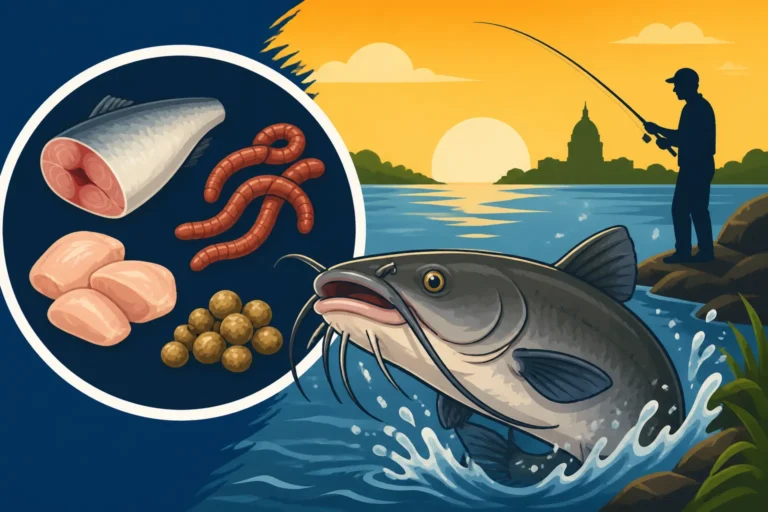
If there's one golden rule in flathead fishing, it's this: use fresh, live bait. Flatheads are predators, and they hunt by feel and scent, often keying in on distressed or injured baitfish. While you might occasionally tempt a smaller flathead with a cut bait, consistently catching bigger fish almost always comes down to presenting a lively meal.
Why Live Bait Reigns Supreme for Flatheads
Unlike their channel cat relatives, flatheads are not scavengers. They prefer to hunt down their prey, and nothing triggers their predatory instincts like a struggling, live baitfish. The vibrations, natural movements, and fresh scent of a live baitfish are irresistible to a flathead lying in ambush. The fresher and livelier your bait, the more attractive it will be.
Using live bait also means you’re presenting something truly natural to the flathead’s environment, something they encounter and eat every single day. They won't spook from it, but rather be drawn in by its movements and scent. This is why many serious flathead anglers spend as much time catching their bait as they do fishing for the flatheads themselves. It's an extra step, but it's a step that dramatically increases your chances of success. For a deeper dive into bait choices, check out Best Live Bait for Flathead Catfish.
Popular Live Baits and How to Keep Them Fresh
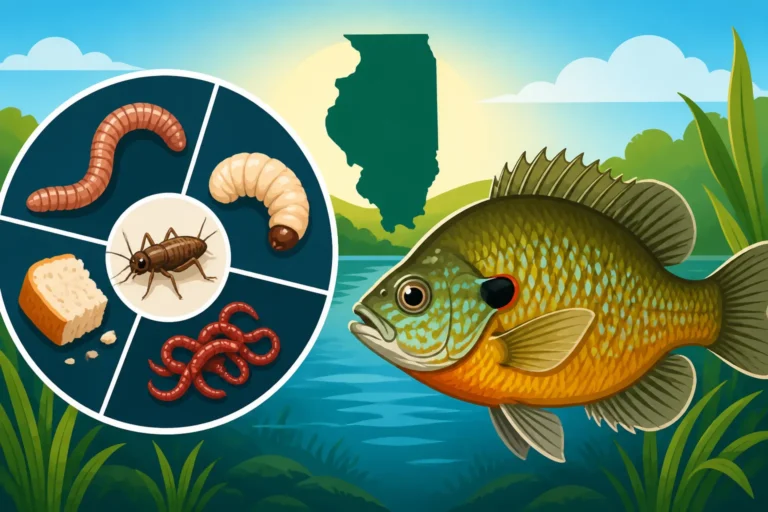
The best live baits are typically species that are native to the waters you're fishing and that flatheads commonly prey upon. In Illinois, popular choices include bluegill, sunfish, shad, suckers, and small carp. Each has its advantages: bluegill and sunfish are hardy and lively; shad are oily and have a strong scent trail; and suckers are tough and can withstand being fished in current for longer periods.
Keeping your bait fresh and lively is paramount. A good baitwell or a large cooler with an aerator is essential. Change the water regularly, and avoid overcrowding your baitfish. Some anglers will add ice to the water to keep temperatures down on hot days, which helps increase oxygen levels and reduces stress on the bait. A healthy, active baitfish will put out more vibrations and attract more attention from a lurking flathead than a sluggish or dying one.
Effective Flathead Rigs: From Carolina to Three-Way
There are several effective ways to present your live bait, and the choice often depends on the water conditions, current, and structure you're fishing.
-
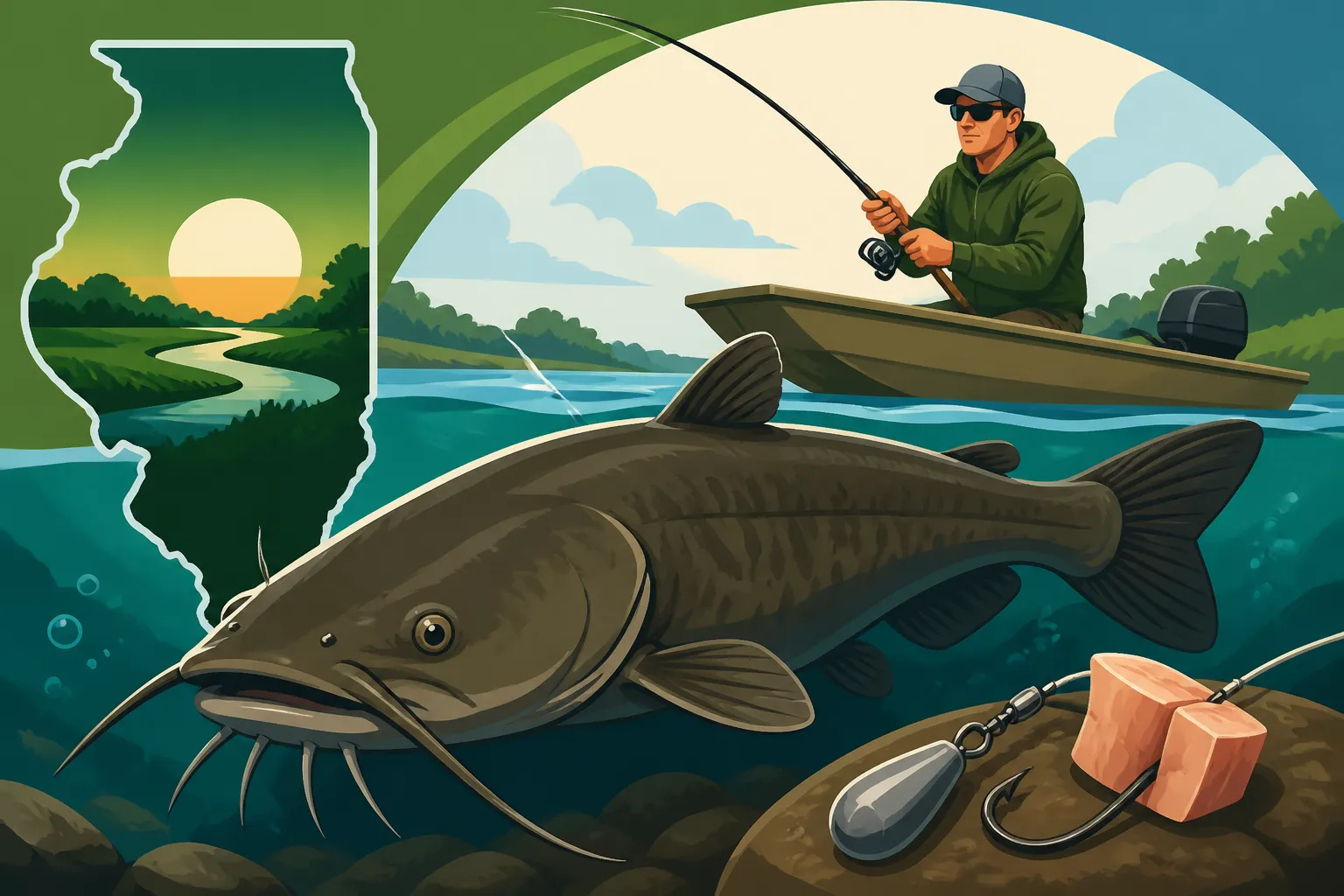
The Carolina Rig (Santee Cooper Rig): This is a staple for many flathead anglers. It consists of a heavy sinker (3-8 oz) threaded onto the main line, followed by a bead, then a heavy-duty swivel. A leader, typically 12-24 inches of heavy monofilament or fluorocarbon, is tied to the other end of the swivel, and then the hook is tied to the end of the leader. The bead protects the knot from the sinker, and the leader allows your bait to swim somewhat freely above the bottom, making it appear more natural and appealing.
-
The Three-Way Swivel Rig: Excellent for fishing in strong currents or when you want to keep your bait at a specific depth. One eye of the three-way swivel is tied to your main line, another to a short dropper line (6-12 inches) with a sinker, and the third to your leader (12-36 inches) with the hook and bait. This allows the bait to swim enticingly in the current, slightly off the bottom, while the sinker holds the rig in place.
-
Slip Sinker Rig: Similar to a Carolina rig but without the bead. The sinker slides directly on the main line above the swivel and leader. This allows the flathead to pick up the bait and run with it without feeling the resistance of the heavy sinker, giving you a better chance to set the hook. This rig is particularly effective when you're looking for Catfish Bottom Fishing Techniques.
Always make sure your knots are strong and your hook is large enough to accommodate your bait without impeding its natural movement. Hook your baitfish through the back, just behind the dorsal fin, being careful not to hit the spine, or through the lips to keep them alive and swimming.
| Live Bait Species | Average Size for Flatheads | Key Advantages | Considerations |
|---|---|---|---|
| Bluegill/Sunfish | 4-8 inches | Very lively, hardy, common, natural prey | Can be difficult to catch in sufficient numbers sometimes |
| Shad (Gizzard/Threadfin) | 5-10 inches | Strong scent, very active, good for attracting fish | Fragile, require excellent aeration to keep alive |
| Suckers | 6-12 inches | Extremely hardy, strong swimmers, large profile | Less common, often need to be purchased or trapped |
| Small Carp (Goldfish) | 6-12 inches | Very durable, good in current, large meal | Can be slow-moving, may not appeal to all flatheads |
Finding Flatheads: Decoding Their Hiding Spots
Knowing what gear to use and what bait they prefer is only part of the battle; you also need to know where to put that bait. Flatheads are masters of concealment, and pinpointing their ambush points is key to successful fishing. Their habits change slightly depending on whether you're on a vast river or a quieter lake, but the principles of finding structure and current breaks remain constant.
River Strategies: Current Seams and Structure
Rivers are classic flathead territory. On large river systems like the Mississippi or Illinois Rivers, flatheads will gravitate towards strong current breaks and heavy cover. Look for the deepest holes and channels, especially those with submerged timber, rock piles, or old bridge pilings. A current seam, where fast water meets slower water, is a prime feeding lane. Flatheads will often lie in the slower water, just out of the main current, waiting for baitfish to drift by in the faster flow.
Pay close attention to outside bends in the river, as these often have deeper water and significant erosion that creates undercut banks and log jams – perfect flathead hideouts. Navigational markers, wing dams, and riprap also create current breaks and attract baitfish, making them excellent spots to target. Don't be afraid to probe dense cover; remember, flatheads want to be tucked away. If you're fishing the Mississippi, you'll be interested in Mississippi River Catfish: Why Southern Illinois Waters Produce So Many.
Lake and Reservoir Tactics: Structure and Thermoclines
While rivers are iconic, Illinois also offers excellent flathead fishing in its larger lakes and reservoirs like Rend Lake, Lake Shelbyville, and Carlyle Lake. In these impoundments, flatheads still seek out structure, but the dynamics are a bit different. Look for old creek channels, flooded timber, deep rock humps, roadbeds, and submerged points. These features act as highways and hiding spots for both flatheads and their prey.
During warmer months, flatheads in lakes will often relate to the thermocline – the layer of water where the temperature rapidly changes. This layer is often rich in oxygen and baitfish, making it a comfortable and productive feeding zone for flatheads. Using a good fish finder to locate these depth changes and any associated structure can significantly improve your odds. Also, don't overlook areas around dam structures or any major changes in bottom contour.
Night Fishing for Flatheads
If there's one secret weapon in flathead fishing, it's night fishing. Flatheads are primarily nocturnal feeders, becoming much more active and willing to leave their cover under the cloak of darkness. As the sun sets, baitfish often move into shallower areas, and flatheads will follow, making them more accessible to anglers. The low light also provides them with a significant advantage over their prey.
When night fishing, safety is paramount. Make sure you have good lighting, know your fishing spot well, and if boating, have all required navigational lights and safety gear. The quiet of the night also means less boat traffic and fewer distractions, allowing you to focus on your line and the subtle takes of a flathead. Many anglers set out multiple rods, covering different depths and spots, and then simply wait for the tell-tale pull of a hungry flathead. For more on this, consider reading Best Time of Day to Catch Catfish.
Mastering the Hookset and the Fight
Hooking a flathead is one thing, but actually landing it is another challenge entirely. These fish are renowned for their incredible strength and stubborn fighting ability. You need patience, the right technique for setting the hook, and a strategy for battling these freshwater titans.
Bank Fishing vs. Boat Fishing Approaches
Both bank fishing and boat fishing can be highly effective for flatheads, each with its own advantages and challenges.
Bank Fishing: Many trophy flatheads are caught from the bank, particularly in rivers or large creeks where anglers can access deep holes, log jams, or undercut banks. The advantage of bank fishing is simplicity and accessibility. You can often get to spots that boats can't easily reach or fish from stable ground. The challenge is mobility; you're limited to what you can cast to. When bank fishing, focus on areas where deep water and heavy cover are close to shore. Setting up multiple rods and letting them soak with live bait is a common and effective tactic. You'll need sturdy rod holders to prevent your rod from being pulled into the water by a hard-hitting fish.
Boat Fishing: Fishing from a boat offers unparalleled mobility and the ability to cover more water and precisely position your bait over key structure. With a boat, you can target mid-river snags, offshore humps, and deep channels. Anchoring upstream from a known flathead spot and letting your bait drift down into the strike zone is a highly effective boat tactic. Positioning your boat to provide the best angle for fighting a fish out of heavy cover is also crucial. For those exploring larger waters, understanding Best Boats for Illinois Rivers can be incredibly helpful.
The Art of the Hookset and Fighting a Flathead
Flatheads are not subtle eaters. When they hit, it's usually a powerful, determined take. However, with live bait and circle hooks, patience is key. Resist the urge to yank the rod immediately. Instead, let the fish take the bait, and allow the rod to load up. The beauty of a circle hook is that as the fish swims away, the hook will naturally rotate and set itself in the corner of the fish's mouth. So, rather than a hard, sweeping hookset, a firm, steady retrieve or simply lifting the rod into the fish is often all that's required.
Once hooked, prepare for a battle. Flatheads will make powerful runs, often heading straight for the nearest cover to try and snag your line. Keep your drag set appropriately – tight enough to apply pressure but loose enough to allow the fish to take line when it surges. Pump and reel, using the rod's power to steer the fish away from snags. Don't rush it; a large flathead can fight for a long time. Maintaining a steady pressure and keeping the rod tip up will help wear the fish down.
Safe Handling and Release Practices
Trophy flathead catfish are a valuable resource, and practicing responsible catch and release, especially for the largest fish, helps sustain the population for future generations. When you get a flathead to the boat or bank, have a large, knotless net ready. These fish are notoriously difficult to hoist by hand due to their immense power and lack of a convenient "handle."
Once the fish is in the net, try to unhook it quickly and efficiently. If the hook is deeply set, use needle-nose pliers or a hook remover. Support the fish horizontally, especially large ones, if you plan to take a photo. Avoid holding them vertically by the jaw for extended periods, as this can damage their internal organs. Get your measurements and photos quickly, and then gently release the fish back into the water, allowing it to swim away on its own power. Conservation efforts, like those reflected in Illinois Flathead Catfish Daily Limit Rules, are vital.
Illinois Regulations and Responsible Angling
Understanding and adhering to fishing regulations is not just about avoiding penalties; it's about being a responsible angler and contributing to the health and sustainability of Illinois's fisheries. Flathead catfish, being a prized game fish, often have specific rules that every angler should know.
Flathead Catfish Size and Possession Limits in Illinois
Like many popular game fish, flathead catfish in Illinois are subject to specific daily catch limits and sometimes size restrictions. These regulations are set by the Illinois Department of Natural Resources (IDNR) to manage fish populations and ensure healthy stocks for the future. The specific rules can vary by water body, so always consult the most current Illinois Fishing Information Guide for the precise regulations for the area you plan to fish.
Generally, there will be a statewide daily possession limit for catfish, and this often includes flatheads, channel cats, and blue cats combined. However, some specific lakes or river stretches might have special regulations, such as minimum length limits or reduced daily creel limits, especially for trophy-managed waters. Ignoring these rules can lead to significant penalties, so it's always worth taking the time to review the guide. You can learn more about general catfish seasons in Illinois Catfish Season Guide.
Conservation Through Catch and Release
While it's exciting to keep a flathead for the table, the largest flatheads are the primary spawners and the most important for maintaining a robust population. Releasing these giants, especially females, ensures they can continue to reproduce and contribute to future generations of trophy fish. Many dedicated flathead anglers practice catch and release for all their large catches, choosing to keep only smaller, younger fish for eating.
Responsible angling practices extend beyond just limits. It also includes proper fish handling, as discussed earlier, using appropriate gear that allows for quick and clean hook removal, and disposing of litter properly. When you bring your gear, like a new tackle box or specialized hooks from Amazon, make sure you also bring a bag for your trash. These efforts help preserve the natural beauty and ecological balance of Illinois's waterways, ensuring that the thrill of catching a flathead remains for years to come.
Understanding Site-Specific Rules
It's absolutely crucial to remember that while there are statewide regulations, many lakes, reservoirs, and specific sections of rivers in Illinois have their own unique fishing rules. These site-specific regulations can pertain to everything from daily catch limits and size restrictions to bait restrictions or even specific fishing times. For example, a lake managed for trophy flatheads might have a slot limit, meaning you can only keep fish below a certain size or above another, with fish in the middle slot required to be released.
Before heading out to any particular fishing spot, always take a few minutes to check the IDNR's fishing regulations for that specific body of water. This information is usually available on the IDNR website or in the printed Illinois Fishing Information Guide. What's legal on the Mississippi River might be different on Carlyle Lake, so a quick check can save you a headache, or even a citation, and ensure you're fishing responsibly and legally.
Disclaimer
This article is for general informational purposes only and does not constitute professional advice. Laws, prices and regulations vary by location and change over time. Consult a qualified professional for guidance on your specific situation.