Best Fishing Boats for Illinois Rivers
It's incredibly frustrating when you're dreaming of a day out on one of Illinois's beautiful rivers, only to realize your current boat just isn't cut out for the unique challenges those waters present. Whether you're fighting strong currents, navigating shallow backwaters, or trying to quietly sneak up on a prime fishing hole, having the right vessel makes all the difference. This comprehensive guide will walk you through everything you need to know to choose the best fishing boat for Illinois rivers, ensuring your next angling adventure is smooth sailing and full of catches.
Understanding the Unique Challenges of Illinois River Fishing
Fishing on a river, especially one as dynamic as the Illinois River system, the Kankakee, or even the mighty Mississippi, is a whole different ballgame compared to hitting a calm lake. Rivers present a distinct set of obstacles and opportunities that demand specific characteristics from your boat. Ignoring these can lead to a less-than-ideal fishing experience, or worse, put you in a tough spot.
Navigating Varying River Conditions
Illinois rivers are rarely uniform. You might encounter wide, deep stretches perfect for trolling, which can quickly transition into narrower channels, submerged sandbars, or rocky rapids. The water levels can fluctuate dramatically depending on recent rainfall, snowmelt, and even the operation of dams. This means your boat needs to be adaptable. A boat that excels in deep, open water might get hung up in a shallow tributary, and one built for tiny creeks might struggle in the main current of the Illinois River during high flow.
Consider a scenario where you're launching on a low-water day, planning to explore some hidden backwater sloughs. If your boat has a deep V-hull designed for larger lakes, you might find yourself constantly trimming your motor or even pushing off the bottom with a paddle, ruining the peaceful experience and potentially damaging your prop. Conversely, a flat-bottomed boat perfect for those shallow spots might feel unstable and rough when crossing a choppy, wind-swept section of a wider river. It's a constant balancing act.
Then there's the debris factor. Rivers, especially after heavy rains, can carry a lot of submerged logs, branches, and other hazards that aren't typically a concern on most lakes. A robust hull and a motor that can handle occasional impacts or quickly get out of the way are invaluable. Knowing the river sections you plan to fish most often will greatly influence the ideal boat's draft and construction.
Dealing with Current and Obstacles
The current is arguably the most significant differentiator when comparing river fishing to lake fishing. It's a constant force you're always working with or against. Strong currents can make boat positioning difficult, making it hard to hold your spot over a promising structure or drift naturally with your bait. This is where the right power, coupled with smart anchoring or trolling motor systems, becomes absolutely essential.
Imagine trying to hold your boat in a swift current while casting to a submerged log where you know the walleye are hiding. Without enough horsepower, or a reliable bow-mount trolling motor, you'll constantly be swept downstream, missing your target and wasting precious fishing time. Similarly, navigating upstream against a strong flow requires a motor with sufficient thrust, not just top-end speed. It's not always about how fast you can go, but how effectively you can maintain control and overcome the river's forces.
Beyond the current, rivers often have navigation hazards that aren't always clearly marked: wing dams, rock piles, submerged trees, and ever-shifting sandbars. A boat that is nimble and responsive, allowing you to make quick directional changes, can save you from a lot of headaches and potential damage. It's about confidence in your craft to get you where you need to go safely, even when conditions are less than ideal.
Accessing Diverse Fishing Spots
One of the great joys of river fishing in Illinois is the incredible diversity of fishing opportunities. You might want to chase smallmouth bass in rocky creeks, target catfish in deep holes along the Mississippi, or explore backwater lakes for crappie and bluegill. Your boat needs to be able to get you to these varied locations, which can range from easily accessible boat ramps to remote, undeveloped shorelines.
A larger, heavier boat might be perfect for covering long distances on the main stem of the Illinois River Fishing Guide, but trying to launch it from a primitive dirt ramp or navigate a narrow, winding slough could be impossible. Conversely, a small, portable boat could be ideal for accessing those hidden gems, but it might not handle the rougher main channels or offer enough space for all your gear and fishing buddies.
Think about the kinds of species you primarily target and where they live. If you're all about chasing big flathead catfish in those deep, snaggy holes, you'll need a stable platform with enough room for heavy gear. If finesse fishing for panfish in lily pads is more your style, a shallower, quieter boat might be preferable. The ideal river fishing boat is often a compromise, designed to maximize your access to your preferred fishing grounds.
Key Boat Characteristics for River Anglers
When you're outfitting yourself for serious river fishing, it’s not just about the size of the boat or how many rod holders it has. There are some fundamental design characteristics that will profoundly impact your experience on Illinois's winding waterways. These elements dictate how your boat performs against current, how easily it navigates tricky spots, and ultimately, how successful and enjoyable your fishing trips will be.
Stability and Maneuverability
On a river, stability isn't just about comfort; it's about safety and effective fishing. Currents, wakes from other boats, and even just shifting your weight to cast can cause a smaller, less stable boat to rock significantly. A stable platform allows you to cast with confidence, land fish without feeling like you're going to take an unexpected swim, and safely navigate choppy water. The width of the boat and the design of its hull play huge roles here. Wider, flatter bottom boats tend to be more stable at rest, which is fantastic for casting from a static position. However, that stability often comes with a trade-off in rougher waters.
Maneuverability, on the other hand, is crucial for navigating tight turns, avoiding obstacles, and positioning your boat precisely over a structure. Rivers are not open lakes; they often have twists, bends, and areas with submerged hazards. A boat that can turn on a dime and respond quickly to steering inputs will keep you out of trouble and allow you to work prime fishing spots more effectively. This is where hull shape, especially the amount of V in the bow, and the responsiveness of your steering system become vital. A boat that tracks well and doesn't get pushed around by the current as much will save you a lot of effort and frustration.
Consider the difference between drifting a stretch for walleye and holding precisely over a sunken tree for bass. For drifting, good tracking and stability are key, but for precise holding, immediate responsiveness and the ability to pivot are paramount. Many river anglers opt for designs that offer a good balance, often leaning towards slightly wider boats that are still nimble enough to handle the varied conditions.
Draft and Hull Design
The "draft" of a boat refers to how much water it needs to float. On Illinois rivers, where shallow areas, sandbars, and backwater sloughs are common, a boat with a shallow draft is a huge advantage. You don't want to be constantly worrying about running aground, especially when trying to access those less-pressured fishing spots. Flat-bottomed boats or modified V-hulls generally have a shallower draft, allowing you to explore areas where deeper V-hulls simply can't go. This can open up a whole new world of fishing opportunities that other anglers might miss.
However, a shallow draft isn't the only consideration for hull design. The shape of the hull also affects how the boat rides through chop, how it tracks in current, and its overall stability. A true flat-bottomed jon boat offers maximum shallow-water access and great stability at rest, but it can provide a very bumpy and wet ride in rough water. A deep V-hull cuts through waves smoothly, offering a comfortable ride, but requires more water depth. A modified V-hull tries to strike a balance, offering decent shallow-water capability while still providing a somewhat smoother ride in light chop.
For river fishing, many experienced anglers gravitate towards modified V-hulls or specialized river boats that have a flatter stern for shallow running but enough V in the bow to handle some waves. This design allows them to navigate a variety of river sections, from the main channel to the skinny water. It's about choosing a hull that matches the typical conditions of the rivers you fish most often, rather than just going for the absolute shallowest or deepest option.
Power and Propulsion
Having the right amount of power is critical for river fishing. You're not just moving through still water; you're often fighting against a current. An underpowered boat will struggle to go upstream, consume more fuel trying to maintain speed, and make precise boat positioning much harder. Conversely, an overpowered boat can be overkill, less fuel-efficient, and potentially unsafe if not handled properly. The key is finding the sweet spot for the size and weight of your boat, and the typical currents you encounter.
When it comes to propulsion, outboard motors are the most common choice for river fishing. Their ability to be trimmed up allows for navigation in shallower water, and they offer excellent maneuverability. However, the type of propeller can also make a big difference. A prop designed for maximum speed might not be the best for navigating strong currents or pushing a heavily loaded boat. Some anglers opt for jet drives, which have no propeller extending below the hull, making them ideal for extremely shallow and obstacle-ridden rivers. While they lose some efficiency and top speed compared to propeller-driven outboards, the peace of mind knowing you won't strike a prop is invaluable in certain river environments.
Beyond the main engine, a reliable trolling motor, especially a bow-mount electric one, is almost non-negotiable for serious river anglers. It allows for quiet, precise positioning and slow drifts, crucial for working structure or holding against a current without constantly firing up the gas engine. Brands like Minn Kota and MotorGuide offer models with GPS anchoring capabilities, allowing you to "spot-lock" your boat in place with incredible accuracy, even in a current. This technology, often found on reputable sites like Amazon or specialized retailers like Bass Pro Shops, transforms how you fish rivers, giving you complete control over your drift and position.
Top Boat Types for Illinois Rivers
Okay, so we've talked about the challenges and the key characteristics, but what does that mean for actual boat types? When you walk into a dealership or browse online, you'll see a dizzying array of options. For Illinois rivers, however, a few specific boat types consistently rise to the top, each with its own set of advantages and ideal uses.
Jon Boats: The Workhorse of Shallow Waters
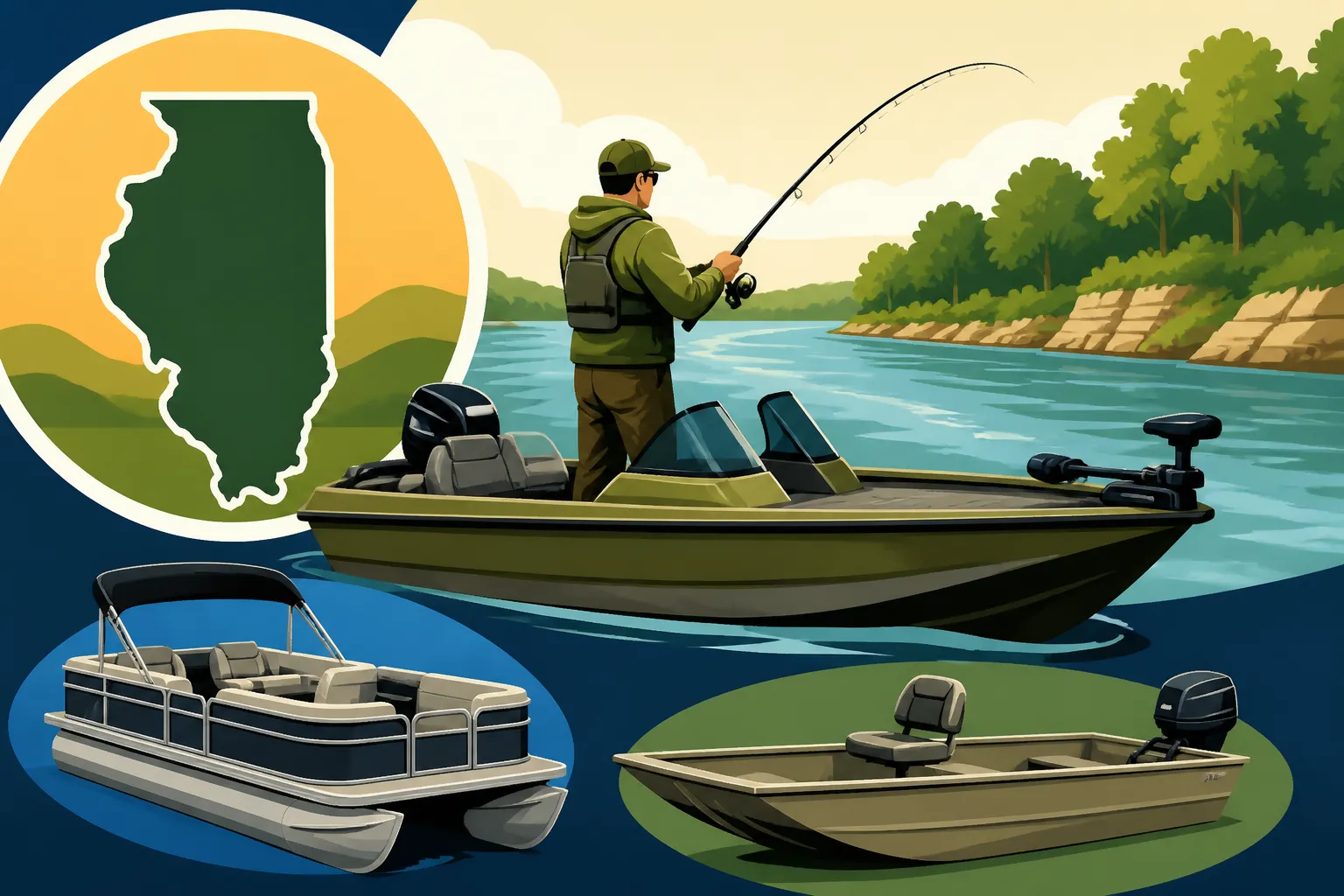
Ah, the trusty jon boat! These are, without a doubt, one of the most popular and practical choices for many Illinois river anglers, especially those who prioritize shallow water access and simplicity. Jon boats are characterized by their flat bottoms, which allow them to float in incredibly shallow water. This is a massive advantage when you're trying to reach those untouched backwater sloughs, sneak through skinny creeks, or navigate areas with fluctuating water levels. They are often made of aluminum, making them relatively lightweight and durable against bumps and scrapes.
The flat bottom also provides exceptional stability at rest, which is fantastic when you're standing up to cast, netting a fish, or moving around the boat. This makes them a favorite for bank anglers who occasionally want to hit the water, or for those who simply appreciate a solid, steady platform. Because of their simple design, jon boats are also typically more affordable than other boat types, making them an excellent entry-level option for new river anglers. You can find them ranging from small, paddle-powered models to larger versions capable of handling small outboard motors.
However, their flat-bottomed design does come with trade-offs. While stable at rest, jon boats can deliver a very rough, "pounding" ride in choppy water. They tend to slap against waves rather than cut through them, which can be uncomfortable and wet on windy days or in the wakes of larger boats. Their maneuverability in strong currents can also be less precise compared to a V-hull, as they tend to get pushed around more easily. Despite these points, for many stretches of the Fox River or Kankakee, a well-equipped jon boat remains a formidable and efficient fishing machine.
Aluminum V-Hull Boats: Versatility for Many Rivers
Stepping up from the pure jon boat, we often find the aluminum V-hull, or sometimes a modified V-hull. These boats are incredibly versatile and are a fantastic choice for anglers who want to fish a wider variety of river conditions, from the calmer stretches of the Spoon River to the wider, sometimes rougher waters of the Mississippi River Walleye and Pike Fishing in Northern Illinois. The "V" shape in the hull allows the boat to cut through waves and chop much more smoothly than a flat-bottomed boat, providing a more comfortable and drier ride.
This improved ride quality makes them much better suited for longer runs or days when the wind kicks up. While they require a bit more water depth than a true jon boat, many modified V-hulls still have a relatively shallow draft, allowing them to access a good amount of river real estate. They offer a great balance between shallow-water capability and open-water comfort. These boats also tend to track better in current, making it easier to maintain a straight course and position your boat precisely.
Aluminum V-hulls come in a vast range of sizes and configurations, from simple utility boats to fully rigged bass boats with casting decks, livewells, and advanced electronics. This adaptability means you can find a model that perfectly suits your specific fishing style and the rivers you plan to tackle. They are generally durable and relatively low-maintenance, making them a wise investment for long-term river use. Many anglers find these to be the sweet spot, providing enough stability for various casting techniques while still being capable of handling a diverse river environment.
Inflatable Boats/Kayaks: Portable and Niche Options
For the minimalist angler, or those focused on extremely specific, hard-to-reach spots, inflatable boats and fishing kayaks offer compelling advantages. These options excel in portability and stealth, making them ideal for small rivers, streams, and remote backwaters where traditional boats simply can't go. Many can be launched without a ramp, carried to the water's edge, or transported in the back of a truck, opening up access to truly hidden gems.
Fishing kayaks, in particular, have exploded in popularity. Modern fishing kayaks are incredibly stable, often featuring wide, flat platforms that allow anglers to stand and cast. They are propelled by paddle, pedal, or even small electric motors, offering silent movement and precise control, which is fantastic for stalking wary fish. Companies like Old Town and Hobie make models purpose-built for fishing, with plenty of storage and mounting options for accessories. Kayak Fishing Gear for Illinois Waters is a popular topic for a good reason!
Inflatable boats, while perhaps less common for serious angling in rivers, can be a great choice for quick trips or for reaching spots that require crossing very shallow areas. They are incredibly buoyant and resilient to minor impacts. However, both inflatables and kayaks have limitations. They are generally slower, have less storage space, and offer minimal protection from the elements compared to larger boats. They also require more physical effort to cover distance, particularly against strong currents. While not for every river angler, for those who value solitude, stealth, and access to truly remote waters, these portable options are unbeatable.
Here's a quick comparison of these popular river boat types:
| Feature | Jon Boat | Aluminum V-Hull | Fishing Kayak |
|---|---|---|---|
| Primary Advantage | Shallow water access, cost | Versatility, ride comfort | Portability, stealth |
| Draft | Very shallow | Shallow to moderate | Very shallow |
| Stability at Rest | Excellent | Good | Excellent (fishing models) |
| Ride in Chop/Waves | Rough, wet | Smooth to moderate | Varies (can be wet) |
| Maneuverability in Current | Good (can be pushed) | Very Good | Excellent (with pedals/motor) |
| Capacity | Moderate | Moderate to High | Low (1-2 persons) |
| Cost (typically) | Low | Medium | Low to Medium |
| Ideal River Use | Skinny water, backwaters | Main channels, diverse conditions | Small streams, remote access |
Specialized Features and Accessories for River Boats
Once you've settled on the core type of boat, it's time to think about outfitting it with the right gear. For river fishing, certain features and accessories aren't just luxuries; they're absolute necessities that enhance safety, efficiency, and your overall success on the water.
Trolling Motors and Anchoring Systems
A reliable trolling motor is arguably the most important accessory for river fishing, second only to the main engine itself. It allows for quiet, precise boat positioning that's simply impossible with a gas outboard. When you're trying to slowly work a shoreline, hold your boat against a mild current to pick apart a structure, or sneak into a shallow cove without spooking fish, an electric trolling motor is your best friend. Bow-mount models are generally preferred for river fishing as they "pull" the boat, offering better control and responsiveness in current. Modern trolling motors with GPS spot-lock technology, like those from Minn Kota or MotorGuide, are game-changers, holding your boat in a precise location even in current or wind, freeing you up to focus on fishing. You can often find a wide selection of these, along with mounting hardware, at Bass Pro Shops or through online retailers.
Beyond electric motors, robust anchoring systems are crucial. Rivers have currents, and sometimes you need to stay put. A lightweight grapnel anchor might work for small, calm backwaters, but for the main channels, you'll need something much heavier and more reliable. River anchors, often shaped like a mushroom or a box, are designed to dig into soft bottoms and resist dragging. A good anchor retrieval system, like an anchor winch, can save your back and make anchoring much easier. Also, consider a "stake out pole" for very shallow water – it's a quiet, simple way to temporarily hold your position. Effective Trolling Motors and Anchoring Systems are vital for safety and success.
For fishing flowing water, a drag chain or drift sock can also be incredibly useful. A drift sock deploys behind or beside the boat, slowing your drift speed in current or wind, allowing you to present baits more effectively. A drag chain, usually a heavy chain deployed off the bow or stern, can achieve a similar effect, helping you control your speed and angle. These tools give you an extra layer of control over your boat's movement, essential when the river dictates your pace.
Electronics and Navigation
In today's fishing world, electronics can give you a significant edge, especially on rivers where conditions can change rapidly and structure might be hidden. A good fish finder is essential for locating underwater structure like logs, rock piles, and drop-offs where fish hold. Side-imaging and down-imaging technologies, available on units from brands like Humminbird and Lowrance, can paint a clear picture of what's beneath and to the sides of your boat, helping you identify prime fishing spots that might otherwise go unnoticed.
GPS capabilities are equally, if not more, important on rivers. Not only do they help you navigate safely, marking hazards and channels, but they also allow you to save waypoints for productive fishing spots or launch points. On a river with multiple bends and similar-looking shorelines, GPS ensures you can always find your way back, especially in low light or fog. Chartplotting features with detailed river maps can show you contours, depths, and even navigation markers, providing critical information about the waters you're fishing.
Having a VHF radio, especially on larger rivers like the Mississippi, is also a wise safety investment. While cell service might be spotty in some remote river sections, a VHF radio allows you to communicate with other boaters, lock tenders, and even emergency services. It's an important part of your Illinois Boating Safety Equipment Checklist and provides peace of mind when venturing far from developed areas.
Storage and Customization Options
River fishing often involves carrying a fair amount of gear – multiple rods, tackle boxes, bait buckets, coolers, and safety equipment. Adequate and organized storage is crucial to keep your boat clutter-free, safe, and efficient. Look for boats with built-in rod storage, under-deck compartments, and dry storage areas to protect your electronics and personal items from spray and rain. Livewells are also a must if you plan to keep your catch fresh or participate in catch-and-release tournaments.
Customization is another key aspect. Many river anglers tailor their boats to their specific needs. This might involve adding extra rod holders, mounting platforms for electronics, or installing specialized lighting for night fishing. A clean, open deck plan can be advantageous, allowing you to configure your space as needed. Rail systems, often found on aluminum boats, provide versatile attachment points for a variety of accessories.
Think about how you fish and what you bring. If you're a multi-species angler, you might need space for different tackle boxes and rod setups. If you fish with kids, you might need more open deck space and secure seating. Consider the layout and how easily it can be adapted. Some boat manufacturers offer modular systems that allow you to reconfigure seating or storage, providing maximum flexibility for diverse fishing trips.
Considering Your Fishing Style and Budget
Choosing the right boat for Illinois rivers isn't just about the water; it's also about you. Your personal fishing style, how often you plan to go out, and, of course, your budget will heavily influence the best choice. It's important to be realistic about these factors to ensure you make an investment that truly enhances your time on the water.
Recreational Angler vs. Serious Tournament Fisherman
Your level of commitment to fishing plays a huge role in boat selection. If you're a recreational angler who enjoys a casual day on the water a few times a month, perhaps with family, your needs will be very different from a serious tournament fisherman who's on the water every weekend, rain or shine.
For the casual recreational angler, simplicity, ease of use, and versatility often trump highly specialized features. A moderately sized aluminum V-hull or a stable jon boat, with enough room for a cooler and a few rods, might be perfect. You probably won't need the most advanced electronics or the highest horsepower motor. Comfort, ease of trailering, and low maintenance will be high on your priority list. The goal is enjoyment, not necessarily breaking records. You're looking for a reliable craft that gets you out there without too much fuss.
On the other hand, if you're a serious tournament angler, especially for species like bass or walleye, your boat becomes an extension of your competitive strategy. You'll likely need faster speeds to get to distant spots quickly, multiple livewells with aeration systems to keep fish healthy, state-of-the-art fish finders and GPS units, and powerful trolling motors. You'll also demand a highly stable casting platform and robust storage for an arsenal of tackle. These boats are often more expensive, require more maintenance, and are designed for performance and efficiency above all else. Illinois Tournament Angler License Rules also highlight the specific regulations that apply to competitive fishing, sometimes requiring different considerations for your setup.
New vs. Used Boats: Making the Smart Choice
The age-old dilemma: new or used? Both have distinct advantages and disadvantages, especially when it comes to boats. Buying new offers the latest technology, a full warranty, and the peace of mind that comes with knowing you're the first owner. You can often customize it exactly to your liking and benefit from dealer support. However, new boats, like cars, depreciate rapidly, and the upfront cost can be significantly higher.
Opting for a used boat can be a fantastic way to get more boat for your buck. You can often find well-maintained boats with many desirable features at a fraction of the cost of a new one. This allows you to potentially afford a larger or better-equipped boat than if you bought new. However, buying used comes with risks. You might inherit someone else's problems, warranties are often expired or limited, and you might need to invest in repairs or upgrades sooner rather than later. Always get a thorough inspection by a qualified marine mechanic before purchasing a used boat.
For river fishing, where boats can take a bit more abuse from shallow water and debris, a used aluminum boat can be a smart choice. Minor dings and scratches are less heartbreaking on a pre-owned vessel. If you're handy with tools and enjoy a project, a used boat offers incredible value. If peace of mind and the latest features are paramount, and your budget allows, then new might be the way to go.
Maintenance and Long-Term Costs
It's easy to get caught up in the excitement of buying a boat, but don't forget the ongoing costs. Boats require maintenance, and river boats, especially, can face unique wear and tear. Regular engine servicing, prop repairs (which are more common on rivers due to hidden obstacles), trailer maintenance, and general cleaning are all part of boat ownership.
Fuel costs are another consideration. Larger engines consume more fuel, and if you're battling strong currents, you'll burn more gas. Storage, insurance, and the eventual need for repairs or upgrades also add to the long-term cost. It's wise to budget not just for the purchase price, but for these recurring expenses. For example, if you often venture into shallow waters, having a spare propeller on hand is a smart investment, available from many marine supply stores or online through Amazon.
Consider the materials of the boat as well. Aluminum boats are generally more forgiving and easier to repair than fiberglass if they sustain minor damage. Simple jon boats have fewer complex systems, meaning less to break. Factor in your own mechanical aptitude and willingness to perform routine maintenance. Choosing a boat that aligns with your available time and budget for upkeep will lead to a much more satisfying ownership experience down the line.
Safety First: Essential Gear for River Boating
Beyond the boat itself, ensuring you have the right safety gear is non-negotiable for river fishing. Rivers, with their currents, debris, and sometimes remote locations, can present unique hazards. Being prepared isn't just about following regulations; it's about protecting yourself, your passengers, and your investment.
Life Jackets and Throwable Devices
This is paramount. Everyone on board, regardless of age or swimming ability, should have a properly fitting, Coast Guard-approved life jacket readily accessible. For children under a certain age (check Illinois Life Jacket Rules for Children Under 13 for specifics), wearing a life jacket at all times while underway is often mandatory. But even for adults, wearing it, rather than just stowing it, is always the safest option, especially on flowing water. In a sudden accident or capsizing, there simply isn't time to grab a stowed life jacket.
There are different types of life jackets (Personal Flotation Devices, or PFDs) designed for various activities. Type III PFDs, often called "flotation aids," are comfortable for extended wear and common for fishing. Make sure they fit snugly but comfortably and allow for a full range of motion. For those who want maximum freedom, inflatable PFDs are an option, but they require proper maintenance and are not suitable for all users or situations.
In addition to individual life jackets, you must carry at least one Type IV throwable flotation device on your boat if it's over a certain length. This could be a ring buoy or a seat cushion. This device is meant to be thrown to someone who has fallen overboard, providing them with something to hold onto until you can maneuver the boat back to them. Knowing how to quickly and accurately deploy one could be a life-saving skill. Remember, Illinois Life Jacket and PFD Rules are in place for a reason – they save lives.
Navigation Lights and Sound Signaling
If you plan to be on the water during periods of restricted visibility – from sunset to sunrise, or in fog, heavy rain, or other low-light conditions – navigation lights are legally required and absolutely essential for safety. Your boat needs a white all-around light visible for 360 degrees and red and green sidelights at the bow. These lights allow other boaters to see you and determine your direction of travel, preventing collisions.
Ensuring your navigation lights are in good working order before every trip, especially when there's a chance of being out after dark, is a simple but critical pre-departure check. Rivers can be bustling with commercial traffic, towboats, and other recreational vessels, and being visible is your primary defense against accidents.
Beyond lights, sound-producing devices are also mandatory. This can be a horn, whistle, or bell, depending on the size of your boat. These devices are used to signal intentions to other vessels (e.g., passing, meeting head-on) and to warn of danger or your presence in limited visibility. A good marine whistle attached to your life jacket or a compact air horn should be standard equipment. Knowing the basic sound signals is part of good boating etiquette and safety, a skill often covered in Illinois Boater Education Card Requirements courses.
First Aid and Emergency Preparedness
Even on a perfect day, accidents can happen. A well-stocked first-aid kit is a must-have on any boat. It should include essentials for cuts, scrapes, insect bites, headaches, and minor injuries. Consider adding items specific to your environment, like motion sickness medication or sunscreen. Make sure everyone on board knows where it's located.
Beyond first aid, think about a broader emergency kit. This could include a dry bag with spare clothes, a space blanket, extra water, non-perishable snacks, a flashlight with extra batteries, and a multi-tool. A fire extinguisher, of the correct marine type and properly maintained, is also a legal requirement on most motorized boats and crucial for extinguishing engine fires or other electrical issues.
Having a communication device, such as a fully charged cell phone in a waterproof case or a marine VHF radio, is vital for calling for help if an emergency arises. Remember that cell service can be spotty in remote river areas, so a VHF radio offers a more reliable alternative for contacting marine authorities or other boaters. Planning for the unexpected, even a simple breakdown, will ensure a safer and more enjoyable experience on Illinois's beautiful, but sometimes challenging, rivers.
Disclaimer
This article is for general informational purposes only and does not constitute professional advice. Laws, prices and regulations vary by location and change over time. Consult a qualified professional for guidance on your specific situation.