Kayak Fishing Gear for Illinois Waters
For many Illinois anglers, the idea of getting out on the water without the hassle and expense of a traditional powerboat is incredibly appealing, but then you start wondering what specialized gear you actually need for kayak fishing. It's easy to get overwhelmed by all the options, from the kayak itself to safety equipment and fishing-specific accessories. This comprehensive guide is here to cut through the confusion and walk you through all the essential and helpful equipment you'll need to successfully and safely fish from a kayak across Illinois' diverse waters, ensuring you're ready for everything from small, quiet ponds to expansive lakes and flowing rivers.
Why Kayak Fishing in Illinois is a Game Changer
There's a special kind of peace that comes with gliding silently across the water, the only sounds being your paddle dipping and the birds calling. For Illinois anglers, kayak fishing isn't just a trend; it's a profound way to connect with nature and access fishing spots that other boats can only dream of. The frustrations of crowded ramps, expensive fuel, and limited access points with larger vessels become a distant memory when you're paddling to your favorite fishing hole.
The Freedom and Accessibility of Kayaks
One of the biggest draws to kayak fishing is the sheer freedom it offers. You don't need a huge truck to tow a boat, nor do you need to worry about booking expensive storage or paying hefty launch fees at every park. Kayaks are incredibly versatile, fitting on car rooftops or small trailers, and can be launched from almost any stretch of bank, even those without formal ramps. This means you can explore countless smaller lakes, quiet backwaters, and narrow river sections across Illinois that are simply off-limits to larger boats, opening up a whole new world of fishing possibilities.
Think about those hidden coves on a big reservoir like Lake Shelbyville or the quiet stretches of the Fox River where shore fishing is tough and powerboats can't go. A kayak puts you right in the heart of that untouched territory. You're not just fishing; you're exploring, discovering new honey holes, and enjoying a more intimate experience with the environment. It's truly a minimalist approach to angling that still provides maximum enjoyment and access.
Reaching Undisturbed Illinois Waters
Imagine fishing a spot where the fish haven't seen a lure in weeks, tucked away in a shallow backwater slough on the Mississippi River or a secluded bay on Rend Lake. Kayaks allow you to do exactly that. Their shallow draft means you can navigate extremely skinny water, slipping over submerged logs and through reeds that would ground any traditional fishing boat. This stealth factor is also a huge advantage; you can approach wary fish without spooking them with the rumble of an outboard motor or the splash of a heavy anchor.
This ability to reach pristine, less-pressured waters often translates to better fishing. Whether you're chasing largemouth bass tucked deep in lily pads, seeking crappie in flooded timber, or targeting elusive walleye in a remote river bend, a kayak gives you the ultimate advantage. It's about getting to where the fish are comfortable, undisturbed, and more likely to bite, giving you an edge that few other fishing platforms can match in Illinois' diverse aquatic landscapes.
Choosing Your Kayak: Types and Considerations for Illinois Waters
Picking the right kayak is arguably the most critical decision you'll make, as it forms the foundation of your entire kayak fishing experience. There are so many options out there, and what works best for a small pond might be a nightmare on a large, windy lake. It's all about balancing stability, speed, comfort, and the kind of water you plan to fish most often here in Illinois.
Sit-on-Top vs. Sit-Inside Kayaks
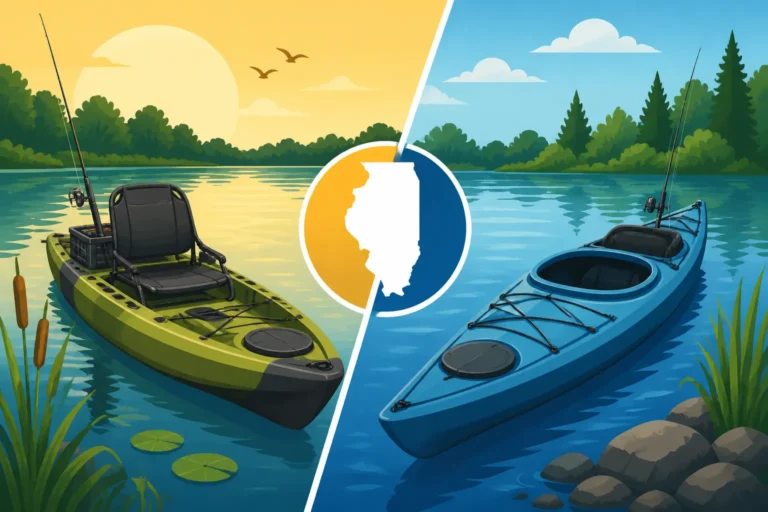
The first major choice is between a sit-on-top (SOT) and a sit-inside (SINK) kayak. For fishing, the vast majority of anglers opt for SOTs, and for good reason. They offer superior stability, making it easier to cast, retrieve, and even stand up to sight fish in calm conditions. SOTs also have scupper holes that allow water to drain out, so you don't have to worry about bailing if you get splashed or take on a small wave. Plus, the open deck space provides ample room for gear, tackle boxes, and even a cooler. It's much easier to get in and out, especially if you take an unexpected swim.
Sit-inside kayaks, while generally faster and offering more protection from the elements, can be restrictive for fishing. They have less deck space, and getting gear in and out of the cockpit can be a pain. If you flip, bailing them out can be a significant challenge on the water. While some experienced anglers use them for specific types of fishing, like fly fishing on calm rivers, for most Illinois fishing scenarios, especially on larger lakes or when you're bringing a lot of gear, a sit-on-top kayak will be a far more practical and enjoyable choice.
Pedal vs. Paddle Kayaks
Once you've settled on a sit-on-top, you'll encounter the pedal versus paddle debate. Traditional paddle kayaks are propelled by, well, paddles! They are generally lighter, more affordable, and simpler in design. They're fantastic for smaller bodies of water, tight spaces, and anglers on a budget. However, paddling can be tiring over long distances or in windy conditions, and it requires you to set your paddle down every time you want to cast, net a fish, or adjust your gear, which can be a real pain when a hot bite is on.
Pedal kayaks, on the other hand, use a foot-pedal drive system to propel the kayak, often leaving your hands completely free for fishing. This is a huge advantage, allowing you to troll, maintain position against wind or current, and fight a fish all at the same time. While they are significantly more expensive and often heavier than paddle kayaks, many anglers find the hands-free operation to be a game-changer, especially on larger Illinois waters like Carlyle Lake or the wide stretches of the Illinois River. They also tend to be more efficient for covering long distances, meaning you can explore more water with less fatigue.
Length, Width, and Stability for Illinois' Lakes and Rivers
The dimensions of your kayak will heavily influence its performance and suitability for various Illinois waters. Generally, longer kayaks tend to be faster and track straighter, making them ideal for covering vast stretches of water on big lakes like Clinton Lake or cruising down the Mississippi River. However, they can be less maneuverable in tight spots like small creeks or crowded backwaters. Shorter kayaks are typically more agile and easier to transport, perfect for smaller ponds and narrow rivers, but they might feel sluggish on open water.
Width directly correlates with stability. Wider kayaks are more stable, which is excellent if you plan to stand up and cast or if you're fishing in choppy conditions. They also provide more storage space. The trade-off is often speed; wider kayaks are usually slower. For beginners or those planning to fish Illinois' large reservoirs, a wider, more stable kayak is often recommended. If you're primarily exploring calm, narrow rivers, a slightly narrower, more agile boat might be preferable. Think about where you'll be spending most of your time before committing. You might even want to check out various models at a local Bass Pro Shops to get a feel for the different sizes.
| Feature | Sit-on-Top (SOT) Kayak | Sit-Inside (SINK) Kayak |
|---|---|---|
| Stability | Generally higher; easier to stand & re-enter | Lower; can feel "tippier" but more enclosed |
| Comfort | Open deck, adjustable seating, more legroom | Enclosed cockpit, less legroom, more snug fit |
| Gear Capacity | Excellent; large open deck, tank wells, rails | Limited; gear often stowed inside hull or on deck |
| Self-Bailing | Yes, scupper holes drain water | No, requires bailing if water enters cockpit |
| Entry/Exit | Very easy; like sitting on a bench | More challenging; requires sliding in |
| Weather Protection | Minimal; exposed to elements | Good; provides shelter from wind and spray |
| Speed | Can be slower due to wider design | Generally faster and tracks straighter |
| Primary Use | Fishing, recreational paddling, ocean/large lakes | Touring, whitewater, colder climates |
Essential Safety Gear You Can't Afford to Skip
Safety isn't just a suggestion when you're out on the water in a kayak; it's a non-negotiable requirement. While kayak fishing offers incredible freedom, it also demands respect for the elements and adherence to basic safety protocols. Trust me, the minute you’re in an unexpected situation, you’ll be incredibly grateful for having the right gear. Plus, some of it is legally mandated in Illinois, so it's best to be prepared.
Personal Flotation Devices PFDs
This is perhaps the most critical piece of safety gear: your Personal Flotation Device, or PFD (often called a life jacket). In Illinois, Do You Need a Life Jacket in a Kayak in Illinois? is a common question, and the answer is a resounding yes. While adults aren't always required to wear them, they must be readily accessible, and children under 13 are legally required to wear a PFD while underway on any vessel, including kayaks. However, for kayak fishing, wearing your PFD at all times is the smartest move you can make. It's not about being a good swimmer; it's about staying afloat and conscious if you unexpectedly capsize or have an emergency.
Modern fishing PFDs are designed with kayak anglers in mind. They often have mesh backs to accommodate high-back kayak seats, multiple pockets for tackle and tools, and attachment points for accessories like radios or whistles. Look for one that fits comfortably, allows for a full range of motion for casting and paddling, and is rated as Coast Guard approved. Don't skimp on this item; it's literally a lifesaver. You can find excellent options at outdoor retailers or online, including Bass Pro Shops.
Paddles, Lights, and Signaling Devices
Even if you have a pedal kayak, always carry a spare paddle. Paddles can be dropped, broken, or lost, and trying to paddle a kayak with your hands is exhausting and ineffective. A lightweight, durable paddle that's appropriate for your kayak's width and your height is crucial. Beyond propulsion, consider signaling devices. A whistle is simple, inexpensive, and incredibly effective for attracting attention, especially if you get into trouble.
For early morning, late evening, or night fishing (which is legal and often productive in Illinois), navigation lights are absolutely essential. Most states, including Illinois, require a white light visible 360 degrees for kayaks operating between sunset and sunrise. This can be a simple battery-powered light on a pole or a headlamp. It’s not just about avoiding fines; it’s about making sure other boaters can see you, especially on busy waters like the Chain O'Lakes or the larger sections of the Illinois River. A small, bright flashlight or headlamp is also invaluable for rigging up, tying knots, and navigating in low light.
First Aid and Emergency Preparedness
Accidents happen, even on calm waters. A small, waterproof first-aid kit stocked with basics like bandages, antiseptic wipes, pain relievers, and any personal medications is a must-have. Keep it easily accessible but securely stowed. Beyond first aid, think about a dry bag for your phone, car keys, and any other valuables you can't afford to get wet. A small, brightly colored tow rope can also be invaluable if you or another kayaker needs assistance getting back to shore.
It's also wise to inform someone of your float plan – where you're going, when you expect to return, and who to contact if you don't check in. Kayak fishing often takes you to remote spots, and being prepared for unforeseen circumstances, from a sudden storm to a twisted ankle, is just smart practice. Checking the weather forecast thoroughly before you launch is a non-negotiable step. Illinois weather can change quickly, and being caught in an unexpected thunderstorm or high winds on a large lake can turn a pleasant outing into a dangerous situation in a hurry.
Rigging Your Kayak for Fishing Success
Once you have your kayak and your essential safety gear, the real fun begins: customizing your setup for maximum fishing efficiency. This is where your kayak transforms from a simple boat into a highly specialized fishing machine. The right rigging makes all the difference in comfort, convenience, and ultimately, how many fish you catch.
Rod Holders and Storage Solutions
One of the first things you'll realize as a kayak angler is that holding a rod 100% of the time just isn't practical or enjoyable. This is where rod holders come in. There's a huge variety, from flush-mount holders that are permanently installed to track-mounted or clamp-on options that offer flexibility in placement. A popular setup for many Illinois anglers involves a couple of flush mounts behind the seat for rod storage while paddling, and then one or two adjustable, RAM-mounted or similar holders in front of you for trolling, soaking bait, or just temporarily setting your rod down while you re-tie a lure or net a fish.
Beyond rod holders, efficient storage is key. Kayak fishing means limited space, so everything needs a dedicated, secure spot. Many kayaks come with bungee straps over tank wells in the stern for securing dry bags or coolers. Milk crates or specialized kayak fishing crates are incredibly popular for holding multiple tackle boxes, a small cooler, and various tools. They can be customized with PVC pipe rod holders, tool caddies, and more. Consider tackle management systems that allow you to quickly access what you need without rummaging, like small, waterproof boxes that fit neatly into a crate or specialized kayak tackle bags. Online retailers like Amazon offer a vast array of organizational solutions.
Anchoring Systems for Kayaks
Maintaining your position in a kayak, especially in current or wind, can be a constant battle. An effective anchoring system is crucial for staying on a productive fishing spot. Unlike a large boat, you don't need a heavy anchor. A small grappler anchor (1.5 to 3 lbs) or a stake-out pole (a solid fiberglass or aluminum pole that can be pushed into soft bottoms) are excellent options. The key is how you deploy it. An anchor trolley system is almost a necessity for kayak anglers.
An anchor trolley is a simple rope and pulley system that runs along the length of your kayak. This allows you to deploy your anchor from either the bow or the stern, and then move the anchor line attachment point anywhere along the side of your kayak. This is incredibly useful for positioning yourself perfectly over a structure, holding yourself at an optimal angle to the wind, or preventing your kayak from "weathervaning" into an uncomfortable position. For example, if you're fishing a submerged brush pile on Lake of Egypt, you can anchor from the bow and then adjust your trolley to swing the stern around for the best casting angle, or if you're holding against current on the Kankakee River, you can quickly adjust your position. Knowing how to set up an Kayak Anchor Setup for Lake Fishing is a real game-changer.
Electronics: Fish Finders and GPS
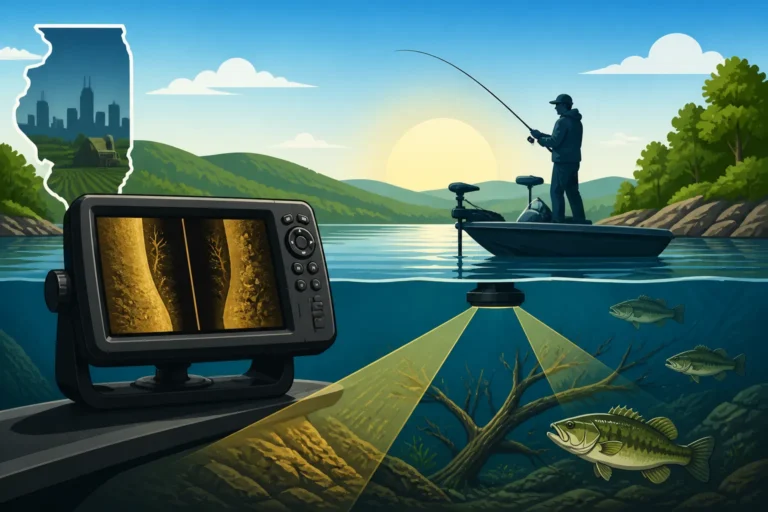
While not strictly essential for every kayak outing, a fish finder with GPS capabilities can dramatically increase your success, especially on larger, unfamiliar waters. Modern fish finders are incredibly compact and efficient, perfect for kayak installation. They allow you to see depth, water temperature, bottom structure, and most importantly, detect fish. This means you can quickly locate submerged humps, weed lines, drop-offs, and bait schools that hold fish, rather than blindly casting.
Integrating GPS allows you to mark waypoints for productive spots, navigate safely, and get back to your launch point without getting lost. Many units also have mapping capabilities, showing you contour lines and navigation markers. Installation on a kayak typically involves mounting the transducer to the hull (often through a scupper hole or with a specialized mount) and placing the display unit on a RAM mount or similar system right in front of you. Power usually comes from a small 12-volt battery stored in a waterproof box. Brands like Humminbird and Lowrance offer excellent compact units suitable for kayaks, and you can find many options at outdoor retailers or on Amazon. They are a significant investment, but for serious anglers, the information they provide is invaluable on Illinois' diverse fishing grounds. Learning about Fish Finders for Illinois Lake Fishing can really boost your angling game.
Paddles, Propulsion, and Portability
Getting your kayak to and from the water, and then effectively maneuvering it once you're there, involves more than just a boat. The right paddle, potential alternative propulsion, and smart transportation strategies are all crucial components of a successful kayak fishing adventure.
Selecting the Right Kayak Paddle
Your paddle is your primary means of propulsion on a traditional kayak, and even with a pedal drive, it's your backup and often used for fine-tuning movements. The right paddle length is crucial; it depends on your height and the width of your kayak. Too short, and you'll hit the sides of your boat; too long, and it'll be unwieldy and tiring. Most manufacturers provide sizing charts. As a general rule, wider kayaks require longer paddles.
Paddle material also makes a difference. Aluminum paddles are durable and affordable but can be heavy. Fiberglass is a good balance of weight and durability, while carbon fiber is the lightest (and most expensive) option, great for long days on the water. Look for a paddle with a comfortable grip and blades designed for efficient paddling. Feathered blades (where the blades are offset at an angle) can reduce wind resistance but take a bit of getting used to. Many fishing-specific paddles also feature built-in measuring tapes or hooks for retrieving lures. Having a good, reliable paddle is not just about moving; it's about conserving energy and staying comfortable throughout your trip.
Trolling Motors and Other Propulsion Aids
While kayak fishing traditionally conjures images of silent paddling, technology has opened up new possibilities for propulsion. Small electric trolling motors are increasingly popular among kayak anglers, especially on larger lakes or for covering significant distances. These motors can be mounted on the stern, side, or even in a specially designed 'motor well' on some kayaks. They require a dedicated battery, usually a lightweight lithium battery, which means careful consideration for weight distribution and waterproof storage.
The benefit is obvious: effortless movement, allowing you to troll lures, fight current, or quickly move between spots without expending physical energy. However, adding a trolling motor changes your kayak's classification. In Illinois, a kayak with any mechanical propulsion (even a trolling motor) generally requires Kayak Registration Rules in Illinois. This also means you'll need to adhere to speed limits and other regulations that apply to motorboats. While they add weight, complexity, and cost, trolling motors can transform a kayak into a true fishing machine, especially for targeting species like walleye on the Mississippi River or covering large areas of Lake Shelbyville.
Transportation and Launching Strategies
Getting your kayak from your vehicle to the water can sometimes feel like a workout before you even start fishing. For lighter kayaks, simply carrying them is an option. However, for heavier fishing kayaks, especially pedal drive models, a kayak cart or trolley is a lifesaver. These wheeled devices allow you to easily roll your kayak over various terrains, from parking lots to sandy beaches or gravel paths, saving your back and energy.
Once at the water, launching can be as simple as pushing off from a gentle bank. For higher banks or docks, a system of ropes can help lower your kayak safely. Consider where you plan to launch most often. Many Illinois state parks and public access points have designated kayak launches or easy bank access. For car topping, roof rack systems with special kayak cradles or J-hooks provide secure transport. If you're using a small trailer, make sure your kayak is properly secured and the trailer lights are functional. Thinking through your launch and retrieve strategy beforehand, especially when fishing alone, will make your trips much smoother and more enjoyable.
Tackle and Storage Solutions for Kayak Anglers
The beauty of kayak fishing is its simplicity, but that doesn't mean you can't be well-prepared. The challenge is bringing everything you need without cluttering your limited space or overloading your kayak. It's an art form to streamline your tackle and gear for efficiency on the water.
Downsizing Your Tackle Box
You can't bring your entire garage-sized tackle collection when kayak fishing, nor would you want to. The key is to be strategic and efficient. Instead of large, bulky tackle boxes, opt for smaller, waterproof utility boxes or soft-sided tackle bags that are designed for kayak use. Pack only what you genuinely expect to use for the day's target species and conditions. If you're chasing bass in a specific lake, focus on the lures and techniques that are known to work there. Don't bring three different crankbait colors if one usually produces.
Consider a multi-tiered approach: a main tackle bag with a variety of lures and terminal tackle for the day, and then a small, fanny-pack style "on-person" tackle box or pouch for the absolute essentials you'll be using constantly. This way, you don't have to reach behind you or dig through a crate every time you need to re-tie. Organize by bait type, hook size, or color, and make sure everything is easily identifiable and accessible. This thoughtful approach to tackle management prevents frustration and keeps you fishing, not fumbling. Many specific Kayak Fishing Accessories for Illinois Anglers cater to this need for compact storage.
Coolers and Catch Storage
If you plan on keeping fish, a good cooler is essential. However, space is a premium on a kayak. Soft-sided coolers are an excellent option as they are lighter and more flexible, fitting into tighter spaces like a tank well. Hard-sided coolers might offer better insulation but take up more rigid space. Consider a cooler that also doubles as a seat, maximizing its utility. For those longer trips, a slightly larger cooler might be worth the trade-off in space.
For smaller panfish or a few bass, a simple stringer might suffice, attached to the side of your kayak and letting the fish trail in the water. For larger game fish or multiple keepers, a dedicated cooler is necessary to keep your catch fresh. Ensure your cooler is secured to the kayak to prevent it from floating away if you capsize. Some kayak anglers even use a fish bag, which is a soft, insulated bag designed to keep fish cold, and it can be rolled up and stowed when not in use.
Nets, Grips, and Other Essential Tools
Landing a fish from a kayak can be tricky. A good landing net is invaluable, especially for larger species like a trophy largemouth bass or a powerful walleye. Look for a net with a long handle that can extend to reach the fish without putting you off balance. A rubberized net will also protect the fish's slime coat and prevent hooks from getting tangled. For toothy fish like northern pike, a net is not just convenient but also safer.
Beyond a net, a pair of fishing pliers (preferably stainless steel to resist corrosion) for hook removal, cutting line, and crimping weights is a must-have. A fish gripper tool is also excellent for handling fish without touching them directly, reducing harm to the fish and keeping your hands safe from hooks or teeth. Attach these tools with a lanyard to your kayak or PFD so they don't go overboard. A sharp knife, a measuring board (many kayaks have built-in rulers), and a small pair of line clippers are other essentials. Every tool should have a designated, secure spot within easy reach.
Comfort and Convenience on the Water
Fishing from a kayak can be a tremendously rewarding experience, but it can also be physically demanding if you're not properly equipped for comfort and convenience. Hours spent sitting, paddling, and battling fish can take their toll, so investing in gear that enhances your well-being on the water will greatly improve your overall enjoyment and endurance.
Seating and Ergonomics
The seat in your kayak is arguably the most important comfort feature. Many entry-level kayaks come with basic, molded-in seats or thin pads that quickly become uncomfortable. If your kayak allows, upgrading to an aftermarket high-back seat with ample padding and back support can be a game-changer. These seats elevate you slightly, provide better posture, and reduce back fatigue, allowing you to fish longer and more comfortably. Some fishing kayaks even come with stadium-style seats that resemble a small lawn chair, offering excellent support and comfort.
Think about ergonomics: can you comfortably reach your paddle, your rod holders, and your tackle? Are your feet in a good position? Adjustable footpegs or rudder controls are important for proper posture and efficient paddling or pedaling. Even small adjustments to your seating position can make a big difference in how you feel after a few hours on the water. A comfortable angler is a happy, more focused, and ultimately, more successful angler.
Staying Hydrated and Fed
It’s easy to get so engrossed in fishing that you forget to drink or eat. Dehydration and low blood sugar can sneak up on you, especially on hot Illinois summer days. Always bring plenty of water, more than you think you'll need. A refillable water bottle or a hydration bladder in your PFD is ideal. For longer trips, consider bringing sports drinks or electrolyte solutions.
Pack snacks that are easy to eat with one hand and provide sustained energy, like granola bars, trail mix, or fruit. Avoid anything that requires elaborate preparation or creates a lot of mess. Keep your food and drinks in an easily accessible cooler or dry bag, secured to your kayak. Taking regular, short breaks to rehydrate and refuel will keep your energy levels up and your mind sharp, ensuring you can enjoy your time targeting fish in Illinois' beautiful waters.
Weather Protection and Clothing
Illinois weather is notoriously fickle. A sunny morning can quickly turn into a windy, rainy afternoon. Dressing in layers is key, allowing you to adjust to changing conditions. Quick-drying, synthetic fabrics are always a better choice than cotton, which stays wet and can make you cold. In summer, prioritize sun protection: a wide-brimmed hat, sunglasses (polarized lenses are a must for spotting fish and structure), and long-sleeved fishing shirts with UPF protection. Sunscreen is also non-negotiable, even on cloudy days.
For cooler weather, waterproof and windproof outerwear is essential. A lightweight rain jacket and pants can easily be stowed in a dry bag and pulled out if needed. Neoprene gloves or paddling gloves can keep your hands warm and protected. Footwear should be water-friendly – sandals, water shoes, or even old sneakers are fine, but be prepared for them to get wet. Always check the forecast before heading out, and if there's any doubt, pack for the worst-case scenario. It's much better to have an extra layer and not need it than to be cold, wet, and miserable.
Maintenance and Longevity of Your Kayak Gear
Investing in quality kayak fishing gear is a significant commitment, so protecting that investment through proper care and maintenance is crucial. A little bit of effort after each trip can significantly extend the life of your equipment, ensuring it's ready for your next Illinois fishing adventure.
Routine Cleaning and Storage
After every outing, especially if you've been in murky river water or used your kayak in saltwater (like Lake Michigan, though primarily freshwater, it can still introduce elements that necessitate cleaning), give your kayak and gear a good rinse with fresh water. This removes dirt, sand, mud, and any aquatic invasives that might cling to your boat. Pay special attention to the pedal drive or rudder system if your kayak has one, as sand and debris can cause wear and tear. Use a mild soap if needed, but avoid harsh chemicals that could damage the plastic.
Once clean, allow everything to thoroughly air dry before storing it. Store your kayak out of direct sunlight to prevent UV degradation, which can make plastic brittle over time. If possible, store it indoors or under a tarp. Hanging kayaks or storing them on their side can help prevent hull deformation. Store accessories like PFDs, paddles, and electronics indoors, away from extreme temperatures. Proper storage not only prolongs the life of your gear but also ensures it's clean and ready for your next trip to Best Fishing Spots in Illinois.
Repairing Minor Damage
Kayaks are tough, but they can still sustain damage. Minor scrapes and gouges in the hull are common and usually just cosmetic. Deeper gouges, however, might need attention. For polyethylene kayaks, a heat gun and a plastic welding rod can be used to repair punctures or cracks, though this is a technique that requires practice. Epoxy repair kits are also available for specific types of plastic. Always consult your kayak manufacturer's recommendations for repairs.
Regularly inspect your gear for wear and tear. Check paddle blades for cracks, PFD straps for fraying, and rod holders for loose mounts. Replacing small worn parts like bungee cords or rudder lines before they fail completely can prevent bigger problems on the water. Having a small repair kit with duct tape, zip ties, and a multi-tool can also be invaluable for on-the-water fixes. Being proactive about repairs keeps your gear reliable and safe.
Extending the Life of Your Electronics
Your fish finder, GPS unit, and any other electronics are often the most delicate and expensive pieces of your kayak fishing kit. Always follow the manufacturer's instructions for care. After each use, wipe down the screen and unit with a soft, damp cloth. Disconnect and remove batteries from the unit if you won't be using it for an extended period, and store batteries in a cool, dry place.
Protect transducer cables from kinks or cuts, and ensure all waterproof seals are clean and intact. If you have a battery for a trolling motor or fish finder, ensure it's charged properly and not left in a fully discharged state for long periods. Consider storing your electronics in a padded, waterproof case when transporting them. Taking these simple steps will protect your investment and ensure your valuable Fish Finders for Illinois Lake Fishing continue to provide reliable service for years to come.
Disclaimer
This article is for general informational purposes only and does not constitute professional advice. Laws, prices and regulations vary by location and change over time. Consult a qualified professional for guidance on your specific situation.