Best Fishing Kayaks for Illinois Lakes
Finding the perfect way to get out on the water and chase Illinois's incredible fish can often feel daunting, especially if you're not ready for the expense and upkeep of a full-blown bass boat. Many anglers dream of quietly slipping into those hard-to-reach coves or shallow backwaters, far from the roar of outboards, but aren't sure where to start. This comprehensive guide will walk you through everything you need to know about choosing the best fishing kayak for Illinois lakes, helping you find that perfect vessel to unlock new fishing adventures.
Why Kayak Fishing is a Game Changer for Illinois Lakes
There's something uniquely satisfying about fishing from a kayak. It's an intimate connection with the water, and in Illinois, with our diverse lakes, rivers, and ponds, it opens up a whole new world of angling opportunities that larger boats simply can't touch. If you've ever felt limited by shoreline access or frustrated by crowded boat ramps, a fishing kayak might just be the answer you've been searching for. It's more than just a boat; it's a tool for exploration.
Escaping the Crowds on Popular Waters
Picture this: it's a beautiful Saturday morning on Lake Shelbyville or Rend Lake, and the main boat ramps are buzzing with activity. Larger boats are launching, anglers are racing to their favorite spots, and the water quickly becomes a playground for speedboats and jet skis. Meanwhile, you, in your fishing kayak, can slip away from the commotion, launching from a quieter access point or even a shoreline park, and paddle to areas where bigger boats fear to tread. This ability to avoid the heavily trafficked zones is a huge draw for many Illinois anglers. You'll often find less pressured fish and a much more peaceful experience.
It's not just about avoiding other boats; it's about finding solitude. Those popular points and submerged humps that every bass boat hammers? Often, the fish there are wary. But the little pockets, the shallow flats, and the lily pad fields nestled deep in a cove that's too narrow for a big motor – those are kayak heaven. You get to experience the lake in a completely different way, often leading to a more rewarding and relaxing day on the water, even when the lake seems packed.
Accessing Remote, Unpressured Fishing Spots
This is perhaps the biggest advantage of kayak fishing in Illinois. Think about all those smaller lakes, winding creeks, or secluded backwater sloughs along the Mississippi or Illinois Rivers that are either too shallow for a motorboat or lack proper boat ramp access. With a fishing kayak, many of these spots become accessible. You can easily portage a kayak short distances or launch it directly from a roadside or a muddy bank, giving you an edge over anglers confined to major access points.
Imagine a hidden pond in a state park, or a section of a lesser-known river like the Kankakee, where the current is gentle, and the banks are overgrown. These are the places where fish often grow larger and are less educated because they see fewer lures. Your kayak becomes your key to unlocking these secret honey holes. This can be especially true for species like crappie or bluegill, which often congregate in dense cover in shallow water that’s unreachable by larger vessels. Having a dedicated Kayak Fishing Gear Checklist for Illinois Anglers can help you prepare for these unique excursions.
The Quiet Advantage: Approaching Skittish Fish
Fish are sensitive creatures, and they can feel the vibrations and hear the noise of a motorboat from a surprising distance. The gentle glide of a kayak, however, is far less intrusive. This stealth factor is invaluable, especially when targeting wary species like largemouth bass, smallmouth bass, or walleye in clear water. You can often get much closer to your target without spooking them, allowing for more precise casts and a more natural presentation of your bait or lure.
This quiet approach means you can work shorelines, weed beds, and structure more effectively. You won't announce your presence, giving you precious extra seconds to make that perfect cast before the fish scatter. For sight fishing, where you actively spot fish before casting, a kayak's quietness is a monumental advantage. It transforms your fishing from a pursuit into a silent hunt, where patience and precision are rewarded. This stealth can truly make a difference in your catch rates, particularly during tough bites or on highly pressured waters.
Key Features to Look For in an Illinois Fishing Kayak
Choosing the right fishing kayak isn't just about picking one that looks cool. It's about finding a vessel that matches the unique demands of fishing our Illinois waters. From battling a trophy bass in a stump field to navigating calm currents, certain features will make your experience much more enjoyable and productive.
Stability Over Speed: A Must for Anglers
Unlike recreational kayaks designed primarily for paddling efficiency, a fishing kayak prioritizes stability. As an angler, you'll be casting, retrieving, reaching for gear, potentially standing to sight fish, and even battling a big catch. A stable platform is crucial for comfort, safety, and effectiveness. You want a kayak that feels solid underfoot (or seat-side), minimizing the risk of tipping, especially when you're distracted by a biting fish.
Look for kayaks with wider hulls, flat bottoms, or pontoon-style designs. These configurations offer excellent primary (initial) stability when you first get in and secondary stability, which is how much the kayak resists tipping further once it's already leaned over. While you might sacrifice a bit of speed getting to your spot, the confidence and ability to move freely in your kayak will pay dividends. After all, what's the point of getting to your spot quickly if you can't comfortably fish once you're there?
Storage and Rigging Options: Your Mobile Command Center
A fishing kayak needs to be more than just a boat; it needs to be a fully functional fishing platform. This means ample and accessible storage for your tackle, rods, cooler, and safety gear. Look for kayaks with designated rod holders (flush-mount or adjustable), large tank wells in the stern for a cooler or tackle crate, and dry storage hatches for electronics, keys, and wallets. Integrated gear tracks are a huge bonus, allowing you to easily mount accessories like fish finders, GPS units, camera mounts, and extra rod holders without drilling into your kayak.
Consider how you'll organize your gear. Do you prefer a tackle crate in the back, or do you need more storage upfront? Will you be bringing multiple rods for different techniques? Thinking about your typical fishing trip and the gear you usually carry will help you identify the necessary storage and rigging capabilities. Retailers like Bass Pro Shops offer a wide array of kayak-specific storage solutions and rigging accessories, helping you customize your craft.
Comfort for Long Days on the Water
Even the most stable and well-rigged kayak won't be enjoyable if it's uncomfortable. Fishing days in Illinois can stretch for hours, especially when the bite is on. A supportive, adjustable seat is non-negotiable. Many modern fishing kayaks feature elevated, framed seats similar to a lawn chair, providing excellent back support and allowing for better visibility and easier standing. These are a vast improvement over the molded-in seats of traditional recreational kayaks.
Beyond the seat, consider foot pedal systems or adjustable footrests. These allow you to brace yourself, improving paddling efficiency and reducing fatigue in your legs and back. Simple things like padded gunwales (the top edge of the kayak) can also make a difference, providing a comfortable place to rest your arms or legs. Don't underestimate the importance of ergonomics when you're planning to spend a whole day paddling and fishing our beautiful Illinois lakes.
Types of Fishing Kayaks Best Suited for Illinois Lakes
Just like there are different types of fish, there are different types of fishing kayaks, each with its own strengths and weaknesses. Understanding these differences will help you choose the best vessel for your preferred fishing style and the specific Illinois waters you plan to explore. Consider how you fish, where you fish, and what your priorities are on the water.
Sit-on-Top Kayaks: The Angler's Favorite
For many Illinois anglers, sit-on-top (SOT) kayaks are the go-to choice, and for good reason. They are incredibly stable, easy to get in and out of, and offer an open, spacious deck for rigging and gear. If you're concerned about comfort or the ability to re-enter your kayak easily after a swim (intentional or not!), a SOT is a fantastic option. They shed water easily, meaning if a wave splashes over the side or you land a particularly feisty fish that causes a splash, the water simply drains out through scupper holes in the deck.
SOTs are particularly well-suited for a wide range of Illinois lakes, from the large expanses of Carlyle Lake to smaller, more intimate ponds. Their stability makes them ideal for casting, standing up to sight fish, and managing a catch. Many models come "fishing-ready" with flush-mounted rod holders and ample storage. For those wondering about the core differences, our guide on Sit-On-Top vs Sit-In Kayaks for Small Lakes dives deeper into this comparison.
| Feature | Sit-on-Top Kayak | Pedal-Drive Kayak | Inflatable Kayak |
|---|---|---|---|
| Pros for Anglers | High stability, easy entry/exit, open deck for gear, self-draining | Hands-free propulsion, excellent for trolling, less fatigue, precise boat control | Highly portable, easy storage, surprisingly stable for some models, good for remote access |
| Cons for Anglers | Can be slower than sit-ins, exposure to elements, generally heavier to transport | Higher upfront cost, can be heavier/bulkier, more moving parts to maintain, limited shallow water clearance when pedals are down | Vulnerable to punctures, can be affected by wind, slower paddling, often less rigid platform for standing |
| Best Use in Illinois | General lake fishing, bass, crappie, panfish, calm rivers, warm weather | Trolling for walleye/muskie, covering large distances, fishing windy lakes, hands-free casting | Remote ponds, small calm lakes, car-top transport, apartment dwellers, casual fishing |
Pedal-Drive Kayaks: Hands-Free Fishing Freedom
If you're serious about covering water, trolling, or simply want to keep your hands free for casting and managing your rod, a pedal-drive kayak is a true game-changer. These kayaks feature a pedal system that powers a propeller or flippers beneath the hull, allowing you to move forward or backward with your legs. This frees up your hands for what matters most: fishing. Imagine slowly working a shoreline, casting, and reeling, all while subtly adjusting your position with your feet. It’s incredibly efficient and effective.
While often a larger investment, the benefits of a pedal-drive system for Illinois anglers are undeniable. They are fantastic for trolling crankbaits for walleye on Lake Michigan or Lake Shelbyville, or for maintaining position against wind and current on larger bodies of water. The ability to easily adjust your speed and direction without putting your rod down means more time fishing and less time paddling. Many anglers find they can fish longer and cover more ground with a pedal-drive system, experiencing less fatigue at the end of the day.
Inflatable Kayaks: Portability for Smaller Waters
For anglers with limited storage space, those who travel frequently, or who want to access truly remote, road-less-traveled waters, inflatable fishing kayaks offer an exciting alternative. Modern inflatable kayaks are a far cry from flimsy pool toys; many are built with durable materials and multiple air chambers, providing surprising rigidity and stability. They pack down into a duffel bag, making them incredibly easy to transport in a car trunk and store in an apartment or garage.
These are particularly useful for those smaller Illinois ponds, reservoirs with difficult access points, or even short trips on calm rivers where you might want to launch and retrieve without a heavy, solid kayak. While they may not offer the same standing platform or extensive rigging options as some hardshell kayaks, their portability can't be beaten. Just be mindful of sharp objects and ensure you have a repair kit handy. For an easy way to get out on the water without the fuss of a trailer or roof rack, an inflatable might be your perfect match.
Essential Kayak Fishing Accessories for Illinois Anglers
Getting the right kayak is only half the battle; equipping it properly for safety, comfort, and fishing efficiency is just as crucial. A well-accessorized kayak transforms it from a simple paddling vessel into a highly effective fishing machine.
Safety Gear and PFDs
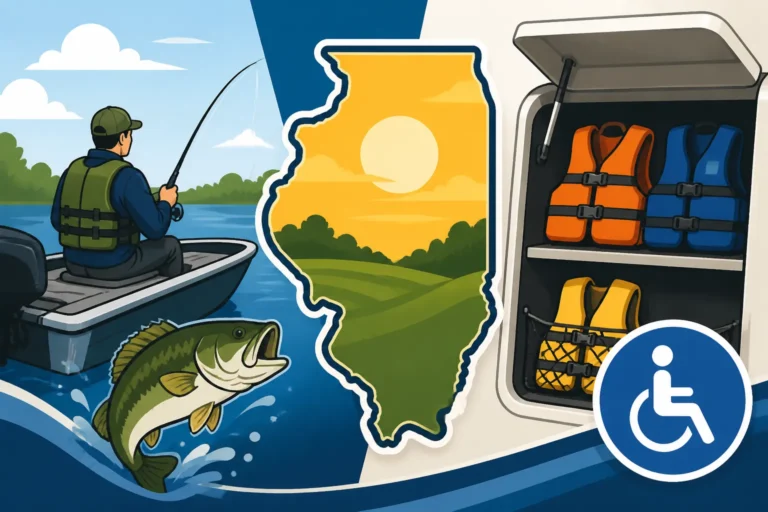
Safety should always be your number one priority on the water. Even on calm Illinois lakes, conditions can change quickly, and accidents can happen. A comfortable and properly fitting Personal Flotation Device (PFD), or life jacket, is absolutely essential. Don't just buy any PFD; invest in one specifically designed for kayak fishing, with features like ample pockets for small tackle, tool attachment points, and a high-back design that won't interfere with your kayak seat. Our guide on Illinois Life Jacket and PFD Rules provides detailed information on what's required.
Beyond the PFD, a whistle or horn is mandatory, and a bright, visible flag can significantly increase your visibility to other boaters, especially on larger lakes or busy rivers. A small first-aid kit, a headlamp for dawn or dusk fishing, and a dry bag for your phone and keys are also non-negotiables. It’s better to be overprepared than caught off guard, and most of these items are easily found at sporting goods stores or online marketplaces like Amazon. Remember, responsible boating starts with safety. Our in-depth look at Do You Need a Life Jacket in a Kayak in Illinois? is a must-read for any new kayaker.
Anchoring and Positioning Systems
One of the biggest challenges in kayak fishing is staying put, especially in windy conditions or when fishing current. An effective anchoring and positioning system is critical. A small, collapsible anchor (grapple or mushroom style) paired with an anchor trolley system is an incredibly versatile setup. An anchor trolley uses a line and pulleys to allow you to deploy your anchor from either the bow or stern of your kayak, adjusting your position relative to the wind or current without having to move the anchor itself. This allows you to precisely hold your position over structure or in a specific zone.
For hands-free positioning and even more precise control, many kayak anglers invest in shallow water anchors (like a stick anchor) or electric trolling motors designed for kayaks. These can be particularly useful for sneaking into tight spots or holding steady on windy days. Before you head out, make sure you understand how to properly set up and use your chosen anchoring system to prevent tipping or getting tangled. You can find more specific advice in our article on Kayak Anchor Setup for Lake Fishing.
Rod Holders and Electronics
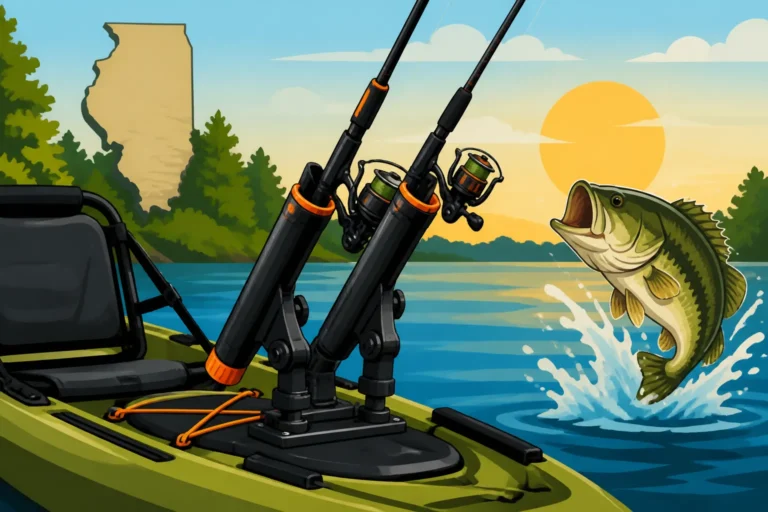
Outfitting your kayak with the right fishing accessories can dramatically improve your experience. Adjustable rod holders are a must-have, allowing you to store extra rods, troll a bait, or simply keep your main rod secure while you handle a fish or take a break. Look for models that can be easily mounted to gear tracks or gunwales and adjusted to different angles. These can also be found at stores like Bass Pro Shops, which often have a dedicated kayak fishing section.
Fish finders, once a luxury, are now commonplace in kayak fishing. Compact, portable units with small transducers can be easily mounted to most kayaks, giving you crucial information about water depth, temperature, and fish location. A good fish finder can help you locate submerged structure, identify thermoclines, and spot schools of baitfish, ultimately leading to more successful trips. Don't forget a quality battery system to power your electronics. To make the most of your setup, check out our guide on Best Kayak Rod Holders for Bass Fishing to see what options might be best for your style of fishing.
Disclaimer
This article is for general informational purposes only and does not constitute professional advice. Laws, prices and regulations vary by location and change over time. Consult a qualified professional for guidance on your specific situation.