Kayak Fishing Gear Checklist for Illinois Anglers
Starting out with kayak fishing in Illinois can feel a little overwhelming, right? You're picturing yourself silently gliding across a calm lake or sneaking up a peaceful river, but then you start thinking about all the stuff you need, and suddenly it feels like you need a whole truck just to haul your gear. It's easy to get lost in what's essential versus what's just nice to have. This guide is here to cut through the clutter and give you a clear, actionable checklist of kayak fishing gear for Illinois anglers, so you can spend less time stressing and more time on the water.
The Foundation: Your Kayak, Paddle, and Personal Safety
Before you even think about baits and lures, you need to get the absolute basics right. Your kayak, how you move it, and how you stay safe are paramount. Trying to fish from an uncomfortable or unsuitable kayak is like trying to run a marathon in dress shoes – it’s just not going to work out well.
Choosing the Right Kayak for Illinois Waters
Illinois offers such a diverse range of fishing opportunities, from the vast expanse of Lake Michigan and the "Big Three" reservoirs like Carlyle, Shelbyville, and Rend Lake, to countless smaller ponds, quiet creeks, and the winding currents of rivers like the Fox or Kankakee. Your kayak needs to match the water you plan to tackle most often.
For those planning to spend most of their time on larger, open waters with potential wind and waves, a longer, wider sit-on-top kayak often provides the stability and storage you'll appreciate. These kayaks are generally easier to get in and out of, especially when you're re-rigging or handling a fish. They also tend to have scupper holes that drain water, meaning you won't be sitting in a puddle after a splash or a light rain. If you're eyeing some of those big reservoir crappie or walleye, the ability to stand and cast, or at least feel secure while doing so, is a huge bonus.
On the other hand, if your passion lies in smaller rivers, tight creeks, or even those serene farm ponds, a more agile, shorter sit-in kayak or a narrower sit-on-top might be your best bet. These are often lighter, making them easier to portage around fallen trees or shallow spots. They can also navigate tighter turns and offer a bit more protection from the elements, which can be nice on a cooler day. The key is to think about the primary type of fishing you'll be doing and let that guide your selection. You can dive deeper into specific models with a read of Best Fishing Kayaks for Illinois Lakes.
Selecting Your Paddle and Personal Flotation Device (PFD)
Don't skimp on your paddle! A good paddle can make or break your day on the water, reducing fatigue and making propulsion feel effortless. The length of your paddle is crucial and depends on your height and the width of your kayak. A general rule of thumb is that when standing next to your kayak, the top of the paddle should reach somewhere between your chin and your forehead. Look for lightweight materials like fiberglass or carbon fiber if your budget allows; your shoulders will thank you after a full day of paddling.
Equally, if not more important, is your Personal Flotation Device (PFD), or life jacket. In Illinois, wearing a PFD is not just a good idea; it's often the law, especially for children. You absolutely need one that fits comfortably and is appropriate for paddling, meaning it allows for a full range of motion while casting and paddling. Forget those bulky orange ones from summer camp; modern fishing PFDs have extra pockets, tool attachments, and high backs designed to work with kayak seats. You can check out all the specifics on Illinois Life Jacket and PFD Rules to make sure you're compliant. Remember, a PFD can only save you if you're wearing it!
Staying Safe on the Water: Essential Gear Beyond Your PFD
While your PFD is your primary safety net, there's a host of other gear that can keep you out of trouble and make your trip more enjoyable. Kayak fishing often puts you in situations where you're more exposed to the elements and further from immediate assistance than if you were in a larger boat.
Navigational and Communication Tools
Even on a familiar lake, conditions can change quickly. Fog can roll in, or you might find yourself exploring a new cove and getting a bit turned around. A reliable way to navigate is essential. While many modern anglers rely on their smartphone for GPS, it's wise to have a backup plan. A dedicated handheld GPS unit or even a good old-fashioned compass and waterproof map can be a lifesaver if your phone battery dies or gets wet.
Communication is another critical aspect. A fully charged cell phone in a waterproof case is a must, but remember that cell service can be spotty in some of Illinois's more remote fishing spots. For larger waters, especially Lake Michigan, a VHF marine radio offers much greater range and reliability than a cell phone for emergency situations. Additionally, a whistle is a simple, inexpensive, and legally required safety device that can signal for help far more effectively than your voice. Don't forget a white light source, like a headlamp or clip-on navigation light, if there's any chance you'll be on the water near dawn, dusk, or after dark – safety often means being seen.
First Aid and Emergency Preparedness
A basic first aid kit is non-negotiable for any outdoor activity, and kayak fishing is no exception. Think beyond just bandages; include antiseptic wipes, pain relievers, allergy medication, and any personal prescriptions. It's easy to get a hook stuck or a minor cut while handling fish, and being able to address it immediately can prevent a small issue from becoming a big problem.
Beyond a first-aid kit, consider a multi-tool or a good fishing knife. A sharp knife is invaluable for cutting line, cleaning fish, or even in a true emergency. Pack extra water and some high-energy snacks, even if you only plan to be out for a few hours. Dehydration and low blood sugar can sneak up on you and quickly sap your energy, making paddling back to shore a struggle. Sun protection, including sunscreen, a wide-brimmed hat, and polarized sunglasses, will protect you from harmful UV rays and help you spot fish more easily in the water.
Optimizing Your Kayak for Fishing: Rods, Tackle, and Anchoring
Now for the fun stuff – making your kayak a fishing machine! Kayak fishing demands gear that's specifically adapted for its unique challenges: limited space, portability, and working from a low, often moving platform.
Rods, Reels, and Tackle Management
When it comes to rods, shorter is often better in a kayak. You don't need a super long casting rod when you're sitting so close to the water. A 6' to 7' medium-light or medium action rod is usually perfect for a variety of Illinois species, from panfish to bass. Consider bringing a couple of different setups to target various species or techniques, but avoid cluttering your small space. A good Best Rods for Illinois Largemouth Bass article can help you narrow down your choices.
Rod holders are absolutely essential. Whether they're flush-mounted, rail-mounted, or a clamp-on style, having a secure place to store your rods while paddling, re-rigging, or fighting a fish is critical. You don't want a rogue wave claiming your favorite rod. Many anglers find a simple milk crate or a specialized kayak tackle bag, often found at retailers like Bass Pro Shops or online at Amazon, to be invaluable for organizing lures, soft plastics, and tools. These keep everything contained, prevent items from rolling around, and often fit neatly behind your seat.
Anchoring and Positioning Systems
Maintaining your position in current or wind is a constant challenge in a kayak. A lightweight anchor is a must-have. A grappling anchor is popular due to its folding design and ability to grip various bottoms. For shallower waters, a stake-out pole or shallow water anchor can be silently deployed, making it perfect for stalking wary fish.
An anchor trolley system is a game-changer for kayak anglers. This simple rope and pulley system allows you to position your anchor line anywhere from the bow to the stern of your kayak, giving you incredible control over how your kayak sits in relation to the wind or current. It means you can stay perfectly positioned over a brush pile or along a weed line without having to re-anchor constantly. Understanding your Kayak Anchor Setup for Lake Fishing is key to maximizing your time and minimizing frustration.
Enhancing Your Experience: Comfort, Convenience, and "Nice-to-Haves"
Once you've got the essentials down, you can start thinking about items that elevate your kayak fishing experience from functional to truly enjoyable. These are the additions that make long days on the water more comfortable and efficient.
Seating and Storage Solutions
Many entry-level kayaks come with basic, sometimes uncomfortable, seats. Investing in an upgraded seat can dramatically increase your comfort, especially on longer trips. Look for seats with good back support and cushioning. Some even offer an elevated position, which can improve your casting angle and visibility.
Effective storage is always a premium in a kayak. Beyond the tackle crate, dry bags are invaluable for protecting electronics, extra clothing, and your lunch from spray and rain. Having various sizes means you can compartmentalize your gear. Cargo netting or bungee cords can secure items to your kayak's deck, preventing them from floating away if you capsize or take on a big wave. Thoughtful organization means less fumbling and more fishing.
Electronic Gadgets and Accessories
Modern technology has revolutionized kayak fishing. Portable fish finders, often available from brands you can find on Amazon, are now compact and battery-efficient enough for kayak use. They can reveal water depth, temperature, and most importantly, locate fish and underwater structure. Having a clear picture of what's beneath you can transform a slow day into a successful one. If you're new to these, a Fish Finder Buying Guide for Beginners can offer excellent insights.
Other accessories, while not strictly necessary, can be incredibly helpful. A small battery pack can keep your phone, fish finder, or other USB-powered devices charged. Action cameras, mounted to your kayak, can capture all the excitement of your catches and the beauty of Illinois's waters, providing memories that last a lifetime. Just remember, every accessory adds weight and potential clutter, so choose wisely based on your actual needs and fishing style. It’s also worth noting that if you add a motor to your kayak, you might need to look into Kayak Registration Rules in Illinois.
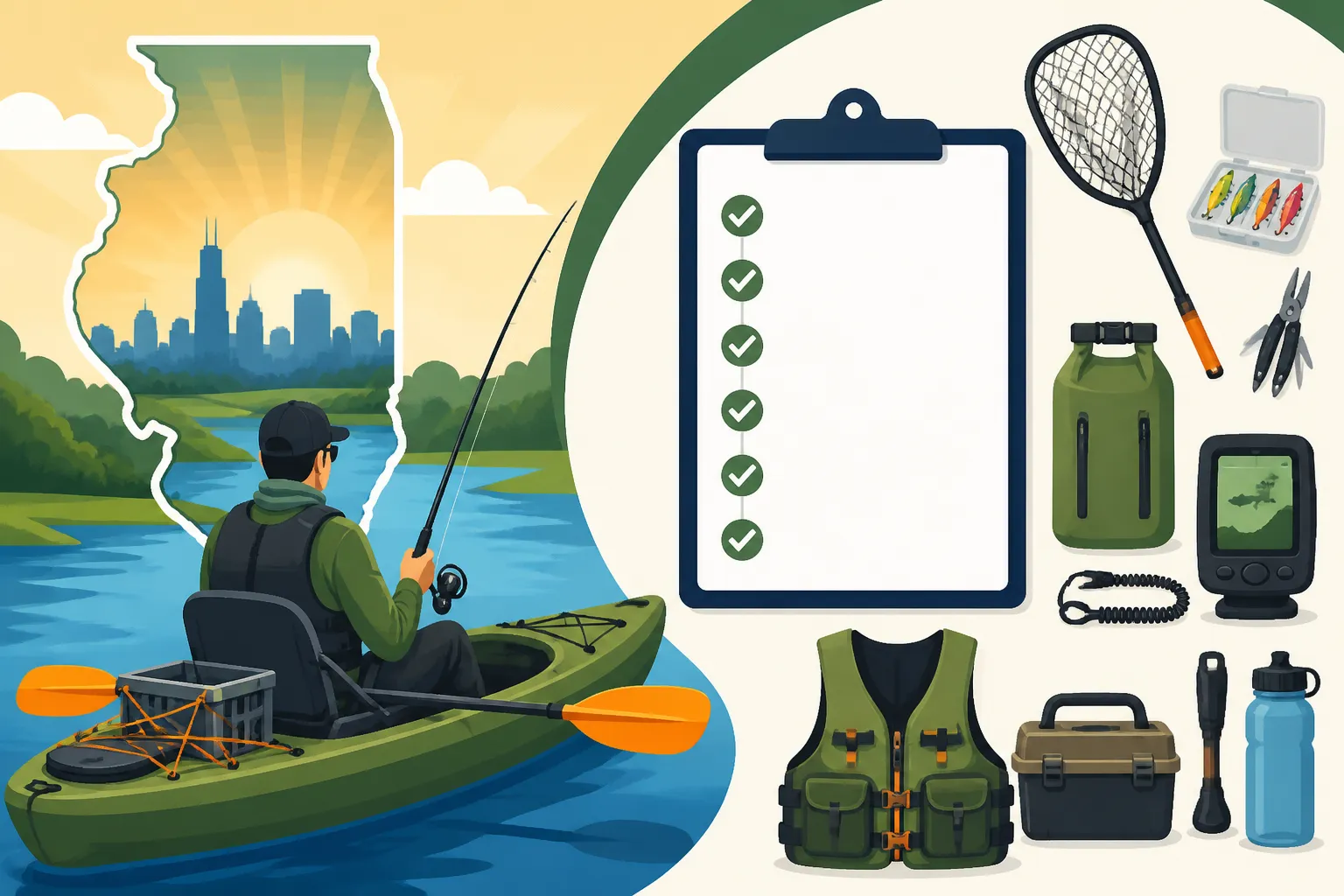
Kayak Fishing Gear Checklist
To help you get organized, here’s a quick checklist of items, broken down by priority.
| Category | Essential (Must-Have) | Recommended (Good to Have) | Optional (Nice-to-Have) |
|---|---|---|---|
| Kayak & Safety | Fishing Kayak | Upgraded Kayak Seat | Dry Box/Pelican Case |
| Paddle | Anchor Trolley System | Action Camera & Mount | |
| PFD (Life Jacket) | Fishing-specific PFD | Small Battery Bank (for charging) | |
| Whistle | Handheld GPS (backup to phone) | Paddle Leash | |
| White Light (if applicable) | VHF Marine Radio (for larger waters) | Cupholder | |
| Fishing Specific | Rod & Reel (at least one) | Multiple Rod/Reel Combos | Specialized Fish Grips |
| Rod Holders | Dry Bags (various sizes) | Landing Net (kayak specific) | |
| Tackle Box/Crate | Portable Fish Finder | Cooler (small, soft-sided) | |
| Anchor & Line | Stake-out Pole/Shallow Water Anchor | Bait Bucket/Livewell | |
| Fishing Pliers/Cutters | |||
| Personal Items | Water Bottle | Snacks | Bug Spray |
| Sunscreen | Map of Fishing Area | Waterproof Speaker | |
| Wide-Brimmed Hat | Extra Layers of Clothing | ||
| Polarized Sunglasses | |||
| First Aid Kit | |||
| Knife/Multi-tool |
This checklist should give you a solid foundation as you build out your kayak fishing arsenal. Remember to consider the specific conditions of the Illinois waters you plan to fish, and don't be afraid to start simple and add gear as you gain experience. You'll find a lot of great Kayak Fishing Accessories for Illinois Anglers out there that can tailor your setup perfectly to your needs. Happy paddling and tight lines!
Disclaimer
This article is for general informational purposes only and does not constitute professional advice. Laws, prices and regulations vary by location and change over time. Consult a qualified professional for guidance on your specific situation.