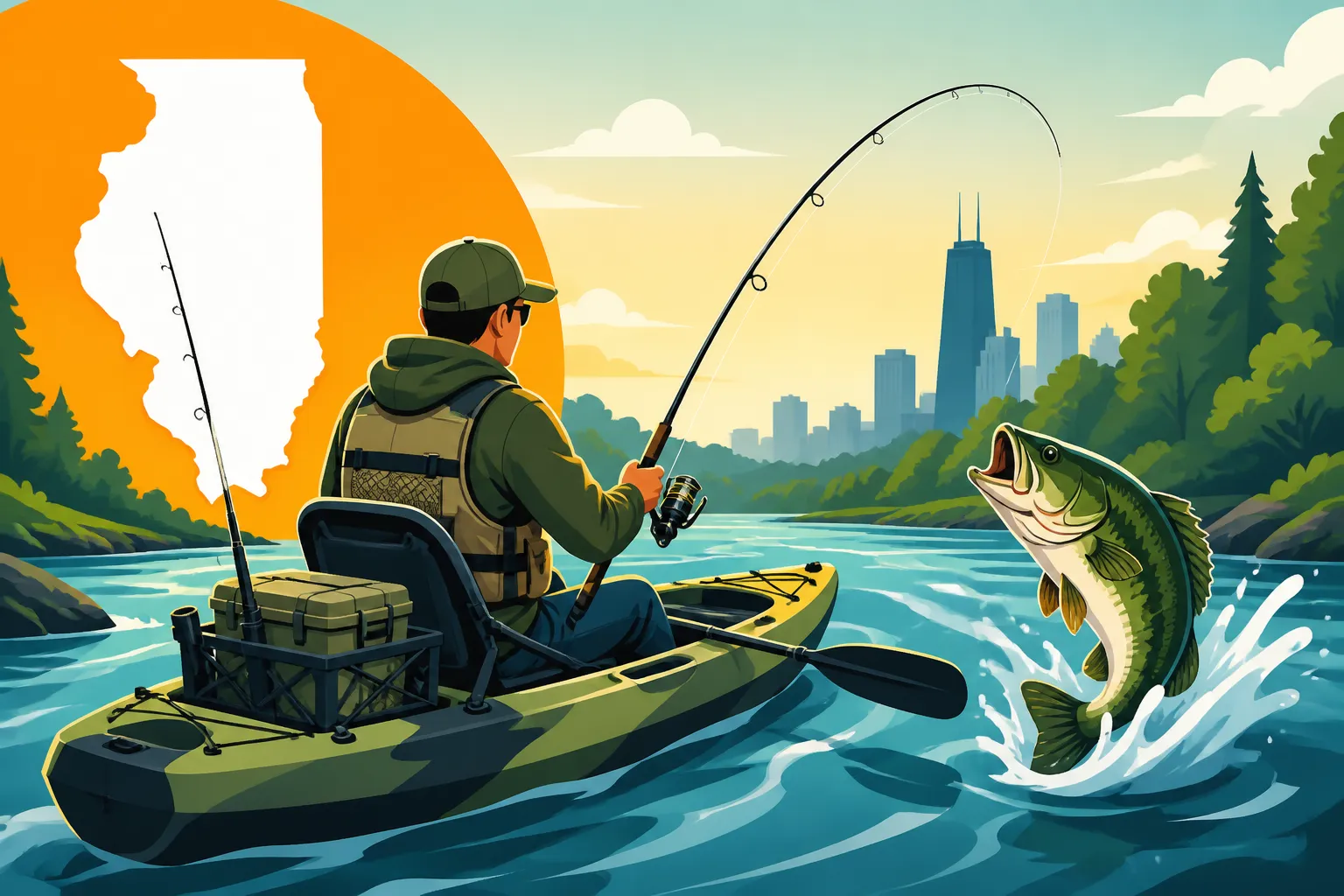
Best Kayak for River Fishing
Oh, the quest for the perfect river fishing kayak! I get it. There's nothing quite like the peace of paddling a quiet stretch of the Kankakee or floating along a backwater slough on the Illinois River, chasing bass or catfish. But picking the right vessel for those winding currents, hidden snags, and sometimes unpredictable conditions can feel like navigating a maze. It’s not just about getting on the water; it’s about having the right gear to make the trip safe, enjoyable, and successful. This guide is here to untangle that process, helping you choose the best kayak to conquer Illinois's diverse river fishing opportunities.
Understanding Different Kayak Types for River Fishing
When you start looking at kayaks, it can feel like a whole new language. You've got sit-on-tops, sit-insides, recreational, touring, fishing-specific, and then the whole paddle versus pedal debate! Each type has its pros and cons, especially when you consider the unique challenges of river fishing compared to a calm lake. Getting this right from the start can save you a lot of frustration (and maybe even a dunking!) down the line.
Sit-on-Top SOT vs Sit-Inside SIT Kayaks
For most river anglers, the first big decision is usually between a sit-on-top (SOT) and a sit-inside (SIT) kayak. Both have dedicated fan bases, and for good reason, but their differences become really apparent when you're battling a current or needing to get in and out quickly.
Sit-on-top kayaks are overwhelmingly popular for fishing, particularly on rivers. The biggest reason? Stability and ease of re-entry. If you capsize in a SOT, you can often just flip it back over and hop right on from the water, even in deeper currents. This is a massive confidence booster when you're far from shore or dealing with unfamiliar snags. They also offer a completely open deck, which makes it super easy to access your gear, cast freely, and even stand up to sight-fish in calmer sections. However, that open deck means you're more exposed to the elements – sun, wind, and certainly splashes from the river. You'll definitely want to invest in good waterproof gear if you go this route, and be mindful of where you place small items that could slide off.
On the other hand, sit-inside kayaks offer more protection from the weather and often feel a bit more nimble in the water. The enclosed cockpit keeps you drier and warmer, which is a real plus during cooler Illinois spring or fall mornings on the Fox River. Many traditional paddlers swear by SIT kayaks for their efficiency and speed. The trade-off for anglers, though, is typically less open deck space for gear, and re-entry after a capsize can be a significant challenge, especially for beginners. If your SIT fills with water, you're looking at a wet exit and potentially a difficult recovery, requiring bailing out water before you can get back in. For calm, slow-moving rivers or smaller creeks where you’re less likely to tip, a SIT could work, but for anything with a bit more punch or potential obstacles, many anglers prefer the SOT for its fishing-friendly design and safety features.
Recreational vs Fishing Kayaks
You might see kayaks labeled "recreational" and think, "Hey, I'm recreating, so that'll work!" While a recreational kayak can certainly get you on the water, fishing kayaks are purpose-built with features that make a world of difference for anglers. Recreational kayaks are generally wider, shorter, and very stable, making them great for leisurely paddles on calm lakes or slow-moving stretches of the Spoon River. They're typically less expensive, which is appealing, but they often lack the dedicated storage, rigging options, and specialized hulls that serious anglers crave.
Fishing kayaks, by contrast, are designed from the ground up with the angler in mind. They feature wider hulls for increased stability, allowing you to stand and cast with confidence. You'll find built-in rod holders, accessory tracks for mounting fish finders and GPS, ample storage for tackle boxes and coolers, and often, more comfortable seating for long hours on the water. These specialized features genuinely enhance your fishing experience, making it easier to manage your gear, navigate to your spots, and land that trophy catch. While they tend to be heavier and pricier than their recreational counterparts, the investment often pays off in terms of convenience, comfort, and functionality on the water.
Pedal vs Paddle Kayaks
This is where things get really interesting, especially for river fishing where current and hands-free operation are huge factors. Traditional paddle kayaks are what most people envision: you use a double-bladed paddle to propel yourself. They are simpler, generally lighter, and often less expensive. For narrow rivers, shallow creeks, or spots with lots of overhead obstacles, a paddle kayak can be the most practical choice. You have full control over your propulsion with your arms, and you can easily maneuver around tight turns or through thick cover, such as those found on smaller tributaries feeding into the Illinois River.
Pedal kayaks, on the other hand, utilize a fin-drive or prop-drive system, allowing you to use your legs to propel the kayak. This is a game-changer for many anglers. Imagine being able to cast, reel, and fight a fish, all while continuously maintaining your position or slowly trolling upstream against a current. It frees up your hands entirely, which is invaluable when you're trying to work a lure or net a big fish. Pedal kayaks are often faster and less tiring over long distances, making them ideal for covering more water on larger rivers like the Mississippi. The downsides? They're typically heavier, more expensive, and the pedal drive system can be vulnerable to shallow water or submerged obstacles, which are common on many Illinois rivers. Some models allow the drive to be retracted, but it's still a consideration for rocky or very shallow sections. You might also find them less maneuverable in extremely tight quarters.
| Feature | Sit-on-Top (SOT) Kayak | Sit-Inside (SIT) Kayak |
|---|---|---|
| Re-entry/Safety | Easy re-entry after capsize; self-bailing | Difficult re-entry; can fill with water |
| Comfort | Open deck, higher seating options, good airflow | Enclosed cockpit, drier, warmer in cool weather |
| Gear Access | Excellent; open deck for tackle, electronics | Limited open space; gear often in hatches/bow |
| Stability | Generally very stable, often designed for standing | Can be stable, but often less so for standing |
| Exposure | Exposed to elements (sun, wind, splash) | Protected from elements |
| Maneuverability | Varies by length, often good for turning | Generally more nimble, tracks well |
| Best for | Fishing, warm weather, easy access, larger anglers | Recreational paddling, cooler weather, efficiency |
Key Features to Look for in a River Fishing Kayak
Beyond the basic type, a river fishing kayak needs specific attributes to perform well and keep you comfortable throughout your trip. River environments are dynamic, and having a kayak that can handle varying conditions while keeping your gear secure and accessible is paramount.
Stability and Maneuverability
These two characteristics often feel like they're at odds, but a good river fishing kayak strikes a balance. Stability is crucial on a river. You'll be dealing with currents, submerged logs, rocky sections, and potentially leaning over to land a fish. A wide, flat hull bottom generally provides the most initial stability, making it easier to cast, move around, and even stand up. This stability is especially important for beginners or those who plan to spend long hours standing and fishing, say for bass on the Illinois River. Look for hull designs that emphasize a wide beam and a stable platform, often with a pontoon-style or tunnel hull.
Maneuverability is equally important, particularly on smaller, winding rivers or those with lots of obstacles. A shorter kayak (typically under 12 feet) with more rocker (upward curve of the hull) will turn much quicker, allowing you to navigate tight bends, avoid strainers, and hold your line in a current. This is invaluable when you're trying to sneak into a specific eddy or maneuver around submerged trees. Longer kayaks, while faster and better at tracking in a straight line (great for crossing wide sections of the Mississippi), can be a real pain to turn in a swift current or a narrow creek. Consider the primary rivers you'll be fishing: a smaller, more maneuverable kayak is often better for a diverse range of Illinois river experiences, whereas a longer, more stable boat might be chosen for wider, slower sections where covering distance is key.
Storage and Rigging Options
River fishing means bringing gear, and you need places to put it securely and accessibly. Adequate storage is non-negotiable. Look for kayaks with plenty of open deck space, particularly behind the seat, for a cooler or tackle crate. Large bow and stern hatches, often with dry bags or bulkheads, are great for storing extra clothing, lunch, and safety gear. Bungee cords and deck rigging are essential for securing items like your paddle when you're fishing. Many modern fishing kayaks feature a large tankwell area that can accommodate various storage solutions, from milk crates to custom-designed tackle systems.
Beyond basic storage, consider the rigging options. Dedicated fishing kayaks come equipped with accessory tracks (like those from YakAttack or Wilderness Systems) that allow you to mount rod holders, fish finders, GPS units, action cameras, and more, all without drilling holes in your kayak. This modularity is fantastic because you can customize your setup for different fishing situations or easily add new electronics. Look for multiple flush-mount rod holders behind the seat and, ideally, a few forward-facing rod holders for quick access. Good rigging will make your fishing experience much smoother, preventing a tangled mess of lines and gear, and keeping your valuable electronics within reach.
Durability and Weight
Rivers can be tough on kayaks. You'll inevitably scrape rocks, bump against logs, and drag your boat over shallow spots, especially on Illinois rivers that can have fluctuating water levels. The material of your kayak makes a huge difference. Most fishing kayaks are made from high-density polyethylene (HDPE), which is incredibly durable and impact-resistant. It can take a beating and bounce back, which is exactly what you need for the rigors of river fishing. While a plastic kayak might show some scratches, it's far less likely to crack or puncture than fiberglass or composite boats, which are generally reserved for open water touring.
Weight is another critical factor, often overlooked until you're trying to load your kayak onto your car after a long day of fishing or, even worse, portaging around a dam. A heavier kayak (100+ lbs, especially pedal drives) might be super stable and feature-rich, but it can be a nightmare to transport alone. If you frequently fish by yourself or launch from remote, unimproved access points, a lighter kayak (under 75 lbs) will save you a lot of effort. Remember to factor in the weight of your gear, too. Consider how you'll get your kayak to and from the water. Many anglers invest in kayak carts or trailers to ease the burden, but the base weight of the boat is still an important consideration for loading and unloading, particularly if you don't have a dedicated launch ramp and are dragging it down an embankment on the Des Plaines River.
Matching Your Kayak to Illinois River Conditions
Illinois has a vast network of rivers, from the mighty Mississippi to smaller, intimate creeks. The "best" kayak truly depends on where you plan to spend most of your time. What works wonderfully for wide, deep channels might be completely impractical for shallow, fast-moving sections.
Shallow Creeks vs Wide Rivers e.g. Kankakee vs Illinois River
Illinois rivers present a huge range of conditions. For small, winding, and often shallow creeks like portions of the Kishwaukee River or numerous nameless tributaries, you'll want a kayak that's shorter, more maneuverable, and has a very shallow draft. A 10-foot sit-on-top with a simple paddle drive is often ideal here. It allows you to turn quickly around tight bends, navigate through fallen timber, and paddle through skinny water without constantly bottoming out. The lighter weight of such a kayak also makes it easier to portage around logjams or low-head dams, which are unfortunately common on smaller waterways. If you're tackling these smaller systems, don't forget your Kayak Fishing Gear Checklist for Illinois Anglers to ensure you have everything you need for the unique challenges.
Conversely, if your primary target is a wide, deep river like the main stem of the Illinois River, the Mississippi River, or even larger sections of the Kankakee River, you might lean towards a longer, more efficient kayak. Here, speed and tracking become more important for covering long distances and fighting a strong current. A longer kayak (12-14 feet) will move through the water with less effort and maintain a straight course more easily. If you're regularly battling a strong current or want to cover miles of water, a pedal-drive kayak truly shines on these larger systems, allowing you to fish hands-free while maintaining your position or even trolling slowly. These bigger kayaks often have more storage and rigging capacity for extended trips, but their increased weight and size mean you'll need reliable boat ramps and potentially a trailer for transport.
Current and Obstacles
Rivers mean current, and current means unique challenges for kayak fishing. Stronger currents, common on major rivers or during periods of high water, demand a kayak that tracks well and can be easily propelled upstream. This is where longer boats and pedal drives really shine. The ability to pedal against a current while casting is a game-changer for many. You'll also want a hull design that sheds water well, especially if you're punching through small rapids or chop. For safety, understanding the Illinois Life Jacket and PFD Rules is paramount, as currents can be unforgiving.
Obstacles are another major consideration. Rivers are full of submerged logs, rock gardens, sandbars, and fallen trees (often called "strainers" or "sweepers"). For these conditions, a highly durable polyethylene kayak is a must. You will hit things; it's just a matter of when. A kayak that can absorb those impacts without catastrophic damage is essential. Good maneuverability also helps you avoid the worst of these obstacles. If you're in an area known for logjams, a shorter kayak that you can easily pull over obstacles or turn sharply to avoid might be preferable to a longer, heavier boat. Always scout ahead, especially in unfamiliar waters, and never underestimate the power of a strainer.
Access Points and Portability
Think about how you're going to get your kayak into the water. Many Illinois rivers have limited formal boat ramps, especially the smaller ones. You might be launching from a muddy bank, a rocky shore, or even dragging your kayak through a field to reach an ideal fishing spot. If this sounds like your typical launch, then portability, meaning a lighter kayak, is going to be your best friend. A 60-pound kayak is much easier to manage solo than a 120-pound behemoth.
Consider a kayak cart to help transport your boat from your vehicle to the water. Some of the most productive river spots are often the least accessible, so a kayak that you can reasonably carry or wheel to these hidden gems will expand your fishing opportunities significantly. If you're always launching from concrete boat ramps on places like the Mississippi or Illinois Rivers, then weight becomes less of a factor, and you can prioritize features and stability. However, even on those larger rivers, exploring backwater lakes and sloughs often requires dragging your boat through shallow channels or across small strips of land.
Essential Accessories and Safety for River Kayaking
Having the right kayak is just one piece of the puzzle. To truly maximize your river fishing experience in Illinois, you'll need a suite of essential accessories and, most importantly, a solid understanding of safety. Rivers demand respect, and being prepared can make all the difference.
Paddles and Propulsion
Even if you choose a pedal-drive kayak, you absolutely need a paddle as a backup or for navigating extremely shallow water where your pedal drive might get stuck. For paddle kayaks, choosing the right paddle is crucial. A lightweight, durable paddle will save your shoulders and increase your endurance over a long day. Look for paddles made from carbon fiber or fiberglass; while more expensive, they're noticeably lighter and stiffer than aluminum. The length of your paddle is determined by your height and the width of your kayak. A wider kayak usually requires a longer paddle to comfortably reach the water without hitting the sides. Many anglers prefer an adjustable-length paddle, allowing them to fine-tune it for different conditions or seating positions.
For pedal-drive kayaks, while the pedal system is your primary propulsion, always have that emergency paddle. Some anglers even prefer a shorter, kayak-specific "backup" paddle that can be stowed easily on deck. Maintaining your pedal drive is also important; regular cleaning and lubrication will ensure it performs when you need it most. And remember, no matter how advanced your propulsion system, understanding how to paddle efficiently can get you out of a sticky situation, like when you’re fighting the current on the Illinois River Fishing Guide and your pedal drive hits a hidden log.
Safety Gear and PFDs
Safety isn't just a suggestion; it's a necessity on the river. The number one piece of safety gear is a properly fitting Personal Flotation Device (PFD), or life jacket. In Illinois, children under 13 are required to wear a PFD while on a watercraft. But honestly, everyone should wear one on a kayak, especially on rivers where currents, obstacles, and cold water are real dangers. Modern fishing PFDs are comfortable, lightweight, and often designed with pockets and attachment points for essential gear like a whistle, knife, or small first-aid kit. These features make it easy to wear all day without feeling bulky. Remember, a PFD stored in your kayak isn't going to save you if you suddenly capsize.
Beyond your PFD, a few other items are critical. A sound-producing device (like a whistle) is often legally required and crucial for signaling other boats or rescuers. A sharp knife, easily accessible, is invaluable for cutting tangled line, rope, or freeing yourself from snags. Always carry a small dry bag with essentials: a fully charged phone in a waterproof case, a small first-aid kit, and an emergency light or headlamp, even if you don't plan to be out past dark. For many Illinois rivers, understanding Illinois Boating Safety Equipment Checklist will give you a good baseline for what you need to have on board.
Anchoring and Positioning
Trying to fish a specific spot in a river's current can be incredibly frustrating without a good anchoring system. You’ll find yourself constantly drifting past your target, making it hard to properly present a lure. A kayak anchor system allows you to hold your position against the current, opening up new possibilities for fishing eddies, submerged structure, or deep holes. The most common setup involves a small grapnel anchor (typically 1.5 to 3 pounds, depending on the current) with an anchor trolley system.
An anchor trolley is a rope system that runs from bow to stern on both sides of your kayak, with a ring that you can slide. This allows you to attach your anchor line to the ring and move the anchor point along the side of your kayak. Why is this so important? On a river, you don't want to anchor off the bow or stern directly, as the current can quickly turn your kayak sideways, increasing your risk of capsizing. By moving your anchor point to the side, you can "pivot" your kayak into the current, presenting a much smaller profile and greatly increasing stability. This also allows you to adjust your angle to fish different lanes without having to pull up your anchor and reposition. When looking for gear at a place like Bass Pro Shops or online through Amazon, definitely look into getting a complete anchor trolley kit along with a small anchor and plenty of rope.
Disclaimer
This article is for general informational purposes only and does not constitute professional advice. Laws, prices and regulations vary by location and change over time. Consult a qualified professional for guidance on your specific situation.