Illinois Ice Fishing Gear Basics
The world of ice fishing can seem like a completely different planet compared to open-water angling, and for many newcomers, the sheer amount of specialized gear is a huge deterrent. You’re not just battling the fish, you’re battling the elements, and that means a whole new shopping list of essentials. It’s easy to feel overwhelmed, wondering what you really need to stay safe, warm, and actually catch something when the lake freezes over. This guide is here to cut through the confusion and explain the basic ice fishing gear you’ll need to make your first forays onto Illinois' hard water successful and, most importantly, safe.
Essential Ice Safety Gear: Your First Priority on the Ice
Alright, let's get real. Before you even think about what lure to tie on, you need to think about safety. The ice might look solid, but conditions can change rapidly, and no fish is worth risking your life for. Being prepared isn't just a good idea; it's absolutely crucial for ice fishing in Illinois or anywhere else. You've got to respect the ice, and that means having the right gear to protect yourself and help others if an accident occurs.
Ice Picks and Spud Bars: Non-Negotiables for Safety
When you step onto the ice, especially early in the season or on unfamiliar waters, your ice picks and spud bar are your best friends. An ice pick is a simple but life-saving tool, essentially two sharp, pointed handles connected by a cord. You wear them around your neck or keep them easily accessible on your jacket. If you happen to break through the ice, these picks give you the grip you need to pull yourself back out of the water, digging into the ice edge to gain leverage. Trust me, trying to claw your way out of icy water with bare hands is nearly impossible. Many anglers, myself included, have had those moments where the ice cracked a little too close, and having those picks instantly accessible brings a huge sense of relief. You can often find decent pairs at your local Bass Pro Shops or even a quick search on Amazon.
Then there's the spud bar, also known as an ice chisel. This is a heavy, long metal pole with a chisel-like tip that you use to test the ice thickness as you walk. You literally "spud" the ice in front of you, striking it forcefully. If the spud bar goes through in one or two hits, the ice is likely too thin to be safe. If it takes several solid hits, you're probably in good shape. It's an old-school tool, but it's incredibly effective and gives you real-time feedback on ice conditions. You might feel a little silly walking around poking the ice, but believe me, feeling safe is far better than being sorry. Always remember that ice thickness can vary wildly, even on the same body of water, due to currents, springs, or recent weather changes. Always test as you go, especially when moving to new areas.
Flotation: Life Jackets, Vests, and Suits
This might sound obvious, but many people don't think about wearing a life jacket while ice fishing. "I'm not on a boat!" they'll say. But the principle is the same: if you go into the water, you need to float. A traditional bulky life jacket can be a pain when you're trying to fish, so many ice anglers opt for inflatable life vests or, even better, a full flotation suit. Inflatable vests are much less cumbersome, designed to inflate automatically when submerged or manually with a pull cord. They offer excellent buoyancy without restricting movement. Illinois Life Jacket and PFD Rules apply here, especially if you're venturing out on a small craft or during colder months.
Flotation suits are the ultimate choice for serious ice anglers. These are insulated suits specifically designed with integrated flotation material. They keep you warm, provide incredible buoyancy if you fall in, and often have features like ice picks built into the sleeves and reflective strips for visibility. It’s an investment, but if you spend a lot of time on the ice, the peace of mind is priceless. Imagine falling through—the shock of the cold can steal your breath, making it hard to swim or even think clearly. A flotation suit not only keeps you afloat but also provides a crucial layer of thermal protection, buying you precious minutes in frigid water.
Emergency Kits and Communication
Beyond personal safety gear, a small but well-stocked emergency kit is a must. This isn't just about first aid, though that's important too. Think about what you'd need if you were stranded or had a minor mishap far from shore. A basic kit should include a whistle to signal for help, a flashlight or headlamp (even during the day, if you're in a dark shelter), a fire starter, and a small amount of high-energy food like granola bars. Having a fully charged cell phone in a waterproof case is also critical, but remember that cold weather can drain batteries quickly, so a portable power bank is a smart addition.
Always tell someone where you're going, when you expect to be back, and what color your ice shack is. This "float plan" isn't just for boaters; it's essential for ice anglers too. If something goes wrong, someone will know where to start looking. On top of that, consider a portable VHF radio if you're on a larger body of water like Lake Michigan, where cell service can be spotty, or if you're with a group and want reliable communication between shacks. These measures might seem like overkill until that one time they're not. Remember, ice fishing should be fun and relaxing, but always approached with a healthy respect for the inherent risks.
Staying Warm and Comfortable: Shelters and Heaters
Once you've got safety covered, the next biggest hurdle to enjoying Illinois ice fishing is staying warm. Sitting still in freezing temperatures, especially when the wind bites, can quickly turn an exciting day into a miserable experience. This is where a good shelter and a reliable heat source become absolute game-changers, transforming your icy outpost into a cozy haven where you can focus on the fish.
Portable Ice Shelters: Flip-Overs and Pop-Ups
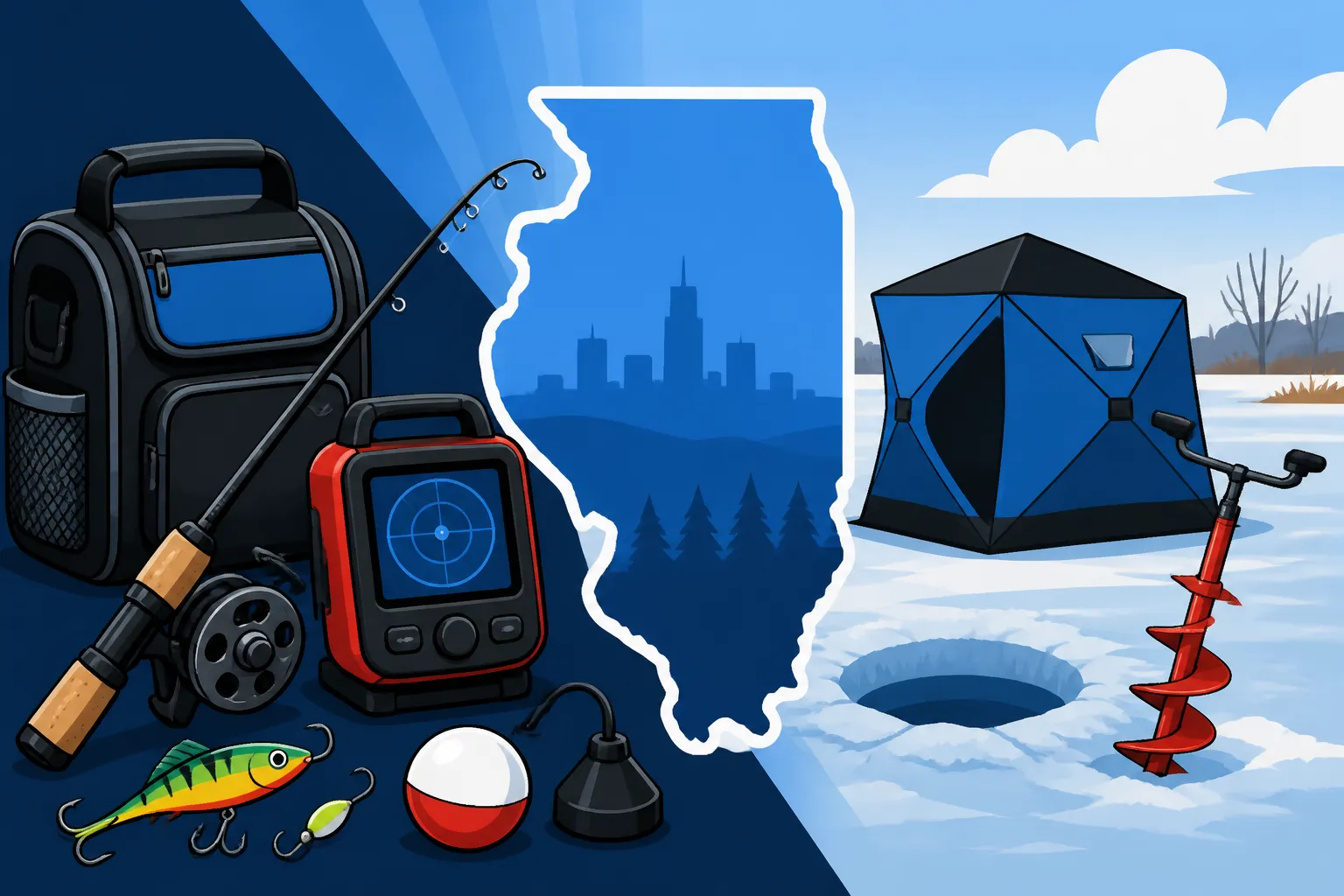
Gone are the days when ice fishing meant huddling over a bare hole, exposed to the brutal wind. Modern portable ice shelters come in two main types: flip-overs and pop-ups, and both offer incredible comfort and protection. Flip-over shelters are often integrated with a sled base, which makes them incredibly easy to transport your gear. You simply "flip" the tent portion over, and it's set up in seconds. Many come with built-in seats, making them super convenient for solo anglers or pairs. They're quick to deploy, easy to move, and provide immediate protection from the wind and snow. When the bite slows down in one spot, you can quickly pull up stakes and drag your entire setup to a new location. Think of them as your personal, mobile fishing bunker.
Pop-up shelters, on the other hand, are typically more spacious, resembling a cube-shaped tent. They offer more interior room, making them ideal for groups or families. While they take a little longer to set up than a flip-over, the extra space is fantastic if you're bringing more gear, want to spread out, or have multiple holes going inside. Both types are insulated, often with thick fabric layers that help trap heat, making a huge difference on those bitter cold days. Deciding between a flip-over and a pop-up often comes down to how many people you typically fish with and how much mobility you need. For a solo angler who likes to move around, a flip-over might be perfect. For a family fishing trip, a pop-up provides ample room for everyone, even for kids trying out Easiest Fish to Catch for Beginners. Brands like Eskimo and Clam are popular choices, and you can browse various models at Bass Pro Shops or online retailers.
Safe Heating Options for Your Shack
A shelter is good, but a heated shelter is pure luxury when it's five degrees outside. Portable propane heaters are the most common choice for ice shacks. They're efficient, relatively inexpensive to operate, and generate a surprising amount of warmth. The key is to choose a heater designed for indoor use and, critically, one that has an oxygen depletion sensor (ODS) and tip-over safety switch. These features are non-negotiable for safety. Carbon monoxide poisoning is a serious risk in enclosed spaces, so proper ventilation is vital. Always ensure you have at least one window or vent slightly open to allow fresh air in and exhaust gases out. You can also pick up a battery-operated carbon monoxide detector for added peace of mind; they're small, affordable, and could save your life.
Another thing to consider is the size of your heater relative to your shack. A small, personal heater might be fine for a one-man flip-over, but a larger pop-up will need more BTUs to stay toasty. Running a propane heater also means carrying propane tanks, which can be heavy. Many anglers use 1-pound disposable cylinders for shorter trips, but for longer outings, a refillable 20-pound tank connected via a hose and filter is more economical and environmentally friendly. Always make sure your connections are secure and leak-free. Staying warm means you can stay out longer, focus better, and truly enjoy the unique experience of ice fishing.
The Core Fishing Tools: Rods, Reels, and Line
Now that you're safe and warm, it’s time to talk about the business end of things: catching fish! Ice fishing isn't just about using a shorter version of your open-water rod. These specialized tools are designed to handle the unique challenges of fishing through a hole in the ice, from subtle bites to fighting fish in a confined space.
Specialized Ice Fishing Rods: Length, Action, and Power
Ice fishing rods are notably shorter than their open-water counterparts, typically ranging from 24 to 36 inches. This shorter length is crucial because you're fishing in a small hole and often inside a confined shelter. It allows for easier jigging and fighting fish without bumping into the walls or ceiling. But don't let their small size fool you; these rods are highly specialized. They come in various powers (ultralight, light, medium, heavy) and actions (fast, moderate, slow), just like regular rods, but scaled down for ice conditions. An ultralight rod with a very sensitive tip is perfect for panfish like bluegill and crappie, allowing you to detect the faintest bites, which are common in cold water. For larger fish like walleye or bass, a medium power rod with a fast action provides the backbone needed to set the hook and fight them effectively. Best Crappie Fishing Lakes in Illinois often require a delicate touch, making rod choice critical.
The "action" of an ice rod refers to where the rod bends. A fast action rod bends mostly at the tip, offering excellent sensitivity and quick hook sets, ideal for reaction strikes. A moderate action rod bends more through the upper half, providing a little more forgiveness for subtle takes and absorbing headshakes better. Many ice rods feature brightly colored tips, sometimes called "sight bobbers," which help you detect those incredibly light bites that you might not feel otherwise. The slightest twitch or bend in that colored tip can indicate a fish. When you're staring down a hole for hours, any edge you can get to spot a bite is welcome!
Ice Fishing Reels: Spinning vs. Inline
Your choice of reel is just as important as your rod. For many anglers, a small spinning reel, size 500 or 1000, is the go-to. These reels are familiar, easy to use, and handle light lines well. They offer smooth drag systems, which are vital when fighting a lively fish on light line through a small hole. Many brands make specific "ice reels" that are designed to perform reliably in freezing temperatures, with components that won't seize up when the mercury drops. When choosing a spinning reel, look for one with a good number of bearings for smooth operation and a reliable anti-reverse.
However, a growing number of ice anglers are turning to inline reels. These reels look and function much like fly reels, with the spool rotating directly in line with the rod. The major advantage of an inline reel is that it virtually eliminates line twist, which can be a real headache with spinning reels, especially when using small jigs. Less line twist means your tiny baits hang more naturally in the water, which can be crucial for enticing finicky fish. They also offer a very controlled retrieve, allowing you to drop your bait precisely to a certain depth and retrieve it slowly and steadily. While they might take a little getting used to if you're accustomed to spinning reels, the benefits for precision and finesse fishing are undeniable, especially when targeting Best Walleye Fishing Spots in Illinois where presentation matters.
Lines for Cold Water and Finicky Fish
Standard monofilament line can become stiff and develop significant memory in freezing temperatures, leading to coils and tangles. This is why specialized ice fishing lines are a must-have. Fluorocarbon line is an excellent choice for ice fishing because it's nearly invisible underwater, has very low stretch for good sensitivity, and resists water absorption, which prevents it from freezing and becoming brittle. Its low memory also means fewer frustrating tangles. For finesse presentations, particularly for panfish, a 2-4 pound test fluorocarbon leader tied to a small jig is often the key.
Another popular option is braided line, often paired with a fluorocarbon leader. Braided line offers superior sensitivity and virtually no stretch, allowing you to feel even the lightest taps. However, braid can absorb water and freeze, so using a fluorocarbon leader not only provides stealth but also prevents ice from building up on your main line. Some anglers prefer specially coated "ice braid" that resists water absorption. The key is to choose a line that balances sensitivity, low memory, and resistance to freezing. Matching your line strength to your target species is crucial, but remember that cold water fish can be very line-shy, so erring on the side of lighter, less visible line is often beneficial.
Breaking Through: Augers for Every Angler
You can have the best safety gear, the coziest shack, and the most sensitive rod, but none of it matters if you can't get a hole in the ice! The auger is your gateway to the fish, and choosing the right one depends on how often you fish, how much ice you typically encounter, and how much physical effort you're willing to exert.
Manual Augers: Simple and Reliable
For many beginner ice anglers or those who only hit the hard water a few times a season, a good old-fashioned manual auger is a perfect starting point. These augers are simple, reliable, and relatively inexpensive. They consist of a hand crank, a shaft, and sharp blades at the bottom. You simply twist the handle, applying downward pressure, and the blades cut a perfect circular hole through the ice. Manual augers are lightweight, easy to transport, and require no fuel or batteries, making them incredibly low-maintenance. They're also wonderfully quiet, which is a huge plus if you're trying to sneak up on wary fish or just enjoy the peaceful solitude of the ice.
However, manual augers do require a fair bit of elbow grease, especially when the ice gets thick. If you're drilling multiple holes in 15+ inches of ice, you'll definitely get a workout! They're generally best suited for ice up to 20-24 inches thick. Beyond that, it becomes quite a chore. Blade sharpness is paramount; dull blades make drilling much harder and less efficient. Always carry a blade guard to protect yourself and the blades during transport. Brands like Eskimo and Strikemaster offer excellent manual augers, and you can often find replacement blades or even full augers at sporting goods stores or online.
Power Augers: Propane and Electric for Efficiency
If you're an avid ice angler, routinely face thick ice, or just prefer to conserve your energy for fighting fish, a power auger is a game-changer. These come in two main types: propane and electric. Propane augers use a small, easy-to-carry propane cylinder to power a gas engine. They drill holes incredibly fast, even through several feet of ice, making them ideal for drilling many holes or when you need to quickly relocate. They're reliable in cold weather and offer consistent power. The main downsides are the noise, exhaust fumes, and the need to carry propane tanks, which adds weight and requires careful handling.
Electric augers, powered by rechargeable lithium-ion batteries, are the newest and increasingly popular kid on the block. They are incredibly quiet, produce no fumes, and start instantly with the push of a button. They drill holes almost as fast as propane models and are much lighter since you're not lugging around a fuel tank. Battery life has improved dramatically, with many models capable of drilling dozens of holes on a single charge, even through thick ice. The main considerations are battery life in extreme cold (though good quality batteries are designed for this) and the initial cost, which can be higher than manual or propane options. Charging multiple batteries for a long weekend trip is also something to plan for. Whether you opt for propane or electric, a power auger drastically reduces the effort of cutting holes, allowing you to cover more water and stay on the fish longer.
Here's a quick comparison of auger types to help you decide:
| Feature | Manual Augers | Propane Augers | Electric Augers |
|---|---|---|---|
| Power Source | Angler's physical strength | Propane fuel | Rechargeable battery |
| Noise Level | Very low | Moderate to loud (engine sound) | Very low (motor hum) |
| Weight (Approx.) | 5-10 lbs | 20-30 lbs (with tank) | 15-25 lbs (with battery) |
| Drilling Speed | Slow to moderate (dependent on ice/angler) | Very fast | Fast |
| Maintenance | Blade sharpening, occasional lubrication | Spark plug, fuel line, oil changes (some models) | Battery charging, blade sharpening |
| Portability | Excellent, very lightweight | Good, but bulkier with fuel | Excellent, no fuel cans, easy to carry |
| Environmental Impact | Minimal | Emissions from propane | Zero emissions during use |
| Typical Cost | Lowest entry cost | Moderate to higher | Moderate to higher (initial, batteries add to cost) |
| Best For | Occasional anglers, thin to moderate ice | Frequent use, thick ice, quick, powerful drilling | Frequent use, thick ice, quiet, clean operation |
Seeing What's Below: Electronics for Ice Fishing
Ice fishing offers a unique challenge: you're completely blind to what's happening beneath the surface, save for the small hole you've cut. Modern electronics have revolutionized this by allowing you to "see" the fish, understand their behavior, and even watch them interact with your bait. This technology can significantly improve your success rate and make the whole experience far more engaging.
Flashers and Sonar: Reading the Underwater World
Flashers and traditional sonar units are arguably the most crucial electronic tools for ice fishing. A flasher displays a real-time, circular view of what's directly beneath your hole. It shows the bottom, your bait, and any fish swimming by, all color-coded to indicate signal strength. You can instantly see your jig descending, watch how fish react to it, and adjust your presentation on the fly. This active feedback is incredibly addictive; you're no longer just blindly jigging, but actively hunting. If a fish approaches, you can raise or lower your bait, jiggle it enticingly, and watch the fish's response. It takes a little practice to interpret the signals, but once you get the hang of it, you'll wonder how you ever fished without one. Vexilar and Marcum are two of the most popular brands for flashers, offering robust, cold-weather-ready units.
Many modern fish finders also offer traditional 2D sonar displays, which can provide a more familiar scrolling graph view of the underwater world. Some units combine both flasher and graph modes, giving you the best of both worlds. The key features to look for are a sensitive transducer that works well through the ice, a bright display that's easy to read in varying light conditions, and robust battery life for those long days on the lake. Understanding Water Temperature and Fish Activity Guide becomes much easier when you can see fish respond (or not respond!) to your lures at different depths and temperatures. These units are portable, typically powered by a 12V battery, and fit neatly into a carrying case, making them easy to transport across the ice.
Underwater Cameras: Seeing the Bite Happen
If flashers let you "see" the fish, underwater cameras let you watch them. These fascinating devices consist of a small, waterproof camera on a long cable, connected to a monitor. You simply lower the camera into your hole, and you can see a live feed of the underwater environment. This allows you to identify fish species, observe structure, and, most excitingly, watch fish approach and strike your bait. It’s an incredible educational tool, helping you understand how fish react to different lures and presentations. Often, what you think is happening underwater is completely different from reality!
Underwater cameras are particularly useful for sight fishing in clear water, especially for species like crappie or bluegill where subtle bites are common. You can literally watch a bluegill nibble at your tiny jig before you even feel the bite. This adds a whole new dimension to the experience, making it more interactive and often more productive. While they aren't always ideal in murky water or low light, in the right conditions, they are an absolute blast. Some anglers use them in conjunction with a flasher: the flasher shows you where the fish are, and the camera confirms their species and how they're behaving. Brands like Aqua-Vu and MarCum offer excellent underwater camera systems, and like flashers, they are designed to be durable and reliable in cold environments.
Dressing for Success: Layering and Footwear
Fishing in Illinois during winter is no joke. The cold can be relentless, and if you’re not dressed properly, you’ll be miserable and heading home early. Proper attire isn't just about comfort; it's about safety. Hypothermia is a real danger, so mastering the art of layering and investing in quality cold-weather gear is absolutely essential for anyone venturing onto the ice.
Layering Systems: Staying Warm, Dry, and Agile
The secret to staying warm in extreme cold is layering, not just wearing one massive, bulky coat. A good layering system allows you to adapt to changing temperatures and activity levels.
- Base Layer: This is closest to your skin and needs to wick moisture away. Think thermal underwear made from merino wool or synthetic materials. Cotton is a huge no-no, as it absorbs sweat and then freezes, making you colder.
- Mid-Layer: This layer provides insulation. Fleece jackets, down vests, or heavy wool sweaters work great here. You might wear one or two mid-layers depending on how cold it is. This is where you trap warmth.
- Outer Layer: This is your protective shell. It needs to be windproof, waterproof, and breathable. A good quality ice fishing jacket and bibs (or a flotation suit, as mentioned earlier) will keep the elements out. Look for features like reinforced knees and seats, plenty of pockets, and adjustable cuffs. Many of these specialized outerwear pieces also offer additional insulation. Remember, when you're drilling holes or walking across the ice, you might warm up, but sitting still in a shack can quickly bring on the chill. Being able to shed or add layers is key to maintaining a comfortable body temperature.
Don't forget headwear! A significant amount of body heat is lost through your head. A warm, insulated hat that covers your ears is a must. Balaclavas or neck gaiters are also excellent for protecting your face and neck from biting winds. Even if you're inside a warm shack, a good hat helps maintain core temperature.
Insulated Boots and Hand Protection
Your feet and hands are often the first parts of your body to get cold, and once they're cold, it's hard to warm them up. High-quality, insulated winter boots are non-negotiable for ice fishing. Look for boots rated for extreme cold (e.g., -40°F or colder) with thick rubber soles for traction on slippery ice and snow. The insulation should be substantial, and a waterproof exterior is crucial. Wearing thick wool or synthetic socks (again, no cotton!) inside your boots will provide an extra layer of warmth and moisture-wicking capability. Having warm, dry feet makes a world of difference in your overall comfort level on the ice.
Hand protection is equally important. You'll need gloves or mittens that keep your hands warm, but also allow you enough dexterity to tie knots, bait hooks, and handle fish. Many anglers use a layering system for their hands too: a thin pair of liner gloves for dexterity, covered by heavy, insulated mittens for maximum warmth. When you need to do something fiddly, you can slip off the mittens, do the task, and then put them back on. Neoprene gloves are also popular, as they offer some warmth even when wet. Just like your boots, make sure your gloves are waterproof. No one wants frozen fingers while trying to land a trophy fish or trying to set up your gear from Bass Pro Shops.
Disclaimer
This article is for general informational purposes only and does not constitute professional advice. Laws, prices and regulations vary by location and change over time. Consult a qualified professional for guidance on your specific situation.