Boater Safety Course Options for Illinois Teens
It’s a truly exciting time when your teen starts showing interest in operating a boat, whether it’s for a peaceful fishing trip on Lake Shelbyville, a day of tubing on Rend Lake, or just cruising around with friends. But let’s be honest, as parents, that excitement is often mixed with a healthy dose of worry. You want them to be independent, but you also want them to be safe and responsible on the water. This guide will walk you through the essential boater safety course options available for Illinois teens, helping you understand the requirements and choose the best path to ensure they become confident, knowledgeable, and safe boat operators.
Why a Boater Safety Course Isn't Just a "Rule" for Illinois Teens
It’s easy to look at boater safety courses as just another hoop to jump through, another certificate to hang on the wall, or simply something the law demands. But for Illinois teens, especially those just getting their feet wet (pun intended!) in the world of boating, these courses are so much more than that. They're the foundation for a lifetime of safe and enjoyable experiences on our beautiful Illinois waters, from the Mississippi River to Lake Michigan.
Understanding Illinois's Age Requirements for Boating
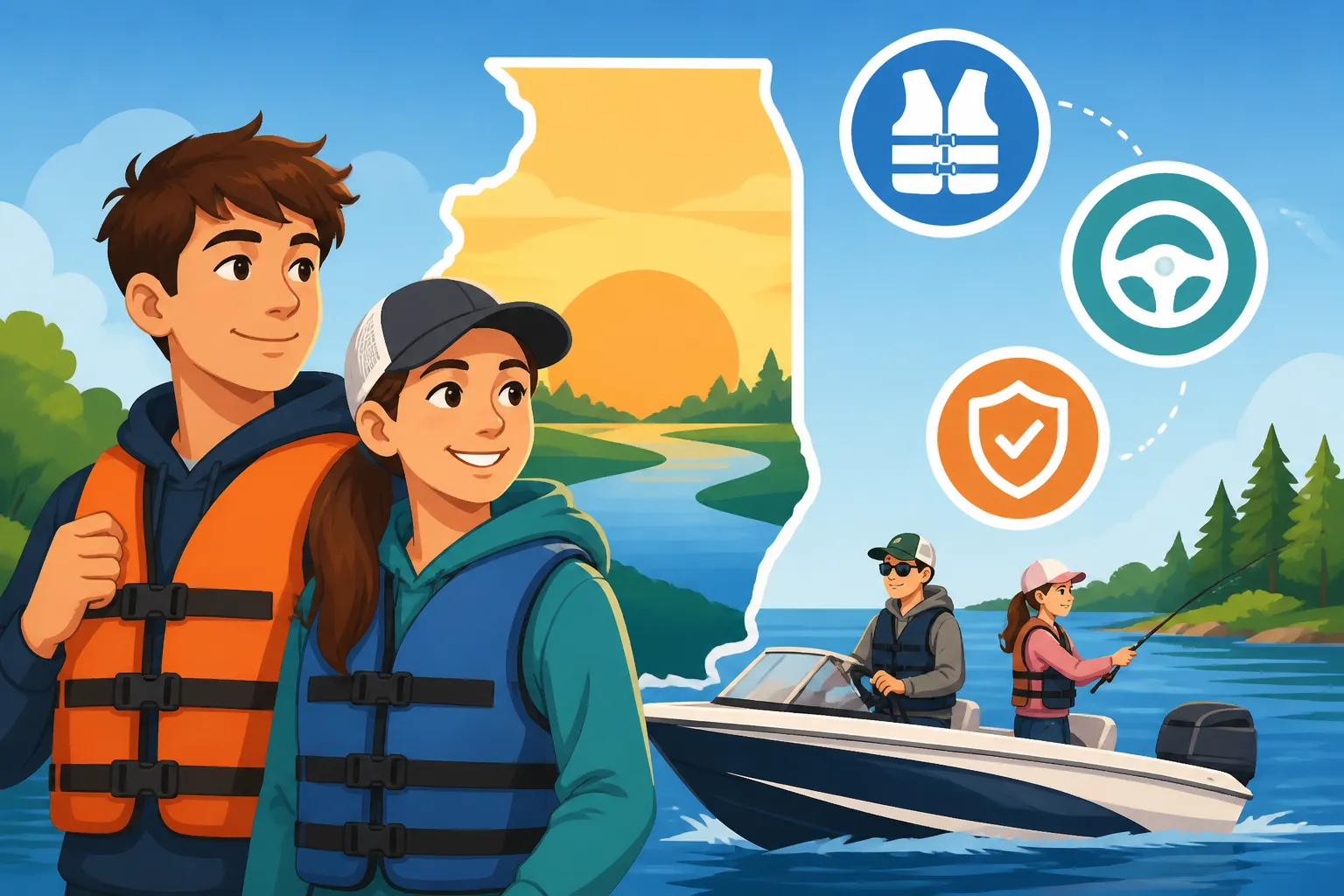
Let's clear up the legal stuff first, because it's probably the main reason you're looking into this. In Illinois, the law is pretty straightforward: anyone born on or after January 1, 1998, who wants to operate a motorboat with a 10 horsepower or greater motor, needs to have a valid Boating Safety Certificate. This applies to personal watercraft (PWCs) too, like jet skis. So, if your teen was born in 1998 or later and is itching to take the helm of anything with a decent engine, they're going to need that certificate. You can find more details on this by checking out Illinois Boater Education Card Age Requirement.
Imagine your 14-year-old, full of enthusiasm, wanting to take out the family fishing boat on Clinton Lake, which has a 25-horsepower outboard. Without that boater safety card, they could face a citation from an Illinois Department of Natural Resources (IDNR) conservation police officer. It’s not just about avoiding trouble, though. It's about making sure they have the fundamental knowledge to navigate safely. The rules cover different scenarios, too. A 12-year-old, for instance, can operate a motorboat with a 10 horsepower or greater motor only if they are accompanied by a parent, guardian, or an adult (at least 18 years old) who holds a valid Boating Safety Certificate or is not required to have one. These specific rules are in place to gradually introduce young people to the responsibilities of boating.
Beyond the Law: The True Value of Boater Education
While meeting legal requirements is important, the true value of a boater safety course extends far beyond simply getting a card to show a game warden. Think about the peace of mind you’ll have knowing your teen isn't just allowed to operate a boat, but is genuinely prepared to do so safely. These courses are designed to instill a deep understanding of marine navigation, emergency procedures, and responsible boating etiquette. It’s about more than just knowing how to start the engine; it’s about understanding how to react when unexpected weather rolls in, how to handle a man overboard situation, or how to navigate safely around other vessels.
Consider a scenario where your teen is out fishing with friends on Lake of Egypt. Suddenly, a fast-approaching storm brings strong winds and rough waves. A boater safety course teaches them to recognize these dangers early, how to safely secure the boat, and the proper procedure for heading back to shore or finding shelter. This isn't theoretical knowledge; it's practical, life-saving information. The confidence that comes from being well-trained also makes the entire boating experience more enjoyable, both for the teen at the helm and for anyone else on board. It fosters a sense of responsibility and respect for the powerful forces of nature, which is invaluable on the water. Illinois Boater Education Card Requirements provides a comprehensive look at the specific knowledge areas covered.
Navigating the Different Boater Safety Course Formats
When it comes to actually taking a boater safety course, you and your teen have a few options in Illinois. Each format has its own set of advantages and disadvantages, so it’s worth considering which one best fits your teen’s learning style, your family’s schedule, and even your budget. The goal is to find a course that your teen will not only complete but truly absorb the information from.
In-Person Classroom Courses: The Traditional Approach
For many, the traditional in-person classroom setting is still the gold standard for learning. These courses are typically offered by the Illinois Department of Natural Resources (IDNR), local park districts, marine dealers, or boating clubs. They usually involve a set number of hours over a few days or weeks, led by a certified instructor.
The biggest pro here is the direct interaction. Your teen can ask questions in real-time, engage in discussions with the instructor and other students, and sometimes even participate in hands-on demonstrations of safety equipment or knot tying. This social aspect can be particularly beneficial for teens who thrive in a structured learning environment or who might get easily distracted studying alone. It also creates a sense of community among new boaters. However, the cons can be significant. These courses have fixed schedules, which can clash with school, sports, or other extracurricular activities. Finding a convenient location might also be a challenge depending on where you live in Illinois. You might find information about local course offerings at places like Bass Pro Shops, which sometimes partner with local organizations or host informational events about boater safety, though they don't typically run the courses themselves.
Online Boater Safety Courses: Flexibility for Busy Schedules
In our modern world, online learning has become incredibly popular, and boater safety is no exception. There are several IDNR-approved online boater safety courses available that allow your teen to complete their training from the comfort of your home, at their own pace.
The flexibility is the huge upside here. Your teen can log in and work on the course whenever they have free time—after school, on weekends, or during summer break. This is a game-changer for busy teens with packed schedules. They can take as long as they need to understand complex topics, revisit modules, and review before the final exam. However, this format demands a good deal of self-discipline. Without a live instructor guiding them, it's up to your teen to stay motivated and focused. Some teens might also miss the direct interaction for clarifying doubts. When looking for online courses, ensure they are recognized by the Illinois Department of Natural Resources and are National Association of State Boating Law Administrators (NASBLA) approved. While you won't take the course on Amazon, you might find supplemental study guides or books there to help reinforce the online learning. Boater Education Course Costs in Illinois will give you a general idea of the investment for both online and in-person options.
Hybrid Options: Blending the Best of Both Worlds
Some organizations offer hybrid courses that attempt to combine the best elements of both in-person and online learning. These might involve completing the theoretical portion of the course online at your teen's leisure, followed by a mandatory in-person review session or a practical skills test.
This approach can be fantastic for teens who appreciate the convenience of online learning but also benefit from some direct interaction or hands-on experience. It allows them to cover the bulk of the material on their own schedule but still get that critical face-to-face time with an instructor to solidify their understanding or practice certain skills. While less common than purely online or in-person options, these hybrid courses offer a valuable middle ground for different learning styles.
Here's a quick comparison of the main course formats:
| Feature | In-Person Classroom Courses | Online Boater Safety Courses |
|---|---|---|
| Flexibility | Low (fixed schedule and location) | High (self-paced, access anywhere) |
| Interaction | High (direct instructor and peer interaction) | Low (self-study, often no direct instructor interaction) |
| Engagement | Can be very engaging with good instructors; group activities | Depends on teen's self-motivation; interactive elements vary |
| Practicality | May include hands-on elements/demonstrations | Primarily theoretical; practical application is self-imagined |
| Discipline | Less required (structured environment) | High (requires self-motivation and time management) |
| Cost Shape | Varies; often includes materials | Generally comparable or slightly less; typically all-inclusive |
What Illinois Teens Will Learn in a Boater Safety Course
So, what exactly will your teen be soaking up in one of these boater safety courses? It's much more than just a list of rules. These courses are comprehensive, covering everything from basic navigation to emergency procedures, all designed to create a well-rounded and responsible boater. The curriculum is typically standardized by organizations like NASBLA and approved by the Illinois Department of Natural Resources, ensuring that all vital topics are covered regardless of the specific provider.
Essential Boating Laws and Regulations
Understanding the "rules of the road" on the water is absolutely critical. Just like driving a car, there are specific regulations governing how boats interact to prevent collisions and ensure smooth passage. Your teen will learn about the proper right-of-way rules, which dictate who must yield to whom in different situations. This includes understanding the difference between a stand-on vessel and a give-way vessel, and how to safely pass other boats. They'll also learn about navigation lights—what lights to display when operating at night or in low visibility, and what those lights mean when seen on another vessel. Sound signals, like horn blasts to indicate intentions or warnings, are also a key part of the curriculum.
Beyond navigation, teens will dive into other Illinois-specific regulations. This includes understanding speed limits in certain areas, particularly in "no wake" zones around marinas, swim beaches, or residential areas. They'll learn about safe distances from swimmers and shorelines, and how to operate personal watercraft responsibly. These regulations aren't just arbitrary; they are designed to protect everyone on the water and the environment. Learning about them early helps instill a deep respect for marine safety. For a broader perspective on regulations, they might also be interested in Illinois Fishing Regulations Overview.
Vessel Operation and Navigation Skills
A boater safety course isn't just about reading a manual; it's about practical skills. While most courses don't involve actual hands-on boat driving (though some may offer optional supplements for this), they thoroughly cover the principles of vessel operation. Your teen will learn the basics of boat handling, including how to safely launch and retrieve a boat, how to perform basic maneuvers, and the critical skill of docking and anchoring. Docking can be particularly tricky, especially with wind and current, and understanding the theory behind it can save a lot of frustration (and embarrassment!) at the ramp.
Navigation skills are also a huge component. This includes understanding how to read nautical charts, identify buoys and other aids to navigation, and safely follow marked channels. While many modern boats use GPS, understanding traditional navigation is still essential, especially if electronics fail. They'll learn how to identify potential hazards like shallow water, submerged objects, and how to respond to common mechanical issues or failures on the water. This knowledge empowers them to make sound decisions and respond effectively when things don't go exactly as planned.
Emergency Preparedness and On-Water Safety
Perhaps the most crucial aspect of any boater safety course is the focus on emergency preparedness and overall on-water safety. This section is designed to equip your teen with the knowledge to prevent accidents and respond effectively if one occurs. They'll learn about the importance of wearing life jackets and understanding the different types, as covered in Illinois Life Jacket and PFD Rules. Proper storage and accessibility of these vital safety devices, as detailed in Illinois PFD Storage and Accessibility Rules, are also a key part of the lesson.
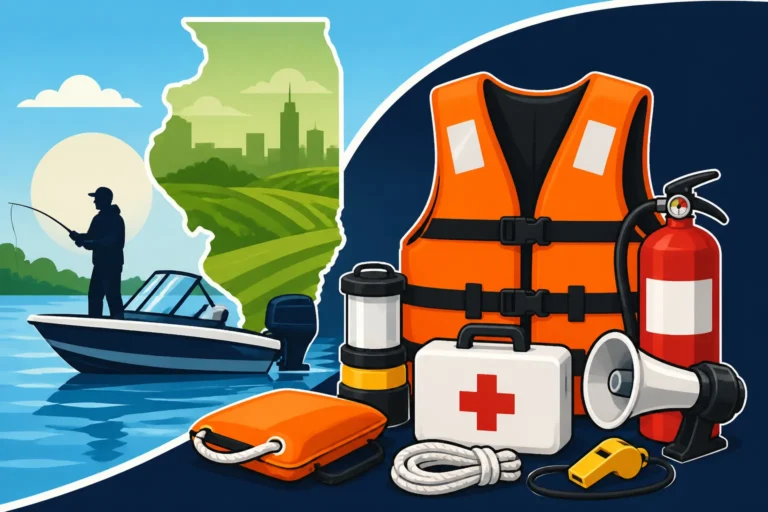
Other critical topics include fire prevention on boats, how to properly use a fire extinguisher, and what to do in case of a fire. They’ll also learn essential procedures for dealing with a man overboard situation, including rescue techniques and reporting requirements. Understanding how to monitor weather forecasts, identify dangerous conditions, and seek safe harbor is paramount. Beyond that, the course will cover basic first aid for common boating injuries, proper use of marine radios like VHF for communication in emergencies, and the importance of having a float plan. Essentially, the goal is to make them proactive in preventing emergencies and confident in handling them if they arise, truly making them a safe skipper on the water. You can find a comprehensive list of what safety gear is required on an Illinois boat in Illinois Boating Safety Equipment Checklist.
Making the Course Experience Successful for Your Teen
Enrolling your teen in a boater safety course is a fantastic step, but there are ways to ensure they get the most out of it and really succeed. It’s not just about passing a test; it’s about absorbing critical information that will keep them, and their passengers, safe on the water for years to come. Thinking through these aspects can make a big difference in their learning journey.
Choosing the Right Course Provider
The first step to a successful experience is selecting an approved and reputable course. In Illinois, you'll want to ensure that any course your teen takes, whether in-person or online, is approved by the Illinois Department of Natural Resources (IDNR) and meets the standards set by the National Association of State Boating Law Administrators (NASBLA). These accreditations mean the curriculum is comprehensive and legally recognized. Most online providers will clearly state their accreditation on their websites.
Beyond accreditation, consider the provider's reputation. Look for reviews or testimonials if possible. Does the course have a good track record? Also, think about the learning environment. For an in-person course, is the instructor engaging and experienced? For an online course, is the platform user-friendly, with clear explanations and interactive elements? While specific costs fluctuate, you'll generally find that boater safety courses are a reasonable investment. Some may be free, while others charge a modest fee that typically covers materials and administrative costs. Always check the provider's website for the most up-to-date information on enrollment and any associated fees. Understanding the general shape of costs is important, as covered in articles like Boater Education Course Costs in Illinois.
Tips for Teens to Excel in Their Boater Safety Course
Once enrolled, encouraging your teen to actively engage with the material will make all the difference. For in-person classes, this means showing up on time, participating in discussions, and not being afraid to ask questions. A good instructor will appreciate their curiosity and it helps reinforce the learning for everyone. If they're taking an online course, encourage them to set a regular schedule for studying, rather than trying to cram everything at the last minute. Treat it like a serious commitment, just like schoolwork.
Reviewing the material regularly, perhaps with practice quizzes, can really help solidify their understanding. Sometimes, discussing concepts with you or other family members who boat can also be beneficial, allowing them to apply what they're learning to real-world scenarios. For instance, after learning about navigation lights, you could point out the lights on boats when you're near a marina or on the water together. This practical application makes the information much more memorable and relevant. Ultimately, passing the final exam is a goal, but truly internalizing the safety principles is the most important outcome. Having their Boater Safety Certificate will not only legally qualify them to operate a motorboat over 10 horsepower, but it will also give them immense confidence and you, as a parent, significant peace of mind.
Disclaimer
This article is for general informational purposes only and does not constitute professional advice. Laws, prices and regulations vary by location and change over time. Consult a qualified professional for guidance on your specific situation.