Best Fish Finder for Small Illinois Lakes
It can be incredibly frustrating to spend hours on a small Illinois lake, casting endlessly without a single bite, wondering if the fish are even there. You paddle around, scan the water surface, maybe try a few different baits, but without any real insight into what's happening beneath your boat or from the bank, it often feels like pure guesswork. This guide is here to tell you that guesswork doesn't have to be part of your fishing experience on smaller waters anymore, revealing how a fish finder can transform your approach and help you locate those elusive fish.
Why a Fish Finder for Small Lakes Isn't Overkill It's a Game Changer!
You might think that fish finders are just for the massive reservoirs or the open waters of Lake Michigan, reserved for those with big boats and even bigger budgets. That's a common misconception, and honestly, it keeps a lot of anglers from unlocking the full potential of their local small lakes and ponds. The truth is, a fish finder can be even more impactful on smaller bodies of water because it allows you to quickly decipher what’s below the surface in areas you might otherwise overlook.
On a smaller lake, fish often relate tightly to subtle structure or depth changes. We're talking about old submerged timber, a sudden drop-off near a bank, or even a small rock pile that's completely invisible from above. Without a fish finder, you're essentially blind to these prime holding spots. Imagine paddling your kayak over a small humped contour that’s absolutely loaded with crappie, but you pass right over it because you had no idea it was there. A fish finder changes that entirely, giving you a detailed underwater view that helps you target fish more effectively, whether you're in a boat, a kayak, or even fishing from the shore.
It’s not just about seeing the fish, either. A good fish finder will show you water depth, temperature, and the contours of the bottom. These pieces of information are gold when you're trying to establish patterns and understand why fish are holding in certain areas. For example, knowing the Water Temperature and Fish Activity Guide can make a huge difference in finding active fish, and your fish finder can often provide that data in real-time.
Key Features to Look For in a Small Lake Fish Finder
When you're wading into the world of fish finders for smaller Illinois lakes, you'll quickly realize there are a ton of options. It's easy to get overwhelmed by all the jargon and features. But don't worry; for our purposes, we can narrow it down to a few critical aspects that will make the biggest difference in your success on smaller waters. Think about what truly matters when you're dealing with less expansive, often shallower, environments.
Portability and Ease of Mounting
For many small lake anglers, particularly those using kayaks, canoes, jon boats, or even just fishing from the bank, portability is paramount. You don't want a massive unit that requires complex wiring and a dedicated power source. Look for models designed for easy transport and quick setup. This could mean a completely self-contained unit with its own battery, or one that clamps easily to the transom or a kayak rail.
Some fish finders even come with suction cup mounts for the transducer, making it a breeze to attach to a small boat and remove when you're done. This flexibility is a huge advantage if you fish multiple small lakes, rent boats, or simply don't want a permanent installation. When considering Kayak Fishing Gear for Illinois Waters, a portable fish finder is almost always a top priority for serious anglers.
Screen Size and Resolution
While you won't need the massive, multi-function displays found on professional bass boats, a screen that's easy to read in varying light conditions is essential. For small lakes, a screen anywhere from 3 to 7 inches diagonal is usually sufficient. What's more important than sheer size, however, is the resolution. A higher pixel count will give you a clearer, crisper image of structure and fish targets, which can be crucial when distinguishing between a submerged log and a school of crappie.
Glare can be a real issue on sunny Illinois days, so look for units with good backlight control and anti-glare coatings if possible. Being able to clearly see that subtle weed line or the faint arc of a fish on your screen, even under bright sunlight, will drastically improve your ability to react and make precise casts.
Transducer Technology and Beam Angle
The transducer is the "eye" of your fish finder, sending and receiving sonar signals. For small lakes, you'll primarily be interested in traditional 2D sonar (often with CHIRP technology) and Down Imaging. CHIRP sonar, which sends a range of frequencies rather than a single one, provides excellent target separation and clarity, making it easier to identify individual fish and differentiate them from structure.
Down Imaging (often called DownScan or ClearVü by different brands) gives you a photographic-like view directly beneath your boat, making it fantastic for pinpointing submerged timber, rock piles, and brush. For most small lakes, Side Imaging might be overkill as the range it covers horizontally can be much wider than many of these water bodies. A wider beam angle on your traditional 2D sonar (around 20 degrees or more) is beneficial for covering more water quickly, helping you find fish faster in shallower areas.
GPS and Mapping Capabilities
Even on smaller lakes, a built-in GPS can be incredibly valuable. It allows you to mark waypoints for productive fishing spots – maybe a specific brush pile where you found crappie, a sudden depth change that holds bass, or even where you dropped your favorite lure. This means you can return to that exact spot on future trips, eliminating the guesswork. For anglers who often target specific types of cover or structure, this feature is a game-changer. Think of it: you find a honey hole of bluegill, mark it, and return to it confidently next time. Best Crappie Fishing Lakes in Illinois often have specific spots known for producing, and GPS helps you navigate directly to them.
Some higher-end models for small lakes may even include basic mapping, showing contours and navigation aids. While not strictly necessary for every small pond, it’s a nice bonus that further enhances your spatial awareness on the water.
Battery Life and Power Options
For portable units, long battery life is non-negotiable. You don't want your fish finder dying on you halfway through a productive day. Look for units that boast several hours of continuous operation on a single charge, or consider carrying a spare battery pack. Many modern portable fish finders use rechargeable lithium-ion batteries.
For those with small jon boats, a 12V marine battery setup is common, and you'll want to ensure your chosen fish finder is compatible with this power source. Don't forget to factor in the charging time and availability of compatible chargers. A dead battery on the water is just as useless as no fish finder at all!
Top Contenders: Types of Fish Finders Suited for Small Illinois Lakes
The market is brimming with various types of fish finders, each with its own set of advantages and disadvantages. For small Illinois lakes, certain categories truly shine due to their portability, ease of use, and targeted feature sets. Let's break down the main types you'll encounter and why they might be the perfect fit for your next fishing adventure.
Castable Fish Finders: The Ultimate in Portability
These are arguably the most versatile option for small lake anglers, especially those who often fish from the bank, a pier, or a kayak where mounting a traditional unit isn't practical. Castable fish finders, like those from Deeper or Lowrance FishHunter, are small, spherical devices that you tie to your fishing line and cast out. They float on the surface, transmitting sonar data wirelessly to your smartphone or tablet via Bluetooth or Wi-Fi.
The beauty of castable units is their sheer portability and minimal setup. You can literally drop it in your tackle box, grab your rod, and head out. They’re excellent for scouting new areas without a boat, checking depths, and identifying submerged structure. If you enjoy Shore Fishing Gear for Illinois Anglers, a castable fish finder will be a fantastic addition to your kit. While the screen is your phone, which can be an advantage, remember to protect your device and ensure you have enough battery on both your phone and the fish finder itself. Many anglers find these perfect for getting a quick read on a pond or a secluded cove.
Portable "Ice Fishing Style" Units: Versatility Beyond Winter
Often marketed for ice fishing, these self-contained portable units are incredibly adaptable for open water fishing on small lakes. Brands like Humminbird and Garmin offer excellent portable kits that include a fish finder head unit, a battery, a charger, and a transducer with a float, all housed in a convenient carrying case.
These units are fantastic because they're ready to go right out of the box. You can simply set the case in your jon boat, secure the transducer over the side, and you're fishing. They're also great for rental boats where you can't install anything permanently. The larger screen on some of these portable units, compared to a phone for castable models, can be a real plus for detailed viewing. For example, if you're targeting specific species like bluegill or crappie, the clearer picture can help you distinguish schools of fish. These robust units often hold up well to the bumps and splashes of a day on the water.
Entry-Level Fixed Mount Units: For Dedicated Small Boats
If you have a dedicated small boat, like a jon boat, an aluminum utility boat, or even a small fiberglass runabout that you use consistently on smaller lakes, an entry-level fixed mount fish finder might be ideal. These typically offer more power, larger screens, and more advanced sonar features than portable units, often at a very reasonable price. You'll install the head unit to your console or transom, and the transducer permanently on the boat.
While they require a bit more setup initially, the benefits include a more stable picture, often better integration with a dedicated boat battery, and sometimes more robust mapping options. Many anglers pick up their entry-level units at Bass Pro Shops, where they can get advice on installation and compatibility with their specific boat. Brands like Lowrance, Garmin, and Humminbird all offer excellent value in this category. They are perfect if you want a reliable, always-ready system for your primary small lake vessel.
| Fish Finder Type | Best For | Pros | Cons | Typical Price Shape |
|---|---|---|---|---|
| Castable | Bank fishing, kayaks, canoes, travel, scouting | Extremely portable, easy to use, no boat needed | Relies on smartphone screen, limited battery life (phone & unit) | Generally very affordable to mid-range |
| Portable (Kit-Style) | Small boats, rental boats, multi-lake use | All-in-one package, dedicated screen, good battery life | Bulkier than castable, transducer still needs deployment | Affordable to mid-range |
| Fixed Mount (Entry-Lvl) | Dedicated small boats, jon boats | Stable installation, larger screens, more power, often more features | Permanent installation, requires boat battery, less portable | Affordable to mid-range |
Setting Up and Using Your Fish Finder on Small Lakes
Alright, you've chosen your fish finder, and now it's time to get it wet! But slapping it on your boat or casting it out isn't the whole story. To truly make the most of your new gadget on those small Illinois lakes, a little bit of knowledge about setup and interpretation goes a long way. This isn't rocket science, but understanding a few basics can quickly elevate you from "I see some blobs" to "I see a school of crappie under that timber at 12 feet!"
Initial Setup and Transducer Placement
For a fixed-mount or portable unit on a boat, proper transducer placement is critical. The transducer needs a clear view of the water beneath your boat, free from obstructions like your motor or propeller wash. If you’re using a jon boat, often a transom mount works well, ensuring the transducer is just below the hull line in clean, undisturbed water. For kayaks, through-hull mounts or external arm mounts are popular, keeping the transducer submerged without interfering with paddling. Incorrect placement can lead to a noisy, unreadable screen, which defeats the entire purpose!
If you've gone with a castable unit, the setup is much simpler: just charge it up, download the app, pair it with your phone, and make sure your phone's location services are on for GPS functionality. Remember, checking reviews on Amazon before you buy can often give you insights into common setup challenges or tips from other users.
Interpreting What You See
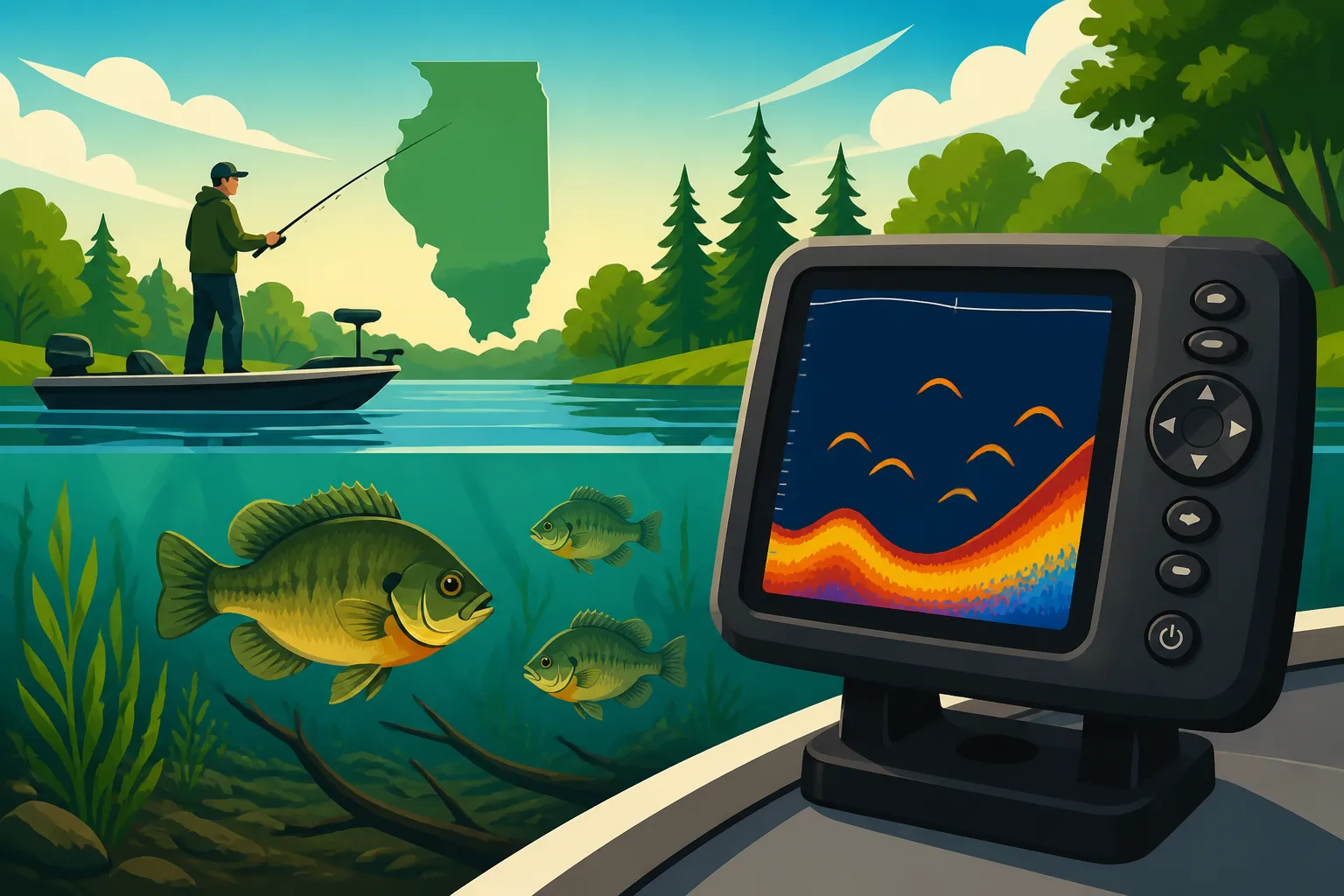
This is where the magic happens and where many beginners get hung up. Your screen isn't going to show you perfect fish shapes every time, especially on traditional 2D sonar. Fish often appear as "arches" or "boomerangs." A full, distinct arch usually indicates a fish passing through the sonar beam. Smaller, partial arches might be smaller fish, or fish just on the edge of the beam. Some fish finders have "fish ID" symbols, but these are often less accurate than learning to read the raw sonar returns.
More importantly, look for structure. Small lakes are often defined by their subtle contours, brush piles, old foundations, or sudden depth changes. Down Imaging excels at showing you these details in a nearly photographic view. Identify those areas where cover meets a drop-off, or where a thermocline (a sudden temperature change layer) might be holding baitfish. These are often the same places where larger predatory fish like bass or walleye will be lurking. Knowing How to Find Bass in Summer Heat often involves using your fish finder to locate cooler, deeper water or dense cover.
Adjusting Settings for Small Lake Conditions
Modern fish finders are pretty smart, but a little manual tweaking can make a big difference. Here are a few settings to consider:
- Sensitivity/Gain: This controls how much detail your fish finder picks up. Too low, and you'll miss fish and faint structure. Too high, and you'll get a lot of clutter and noise. On smaller, often shallower lakes, you might need to adjust this more frequently as conditions change or as you move between depths. Start around 70-80% and fine-tune.
- Zoom: Use the zoom feature to get a magnified view of the bottom or a specific depth range. This is especially useful if you've marked a fish or structure and want a closer look.
- Display Speed: This controls how fast the sonar history scrolls across your screen. A faster speed might give you a more real-time view, which can be good when actively searching for schools of fish. A slower speed can make it easier to interpret stationary structure.
- Frequency: Many transducers offer multiple frequencies (e.g., 83/200 kHz for 2D sonar, or specific frequencies for Down Imaging). Lower frequencies (like 83 kHz) penetrate deeper and cover a wider cone, while higher frequencies (like 200 kHz) offer better detail in shallower water but with a narrower cone. Experiment to see what works best for your specific lake and target depth.
By taking the time to understand these settings and practicing interpreting what you see, your fish finder will quickly become an indispensable tool on your small Illinois lake adventures. You'll stop just guessing and start truly understanding the underwater world, leading to more successful and satisfying fishing trips.
Disclaimer
This article is for general informational purposes only and does not constitute professional advice. Laws, prices and regulations vary by location and change over time. Consult a qualified professional for guidance on your specific situation.