Sit-On-Top vs Sit-In Kayaks for Small Lakes
Trying to decide on the perfect fishing kayak for those beautiful, serene small lakes around Illinois can feel like a real head-scratcher. With so many options out there, it’s easy to get overwhelmed wondering if a sit-on-top or a sit-in model is truly the better choice for your angling adventures. This guide is going to break down the key differences, helping you understand which kayak style will best suit your fishing needs and local waters.
Understanding the Core Differences: Sit-On-Top (SOT) vs. Sit-In (SINK) Kayaks
When you first step into the world of fishing kayaks, one of the biggest distinctions you'll encounter is between sit-on-top (SOT) and sit-in (SINK) designs. These aren't just minor variations; they fundamentally change your experience on the water, especially when you're focused on reeling in fish from Illinois's numerous smaller lakes. It’s not about one being inherently "better" than the other, but rather which one aligns more closely with your personal comfort, fishing style, and the conditions you typically face.
Sit-On-Top Kayaks: The Open-Air Experience
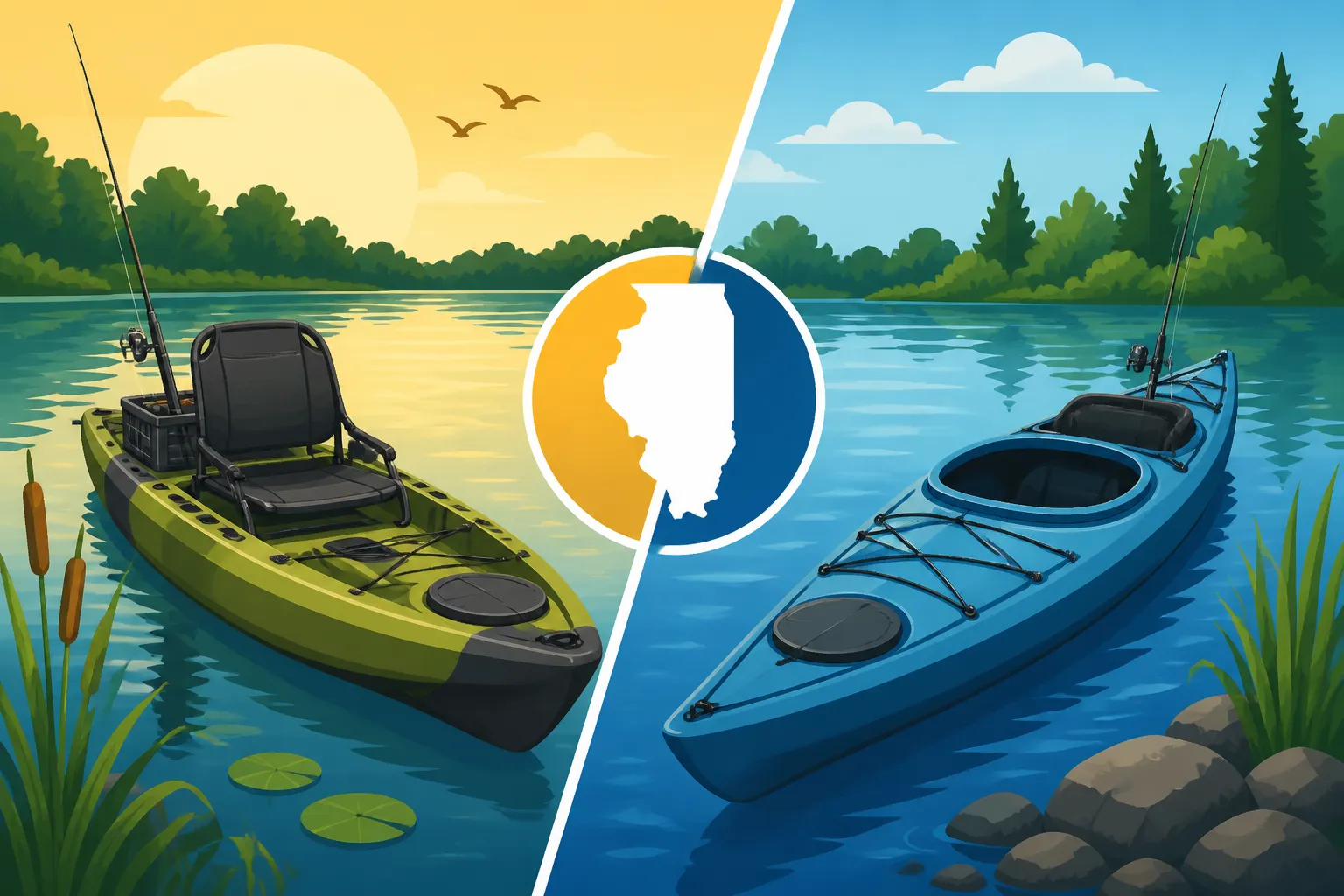
Imagine lounging on a comfortable, open deck rather than being tucked down inside a cockpit. That's essentially the sit-on-top kayak experience. These kayaks feature an open deck where you sit directly on top, often on a molded seat or an elevated frame seat. The design is fantastic for many reasons, particularly for anglers. Their open nature means easy entry and exit, which is a huge plus if you're frequently getting in and out to wade in shallow areas or just need to stretch your legs. If you've ever tried to squeeze into a tight cockpit on a dock, you'll immediately appreciate the simplicity of just plopping down on a SOT.
SOT kayaks are generally wider and have a higher initial stability, making them feel incredibly secure, especially for beginners or those who like to stand up and cast. Think of those smaller lakes, perhaps a quiet state park lake like Shabbona or Lake Le-Aqua-Na, where you might be casting for bass near submerged timber. The stability of a SOT can give you the confidence to make those critical casts without fear of capsizing. Many SOTs also come equipped with "scupper holes" that run through the hull, allowing any water that splashes onto the deck to drain out naturally, keeping your sitting area relatively dry. This self-bailing feature is a lifesaver if you're out on a breezy day or catch a little wave from a passing boat. Plus, the open deck often provides ample, easily accessible storage for tackle boxes, coolers, and other Kayak Fishing Gear for Illinois Waters, which is incredibly convenient when you need to grab something quickly.
Sit-In Kayaks: The Enclosed and Protected Ride
On the flip side, sit-in kayaks offer a more traditional kayaking experience. With a SINK, you slide your legs into a cockpit, which completely encloses the lower half of your body. This design has some significant advantages, especially for those who prioritize efficiency, speed, or protection from the elements. Because your center of gravity is lower and the hull is typically narrower, SINKs often track straighter and require less effort to paddle, making them ideal if you need to cover a lot of water on a larger "small" lake or deal with a bit of wind. For instance, if you're exploring the more expansive sections of Evergreen Lake or heading across a windy Kinkaid Lake, a sit-in might get you to your favorite fishing spot with less fatigue.
The enclosed cockpit also provides a degree of protection from the wind, sun, and spray, which can be a real blessing on a cooler morning or during an unexpected drizzle. While the storage might not be as immediately open as a SOT, many SINKs have watertight bulkheads and hatches for gear storage, keeping your electronics or extra clothes dry. However, the trade-off is often a slightly more challenging entry and exit, especially from the water. If you were to capsize (which is less common in calm lake conditions but still possible), re-entry can be a more involved process. For anglers who prefer a nimble, fast craft and don't mind a snugger fit, a sit-in kayak offers a closer connection to the water and excellent paddling performance.
Performance on Small Illinois Lakes: What to Expect
Illinois is blessed with countless small to medium-sized lakes, from municipal parks to larger state park reservoirs. These waters often present a mix of calm, glassy mornings, occasional windy afternoons, and varying depths. How your kayak performs in these specific conditions, particularly concerning stability, maneuverability, comfort, and gear storage, is crucial for a successful fishing trip. Understanding these nuances can save you a lot of frustration once you're out on the water.
Stability and Maneuverability on Calm Waters
When you're fishing a small Illinois lake, chances are you'll encounter mostly calm or gently rippled waters. In these conditions, both SOTs and SINKs can offer a pleasant experience, but their inherent characteristics truly shine in different ways.
Sit-On-Top Kayaks: These are often the champions of stability. Their wider hulls and flatter bottoms typically provide what's known as excellent "initial stability" – meaning they feel very steady right when you get in. This is fantastic for anglers who like to move around a bit, reach for their tackle box, or even stand up to sight fish or get a better casting angle. Imagine you're trying to cast to a tricky spot under a willow tree on a small pond; the ability to shift your weight without feeling tippy is a massive advantage. If you hook into a sizable bass or a fighting channel catfish, that rock-solid platform allows you to fight the fish more effectively without worrying about taking an unplanned dip. This stability also makes them very forgiving for beginners or those who just want to relax and drift. For many, the peace of mind knowing your kayak won't easily tip makes the fishing experience much more enjoyable.
Sit-In Kayaks: While generally more stable than sea kayaks, fishing-specific sit-in kayaks tend to have less initial stability compared to their SOT counterparts. However, they often boast superior "secondary stability," meaning they feel stable once they're leaned over to a certain point – useful for experienced paddlers who want to edge their kayak. For fishing, this can mean a slightly more cautious approach when standing or moving about. However, their narrower design often means they are more maneuverable, especially in tight quarters or when you need to quickly pivot to follow a schooling white bass. On a small, winding river section that flows into a lake, a SINK can navigate obstacles and currents with more grace. They're also usually faster and track straighter, which is great if your "small lake" actually requires covering a few miles to hit all your honey holes. Ultimately, for calm waters, SOTs win on immediate stability for active fishing, while SINKs offer better paddling efficiency and maneuverability if you're a more active paddler.
Comfort and Gear Storage for a Day on the Water
A long day of fishing can be tough on the body if your kayak isn't comfortable, and nothing is more frustrating than fumbling for gear when the bite is hot.
Sit-On-Top Kayaks: Modern SOT fishing kayaks often come with incredibly comfortable, adjustable frame seats that are elevated off the deck. This elevation keeps you drier, provides better visibility, and can be a huge ergonomic benefit, especially for your back and legs. Spending hours casting for bluegill or crappie, you'll appreciate being able to reposition yourself easily. When it comes to gear, SOTs are hard to beat for accessible storage. The open deck means you can strap down coolers, large tackle boxes, and even small crates right behind your seat. Many models feature rod holders (both flush-mounted and adjustable ones) strategically placed, and plenty of rail space for mounting fish finders, GPS, or camera equipment. If you like to bring a lot of gear or prefer everything within easy reach, a SOT usually offers more versatile and open storage options. Think about having your bait bucket, stringer, and net all secured but accessible. Best Kayak Models for Illinois Fishing often highlight SOTs for their superb fishing utility.
Sit-In Kayaks: Comfort in SINKs can vary wildly. Basic models might have molded plastic seats with minimal padding, which can get uncomfortable after a few hours. However, many fishing-oriented SINKs now offer upgraded seating with more cushioning and back support. The main comfort distinction is the lower seating position and the enclosed cockpit. While it offers protection from splash, it can also feel more constricting. Legroom can be an issue for taller anglers, and stretching out often requires getting out of the kayak. Storage is typically managed through front and rear hatches, often leading to watertight bulkheads. This is excellent for keeping sensitive gear dry and secure, but less convenient for quick access. You might need to plan your tackle selection more carefully, keeping only essentials within the cockpit and accessing larger items from hatches. Rod holders are common, but the layout might be less adaptable than the open deck of a SOT. For a short trip targeting panfish where you don't need much gear, a comfortable SINK can be perfectly fine. However, for serious anglers with a lot of equipment, the open layout of a SOT is often preferred.
Practical Considerations for Illinois Anglers
Beyond the core design and on-water performance, there are several practical aspects that Illinois anglers should weigh when choosing between a sit-on-top and a sit-in kayak. These factors often impact the overall convenience, safety, and enjoyment of your fishing trips, especially when dealing with varied lake conditions and personal preferences.
Entry, Exit, and Re-Entry in Shallow or Unexpected Situations
Let's face it, sometimes things don't go exactly as planned. Whether you're launching from a muddy bank, needing to wade through a shallow cove, or even having an accidental spill, how easily you can get in and out of your kayak makes a big difference.
Sit-On-Top Kayaks: This is where SOTs truly shine, particularly for fishing. The open deck design means you can simply step onto the kayak from a dock or a shallow shoreline, making launches incredibly straightforward. If you need to jump out to retrieve a lure snagged in a tree or to wade a sandbar to cast further, re-entry is usually just a matter of pulling yourself back onto the deck, almost like climbing onto a raft. This ease of re-entry is a huge safety advantage, especially on cooler days or if you're fishing alone. For anglers who enjoy launching from unconventional spots or anticipate getting in and out of their boat, the SOT is practically designed for it. Imagine having to put on a Do You Need a Life Jacket in a Kayak in Illinois? while scrambling back into a tippy boat; with a SOT, it's a much less stressful affair.
Sit-In Kayaks: Entry and exit from a SINK can be a bit more of a gymnastic feat. You typically need to sit on the back deck, slide your legs into the cockpit, and then scoot your body in. From a dock, it’s manageable, but from a rocky or muddy bank, it can be awkward and messy. If you capsize or need to get out in deeper water, re-entry into a SINK requires more technique and core strength. You generally need to get alongside the kayak, pull yourself partially over the back deck, then slide yourself back into the cockpit while trying to balance the boat. While not impossible, it can be challenging, especially if the water is cold or you're tired. For this reason, many SINK users prefer launching from well-maintained boat ramps or docks.
Weather Adaptability: From Sunny Days to Unexpected Showers
Illinois weather can be notoriously unpredictable. A sunny morning can quickly turn into a windy, drizzly afternoon. Your kayak's design can offer varying degrees of protection from these elements.
Sit-On-Top Kayaks: SOTs offer an "open-air" experience, which is fantastic on hot, sunny summer days. You're exposed to the sun, allowing for a good tan (or a bad sunburn if you're not careful!). However, this also means you're fully exposed to wind and spray. While scupper holes will drain water, you're likely to get wet, especially your lower half. On cooler spring or fall days, this exposure can make you cold quickly. Anglers often compensate with appropriate layering, waterproof pants, or even adding a small seat-back cover. They are ideal for warm-weather fishing, but less comfortable when temperatures drop or conditions turn foul.
Sit-In Kayaks: The enclosed cockpit of a SINK provides a significant advantage in terms of weather protection. Your legs and lower body are shielded from wind, sun, and splashes, keeping you warmer and drier. This makes SINKs a more comfortable choice for fishing in cooler weather, brisk mornings, or when there's a higher chance of rain. You can also add a spray skirt (though less common for fishing SINKs) to completely seal the cockpit, turning it into a very dry and warm environment. The trade-off is less airflow on hot days, which can make the cockpit feel stuffy, and you're still exposed from the waist up, so a good rain jacket is always a must. For extending your fishing season into the colder months on a small lake, a SINK often provides a more comfortable and protected experience.
Transport, Storage, and Budget
These are often the unsung heroes of kayak ownership. A kayak you can't easily get to the water or store at home quickly loses its appeal.
Transport: Both SOT and SINK kayaks can be transported on car roof racks, truck beds, or small trailers. SOTs tend to be heavier and wider due to their design, which can make loading and unloading a bit more challenging for a single person. Their bulkier profile can also catch more wind when driving. SINKs are often lighter and narrower, making them easier to handle solo and more aerodynamic on the highway. However, the length can still be a factor, and some SINKs are quite long. Consider your vehicle and your physical capability.
Storage: SOTs often take up more space due to their width and sometimes more irregular shapes for fishing features. They can be stored vertically or horizontally in a garage or shed. SINKs, being narrower, might be easier to store on their side or on racks, potentially fitting into tighter spaces. Regardless of type, proper Illinois PFD Storage and Accessibility Rules also apply to your safety gear, which adds to the overall space consideration.
Budget: The price range for both types is incredibly broad, from entry-level recreational models to high-end, feature-packed fishing machines. Generally, a basic recreational SINK might be slightly cheaper than a basic fishing SOT, simply because SOTs often integrate more features like advanced seating, rod holders, and large storage areas from the get-go. However, once you start adding fishing features to a SINK or comparing similar-level models, prices can be quite comparable. You can find excellent options for both types at retailers like Bass Pro Shops or even browse a wide selection online from platforms like Amazon. Remember to factor in accessories like paddles, life jackets, anchors, and a Kayak Anchor Setup for Lake Fishing when budgeting, as these are essential additions.
Making Your Choice: Matching Kayak to Fishing Style
Ultimately, the best kayak for you boils down to your personal fishing preferences, physical comfort, and how you envision your typical day on a small Illinois lake. There’s no single right answer, only the right answer for you. Let’s look at which kayak type typically aligns with different angling approaches.
When a Sit-On-Top Kayak Shines for Illinois Fishing
If you're an angler who prioritizes stability, accessibility, and comfort in warmer weather, a sit-on-top kayak will likely be your best friend on Illinois's small lakes.
- Active Angling and Standing: If you love to stand up to sight fish for largemouth bass in shallow coves or to get a better casting angle over lily pads, the superior initial stability of a SOT is invaluable. This is especially true on lakes known for good bass fishing, like Clinton Lake or Lake of Egypt. Being able to easily stand and sit down again without feeling precarious can greatly enhance your fishing success and reduce fatigue.
- Ease of Entry and Exit: For those who frequently launch from informal spots like grassy banks, or enjoy getting out to wade and cast the shoreline, the SOT's design makes this process seamless. It's also ideal if you need to quickly retrieve a snagged lure or re-bait your hook while semi-submerged.
- Warm Weather and Summer Fishing: When the sun is high and the water is warm, the open-air design of a SOT is incredibly comfortable. You'll appreciate the ability to dangle your feet in the water to cool off or to simply enjoy the unrestricted feeling. This makes them perfect for leisurely summer days spent targeting bluegill with the kids at a local pond, or chasing crappie at Rend Lake during their spring spawn. If you're looking for Best Beginner Bluegill Fishing Setup, a SOT provides an easy platform.
- Beginner-Friendly and Family Outings: SOTs are often recommended for new paddlers and families because of their stability and forgiveness. They're less intimidating, making them great for teaching kids to fish. For a relaxed outing with less focus on speed and more on fun, a SOT is usually the preferred choice. Consider linking this to Best Fishing Spots for a Kid's First Fish in Illinois.
- Lots of Gear: If you tend to bring a substantial amount of tackle, multiple rods (perhaps a Best Rods for Illinois Largemouth Bass setup alongside a panfish rig), a cooler, and various accessories, the open deck and numerous mounting options of a SOT typically offer more versatile and accessible storage.
When a Sit-In Kayak Might Be a Better Fit
For anglers who value paddling efficiency, speed, protection from the elements, and a more traditional paddling feel, a sit-in kayak could be the superior choice for fishing Illinois's small lakes.
- Covering Distance and Efficiency: If your fishing spots require you to paddle longer distances across a larger small lake, or if you frequently encounter wind, the narrower, more hydrodynamic hull of a SINK can make for a faster, more efficient paddle. This means less effort to reach those far-off honey holes, leaving you with more energy for fishing.
- Cooler Weather and Multi-Season Angling: The enclosed cockpit offers a significant advantage in cooler temperatures by shielding your lower body from wind and spray. If you enjoy extending your fishing season into the early spring or late fall on waters like Lake Shelbyville or Carlyle Lake, a SINK will keep you much warmer and drier than a SOT.
- Protection from Elements: Beyond temperature, the cockpit provides good protection from sun exposure on your legs and from unexpected splashes or light rain. This can be a comfort factor for longer days on the water.
- Stealth and Lower Profile: A SINK's lower profile can sometimes make it less susceptible to being blown around by strong winds, potentially offering a more stable platform for casting in gusty conditions, and a slightly stealthier approach to wary fish.
- Specific Fishing Techniques: While SOTs are versatile, some anglers prefer the feeling of being "in" the water for certain techniques that require more precise boat control or a lower vantage point. For Best Panfish Setup for Kids or Best Time of Day to Catch Bluegill, a SINK can offer a nimble and direct connection to the fish.
| Feature / Kayak Type | Sit-On-Top (SOT) Kayak | Sit-In (SINK) Kayak |
|---|---|---|
| Stability | High initial stability, great for standing/moving. | Good secondary stability, can feel less stable initially. |
| Comfort | Elevated seating, open deck, good legroom. | Lower seating, enclosed cockpit, can feel snug. |
| Entry/Exit | Very easy, especially from shore or water. | More challenging, especially from water. |
| Weather Protection | Minimal, exposed to sun, wind, and spray. | Good for lower body, protected from wind/splash. |
| Gear Storage | Open deck, very accessible, versatile tie-downs. | Hatches/bulkheads, secure but less accessible. |
| Speed/Efficiency | Generally slower, wider hull creates more drag. | Generally faster, tracks straighter. |
| Re-Entry | Simple, easy to get back on from the water. | Requires more technique and effort. |
| Best For | Warm weather, active fishing, beginners, families, lots of gear, shallow wading. | Cooler weather, covering distance, experienced paddlers, minimal gear. |
| Key Advantage | Stability and freedom of movement. | Efficiency and protection. |
Ultimately, consider what your typical fishing day looks like, the specific lakes you frequent, and what compromises you're willing to make. Trying out both types if possible, perhaps renting one from a local outfitter, can give you a real feel for which design truly floats your boat. And don't forget about Kayak Registration Rules in Illinois before you hit the water!
Disclaimer
This article is for general informational purposes only and does not constitute professional advice. Laws, prices and regulations vary by location and change over time. Consult a qualified professional for guidance on your specific situation.