Best Catfish Bait Rigs for Carlyle Lake
Fishing for catfish on a massive reservoir like Carlyle Lake in Illinois can feel like searching for a needle in a haystack, especially when you're staring at miles of open water and wondering what tackle setup will actually reach those whiskered giants. It's a common frustration—you've got your bait, but how do you present it effectively so it doesn't just get lost in the current or picked apart by smaller fish? This guide is here to unravel that mystery, walking you through the best bait rigs specifically designed to help you hook into some impressive catfish on Carlyle.
Understanding Carlyle Lake’s Catfish and Their Habitat
Carlyle Lake, being Illinois's largest man-made lake, presents a unique challenge for catfish anglers. It's not a small pond where any old bobber rig will do. This sprawling body of water, with its fluctuating depths, varying bottom structures, and often significant currents, requires a thoughtful approach to rigging. Before we dive into the specific rigs, let's briefly consider the species you're likely targeting and where they tend to hang out.
The Catfish Species of Carlyle Lake
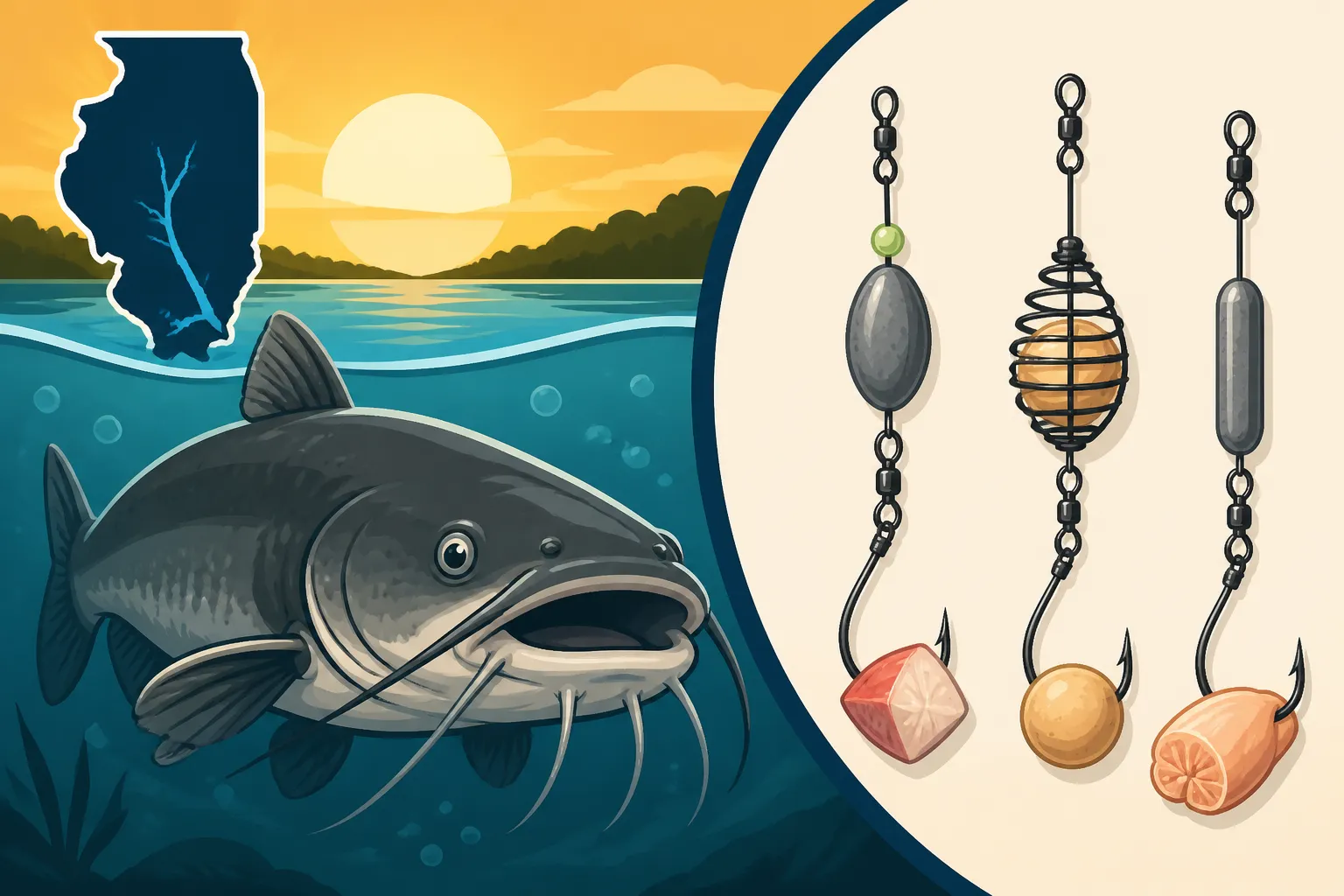
Carlyle Lake is a prime spot for all three major catfish species found in Illinois: Channel Catfish, Blue Catfish, and Flathead Catfish. Each has its own preferences when it comes to habitat and feeding habits, which in turn influences the best rig to use.
Channel Catfish are arguably the most abundant and widespread in Carlyle. They're opportunistic feeders, often found near submerged cover like brush piles, downed trees, or along channel edges. They're not too picky and will readily take a variety of baits. Blue Catfish, the true giants of the lake, prefer deeper, open water areas, especially around the old river channels, humps, and points. They're often schooling fish and will actively hunt larger prey. Flathead Catfish are ambush predators, typically found holed up in heavy cover—logs, stumps, rock piles—where they wait for live bait to pass by. Understanding these nuances is crucial for selecting the right rig and bait. If you're keen to learn more about identifying these different species, check out Channel Catfish vs Blue Catfish vs Flathead Catfish in Illinois.
Key Areas to Target on Carlyle Lake
When you're out on Carlyle, you're looking for structure. For Channel and Blue Catfish, focus on the deeper sections of the Kaskaskia River channel that winds through the lake. Pay attention to bends in the channel, submerged humps, and points that drop off sharply. The areas around the dam and spillway can also be productive, especially during periods of water release when current is generated, concentrating baitfish and, consequently, catfish. For Flatheads, scour the timbered areas, especially in the upper arms of the lake or any place where there are old standing trees or submerged logs. These fish are all about cover. Carlyle Lake Fishing Guide offers a fantastic overview of the lake's best spots.
Essential Components of a Quality Catfish Rig
No matter which specific rig you choose, the foundational components remain largely the same. Having good quality tackle is not just about catching fish; it's about minimizing frustration from snapped lines, straightened hooks, and lost fish. On a big lake with potentially large fish and snags like Carlyle, you absolutely need dependable gear.
Lines, Hooks, and Swivels: Your Foundation
Your main line should be robust. Many serious catfish anglers on Carlyle opt for braided line, typically 30-80 lb test, for its strength, lack of stretch, and abrasion resistance. A strong monofilament leader, perhaps 20-50 lb test, is often tied to the braid for its shock absorption and to make snags a bit more manageable (you'll often break off the leader, saving your main line). Look for high-quality, corrosion-resistant swivels to prevent line twist, especially when using cut bait that might spin in the current. Barrel swivels or heavy-duty snap swivels are standard.
For hooks, the choice often comes down to the bait and the species. Circle hooks are overwhelmingly popular for catfishing because they typically hook the fish in the corner of the mouth, reducing gut-hooking and making for easier release if you're not keeping your catch. Sizes range from 3/0 to 10/0, depending on your bait size and target fish. Larger hooks (7/0-10/0) are ideal for bigger cut baits or live baits meant for trophy Blues and Flatheads. For Channels, 3/0-6/0 is usually sufficient. Remember, a sharp hook is non-negotiable! You can find a wide array of hooks and lines at most sporting goods stores or through online retailers like Amazon.
Weighting Your Bait: Sinkers and Their Purpose
Carlyle Lake can have significant current, particularly in the river channel or near the dam. Your sinker's job is to get your bait down to where the fish are and keep it there. Pyramids, no-roll, and flat bank sinkers are popular choices because they dig into the bottom and resist current better than egg sinkers. The weight itself will vary greatly depending on depth and current—you might use anywhere from 1/2 ounce in calm, shallow areas to 4 ounces or more in deeper, moving water. Having a variety of weights on hand is always a good idea. Many anglers stock up on these at places like Bass Pro Shops.
Top Catfish Bait Rigs for Carlyle Lake
Now, let's get into the specifics of the rigs that will help you effectively present your bait to Carlyle's catfish. Each rig has its strengths and is suited for different conditions and target species.
The Classic Slip Sinker Rig
The slip sinker rig, sometimes called a Carolina rig for catfish, is a perennial favorite and a fantastic starting point for any Carlyle Lake catfishing trip. It's simple, effective, and allows the fish to pick up the bait without feeling the resistance of the sinker, which can be a huge advantage with wary fish.
How to Tie the Slip Sinker Rig
To tie this rig, you'll first thread your main line through a slip sinker (an egg sinker or a no-roll sinker works well here). After the sinker, you'll tie on a swivel. This swivel acts as a stop for your sinker and prevents it from sliding down to your hook. To the other end of the swivel, you'll attach your leader line (typically 12-24 inches of monofilament or fluorocarbon), and then finally, your hook. The beauty of this rig is that when a catfish takes the bait, the line slides freely through the sinker, giving the fish time to mouth and swallow the bait before it feels any weight. This translates to better hooksets.
This rig excels when fishing current, as the sinker holds bottom while your bait drifts naturally a short distance behind it. It’s also excellent for fishing on a somewhat soft bottom, as the sinker sinks slightly, but your bait remains suspended above the muck, making it more visible and scent-dispersing. Many anglers use this rig when targeting Channel Catfish along the drops or humps, and it's also effective for Blue Catfish when they're actively feeding. You'll often see folks using this rig from the bank, too, allowing for good casting distance and keeping the bait stationary.
Pros and Cons of the Slip Sinker Rig
Pros:
- Allows fish to take bait freely without feeling weight, leading to higher hook-up rates.
- Excellent for both still water and moderate currents.
- Easy to tie and suitable for a wide range of baits, from cut bait to worms and stink baits.
- Good for fishing various bottom types, keeping bait slightly elevated from the sinker.
Cons:
- Can be prone to tangles if the leader is too long or in strong currents.
- The sliding sinker can sometimes get hung up in heavy cover if not careful.
- Less effective for extremely heavy currents where a heavier, more stable bottom rig is needed.
The Santee Cooper Rig
The Santee Cooper rig is a slight modification of the slip sinker rig, but that small change makes a significant difference, especially when you're dealing with a muddy or debris-laden bottom, which you can definitely encounter in parts of Carlyle Lake. Its main purpose is to keep your bait elevated off the bottom, making it more visible and preventing it from being buried in silt or snatched by pesky crabs.
Building the Santee Cooper Rig
Start just like the slip sinker rig: main line, then a slip sinker. After the sinker, tie on a swivel. Here's where it changes: attach your leader line to the swivel, but before tying on your hook, add a small float or a piece of cork (often called a peg float or Santee Cooper float) onto the leader, about 2-6 inches above your hook. The float doesn't need to be huge; just enough buoyancy to lift your bait a few inches or a foot off the bottom. Then, tie on your hook.
This rig is a game-changer when you're fishing areas with soft, silty bottoms, or where there's a lot of submerged vegetation or debris. The float keeps your bait tantalizingly suspended above the junk, allowing its scent to disperse better and making it more accessible to cruising catfish. It's particularly effective for Channel and Blue Catfish, especially when using cut bait or large chunks of punch bait, which benefit from being off the bottom. Imagine a big chunk of shad hovering just above the silty bottom in a deep channel bend—irresistible to a hungry catfish!
Advantages and Drawbacks of the Santee Cooper Rig
Pros:
- Keeps bait elevated off the bottom, preventing it from being buried in mud or caught in snags.
- Enhances bait visibility and scent dispersion.
- Ideal for fishing over soft bottoms or areas with light vegetation.
- Effective for all major catfish species, especially with cut bait.
Cons:
- Requires an extra component (the float), adding a bit more complexity to the setup.
- Can reduce casting distance slightly compared to a purely weighted rig.
- The float might occasionally get tangled in extremely heavy cover.
The Three-Way Swivel Rig
When you need serious versatility and a presentation that can handle strong currents or present multiple baits, the three-way swivel rig is your friend. It's a robust setup that allows for different bait and weight presentations simultaneously.
Constructing the Three-Way Swivel Rig
This rig starts with a three-way swivel. Your main line ties to one eye of the swivel. To the second eye, you'll attach a short leader (6-12 inches) with your sinker at the end. To the third eye, you'll attach a longer leader (12-36 inches) with your hook and bait. The sinker leader is intentionally shorter so that if your sinker gets snagged, you might only lose the sinker and its short leader, saving your main line and the rest of your rig.
The three-way swivel rig is incredibly versatile for Carlyle. You can use it to present a live baitfish for Flatheads off one leader while having a chunk of cut bait for Blues or Channels off the other. It's particularly effective in areas with stronger currents, such as near the dam or in the main river channel, as the heavy sinker holds firm while your bait can drift tantalizingly in the current. It allows you to fish deeper holes and channels very effectively. Consider looking at Catfish Bottom Fishing Techniques for more on how to leverage this rig.
Benefits and Limitations of the Three-Way Swivel Rig
Pros:
- Excellent for strong currents, keeping bait stable and at depth.
- Versatile, allowing for presentation of different baits or bait types (e.g., live and cut bait).
- Minimizes loss of entire rig if sinker snags.
- Effective for targeting multiple species or experimenting with bait.
Cons:
- More components mean more potential points of failure or tangles.
- Can be a bit more complex to tie quickly, especially for beginners.
- The extra components might deter some fish in extremely clear, calm water, although this is less common for catfishing.
Table: Comparing Catfish Bait Rigs for Carlyle Lake
Here's a quick comparison to help you decide which rig might be best for your next Carlyle Lake adventure:
| Rig Type | Ideal Target Species | Best Conditions / Habitat | Key Feature | Pros | Cons |
|---|---|---|---|---|---|
| Slip Sinker Rig | Channel Catfish, Blue Catfish | Varied bottoms, moderate current | Bait slides freely through sinker | Sensitive, easy to tie, good hook-up rates | Can tangle, less effective in heavy snags |
| Santee Cooper Rig | Channel Catfish, Blue Catfish | Soft/muddy bottoms, light vegetation | Float keeps bait elevated | Prevents bait burial, improves visibility | More components, slightly reduced casting distance |
| Three-Way Swivel Rig | All Catfish Species | Strong currents, deep channels, varied bait | Separate leaders for weight and bait | Versatile, handles current, reduces gear loss | More complex, potential for more snags with multiple lines |
Tips for Rigging Success on Carlyle Lake
Beyond choosing the right rig, there are several other factors that will significantly influence your success when chasing catfish on Carlyle Lake. These small details can make a huge difference in whether you're just fishing or actually catching.
Bait Selection and Presentation
The best rig in the world won't work without the right bait. For Carlyle Lake, the classic choices are usually effective. Cut bait, particularly fresh shad or skipjack herring, is a consistent winner for both Channel and Blue Catfish. Don't be afraid to use decent-sized chunks, especially if you're targeting larger fish. Stink baits, punch baits, and dip baits are also very popular for Channel Catfish, especially when dabbed on a sponge hook or a bait holder spring. For Flatheads, live bait is almost always king—bluegill, shad, or large minnows are excellent choices. Ensure your live bait is healthy and active on the hook. To get a deeper dive into bait choices, look into Best Bait for Illinois Channel Catfish or Best Live Bait for Flathead Catfish.
Presentation is key. Cast your rig to your chosen spot and allow it to settle. Once it's on the bottom, often less is more. Let the bait sit for 15-30 minutes, allowing its scent to disperse. If you're not getting bites, reel in a little to move it to a slightly new spot, or retrieve and re-cast to a different area altogether. Sometimes just a slight change in location can put your bait right in front of a hungry fish.
Understanding Current and Structure
Carlyle Lake, especially along the old river channels, can have subtle but important currents. Watch for eddies, current seams, and areas where the current slows down. Catfish will often position themselves in these areas to ambush prey as it drifts by. A good fish finder can be invaluable here, helping you locate subtle depth changes, submerged humps, and brush piles that hold fish. Don't be afraid to experiment with different depths and distances from the bank or boat. Sometimes the fish are closer than you think, especially in the evening or morning hours.
Safety and Responsible Angling
When you're dealing with sharp hooks, heavy weights, and potentially large, powerful fish, safety is paramount. Always use pliers or a hook remover to extract hooks, especially if a fish is deeply hooked. Wear appropriate personal flotation devices (PFDs) if you're in a boat, and be aware of weather changes on a large body of water like Carlyle. Keep your fishing area clean, disposing of all trash and old line responsibly. Following catch limits and size regulations for each species is also crucial for maintaining a healthy fishery for everyone. These rules are detailed in resources like Illinois Fishing Season and Catch Limit Rules.
By understanding the species, choosing the right rig, and practicing safe, responsible angling, you're well on your way to a successful and enjoyable catfishing experience on Carlyle Lake. It's a fantastic lake with plenty of whiskered residents waiting to be caught!
Disclaimer
This article is for general informational purposes only and does not constitute professional advice. Laws, prices and regulations vary by location and change over time. Consult a qualified professional for guidance on your specific situation.