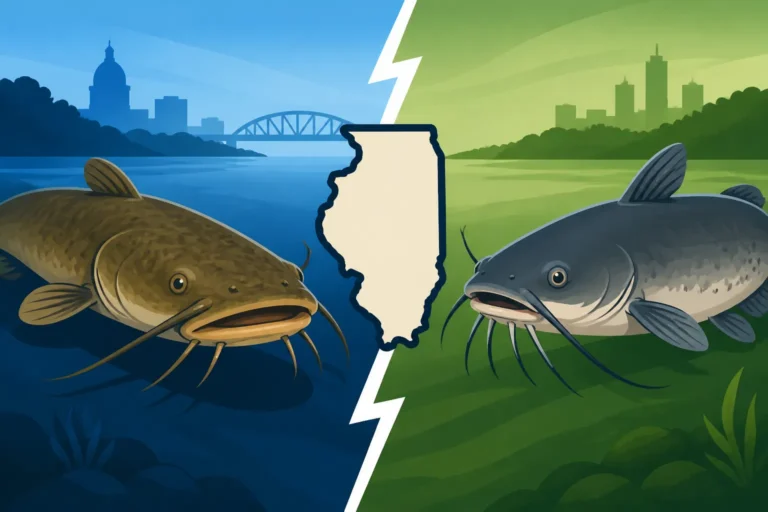
Channel Catfish vs Blue Catfish vs Flathead Catfish in Illinois
It can be incredibly frustrating to reel in a magnificent catfish, only to stare at it wondering, "Is this a channel cat, a blue, or a flathead?" This common dilemma can lead to confusion about daily limits, how best to prepare your catch, or even whether you’re adhering to specific regulations. This comprehensive guide is here to clear up that confusion, offering clear, actionable ways to identify the three primary catfish species found throughout Illinois waters, helping you fish smarter and enjoy your time on the water even more.
The Catfish Conundrum: Why Identifying Your Catch Matters in Illinois
There’s a certain thrill that comes with the bend in the rod and the powerful tug of a big catfish. But once you land that whiskered beauty, the excitement can sometimes be replaced by a moment of uncertainty. Is this the species you were targeting? Does it meet the size and creel limits for that particular type of catfish? For many anglers, especially those new to the diverse world of Illinois fishing, telling the difference between a Channel, Blue, and Flathead Catfish can feel like trying to solve a puzzle.
This isn't just about curiosity; it has real implications for responsible angling. Knowing your fish ensures you're following the rules, helping to conserve fish populations, and even enhancing your culinary experience if you plan to keep your catch. Misidentifying a fish could inadvertently put you on the wrong side of local regulations, which can vary significantly by species and water body. It's a key part of becoming a truly knowledgeable and ethical angler in our great state.
More Than Just "Catfish": Understanding the Illinois Species
When most folks say "catfish," they often picture the ubiquitous Channel Catfish, and for good reason—they are incredibly widespread and popular. However, Illinois is home to three distinct species of larger catfish, each with its own unique characteristics, habitats, and behaviors. These aren't just subtle variations; they are different animals with different biological needs and, importantly, different regulatory guidelines.
Imagine heading out to the Mississippi River, perhaps near Alton or Quincy, with hopes of landing a true behemoth. You might be dreaming of a massive Blue Catfish, known for their sheer size and powerful runs in strong currents. But if you're not sure how to tell it apart from a large Channel Cat, you might be surprised when you check your Illinois Catfish Daily Limits Explained and find the rules are different! Each species thrives in slightly different environments and responds to different baits and techniques, making accurate identification the first step toward successful and responsible fishing.
The Real-World Impact of Misidentification
Beyond simply knowing what you've caught, misidentification can lead to several tricky situations. Let's say you're fishing a popular lake like Rend Lake, known for its abundant Channel Catfish. You pull in a decent-sized cat, assume it's a Channel, and put it in your cooler. Later, you realize it was actually a Flathead Catfish, which often has a different daily limit or even a slot limit in certain waters. Suddenly, your fun day could turn into a headache if you've unintentionally exceeded a limit.
Another scenario involves bait selection. If you're specifically targeting Flathead Catfish, you'll likely be using live bait, as they are primarily predators. If you mistakenly believe you're after Blues or Channels, you might bring a tackle box full of cut bait or stink bait, missing out on your target species altogether. Understanding the distinct traits of each species means you can tailor your approach, selecting the right gear and techniques, and ensuring you have the correct information about Catfish Limits Compared to Walleye Limits in Illinois or other species-specific rules for that particular outing.
Channel Catfish: The Widespread Fighter
Ah, the Channel Catfish. This is arguably Illinois's most popular catfish species, a true staple for anglers across the state, from small farm ponds to the largest rivers. They're known for their feisty fight, their willingness to bite a wide variety of baits, and their delicious table fare. If you've ever cast a line for catfish in Illinois, chances are high you've encountered a Channel Cat. They truly are the everyman's catfish, offering great sport for beginners and seasoned pros alike.
The beauty of the Channel Cat is its adaptability. You can find them almost anywhere there's water in Illinois, from slow-moving creeks to sprawling reservoirs. They are often the first catfish species a young angler catches, sparking a lifelong passion for fishing. But even with their commonality, knowing the precise characteristics that set them apart from their larger cousins is key to confident identification.
How to Spot a Channel Cat: Key Identification Markers
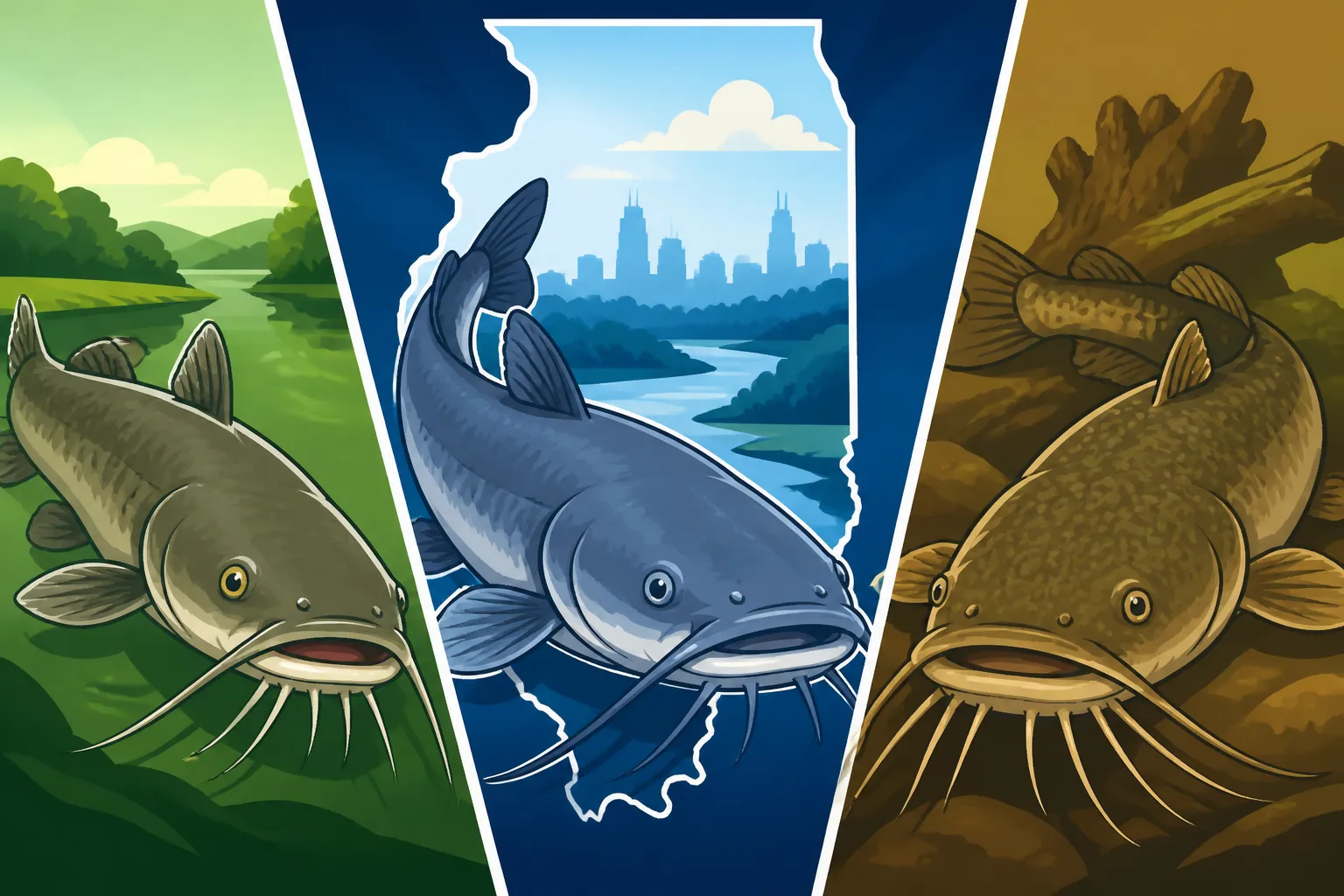
Channel Catfish have a few distinct features that make them relatively easy to identify once you know what to look for. First, and perhaps most notably, they possess a deeply forked tail, almost like a swallow's tail. This is a primary differentiator from both Blue and Flathead Catfish, which have less-forked or rounded tails, respectively. Their body coloration can vary quite a bit depending on the water clarity and type of bottom, ranging from olive-green to blue-gray on their back and sides, fading to a silvery-white belly. Younger fish often have distinct dark spots on their sides, which tend to fade as they age.
Another key identifier is their anal fin, which is typically rounded and has 24-29 rays. While counting rays might seem a bit extreme in the field, the overall rounded shape is a good visual clue. Their head is relatively small compared to their body, with a slightly protruding upper jaw. They have eight barbels around their mouth, which are crucial sensory organs for finding food in murky water. Keep these traits in mind, and you'll be well on your way to confidently identifying the spirited Channel Catfish.
Where Channel Cats Love to Hang Out in Illinois
Channel Catfish are incredibly adaptable and can be found throughout almost all of Illinois's rivers, streams, and lakes. You'll find them thriving in larger bodies of water like Lake Shelbyville, Carlyle Lake, and Rend Lake, where they patrol the edges of drop-offs, submerged timber, and along creek channels. But don't overlook smaller waters either; farm ponds and even urban park lakes often hold healthy populations of Channel Cats.
They prefer areas with some current or moving water, but they can also be found in still waters with sufficient cover. Look for them around submerged brush piles, rock formations, bridge pilings, and along natural river bends where food gets funneled. They are opportunistic feeders, so finding areas where baitfish or other food sources congregate is often the key to locating Channel Catfish. Whether you're casting from shore or from a boat, chances are you're never too far from a good Channel Cat bite in Illinois.
Fishing for Channel Cats: Tips and Common Baits
Fishing for Channel Catfish is often a straightforward and incredibly rewarding experience. They are not particularly picky eaters, which is one of their charms. When it comes to bait, prepared stink baits, chicken livers, cut shad, nightcrawlers, and even corn are all highly effective. Many anglers swear by a simple slip-sinker rig with a hook, allowing the bait to sit on the bottom where Channels typically feed.
A medium-heavy action rod with a spinning or baitcasting reel spooled with 10-20 lb monofilament or braided line is a good all-around setup. You don't need highly specialized gear to have success. Just cast your bait out, let it sink to the bottom, and wait for that telltale tap-tap-drag of a Channel Cat picking up the bait. Many essential fishing items, from hooks to line, can be found readily on platforms like Amazon, making it easy to gear up for your next outing. For more specific advice, check out Best Bait for Illinois Channel Catfish.
Blue Catfish: The River Monsters
Now, let's talk about the true heavyweights of the Illinois catfish scene: the magnificent Blue Catfish. These are the fish that inspire legends and push the limits of your tackle. While not as universally distributed as Channel Cats, Blue Catfish populations in Illinois are robust in certain large river systems, particularly the Mississippi, Illinois, and Ohio Rivers. If you're dreaming of a cat that can push past the 50-pound mark, the Blue Catfish is likely your target.
Anglers often travel great distances to target these giants, drawn by the challenge and the sheer power they exhibit once hooked. They are distinct from their Channel Cat cousins in several key ways, and recognizing these differences is crucial for any serious catfish enthusiast looking to land a trophy. Their habitat preferences and feeding behaviors also lean towards larger, more open water scenarios, making them a unique challenge.
Distinguishing the Blue Cat: Features to Look For
The Blue Catfish shares some similarities with the Channel Cat but has several key differences. Most notably, their tail is also forked, but it's generally less deeply forked than a Channel Cat's, and the lobes are often more pointed. Their body is typically a steely blue-gray to slate gray on the back, fading to a white belly, and they lack the distinct spots often seen on younger Channel Cats. The name "Blue Catfish" really gives away their predominant coloration.
Perhaps the most reliable identifier is their anal fin, which is long and straight along the bottom edge, containing 30-36 rays (more than a Channel Cat). Their head is relatively broad and flat on top, and their upper jaw protrudes slightly beyond the lower jaw, a characteristic sometimes referred to as "supra-terminal." Like Channel Cats, they have eight barbels, but their overall body shape is more streamlined and elongated, built for fighting strong currents. Understanding these subtleties is what makes a seasoned angler confident in their catch.
Blue Catfish Strongholds in Illinois
For anglers in Illinois seeking Blue Catfish, the undisputed champions are the mighty Mississippi River and its major tributaries, especially the lower Illinois River and the Ohio River. These vast river systems provide the perfect habitat for Blue Cats, with their strong currents, deep scour holes, large timber snags, and abundant food sources. Mississippi River Catfish Fishing in Southern Illinois is a prime example of where these giants thrive.
You'll often find Blue Cats congregating in deep holes, along the edges of main river channels, near wing dams, and around major bends where currents create significant structure. They are pelagic in nature, meaning they often suspend in the water column or cruise open areas, unlike Flatheads which are more structure-oriented. Knowing these preferences helps immensely when planning your strategy to target these powerful fish.
Targeting Blue Cats: Gear and Strategies for Big Fish
Targeting Blue Catfish is serious business and usually requires heavy-duty gear. You'll want a strong, medium-heavy to heavy action rod, often 7-9 feet long, paired with a stout baitcasting reel capable of holding a significant amount of heavy line. Braided line in the 30-80 lb test range is a popular choice due to its strength and sensitivity. A robust Carolina rig or a three-way rig with heavy sinkers (often 3-8 ounces or more, depending on current) is commonly used to present bait on the bottom.
When it comes to bait, fresh cut bait is king for Blue Catfish. Shad, skipjack herring, carp, and even large pieces of suckers are all excellent choices. The fresher the better, as Blue Cats rely heavily on their sense of smell. You'll often need to anchor upcurrent from a promising spot, allowing your bait to drift naturally into a deep hole or current seam. Many anglers invest in specialized catfish rods and reels, which are readily available on platforms like Amazon, designed to handle the brute force of these river monsters. To learn more about specific spots, check out Illinois Blue Catfish: Where to Find the Biggest Ones.
Flathead Catfish: The Ambush Predator
Stealthy, powerful, and utterly unique, the Flathead Catfish stands apart from its Channel and Blue cousins. Known for its distinct appearance and its preference for live bait, the Flathead is an apex predator in many Illinois waterways. If you're looking for a fish that fights with sheer, stubborn power and has an almost prehistoric look, the Flathead Catfish is your quarry. They are true ambush predators, often found tucked away in heavy cover, waiting for an unsuspecting meal to swim by.
Many anglers develop a special admiration for Flatheads because of the challenge they present. They're not as eager to bite as Channels, and they require a specific approach and a lot of patience. Their unique characteristics also make them relatively easy to identify once you know what to look for, setting them apart both visually and behaviorally from the other Illinois catfish species.
Identifying a Flathead: Unmistakable Characteristics
The Flathead Catfish truly lives up to its name with a noticeably broad, flattened head, which is perhaps its most distinctive feature. Unlike the Channel and Blue Catfish, its lower jaw protrudes beyond the upper jaw, giving it a somewhat "grumpy" or aggressive look. Their eyes are also quite small, perched on top of their flat head. This unique head shape and jaw configuration are perfect for ambushing prey from below.
Another key identifier is their tail, which is rounded or only slightly notched, never deeply forked. This is a crucial distinction from both Channel and Blue Catfish. Their body coloration is typically mottled, with shades of yellow, brown, and olive green, often with darker blotches, allowing them to camouflage perfectly in their preferred snag-filled habitats. Their skin is smooth, without scales, like all catfish, but the pattern is unique. Their anal fin is shorter and more rounded than a Channel Cat's, with typically 14-17 rays. These combined features make the Flathead unmistakable once you've seen one.
Flathead Catfish Habitats Across Illinois
Flathead Catfish prefer slow-moving to moderate currents in larger rivers and reservoirs with abundant submerged woody cover. You'll find them in the Mississippi River, the Illinois River, the Ohio River, and major reservoirs like Lake Shelbyville and Carlyle Lake. They are particularly fond of log jams, fallen trees, brush piles, rock ledges, and deep holes with plenty of underwater structure where they can hide and ambush prey.
Unlike Channel Cats, which roam more openly, or Blue Cats, which cruise deeper channels, Flatheads are homebodies. They'll often set up shop in a specific snag or hole and guard it fiercely. Finding these hidden sanctuaries is often the biggest challenge and the greatest reward when targeting Flatheads. Their preference for heavy cover means you'll often need to fish close to thick structure, which can test your knot strength and line abrasion resistance.
Mastering Flathead Fishing: Live Bait and Patience
If you're serious about catching Flathead Catfish, be prepared to use live bait. Unlike the opportunistic Channels or Blue Cats that readily take cut bait, Flatheads are predominantly piscivores, meaning they prefer live fish. Sunfish, shad, suckers, and even small carp are excellent choices. The key is to present your live bait in a way that looks natural and enticing, often near heavy cover. A simple slip-sinker rig or a three-way swivel rig with a sturdy circle hook is effective.
Heavy-duty gear is a must, similar to what you'd use for large Blue Cats, but with an even greater emphasis on abrasion resistance due to fishing around snags. Expect a slow, determined fight when you hook a Flathead; they'll try to get back into the cover immediately. Patience is truly a virtue when Flathead fishing. You might sit for hours without a bite, but when that rod finally loads up, the reward is well worth the wait. For more detailed tips, consider reading Flathead Catfish Fishing Tips for Illinois Anglers. Specialized line and heavy-duty hooks designed for fighting big fish in tough conditions can be found on online marketplaces like Amazon.
Side-by-Side: A Comparative Look at Illinois Catfish
Now that we've delved into each species individually, let's put them side-by-side to highlight their key differences. Understanding these distinctions is not just for identification; it also helps you understand their behavior, preferred habitats, and even what techniques are most effective for each. It's about building a complete picture of these fascinating fish.
Beyond the physical traits, thinking about their "lifestyle" can really cement your understanding. One is a roaming scavenger, another a powerful river cruiser, and the third a patient ambush predator. Each plays a vital role in our aquatic ecosystems and offers a different challenge and reward to the angler. This comparison will help you quickly assess your catch and make informed decisions on the water.
Key Differences at a Glance
Let's break down the most critical identification features in a simple comparison. This table should serve as a quick reference when you're out on the water, helping you confirm your catch. Remember, practice makes perfect, and observing these features in real life is the best way to solidify your knowledge.
| Feature | Channel Catfish | Blue Catfish | Flathead Catfish |
|---|---|---|---|
| Tail Shape | Deeply forked | Moderately forked (less than Channel) | Rounded or only slightly notched |
| Head Shape | Relatively small, slightly pointed | Broad, flat on top, streamlined | Very broad and flat, shovel-like |
| Jaw Position | Upper jaw slightly protrudes or even | Upper jaw slightly protrudes | Lower jaw clearly protrudes beyond upper jaw |
| Anal Fin | Rounded, 24-29 rays | Long, straight bottom edge, 30-36 rays | Shorter, rounded, 14-17 rays |
| Coloration | Olive-green to blue-gray, often spotted (young) | Steely blue-gray to slate gray, no spots | Mottled yellow, brown, olive green, blotchy |
| Preferred Bait | Prepared baits, cut bait, worms | Fresh cut bait | Live fish |
| Habitat | Varied: ponds, lakes, rivers | Large rivers, deep channels, strong currents | Rivers, reservoirs, heavy submerged cover/snags |
This table provides a quick visual aid, but remember to consider all features together rather than relying on just one. The combination of tail, head, and anal fin characteristics is usually definitive.
Behavior and Diet: What Makes Them Tick
The physical differences between these catfish species are intrinsically linked to their behavior and diet. Channel Catfish are true omnivores and scavengers, with a diet that includes insects, crustaceans, small fish, and detritus. This is why they are so eager to hit a wide range of baits, from stink baits to nightcrawlers. They're active feeders, constantly patrolling for their next meal.
Blue Catfish, while they will scavenge, become increasingly piscivorous (fish-eating) as they grow larger. Their streamlined bodies are built for cruising strong currents and actively hunting baitfish. This is why fresh cut bait, which mimics injured or dead fish, is so effective. They are powerful, open-water predators. Flathead Catfish are the most specialized predators of the three. They almost exclusively feed on live fish, using their wide mouths to engulf prey in ambush attacks from their concealed locations. Their preference for live bait is a direct reflection of their predatory nature. Understanding these dietary preferences is a crucial part of developing successful fishing strategies.
Fishing Regulations: Why Knowing the Species is Crucial
Perhaps the most critical reason for accurate catfish identification, beyond personal satisfaction, lies in Illinois's fishing regulations. It's not uncommon for different species to have different size limits, daily creel limits, or even special regulations on specific bodies of water. For example, while Channel Catfish typically have generous statewide limits, Blue Catfish or Flathead Catfish might have more restrictive rules in certain river stretches or lakes, particularly if they are part of a trophy management program.
You wouldn't want to accidentally keep an undersized Flathead because you thought it was a legal-sized Channel, or over your limit for Blue Catfish because you weren't aware of a special regulation. Always consult the most current Illinois fishing regulations guide before heading out. This guide will provide detailed information on Illinois Fishing Season and Catch Limit Rules, Illinois Catfish Daily Limits Explained, and any site-specific rules that might apply to your chosen fishing spot. Being knowledgeable helps protect our fisheries for future generations and ensures you avoid any potential penalties.
Beyond Identification: Ethical Angling and Conservation
Once you've honed your identification skills, the next step is to embrace ethical angling practices. Catching fish is only part of the equation; how we treat the fish and the environment is just as important. Responsible fishing ensures that the thrill of reeling in a big catfish can be enjoyed by many for years to come. This means not just following the rules, but also practicing good stewardship.
Our catfish populations are a valuable resource, providing recreation and food for countless Illinoisans. By understanding the specific needs and vulnerabilities of each species, we can make choices that support their health and abundance. This goes beyond just knowing what fish you have on the line; it extends to how you handle it, whether you choose to release it, and how you educate yourself about conservation efforts.
Handling Your Catch Responsibly
Whether you plan to keep your catfish for the dinner table or release it to fight another day, responsible handling is paramount. For catch-and-release, minimizing stress and injury to the fish is crucial for its survival. This often means using circle hooks, which tend to hook fish in the corner of the mouth, making removal easier and less damaging than traditional J-hooks.
Always wet your hands before handling a fish to protect its protective slime coat, and support the fish's body horizontally, especially larger fish, to avoid damaging internal organs or its spine. If you're using a net, opt for a rubberized, knotless net to minimize fin and scale damage. Have your camera ready and your measuring device handy to quickly record your catch, then release the fish gently back into the water, ensuring it swims away strongly. Even if you're keeping the fish, ethical handling means dispatching it quickly and humanely.
Supporting Illinois Catfish Populations
Anglers play a vital role in the conservation of Illinois's fish populations. By strictly adhering to all fishing regulations, including size and creel limits for Illinois Blue Catfish Daily Limit: What You Need to Know, Illinois Flathead Catfish Daily Limit Rules, and Illinois Channel Catfish Daily Limit Explained, you directly contribute to sustainable fishing. These limits are put in place by biologists who study fish populations to ensure they remain healthy and vibrant.
Beyond following the rules, consider supporting organizations dedicated to aquatic conservation in Illinois. Participating in habitat restoration projects, advocating for clean water initiatives, or simply educating other anglers about responsible practices all help secure the future of our incredible catfish fisheries. The health of our waters directly impacts the fish, and ultimately, our ability to enjoy the sport we love.
Disclaimer
This article is for general informational purposes only and does not constitute professional advice. Laws, prices and regulations vary by location and change over time. Consult a qualified professional for guidance on your specific situation.