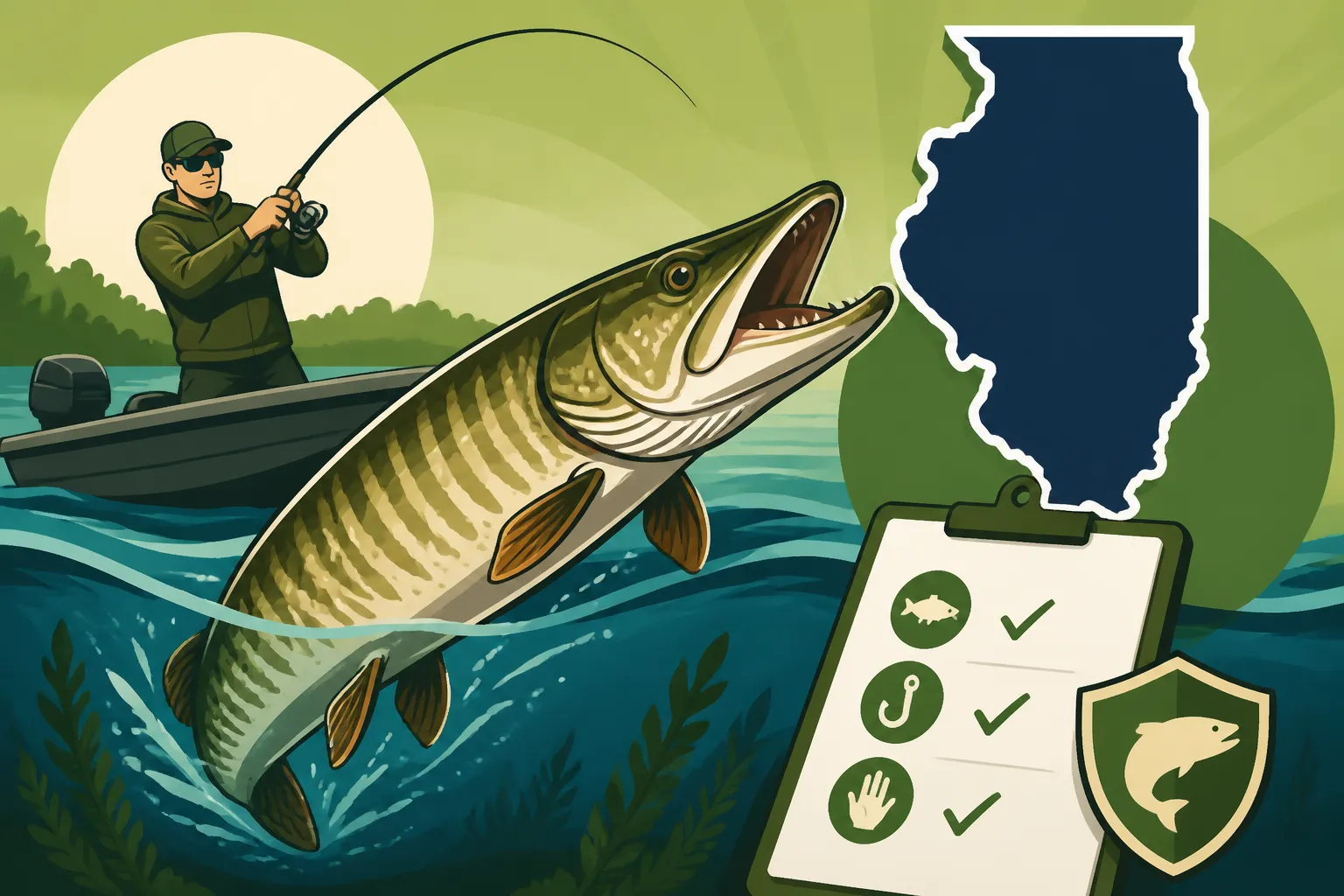
Illinois Muskie Fishing: Rules and Regulations for This Game Fish
Catching a muskie in Illinois is often considered the pinnacle of freshwater angling, a challenge many dedicated fishers dream of conquering. But before you cast your line for this magnificent "fish of 10,000 casts," it's crucial to understand the very specific rules and regulations that govern muskie fishing in the Prairie State. This guide will walk you through everything you need to know, from identifying these powerful predators to navigating the complex web of statewide and site-specific limits, ensuring your pursuit is both thrilling and legal.
The Allure of Muskie Fishing in Illinois: Why They're So Prized
Muskellunge, or muskie as they're more commonly known, represent the ultimate freshwater challenge for many anglers. They're big, they're aggressive, and they're incredibly elusive, which is precisely what makes them so captivating. Hooking into a muskie is an experience unlike any other, often requiring immense patience and specialized techniques.
The "Fish of 10,000 Casts" Reputation
You've probably heard the adage "fish of 10,000 casts," and while it's a slight exaggeration, it speaks volumes about the dedication required to land a muskie. These fish are not only rare but also notoriously finicky. They can follow a lure right to the boat, stare you down, and then turn away without a hint of a strike, leaving you wondering what you did wrong. It's a humbling experience, but one that fuels the passion for many muskie enthusiasts who are always chasing that next adrenaline rush.
The sheer effort involved in muskie fishing—the endless casting of large, heavy lures, often for hours without a single bite—builds a unique kind of respect for the species. Every single strike, every follow, and especially every fish landed, feels like a monumental achievement. It’s a sport where persistence truly pays off, and the reward is often a fish that measures in feet, not inches.
Identifying Illinois Muskie: Distinguishing Them from Pike
Before you can comply with regulations, you need to be sure what you've caught! Muskie can often be confused with their close relatives, northern pike, especially by less experienced anglers. Both are long, predatory fish with sharp teeth, but there are key differences that set them apart. Misidentification can lead to keeping an illegal fish or, worse, accidentally harming a protected species.
The most reliable way to tell them apart is by examining the scale patterns on their cheeks and gill covers. A muskie will have scales only on the upper half of its cheek and gill cover, leaving the lower half bare. Northern pike, on the other hand, typically have scales covering their entire cheek and at least the upper half of their gill cover. Their coloration also differs; muskie usually have dark markings (spots, bars, or blotches) on a lighter background, while pike tend to have lighter, bean-shaped spots on a dark background.
Muskie vs Northern Pike: How to Tell the Difference
While we touched on it briefly, let's dive a little deeper into distinguishing between these two magnificent fish, as it's critical for adherence to fishing rules. Besides the cheek and gill cover scales, another telltale sign is the number of pores on the underside of their jaw. Muskies typically have 6-9 pores on each side, whereas northern pike usually have 5 or fewer. It's a subtle difference, but one that trained eyes rely on.
Furthermore, muskie tend to have a more slender body shape and a more pointed snout compared to the northern pike's somewhat broader, duck-bill-like snout. The tail fin of a muskie is also often more deeply forked with pointed tips, while a pike's tail can be less forked and more rounded. Knowing these specific traits is not just about identifying your catch; it's about understanding and respecting the unique biology of each species, especially given their different regulatory statuses. For a deeper dive, check out Muskie vs Northern Pike: How to Tell the Difference.
Navigating Illinois Muskie Fishing Regulations: What You Need to Know
Illinois takes its muskie management seriously, and for good reason. These fish are slow-growing and highly sought after, making them vulnerable to overfishing if not properly managed. This means that regulations, including size limits, daily limits, and possession limits, are strictly enforced to protect populations and ensure future angling opportunities.
Statewide Size and Daily Catch Limits
Across most of Illinois, the statewide regulation for muskie is a hefty minimum size limit. This isn't just a suggestion; it's a rule designed to allow muskie to reach reproductive maturity and contribute to the population before being harvested. Generally, you're looking at a 36-inch minimum length, though this can sometimes be even larger in specific waters. The daily catch limit is typically one fish per angler, meaning you can only keep one legal-sized muskie per day, no matter how many you catch and release.
Imagine spending an entire day on the water, battling the elements, and finally hooking into a beautiful muskie. The excitement is palpable as you bring it to the boat. Now, the crucial moment: measuring. If it falls even an inch short of that 36-inch mark, it absolutely must go back in the water unharmed. This is where a good, reliable measuring board is your best friend – not a flimsy tape measure that might give you a false reading.
Site-Specific Rules: The Importance of Checking Local Waters
While there are statewide regulations, it is absolutely, unequivocally vital to remember that muskie rules can and do vary significantly from one lake or river to another. What's legal on one body of water might be illegal just a few miles down the road. This is particularly true for muskie, where specific lakes might have special management programs or unique populations that require tailored regulations. For instance, some lakes might have a 42-inch minimum length, or even be catch-and-release only for muskie.
Before you ever head out to a new spot, or even a familiar one, you need to consult the current Illinois Fishing Information Guide for that specific body of water. This guide, published annually by the Illinois Department of Natural Resources (IDNR), is your Bible for fishing regulations. It’s available online and at many bait and tackle shops. Failing to check these site-specific rules is not just a rookie mistake; it can lead to hefty fines and confiscation of your catch and gear. It really pays to do your homework! You can often find a current copy of the guide at places like Amazon or local sporting goods stores.
Understanding Possession Limits and Transport Restrictions
Beyond the daily catch limit, Illinois also has rules regarding how many fish you can possess. For muskie, the possession limit often mirrors the daily limit, meaning you can typically only have one legal-sized muskie in your possession at any given time, regardless of how many days you've been fishing. This prevents anglers from accumulating multiple fish over several days or from different fishing trips.
When it comes to transporting your catch, there are specific guidelines as well. If you've legally harvested a muskie, it needs to be transported in a way that allows a conservation police officer to easily identify and measure it. This usually means keeping it intact, without filleting it, until you've reached your final destination. These rules are in place to prevent illegal harvesting and to aid in enforcement, ensuring everyone plays by the same set of rules. For a broader view on all the limits, check out Illinois Fishing Season and Catch Limit Rules.
Essential Licenses and Stamps for Illinois Muskie Anglers
Just like with any other game fish in Illinois, you can't just show up with a rod and reel and start fishing for muskie. There are foundational licensing requirements that all anglers must meet. These fees directly contribute to the conservation and management efforts that keep our muskie populations healthy and our fishing opportunities thriving.
Your Illinois Fishing License: The Foundation
The very first and most important step for any angler, including those targeting muskie, is to possess a valid Illinois fishing license. This isn't optional; it's mandatory for anyone aged 16 and older, whether you're a resident or a non-resident. The type of license you need depends on your residency status and how long you plan to fish. You might opt for an annual license if you're a frequent angler, or a shorter-term license if you're just visiting or trying it out for a weekend.
This license acts as your basic permit to fish in Illinois waters. Without it, any fish you catch, including a prized muskie, is considered illegally taken, and you could face significant penalties. You can easily purchase your license online through the IDNR website, at licensed vendors like bait shops and sporting goods stores, or even through the Amazon app if they partner with official license providers in your area (always double-check the legitimacy of any third-party provider). For a detailed breakdown of costs and types, refer to Illinois Fishing License Costs and Types.
Are Special Muskie Stamps Required?
This is a common question, especially since Illinois requires specific stamps for other popular species like trout and salmon. However, for muskie, the good news is that no additional special stamp is currently required beyond your general Illinois fishing license. You won't need a separate "Muskie Stamp" like you would an Illinois Trout and Salmon Stamp Requirements if you were heading out to Lake Michigan for salmon or a stocked trout pond.
This doesn't mean muskie aren't a priority; quite the opposite. The management and stocking programs for muskie are funded through the general fishing license revenue and other conservation efforts. So, while you don't need an extra sticker for your muskie pursuits, your regular fishing license is still directly supporting the health of these magnificent fish and their habitats.
Penalties for Non-Compliance
Let's be blunt: fishing without a proper license or failing to adhere to regulations can lead to some serious consequences. Conservation Police Officers (CPOs) patrol Illinois waters diligently, and they are well-versed in fishing laws. Getting caught without a license, exceeding catch limits, or keeping undersized fish can result in significant fines, confiscation of your catch, and even your fishing equipment. Imagine the heartbreak of having that trophy muskie taken away, along with a hefty fine, simply because you didn't check the rules.
Ignorance of the law is not an excuse. It's your responsibility as an angler to know and follow all applicable regulations. These penalties aren't just about punishment; they're about deterring illegal activity that could jeopardize the fragile balance of our fisheries. Nobody wants to be the subject of a game warden's citation, so make sure your license is current and you've double-checked those site-specific muskie rules. You can learn more about the consequences in Penalties for Fishing Without a License in Illinois.
Muskie Conservation and Responsible Angling Practices
Muskie are more than just a challenge; they're a vital part of Illinois' aquatic ecosystem. Because of their relatively low population densities and slow growth rates, responsible angling practices are paramount. Most dedicated muskie anglers are passionate advocates for conservation, understanding that the future of muskie fishing depends on careful handling and a strong commitment to catch-and-release.
The Ethos of Catch-and-Release for Muskie
While regulations might allow for the harvest of one legal-sized muskie, the vast majority of muskie anglers practice catch-and-release religiously. This isn't just a trend; it's a deeply ingrained ethic that recognizes the value of these fish as breeders and as future angling opportunities. Every large muskie safely released back into the water has the potential to spawn many more times and provide another thrilling fight for a different angler down the line.
Releasing a muskie ensures that the genetics of these powerful fish continue to enrich the population, and it allows others to experience the incredible thrill of encountering such a majestic creature. It's a way of giving back to the fishery and ensuring that the "fish of 10,000 casts" remains a viable pursuit for generations to come. Many anglers will only keep a muskie if it's a potential state record, and even then, they'll weigh the impact carefully. If you're chasing a true monster, you might want to review Illinois State Record Muskie: What It Takes to Beat It.
Best Practices for Handling and Releasing Muskie Safely
Handling a muskie improperly can cause serious injury to both the fish and the angler. These fish have razor-sharp teeth and are incredibly strong, even out of the water. The goal is always to minimize stress and ensure the fish has the best chance of survival after release. This means having the right tools ready before you even hook a fish.
First, reduce fight time as much as possible to prevent exhaustion. Once alongside the boat, use a large, rubberized landing net to secure the fish. Avoid lifting a large muskie by its jaw or vertically, as this can damage its spine and internal organs. Instead, support its body horizontally with one hand under its belly and the other gripping its gill plate (not the gills themselves). Quickly remove hooks with long-nose pliers or a specialized hook remover, often available on Amazon or at tackle shops. If you need to take a photo, do it quickly, holding the fish horizontally, and get it back into the water within seconds.
Gearing Up for Muskie: Tools for a Safe Release
Having the proper gear isn't just about catching muskie; it's crucially important for their safe release. Without the right tools, you risk harming the fish or yourself. This isn't a sport where you can get by with flimsy equipment.
Your essential muskie release toolkit should include: a large, knotless, rubberized landing net to protect the fish's slime coat; long, straight-nose pliers and heavy-duty bolt cutters for quick hook removal (especially if hooks are deeply set or multiple hooks are involved); jaw spreaders to safely access hooks in a toothy mouth; and a specialized, cradling-style measuring board to get an accurate length without putting undue stress on the fish. You can find many of these items, like a heavy-duty pair of long-nose pliers, on Amazon to get prepared for your next outing. Investing in quality gear is an investment in the health of the muskie population. For a general overview of specialized tackle, check out Illinois Muskie Gear and Tackle or Best Rod and Reel Combo for Illinois Muskie.
Where to Pursue the Elusive Muskie in Illinois
Illinois might not be the first state that comes to mind when you think of muskie fishing, but it actually boasts several fantastic waters that offer legitimate chances at trophy-sized fish. Knowing where to focus your efforts can drastically reduce those "10,000 casts."
Top Illinois Lakes Known for Thriving Muskie Populations
While muskie are found in various waters across Illinois, a few lakes stand out as consistent producers and are actively managed for muskie fisheries. These are the places where anglers have the best shot at success and where many of the state's largest muskie are caught. Often, these lakes are part of active stocking programs by the IDNR to supplement natural reproduction.
Perhaps the most famous muskie lake in Illinois is Lake Shelbyville, particularly its expansive Kaskaskia River arm. Other notable lakes include Kinkaid Lake in southern Illinois, known for its clear water and scenic beauty, and Spring Lake near Peoria. These lakes often have special muskie regulations, so always refer to the specific IDNR guide for the body of water you intend to fish. These specific lakes are prime destinations for a reason, and if you want to know more about them, check out Illinois Muskie Fishing: Best Lakes to Try.
River Systems and Their Muskie Potential
While lakes get most of the attention for muskie, several river systems in Illinois also hold populations of these magnificent fish, offering a different kind of angling experience. River muskie often behave differently than their lake counterparts, using current breaks and submerged structures to ambush prey.
The Illinois River, particularly its larger tributaries, can hold muskie, though they are often less concentrated than in dedicated muskie lakes. The Fox River and the Kankakee River in northern Illinois are also known to produce muskie catches for persistent anglers. Fishing river systems requires a keen understanding of current, eddies, and cover, making it a unique challenge. These river fish, while perhaps not as numerous, are often incredibly strong and provide unforgettable battles.
Table: Key Illinois Muskie Regulations Overview
This table provides a general overview of common muskie regulations in Illinois. Always remember that site-specific regulations can override statewide rules, so consult the current Illinois Fishing Information Guide for your specific body of water.
| Regulation Type | Statewide Rule (General) | Important Considerations |
|---|---|---|
| Fishing License | Required for ages 16 and older | Resident vs. Non-Resident, Annual vs. Short-Term |
| Special Stamps | Not required for Muskie | Unlike Trout or Salmon, no separate stamp needed |
| Minimum Size Limit | 36 inches | Many lakes have higher limits (e.g., 42 inches) |
| Daily Catch Limit | 1 fish | Strictly enforced per angler per calendar day |
| Possession Limit | 1 fish | Reflects daily limit, not cumulative over days |
| Transport Rule | Keep intact until destination | Allows for identification and measurement |
| Catch-and-Release | Highly encouraged and practiced | Use proper handling tools and techniques |
Disclaimer
This article is for general informational purposes only and does not constitute professional advice. Laws, prices and regulations vary by location and change over time. Consult a qualified professional for guidance on your specific situation.