Spotted Bass Fishing: A Complete Guide for Illinois Anglers
It can be incredibly frustrating when you're out on the water, you catch what you think is a bass, but something just feels… off. Is it a largemouth? A smallmouth? Or perhaps something else entirely, like the often-overlooked spotted bass? Illinois waters hold a diverse array of fish, and understanding the nuances of each species is key to successful and responsible angling. This comprehensive guide will illuminate the world of spotted bass in Illinois, helping you identify them, find their prime habitats, and master the techniques to catch them consistently.
Understanding the Spotted Bass and Its Presence in Illinois
The spotted bass, often affectionately called a "spot" by anglers, is a fascinating member of the black bass family. While it shares many similarities with its more famous cousins, the largemouth and smallmouth bass, the spotted bass carves out its own niche in Illinois’s aquatic ecosystems. These fish are known for their feisty fight and a preference for habitat that's a bit of a blend between what a largemouth and smallmouth might favor, often causing confusion among those new to bass fishing.
Origins and Spread of Spotted Bass in Illinois
Spotted bass aren't native to every single water body in Illinois, but they have established themselves quite well in certain regions, especially in the southern and western parts of the state. Originally, their range was more concentrated in the southeastern United States, but through a combination of natural range expansion and, in some cases, stocking or accidental introduction, they've found their way into various Illinois river systems and reservoirs. They thrive in environments where conditions might be slightly too clear or current-heavy for largemouth bass, but not quite as cold or rocky as ideal smallmouth territory. Their adaptability is a big reason for their successful spread, and anglers in these areas are increasingly encountering them.
What makes them so interesting is how they often coexist with other bass species. Unlike some invasive species that completely displace native fish, spotted bass often find their own unique feeding lanes and depths, allowing them to carve out a living without necessarily dominating the entire ecosystem. This means you might find them sharing water with both largemouth and smallmouth bass, adding an exciting challenge to species identification on the water.
Key Characteristics of the Spotted Bass Species
Physically, the spotted bass has a lot in common with its black bass relatives, which is why they're so easily mistaken. However, there are a few defining features that, once you know them, make identification much simpler. They typically have a more streamlined body than a largemouth, but not quite as torpedo-shaped as a smallmouth. Their coloration generally ranges from green to bronze on the back, fading to lighter sides with a distinct, often broken, lateral band of dark blotches or spots.
Perhaps the most telling characteristic is the texture on their tongue. If you run your finger over a spotted bass's tongue, you'll feel a rough patch of teeth, which is usually absent on a largemouth and present on a smallmouth. Their jawline is another key differentiator: when its mouth is closed, the upper jaw of a spotted bass will typically extend to or slightly past the rear edge of the eye, but generally not as far back as a largemouth's. On average, spotted bass don't grow quite as large as trophy largemouth, but they can still reach impressive sizes, often exceeding three or four pounds in productive waters. They're also notorious for their aggressive strikes and powerful fights, pound-for-pound often feeling stronger than a largemouth of similar size.
Where to Find Spotted Bass in Illinois Waters
While spotted bass aren't found statewide like largemouth, they have certainly made a name for themselves in specific regions and water bodies within Illinois. Knowing their preferred hangouts is half the battle when you're trying to target these exciting fish. They generally prefer clear to moderately turbid water with some current and structure, which points to certain types of environments over others.
River Systems and Tributaries
Many of the best spotted bass populations in Illinois are found in its river systems and their larger tributaries, especially in the southern and western portions of the state. These fish really thrive in moving water, often positioning themselves behind current breaks, around submerged timber, or near rocky ledges where they can ambush prey. Rivers like the Ohio River and its Illinois tributaries, as well as parts of the Kaskaskia River system, are known to hold good numbers of spotted bass. The smaller, clearer tributaries that feed into the larger rivers can also be hotspots, especially during certain times of the year when fish move upstream to spawn or feed.
When fishing these river environments, pay close attention to areas where the current slows down, such as eddies, slack water behind islands, or deep bends. Rock riprap along bridge abutments and deeper scour holes can also be prime locations. These spots offer cover, reduced current, and often concentrate baitfish, creating ideal ambush points for hungry spotted bass. Don't be afraid to explore areas that might seem a little too "riverine" for largemouth, as that's often exactly where you'll find spots.
Reservoir and Lake Habitats
Beyond rivers, certain reservoirs and larger lakes in Illinois also host thriving populations of spotted bass. These are typically impoundments that feature clearer water, rocky bottoms, and significant depths, providing the ideal combination of habitat elements that spotted bass prefer. Lakes like Lake of Egypt in southern Illinois are well-known for their spotted bass fisheries, offering anglers a chance to target these fish in a more traditional lake setting. Other smaller, clear-water reservoirs with plenty of rocky structure and good depth might also hold these fish, even if they aren't widely publicized for them.
In lake environments, spotted bass often relate to offshore structures like humps, points, and ledges, especially those with rock or gravel. They can be found deeper than largemouth bass, particularly during the warmer months, as they seek out cooler, more oxygenated water. Submerged timber, old roadbeds, and creek channels can also be productive. When scouting new waters, look for maps that indicate steep drop-offs and hard bottom contours – these are often tell-tale signs of potential spotted bass territory. Many anglers targeting Best Bass Fishing Lakes in Illinois might accidentally stumble upon spotted bass due to their similar habitat preferences in certain areas.
How to Identify a Spotted Bass from Other Black Bass
One of the biggest challenges, and sometimes a source of confusion, for Illinois anglers is telling the different black bass species apart. Largemouth, smallmouth, and spotted bass can often be caught in the same waters, and at a quick glance, they might look quite similar. However, there are several key anatomical differences that, once you learn them, will make positive identification a breeze. Knowing these distinctions isn't just for bragging rights; it's crucial for adhering to specific fishing regulations that might vary by species and location.
Distinguishing from Largemouth Bass
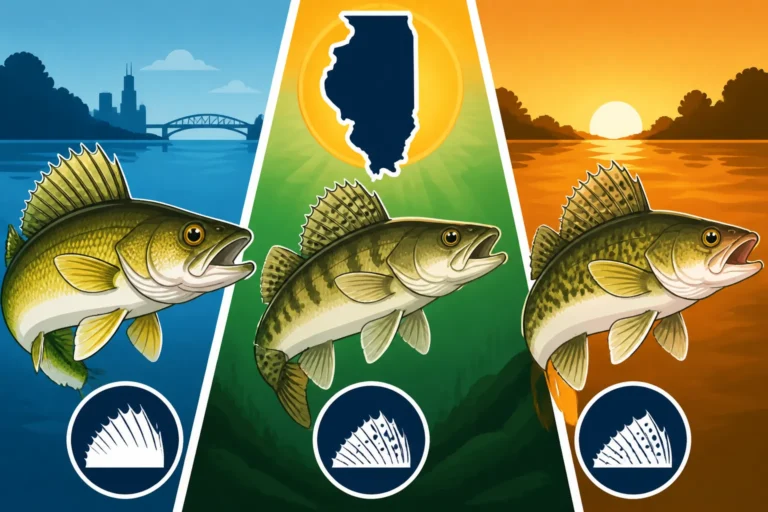
The most common mix-up in Illinois is between the spotted bass and the largemouth bass. Here's how to tell them apart:
- Jawline: This is often the easiest and most reliable indicator. For a largemouth bass, when its mouth is closed, the corner of its upper jaw extends well beyond the back edge of its eye. For a spotted bass, the corner of its upper jaw typically aligns with or only slightly extends past the back edge of the eye. This is usually the first thing I check!
- Lateral Line: Both have a dark lateral line, but on a largemouth, it's usually a solid, prominent dark stripe. On a spotted bass, this lateral line often appears more broken, segmented, or composed of distinct, diamond-shaped spots that run together, giving it a somewhat "spotted" appearance (hence the name!).
- Tongue Patch: If you're comfortable handling the fish, gently open its mouth and feel its tongue. A spotted bass will have a small, rough patch of teeth (a "tooth patch") in the center of its tongue. A largemouth bass almost never has this. This is an incredibly reliable indicator if you can safely perform the check.
- Dorsal Fin: Largemouth bass have a very deep notch in their dorsal fin, almost appearing as two separate fins. Spotted bass have a less pronounced notch, making their dorsal fin appear more continuous.
Many anglers might be surprised to learn that what they thought was a small largemouth was actually a spotted bass, especially in certain river systems. Paying attention to these subtle but distinct features makes all the difference.
Distinguishing from Smallmouth Bass
While less common to confuse, spotted bass can also sometimes be mistaken for smallmouth bass, especially if you're not used to seeing all three species. Here are the key differences:
- Coloration: Smallmouth bass typically have vertical bars or tiger stripes along their sides, ranging from bronze to brown, and usually lack a distinct horizontal lateral band. Spotted bass, conversely, will have that broken lateral band of spots and often a greener hue.
- Jawline: Smallmouth bass have a shorter jaw than both largemouth and spotted bass. Their upper jaw will almost never extend beyond the middle of their eye when their mouth is closed.
- Eye Color: While not foolproof, smallmouth often have reddish eyes, whereas spotted and largemouth bass typically have more golden or black eyes.
- Body Shape: Smallmouth bass are generally more torpedo-shaped and muscular, adapted for strong currents. Spotted bass are a bit chunkier than a smallmouth, but more streamlined than a largemouth.
- Tongue Patch: Like spotted bass, smallmouth bass do have a tooth patch on their tongue. So, while this helps distinguish from a largemouth, it won't help you tell a spot from a smallie. This is where the jawline and coloration become critical.
Subtle Cues and Local Variations
It's important to remember that fish coloration can vary significantly depending on water clarity, diet, and habitat. A spotted bass caught from clear, rocky water might have more vivid markings than one from slightly murky, riverine conditions. Don't rely solely on color. Always try to check multiple identification points, especially the jawline and the tooth patch on the tongue if possible.
To make it even clearer, here's a quick comparison table:
| Feature | Largemouth Bass | Smallmouth Bass | Spotted Bass |
|---|---|---|---|
| Upper Jaw | Extends well past eye | Ends before or at middle of eye | Ends at or slightly past back of eye |
| Lateral Line | Solid, dark, horizontal band | Vertical bars or "tiger stripes" | Broken, diamond-shaped spots; somewhat continuous |
| Tongue Patch | Absent (smooth) | Present (rough) | Present (rough) |
| Dorsal Fin Notch | Very deep notch, almost two fins | Shallow notch, looks continuous | Moderate notch, more continuous than largemouth |
| Body Shape | Robust, chunky | Streamlined, torpedo-shaped | In-between, more streamlined than largemouth |
Understanding these distinctions is essential for following Illinois Statewide Bass Fishing Limits and other regulations, as limits can sometimes differ for each species.
Effective Techniques and Baits for Spotted Bass
Once you've honed your identification skills, the next step is learning how to consistently catch these feisty fish. Spotted bass are known for being aggressive feeders, but they often respond to different presentations and baits than their largemouth cousins. They frequently inhabit deeper water and areas with current, so tailoring your approach to these conditions is key.
Preferred Lures and Presentations
Spotted bass often prefer smaller baits and faster presentations compared to largemouth. They are highly predatory and react well to lures that mimic crawfish, shad, or other baitfish in their environment.
- Jigs and Worms: Finesse jigs, especially football jigs in darker colors (green pumpkin, black and blue), are incredibly effective when fished along rocky bottoms or ledges. Pair them with small craw or creature baits. For soft plastics, dropshot rigs with small worms (like a Roboworm or a Z-Man StreakZ) or shaky head jigs with trick worms can be deadly. These presentations allow you to target fish holding tight to structure in deeper water. Many anglers swear by these for deeper, clearer impoundments.
- Crankbaits: Smaller, tight-wobbling crankbaits that dive to the depths where spotted bass are holding can be very productive. Colors that mimic shad or crawfish are usually a safe bet. Lipless crankbaits are also excellent, particularly when fished through submerged grass or over rocky flats. Look for models designed for deeper dives, especially when fishing offshore structure.
- Swimbaits: Small paddle-tail swimbaits, either rigged on a jig head or fished as a trailer on a bladed jig, can be fantastic for spotted bass. They offer a realistic profile and subtle action that can tempt even wary fish. Experiment with different sizes, but generally, anything from 2.5 to 4 inches will work well.
- Topwater Lures: Don't count out topwater! While often associated with largemouth, spotted bass will absolutely smash a popper, walking bait, or prop bait, especially during low-light conditions or when they're actively feeding on schooling baitfish near the surface. The thrill of a topwater strike from a spotted bass is truly something to experience.
When purchasing these lures, checking out resources like Amazon can give you a wide variety of options and often competitive pricing, allowing you to experiment with different brands and styles without breaking the bank.
Live Bait Options
While artificial lures are highly effective, sometimes nothing beats live bait for tempting a spotted bass, especially if the bite is tough or you're fishing with beginners.
- Minnows: Live minnows are a classic choice for all bass species, and spotted bass are no exception. They're particularly effective when fished on a simple hook under a bobber or slowly drifted near structure. Their natural movement is often irresistible.
- Crawfish: Spotted bass absolutely love crawfish. Rigging a live crawfish on a small jig head or a Carolina rig and dragging it along the bottom is a fantastic way to imitate their natural forage. This is especially effective in rocky river sections where crawfish are abundant.
- Worms: Nightcrawlers or smaller garden worms can also entice spotted bass, especially smaller ones. They're a versatile bait that can be fished in many ways, from simple bobber rigs to weighted presentations on the bottom.
When using live bait, remember to present it as naturally as possible and use a hook size appropriate for both the bait and the expected size of the fish.
Fishing Structure and Current Breaks
Spotted bass are masters of using structure and current to their advantage. Unlike largemouth that might hide deep in thick cover, spotted bass often relate more to hard bottom, rocky areas, and points that jut out into deeper water.
- Rocky Points and Ledges: These are prime targets. Fish jigs, dropshot rigs, or crankbaits along the edges of points that drop off into deeper water. Spotted bass will often stage on these ledges, waiting for bait to pass by.
- Current Breaks: In river systems, look for anything that disrupts the flow of water. This could be a large rock, a log, bridge pilings, or even a subtle seam where faster water meets slower water. Spotted bass will sit in the slack water, expending minimal energy while waiting for food. Casting upstream and allowing your lure to drift naturally into these breaks can be very effective.
- Submerged Timber and Brush Piles: While they prefer harder structure, spotted bass will absolutely use submerged wood for cover, especially if it's in deeper water or near a current seam. Flipping or pitching jigs into these areas can produce explosive strikes.
- Deep Humps and Offshore Reefs: In larger reservoirs, spotted bass often congregate on offshore humps or rock piles that aren't visible from the surface. A good fish finder is invaluable for locating these subtle structures. Once found, vertical jigging or dropshotting can be highly productive. These fish don't typically hang out in the shallow, weedy coves where you might find largemouth, so adjusting your focus to deeper, harder structure is crucial. You might find a spot on Best Fishing Spots in Illinois where these conditions are prevalent.
Understanding Seasonal Spotted Bass Patterns
Just like any other fish species, spotted bass behavior changes significantly throughout the year in response to water temperature, daylight hours, and spawning cycles. Understanding these seasonal patterns is crucial for consistent success on the water in Illinois. Knowing when and where to find them, and what techniques to use, will greatly increase your chances of a memorable day.
Spring Pre-Spawn and Spawn
As the water temperatures in Illinois begin to rise in early spring, usually when they hit the high 50s to low 60s Fahrenheit, spotted bass move out of their deeper wintering holes and begin their pre-spawn migration. During this period, they'll stage on points, ledges, and transition areas leading into shallower spawning coves or flats. They are typically very aggressive during pre-spawn as they feed heavily to build energy for the upcoming spawn. This is a fantastic time to catch big, healthy spots.
Once water temperatures stabilize in the mid-60s, typically from late April through May in many Illinois waters, spotted bass move into shallower, protected areas to spawn. Unlike largemouth, which prefer soft bottoms and vegetation, spotted bass often choose rocky or gravelly bottoms in slightly deeper water (3-10 feet) to build their nests. They'll defend their beds aggressively, making sight fishing with soft plastics or small jigs very effective if you can spot them. However, remember the importance of releasing spawning fish quickly to protect the future of the fishery. After the spawn, they’ll briefly be lethargic before moving to post-spawn patterns.
Summer Deep Water and Current
As Illinois summers heat up and water temperatures soar into the 70s and 80s, spotted bass typically retreat to deeper, cooler, and more oxygenated water. In reservoirs, this means they'll often be found on deep offshore humps, ledges, creek channels, and submerged timber. They'll still relate to structure but will be holding much deeper, sometimes 20-40 feet or more, depending on the lake's depth and thermocline. In river systems, they'll concentrate in deeper pools, current breaks, and areas with cooler spring feeds.
During the summer, vertical presentations like dropshotting, jigging spoons, or deep-diving crankbaits become highly effective. Look for schooling baitfish on your fish finder, as spotted bass will often be nearby. Early mornings and late evenings can also see them moving shallower to feed, especially on topwater lures. Night fishing for spotted bass can also be productive during the warmest months, as they use the cover of darkness to move into shallower feeding grounds. Check out Best Night Fishing Spots in Illinois for ideas on where to try this.
Fall Feeding Frenzy and Winter Holding
As autumn arrives and water temperatures begin to cool, spotted bass enter a "fall feeding frenzy" phase, similar to other bass species. They become incredibly active, chasing baitfish as they school up in preparation for winter. This is a fantastic time for power fishing with crankbaits, swimbaits, and spinnerbaits, especially along points, humps, and channel swings. They'll often push baitfish into coves or against steep banks, creating exciting opportunities for fast action. As temperatures continue to drop, they'll follow bait into deeper water, often suspending in open water or relating to vertical structures.
By late fall and into winter, once water temperatures dip below 50 degrees, spotted bass move to their deepest wintering areas. This typically means deep creek channels, main lake humps, or vertical bluffs where they can find stable water temperatures. Their metabolism slows, and they become less active, but they can still be caught with slow, finesse presentations like dropshot rigs, shaky head jigs, or blade baits. Patience is key during the winter months, as bites will be more subtle, but large, healthy fish can still be caught. For specific insights into seasonal changes, refer to Illinois Fishing Seasons Guide.
Illinois Regulations for Spotted Bass Anglers
Understanding and adhering to fishing regulations is not just a legal requirement, it's a critical part of responsible angling and ensuring the health and sustainability of our fisheries for future generations. While many regulations are statewide, it's incredibly important to remember that Illinois also has numerous site-specific rules that can apply to individual lakes, rivers, or even sections of a river. This is particularly true for black bass species, where management strategies might vary based on local population dynamics.
Statewide vs. Site-Specific Rules
For most of the Illinois waters, spotted bass generally fall under the statewide black bass regulations. However, this is where it gets a little tricky, because in many cases, there isn't a separate statewide regulation specifically for "spotted bass." Instead, they are often lumped into the general "black bass" category, which includes largemouth and smallmouth. This means that if the statewide rule for black bass is, for example, a 14-inch minimum length limit and a 6-fish daily creel limit, then spotted bass would typically be subject to those same rules.
However, the Illinois Department of Natural Resources (IDNR) frequently implements site-specific regulations for certain lakes and rivers. These rules can override the statewide regulations and might include different length limits (e.g., 12-inch minimum, 15-inch minimum, or even catch-and-release only periods) and different creel limits (e.g., 3 fish per day, or a slot limit). It's always best practice to consult the most current Illinois Fishing Information Guide published by the IDNR. This guide outlines all statewide regulations and then details any exceptions for specific water bodies. Before you head out, especially to a new lake or river section, make sure to look up those site-specific rules.
Size and Creel Limits
As mentioned, for many waters, spotted bass will fall under the general black bass regulations. If there's a 14-inch minimum length limit, any spotted bass you catch under that size must be immediately released. Similarly, if the creel limit (the number of fish you can keep) is 6 fish per day, that applies to your combined catch of largemouth, smallmouth, and spotted bass. It's rare to find a specific regulation only for spotted bass in Illinois, but it's not impossible, especially if the IDNR is monitoring a unique population.
Always carry a ruler or measuring device to ensure your fish are legal size, and keep a mental tally of your catch. The goal of these limits is to protect the spawning population and allow enough fish to grow to a mature size, contributing to a healthier fishery. Remember, responsible anglers prioritize the sustainability of the resource. You can find detailed breakdowns of these rules in the Illinois Fishing Regulations Overview.
Importance of Compliance
Compliance with fishing regulations is non-negotiable. Fishing without a proper license, exceeding catch limits, or keeping undersized fish can result in significant penalties, including fines and the potential loss of fishing privileges. Game wardens regularly patrol Illinois waters, and they are well-versed in identifying different fish species and ensuring anglers are following the rules. Ignorance of the law is not an excuse.
Beyond the legal ramifications, respecting regulations is about ethical angling. These rules are designed by fisheries biologists to manage populations, protect vulnerable species, and ensure that everyone has the chance to enjoy a quality fishing experience. Practicing catch and release, especially for larger breeding fish, and minimizing stress on fish you intend to keep or release, contributes directly to the health of the spotted bass fishery in Illinois. Understanding Penalties for Fishing Without a License in Illinois highlights the importance of being prepared.
Essential Gear for Targeting Spotted Bass
Having the right gear can make a significant difference in your success when targeting spotted bass. While you can certainly catch them with general bass fishing tackle, optimizing your setup for their specific behaviors and habitats will put more fish in your boat or on the bank. Spotted bass often prefer lighter presentations and can be found deeper, so finesse and sensitivity are key.
Rod, Reel, and Line Selection
For spotted bass, many anglers lean towards lighter, more sensitive setups that allow for finesse presentations and detecting subtle bites in deeper water or current.
- Rods: A medium-light to medium power spinning rod, typically 6'6" to 7'2" in length, is an excellent all-around choice. This provides enough backbone to fight feisty fish but enough tip sensitivity to cast lighter lures and feel those delicate taps. If you're using slightly heavier presentations like larger jigs or crankbaits, a medium-heavy baitcasting rod around 7 feet can be effective. Graphite rods are preferred for their sensitivity.
- Reels: For spinning setups, a 2000 or 2500 size reel is perfect, offering a smooth drag and good line capacity for lighter lines. Pair this with a baitcasting reel in a 100 or 150 size for your heavier applications. Smooth retrieves and precise casting are important, especially when targeting specific structures.
- Line: This is where many anglers really dial in for spotted bass.
- Fluorocarbon: My personal favorite for spotted bass. Its low stretch provides excellent sensitivity, and its near-invisibility underwater is a huge advantage in the clearer waters spotted bass prefer. I typically use 8-12 lb test for most applications.
- Braided Line: Excellent for sensitivity and strength, especially when fishing around abrasive rocks or heavy cover. If using braid, I'd often use 10-20 lb test with a fluorocarbon leader (6-10 lb test) for stealth.
- Monofilament: While less sensitive, a good quality 8-10 lb test mono can work, especially for topwater or shallow crankbaits where a little stretch can be beneficial.
The choice between spinning and baitcasting often comes down to the lure weight and presentation style. Finesse techniques like dropshotting, small jigs, and light worms typically shine on spinning gear, while heavier crankbaits and jigs might be better suited for baitcasting. For some of the best options, you can often find great deals and a wide selection of Best Rods and Reels for Illinois Anglers on Amazon.
Tackle Box Essentials
Your tackle box for spotted bass fishing should lean towards smaller, more versatile lures that can be worked efficiently in deeper water or current.
- Jigs: A variety of football jigs and finesse jigs in 1/8 oz to 1/2 oz are critical. Colors like green pumpkin, brown, and black/blue are staples. Bring a selection of small plastic crawfish and creature bait trailers to match.
- Soft Plastics: Essential for dropshotting, shaky heads, and Carolina rigs. Stock up on straight-tail worms (4-6 inches), small craw imitations, and subtle creature baits. Natural colors that mimic local baitfish or crawfish are usually best.
- Crankbaits: Small to medium-sized crankbaits that dive to various depths (from 5 feet to 20+ feet) are important. Look for tight-wobbling models in shad, crawfish, or perch patterns. Lipless crankbaits also have their place.
- Topwater Lures: Poppers, walking baits, and prop baits in smaller sizes (2-4 inches) are great for early morning, late evening, or when fish are schooling on the surface.
- Terminal Tackle: Don't forget an assortment of weights (dropshot weights, bullet weights for Texas rigs, split shots), hooks (EWG hooks for Texas rigs, dropshot hooks, straight shank hooks for wacky rigs), swivels, and leader material. Having a good variety of sizes allows you to adjust to conditions.
Keeping your tackle organized, perhaps with small, clear utility boxes, makes it easy to find what you need quickly, which is especially important when you're fishing in a boat and need to make rapid lure changes. Amazon has a vast selection of tackle organizers and components to help keep you prepared.
Boating and Electronics
While you can certainly catch spotted bass from the bank in some river systems or accessible lake areas, a boat often provides the best access to their prime deep-water and offshore habitats.
- Boat Type: Anything from a small Jon boat to a fully rigged bass boat can work. The key is maneuverability and stability, especially if you're fishing in current or on larger reservoirs. Kayaks are also becoming incredibly popular for spotted bass, allowing anglers to quietly access smaller creeks and stealthily fish along shorelines. Consider checking out Best Fishing Boats for Illinois Lakes.
- Trolling Motor: An electric trolling motor is invaluable for precise boat positioning, especially when working structure, holding in current, or dropshotting. Both bow-mount and transom-mount options have their advantages depending on your boat size and fishing style.
- Fish Finder/Sonar: This is perhaps the most critical piece of electronics for spotted bass fishing. High-quality sonar with down imaging and side imaging can help you locate subtle changes in bottom contour, identify submerged timber, and even mark individual fish or schools of baitfish in deeper water. Understanding how to read your electronics is a game-changer for finding those elusive offshore spots. Modern units often include GPS and mapping features, which are excellent for marking productive spots and navigating safely. Look for units that combine traditional 2D sonar with imaging capabilities for the most comprehensive view of the underwater world.
Investing in reliable boating and electronics gear will significantly enhance your ability to find and catch spotted bass, especially when they're holding deep or in expansive water.
Conservation and Future of Spotted Bass in Illinois
While spotted bass offer an exciting fishing opportunity for Illinois anglers, their presence and management also raise important conservation considerations. As a species that has expanded its range, understanding their ecological impact and promoting responsible angling practices are key to ensuring healthy fisheries for all species.
Managing an Expanding Species
Spotted bass are a prime example of a species whose range has broadened over time, and in some areas, they might be considered an introduced species, even if not explicitly "invasive" in the way some other fish might be. The Illinois Department of Natural Resources (IDNR) continuously monitors fish populations, including spotted bass, to understand their distribution, growth rates, and interactions with native species like largemouth and smallmouth bass. Managing them involves balancing the recreational opportunities they provide with potential impacts on existing ecosystems.
In some waters, spotted bass may compete with native largemouth bass for food and habitat, particularly if the water body favors spotted bass's preferences (clearer, rockier, with more current). In other areas, they simply fill a niche that wasn't fully occupied. The IDNR may adjust fishing regulations, such as size and creel limits, or even stocking programs, based on their assessments. Their goal is always to maintain a healthy and balanced fishery, providing diverse opportunities for anglers while protecting the long-term ecological integrity of Illinois's waters. It's a complex task that requires ongoing research and adaptive management strategies.
Responsible Angling Practices
As anglers, we play a vital role in the conservation of spotted bass and all fish species in Illinois. Practicing responsible angling ensures that these fisheries remain robust for generations to come.
- Catch and Release: While keeping legal-sized fish for consumption is perfectly fine, practicing catch and release, especially for larger breeding-size spotted bass, is highly encouraged. Releasing these fish helps maintain a strong spawning population and contributes to the overall health and genetic diversity of the fishery. When releasing fish, handle them gently, minimize their time out of water, and ensure they are revived before letting them go.
- Minimize Stress: During warmer months, fish, especially those caught from deeper water, can experience increased stress. Consider using methods that reduce fight time, use appropriate tackle, and handle them carefully. If you're doing a photo, get it quickly and release the fish. Avoid unnecessary handling or prolonged exposure to air.
- Know Your Regulations: As discussed, always verify the current statewide and site-specific regulations for black bass before you fish. These rules are in place for a reason – to protect the fish. Understanding Illinois Fishing Regulations Overview will keep you informed.
- Prevent Spreading Species: Never transfer fish from one water body to another. This is illegal and can introduce diseases or non-native species that could devastate existing ecosystems. Always drain your livewells and clean your boat and trailer to prevent the transfer of aquatic invasive species.
By being mindful of these practices, Illinois anglers can enjoy the thrill of catching spotted bass while actively contributing to their conservation and the health of the broader aquatic environment. The future of spotted bass fishing in Illinois depends on all of us doing our part.
Disclaimer
This article is for general informational purposes only and does not constitute professional advice. Laws, prices and regulations vary by location and change over time. Consult a qualified professional for guidance on your specific situation.