Illinois Striped Bass: A Rare Catch Explained
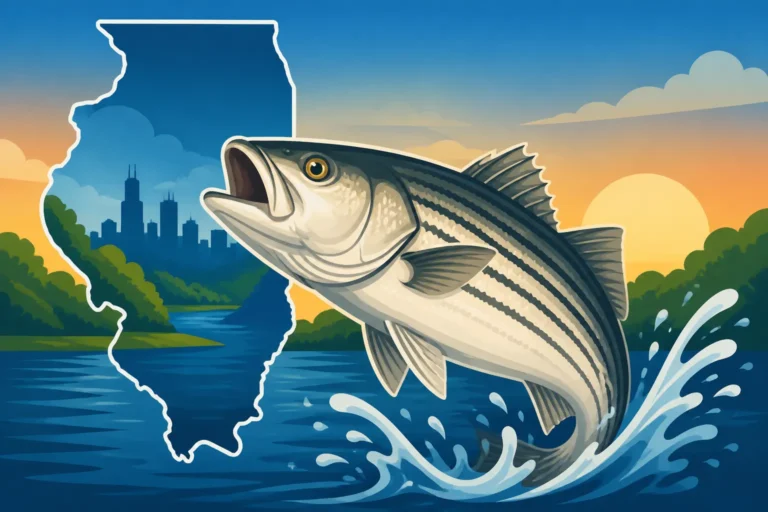
Many anglers across Illinois dream of reeling in a trophy, perhaps a giant muskie or a massive flathead catfish, but few ever even consider the possibility of catching a striped bass. That's because encountering a true striped bass in Illinois waters is an exceptionally rare event, often leaving even seasoned fishermen scratching their heads. This guide will delve into why these powerful fish are such an anomaly in our state, how to properly identify one if you're lucky enough to hook into it, and what regulations apply to this elusive species.
Understanding the Enigma: Why Striped Bass Are a Rare Catch in Illinois
The idea of catching a striped bass in Illinois might sound like a tall tale, and for good reason. Unlike our native white bass or the increasingly common hybrid striped bass (which we'll talk about later), purebred striped bass aren't naturally occurring in most Illinois waterways. They're primarily a saltwater species, thriving in the Atlantic Ocean along the East Coast of North America, though they do migrate into freshwater estuaries for spawning. Their presence inland, far from brackish water, is almost always due to specific stocking programs designed to create a recreational fishery, or sometimes, a very rare stray.
Illinois simply doesn't have the natural habitat that truly supports a self-sustaining population of pure striped bass. We lack the vast, coastal estuaries and the direct connection to the ocean that they require for their full life cycle. While some states farther south or those with direct access to the Gulf of Mexico or large freshwater impoundments do stock striped bass, Illinois has largely focused on the hybrid striped bass, which is a cross between a striped bass and a white bass. This hybrid is much more tolerant of our freshwater conditions and offers a fantastic sportfishing opportunity, often mistaken for its purebred cousin. The sheer logistics and ecological suitability for a pure striped bass fishery in Illinois just aren't there, making any report of a true striped bass a significant and unusual event. It's truly like finding a needle in a haystack, and sometimes, even the "needle" turns out to be a very well-camouflaged piece of straw.
The Role of Stocking and Habitat Limitations
In states where pure striped bass are found in freshwater, it's typically because they have been introduced through extensive stocking programs into massive reservoirs that can mimic some of their needs, even without direct ocean access. These impoundments are often large enough and deep enough to provide the cooler, oxygenated water that stripers prefer, especially during warmer months. However, Illinois's lakes and rivers, while offering fantastic fishing for many species, generally don't fit this specific bill for pure stripers. Our waters simply don't have the ideal thermal stratification, current flows, or expansive forage bases to keep a pure striped bass population thriving on its own.
Consider the Mississippi River, for instance. While it's a massive waterway, the sections bordering Illinois might see an occasional stray. These fish often originate from stocking programs much further south, or from interconnected river systems that flow through states where stripers are more common. So, if you're ever on the Mississippi and you hook into something that looks suspiciously like a striped bass, it's likely a traveler, having journeyed quite a distance from its original habitat. It's a testament to their resilience, but also a stark reminder of their non-native status in our local waters.
Distinguishing Purebred vs. Hybrid Striped Bass
This is where much of the confusion lies. Most anglers who believe they've caught a striped bass in Illinois have actually landed its feisty relative: the hybrid striped bass. These hybrids, often called "wipers," are a cross between a female striped bass and a male white bass. They're sterile, meaning they don't reproduce naturally, and are widely stocked in many Illinois lakes and rivers to provide an exciting, hard-fighting sportfish. They grow quickly, fight like crazy, and are a blast to catch.
The key difference, which we'll dive into more in the next section, often comes down to the lateral lines – those distinct stripes running along their bodies. Pure striped bass usually have unbroken lines, while hybrids typically have broken or irregular lines. It's a subtle but important distinction that often requires a closer look. For instance, if you're fishing a popular reservoir like Lake Shelbyville or Clinton Lake, and you pull in a fish with bold stripes that fights like a freight train, the odds are overwhelmingly in favor of it being a hybrid striped bass, not a purebred. These hybrids are specifically chosen for Illinois stockings because they thrive here.
Spotting the Stripes: How to Identify an Illinois Striped Bass
So, you're out on the water, perhaps fishing for Illinois Walleye Fishing: The Complete Guide or maybe even trying your luck for Catfish Species in Illinois: The Complete Guide, and suddenly, you've got something big and powerful on the line. It's got stripes, it's strong, and it just doesn't quite look like a white bass. How do you tell if it's a true striped bass, a hybrid striped bass, or maybe just a really big white bass? This is crucial for accurate identification, especially given the rarity of purebred stripers in our state.
The subtle differences can be tricky, especially when you're excited or dealing with a feisty fish at the side of the boat. It's not uncommon for even experienced anglers to get them mixed up, but knowing what to look for can really help.
Key Identification Markers
Let's break down the primary visual cues to help you differentiate these similar-looking fish:
- Body Shape: Pure striped bass tend to have a more elongated, streamlined body, almost torpedo-like. Hybrid striped bass are typically deeper-bodied, stockier, and more compressed from side to side, often appearing thicker for their length. White bass are the most "stubby" of the three, with an even deeper body profile compared to hybrids.
- Lateral Lines (Stripes): This is the most famous and usually the most reliable differentiator.
- Pure Striped Bass: The dark, horizontal stripes running along their sides are typically continuous and unbroken. They extend from gill plate to tail, and none of them will appear fragmented or uneven.
- Hybrid Striped Bass: Their stripes are almost always broken, irregular, or disjointed, particularly below the lateral line. You might see several stripes that start and stop, or weave into each other. Some might be continuous, but most will show some form of interruption.
- White Bass: White bass have only one distinct lateral line that reaches the tail, and any other stripes below it are usually faint and often do not reach the tail. They are much less pronounced than on either a pure striper or a hybrid.
- Tongue Patches: This is a less obvious but highly reliable internal feature. If you can safely examine the fish's tongue, a true striped bass will have two distinct patches of teeth on its tongue. Hybrid striped bass generally have one patch or sometimes none, and white bass have a single patch or none. This requires careful handling, of course, and isn't always practical on the water.
- Dorsal Fins: Look at the two dorsal fins on the fish's back.
- Pure Striped Bass and Hybrid Striped Bass: The first dorsal fin (spiny) and the second dorsal fin (soft-rayed) are clearly separated, with a distinct gap between them.
- White Bass: The two dorsal fins are usually connected at the base, or very nearly so, with a much smaller gap or none at all.
Here’s a quick comparison table to help you out in a pinch:
| Feature | Pure Striped Bass | Hybrid Striped Bass | White Bass |
|---|---|---|---|
| Body Shape | Elongated, streamlined | Deeper-bodied, stockier | Deepest body, more compressed |
| Lateral Lines | Continuous, unbroken | Broken, irregular, disjointed | One prominent, faint below |
| Tongue Patches | Two distinct patches | One patch or none | One patch or none |
| Dorsal Fins | Clearly separated | Clearly separated | Connected or very close at base |
What to Do If You're Unsure
If you catch a fish and you're not absolutely certain whether it's a pure striped bass or a hybrid, the best course of action is to assume it's a hybrid striped bass. This is because hybrids are the most commonly stocked and encountered "striper-like" fish in Illinois. Snap a clear photo, ideally with good lighting and showing the lateral lines distinctly, and then release the fish if you're not confident in your identification and regulatory knowledge. You can always consult with local bait shop owners, DNR officials, or online fishing forums where experienced anglers can help with identification. Many excellent resources are available, and you might even find comprehensive fish identification guides on Amazon that can be a great addition to your tackle box or boat.
Where and How: The Slim Chance of Catching a Striped Bass
Given their extreme rarity, actively "targeting" pure striped bass in Illinois is, frankly, an exercise in futility. It's like going hunting for a unicorn – a fun thought, but not exactly practical. However, if you are lucky enough to encounter one, it will almost certainly be a chance encounter while fishing for other species.
Potential (But Unlikely) Encounter Zones
While Illinois doesn't have a dedicated striped bass fishery, if one were to show up, it would most likely be in these areas:
- The Mississippi River: This is probably your highest (though still very low) chance. The Mississippi River is connected to a vast network of waterways, and striped bass from more southerly stocking programs or natural populations could potentially wander upriver. Specifically, the lower portions of the Mississippi River in Southern Illinois might occasionally see a stray, but it's still far from common.
- Major Reservoirs with Connected Systems: In very rare instances, a pure striped bass could potentially make its way into a large reservoir like Rend Lake Fishing Guide for Illinois Anglers or Carlyle Lake Fishing Guide if they somehow came from an upstream stocking program in another state, or if there was an accidental release. But again, this is extremely improbable. The fish stocked in these lakes, which look like stripers, are overwhelmingly hybrid striped bass.
- "Hybrid Hotspots": Ironically, the places where you have the best chance of encountering a fish that looks like a striped bass are the very places where hybrid striped bass are heavily stocked. Lakes like Clinton Lake, Lake Shelbyville, and many sections of the Illinois River are known for their robust hybrid populations. If a pure striper somehow managed to get into these waters, it would be alongside its hybrid cousins.
It’s important to reiterate: if you catch a "striper" in Illinois, assume it's a hybrid striped bass until proven otherwise through careful identification. This mindset helps manage expectations and ensures you're following the correct regulations for the species you're most likely to encounter.
Techniques (If You Happen Upon One)
If a pure striped bass somehow appears in your fishing spot, the techniques that work for hybrid striped bass or even large white bass would likely be effective. Striped bass are aggressive predators and respond well to baits and lures that mimic their forage.
- Lures: Crankbaits, swimbaits, large spoons, and topwater lures can all entice a strike from an aggressive striper. Look for lures that imitate shad, alewives, or other baitfish.
- Live Bait: Large live bait, such as shad, minnows, or even smaller panfish (where legal), can be irresistible to a hungry striped bass.
- Tactics: Trolling, casting to schooling baitfish, or fishing near structure and current breaks are all common methods for catching hybrids and would likely work for a pure striper as well. Remember that these fish are strong fighters, so having appropriately sized gear, like a medium-heavy rod and a reel with a good drag system, is always a good idea when you're fishing for aggressive species. You don't want to be undergunned if you hook into a truly large fish! A robust spinning or baitcasting combo is usually a good bet, and you can find a great selection of reliable fishing equipment on Amazon.
Ultimately, the best "technique" for catching a pure striped bass in Illinois is simply to keep fishing for other species and be prepared for the unexpected. It’s the kind of catch that becomes an immediate fish story, one you'll be recounting for years to come.
Legality and Lore: Illinois Regulations for Striped Bass
When it comes to fishing in Illinois, understanding the rules and regulations is paramount. While most of the regulations you'll encounter for "striped" fish pertain to hybrid striped bass, it's good to be aware of the situation if you ever do encounter a true striped bass. After all, ignorance of the law is no excuse, especially when a game warden might check your catch. Knowing your Illinois Fishing Regulations Overview is always a smart move.
Striped Bass in the Illinois Fishing Information Guide
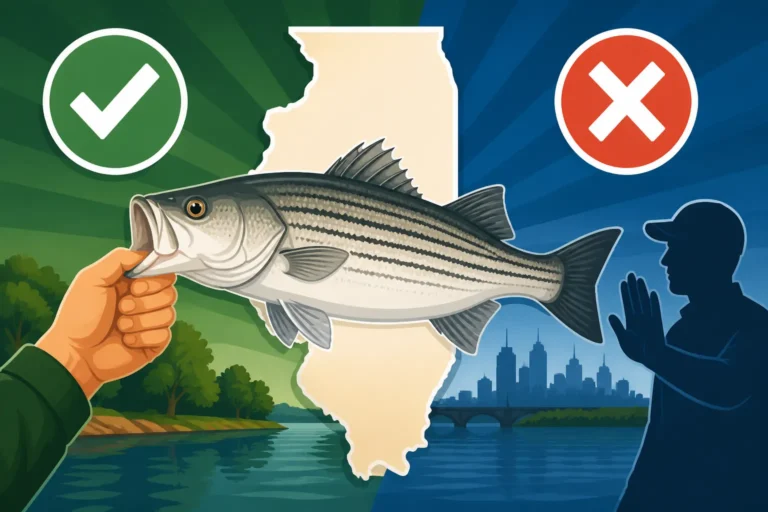
The Illinois Department of Natural Resources (IDNR) sets the rules for all fish species in the state. If you consult the official Illinois Fishing Information Guide Covers April 2026 Through March 2027, you'll notice that specific statewide regulations for pure striped bass are generally absent because they are not considered a common or managed species in Illinois waters. Instead, you'll find clear guidelines for white bass and hybrid striped bass, often grouped together under "Striped Bass (includes White Bass and Hybrid Striped Bass)."
This grouping simplifies things for anglers since the hybrid striped bass is the primary "striper-like" species that is regularly encountered and harvested. Therefore, if you catch a fish with stripes that you suspect might be a striped bass, you should always refer to the regulations for "Hybrid Striped Bass" in the current IDNR guide. These regulations will cover daily catch limits and sometimes size limits, which can vary by specific lake or river.
Why Specific Regulations Matter
The reason for distinct regulations between species, even similar-looking ones, often comes down to population management. Hybrid striped bass are stocked deliberately, and their numbers are managed to provide a sustainable sport fishery. Pure striped bass, if they were to somehow establish a population, would have different ecological impacts and might require entirely different management strategies. Since they aren't established here, specific pure striped bass regulations are largely unnecessary.
It’s a good practice to always check the site-specific regulations for the body of water you're fishing. Checking Site-Specific Rules Before Fishing an Illinois Lake is not just good advice, it’s often legally required, as limits can differ greatly from statewide rules. What's allowed on the Mississippi River might be different from a state park lake.
What to Do with Your Rare Catch
If, by some incredibly rare stroke of luck, you do catch a pure striped bass, and you've positively identified it beyond a shadow of a doubt, your options typically align with the regulations for hybrid striped bass for that specific body of water. However, because of their extreme rarity, many anglers might consider it a "catch and release" situation after documenting the unusual find with a photo. This allows the unique fish to potentially continue its journey or contribute to scientific understanding if reported.
It's also worth reporting such an unusual catch to the IDNR. They are always interested in documenting rare occurrences of fish species, as it contributes to their understanding of aquatic ecosystems and species distribution. While you don't need a special Illinois Tournament Angler License Rules for a rare catch, responsible angling practices, including adherence to all licensing and safety rules, are always important. Make sure you have your Illinois Fishing License Guide for 2026 in hand before you even cast a line.
In conclusion, while the allure of a pure striped bass in Illinois waters is undoubtedly captivating, it remains one of the state's most elusive and almost mythical catches. Focus on the fantastic hybrid striped bass fishery we do have, and who knows, perhaps one day you'll be the one telling the incredible story of the pure striper you almost caught!
Disclaimer
This article is for general informational purposes only and does not constitute professional advice. Laws, prices and regulations vary by location and change over time. Consult a qualified professional for guidance on your specific situation.