Illinois Lake Michigan Brown Trout Fishing Tips
Trying to target brown trout on the Illinois side of Lake Michigan can feel like chasing a ghost sometimes. These elusive fish are famous for their cunning and often require a different approach than their salmonid cousins, leading to frustration for many anglers who just want to land a beautiful, hard-fighting brown. This guide is here to cut through the confusion and share tried-and-true tips, strategies, and gear recommendations to help you find success on these incredible waters.
Understanding Lake Michigan's Brown Trout
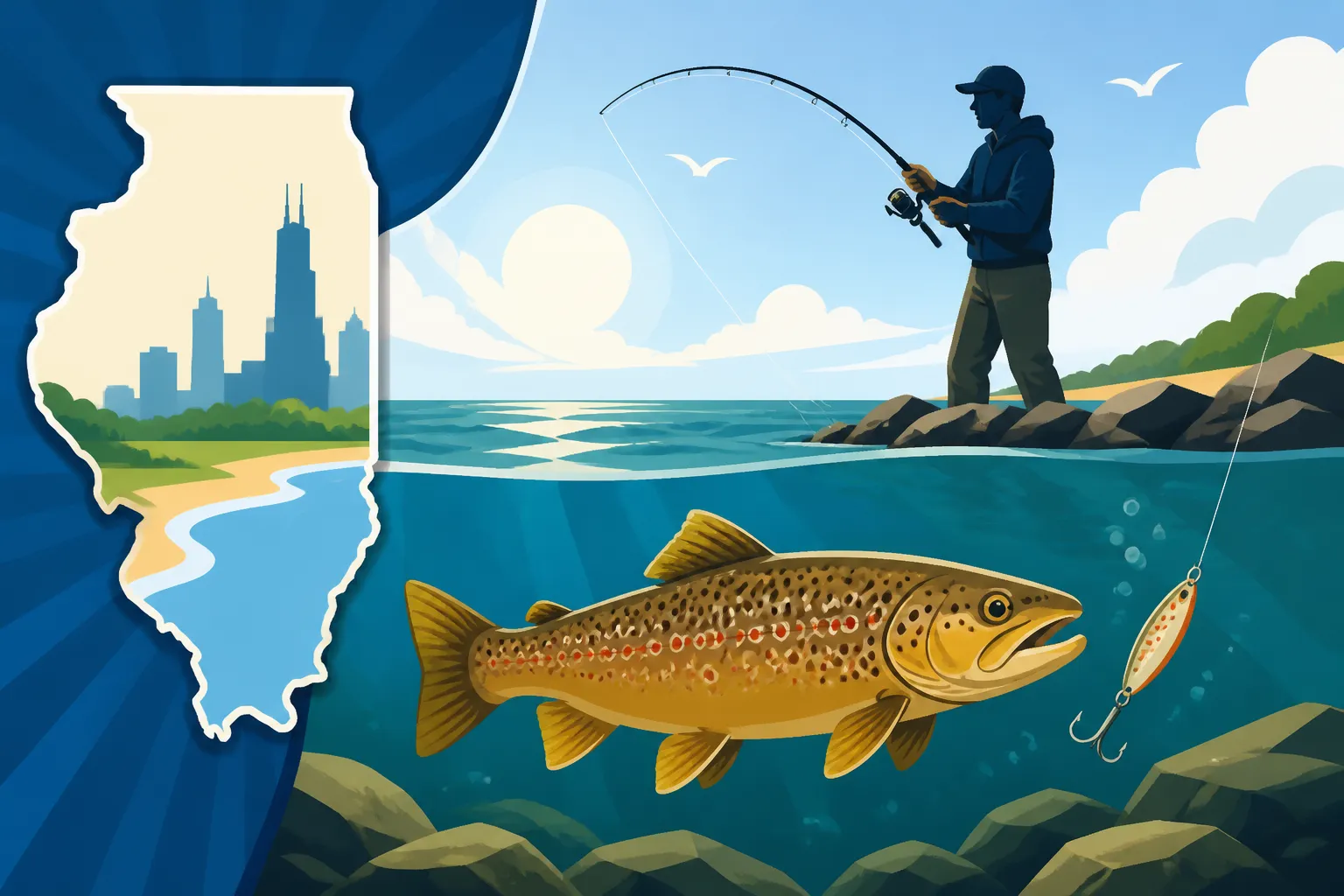
Brown trout, with their distinctive spots and often golden flanks, are a formidable sport fish in Lake Michigan. They're not always easy to find, but that's part of their charm. Unlike some of the other salmonids that tend to congregate in massive schools during specific runs, brown trout often spread out and can be found closer to shore, making them a unique target for Illinois anglers.
The Brown Trout's Behavior and Habitat in Lake Michigan
Brown trout are really creatures of habit, but those habits can change with the seasons and water conditions. In Lake Michigan, they tend to hug the shoreline, especially in spring and fall, when cooler water temperatures push baitfish into shallower areas. They love structure – think rock piles, breakwaters, piers, and even sudden changes in depth. These areas provide both ambush points for hunting smaller fish and cover from predators. They're also quite tolerant of slightly warmer water than some of their salmon and trout relatives, which means you can sometimes find them in relatively shallow nearshore areas even in the summer, especially early and late in the day.
During the colder months, brown trout will often move to deeper waters, but they'll still relate to structure. They’re opportunistic feeders, meaning they'll pretty much eat whatever is available, from alewives and smelt to gobies and other smaller fish. This adaptability is what makes them such a fun challenge to pursue, but it also means you need to be versatile in your approach. Understanding their preference for cooler water (usually in the 40s to low 60s Fahrenheit) and their tendency to hold near structure is key to unlocking their secrets. They’re also known for their powerful runs and aerial acrobatics once hooked, which makes them a truly prized catch.
Key Differences Between Brown Trout and Other Lake Michigan Species
While Lake Michigan is home to a fantastic array of salmon and trout, brown trout stand out. For starters, they're often less nomadic than Chinook or Coho salmon, which undertake massive migrations. Browns tend to stick to a general area, especially along the Illinois shoreline where they were stocked. This means if you find a productive spot for browns, it's likely to remain productive for a while, assuming conditions don't drastically change.
Visually, brown trout are fairly easy to distinguish. They have dark spots with light halos, and often a golden-brown or silvery body, depending on their diet and environment. Their tail is usually square or slightly forked, and unlike coho or Chinook salmon, they typically don't have spots on their tail fin. How to Identify a Brown Trout vs a Rainbow Trout or a salmon is a crucial skill. They also tend to be a bit more solitary than other schooling fish like whitefish or perch. This means you might catch one or two browns from a specific area, rather than dozens like you might with a school of yellow perch. Their fight, too, is distinct – often characterized by deep, powerful runs and aggressive head shakes, making them a thrilling adversary on the end of your line.
| Species | Common Habitat in Lake Michigan (Illinois) | General Behavior | Preferred Water Temp | Average Size (Illinois) |
|---|---|---|---|---|
| Brown Trout | Nearshore, harbors, structure, tributaries | Solitary, opportunistic, structure-oriented | 45-65°F | 2-10 lbs |
| Coho Salmon | Open water, nearshore in spring/fall | Schooling, migratory | 40-58°F | 3-8 lbs |
| Chinook Salmon | Open water, deeper in summer | Solitary (adults), powerful | 40-55°F | 10-30 lbs+ |
| Rainbow Trout | Open water, surface to mid-depths | Highly migratory, aggressive | 45-65°F | 5-15 lbs |
| Lake Trout | Deep, cold water (offshore) | Bottom-oriented, slow-moving | 35-50°F | 10-25 lbs+ |
Essential Gear for Illinois Brown Trout Anglers
Having the right gear is half the battle when it comes to consistently catching brown trout in Lake Michigan. Because these fish can be found in various depths and conditions, you'll need versatile equipment, whether you're casting from shore or trolling from a boat.
Rods, Reels, and Line Choices for Lake Michigan
For brown trout, you're generally looking for a medium to medium-heavy action rod, around 7 to 9 feet long. This length gives you good casting distance from shore and enough leverage when fighting a strong fish from a boat. If you're primarily trolling, a shorter, more stout rod in the 6-foot range might be preferred, especially if you're using downriggers or planer boards. A good quality graphite rod will offer sensitivity for detecting subtle bites and backbone for setting the hook.
Matching your rod with a reliable spinning reel (for casting) or a level-wind baitcasting reel (for trolling) is crucial. For spinning reels, look for one in the 2500-4000 series size, spooled with 8-12 pound monofilament or fluorocarbon. Braided line in the 15-20 pound range can also be an excellent choice for its sensitivity and strength, but you'll want to add a fluorocarbon leader of 6-10 feet for stealth. Fluorocarbon is nearly invisible underwater and has good abrasion resistance, which is perfect for fighting fish around rocky areas. For trolling, a baitcasting reel spooled with 15-25 pound monofilament or even leadcore line can be incredibly effective, especially when trying to reach specific depths. When searching for reels and rods, don't hesitate to check platforms like Amazon for a wide selection and user reviews to find the right balance of quality and price.
Lures and Baits That Brown Trout Can't Resist
Brown trout are predatory and respond well to lures that imitate their natural prey. Here’s a rundown of what generally works:
- Spoons: Classic spoons like the Little Cleo, Dardevle, or those from brands like Acme or Doctor Spoon are absolute killers for brown trout. They come in various sizes and colors, and their wobbling action perfectly mimics a wounded baitfish. Chrome, silver, gold, and vibrant patterns like "fire tiger" are always good starting points. Best Trolling Techniques for Illinois Lake Michigan Salmon and Trout often involve spoons.
- Stickbaits/Minnow Plugs: Long, slender stickbaits such as Rapala, Bomber, or Smithwick are fantastic, especially when trolled or cast in shallower water near piers or breakwaters. Their darting, struggling action drives brown trout wild. Experiment with natural minnow patterns, chartreuse, and bright orange.
- Body Baits/Crankbaits: Deeper-diving crankbaits can be very effective when browns are holding further down. Choose models that dive to the depth you're targeting. These are especially good for covering water quickly when trolling.
- Live Bait: While many prefer artificials, nothing beats a live smelt or alewife if you can get your hands on them. Shiners or large minnows can also be very effective, either still-fished under a bobber from a pier or slow-trolled behind a small dodger or flasher.
Don't be afraid to experiment! Brown trout can be picky, so having a variety of lure types, sizes, and colors in your tackle box is essential. You can often find great multi-packs of popular spoons and stickbaits on Amazon, which is a convenient way to build up your arsenal without breaking the bank.
Specialized Electronics and Accessories for Efficiency
Beyond your basic rod and reel, a few key accessories can significantly increase your success rate for brown trout on Lake Michigan:
- Fish Finder/GPS Combo: If you're on a boat, a quality fish finder is almost non-negotiable. It helps you identify schools of baitfish, locate structure, and mark individual fish. A GPS unit, often integrated into the fish finder, helps you mark productive spots and navigate. Brands like Humminbird and Lowrance offer excellent options.
- Downriggers/Planer Boards: For boat anglers, these tools allow you to present lures at precise depths and away from the boat, covering more water. Downriggers are great for getting lures deep, while planer boards spread your lines out, especially useful for getting lures into shallower water without spooking fish.
- Net: A large, sturdy landing net with a long handle is a must. Brown trout can be powerful fighters, and a good net ensures you land your prize safely.
- Temperature Gauge: Because brown trout are so sensitive to water temperature, a surface and subsurface temperature gauge can be invaluable. Knowing the thermocline and where the ideal temperature range is will help you target fish more effectively. You can often find portable, easy-to-use temperature gauges online through retailers like Amazon.
- Fishing Pliers and Line Cutters: Essential for handling hooks, cutting line, and ensuring safe catch and release.
Having a Tackle Box Setup for Illinois Species that's organized and well-stocked will ensure you're ready for anything these cunning fish throw at you.
Top Techniques for Successful Brown Trout Fishing
Catching brown trout in Lake Michigan isn't just about having the right gear; it's about employing the right strategies for the conditions and locations you're fishing. Being adaptable is key!
Trolling Strategies for Deeper Waters
Trolling is arguably the most effective way to cover vast expanses of Lake Michigan and find active brown trout, especially when they move a bit deeper or spread out. The key is to present your lures at the right depth and speed.
- Depth Control: This is paramount. Brown trout will often hold at specific depths, particularly near temperature breaks or structure. Downriggers allow you to precisely control the depth of your lures, typically from 10 to 100 feet or more. If you don't have downriggers, diving planers or weighted lines (like leadcore or copper line) can get your lures down, though with less precision. Pay close attention to your fish finder to see where baitfish and thermoclines are, and then set your lures to run just above or through that zone.
- Speed is Critical: Brown trout often prefer a slower troll than salmon. Aim for speeds between 1.5 to 2.5 miles per hour. However, always experiment! Sometimes a slightly faster or slower speed can trigger bites. Observe your rod tips – if your lures aren't showing good action, adjust your speed.
- Lure Spread: Use a variety of lures at different depths and distances behind the boat to figure out what the fish are hitting. Planer boards are excellent for spreading out lines, allowing you to cover a wider swath of water and keep lures from tangling. Running a combination of spoons, stickbaits, and even some smaller flies behind a dodger can be a winning strategy.
- Directional Trolling: Don't just troll in a straight line. Make subtle S-turns. When you turn, the inside lures will slow down and drop, while the outside lures will speed up and rise. This change in action often triggers strikes from following fish. Pay attention to which side gets hit, as it might indicate a preference for slower or faster lure action.
Many experienced anglers on Lake Michigan will have a detailed Illinois Lake Michigan Trolling Gear Checklist before they even leave the dock, ensuring they're prepared for every possibility.
Pier and Shore Fishing for Opportunistic Anglers
You don't need a boat to catch brown trout in Illinois! Many trophy browns are landed by shore and pier anglers, especially during the spring and fall. These fish often come into shallow waters to feed, particularly after strong winds or during periods of low light.
- Timing is Everything: Dawn, dusk, and even night fishing can be incredibly productive from shore. Overcast days or days with choppy water can also be excellent, as the reduced light and disturbed surface make brown trout feel safer to feed in the shallows. In spring, as ice recedes, the warmer nearshore water attracts baitfish and, consequently, brown trout.
- Location, Location, Location: Focus your efforts around natural and artificial structures. Piers, jetties, breakwaters, river mouths, and even areas with submerged rocks or rubble are prime brown trout territory. These spots offer cover and concentrate baitfish. The Chicago lakefront harbors and surrounding areas are legendary for their shore fishing opportunities. Lake Michigan Shore Fishing Access Near Chicago, Illinois is readily available.
- Casting Techniques: Long casts are often necessary to reach deeper water or active fish. Use heavy spoons or stickbaits that can be cast a good distance. A slow, steady retrieve with occasional pauses or twitches can be deadly. When the fish are very close, jigging spoons or even using live minnows under a slip bobber near pier pilings can be effective. Don't be afraid to walk and cast, covering as much ground as possible until you find active fish.
- Safety First: When fishing from piers, especially in adverse weather, always be mindful of your surroundings. Slippery surfaces, strong winds, and rogue waves can be dangerous.
Adapting to Seasonal Patterns and Water Conditions
Brown trout behavior is heavily influenced by the seasons and immediate water conditions. Being able to adapt is crucial for consistent success.
- Spring (March – May): This is prime time for shore and pier anglers. As ice melts and nearshore waters warm up, brown trout move in to feed on smelt and alewives. Look for warmer water discharges (power plants, river mouths) or areas where cold currents meet warmer pockets. Spoons and stickbaits cast from shore or trolled very shallow are effective. Spring Fishing Calendar for Illinois Anglers is packed with good advice for this season.
- Summer (June – August): Brown trout generally move deeper to find cooler water, often 30-60 feet down. Trolling with downriggers or leadcore becomes essential. Target areas around harbors, deeper breakwalls, and offshore structure. Night fishing from piers can still yield results as browns might venture into the shallows under the cover of darkness.
- Fall (September – November): As water temperatures drop, brown trout again move closer to shore, sometimes in preparation for spawning, but primarily to feed. This is another fantastic period for both boat and shore anglers. The browns can be very aggressive as they bulk up for winter. Trolling spoons and stickbaits, or casting from piers with heavy spoons, can be very productive.
- Winter (December – February): Ice fishing for brown trout isn't common on Lake Michigan's main body due to safety, but in some protected harbors that freeze over, it can be possible. Otherwise, it's generally a boat-only affair on ice-free days, targeting deeper structure with vertical jigging or slow trolling.
Always check the local weather, wind direction, and water temperature before heading out. Strong winds can bring in colder, dirtier water, changing the fishing drastically. A sudden drop in barometric pressure, for example, can often make fish less active. Understanding how these factors influence fish behavior will dramatically improve your chances.
Where to Find Brown Trout Along the Illinois Shoreline
Illinois' Lake Michigan shoreline, though relatively short, offers some fantastic opportunities for brown trout. Knowing where to focus your efforts can save you a lot of time and lead to more consistent catches.
Productive Harbors and Nearshore Areas
The harbors along the Illinois coastline are absolute magnets for brown trout, especially during the spring and fall. These protected waters offer a slightly more stable environment, concentrate baitfish, and often have structures like breakwalls, docks, and pilings that brown trout love to patrol.
- Chicago Harbors: The various harbors along Chicago's lakefront, from Montrose Harbor in the north down to Jackson Park Harbor, are legendary. These areas offer excellent shore access and boat launches. Browns can be found cruising the breakwalls, around the mouths of the harbors, and even inside the harbors themselves. Cast spoons, stickbaits, or jigs.
- Waukegan Harbor: Further north, Waukegan Harbor is another hotspot. Its deep water access and proximity to excellent fishing grounds make it a popular launch point for boat anglers. Shore anglers can target the harbor entrance and the surrounding breakwalls.
- North Point Marina: Located near the Wisconsin border, this marina offers similar opportunities to Waukegan, with ample structure and deep water access.
- River Mouths: Any river or stream that flows into Lake Michigan along the Illinois shore can be a prime area, especially during periods of high water or specific baitfish runs. The changing currents and influx of different water temperatures can hold fish.
When fishing these areas, remember that boat traffic can be heavy, especially on weekends. Practice good boat ramp etiquette and be respectful of other anglers.
Identifying Structure and Cover for Trout Ambush Points
Brown trout are ambush predators, and they use structure and cover to their advantage. Learning to "read" the water and identify these key areas will make you a much more successful angler.
- Breakwalls and Piers: These are obvious, man-made structures that extend into the lake. Browns will often patrol the deeper sides, looking for baitfish. Cast parallel to these structures, letting your lure sink before starting a slow retrieve. The points and corners where breakwalls meet the shore or change direction are especially productive.
- Rock Piles and Reefs: Submerged rock piles, natural reefs, and even artificial reefs provide excellent habitat. Use your fish finder to locate these offshore. If fishing from shore, look for areas where the bottom composition might change, indicated by different wave patterns or clearer water.
- Depth Changes (Drop-offs): Brown trout will often position themselves along sudden changes in depth, or drop-offs, moving up into shallower water to feed and retreating to deeper, safer water when not active. These can be hard to spot from shore but are easily identified with a fish finder from a boat. Trolling along these contours is a highly effective strategy.
- Current Seams: Where currents meet or where a river flows into the lake, you'll often find current seams. These areas concentrate baitfish and provide an easy ambush point for predatory brown trout. Cast your lures upstream and let them drift naturally into the seam, or troll along the edge of the seam.
Remember that brown trout can be quite spooky, especially in clear, calm water. Make long casts, use stealthy approaches, and avoid loud noises. Being patient and observant will pay off on the Illinois side of Lake Michigan when targeting these beautiful and challenging fish. Also, make sure you're aware of the Illinois Fishing Regulations Overview for Lake Michigan, as rules can vary from statewide regulations.
Disclaimer
This article is for general informational purposes only and does not constitute professional advice. Laws, prices and regulations vary by location and change over time. Consult a qualified professional for guidance on your specific situation.