Brown Trout vs Rainbow Trout: How to Tell Them Apart
You’ve just landed a beautiful trout, its flanks shimmering in the Illinois sun, and a thought crosses your mind: "Is this a rainbow or a brown?" It's a common moment of hesitation for many anglers, myself included, whether you're a seasoned veteran or just casting your first line. Distinguishing between these two popular species can feel tricky, especially when they share similar habitats, but knowing the difference is key to understanding regulations, improving your technique, and simply appreciating the unique fish you've caught. This guide will walk you through the tell-tale signs, helping you confidently identify your next trout in Illinois waters.
The Core Differences at a Glance
Let's dive right into the physical characteristics that set brown trout and rainbow trout apart. While both are stunning members of the Salmonidae family, they each possess distinct traits that, once you know what to look for, make identification much easier. It's like learning to tell apart two different dog breeds – they're both dogs, but their features make them unique.
Body Shape and Fin Characteristics
When you first look at a trout, pay attention to its overall build. Rainbow trout tend to have a more streamlined, torpedo-shaped body, often appearing a bit more sleek and slender, especially if they’ve been living in fast-moving water. Their caudal fin, or tail fin, is typically broader and more squared-off, often with faint spots throughout. This powerful tail is part of what makes them such strong fighters when hooked.
Brown trout, on the other hand, often have a more robust, slightly deeper body, sometimes looking a bit "chunkier" or more solid than a rainbow. Their tail fin tends to be less spotted, and can appear a little more forked or slightly emarginate compared to the rainbow's squarer tail. While subtle, these differences in body and fin shape can be a good initial clue when you're trying to figure out what you've caught. They're built for ambush and holding steady in currents.
Distinctive Coloration and Spotting Patterns
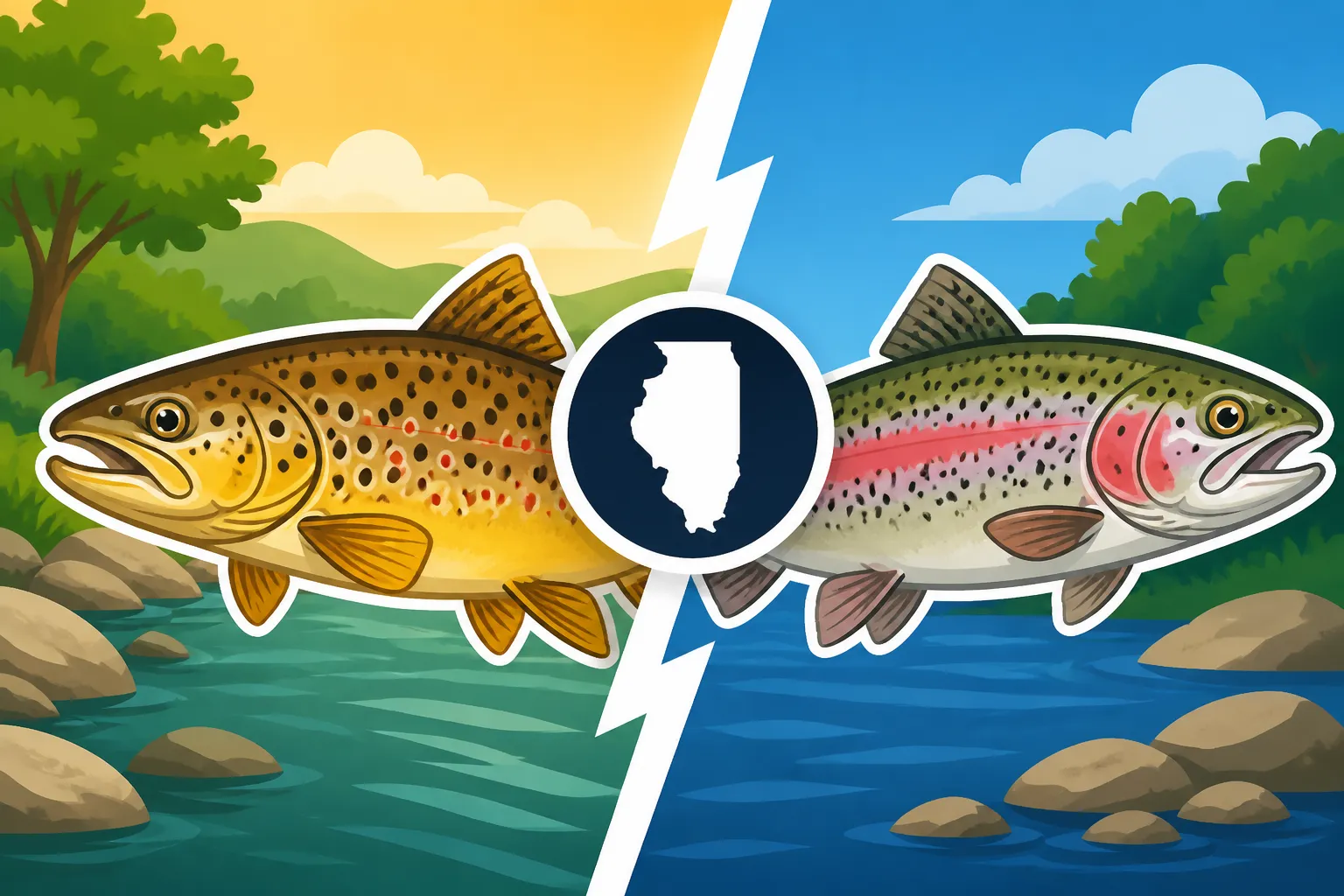
This is often the most reliable way to tell the two apart. Rainbow trout get their name from the iridescent, pinkish or reddish stripe that often runs horizontally along their lateral line, especially noticeable on larger, wilder fish. Their bodies are typically silver, greenish-blue, or brassy, and they are almost always covered in numerous small, dark spots. These spots are usually well-distributed, including on their dorsal fin, adipose fin, and that broad tail fin. It’s like they’ve been sprinkled with pepper from head to tail.
Brown trout, true to their name, typically exhibit a coloration that ranges from golden brown to olive green on their backs, fading to a creamy or yellowish belly. Their most distinctive feature is a scattering of prominent dark spots, often surrounded by a lighter halo, along their sides. Crucially, brown trout also have reddish-orange spots, sometimes with a pale halo, which are almost entirely absent on rainbow trout. These red spots are a dead giveaway. You'll find spots on their dorsal fin, but typically fewer spots on their tail fin compared to a rainbow. If you see those reddish spots, you've got a brown trout. You can often find excellent field guides on Amazon that highlight these exact differences with clear illustrations.
Mouth and Jaw Structure Clues
The mouth of a trout can offer another helpful diagnostic. Rainbow trout generally have a mouth that extends back to about the middle of the eye, or just slightly beyond. Their jawline is fairly straight. This is a good, general-purpose mouth for eating insects, small baitfish, and crustaceans.
Brown trout, especially the larger, more predatory ones, often have a more pronounced, somewhat predatory mouth. Their jaw typically extends further back, often well past the posterior edge of the eye. This larger gape allows them to consume larger prey, which fits their often more piscivorous (fish-eating) diet as they grow. While not always definitive on smaller fish, a noticeably larger mouth extending further back can lean you towards a brown trout, particularly if other features also align. When looking for tackle, consider checking Amazon for specific trout-sized lures that might be more effective for one species over the other.
Here’s a quick comparison table to help you keep these distinctions straight:
| Feature | Rainbow Trout | Brown Trout |
|---|---|---|
| Body Shape | Streamlined, torpedo-like, often slender | More robust, slightly deeper body, often "chunkier" |
| Lateral Stripe | Prominent pink/reddish stripe often present | No distinct lateral stripe; uniform body coloration |
| Dark Spots | Numerous small, dark spots over body, fins, tail | Fewer, larger dark spots, often with light halos |
| Red Spots | Generally absent | Present, often with pale halos, a key identifier |
| Tail Fin | Broad, squared-off, often spotted | Less spotted, sometimes slightly forked or emarginate |
| Mouth | Extends to middle of eye or slightly beyond | Often extends well past the back of the eye |
| Diet Tendency | Insects, crustaceans, small baitfish | More predatory; larger fish, crayfish, insects |
Rainbow Trout: The Iconic Illinois Stocker
Rainbow trout are undoubtedly one of the most recognizable and widely sought-after sportfish in Illinois. Their vibrant colors and spirited fight make them a favorite, especially in the state's popular put-and-take fisheries. Understanding their specific characteristics and habits is crucial for any angler.
Identifying Features of Rainbow Trout
Beyond the general characteristics we've already covered, there are a few nuances to rainbow trout that are worth noting. The intensity of that characteristic pink or red stripe can vary significantly. In some highly oxygenated, clear-water environments, or during spawning season, it can be incredibly vivid. In other waters, particularly those with less optimal conditions or in very young fish, it might be quite faint or even absent. However, the presence of numerous small, dark spots, consistently covering the back, sides, and fins—especially the adipose fin and the entire tail—is a very strong indicator. Their coloration can also adapt to their environment, ranging from a dark, almost olive green in shaded rivers to a bright, silvery sheen in open lakes. When comparing Rainbow Trout vs Brown Trout vs Brook Trout: Identification Guide, you'll see how rainbow trout typically stand out.
Another interesting aspect is the dorsal fin. While spotted, it often has a softer, more rounded appearance compared to some other trout species. Their scales are relatively small and smooth. When you're handling one, you might also notice the adipose fin (the small, fleshy fin between the dorsal and tail fins) is usually present and unclipped, unless it's part of a specific research program. Their overall sleek profile is built for speed and agility, allowing them to thrive in varied water conditions.
Where and When You're Most Likely to Encounter Them in Illinois
In Illinois, your primary encounters with rainbow trout will be in stocked waters. The Illinois Department of Natural Resources (IDNR) regularly stocks rainbow trout in numerous lakes and ponds across the state, particularly during the spring and fall seasons for their popular "Catchable Trout Program." These are often designated urban ponds, state park lakes, and other easily accessible public fishing areas. Places like Axehead Lake, Belleau Lake, and Rock Creek are prime examples where you'll find these spirited fish shortly after stocking. To understand when these stocking events typically occur, check out the Illinois Fishing Seasons Guide.
While some limited natural reproduction might occur in very specific, cold-water streams in northern Illinois, the vast majority of rainbow trout caught by anglers here are hatchery-raised. This means they are often less wary than wild trout and are accustomed to feeding on a variety of readily available baits and lures. You'll find them cruising shorelines, around inlets, and in deeper holes, often schooled up after a fresh stocking. Knowing these locations is half the battle; the other half is having the right gear, which you can often find from sellers on Amazon for reasonable prices.
Common Sizes and Habits of Illinois Rainbows
The size of rainbow trout you’ll catch in Illinois typically ranges from 10 to 16 inches, as these are the common sizes for stocked fish. Occasionally, if a fish survives multiple stocking seasons or manages to grow in a particularly fertile body of water, you might hook into a larger one, but these are less common. They are generally opportunistic feeders, eager to strike at a variety of offerings.
Rainbow trout are known for their strong, acrobatic fights, often leaping out of the water when hooked, which makes them incredibly exciting to catch. Their diet in Illinois’ stocked waters usually consists of anything from corn and salmon eggs to small inline spinners and jigs. They tend to be more active in cooler water, which is why spring and fall are prime seasons. During the summer, they might retreat to deeper, cooler sections of lakes or where cold springs feed into the water body. They don't typically live as long in Illinois' warmer waters as they would in their native cold-water habitats out west, so catching them soon after stocking is often the best strategy.
Brown Trout: The Elusive and Wary Fighter
Brown trout might not be as widely distributed or frequently stocked as rainbows in Illinois, but they hold a special place for anglers seeking a more challenging and often larger catch. These fish are known for their cunning and aggressive nature, making them a true prize.
Identifying Features of Brown Trout
As discussed, the hallmark of the brown trout is its coloration and spotting. Those dark spots with lighter halos and, crucially, the reddish-orange spots, are your primary identifiers. These red spots are often surrounded by a light "halo" or ring, making them quite distinctive against the brown or olive background. The overall body color can be incredibly variable, from light gold in sandy-bottomed rivers to a deep, dark brown in tannin-stained waters, or even a silvery hue in large lakes like Michigan. The back and upper sides will almost always be darker, transitioning to a cream or yellowish belly.
Their pectoral and pelvic fins might sometimes have a yellowish or orange tint, especially closer to the belly. Unlike the rainbow's typically spotless adipose fin (save for a few stragglers), brown trout often have a few dark spots on theirs. The larger, more predatory mouth is also a key feature, indicative of their diet preferences. Anglers who take their time to observe these subtleties quickly become adept at distinguishing between the species, a skill that can be refined with a good Illinois Fishing Information Guide Covers April 2026 Through March 2027.
Where and When You Might Find Brown Trout in Illinois
Finding brown trout in Illinois requires a bit more intentional effort than rainbows. While a few streams in the state might hold very small, wild populations where conditions are suitable (think specific cold-water creeks in the northern part of the state), the most significant brown trout fishery in Illinois is Lake Michigan. The IDNR stocks brown trout in Lake Michigan to support the fantastic salmon and trout fishery there. These fish thrive in the colder, deeper waters of the big lake, growing to impressive sizes.
You're less likely to stumble upon a brown trout in a local pond or reservoir unless it's been specifically stocked, and even then, their survival in warmer, shallower waters can be challenging. For the serious brown trout enthusiast in Illinois, Lake Michigan is the destination. Early spring and late fall are often prime times when browns move closer to shore, making them accessible to pier and shore anglers, as well as boaters. Understanding the patterns of these lake-dwelling giants is key, and articles like Illinois Lake Michigan Brown Trout Fishing Tips can provide valuable insights.
Sizes, Lifespan, and Behavioral Quirks of Brown Trout
Brown trout in Illinois, particularly in Lake Michigan, can grow to much larger sizes than the typical stocked rainbow. It's not uncommon to hear about brown trout caught from Lake Michigan that are well over 20 inches, with some reaching trophy sizes of 10 pounds or more. These fish have a longer lifespan in suitable habitats, allowing them to grow significantly over several years.
Behaviorally, brown trout are often considered more elusive and warier than rainbow trout. They are highly predatory, and as they grow, they shift their diet significantly towards other fish. This makes them a challenging catch, often requiring specific techniques and lures that mimic baitfish. They are also masters of camouflage, using their spotted patterns to blend into rocky bottoms and submerged cover. When hooked, they tend to make powerful, deep runs, often staying close to the bottom or structure rather than leaping like a rainbow. This powerful fight, combined with their striking beauty and elusiveness, makes catching a big Lake Michigan brown trout a truly memorable experience.
Why Accurate Identification Matters for Anglers
You might think, "A trout is a trout, right?" Not exactly! Being able to tell a brown trout from a rainbow trout isn't just about showing off your fish ID skills; it has practical implications that can directly affect your fishing experience and your compliance with local regulations. Getting it wrong could mean unintentionally breaking a rule or missing out on a better fishing strategy.
Understanding Regulations and Catch Limits
This is perhaps the most critical reason for accurate identification. In Illinois, fishing regulations, including size limits, daily creel limits (how many you can keep), and even seasonal restrictions, can differ between species. For example, a particular lake might have a slot limit for brown trout but a simple daily limit for rainbow trout. Or, in some special management areas, one species might be catch-and-release only, while the other can be harvested. Ignoring these distinctions can lead to fines or penalties.
Conservation efforts are often species-specific too. Fisheries biologists closely monitor populations of different trout species, and their management strategies depend on anglers accurately reporting their catches and adhering to specific rules. When you incorrectly identify a fish, you're not just making a mistake for yourself, but potentially muddying the waters for accurate data collection and conservation efforts. Always check the current Illinois Fishing Regulations Overview for the specific body of water you're fishing. It's available as a print booklet and often online, giving you all the details you need to stay legal.
Tailoring Your Techniques and Approach
Knowing whether you're targeting brown trout or rainbow trout allows you to refine your fishing techniques, bait selection, and even the time of day you fish. As we've discussed, rainbow trout in Illinois' stocked waters are often less wary and will hit a wide range of common baits and lures. They're more inclined to chase flashy spinners or sip power bait. This makes Best Bait for Rainbow Trout Fishing a great resource to explore.
Brown trout, particularly the larger ones, are often more selective and predatory. They might prefer larger, more realistic baitfish imitations, jerkbaits, or even larger live baits. They tend to be more active during low-light conditions, like dawn, dusk, or even at night, especially during warmer months. Understanding these behavioral differences means you can choose the right gear, like specific lures or heavier lines, and approach a fishing spot with a strategy tailored to the species you hope to catch. This precision increases your chances of success and makes your time on the water more productive.
Conservation and Respect for the Fishery
Finally, accurate identification fosters a deeper respect for the fish and the ecosystems they inhabit. Every fish species plays a unique role, and understanding their characteristics helps us appreciate their biology and challenges. By correctly identifying your catch, you contribute to responsible angling practices and support the health of Illinois' diverse fisheries.
When you know you’re handling a brown trout, for instance, you might be extra careful with catch-and-release, understanding its specific vulnerabilities or resilience. It also connects you more deeply to the sport itself, allowing you to learn and grow as an angler. Identifying species is a fundamental skill that every responsible angler should cultivate, and with a little practice, it becomes second nature. Tools like fish ID apps or waterproof field guides purchased from Amazon can be invaluable companions on the water to help cement your knowledge.
Disclaimer
This article is for general informational purposes only and does not constitute professional advice. Laws, prices and regulations vary by location and change over time. Consult a qualified professional for guidance on your specific situation.