Rainbow Trout vs Brown Trout vs Brook Trout: Identification Guide
There's nothing quite like the thrill of reeling in a beautiful trout, but for many anglers, especially those new to the cold-water game in Illinois, figuring out exactly which trout you've just caught can be a real head-scratcher. Those subtle differences in coloration, spotting, and even fin shape can be tricky to distinguish on the water. This guide is here to break down the key characteristics of Rainbow Trout, Brown Trout, and Brook Trout, helping you confidently identify your catch and deepen your understanding of these magnificent fish in Illinois waters.
The Essential Differences: Why Identification Matters
You might think, "A trout is a trout, right?" Well, not exactly! Knowing the specific species you're targeting or have just landed can be more important than you realize. It's not just about bragging rights; it's about understanding regulations, conservation efforts, and even tailoring your fishing techniques for better success. Each species has its own quirks and preferences, and a little knowledge goes a long, long way.
More Than Just Pretty Colors: The Importance of Knowing Your Catch
When you're out on an Illinois stream or lake, being able to identify your trout on the fly can directly impact your day. For instance, some waters might have different catch limits or size restrictions for specific trout species. Accidentally keeping a protected Brook Trout when you thought it was a more common Rainbow could land you in hot water with the Illinois Department of Natural Resources (IDNR). Beyond regulations, understanding which species you're after helps you choose the right bait, lure, and presentation. Illinois Fishing Season and Catch Limit Rules explains more about these vital regulations. Moreover, if you're practicing catch-and-release, knowing the species helps you handle it with the care appropriate for its resilience and population status.
Illinois' Trout Landscape: Where Each Species Fits In
Illinois isn't exactly known as a trout mecca like some western states, but we do have a vibrant, if sometimes overlooked, trout fishery. The IDNR works hard to maintain these populations, primarily through stocking programs. Rainbow Trout are by far the most commonly stocked and widespread. Brown Trout are also stocked in certain cold-water streams and Lake Michigan, providing a challenging and rewarding pursuit. Brook Trout, on the other hand, are truly special—they are Illinois' only native trout species, found in only a handful of pristine, spring-fed streams, making their identification and protection incredibly important. Understanding this landscape helps contextualize why these identification skills are so valuable.
Rainbow Trout: The Arc of the Streamer
Ah, the Rainbow Trout! For many, this is the quintessential trout, often the first one an angler in Illinois encounters. They're known for their spirited fights and beautiful, often iridescent, appearance. If you've fished any of our popular stocked trout waters, chances are you've had a run-in with a rainbow.
Signature Marks: Coloration and Spotting
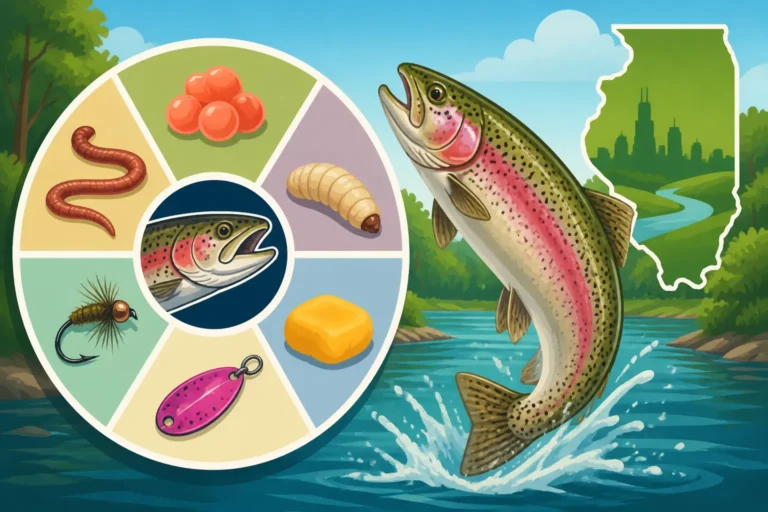
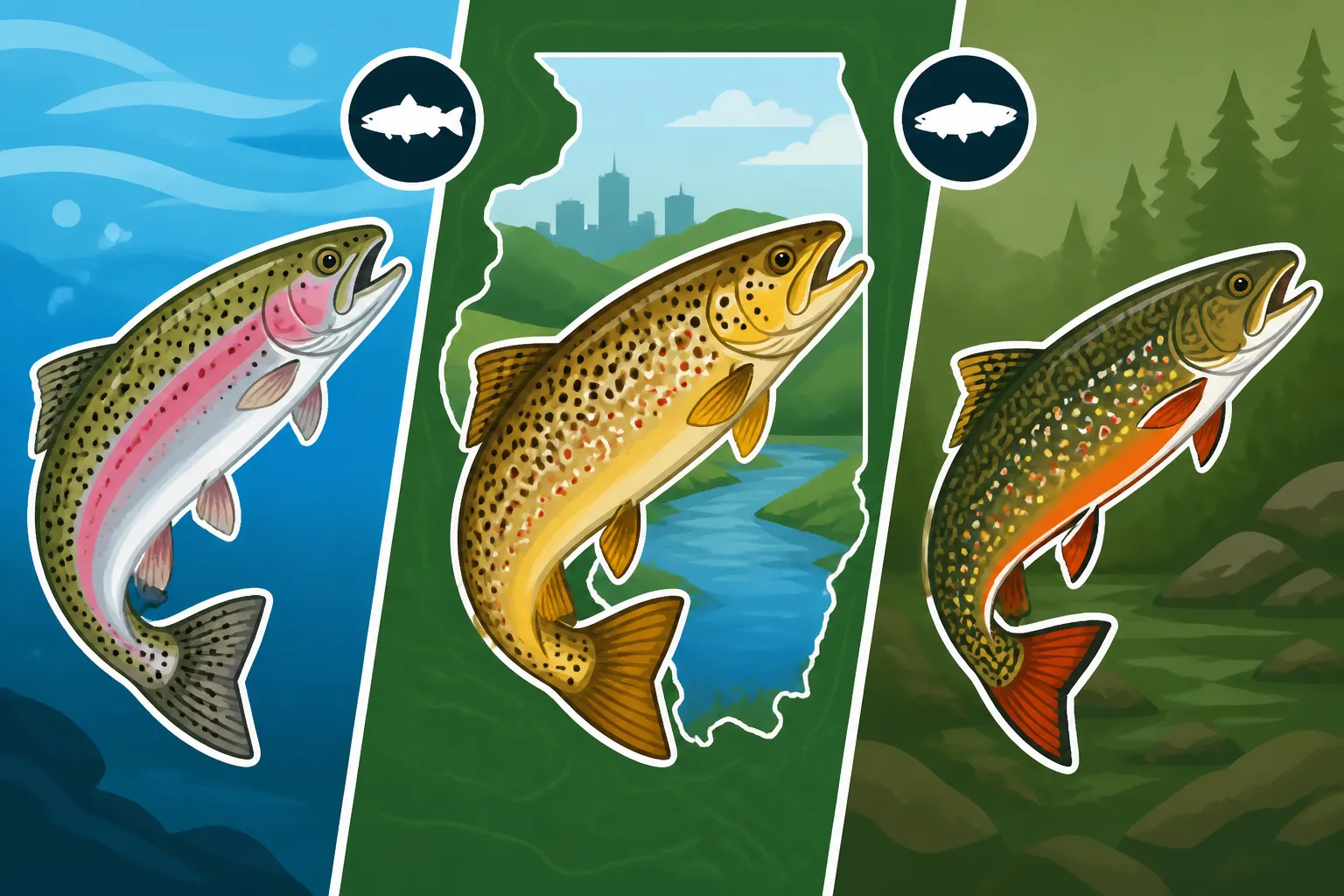
The most defining feature of a Rainbow Trout is usually that distinctive, often reddish or pinkish, lateral stripe running down its side, almost like a rainbow arc. This stripe can be vibrant and pronounced, especially on males during spawning, or more subdued on fish in larger lakes. Their bodies typically range from an olive-green or bluish-green on the back, fading to silvery sides and a white belly.
Spotting is another key identifier. Rainbow Trout are covered in small, dark spots—sometimes black, sometimes brownish—that extend from their head all the way down their body and even onto their caudal (tail) fin. These spots are usually fairly uniform in size and distribution. Unlike some other trout, their spots don't typically have "halos" or lighter rings around them. If you're outfitting yourself for your next trout adventure, remember that seeing these subtle patterns underwater often requires good quality eyewear, and Amazon offers a fantastic selection of polarized sunglasses that can make a huge difference in fish spotting.
Physical Traits and Fin Details
Beyond the coloration, Rainbow Trout have a generally sleek, torpedo-shaped body that’s built for speed and fighting current. Their mouth is relatively small, typically not extending beyond the back of their eye. Their caudal fin is usually slightly forked or squared, and those spots mentioned earlier are present on it, which is a big clue. The dorsal fin will also be spotted. You'll often notice a somewhat adipose fin, which is a small fleshy fin located between the dorsal and caudal fins, common to all salmonids (the family that includes trout and salmon).
When you look at a Rainbow Trout, think "athletic and speckled." They tend to be a bit more streamlined than some of their cousins, making them excellent fighters on light tackle. Best Rods for Illinois Largemouth Bass covers some gear considerations, and while it's focused on bass, the principles of rod action and sensitivity are applicable to trout fishing as well!
Where Rainbows Roam in Illinois
In Illinois, Rainbow Trout are primarily found in waters that are regularly stocked by the IDNR. These include numerous state park lakes, urban ponds, and specific cold-water streams that can sustain them, especially during the cooler months. You'll often find them thriving in lakes like those in Shabbona Lake State Park or in the "put-and-take" fisheries that get a fresh batch of fish each spring and fall. Illinois Rainbow Trout Stocked Lakes and Streams provides a comprehensive list of places where you're most likely to encounter these beauties. They are also found in Lake Michigan, where they migrate as steelhead, offering a truly exciting angling experience.
Unveiling the Brown Trout: The Elusive Predator
The Brown Trout is a fascinating fish, known for its elusiveness, predatory nature, and often stunning beauty. If you've caught a brown, you know they can be a challenge, making the reward all the sweeter. These fish tend to grow larger and live longer than rainbows in comparable waters, demanding a different approach from anglers.
Unique Hues and Haloed Spots
Brown Trout typically have a body coloration that lives up to their name—often a golden-brown, olive, or bronze on their backs, fading to lighter brown or yellowish sides and a creamy belly. What really sets them apart, however, are their spots. Brown Trout usually display a mix of dark brown or black spots, and distinctive red or orange spots, many of which are surrounded by a pale "halo" or ring. These haloed spots are a dead giveaway! The spotting often extends onto their dorsal fin and adipose fin, but less frequently onto their caudal fin, which is another useful distinction.
The intensity and number of these spots can vary greatly depending on their habitat and diet, with stream-dwelling browns often having more vivid markings than lake-dwelling ones. Sometimes, these spots can be very subtle, so you might need to look closely. Having a good visual aid on the water, like a waterproof guide you can quickly reference, can be incredibly helpful.
Distinctive Body Shape and Jawline
Brown Trout generally have a more robust, "stocky" build compared to the sleek Rainbow. Their head is often proportionately larger, and their mouth is notoriously bigger, frequently extending well past the back of their eye. This larger mouth is a clear indication of their predatory diet, as they're known to consume smaller fish, crayfish, and large insects.
Their caudal fin is typically square or only very slightly forked, and usually lacks the heavy spotting seen on a rainbow's tail. When you're trying to differentiate, look at that jawline and tail fin; these are often the most telling physical characteristics. They've got a slightly more aggressive look about them, fitting their reputation as formidable hunters.
Preferred Haunts of Illinois Browns
In Illinois, Brown Trout are much more selective about where they live. They require consistently cold, well-oxygenated water, often preferring stream sections with plenty of cover like undercut banks, fallen logs, and deep pools. They are stocked in some of our designated cold-water streams and are also a significant part of the Lake Michigan fishery. Illinois Lake Michigan Brown Trout Fishing Tips delves into the specifics of pursuing these magnificent fish in the big lake.
While not as widely distributed as Rainbows, dedicated anglers know where to find Illinois' Brown Trout. These areas are often more challenging to fish, but the reward of a beautiful, wild-looking brown is unparalleled. They tend to be shier and more nocturnal than rainbows, especially larger specimens, which is why a good headlamp, easily found on Amazon, can be a valuable tool for night fishing for these elusive giants.
Brook Trout: Illinois' True Native Beauty
The Brook Trout holds a special place in the hearts of Illinois anglers. It is our only native trout species, a true gem of pristine, cold-water environments. These fish are typically smaller than rainbows and browns but are absolutely breathtaking in their coloration. Catching an Illinois Brook Trout is a rare and cherished experience, often reserved for those who seek out the state's most untouched natural spring creeks.
Worm-like Patterns and Vibrant Fins
Brook Trout possess perhaps the most striking and intricate coloration of the three. Their backs are usually a dark olive, sometimes almost black, covered in distinctive, wavy, worm-like markings called "vermiculations." These vermiculations are typically lighter, a yellowish or cream color, contrasting beautifully with the darker base. Their sides often feature vibrant red or orange spots, sometimes surrounded by blue halos, making them truly stand out.
But the real showstopper? Their fins! The lower fins (pelvic, anal, and often the caudal) are a brilliant orange or reddish color, famously tipped with a stark white leading edge, followed by a thin black line. This "white-edged fin" characteristic is arguably the most reliable and easiest way to distinguish a Brook Trout from any other species in Illinois. No other trout found here has this distinct fin pattern.
Smaller Stature and Mouth Characteristics
Brook Trout are generally smaller than the other two species, rarely reaching trophy sizes in Illinois streams. Their bodies are typically more elongated and slender. They have a relatively large mouth for their size, though not as exaggerated as a brown trout's, which usually extends to or slightly past the back of their eye.
Their tail fin is typically square or very slightly emarginate (a gentle indentation). The presence of vermiculations on the back, the red/blue spots, and those unmistakable white-edged lower fins are your best bets for a positive ID. Remember, their presence indicates a very healthy, cold, and clean stream ecosystem, so handling them gently and practicing catch-and-release is paramount. Illinois Brook Trout: Where a Few Streams Still Hold Them offers more insight into these delicate fisheries.
Finding the Fading Footprints of Brookies
As Illinois' native trout, Brook Trout require extremely specific conditions: ultra-cold, clear, highly oxygenated water, often fed by springs, and minimal habitat disturbance. Consequently, their populations are very localized and fragile. They are not stocked in the same "put-and-take" manner as rainbows. Instead, they represent wild, self-sustaining populations in a handful of pristine, undisturbed streams, mainly in the northern part of the state.
These special places are often protected and require careful stewardship from anglers. Catching a Brook Trout is often less about the size and more about the experience of connecting with a piece of Illinois' natural heritage. They are a sign of truly healthy aquatic environments, and knowing how to identify them helps in their conservation.
Beyond Visuals: Behavioral and Habitat Clues
While visual identification is crucial, understanding the typical behaviors and habitat preferences of each trout species can also provide valuable clues, especially if you're not getting a clear look at every spot or fin. Fish don't just exist in a vacuum; they interact with their environment in predictable ways.
Feeding Habits and Preferred Baits
Each trout species has a slightly different dining preference, which can inform your bait and lure choices.
- Rainbow Trout: These are often the most opportunistic feeders. They'll readily take insects (both aquatic and terrestrial), worms, small minnows, salmon eggs, corn, and a wide array of artificial lures like spinners, spoons, and flies. They are generally more active throughout the day, especially in stocked waters. If you're looking for a versatile fishing kit that covers many of these bases, Amazon has countless beginner-friendly tackle box options.
- Brown Trout: As they grow, Brown Trout become more piscivorous (fish-eating). While they'll still eat insects and crustaceans, larger browns often key in on smaller baitfish. This is why lures mimicking minnows, crayfish, or even small rodents can be effective. They tend to be shyer and more nocturnal, especially the trophy-sized individuals, often retreating to deep cover during daylight hours.
- Brook Trout: Being smaller and often in more pristine, insect-rich environments, Brook Trout are primarily insectivores. They feed heavily on aquatic insects, nymphs, and small terrestrial insects that fall into the water. Small spinners, tiny spoons, and especially dry flies and nymphs are excellent choices for brookies.
Water Preferences and Seasonal Movements
Where you find a trout can often tell you what kind it is, given Illinois' specific trout distribution.
- Rainbow Trout: Highly adaptable, especially the stocked varieties. They can tolerate a wider range of water temperatures than browns or brookies, though they still prefer cool, oxygenated water. In Lake Michigan, they transform into steelhead, undertaking significant migrations. You'll find them in lakes, ponds, and larger rivers, particularly where stocked. Best Time to Fish in Illinois often aligns with Rainbow Trout stocking schedules.
- Brown Trout: Demand colder, cleaner water than rainbows, and are particularly sensitive to low oxygen levels and high water temperatures. They thrive in streams with good structure—undercut banks, boulders, logjams—and deep pools for cover. In Lake Michigan, they patrol rocky shorelines and structure, often staying closer to shore than salmon or lake trout.
- Brook Trout: The most demanding of the three. They absolutely require consistently cold (often spring-fed), crystal-clear, highly oxygenated water, making them an indicator species for pristine stream health. They are intolerant of pollution and siltation, meaning their presence is a good sign the water quality is excellent. They typically inhabit smaller headwater streams and rarely venture into larger rivers or lakes in Illinois, except in specific, carefully managed instances.
Quick Reference: Trout Identification Cheat Sheet
To help you out on the water, here's a handy table summarizing the key distinguishing features of Illinois' three main trout species. Keep this in mind when you're making your next cast!
| Feature | Rainbow Trout | Brown Trout | Brook Trout |
|---|---|---|---|
| Coloration | Olive/blue back, silvery sides, white belly | Golden-brown/olive back, yellowish sides, cream belly | Dark olive/black back, lighter belly |
| Lateral Stripe | Prominent pink/red stripe (often iridescent) | Generally absent, or very faint | Absent |
| Body Spots | Small, dark spots over entire body and tail | Dark spots and red/orange spots, many with pale halos | Red/orange spots (some blue halos), worm-like patterns (vermiculations) on back |
| Tail Spots | Heavily spotted | Few or no spots | Few or no spots, often some vermiculations |
| Lower Fins | No distinct markings | No distinct markings | Vibrant orange/red with white leading edge and black stripe |
| Mouth Size | Moderately sized, usually to back of eye | Large, often extending past back of eye | Moderately sized, usually to back of eye or slightly past |
| Tail Shape | Slightly forked or squared | Square or very slightly forked | Square or very slightly emarginate |
| Native to Illinois? | No (introduced) | No (introduced) | Yes |
Key Distinguishing Features At a Glance
The table above really boils down the main points, but if you're in a hurry on the stream, focus on these quick checks:
- Lateral Stripe: Bright pink/red stripe? Likely a Rainbow.
- Haloed Spots: Red or orange spots with pale rings? Definitely a Brown.
- White-Edged Fins: Bright orange fins with a white leading edge? That's your Brookie!
- Worm-like Patterns: Wavy, light patterns on a dark back? Also a Brookie.
These four characteristics will get you 99% of the way there in identifying the trout species you've caught in Illinois.
Why Knowing Your Trout Enhances Your Fishing Experience
Beyond just identification, truly understanding the differences between these trout species enriches your entire fishing experience. It allows you to appreciate their unique adaptations to their specific environments. You'll learn to anticipate their behaviors, choose more effective presentations, and develop a deeper respect for the diverse aquatic life in Illinois.
Whether you're targeting the hard-fighting Rainbows in a stocked lake, stalking the elusive Brown Trout in a cold stream, or cherishing the rare encounter with a native Brookie, knowing your trout makes you a more knowledgeable, ethical, and ultimately, a more successful angler. So next time you're on the water, take a moment to admire your catch and identify its distinct features. It’s part of the beauty of Illinois fishing! You might even learn something new about where these amazing fish live, like Why Fishing Rules Vary by Lake and River.
Disclaimer
This article is for general informational purposes only and does not constitute professional advice. Laws, prices and regulations vary by location and change over time. Consult a qualified professional for guidance on your specific situation.