What Is a Saugeye and Where Do You Catch One in Illinois?
Have you ever been out on the water, reeling in what you thought was a walleye, only to look closer and realize it just… didn't quite fit the bill? Or perhaps you've heard whispers of a mysterious hybrid fish, the "saugeye," and wondered if they actually exist in Illinois and where you might find one. It's a common point of confusion for many anglers, especially with similar-looking species swimming in our waters. This guide is here to clear up the mystery, explain exactly what a saugeye is, and point you towards the Illinois waters where you might just hook into one of these unique catches.
The Saugeye Explained: A Hybrid Marvel
Fishing in Illinois offers a rich diversity of species, but sometimes nature, or rather, fish management, throws us a curveball with a unique blend. The saugeye is exactly that – a fascinating hybrid that combines the best traits of two popular game fish, creating a formidable opponent for any angler. It's not just a casual crossbreed; it's a deliberate stocking choice in many places, including parts of Illinois, to enhance fishing opportunities and create a more robust fishery. Understanding this hybrid starts with knowing its parentage and why it's such a prized catch.
What Exactly is a Saugeye?
At its core, a saugeye is a hybrid fish, born from the cross-breeding of a female walleye and a male sauger. Think of it like a mule in the animal kingdom – a sturdy, capable offspring of two distinct but related species. This isn't something that happens willy-nilly in the wild very often, though it can occur; rather, saugeye are typically produced in hatcheries by fisheries biologists. They are then stocked into lakes and rivers specifically chosen for their environmental conditions and fishing potential. The goal is to get a fish that grows faster than a sauger, is more tolerant of turbid (cloudy) water than a walleye, and generally provides a strong sportfishing experience.
The lineage matters a great deal when you're trying to identify these fish. A walleye, known for its distinct white tip on the lower tail fin, is a revered freshwater predator. The sauger, often found in larger rivers, is smaller, has more pronounced dark spots on its dorsal fin, and lacks the walleye's white tail tip. The saugeye inherits characteristics from both, which is why identifying them can be tricky, even for seasoned anglers. They often exhibit a mosaic of traits, sometimes leaning more towards one parent than the other, making each catch a unique puzzle.
Why Illinois Stocks Saugeye
The decision to stock saugeye in Illinois isn't just about adding another fish to the list; it's a strategic move by the Department of Natural Resources (IDNR) to improve angling opportunities. Saugeye offer several advantages that make them a prime candidate for stocking in certain Illinois waters. Firstly, they exhibit what's often called "hybrid vigor," meaning they tend to grow faster and larger than pure sauger, and sometimes even faster than walleye, especially in the conditions where they are typically stocked. This rapid growth translates into more robust, trophy-sized fish for anglers to pursue, which is always a welcome development for the local fishing scene.
Secondly, saugeye are incredibly adaptable. Walleye prefer clear, cooler water, while sauger are more at home in murky, warmer, riverine environments. The saugeye often strikes a balance, possessing a greater tolerance for a wider range of water clarities and temperatures than either parent. This means they can thrive in waters that might not be ideal for pure walleye stocking, expanding the potential for a thriving game fish population. It makes them a great option for many of Illinois's diverse lakes and rivers, ensuring a more resilient and productive fishery. When you consider the effort put into managing fish populations, a species that can deliver on size and adaptability is a true asset.
Identifying Your Catch: Saugeye vs. Walleye vs. Sauger
One of the biggest frustrations for anglers targeting walleye or sauger in Illinois is the constant question: "What did I just catch?" The saugeye muddies the waters even further, literally and figuratively. It's not uncommon to hear tales of anglers debating for minutes over a fish's identity right there on the boat. Knowing the subtle but distinct features that differentiate these three fish is key, not only for satisfying your curiosity but also for adhering to any specific regulations that might apply to each species in certain waters. Sometimes, a quick check of an identification guide you might have saved to your phone or purchased from a retailer like Amazon can save you a lot of guesswork.
Key Physical Distinctions
Let's talk about the tell-tale signs to help you discern a saugeye from its walleye and sauger relatives. The first place to look is often the dorsal fin, specifically the spiny anterior dorsal fin. A pure sauger will typically have distinct, dark spots or blotches arranged in rows on this fin. A walleye, on the other hand, will usually have a more uniform, clear or slightly mottled dorsal fin, with a prominent dark blotch at the base of the last few spines. The saugeye? It's a mix. You'll often see distinct dark spots, but they tend to be scattered or splotchy rather than forming neat rows, and they may not be as intense as those on a sauger. It's like a watercolor painting compared to a dot-matrix print.
Another crucial identifier lies in the tail fin and the body markings. Walleye famously have a brilliant white tip on the lower lobe of their tail fin – a dead giveaway. Sauger lack this white tip completely. The saugeye will either have no white tip at all, or a very faint, small, and often smudged white mark, nothing as clear and defined as a pure walleye. On the body itself, sauger tend to have distinct, saddle-like blotches or bars across their back and sides, which can be quite pronounced, especially when they are fresh out of the water. Walleye have more subtle, sometimes faint, bars or mottling. Saugeye again land in the middle, often showing some degree of irregular, blotchy markings that don't quite form saddles but are more pronounced than a walleye's. For a deeper dive, check out resources like Illinois Walleye vs Sauger vs Saugeye: Key Differences or How to Tell a Walleye From a Sauger?. It's really about picking up on those subtle cues, because nature doesn't always paint in broad strokes.
Here's a quick comparison table to help:
| Feature | Walleye | Sauger | Saugeye (Hybrid) |
|---|---|---|---|
| Dorsal Fin | Clear with a dark blotch at the base | Distinct dark spots in rows | Scattered, irregular dark spots/splotches |
| Tail Fin | Prominent white tip on lower lobe | No white tip | No white tip or very faint/smudged |
| Body Markings | Subtle mottling or faint bars | Distinct saddle-like blotches or bars | Irregular, blotchy markings, more defined than walleye |
| Pyloric Caeca | 3-5 very long, distinct caeca | 7-10 short, tuft-like caeca | Intermediate: 5-8 medium-length caeca |
Note: Pyloric caeca are finger-like projections near the stomach, visible upon dissection. This is a definitive but not always practical field identification method.
Behavioral Differences and Habitat Preferences
Beyond the visual cues, understanding the behavioral nuances and preferred habitats of these species can also help you determine what you’ve hooked. Walleye are often associated with larger, deeper, and clearer lakes, preferring rocky structures, humps, and drop-offs. They can be light-sensitive, often feeding most actively at dawn, dusk, or under cloudy conditions. Sauger, on the other hand, are true river fish. They thrive in turbid, flowing water, often congregating in deeper holes, current breaks, and below dams. Their eyes are well-adapted for low-light conditions in murky water, making them efficient predators in challenging environments.
Saugeye, due to their hybrid vigor, often display a blend of these behaviors and preferences, allowing them to thrive in a broader array of conditions. They tend to be more tolerant of warmer, murkier water than walleye, making them suitable for many of Illinois's mid-sized reservoirs and rivers that might otherwise struggle to support a strong walleye population. You might find them in areas with moderate current, like river bends or deeper pools, but also congregating around submerged structure in lakes. This adaptability is precisely why they are stocked – to provide a robust fishery in diverse habitats. If you're fishing a turbid lake or a river with varied depths, a saugeye might be more likely than a pure walleye. Their willingness to bite in a wider range of conditions means they can offer exciting action when other species are sluggish.
Where to Chase Saugeye in Illinois
Now that you're a budding saugeye identification expert, the next natural question is: "Where exactly in Illinois can I find these fascinating fish?" While not as widespread as bass or panfish, saugeye populations are carefully managed and stocked in specific waters across the state, offering exciting opportunities for anglers willing to seek them out. It's not a matter of just dropping a line anywhere; knowing the designated saugeye waters significantly increases your chances of success. Often, the same techniques you'd use for their parent species will work wonders for saugeye, so your existing gear and knowledge are already a huge head start.
Top Illinois Lakes for Saugeye
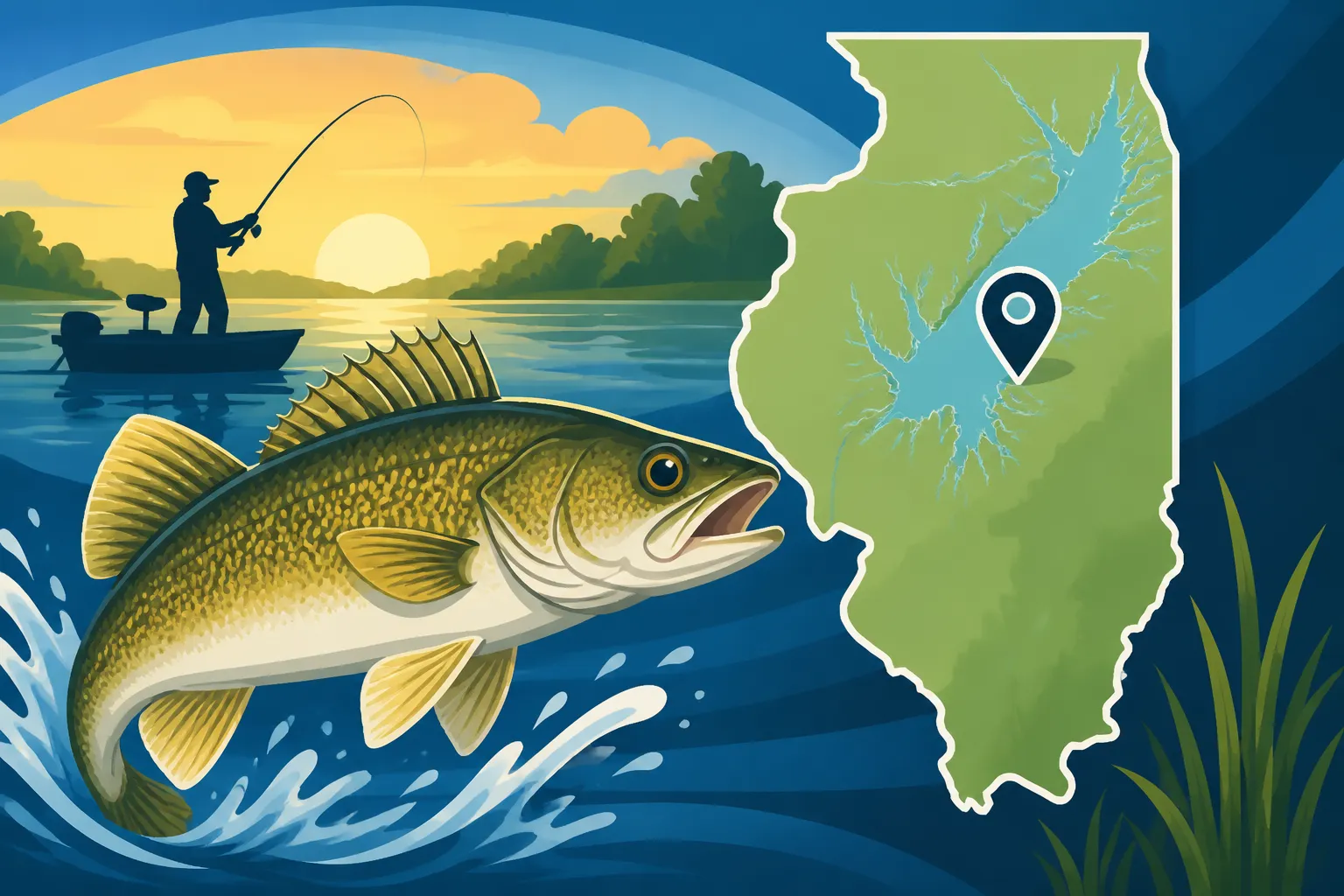
Illinois has several lakes and reservoirs known for their saugeye populations, often thanks to proactive stocking programs by the IDNR. These bodies of water are typically chosen because they offer the right blend of habitat and forage for saugeye to thrive. One prominent example that often comes up in discussions about Illinois saugeye is Lake Shelbyville. This large reservoir in central Illinois is renowned for its diverse fishery, and saugeye are a key part of that mix. Anglers there often target saugeye around main lake points, submerged islands, and creek channel drop-offs, especially during cooler months or low-light conditions. The fish in Lake Shelbyville grow to impressive sizes, making it a popular destination. You might want to explore resources like Lake Shelbyville Fishing Guide for more details on this particular hotspot.
Another excellent location to consider is Clinton Lake. This cooling lake for a power plant, known for its warmer waters, offers a unique environment where saugeye can flourish. The warmer water can lead to faster growth rates, and anglers often find saugeye lurking around the lake's abundant submerged timber and ledges. Because of the power plant's influence, fishing patterns here can differ from other lakes, making it an exciting challenge. Other lakes that have historically been stocked or may have populations include Kaskaskia River at Carlyle Lake and other larger reservoirs that provide ample forage and diverse structure. It's always a good idea to check the latest IDNR stocking reports or local fishing forums, or even a good fishing map from Amazon, to confirm current saugeye presence, as stocking efforts can vary year to year.
Riverine Opportunities
While many saugeye fisheries are lake-based, their sauger heritage means they are also quite at home in river systems, especially those with some flow and varying depths. The Illinois River is a fantastic place to consider for saugeye, particularly in its central and lower stretches. The river's expansive network of channels, backwater lakes, and current breaks provides ideal habitat for these adaptable fish. Anglers often find saugeye congregating in deeper holes, around bridge pilings, and along rip-rap shorelines where current brings food. These fish can be found alongside walleye and sauger, making for exciting mixed bags.
Other river systems that might hold saugeye, often as a result of migration from stocked lakes or incidental stocking, include the Kaskaskia River and potentially stretches of the Wabash River along the Illinois border. When fishing rivers, pay close attention to changes in current, depth, and bottom structure. Saugeye will often position themselves just out of the main flow, in ambush points where they can dart out to catch unsuspecting baitfish. Fishing around dams and locks can also be productive, as these structures create current seams and eddies that attract predatory fish. Just remember that river fishing often means adapting to changing conditions, from water levels to clarity, so flexibility with your approach is key. Don't forget to consult guides like Illinois Walleye Fishing Season on the Mississippi River for related river fishing insights.
Fishing Techniques for Saugeye
Fishing for saugeye isn't drastically different from targeting walleye or sauger, which is great news because you probably already have some effective techniques in your arsenal. The key is to remember their hybrid nature: they'll often respond to tactics that work for both parents. One of the most consistent methods for saugeye in both lakes and rivers is jigging. Using a lead-head jig tipped with a minnow, plastic grub, or a soft plastic paddle tail is incredibly effective. Work your jig near the bottom, imparting small hops or drags to mimic a wounded baitfish. In deeper water or current, a heavier jig might be necessary to maintain bottom contact. Walleye Jigging Techniques can provide an excellent foundation for this approach.
Trolling is another highly productive method, especially in larger lakes like Lake Shelbyville. Crankbaits that dive to the depth where saugeye are holding, or even lipless crankbaits, can be deadly. Pay attention to contour lines, ledges, and submerged cover. Using a fish finder to locate schools of baitfish or saugeye itself will significantly increase your success. Early morning, late evening, or even night fishing can be prime times, as saugeye, like their walleye parent, are often more active during low-light conditions. On rivers, vertically jigging right over deep holes or current breaks with spoons or blade baits can be very effective. Remember, saugeye are opportunistic predators, so presenting bait or lures in their strike zone, especially near structure or changes in depth, is paramount. You can find a good selection of specialized lures and tackle for these methods on sites like Amazon.
Regulations and Conservation for Illinois Saugeye
Catching a saugeye is a thrilling experience, but it's crucial to remember that with great fishing comes great responsibility. Like all game fish in Illinois, saugeye are subject to specific regulations designed to protect their populations and ensure sustainable fishing for future generations. These rules can sometimes vary by water body, adding another layer of complexity to your fishing trip. It’s not just about what you catch, but how much and what size you can keep. Always make it a habit to check the most current regulations before you head out on the water; ignorance of the law is no excuse, and wardens are diligent.
Understanding Catch Limits and Size Restrictions
Illinois fishing regulations are put in place for a reason: to manage fish populations effectively. For saugeye, this typically means a daily creel limit (how many fish you can keep in a day) and a minimum size limit. These limits are not arbitrary; they are based on scientific data about the species' growth rates, reproductive success, and overall population health within specific water bodies. For example, a lake might have a 14-inch minimum size limit for saugeye, while another might have a different regulation or even a slot limit (where only fish within a certain size range can be kept). These rules are often similar to those for walleye or sauger, but it's important not to assume.
It's common for the IDNR to publish an annual fishing guide that details all these specific rules. You can often find this guide online or at bait shops and sporting goods stores, or even on a trusted retailer like Amazon. Always double-check the section for the specific lake or river you plan to fish, as statewide rules might differ from site-specific regulations. Penalties for exceeding limits or keeping undersized fish can be steep, ranging from fines to confiscation of gear. Being a responsible angler means being informed, so take the time to review the Illinois Fishing Regulations Overview before every season.
Responsible Angling Practices
Beyond simply following the rules, responsible angling means adopting practices that promote the health of the fishery. Catch and release is a vital part of this, especially for larger saugeye. While delicious, trophy-sized fish are often the most reproductively valuable, contributing significantly to the next generation. If you plan to release a fish, handle it with care: minimize its time out of water, use wet hands to protect its slime coat, and revive it gently before letting it go. Using circle hooks can also reduce gut hooking, improving a fish's chances of survival upon release.
Remember that saugeye are a stocked species in many Illinois waters, representing an investment by the state into enhancing your fishing experience. Respecting these fish and their habitat ensures that future generations of anglers can enjoy the thrill of catching them too. Properly disposing of litter, avoiding the spread of aquatic invasive species, and reporting any suspicious activities or violations to the authorities are all part of being a good steward of Illinois's natural resources. We all want healthy fish and thriving waterways, and our actions as anglers play a huge role in making that a reality.
Disclaimer
This article is for general informational purposes only and does not constitute professional advice. Laws, prices and regulations vary by location and change over time. Consult a qualified professional for guidance on your specific situation.