Illinois Panfish Species: Bluegill, Crappie and Sunfish Explained
Stepping out onto a quiet Illinois lake or pond, rod in hand, ready for a peaceful day of fishing is one of life's simple pleasures. But for many new anglers, or even seasoned ones looking to branch out, the world of panfish can seem a little overwhelming. "Are all sunfish the same?" "What's the difference between a crappie and a bluegill?" "And what on earth is a redear?" You're not alone in these questions! This guide is here to untangle the panfish puzzle, explaining the most common and beloved panfish species you'll encounter in Illinois waters, how to tell them apart, and how to catch them.
The Panfish Family: What Makes Them Special?
When we talk about "panfish," we're generally referring to a group of smaller, delicious freshwater fish that are perfect for frying up in a pan. They might not be the giants of the lake, but what they lack in size, they make up for in abundance, feisty fights on light tackle, and accessibility. These fish are found almost everywhere, from sprawling reservoirs to tiny farm ponds, making them incredibly popular targets for anglers of all ages and skill levels. They're often the first fish a kid ever catches, sparking a lifelong love for the outdoors.
Why We Love Panfish in Illinois
There's something truly special about panfish here in Illinois. They are the backbone of many local fisheries, providing countless hours of enjoyment without requiring highly specialized gear or techniques. For families, panfish offer an incredible opportunity to spend quality time together, teaching kids the joy of a tug on the line. You don't need a fancy bass boat or expensive electronics to get into them. A simple cane pole, a bobber, a hook, and a container of worms can set you up for success. Plus, they taste fantastic! Nothing beats a fresh mess of fried bluegill or crappie after a successful day on the water. They're reliable, they're fun, and they're delicious – what more could an angler ask for?
General Characteristics and Identification Tips
While each panfish species has its unique quirks, they share some common characteristics that help us group them. Generally, panfish have a compressed, disc-like body shape, large eyes, and a small mouth. They tend to be highly colorful, especially the males during spawning season, showcasing vibrant blues, greens, oranges, and reds. Their dorsal fin often has a spiny, rayed front portion and a soft, rayed back portion, sometimes appearing almost as two separate fins.
One of the biggest challenges for new anglers is telling the different types of sunfish apart, as they can look very similar and even hybridize in the wild. Pay close attention to subtle details: the size of the mouth, the color patterns, the length of the opercular flap (the "ear" flap behind the eye), and the presence of specific spots or bars. Even a slight difference in fin patterns or body spots can be a key identifier. It's like being a detective on the water, and once you get the hang of it, identifying these beauties becomes part of the fun. Keeping a small field guide handy or using a fishing app on your phone can be super helpful for quick identification when you're just starting out.
Bluegill: The Everyday Fighter
Ah, the bluegill! If there's one fish that embodies the spirit of panfishing in Illinois, it's the bluegill. This humble, yet feisty, fish is likely responsible for hooking more anglers on the sport than any other species. From small ponds to large reservoirs, bluegill are almost everywhere, offering consistent action and a delicious reward. They might not be trophy fish in size, but catching a limit of these broad-shouldered fighters on ultralight tackle is incredibly satisfying. They put up a surprising fight for their size, pulling hard and refusing to give up, which makes them such a joy to catch.
Bluegill Identification and Habitat
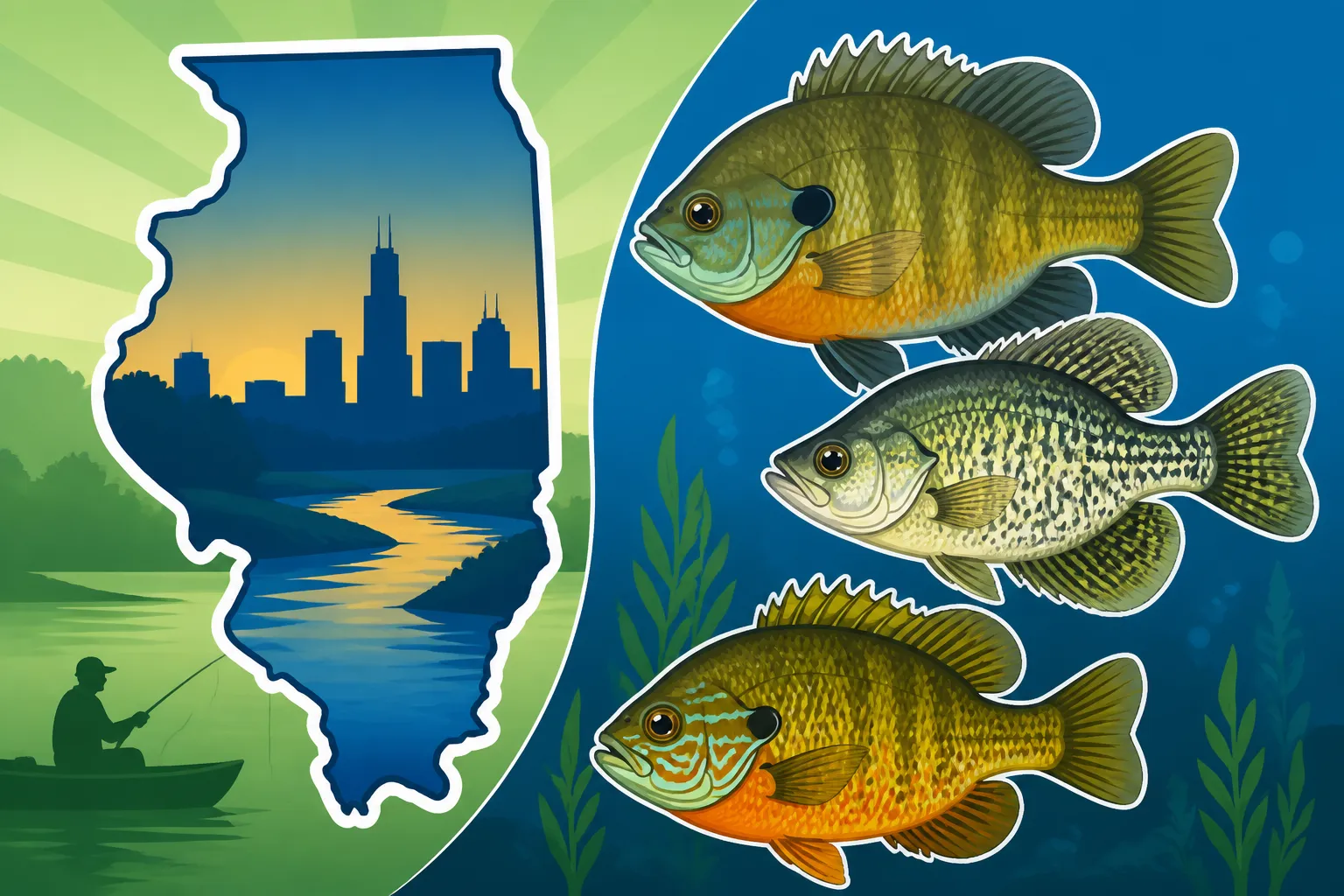
Identifying a bluegill is usually pretty straightforward, though they do have some close relatives. The most defining feature of a bluegill is the solid black "ear flap" (operculum) with no colored trim. They typically have a small mouth, a deep, compressed body, and a dark spot at the base of the soft dorsal fin. Their coloration can vary wildly depending on the water clarity and their habitat, ranging from olive green to yellowish-brown on top, fading to a lighter belly, often with several faint vertical bars along their sides. Spawning males can develop a striking blue on their chin and jaw (hence "bluegill") and vibrant orange or reddish breasts.
Bluegill are incredibly adaptable and thrive in a wide variety of Illinois waters. You'll find them in lakes, ponds, slow-moving rivers, and even backwater sloughs. They love cover – think submerged vegetation like lily pads and coontail, brush piles, fallen trees, and docks. They'll often school up in these areas, especially during the warmer months, making them easy to target. In the spring, they move into shallow, protected coves to create their characteristic "beds" – circular depressions in the substrate where they spawn. Finding these beds can lead to some incredible action, as the fish are aggressive and plentiful. You can often spot these beds in clear water by looking for light-colored circular patches on the bottom.
Best Baits and Techniques for Bluegill
Bluegill are not picky eaters, which is another reason they're such a fantastic target for beginners and seasoned anglers alike. When it comes to bait, live options are often the most effective. Small worms, like red wigglers or pieces of nightcrawlers, are absolute bluegill candy. Crickets, grasshoppers, and even small grubs also work wonders. For artificial presentations, tiny jigs (1/32 to 1/64 ounce) tipped with a piece of a soft plastic grub, a small fly, or even just a wax worm can be incredibly productive. You can find a huge variety of these tiny jigs and soft plastics on Amazon if your local bait shop doesn't have the specific colors you're looking for.
The classic setup for bluegill is a lightweight spinning rod or even a simple cane pole, a small hook (size 8-12), a tiny split shot weight a few inches above the hook, and a small bobber to suspend your bait. Cast near cover, let your bait settle, and watch that bobber! When it starts to dance or disappears, set the hook gently. Many anglers also enjoy fly fishing for bluegill, using small poppers, nymphs, or wet flies. This method offers an exciting challenge and can be incredibly rewarding. For more detailed tips on rigging, check out our guide on How to Rig a Wax Worm Under a Bobber for Bluegill.
Size and Limits for Illinois Bluegill
One of the great things about bluegill fishing in Illinois is that they are generally very prolific, and statewide regulations are often quite liberal. While there might be specific site-specific regulations on certain lakes or ponds, generally there's no minimum size limit for bluegill, and the daily creel limit is quite generous. This means you can keep a good mess of fish for the frying pan, especially if you're targeting smaller "eater" size fish.
However, it's always a good idea to check the current Illinois Fishing Information Guide for the specific body of water you're fishing. Why Fishing Rules Vary by Lake and River is an important concept, as some lakes might have special regulations aimed at improving panfish populations or balancing the predator-prey dynamics. For instance, some lakes might have a slot limit or a reduced daily creel limit for bluegill, especially if they are trying to grow larger fish. Always consult the official regulations before you head out to ensure you're in compliance.
Crappie: The Delicious Duo (Black and White)
If bluegill are the everyday fighters, then crappie are the sought-after gourmets of the panfish world. Known for their delicate, flaky white meat and their tendency to school up in large numbers, crappie are a favorite target for many Illinois anglers. We're lucky in Illinois to have two prominent species: the black crappie and the white crappie, both of which offer fantastic fishing opportunities, especially in the spring and fall. These fish can grow larger than bluegill, often reaching impressive sizes that make for an even more substantial meal.
Black Crappie vs. White Crappie: Spotting the Differences
While both are fantastic fish, there are some subtle but important differences between black crappie and white crappie that help identify them.
Black Crappie ( Pomoxis nigromaculatus ):
- Appearance: Typically have irregular, blotchy black spots scattered across their silvery-green bodies. Their coloration is generally darker than white crappie.
- Dorsal Fin Spines: The most reliable way to distinguish them is by counting the spines in their dorsal fin. Black crappie almost always have 7 or 8 dorsal fin spines.
- Mouth: Their mouth is larger, extending back past the middle of the eye.
- Body Shape: Generally more rounded or disc-shaped than white crappie.
- Habitat: Prefer clearer water with abundant vegetation and structure.
White Crappie ( Pomoxis annularis ):
- Appearance: Characterized by distinct, often organized, vertical bars along their sides, giving them a striped appearance. Their overall color is usually lighter, more silvery.
- Dorsal Fin Spines: White crappie consistently have 6 dorsal fin spines.
- Mouth: Their mouth is slightly smaller, usually not extending past the middle of the eye.
- Body Shape: Tend to have a more elongated or oval body shape.
- Habitat: More tolerant of turbid (cloudy) waters and often found in larger rivers and reservoirs with less vegetation but plenty of submerged timber.
Knowing these differences can sometimes help you target one over the other, as their preferred habitats might vary slightly within the same body of water.
Crappie Habitats and Seasonal Movements
Crappie are masters of structure. They love to hang around submerged trees, brush piles, docks, bridge pilings, and any other cover that offers protection and ambush points for their prey. In Illinois, you'll find them in large reservoirs like Rend Lake, Lake Shelbyville, and Carlyle Lake, as well as many smaller lakes, ponds, and river backwaters. For some of the best crappie fishing, be sure to check out our Best Crappie Fishing Lakes in Illinois guide.
Their movements are heavily influenced by water temperature, especially during the spring spawn. As water temperatures rise into the 50s and 60s, crappie move into shallower water, often congregating in large schools to spawn in protected coves or around shallow brush. This is often the easiest time to catch them, as they are concentrated and aggressive. After the spawn, they retreat to deeper, cooler water, often suspending over brush piles or deep channels. In the fall, as water temperatures drop, they'll often move back into shallower areas or suspend near baitfish schools, providing another excellent fishing opportunity. Night fishing can also be incredibly productive for crappie, as they are attracted to lights.
Essential Crappie Baits and Rigs
Crappie have a relatively small, upward-facing mouth, which means tiny baits and jigs are the name of the game. Live minnows are a classic crappie killer, often suspended under a bobber or fished on a crappie rig with two hooks. Small jigs (1/16 to 1/8 ounce) tipped with soft plastic grubs, tubes, or curly-tail plastics are also incredibly effective. Popular colors vary, but chartreuse, white, pink, and black are consistent producers. You can find a fantastic array of crappie jigs and plastics that are perfect for Illinois waters on sites like Amazon.
Common crappie fishing techniques include:
- Jigging: Vertically jigging small jigs over brush piles or structure, often using a sensitive rod to detect subtle bites.
- Casting: Tossing jigs or minnows under a bobber towards submerged cover.
- Trolling: Slow-trolling multiple lines with jigs or minnows to cover larger areas, particularly useful when fish are scattered.
- Spider Rigging: Using multiple rods extended out from the boat, each with a different bait or jig, to present a wide spread to schooling crappie. This is a favorite method on large reservoirs.
Crappie can be finicky, so experimenting with different depths, retrieve speeds, and colors is key to figuring out what they want on any given day. A good fish finder can also be invaluable for locating those crucial brush piles and schools of fish.
Sunfish Varieties Beyond Bluegill
While bluegill are the most common and widely recognized sunfish, Illinois waters are home to several other fascinating species that also fall under the "panfish" umbrella. These relatives of the bluegill offer diverse fishing experiences, from hard-fighting bottom dwellers to feisty pond inhabitants. Understanding these other sunfish can expand your panfish horizons and help you appreciate the rich biodiversity of Illinois's aquatic ecosystems. Many of them are just as fun to catch as bluegill, and equally tasty.
Redear Sunfish: The Shellcracker
The redear sunfish (Lepomis microlophus) is often affectionately called the "shellcracker" due to its preference for snails and other mollusks. Unlike bluegill, which primarily eat insects, redear have specialized pharyngeal teeth in their throats that allow them to crush the shells of snails. This unique diet often means they grow a bit larger than bluegill and can put up an even harder fight.
Identification: Redear are similar in body shape to bluegill but lack the dark spot on the dorsal fin. Their most distinguishing feature is the bright red or orange margin on the opercular flap (the "ear" tab) in males, which is often a duller orange or yellowish in females. They also tend to have a slightly more pointed snout and a smaller mouth compared to bluegill. Their bodies are typically olive green to yellowish-brown, often with faint blotches or spots.
Habitat and Techniques: Redear prefer clear water with abundant vegetation and, of course, a healthy snail population. They tend to stick closer to the bottom, often around weed lines or shell beds. They are not as aggressive feeders as bluegill and often require a more patient approach. Small worms, crickets, or even small pieces of clam can work, but for a true "shellcracker" experience, try fishing with small jigs tipped with pieces of nightcrawler or a redear-specific bait like a small piece of shrimp. Look for them in areas where snails are plentiful, often deeper than where you'd find bluegill bedding.
Green Sunfish: The Feisty Backyard Catch
The green sunfish (Lepomis cyanellus) is another common and widely distributed panfish in Illinois, particularly in smaller ponds, creeks, and even ditches. While they don't grow very large, they are incredibly aggressive and will readily strike at almost any bait, making them a great target for kids or when you just want to guarantee some action. They are the definition of "feisty," punching above their weight when hooked.
Identification: Green sunfish are easily identified by their relatively large mouth (extending to or past the middle of the eye), a chunky, robust body, and often bright, iridescent blue-green spots on their cheeks and gill covers. Their opercular flap is usually black with a light-colored margin, typically orange or red. Their body coloration is usually dark olive to brown on top, fading to yellowish on the belly, often with faint vertical bars.
Habitat and Techniques: You'll find green sunfish in just about any freshwater habitat in Illinois, from muddy ponds to rocky streams. They are very tolerant of poor water quality and often outcompete other sunfish in marginal habitats. They love cover and will hide around rocks, submerged wood, weeds, and undercut banks. Because they are so aggressive, they'll hit almost anything. Worms, crickets, grubs, and small jigs are all excellent baits. They'll even chase small spinnerbaits or artificial lures intended for bass. They're a perfect fish to introduce a child to fishing, as they provide consistent bites.
Hybrid Sunfish: A Stocked Pond Favorite
Hybrid sunfish are exactly what they sound like: a cross between two different sunfish species, most commonly a bluegill and a green sunfish. These hybrids are often stocked in private ponds and small public lakes because they exhibit "hybrid vigor" – they grow faster and larger than either parent species, and being largely sterile, they don't overpopulate the pond like pure bluegill can. This makes them an excellent management tool for pond owners and a fun target for anglers.
Identification: Hybrid sunfish can be a bit tricky to identify definitively, as their appearance can vary depending on the exact genetic cross. They often display characteristics of both parent species, such as the overall body shape of a bluegill but with a larger mouth like a green sunfish. Their "ear flap" might show characteristics of both, perhaps a dark spot with a colorful margin. Look for a fish that seems "bigger" or more aggressive than a typical bluegill, with a mix of bluegill and green sunfish features.
Habitat and Techniques: You'll primarily find hybrid sunfish in stocked ponds and smaller lakes where they've been intentionally introduced. They behave much like an aggressive bluegill, readily hitting worms, crickets, and small artificial lures. Because they grow larger and are so eager to bite, they provide excellent sport, especially for those looking for a slightly bigger panfish without needing heavy tackle. Hybrid Sunfish Stocked Ponds Worth Trying can be excellent places to target these interesting fish.
Panfish Fishing Gear: Keeping It Simple
One of the most appealing aspects of panfish fishing is that you don't need a massive investment in gear to get started. In fact, keeping it simple often leads to the most success and enjoyment. This accessibility makes panfish a perfect entry point into fishing for anyone, regardless of budget or experience level.
Rods, Reels, and Line for Panfish
For panfish, the key is to go light. Ultralight tackle makes even a modest bluegill feel like a trophy fish, enhancing the fight and making the experience far more exciting.
- Rods: An ultralight spinning rod, typically 5 to 6 feet long, with a fast or moderate action, is ideal. This type of rod is sensitive enough to detect the subtle bites of panfish and flexible enough to cast light lures. A fiberglass or graphite composite rod offers a good balance of durability and sensitivity for beginners. You don't need to spend a fortune; there are many excellent, affordable ultralight combos available.
- Reels: Pair your ultralight rod with a small spinning reel (typically a 500 or 1000 series). Look for one with a smooth drag system, as this will prevent your light line from breaking when a surprisingly large crappie or bluegill makes a strong run.
- Line: Monofilament line in 2 to 6-pound test is perfect for panfish. It's affordable, has good knot strength, and enough stretch to act as a shock absorber. Lighter line allows for longer casts with small baits and is less visible to finicky fish. If you're looking for gear, you can browse a wide selection of Ultralight Tackle for Panfish Fishing options on Amazon to find the perfect setup for your needs.
Basic Tackle Box Essentials
You don't need a huge, overflowing tackle box to effectively fish for panfish. A small, organized box with the essentials will serve you well. Here's a rundown of what to include:
- Hooks: A variety of small hooks, sizes 8-12, are ideal. Aberdeen hooks are popular for panfish because they are thin-wired, making them less likely to gut-hook a fish, and they bend out easily if snagged.
- Bobbers: Small slip bobbers or clip-on bobbers are essential for suspending your bait at the right depth and indicating bites. Keep a few different sizes on hand.
- Sinkers: A small assortment of split shot weights (sizes BB, 3/0, 7/0) will help you get your bait down to the fish.
- Jigs: A selection of tiny jigs (1/32 oz, 1/64 oz) in various colors (chartreuse, white, pink, black) for crappie and bluegill. Tipping these with soft plastics or live bait is a deadly combination.
- Soft Plastics: Small grubs, tubes, and curly-tail plastics to tip your jigs.
- Swivels: Small barrel swivels can help prevent line twist.
- Needle-nose Pliers or Hemostats: Invaluable for removing hooks from fish, especially those with small mouths.
- Clippers or Small Scissors: For cutting line.
- Live Bait: Worms (red wigglers, pieces of nightcrawler), crickets, or minnows, kept in a breathable container.
- Measuring Tape/Scale (Optional): If you like to track your catches, but not essential for a fun day out.
Keeping your tackle box neat and organized, even if it's a small one, will save you a lot of frustration on the water. Check out our advice on Tackle Box Organization for Panfish Trips for more tips. Remember, the goal is to have fun, catch some fish, and enjoy the beauty of Illinois's outdoors. Whether you're chasing trophy crappie or introducing a youngster to the thrill of a bluegill on the line, panfish offer endless opportunities for enjoyment. Don't forget to secure your Illinois Fishing License Guide for 2026 before heading out!
Panfish Species Comparison Table
To help you quickly differentiate between the most common Illinois panfish, here's a handy comparison table. Remember, natural variations and hybridization can occur, but these key features are generally reliable.
| Feature | Bluegill | Black Crappie | White Crappie | Redear Sunfish | Green Sunfish |
|---|---|---|---|---|---|
| Body Shape | Deep, rounded, compressed | Deep, rounded, compressed | More elongated, oval, compressed | Deep, rounded, compressed | Robust, chunky, slightly elongated |
| Mouth Size | Small (doesn't reach middle of eye) | Large (reaches past middle of eye) | Smaller (doesn't reach middle of eye) | Small (doesn't reach middle of eye) | Large (reaches past middle of eye) |
| Opercular Flap (Ear) | Solid black, no colored trim | Black, no distinct margin color | Black, no distinct margin color | Black with bright red/orange margin | Black with light-colored margin |
| Dorsal Fin Spines | 10-12 | 7-8 | 6 | 10-11 | 10 |
| Body Markings | Faint vertical bars, dark spot on dorsal | Irregular, blotchy black spots | 5-9 distinct vertical bars | Faint blotches or spots | Blue-green spots on cheeks, faint bars |
| Preferred Habitat | Clear water, heavy vegetation, structures | Clearer water, vegetation, structure | Turbid water, submerged timber, rivers | Clear water, vegetation, shell beds | Any water, rocks, logs, tolerant |
| Primary Diet | Insects, larvae, small crustaceans | Minnows, insects, crustaceans | Minnows, insects, crustaceans | Snails, mollusks, insects | Insects, worms, small fish |
| Common Baits | Worms, crickets, tiny jigs | Minnows, small jigs, tiny plastics | Minnows, small jigs, tiny plastics | Worms, grubs, small pieces of clam | Worms, crickets, small jigs, spinners |
Disclaimer
This article is for general informational purposes only and does not constitute professional advice. Laws, prices and regulations vary by location and change over time. Consult a qualified professional for guidance on your specific situation.