How to Identify a Sauger vs a Walleye by Its Fins
It can be incredibly frustrating to reel in a beautiful fish, only to stare at it and wonder, "Is this a walleye or a sauger?" For many Illinois anglers, especially those casting lines in the Mississippi River or other large systems, this is a common dilemma. These two species, while both fantastic sportfish and delicious table fare, have distinct legal requirements and subtle differences that can be tough to spot at a glance. This guide is here to cut through that confusion, focusing on the most reliable way to tell them apart: by looking closely at their fins.
The Core Challenge: Why Sauger and Walleye are Often Confused
Let's be honest, walleyes and saugers are practically cousins in the pike-perch family, and they often hang out in similar places. This close relationship is precisely why so many of us struggle to tell them apart when they're flopping around in the bottom of the boat or at the end of a line.
Similarities in Appearance and Habitat
When you first look at a walleye or a sauger, you’ll notice they share that classic elongated, torpedo-like body shape that makes them efficient predators. They both have that slightly rough, sandpaper-like skin, two distinct dorsal fins, and an overall greenish-gold to brownish coloration, often with a lighter belly. In Illinois, particularly in major river systems like the Mississippi or the Illinois River, you might find both species thriving in the same murky, current-laden waters, or even along the edges of deep main channel bends. It’s not uncommon to catch one after the other, adding to the identification challenge.
Imagine you're out on the Mississippi River Walleye and Pike Fishing in Northern Illinois on a slightly overcast day, and the light isn't perfect. You just pulled in a fish that's a good size, has those prominent eyes that look like they're designed for low light, and feels like a walleye. But then you catch another, and it looks almost the same, but… is it? That's the moment the confusion really sets in. Both fish use similar ambush tactics, often holding near structure, current breaks, or deep holes, making their general behavior and preferred spots feel incredibly similar.
The Importance of Correct Identification for Anglers
So, why bother learning the subtle differences? Well, beyond the satisfaction of knowing exactly what you've caught, there are very practical reasons. Illinois has specific regulations for both walleye and sauger, and these can include minimum size limits and daily catch limits that differ significantly. For example, Illinois Walleye Size and Catch Limits often involves a minimum length, while sauger limits might be more generous or have different rules entirely. Accidentally keeping a short walleye because you thought it was a legal sauger, or vice-versa, can land you a citation from a conservation officer.
It's not just about avoiding fines, though. Understanding the species helps you become a better angler. If you know you're targeting sauger, you might adjust your tactics, bait, or even the depth you're fishing compared to when you're specifically after walleye. It helps you understand their behavior, where they might spawn, and what kind of structure they prefer. Plus, it shows a respect for the resource and the conservation efforts put in place to maintain healthy fish populations. Getting good at identification quickly allows you to make informed decisions on the water, whether you're keeping a fish for dinner or practicing catch-and-release.
Unveiling the Differences: Focus on the Dorsal Fin
Alright, let's get down to brass tacks. The absolute best place to start when trying to distinguish a walleye from a sauger is by examining their dorsal fins. These are the fins running along the fish's back. Both have two: a spiny front dorsal fin and a softer-rayed second dorsal fin.
The Walleye's Distinctive Dorsal Fin Spot
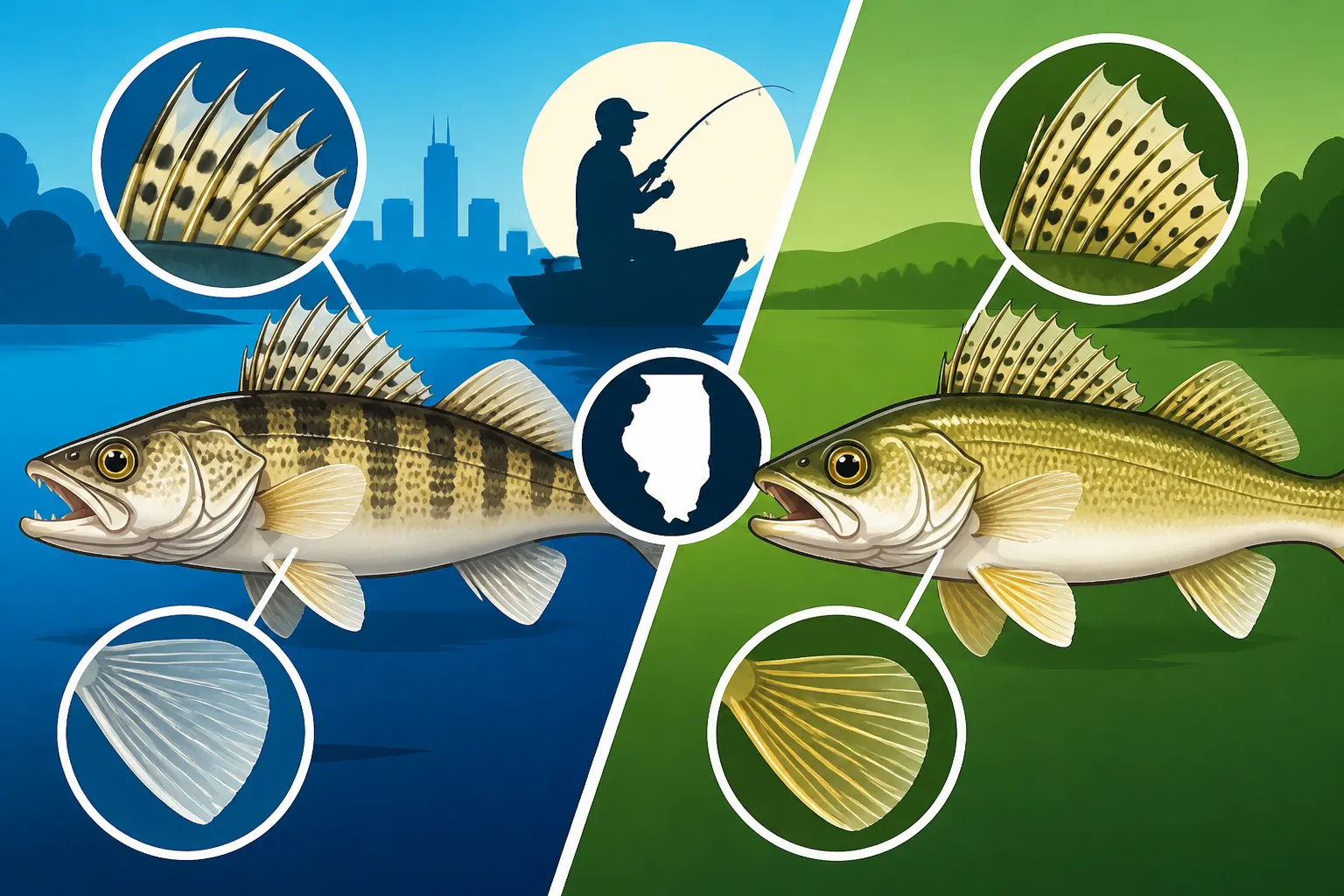
When you're holding a walleye, the first thing you should look for is a prominent, dark, almost thumb-sized spot on the trailing (rearmost) edge of its first dorsal fin. This isn't just a faint smudge; it's typically a very clear, deep black blotch. Think of it as a definitive "bullseye" marker.
This spot is incredibly reliable. I've caught countless walleyes over the years, from small ones to true trophy fish, and this spot has almost always been there, making identification quick and easy. It's usually located right where the last few spines meet the fin's membrane. Imagine you've just landed a beautiful walleye from Lake Shelbyville Fishing Guide. As you bring it alongside the boat, even before you net it, you can often glimpse that tell-tale black spot, confirming your suspicions. This spot is so consistent that it's often the single best field mark to differentiate it from a sauger, even if the fish is thrashing a bit. If you can only check one thing, make it this spot!
Sauger's Spotted Dorsal Fin Pattern
Now, let's talk about the sauger. Unlike the walleye with its single, concentrated dark spot, the sauger's dorsal fins are characterized by multiple, distinct rows of black spots or a mottled pattern. These spots are usually spread across both the spiny first dorsal fin and often extend onto the softer-rayed second dorsal fin. You won't find that big, singular black blotch on the sauger.
Instead, picture a series of small, dark freckles or a uniform pattern of dark spots scattered across the entire fin, rather than clumped in one place. It's almost like the sauger's fins are trying to camouflage it even further with this speckled appearance. This pattern can vary in intensity, but the key is the lack of that one large, prominent spot. If you're on a productive stretch of the Mississippi River and reeling in sauger after sauger, you'll notice this consistent, spotted, or mottled pattern on their dorsal fins, a stark contrast to the walleye's single dark marker. It's a "scattered" look versus a "single target" look.
Beyond the Dorsal: Other Fin and Body Clues
While the dorsal fin is your primary identification tool, there are other subtle clues you can look for, especially if you're still unsure or want to double-check. These involve other fins and the overall body pattern.
Caudal Fin (Tail) Markings
Another excellent, albeit sometimes less obvious, indicator is found on the caudal fin, which is the tail fin.
- Walleye: Many walleyes, particularly larger ones, will have a distinct white tip on the lower lobe of their caudal fin. This isn't always present on every single walleye, but when it is, it's a very reliable secondary marker. It's often a crisp, clean white edge.
- Sauger: Saugers typically lack this prominent white tip on their tail. Their caudal fin will usually be more uniformly patterned or mottled, blending in with the rest of their body coloration.
If you're still debating between the two after checking the dorsal fin, gently spread the tail fin and look for that white tip. It can be a bit like finding a hidden gem, but once you see it on a walleye, you'll recognize it again.
Pectoral and Pelvic Fin Colors and Patterns
While not as definitive as the dorsal or caudal fin markings, the pectoral (side) and pelvic (belly) fins can offer some subtle hints, though these can vary more by individual fish and water conditions.
- Walleye: Their fins tend to be a bit more opaque, sometimes with a yellowish or greenish tint, often blending smoothly with the belly color.
- Sauger: Sauger fins can sometimes appear a bit more translucent, and you might occasionally see very faint, almost ghostly spots or patterns extending onto them. This is a less reliable marker than the dorsal fin, but it's another piece of the puzzle to consider.
When you're gently handling the fish, take a moment to look at all its fins. Hold it carefully, perhaps over a measuring board if you're concerned about regulations, and observe these smaller details. A good pair of polarized sunglasses, or even a basic fish identification card from Amazon, can help you see these subtle differences more clearly on the water.
Overall Body Pattern and Coloration (Contextual Clues)
Finally, while body coloration can be highly variable due to factors like water clarity, diet, and even geographic location, there are some general tendencies that can provide contextual clues. However, always defer to fin markings for definitive identification.
- Walleye: Generally, walleyes have a more uniform, streamlined coloration. They're often described as golden-olive, brassy, or dark green on their backs, fading to a lighter, often pearly white or yellowish belly. They usually have fewer distinct blotches or markings along their sides.
- Sauger: Saugers tend to have a more pronounced, "splotchy" or camouflaged appearance. Look for distinct dark blotches or saddle-like patterns along their back and sides that extend below the lateral line. Their overall color often leans more towards a brownish or grayish hue, which helps them blend into the rocky and silty bottoms they often inhabit. This mottled pattern can be quite striking and is a good secondary indicator when paired with the fin observations.
Remember, though, that a walleye caught in murky river water might appear darker and more mottled than one caught in a clear lake, so rely on the fins first and foremost. Always keep in mind that Why Fishing Rules Vary by Lake and River applies not just to limits but also to the appearance of the fish themselves.
Putting It All Together: A Quick Identification Guide for Anglers
Let's consolidate all this information into a quick checklist you can mentally run through the next time you're on the water and land a fish that looks like it could be either a walleye or a sauger. Getting good at this rapid identification is a skill that comes with practice, but knowing what to look for makes all the difference.
Step-by-Step Fin Check
Here’s a quick mental checklist for when you’ve got a fish in hand:
- Examine the First Dorsal Fin: This is your absolute primary check.
- Walleye: Look for a large, distinct, dark blotch on the trailing edge (the very back) of the first dorsal fin. It's usually a solid, obvious spot.
- Sauger: Instead of a single blotch, look for distinct rows of smaller black spots or a mottled pattern spread across the entire first dorsal fin, and often onto the second dorsal fin too. There will be no singular large blotch at the back.
- Check the Caudal Fin (Tail): This is your best secondary check.
- Walleye: Look for a clear, white tip on the lower lobe of the tail fin.
- Sauger: The tail fin will generally lack this distinct white tip and will likely be more mottled or uniformly patterned.
- Observe Overall Body Pattern: Use this as a confirming clue, but don't rely solely on it.
- Walleye: Tends to have a more uniform body color, often golden-olive to brassy, with a clean, lighter belly and less distinct blotching on the sides.
- Sauger: Often has more pronounced dark blotches or saddle patterns along its back and sides, giving it a more camouflaged, "splotchy" look.
To help visualize, here's a quick comparison table:
| Feature | Walleye | Sauger |
|---|---|---|
| First Dorsal Fin | Prominent, dark spot on trailing edge | Multiple small, distinct spots or mottled pattern |
| Second Dorsal Fin | Clear or faintly spotted | Often spotted or mottled, like the first |
| Caudal Fin (Tail) | Distinct white tip on lower lobe (often) | Lacks white tip; more mottled/uniform |
| Body Markings | Generally uniform, golden-olive to brassy | Distinct dark blotches/saddle patterns on sides |
| General Build | Can be larger, heavier-bodied | Often more slender |
Why the ID Matters for Regulations and Respecting the Fish
Having a definitive way to tell these two species apart is crucial for any responsible angler. Imagine a scenario where the daily limit for walleye is six fish at 14 inches minimum, but for sauger, it's 10 fish with no minimum size. This isn't exactly how Illinois Fishing Season and Catch Limit Rules work, but it illustrates why knowing the difference is paramount. Misidentifying your catch could easily lead to exceeding a bag limit or keeping an undersized fish, which is a big no-no.
Always carry a copy of the current Illinois Fishing Regulations Overview, either the physical booklet or a digital version on your phone. A laminated, waterproof fish identification card (you can find great ones on Amazon!) that specifically details Illinois species is also a fantastic tool to have clipped to your tackle box or life vest. When in doubt, it's always best to err on the side of caution. If you're not 100% sure what you've caught, especially if it's near a size limit, it's often best to release it unharmed. This kind of careful practice ensures that we all contribute to sustainable fishing for generations to come. Having the right tools, whether it's a good pair of pliers or a dependable identification guide, enhances your experience and helps you be a more ethical angler.
So, the next time you feel that familiar tug on your line in Illinois waters, and you pull up a beautiful, silver-sided fish, take a moment. Look for that definitive dark spot on the dorsal fin, or the pattern of scattered speckles. Check for the white tip on the tail. These small details are your keys to correctly identifying your catch and truly understanding the amazing fish that call Illinois home. You'll not only stay within the rules but also deepen your appreciation for the rich diversity of our waterways.
Disclaimer
This article is for general informational purposes only and does not constitute professional advice. Laws, prices and regulations vary by location and change over time. Consult a qualified professional for guidance on your specific situation.