Are Spotted Gar Safe to Handle?
It’s a scenario many Illinois anglers have faced: you’re out on a quiet backwater, enjoying a peaceful day, when suddenly you hook into something truly prehistoric-looking. With its long, toothy snout and armor-plated body, the spotted gar can look incredibly intimidating. The immediate question that pops into most anglers' minds is, "Are these things actually safe to handle, or am I asking for trouble?" This guide is here to walk you through exactly how to approach, handle, and release spotted gar safely, putting those anxieties to rest so you can enjoy the thrill of catching these unique fish without worry.
Understanding the Spotted Gar
Let's start by getting to know the spotted gar a little better. These incredible fish are native to Illinois waters and, while they might look like something out of a dinosaur movie, they're a vital part of our aquatic ecosystem. Understanding what makes them tick, and what makes them appear so daunting, is the first step toward confident handling.
Physical Characteristics and What Makes Them Look Intimidating
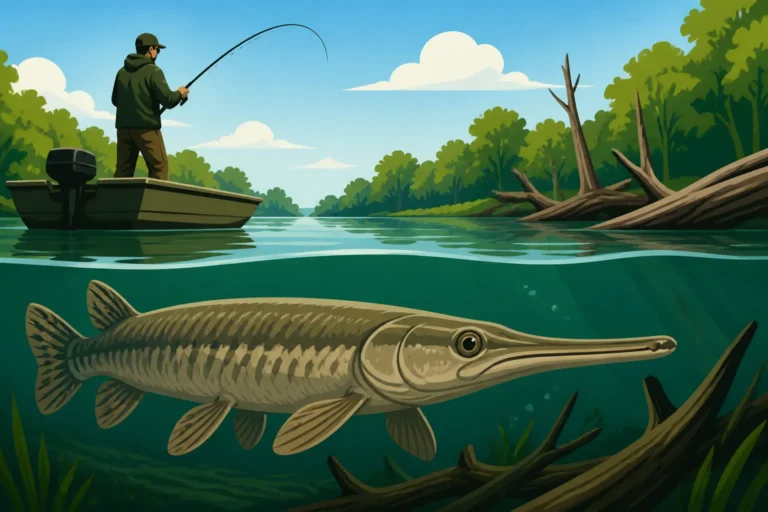
The most striking feature of a spotted gar is undoubtedly its long, narrow snout, absolutely packed with needle-sharp teeth. This isn't a mouth you want to casually stick your thumb into, that's for sure. Their bodies are covered in thick, diamond-shaped ganoid scales, which give them that armored appearance. These scales aren't like the flexible scales of a bass or crappie; they're hard, bony, and offer incredible protection. This combination of a toothy maw and a tough, rigid body can make them seem like a real handful, leading many anglers to simply cut the line rather than risk getting close.
The coloration of a spotted gar also adds to its allure, with olive or brownish backs fading to lighter bellies, and distinct dark spots covering its body and fins. They can grow to impressive sizes in Illinois, sometimes exceeding three feet in length. Imagine a fish that long, thrashing with a mouth full of sharp teeth and a body covered in tough, potentially abrasive scales—it's easy to see why initial impressions can lean towards caution.
Where You'll Find Them in Illinois
Spotted gar thrive in slow-moving, vegetated waters, making them a common sight in the backwaters of major river systems across Illinois. Think about those calmer oxbows, sloughs, and shallow bays of the Mississippi River or the Illinois River. They love areas with plenty of submerged weeds, lily pads, and fallen timber, where they can ambush smaller fish. You might also find them in larger lakes with extensive shallow, weedy flats.
For anglers looking to target these unique fish, understanding their habitat is key. They're often found lurking just below the surface, perfectly camouflaged, waiting for an unsuspecting meal to swim by. They're not always found in the same fast-current areas where you might target walleye or certain bass species. If you're fishing in stagnant or slow-moving water with lots of cover, especially in the southern and central parts of the state, there's a good chance you'll encounter a spotted gar. Mississippi River Fishing in Illinois: Which Species Live Where can give you more insight into where these species congregate.
Their Role in the Ecosystem
Despite their menacing appearance, spotted gar are not some invasive menace; they are native predators and an important part of Illinois' aquatic food web. They primarily feed on smaller fish, crustaceans, and insects, helping to maintain a healthy balance in their environment. In fact, seeing a healthy population of gar can be a sign of a robust and diverse ecosystem.
They often get a bad rap as "trash fish" or "nuisance fish" by some anglers who misunderstand their ecological value. However, they play a crucial role, often preying on slower, less desirable fish, and can even contribute to controlling overpopulation of certain species. Approaching them with respect for their place in nature, rather than fear or disdain, is a much better mindset for any angler.
The Real Risks of Handling Spotted Gar
So, are spotted gar truly dangerous? The short answer is: they can be if you're not careful. But with the right knowledge and tools, the risks are easily managed. It's not about them actively trying to harm you, but rather their natural defenses and physical characteristics that require a cautious approach.
Those Teeth Aren't Just for Show
Let's address the most obvious concern first: their teeth. Spotted gar have numerous, sharp, conical teeth designed for grasping and holding slippery prey. If a gar thrashes while you're trying to unhook it, those teeth can easily cause a painful puncture wound or laceration. It’s not an aggressive bite in the sense of an attack, but rather an accidental injury during the struggle.
Imagine trying to remove a hook from a fish that's twisting and turning, and its mouth is full of sharp points. Without proper control, your fingers are vulnerable. This is why having the right tools and knowing how to control the fish's head is paramount. A gar's primary defense is to thrash and bite, purely out of instinct and fear when caught, not malice.
The "Armor" Can Be Surprisingly Sharp
While those ganoid scales provide excellent protection for the gar, they can be surprisingly abrasive to human skin. Running your hand along a gar's body against the grain of the scales can result in nasty scrapes and cuts. Think of it like a very coarse sandpaper or a file. This "armor" is an evolutionary marvel for the fish but a potential hazard for an angler trying to grip it firmly.
When you're dealing with a large, strong fish, maintaining a secure grip is essential for both your safety and the fish's well-being. However, gripping a gar too tightly or incorrectly can lead to friction burns or cuts from these tough scales. Again, proper technique and perhaps some protective gear can mitigate this risk entirely.
The Roe (Eggs) Are Toxic
Here's a critical piece of information that every angler in Illinois should know: spotted gar eggs (roe) are highly toxic to humans and other mammals. This is not a myth; it's a scientific fact. If ingested, the roe can cause severe gastrointestinal distress, including vomiting, diarrhea, and abdominal pain. While a gar's flesh is generally considered edible by some, consuming the eggs is a serious health hazard and should be avoided at all costs.
This toxicity is a natural defense mechanism for the gar, protecting its offspring from predators. It's a key reason why catch-and-release is often the preferred method for many anglers, especially if they are unfamiliar with safely processing gar or distinguishing between male and female fish during spawning seasons. Always be aware of this unique biological fact, especially if you're considering keeping a gar for the table.
Safe Handling Techniques for Anglers
Now that we've covered the potential hazards, let's talk about how to confidently and safely handle a spotted gar. It’s all about preparation, proper tools, and a calm, decisive approach. You can absolutely enjoy catching these fascinating fish without getting hurt.
Gear You'll Want to Have On Hand
Having the right tools makes all the difference when handling a gar. Don't go into a gar encounter unprepared! First, a sturdy pair of long-nosed pliers or de-hookers is essential. These allow you to reach deep into their long mouths without putting your fingers at risk. You can find excellent options on Amazon, often specifically designed for saltwater or toothy fish. Secondly, a pair of heavy-duty fishing gloves (leather or kevlar-reinforced) can protect your hands from both teeth and scales. They might make handling a bit trickier, but the protection is worth it.
Consider carrying a jaw spreader if you frequently target gar or other toothy species. This tool can hold their mouth open, providing a safer working space. Lastly, a rubber-coated landing net or a large cradle-style net can help you secure the fish in the water, reducing thrashing before you even attempt to handle it. Avoid nets with thin mesh, as gar teeth can easily get tangled and cause damage to both the net and the fish. Having a Tackle Box Setup for Illinois Bass Anglers can be easily adapted with a few extra tools for gar.
The Approach: Controlling the Head
The key to safely handling a spotted gar is to control its head immediately. A gar that can thrash its head side-to-side is a gar that can easily bite or scrape you. Once you've landed the fish (preferably in a net to minimize struggle), try to pin its body against the ground, a boat gunwale, or your lap (if wearing thick pants and gloves). Use one hand, protected by a glove, to firmly grasp the gar behind the head, just where the gills meet the body. This grip often immobilizes the head enough to prevent biting.
Another effective method, particularly for larger gar, is to use a specific gar grabber tool or a large pair of lip grippers designed for toothy fish. These tools allow you to securely hold the gar's snout, preventing it from biting, while keeping your hands clear of the danger zone. Remember, a calm and confident approach will not only keep you safe but also reduce stress on the fish.
Removing the Hook Safely
With the gar’s head secured, hook removal becomes much safer. Use your long-nosed pliers or de-hooker to carefully grip the hook shank. If the hook is deeply embedded or the gar has swallowed it, resist the urge to yank it out carelessly, as this can cause severe internal injury to the fish. Sometimes, cutting the line as close to the hook as possible is the best option, especially if you're planning to release the fish. Hooks will eventually rust out, and it's better than causing fatal trauma.
For hooks in the mouth or jaw, a swift, firm twist of the pliers can often dislodge it. Be patient, take your time, and ensure you have a clear view of the hook before attempting removal. If the gar starts to struggle, re-establish your head control before continuing. Never put your fingers near the teeth unless you have a reliable jaw spreader in place.
Releasing the Gar
Once the hook is removed, it’s time for a proper release. If you handled the fish in a boat, gently lower it back into the water, headfirst, supporting its belly. Allow it to regain its bearings before letting go. If you're bank fishing, try to release it directly from the net, or support its belly as you place it back in the water. Avoid dropping the fish from a height onto the water, as this can cause internal damage.
Often, spotted gar will be quite lethargic after being caught, especially on warmer days. Hold the gar upright in the water, moving it gently back and forth to help oxygenate its gills. Wait until you feel a strong kick of its tail and it tries to swim away before fully releasing your grip. This ensures the fish has the best chance of survival. Releasing them quickly and carefully ensures the health of our fisheries for future generations.
Debunking Common Myths About Gar
Gar often get a bad rap, mostly due to their intimidating appearance and some old wives' tales. Let's clear up some common misconceptions that might make anglers hesitant to interact with these amazing fish.
Are They "Trash Fish"?
Absolutely not! The term "trash fish" is often applied to species that aren't typically targeted for sport or consumption, or those perceived as competitors for more desirable species. This couldn't be further from the truth for spotted gar. As we discussed, they are native predators and play an essential role in maintaining a balanced ecosystem in Illinois waters. They help control populations of other fish, keeping the overall fishery healthy.
Many anglers actually enjoy targeting gar for their unique fight and challenge. They are powerful fish that can put up an impressive battle on the right tackle. Some people even consider their meat edible, though it requires specific preparation due to their bony structure and the toxic roe. Calling them "trash fish" diminishes their natural value and perpetuates a misunderstanding of their importance in our local environments.
Do They Attack Humans?
This is a fear that's been fueled by their appearance and perhaps a few sensationalized stories, but it's simply not true. Spotted gar do not actively attack humans. Their "aggression" when caught is a purely defensive, instinctual reaction to being hooked and handled. They are wild animals, and like any wild animal, they will defend themselves if they feel threatened.
The injuries that occur during gar handling are almost always accidental—a result of a thrashing fish, sharp teeth, and sometimes, improper handling techniques by the angler. They are not swimming through our rivers looking for ankles to bite or fingers to latch onto. You're far more likely to injure yourself on a treble hook or slip on a muddy bank than to be "attacked" by a gar.
The True Threat: Other Hazards While Fishing
When you put the risks of handling a gar into perspective, you'll realize there are many other, more common hazards associated with fishing. Think about it:
- Fish Hooks: How many times have you snagged yourself with a hook, either on a cast or while unhooking a fish? That's a far more common injury than a gar bite.
- Slippery Banks and Boat Decks: A slip and fall can lead to anything from a bruise to a broken bone, a risk present every time you're near the water. Bank Fishing Tips for Beginners often include advice on safe footing.
- Sun Exposure: Prolonged time in the sun without protection can lead to sunburn, heatstroke, or worse over time.
- Boating Accidents: If you're on the water, there's always a risk of collision, capsizing, or other mishaps. Illinois Boating Safety Gear Checklist highlights many of these concerns.
- Other Wildlife: Encounters with venomous snakes, spiders, or even aggressive birds are statistically more likely to cause problems than a gar.
By comparing these common fishing hazards to the perceived threat of a gar, it becomes clear that with a little caution and the right tools, handling a gar is a manageable risk—far less intimidating than many other things we routinely encounter.
Here's a quick comparison of gar handling scenarios:
| Scenario | Potential Risk | Mitigation Strategy |
|---|---|---|
| Hook in mouth, no gloves/pliers | Puncture wounds, lacerations from teeth | Use long-nosed pliers/de-hooker, wear heavy gloves |
| Gar thrashing in hand | Scrapes from ganoid scales | Control head, secure body, use net or jaw gripper |
| Consuming gar roe | Severe gastrointestinal distress | Never consume gar eggs, practice catch-and-release if unsure |
| Accidental drop onto hard surface | Injury to fish, potential for re-hook | Use a net, cradle fish, release gently at water's edge |
Final Thoughts for Confident Gar Handling
So, are spotted gar safe to handle? Yes, absolutely, if you approach them with respect, the right tools, and a bit of knowledge. These ancient fish are a truly fascinating part of Illinois' aquatic heritage, and there's no reason to let fear keep you from experiencing the thrill of catching one. Remember to always prioritize safety for both yourself and the fish.
Invest in some basic gear like long pliers and good gloves (easily found on Amazon), understand where their teeth and scales pose a risk, and definitely remember that their eggs are toxic. With these simple precautions, you can confidently unhook, admire, and safely release a spotted gar back into the waters of Illinois, adding a unique and memorable experience to your fishing adventures. Don't let their prehistoric looks scare you away from these incredible creatures!
Disclaimer
This article is for general informational purposes only and does not constitute professional advice. Laws, prices and regulations vary by location and change over time. Consult a qualified professional for guidance on your specific situation.