Illinois Spotted Gar Fishing in the Mississippi River Backwaters
There's a certain thrill in pursuing a fish that looks like it swam straight out of the dinosaur age, and in Illinois, that often means setting your sights on the spotted gar. For many anglers, these long, toothy predators are an intriguing challenge, far removed from the usual bass or crappie pursuits. This guide is all about helping you unlock the secrets of successfully targeting spotted gar, especially in the rich, often overlooked backwaters of the Mississippi River.
The Allure of Spotted Gar in Illinois Waters
Spotted gar are truly unique creatures, and for a dedicated angler, that uniqueness is precisely their appeal. They're not your typical panfish or even your average sport fish; they represent a wilder, more ancient side of our freshwater ecosystems. Many folks might see them as nuisance fish due to their appearance or their tendency to steal bait meant for other species, but I promise you, once you hook into a sizable spotted gar, you'll quickly understand why a growing number of anglers specifically seek them out.
A Glimpse into Prehistoric Angling
Imagine reeling in a fish that's covered in tough, diamond-shaped scales, boasting a long, tooth-filled snout, and has been patrolling these waters for millions of years. That's the spotted gar for you. They can grow to impressive sizes, sometimes exceeding three feet in length, and when hooked, they put up a surprisingly strong fight. They'll pull hard, roll, and often make spectacular leaps out of the water, making every catch an adrenaline-fueled experience. Their distinct markings, a series of dark spots covering their olive-brown bodies, only add to their prehistoric charm. Unlike some other gar species, the spotted gar's spots extend onto its head and snout, making it quite distinguishable. It's a true test of tackle and technique to bring one of these beauties to hand. If you're curious about their ancient relatives, you might enjoy learning about Spotted Gar and Bowfin: The Strangest-Looking Freshwater Fish.
Beyond the fight, there's a certain satisfaction in connecting with a species that thrives in environments many other fish find challenging. They're resilient, cunning, and perfectly adapted to their niche. Learning to identify them correctly is part of the fun; you can tell them apart from other species by looking closely at their snout and the pattern of their spots. For a deeper dive into distinguishing these fish, check out Spotted Gar vs Bowfin: How to Tell These Prehistoric Fish Apart. They represent a unique branch of the Illinois fishing tree, offering a distinct challenge and a rewarding experience for those willing to venture off the beaten path.
Why the Mississippi River Backwaters?
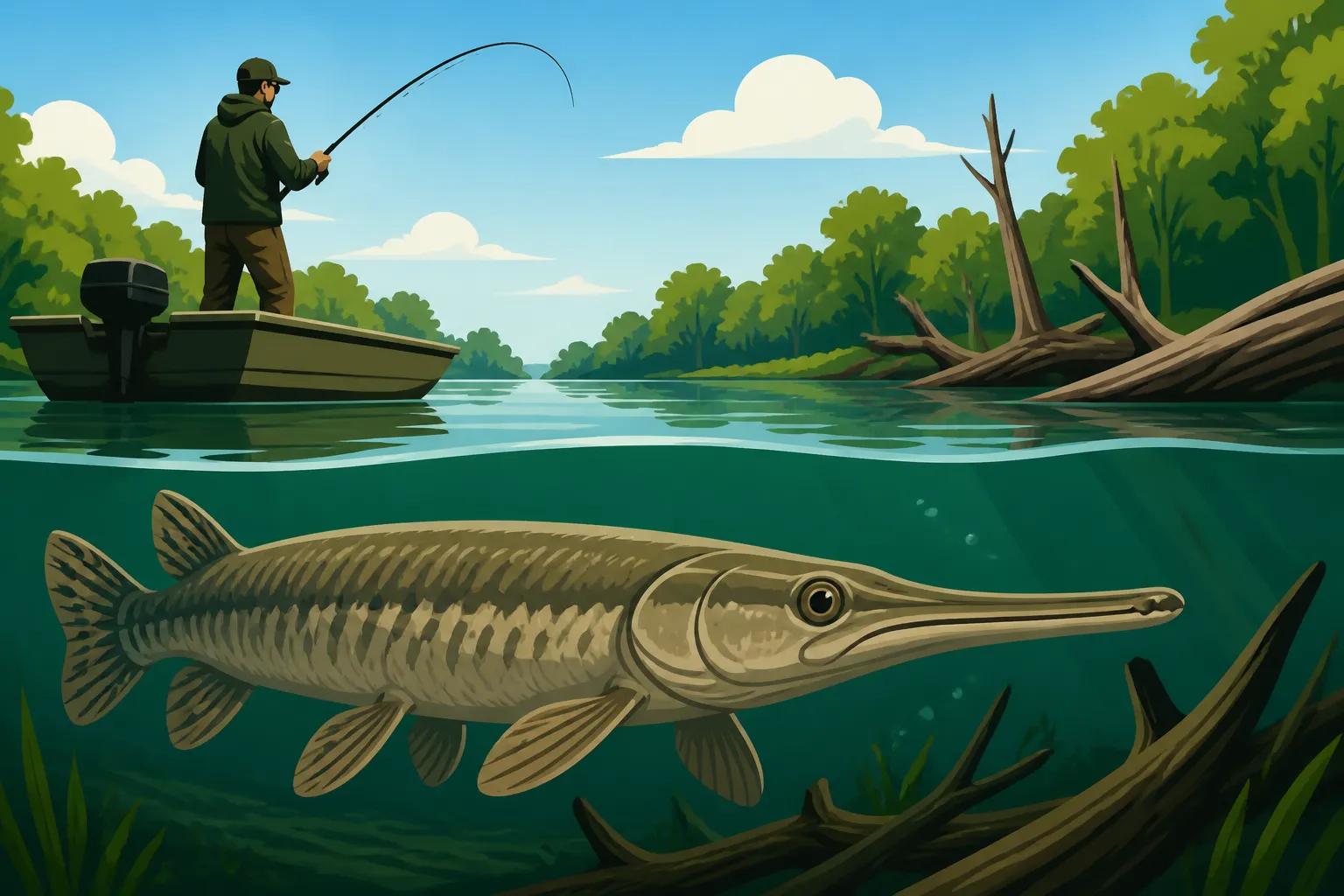
The Mississippi River, particularly its numerous backwater areas, is an absolute goldmine for spotted gar. These areas, characterized by slower currents, abundant aquatic vegetation, and often warmer, shallower water, create the perfect habitat for gar to thrive. Think about oxbow lakes, sloughs, abandoned river channels, and weed-choked bays – these are prime gar territory. Unlike the main channel which has stronger currents and deeper water, the backwaters offer refuge and ample ambush points.
These nutrient-rich environments provide an endless buffet of smaller fish, which is the primary diet of a spotted gar. They're ambush predators, often lurking motionless amidst the weeds or submerged timber, waiting for an unsuspecting meal to swim by. The complexity of these backwater systems, with their hidden pockets and intricate networks of submerged structure, makes them incredibly productive. Anglers targeting other species in these very same backwaters, such as those fishing for Mississippi River Backwater Fishing for Crappie and Bass, Illinois or even Mississippi River Bullhead Fishing in the Backwater Sloughs, often encounter gar, sometimes quite unexpectedly. Understanding this preferred habitat is the first crucial step to consistently finding and catching spotted gar in Illinois.
Essential Gear and Techniques for Spotted Gar
Fishing for spotted gar isn't like casting for bluegill. Their unique mouth structure – long, bony, and filled with needle-sharp teeth – requires some specialized approaches. You're going to need gear that can handle a strong fight and methods that account for their tough jaws. Trying to catch them with ultralight tackle and tiny hooks designed for panfish will only lead to frustration and lost fish.
Rods, Reels, and Line: Building Your Setup
When it comes to tackle for spotted gar, think robust. You'll want a medium-heavy to heavy action spinning or baitcasting rod, typically in the 7 to 8-foot range. This length gives you good casting distance and leverage for fighting a strong fish. Pair that with a sturdy reel, capable of holding a good amount of line and delivering reliable drag pressure. Many anglers find baitcasting reels work well for the larger baits often used for gar, offering precision casting into tight spots in the backwaters.
For line, braided line is almost a necessity. Its lack of stretch and high abrasion resistance are invaluable when battling a gar through heavy cover and contending with their sharp teeth. I'd recommend 30 to 50-pound test braided line. You can find excellent quality braided lines on Amazon that will stand up to the challenge. A fluorocarbon leader of 30 to 50 pounds, about 18-24 inches long, can add a bit of stealth and extra abrasion resistance just before your hook, though some anglers go straight braid. Avoid monofilament as your main line; it simply doesn't have the durability or sensitivity needed for gar fishing in these environments.
Baits, Lures, and the Rope Trick
Now, this is where it gets interesting! Gar are primarily piscivorous, meaning they eat other fish. So, natural baits mimicking their prey are often highly effective.
- Live Bait: Smaller live fish like shad, minnows, or small bluegill are fantastic. Present them under a bobber or free-lined near cover. Gar will often slowly mouth the bait before taking it completely, so patience is key. A Kahle hook or a circle hook works well here, as they are designed to hook in the corner of the mouth, avoiding the bony snouts.
- Cut Bait: Fresh cut bait, especially strips of oily fish like shad or carp, can also be very productive. The scent trail it puts out can attract gar from a distance. Again, a sturdy hook is essential.
- Artificial Lures: While less common, certain artificials can entice gar. Spinnerbaits, spoons, and soft plastic swimbaits retrieved slowly near cover can sometimes trigger a strike. However, hooking them with traditional treble hooks can be tough due to their bony mouths.
This leads us to the legendary Rope Trick. This ingenious method uses a frayed nylon rope, often with a small weight or piece of cut bait attached, in place of a hook. When a gar bites, its teeth get tangled in the nylon fibers. It's an incredibly effective and relatively humane way to catch and release gar, as there's no hook to injure them. You can tie your own or even find pre-made gar getters on Amazon. This technique dramatically increases your hook-up ratio and minimizes frustration.
| Technique/Bait | Description | Pros | Cons | Ideal for |
|---|---|---|---|---|
| Live Bait | Small live fish (shad, minnows) under bobber or free-lined | Highly effective, natural presentation | Gar can be hard to hook, bait cost/supply | Patient anglers, larger gar |
| Cut Bait | Strips of oily fish (shad, carp) on a sturdy hook | Strong scent trail, attracts from distance | Less active presentation, can attract trash fish | Slower fishing, scent-driven bites |
| Rope Lure | Frayed nylon rope, often with small weight/bait | Extremely high hook-up ratio, humane | Not a "hook and reel" fight, specific gear | Catch & release, high success rate |
| Artificial Lures | Spinnerbaits, spoons, soft plastic swimbaits, retrieved slowly near cover | Active fishing, covers water quickly | Low hook-up ratio due to bony mouth | Explaining areas, seeking active fish |
Locating Gar Hotspots in Backwater Habitats
Finding the right spot is paramount. As mentioned, spotted gar love calm, shallow, vegetated waters. On the Mississippi River, this means exploring the myriad of backwaters, sloughs, and oxbows. Look for areas with:
- Dense Aquatic Vegetation: Lily pads, cattails, submerged grasses, and brush offer cover for both gar and their prey. Gar will often lie motionless just beneath the surface in these areas, basking or waiting to ambush.
- Submerged Timber and Laydowns: Fallen trees, log jams, and brush piles provide structure where gar can hide.
- Shallow Bays and Coves: Especially on sunny days, these areas warm up, attracting baitfish and consequently, gar.
- Ditches and Channels connecting to the main river: These can be highways for fish moving between the main river and the backwaters.
- Slack Water Areas: Any spot where the current slows down significantly is a potential gar hangout.
Using a good pair of polarized sunglasses will help you spot gar cruising or basking just below the surface. A quiet approach, whether by kayak (check out Kayak Fishing Gear for Illinois Waters) or a stealthy boat, will prevent spooking these wary predators. Pay close attention to any subtle movements in the water – a ripple, a V-wake, or even a flash of a tail could indicate a gar is present. These fish can be surprisingly difficult to see despite their size, blending in perfectly with their surroundings.
Handling and Regulations: What You Need to Know
Catching a spotted gar is only half the battle; knowing how to safely handle these unique fish and understanding the rules that govern their harvest is just as important. Their long, toothy snouts and armor-like scales demand respect and a cautious approach to ensure both your safety and the well-being of the fish.
Safe Handling Practices for Gar
Gar have mouths full of sharp, needle-like teeth. If you're using traditional hooks, a long-nose pliers or a jaw spreader is absolutely essential for hook removal. Never, ever stick your fingers near a gar's mouth. Even when they seem subdued, a sudden thrash can result in a nasty injury.
When handling the fish, cradle its body with one hand and firmly grasp the back of its head/neck area with the other. Their bodies are rigid, but they can still twist and thrash. Some anglers prefer to use heavy-duty fishing gloves, which can provide an extra layer of protection against their teeth and abrasive scales. If you're practicing catch and release, try to keep the fish in the water as much as possible, especially during warmer months. If you must bring it aboard for a quick picture, do so quickly and carefully, then release it gently headfirst back into the water. For more information on safely handling these unique creatures, you can look up specific guides like Are Spotted Gar Safe to Handle?.
Illinois Regulations for Spotted Gar
While not as heavily regulated as some game fish, there are still rules in place for gar fishing in Illinois. The Illinois Department of Natural Resources (IDNR) sets the statewide fishing regulations, which include bag and possession limits, and sometimes size restrictions, though these are less common for gar. Always, always check the current Illinois Fishing Information Guide before you head out, as regulations can change. You can usually find a copy online or at bait shops.
Generally, you will need a valid Illinois fishing license to fish for gar, just like any other species. This is a fundamental requirement across the state, and not having one can lead to Penalties for Fishing Without a License in Illinois. While specific gar regulations might not be highlighted as prominently as those for bass or walleye, they still fall under the general fishing rules. It's your responsibility as an angler to be aware of what's legal in the waters you're fishing. Information on Illinois Fishing Regulations Overview provides a good starting point for general rules.
Catch and Release vs. Harvest Considerations
Many anglers who target spotted gar practice catch and release, appreciating them as a unique sport fish. This is especially true when using the "rope trick" method, which is designed for minimal harm. However, spotted gar are edible, and some anglers do choose to harvest them. Their meat is firm, white, and has a mild flavor, often described as similar to cod or tilapia, although it does require careful preparation to remove the skin and often involves filleting around their bony structure.
If you plan to harvest gar, be aware of any applicable bag limits (the number of fish you can keep in a day) and possession limits (the total number of fish you can have on hand, including those at home). These limits are in place to ensure sustainable fish populations. Understanding Daily Bag Limits Versus Possession Limits Explained is key for responsible angling. Remember to dispatch any harvested fish quickly and humanely. Whether you choose to release them to fight another day or bring them home for a meal, respectful and informed angling is always the way to go.
Common Challenges and Overcoming Them
Fishing for spotted gar, while rewarding, isn't always straightforward. Their unique anatomy and habitat preferences can present some specific challenges that might frustrate a less-prepared angler. But with a bit of knowledge and the right approach, you can turn those challenges into successes.
The Elusive Bite: Why Gar Can Be Tricky
One of the most common frustrations when targeting gar is their unique bite. Because of their long, bony snout, they often "mouth" or "bat" at baits for a while before actually getting a hook into their jaw. You might feel a lot of taps, nudges, or even see your bobber dance wildly, but setting the hook firmly can be surprisingly difficult. This is especially true with traditional hooks.
The key to overcoming this is patience and understanding their feeding behavior. If you feel a bite, resist the urge to immediately set the hook with a strong jerk. Instead, give the fish time. Let it take the bait, and if using a circle hook, let the fish turn and pull the line tight. If using the rope trick, simply wait until you feel steady pressure and a firm pull, indicating the gar's teeth are well-tangled in the fibers. Many gar anglers will wait 10-20 seconds or even longer after the initial bite before attempting to set the hook or simply begin reeling if using a rope lure. This patience significantly increases your hook-up ratio and reduces missed strikes.
Dealing with Snags and Heavy Cover
Spotted gar love heavy cover – dense weeds, submerged brush, and timber. While this is where you'll find them, it's also where you're most likely to get snagged. Lost tackle can be incredibly frustrating and expensive, and it interrupts your fishing flow. The Mississippi River backwaters are notorious for their snaggy bottoms.
To minimize snags:
- Use Weedless Rigs: When using artificial lures, choose weedless hooks or Texas-rigged soft plastics.
- Float Fishing: Presenting live or cut bait under a bobber keeps your bait suspended above most of the bottom clutter. Adjust your bobber depth carefully to keep your bait just above the snags but still in the strike zone.
- Braided Line: As mentioned earlier, braided line cuts through vegetation much better than monofilament, and its strength can sometimes help you pull free from lighter snags.
- Careful Casting: Be precise with your casts. Aim for openings in the cover, or along the edges where gar might be lurking, rather than directly into the densest parts.
- Boat Positioning: If fishing from a boat or kayak, position yourself to cast parallel to cover or from an angle that allows you to retrieve your lure or bait along the edge without getting buried deep within the snags. A durable fishing line, which you can stock up on from Amazon, will definitely pay off here.
By understanding the gar's preferences and employing smart tactics for both presentation and retrieve, you'll spend more time fighting fish and less time fighting snags.
Disclaimer
This article is for general informational purposes only and does not constitute professional advice. Laws, prices and regulations vary by location and change over time. Consult a qualified professional for guidance on your specific situation.