Where to Catch Bowfin and Spotted Gar Together in River Backwaters
There's a special thrill that comes with targeting Illinois's more unusual and ancient fish species. Many anglers focus solely on bass, crappie, or walleye, completely overlooking the incredible fighting power and unique biology of creatures like bowfin and spotted gar. If you've ever found yourself intrigued by these toothy, hard-hitting fish and wondered how you could tangle with both on the same outing, you're in the right place. This guide is all about helping you understand their shared habitats, behaviors, and the best strategies to find and successfully catch bowfin and spotted gar in the rich, often overlooked, river backwaters of Illinois.
Finding Their Shared Sanctuary: Unpacking Illinois River Backwaters
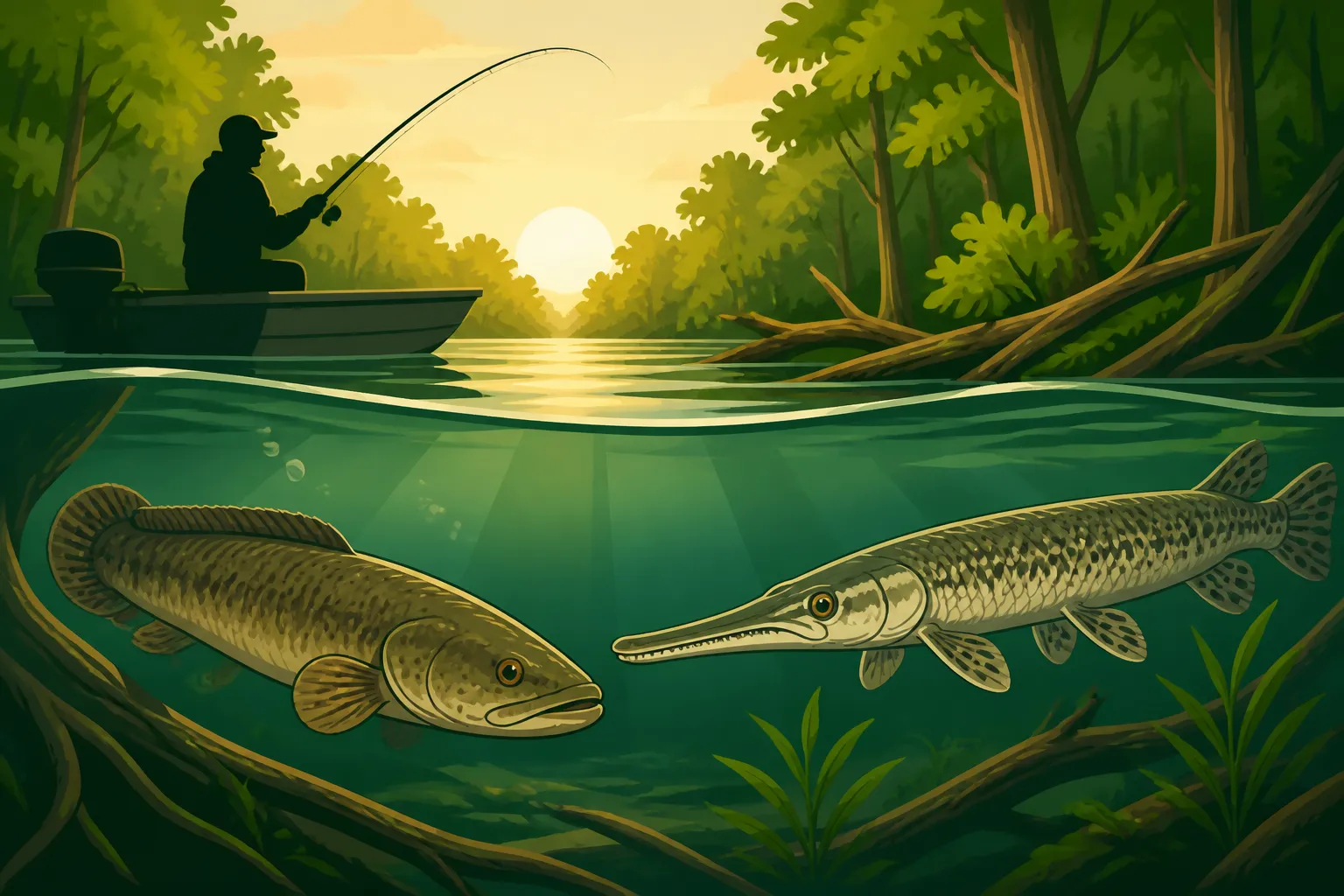
Illinois's river systems, particularly the slow-moving backwaters, are teeming with life. While the main channels buzz with boat traffic and active currents, it's in those quieter, forgotten corners that some of our most fascinating fish thrive. Bowfin and spotted gar, in particular, have a real affinity for these types of environments, making them prime targets for a unique fishing adventure.
The Allure of Stagnant Water: Why Backwaters are Prime Real Estate
Think about it: the main river current can be relentless. For fish that aren't built for constant upstream battles or that prefer to ambush their prey, those calmer backwater areas are like a sanctuary. These spots typically feature slower currents, if any at all, allowing aquatic vegetation to flourish. This vegetation—lilies, hydrilla, coontail, you name it—provides crucial cover for smaller baitfish, which, in turn, attracts the predators.
Beyond just cover, these backwaters often have softer, muddier bottoms, which are perfect for bottom-dwelling invertebrates and frogs, another food source for both bowfin and gar. The water might be a bit murkier, too, offering these stealthy hunters an advantage in ambushing prey. Plus, during hot Illinois summers, the main river can become quite warm, but backwater areas, especially those with deeper pockets, can offer slightly more stable temperatures or access to cooler, oxygenated water. It's a whole ecosystem built around low flow and abundant cover.
Pinpointing Productive Pockets: Reading the Water for Bowfin and Gar
Successfully finding bowfin and spotted gar means learning to "read" the backwater effectively. Don't just cast blindly. Look for visual cues that scream "fish." Start by identifying areas with dense weed beds. The edges of these beds, where the weeds meet open water, are often ambush points. Submerged timber, fallen logs, and brush piles are also gold mines. These structures offer shade and hiding spots for both predator and prey.
Consider areas where smaller feeder creeks or ditches empty into the backwater. These can create subtle current breaks and carry in additional food sources. Deeper holes or channels within the backwater are also worth investigating, especially during colder periods or in the heat of summer when fish seek more stable temperatures. Sometimes, even just a slight bend in the backwater that creates a calm eddy can hold a concentration of fish. Use a quality pair of polarized sunglasses – perhaps one you picked up from Amazon – to peer into the water and identify these features. These aren't necessarily clear-water fish, but being able to spot cover and structure is invaluable.
Decoding the Ancient Ones: Understanding Bowfin Behavior for a Better Catch
Bowfin, often mistaken for snakeheads due to their elongated bodies and dorsal fins, are true survivors. They've been around for millions of years, and a few minutes fighting one on the end of your line will quickly tell you why. They are aggressive, powerful, and have a unique set of adaptations that make them incredibly resilient in diverse Illinois waters.
The Tenacious Bowfin: Identifying Illinois's Freshwater Anomaly
First off, let's make sure you know what you're looking at. A bowfin typically has a long, cylindrical body, a distinctively long dorsal fin that runs almost half the length of its back, and a large, toothy mouth. Males often have a prominent black spot with a yellowish-orange halo at the base of their tail fin, especially during spawning season. They possess a primitive air bladder that functions as a lung, allowing them to gulp air directly from the surface, which is why you might see them "rolling" in stagnant water.
This ability to breathe air means they can tolerate incredibly low oxygen levels that would kill most other fish. This is a huge advantage in those warm, shallow backwaters where oxygen can deplete quickly. Their diet is varied, but they are opportunistic predators, feasting on baitfish, frogs, crayfish, and even small rodents. When you hook a bowfin, be prepared for a fight; they pull hard, thrash wildly, and are known for their aerial acrobatics. They don't give up easily, making them a truly exciting catch. You can learn more about Spotted Gar vs Bowfin: How to Tell These Prehistoric Fish Apart if you're ever in doubt.
Bait and Tactics: Luring the Voracious Bowfin
Bowfin are not picky eaters, which is great news for anglers. Their aggressive nature means they'll often strike at a variety of baits and lures. Live bait is consistently one of the best options. Think shiners, minnows, or even small bluegill hooked through the back or lips. Present these under a bobber near weed edges or suspended above submerged timber. If you're feeling ambitious, a lively frog or a large nightcrawler can also be irresistible.
For artificial lures, anything that creates a lot of commotion or flashes will draw attention. Spinnerbaits, chatterbaits, and weedless spoons are excellent choices for working through heavy cover where bowfin often hide. Topwater lures, especially frog imitations or poppers, can lead to explosive strikes that will get your heart pounding. Cast these tight to cover, let them sit for a moment, then twitch them erratically. Remember, their strike is often a reaction, so make your lure look like an easy meal trying to escape. When setting the hook, give it a firm, solid yank – those bony mouths can be tough to penetrate.
Mastering the Prehistoric Hunter: Insights into Spotted Gar for Anglers
Spotted gar are another incredible testament to ancient fish design, sporting an armor-plated body and a long, tooth-filled snout that makes them unmistakable. While they might look intimidating, they are a fascinating challenge for any angler willing to adapt their techniques.
The Elusive Spotted Gar: Identification and Preferred Habits
Spotted gar are easily recognized by their long, cylindrical bodies, which are covered in hard, diamond-shaped ganoid scales that act like armor. Their most distinctive feature is their elongated snout, filled with needle-sharp teeth. As their name suggests, they have prominent dark spots on their body, fins, and head, distinguishing them from other gar species. They tend to prefer slower-moving or stagnant waters, just like bowfin, but often hang out closer to the surface, especially on warm, sunny days. You'll frequently spot them "basking" just below the surface in shallow, weedy areas, almost motionless.
These fish are visual predators, relying on their keen eyesight to ambush baitfish, crayfish, and insects. While their appearance suggests extreme aggression, their strikes can be surprisingly subtle at times, as they often "sidewipe" their prey before engulfing it. Patience is key when targeting gar; watching them is often as much a part of the experience as catching them. Understanding Illinois Spotted Gar Fishing: What You Need to Know can help you refine your approach further.
Specialized Approaches: Gear and Lures for Gar Success
Fishing for spotted gar requires a bit of a different strategy, primarily due to their unique mouth. Those long, bony jaws make traditional hook sets notoriously difficult. Many anglers find standard hooks just slide off or get stuck in the hard bone without penetrating.
One popular and highly effective method is using a "rope lure" or "fray lure." This involves taking a length of nylon rope, fraying the ends, and securing it to your line. When a gar strikes, their teeth get tangled in the nylon fibers, allowing you to reel them in. There are plenty of options for these specialized lures on Amazon.
If you prefer traditional lures, think small, fast-moving baits. Inline spinners, small spoons, or even twitch baits can work, but you'll need to be ready for a lot of missed strikes. For bait, cut bait (like pieces of shad or carp) or live minnows presented under a bobber can be effective. When a gar picks up the bait, resist the urge to set the hook immediately. Let them run with it for a good 10-20 seconds, allowing them to fully engulf the bait and hopefully turn it, increasing the chance of a hookup. Heavy monofilament or braided line is a must, as their teeth can easily fray lighter line. A wire leader is also a good idea.
The Double Header Dream: Targeting Bowfin and Gar on the Same Trip
The real magic happens when you understand how to fish for both these incredible species in the same session. Since they share a love for similar backwater environments, optimizing your approach for a potential double-header is not only possible but incredibly rewarding.
Overlapping Zones: Where to Expect Both Species to Strike
While both bowfin and spotted gar thrive in the calmer, vegetated backwaters, there are subtle differences in their preferred micro-habitats that can help you target them. Gar often prefer the more open, sun-exposed shallow areas, especially near the surface, where they can bask. Bowfin, while also shallow, tend to lurk deeper within the weed beds or near denser cover like fallen trees and brush piles, waiting to ambush.
The key to a double-header is to identify areas that blend these preferences. Look for shallow flats with significant weed growth, but also adjacent deeper pockets or a channel running through them. A sunny, shallow cove with a sunken log in the middle, surrounded by lily pads, would be an ideal spot. You might cast a topwater lure near the log for a bowfin, and then let it drift slowly towards the open, sunny patch where a gar might be cruising. Understanding Why Fishing Rules Vary by Lake and River is always a good idea, as even within the same backwater, specific zones might have their own nuances.
A Combined Tackle Box: Versatile Gear for Dual Pursuit
To successfully pursue both bowfin and spotted gar, your tackle box needs to be robust and versatile. You'll want a medium-heavy to heavy action spinning or baitcasting rod, about 6.5 to 7.5 feet long. This gives you the power to cast larger baits and wrestle these strong fish out of heavy cover. Pair this with a reel spooled with 20-50 pound braided line. Braid is essential for its strength, abrasion resistance, and minimal stretch, which helps with hook sets.
Consider carrying a variety of leaders. While a heavy fluorocarbon leader might work for bowfin, a short wire leader is almost a necessity for gar to prevent bite-offs. Keep a selection of weedless spoons, spinnerbaits, and soft plastic frogs for bowfin, along with live bait options like shiners or cut bait. For gar, remember those rope lures. It's also wise to have extra hooks (strong, wide-gap models are best) and even some heavier split shot or small weights for presenting baits deeper. For retrieving lures stuck in cover, a lure retriever can be a real lifesaver, and you can find many dependable ones on Amazon.
| Feature | Bowfin | Spotted Gar |
|---|---|---|
| Body Shape | Stout, cylindrical | Slender, cylindrical |
| Snout/Mouth | Broad, large mouth with sharp teeth | Long, narrow snout with needle-like teeth |
| Dorsal Fin | Very long, almost half the back's length | Short, triangular, located far back |
| Tail Spot | Often present (male: black with orange halo) | Absent |
| Scales | Smooth, cycloid | Hard, diamond-shaped (ganoid) |
| Preferred Depth | Mid-water to bottom, dense cover | Near surface, open shallow areas, basking |
| Typical Baits | Live bait, frogs, spinnerbaits, topwater | Rope lures, cut bait, small live minnows |
| Handling | Strong teeth, thrashy, gill plates | Sharp teeth, armored body, stiff |
| Distinguishing | Gulping air at surface, long dorsal | Long, toothy snout, distinct spots |
Safe Encounters: Handling These Tooth-Filled Fighters
Catching these magnificent creatures is one thing; handling them safely for both you and the fish is another. Both bowfin and spotted gar have formidable teeth and can be quite feisty out of the water.
For bowfin, they will thrash and roll, and their gill plates are sharp. Use a sturdy net to land them, and consider a pair of heavy-duty gloves, such as those you might find on Amazon, for handling. A jaw-gripper tool can also be incredibly useful for controlling their head while unhooking.
Spotted gar require even more caution due to their long, toothy snouts. Never grab them by the body with bare hands, as their armor-like scales can scrape you, and their teeth are everywhere. Again, a net is crucial. Many anglers will hold them by the base of the tail or use a jaw gripper. Pliers, like robust needle-nose pliers, are essential for removing hooks from either species, keeping your fingers well away from those jaws. If you plan to release them (and we encourage catch and release for these unique fish), minimize their time out of water and handle them gently but firmly. They are tough, but respect for the fish is paramount. Don't forget to check the Illinois Fishing Regulations Overview for any specific handling or release rules in your area.
Getting out into the river backwaters of Illinois to target bowfin and spotted gar is an adventure unlike any other. It’s a chance to connect with truly ancient creatures and experience a side of fishing that many never explore. With the right approach and a bit of patience, you might just find yourself with a tale of two prehistoric fish on the same trip.
Disclaimer
This article is for general informational purposes only and does not constitute professional advice. Laws, prices and regulations vary by location and change over time. Consult a qualified professional for guidance on your specific situation.