Growth Rate of Largemouth Bass: How Long to Reach Trophy Size
Every angler who's spent countless hours on Illinois's lakes and rivers, casting for that elusive big largemouth, has probably asked themselves the same question: just how long does it really take for these fish to grow to a truly impressive size? It's a question often met with a shrug and a "depends," which, while true, isn't very satisfying when you're dreaming of a wall-hanger. This guide is here to dig into the fascinating world of largemouth bass growth in Illinois, helping you understand the journey from a tiny fry to that once-in-a-lifetime trophy and what factors play the biggest roles in that transformation.
Understanding Largemouth Bass Growth in Illinois
The growth rate of a largemouth bass isn't a fixed, universal number. It's a complex dance influenced by a myriad of environmental and biological factors, and in a state as diverse as Illinois, those factors can vary wildly from one body of water to another. What works for a bass in a nutrient-rich southern Illinois reservoir might be completely different from a bass in a smaller, colder northern lake.
What Influences Growth Rates?
Think of a young bass as a growing teenager – they need good food, a comfortable home, and the right conditions to really thrive and put on weight. For our finned friends, this translates to several key influences:
- Forage Base: This is arguably the biggest driver of growth. A lake teeming with easily digestible, high-protein prey like gizzard shad, golden shiners, and abundant panfish (bluegill, crappie) will produce faster-growing, fatter bass. If a lake's primary forage is smaller, less nutritious bug larvae or stunted panfish, bass growth will be slower. Imagine trying to grow big on a diet of snacks versus full, nutritious meals; it’s the same for a bass.
- Water Temperature and Growing Season: Illinois experiences a wide range of temperatures throughout the year. Bass are cold-blooded, so their metabolism is directly tied to water temperature. Warmer waters (within their optimal range) mean higher metabolism, more feeding, and faster growth. Lakes with longer warm-water periods, particularly in southern Illinois, generally allow bass to grow for more months out of the year compared to their northern counterparts where the growing season is shorter.
- Genetics: Just like people, some bass are genetically predisposed to grow larger and faster than others. While you can't control the genes of the fish in your favorite lake, state agencies sometimes stock specific strains of largemouth bass known for their growth potential, like the Florida largemouth bass, though their survival and growth in colder Illinois waters can be challenging.
- Population Density: If a lake is overcrowded with too many bass, competition for food becomes intense. This often leads to a phenomenon known as "stunting," where many bass grow slowly and rarely reach large sizes. Conversely, a well-managed lake with a balanced population and ample food can produce impressive individual fish. It’s all about finding that sweet spot where there are enough bass to maintain a healthy population, but not so many that they're starving each other out.
- Habitat and Water Quality: Healthy aquatic vegetation, submerged timber, and good water quality provide cover for bass, ambush points for feeding, and support a robust forage base. Poor water quality, excessive sedimentation, or a lack of suitable cover can stress fish, reduce their feeding efficiency, and slow growth. A healthy ecosystem equals healthy fish.
The "Average" Growth Curve
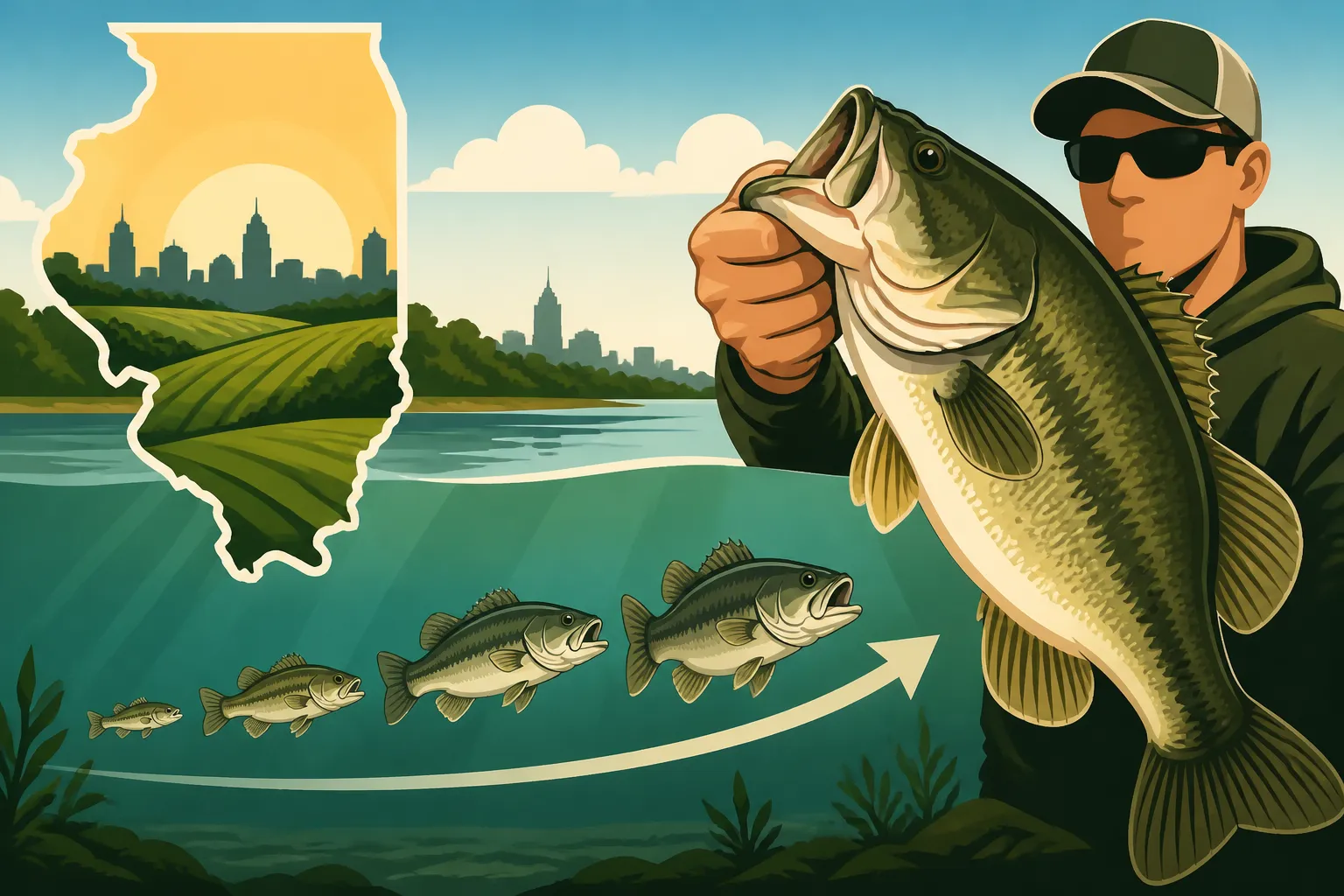
While there's no single "average" that fits every Illinois lake, we can look at general trends. Largemouth bass in Illinois typically hatch in the spring and grow rapidly through their first few warm seasons. In a productive lake, a bass might reach 6-8 inches in its first year. By year two or three, it could be 12-15 inches. Getting to that coveted 4-5 pound mark, often considered a good "trophy" in many Illinois waters, usually takes around 5-7 years, sometimes more in less productive systems. To reach the truly monstrous sizes of 7+ pounds, you're looking at a fish that has survived many seasons, likely 8-10 years or even longer. These old, large fish are incredibly rare and a testament to their adaptability and the quality of their environment.
It's a marathon, not a sprint, for these fish. They face predation, angling pressure, and environmental challenges throughout their lives. Each year they survive and grow, they become a more impressive specimen.
Regional Differences in Illinois
Illinois is a long state, stretching from the temperate climate of the northern suburbs to the warmer, often deeper reservoirs of the south. This geographical span means significant differences in bass growth rates.
- Southern Illinois Lakes: Reservoirs like Rend Lake, Lake Shelbyville, and Carlyle Lake are often known for their excellent largemouth bass fisheries. These lakes typically have longer growing seasons due to warmer average temperatures and can support robust forage bases, especially gizzard shad populations. This combination often leads to faster growth rates and a higher probability of encountering larger bass. You might find a 4-pound bass in southern Illinois that is a year or two younger than a similar-sized fish from a northern lake. The abundance of Mississippi River Catfish: Why Southern Illinois Waters Produce So Many also points to the rich aquatic environments downstate.
- Central Illinois Lakes: Lakes like Clinton Lake or Lake Springfield fall somewhere in the middle. They still have good growing seasons and often strong forage, but might not push fish to trophy size as quickly as the southernmost waters. These lakes often offer a good balance of quantity and quality for bass anglers.
- Northern Illinois Lakes: Smaller, shallower lakes and ponds in northern Illinois, or those impacted by colder winters, might see slower growth rates. Bass here will still get big, but it might take them an extra year or two to reach the same size as their southern cousins. However, some northern lakes, particularly those with excellent habitat and strong management, can still produce truly giant bass, albeit at a slower pace. The Fox River Fishing Guide in Illinois is a great example of diverse fisheries in the northern part of the state, showcasing how even smaller rivers can hold impressive fish given the right conditions.
The key takeaway here is that while statewide averages exist, local conditions are king. Always check specific lake reports or talk to local bait shop owners for the most accurate picture of bass growth in your chosen fishing spot.
Defining a "Trophy" Largemouth Bass in Illinois
What exactly constitutes a "trophy" largemouth bass? For some, it’s a fish that breaks a state record; for others, it's simply a new personal best. In Illinois, with its varied fisheries, the definition can be pretty fluid, but there are some common benchmarks.
Weight vs. Length for Trophy Status
When we talk about trophy bass, both weight and length are important. A 20-inch bass that's skinny might only weigh 3 pounds, while a plump, healthy 20-inch fish could easily hit 5 pounds or more. Typically, serious anglers prioritize weight because it indicates the fish's overall health, age, and girth, rather than just its linear growth. However, length is often easier to measure accurately on the water, especially if you're practicing catch and release.
Here’s a general idea of what many Illinois anglers consider:
- Good keeper/solid fish: 15-18 inches, 1.5-3 pounds. These are healthy, respectable bass that are fun to catch.
- Quality fish/personal best: 18-21 inches, 3-5 pounds. Many anglers consider a 4-5 pound bass a fantastic achievement in Illinois.
- Trophy class: 21-24+ inches, 5-7+ pounds. These are the fish that make your heart pound and your hands shake. A 6-pound bass is truly a fish of a lifetime for many in Illinois.
- Giant/State Record contender: 7.5 pounds and up. This is truly rare territory, often representing a fish of 23-25+ inches.
When you're out there on the water, having a reliable scale and measuring board is crucial. You can find some excellent digital scales and durable measuring boards on Amazon, which can help you get accurate stats on your catches. Knowing your fish's exact weight and length can help you track your progress and truly appreciate the size of a trophy bass.
How Long Does it Really Take to Get There?
This is the million-dollar question, isn't it? Based on the growth factors we discussed, a true trophy bass (let's say 5+ pounds) in Illinois typically takes:
- 5-7 years in highly productive southern Illinois lakes with abundant forage and long growing seasons. These are your best bets for faster growth to trophy size.
- 7-9 years in moderately productive central and northern Illinois lakes. Growth is steady, but it takes a bit more time for them to pack on the pounds.
- 9-12+ years in less productive, colder, or overcrowded waters. These fish have truly defied the odds and survived a long time to reach such a size.
Remember, these are estimates. A fish's individual history matters. A bass that had a particularly good year for food availability and mild weather might jump ahead, while one that dealt with a harsh winter or a period of intense fishing pressure might lag. It's truly incredible how long these fish live and grow to reach such sizes. For more detailed information, you can always check out How Big Do Largemouth Bass Get in Illinois Lakes?.
Illinois State Records as a Benchmark
The ultimate benchmark for a trophy largemouth in Illinois is the state record. Currently, the Illinois state record largemouth bass weighs in at a phenomenal 13 pounds 1 ounce. This fish was caught decades ago and stands as a testament to the incredible potential of Illinois waters.
Imagine a fish surviving for well over a decade, maybe even 15 years, to reach such a size! When you look at the state record, it highlights just how rare and special those truly massive bass are. While most of us won't break the state record, understanding that such fish exist gives us something to dream about. For details on this incredible catch and others, you can check out Illinois State Record Largemouth Bass: How Big Was It?. It puts into perspective the journey a bass takes to become legendary.
Maximizing Your Chances for a Trophy Bass
Catching a trophy largemouth bass isn't just luck; it's a combination of understanding fish behavior, knowing your waters, and employing smart angling practices. If you're serious about targeting bigger fish, there are definitely things you can do to stack the odds in your favor.
Key Factors for Faster Growth
While you can't personally make a wild bass grow faster, you can certainly seek out environments where the conditions are ideal for rapid growth.
- Healthy Habitat: Look for lakes with diverse and abundant habitat. This means plenty of submerged timber, thick weed beds, rocky points, and steep drop-offs. These areas provide cover for bass to ambush prey and protect themselves from predators. A lake with a varied bottom structure and good cover will naturally support larger, healthier fish. Knowing Why Fishing Rules Vary by Lake and River also helps in understanding how different environments are managed for optimal fish growth.
- Abundant Forage Base: Prioritize lakes known for strong populations of primary forage species like gizzard shad. Shad are like rocket fuel for bass, providing a high-calorie, easily accessible food source. When checking lake reports or talking to local experts, ask about the health of the shad population. Lakes with consistent shad spawns often produce faster-growing bass.
- Good Water Quality and Management: Stable water quality, with consistent oxygen levels and minimal pollution, reduces stress on fish and allows them to expend more energy on growth. Lakes that are actively managed by the Illinois Department of Natural Resources (IDNR) or local conservation districts often have better outcomes for trophy fish. This can include habitat improvement projects, careful stocking, and length/creel limits designed to protect larger bass. Sometimes, simply visiting Illinois State Park Fishing Spots can offer a glimpse into well-managed fisheries.
Angler Practices that Support Trophy Growth
As anglers, we have a direct impact on the fish populations we enjoy. Adopting responsible practices can help ensure future generations of trophy bass.
- Catch and Release: This is perhaps the most impactful practice for promoting trophy bass. When you release a healthy, large bass, especially those in the 3-6 pound range, you're allowing it to continue growing and to spawn, contributing its strong genetics to the population. Handle these fish with care: minimize their time out of water, use wet hands, and support their body weight. If you're using a digital scale you purchased from Amazon, make sure the fish is properly supported to avoid jaw damage.
- Selective Harvest: While catch and release is great, sometimes removing smaller, less desirable fish can actually benefit a population. In some overcrowded lakes, removing a certain number of smaller bass can reduce competition for food, allowing the remaining fish to grow faster and larger. Always check Illinois Fishing Season and Catch Limit Rules and site-specific regulations before harvesting any fish, as rules vary.
- Using Appropriate Gear: Using tackle that's too light can prolong the fight, stressing a large fish unnecessarily. When targeting bigger bass, use a rod and reel combo that can handle the fight efficiently, allowing you to land the fish quickly and release it in good condition. You'll find a wide range of suitable gear, from heavy-action rods to robust reels, available on Amazon. Equipping yourself properly means a better experience for both you and the fish. For more on this, check out Best Rods for Illinois Largemouth Bass.
Gear and Techniques for Targeting Larger Bass
Beyond environmental factors and conservation, your personal approach to fishing can also influence your chances of hooking a trophy.
- Upsize Your Baits: Larger bass often prefer larger meals. While they'll still eat smaller lures, throwing bigger swimbaits, jigs, crankbaits, or topwater frogs can often attract the attention of a more substantial fish. Don't be afraid to experiment with baits that seem almost too big – a true lunker isn't going to turn down a substantial meal. You can explore a vast selection of these larger baits on Amazon, often with detailed reviews from other anglers.
- Fish Structurally Complex Areas: Big bass are often found in areas with the best cover and ambush points. This could be thick hydrilla beds, dense submerged timber, deep rock piles, or steep bluffs. Spend time learning your chosen lake's underwater topography. Using modern electronics like fish finders can be incredibly helpful in locating these prime spots where big bass lurk.
- Patience and Persistence: Trophy bass fishing isn't about numbers; it's about quality. You might go hours without a bite, but when that one big fish hits, it makes all the waiting worthwhile. Dedicate your time to areas known to hold larger fish, and be patient. Sometimes, the biggest fish are the most elusive. For specific methods, articles like Bass Fishing Techniques for Beginners can help, but remember to adapt them for larger fish.
- Consider Timing: While bass can be caught year-round, certain seasons offer better chances for big fish. The pre-spawn period in spring, when females are full of eggs and actively feeding, is a prime time. Fall, as bass fatten up for winter, is another excellent window. Understanding the Illinois Bass Spawn Timing Guide can significantly improve your chances.
Ultimately, catching a trophy largemouth bass in Illinois is a rewarding challenge. It requires knowledge, respect for the fish, and a healthy dose of patience. By understanding how these magnificent fish grow and by employing responsible and strategic angling practices, you increase your odds of experiencing that exhilarating moment when a true lunker largemouth slams your bait.
Disclaimer
This article is for general informational purposes only and does not constitute professional advice. Laws, prices and regulations vary by location and change over time. Consult a qualified professional for guidance on your specific situation.