Illinois Spotted Gar Fishing: What You Need to Know
The spotted gar in Illinois waters can be a real enigma for many anglers. Often mistaken for other long, slender fish or sometimes viewed as a nuisance, these prehistoric-looking creatures actually offer a unique and exciting fishing challenge if you know how to approach them. This guide is here to shed light on what makes spotted gar tick, where to find them, and how to successfully target these fascinating fish, giving you the knowledge to appreciate their place in our aquatic ecosystems.
Understanding the Spotted Gar in Illinois
Spotted gar are truly fascinating fish, remnants of a time long past, and they occupy a unique niche in Illinois' diverse aquatic environments. For many years, they might have been overlooked or even misunderstood by anglers. But once you get to know them, you'll find they're a worthy target, offering a thrilling fight and a chance to connect with a truly ancient species. They're definitely not your average panfish!
Identifying Spotted Gar
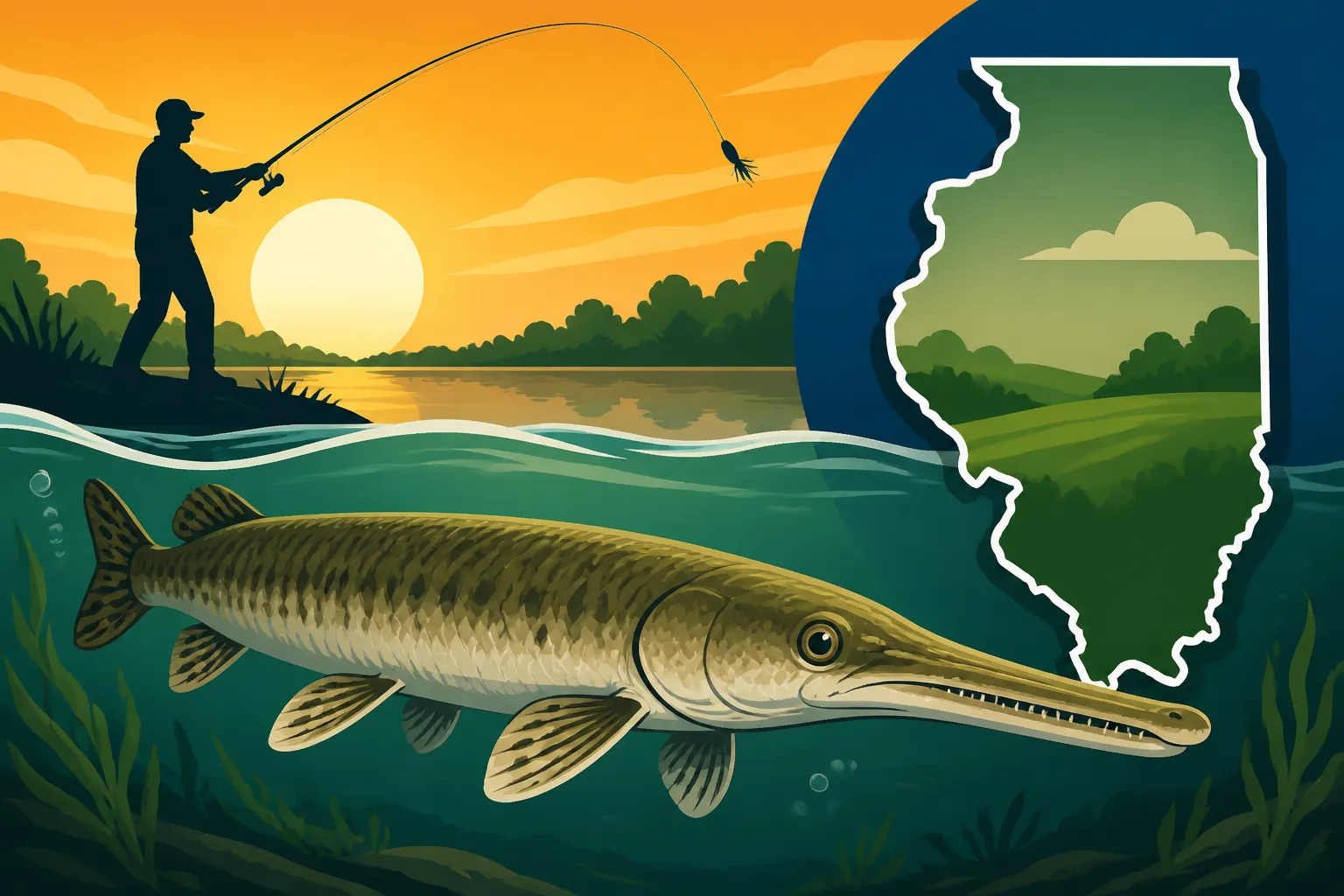
When you're out on the water, especially in the murkier backwaters or slow-moving river systems of Illinois, you might encounter a few different gar species. The spotted gar, however, has some distinctive features that set it apart. Its most obvious characteristic, as the name suggests, is the presence of numerous dark, round spots on its body, head, and fins. These spots are usually quite prominent and cover its entire olive-brown to silvery-white body, giving it a somewhat speckled appearance.
Unlike its cousin, the longnose gar, the spotted gar has a relatively shorter, broader snout. The snout length is typically shorter than half the length of its head, and it's wider at the base, tapering gradually to the tip. This is a key identifier when you're trying to distinguish between gar species in the field. Also, take a close look at the bony, diamond-shaped scales that cover their bodies – these scales are tough, almost armor-like, which is why gar can be so challenging to handle and why they often escape traditional hooks. If you're keen on knowing the differences between gar and similar fish, checking out Spotted Gar vs Bowfin: How to Tell These Prehistoric Fish Apart can really help clarify identification.
The Gar's Role in the Ecosystem
It's easy to dismiss gar as "trash fish" or predatory nuisances, but that couldn't be further from the truth. Spotted gar play a vital role in maintaining a healthy aquatic ecosystem in Illinois. As apex predators in their preferred habitats, they help control populations of smaller, less desirable fish species, including some invasive ones. By preying on abundant forage fish, they prevent overpopulation and competition for resources, contributing to the overall balance of the food web.
Imagine a backwater slough teeming with stunted carp or gizzard shad. The spotted gar acts as a natural control, keeping those populations in check. This selective predation means that the healthier, faster-growing fish have a better chance to thrive. Their presence is often an indicator of a diverse and robust aquatic environment. So, when you catch a spotted gar, remember you're holding a significant contributor to the ecological health of that body of water, not just another fish. Understanding their ecological importance helps foster a respect for these unique creatures and encourages responsible angling practices, especially when it comes to catch and release.
Prime Habitats and Hotspots for Spotted Gar in Illinois
If you're looking to target spotted gar, knowing where they prefer to hang out is half the battle. These fish aren't found just anywhere; they have specific preferences that dictate their distribution across Illinois waters. Understanding these habitats will greatly increase your chances of a successful outing.
Backwaters and Slow-Moving Rivers
Spotted gar are creatures of comfort, preferring warm, shallow, and often turbid waters with plenty of vegetation. This makes the backwaters, oxbow lakes, and slow-moving stretches of larger river systems in Illinois their ideal homes. Think about those calmer areas off the main current of rivers like the Illinois River or the Mississippi River, where the water warms up quickly and there's a dense cover of lily pads, submerged logs, or weed beds. These areas provide both ambush points for their predatory hunting style and protection from stronger currents.
These environments also tend to be rich in the smaller baitfish that gar feed on, such as minnows, sunfish, and small carp. They'll often lurk just below the surface, perfectly camouflaged among the weeds, waiting for an unsuspecting meal to swim by. When targeting these areas, look for quiet coves, flooded timber, or areas where tributaries feed into a main river, creating slack water. Shallow flats with dark bottoms that absorb sunlight are also prime locations, especially during cooler mornings when gar might bask near the surface to warm up. If you're considering the extensive Mississippi River Fishing in Illinois: Which Species Live Where, you'll find plenty of these ideal gar habitats along its calmer stretches.
Specific Illinois Locations Known for Gar
While spotted gar can be found throughout the lower two-thirds of Illinois in suitable habitats, certain locations are particularly renowned for them. The vast backwater complexes of the Mississippi River, particularly in southern Illinois, are absolute hotspots. Areas near Cairo, Grafton, and any of the major lock and dam systems that create extensive slack-water pools often hold significant populations. These areas are characterized by diverse aquatic vegetation and an abundance of forage.
Another excellent system is the Illinois River and its associated tributaries and side channels, especially below Peoria. The numerous backwater lakes and sloughs connected to the main channel provide perfect habitat. Beyond the major rivers, some larger reservoirs and natural lakes with substantial shallow, vegetated areas can also produce good gar fishing. Kaskaskia River State Fish and Wildlife Area, for example, offers various backwater areas that are known for gar. Remember, while a fishing license is usually required, always check the Illinois Fishing Regulations Overview for any site-specific rules or special considerations before you head out, as regulations can sometimes vary by waterway.
Essential Gear and Techniques for Spotted Gar Fishing
Fishing for spotted gar is not your typical bass or crappie outing. These fish are tough, toothy, and have a unique way of striking and fighting, so you need specialized gear and techniques to consistently land them. Trying to catch them with standard panfish tackle will likely lead to a lot of frustration and lost fish.
Rods, Reels, and Line Considerations
When it comes to rods and reels for spotted gar, think robust. You'll want a medium-heavy to heavy-action spinning or baitcasting rod, typically in the 7 to 8-foot range. This length provides the leverage needed to cast heavier baits and control a powerful fish, especially in dense cover. A fast tip is helpful for casting accuracy, but a strong backbone is crucial for setting the hook and muscling a gar out of weeds. For reels, a sturdy spinning reel in the 3000-4000 series or a baitcasting reel with a reliable drag system will do the trick. The key is durability, as gar can put a lot of strain on your gear.
Now, let's talk line – this is where many anglers go wrong. Gar have incredibly sharp, needle-like teeth, which can easily sever monofilament or fluorocarbon line. Therefore, a heavy braided line is almost essential. Think 30 to 50-pound test braided line. Braided line offers excellent abrasion resistance and minimal stretch, which is vital for detecting subtle bites and getting a solid hookset through their bony mouths. You can find a good selection of durable braided lines on retail sites like Amazon or at your local tackle shop. While braided line is strong, a short leader of steel or heavy fluorocarbon (80-100 lb test) is often still a good idea, as even braid can be frayed by repeated contact with their teeth or rough scales during a prolonged fight. This leader doesn't need to be long, just enough to protect your main line. If you're also interested in Best Rods and Reels for Illinois Anglers for other species, you'll find some overlap in the heavy-duty recommendations.
Best Baits and Lures for Gar
Spotted gar are opportunistic predators, and they'll hit a variety of baits and lures, but some are definitely more effective than others. Live bait is often the most productive. Small to medium-sized minnows, shad, or sunfish (where legal to use as bait) rigged under a bobber or free-lined are incredibly enticing. Gar are sight feeders, and the struggling action of live bait often triggers their predatory instincts. Just make sure your hook placement allows the bait to swim naturally.
For artificial lures, thin-profile jerkbaits, spoons, or soft plastics with a darting action can work. The key is to retrieve them slowly, mimicking an injured or confused baitfish. However, the real challenge with traditional hooks and gar is their bony, tooth-filled mouth. It's incredibly difficult to get a hook to penetrate and hold. This is where specialty rigs come in. Many gar anglers utilize what's known as a "rope lure" or "fray lure." These are essentially bundles of unraveled nylon rope or similar material tied to a weight. The gar's teeth get tangled in the fibers, allowing you to land them without a hook. You can often find pre-made rope lures on platforms like Amazon, or you can easily make your own.
Specialty Techniques: Ropeless Rigs and Snagging
As mentioned, the unique anatomy of a gar's mouth makes conventional hook-and-line fishing quite tricky. This has led to the development of specialized techniques, primarily revolving around the "ropeless rig." This method, using a frayed nylon or synthetic rope, is incredibly effective and greatly reduces harm to the fish since no hook is involved. The gar strikes the "lure," its teeth get hopelessly tangled in the fibers, and you simply reel it in. This is especially good for anglers who prefer catch and release, as the fish can often be untangled with minimal stress.
Another technique, although sometimes controversial and regulated, is snagging. Snagging involves using large, unbaited treble hooks and essentially jerking them through the water to hook the fish externally. While effective, it can be more damaging to the fish and is only legal in specific seasons and locations in Illinois, primarily for certain species like paddlefish or Asian carp. It is crucial to check the current Illinois fishing regulations before attempting to snag any fish, as rules can change. For spotted gar, the rope lure offers a much more sporting and conservation-minded approach. Many seasoned gar anglers will also pack a pair of long-nosed pliers and thick gloves, essential tools for handling these toothy creatures once they're boat-side.
Handling and Releasing Spotted Gar Safely
Landing a spotted gar is one thing; handling it safely for both you and the fish is another challenge entirely. These fish are powerful, covered in sharp, bony scales, and possess a mouth full of needle-like teeth. Approaching them without proper caution can lead to painful cuts or injuries. Taking the right precautions ensures a positive experience for everyone involved.
The Challenge of Gar Teeth and Scales
The first thing you'll notice when you finally get a gar close is its formidable appearance. Those long jaws are lined with rows of razor-sharp teeth, perfectly adapted for grasping slippery prey. A gar's bite can easily puncture skin, so direct contact with the mouth should be avoided at all costs. Furthermore, their bodies are covered in ganoid scales, which are incredibly tough and rigid. They feel like armor and can be surprisingly sharp, especially around the fins and tail. Trying to grip a gar without protection is an open invitation for scrapes and cuts.
A common mistake is trying to hold a gar by the tail or body without gloves. Even if you avoid the teeth, those scales can do a number on your hands. This is why tools like lip-grippers or heavy-duty gloves are not just recommended, but practically mandatory. When a gar thrashes, as they inevitably will, those sharp parts become dangerous projectiles. Ensuring your own safety is paramount, but so is the well-being of the fish. Minimizing handling time and making sure you have the right tools ready before you even hook a fish can make a huge difference in the outcome. For more on this, you might find Are Spotted Gar Safe to Handle? a helpful read.
Best Practices for Hook Removal and Release
Once you've landed a spotted gar, the next critical step is safe hook removal and release, especially if you're practicing catch and release, which is common for this species. If you've used a rope lure, disentangling the gar is relatively straightforward. Often, a gentle twisting motion or using a small stick to pick the fibers out of their teeth is all that's needed. The fish can then be safely released back into the water.
For traditional hooks, the process is more delicate. First, use a quality lip-gripper to secure the gar's lower jaw. This immobilizes the head and keeps your hands away from the teeth. With the gar's head securely held, use a pair of long-nosed pliers or, even better, a dehooking tool to carefully remove the hook. If the hook is deeply embedded or the fish is severely stressed, it might be best to cut the line as close to the hook as possible. A hook left in can often rust out, causing less harm than prolonged, traumatic removal. Once the hook is out or the line is cut, gently place the gar back in the water, supporting its belly until it swims away under its own power. Avoid dragging it on the bank or keeping it out of water for extended periods.
Regulations and Conservation for Illinois Spotted Gar
As anglers, we have a responsibility to understand and abide by fishing regulations, not just for popular game fish, but for all species, including spotted gar. These rules are in place to ensure healthy fish populations for future generations and to manage our aquatic resources sustainably.
Statewide Regulations and Limits
In Illinois, spotted gar are generally considered part of the "unrestricted" or "rough fish" category, meaning they often have very liberal or no specific daily catch or possession limits in many waters. However, it's absolutely crucial to remember that general statewide regulations can sometimes be superseded by site-specific rules, especially on state parks, conservation areas, or particular lakes and rivers. For example, some bodies of water might have specific restrictions on certain fishing methods or species to protect local ecosystems or ensure fair public access.
Therefore, before you head out, always consult the most current Illinois Fishing Information Guide. This guide, usually available online through the Illinois Department of Natural Resources (IDNR) or at tackle shops, will provide the definitive word on current regulations, including any size or creel limits that may apply to gar in the specific water you plan to fish. Ignoring these rules, even unintentionally, can lead to penalties. When in doubt, err on the side of caution and practice catch and release. Also, be mindful of how the Illinois Fishing Season and Catch Limit Rules might apply to other species you encounter while targeting gar, ensuring you're compliant across the board.
Conservation Efforts and the Future of Gar Fishing
While spotted gar populations are generally stable and healthy across much of their range in Illinois, conservation is still an important topic. As with all native species, maintaining healthy habitats is key. Gar thrive in healthy, vegetated backwaters, and protecting these areas from pollution, habitat degradation, and invasive species benefits gar and countless other aquatic organisms. Many anglers who target gar are keen conservationists, advocating for clean water and responsible angling practices.
The future of gar fishing in Illinois looks bright, largely due to a growing appreciation for these unique fish. What was once overlooked is now seen as a thrilling, challenging pursuit for many anglers. The rise of specialized techniques like the rope lure also means that gar can be targeted and released with minimal harm, promoting sustainable sport fishing. As more anglers discover the excitement of gar fishing, it’s important to share knowledge about proper identification, ethical handling, and the ecological value of these incredible prehistoric fish. Education and responsible angling are the best ways to ensure that Illinois spotted gar continue to thrive and provide unique angling opportunities for years to come.
Recommended Gear for Spotted Gar Fishing
Having the right tools can make all the difference when targeting spotted gar. Their unique anatomy and fighting style require specific considerations. Here's a quick overview of essential gear that will help you succeed and stay safe.
| Gear Item | Why It's Needed | Key Features to Look For |
|---|---|---|
| Heavy-Duty Rod | Power to cast heavy baits & handle strong fish | 7-8 feet, Medium-Heavy to Heavy action, strong backbone |
| Durable Reel | Reliable drag system, built for tough fights | 3000-4000 series spinning or sturdy baitcasting reel |
| Braided Fishing Line | High abrasion resistance, minimal stretch, strong | 30-50 lb test, good knot strength |
| Steel/Heavy Fluorocarbon Leader | Prevents line severance from gar teeth | 80-100 lb test, short length (6-12 inches) |
| Rope Lures (Fray Lures) | Effective hook-free method to tangle gar teeth | Made from unraveled nylon/synthetic rope; reusable |
| Long-Nosed Pliers/Dehooker | Safe hook removal, keeps hands from teeth | Stainless steel, at least 8-10 inches long |
| Lip Grippers | Securely holds gar for control & safety | Floating, ergonomic grip, strong jaws |
| Heavy-Duty Gloves | Protects hands from sharp scales & teeth | Puncture-resistant, non-slip grip, extended wrist protection |
| Tackle Box | Organize and store all your specialized gar gear | Durable, waterproof, multiple compartments (many available on Amazon) |
| Cutting Tool | For cutting line if hook is deep or fish is stressed | Sharp scissors or line cutters (can find multi-tools on Amazon) |
This comprehensive setup ensures you're prepared for the unique challenges spotted gar present, making your fishing experience more enjoyable and successful. Remember, you can often find many of these specialized items, like durable gloves or quality lip grippers, through online retailers such as Amazon, making it convenient to gear up for your next gar adventure.
Disclaimer
This article is for general informational purposes only and does not constitute professional advice. Laws, prices and regulations vary by location and change over time. Consult a qualified professional for guidance on your specific situation.