Southern Illinois Mississippi River Catfish Fishing Explained
One of the biggest fishing frustrations in Southern Illinois is feeling overwhelmed by the sheer size and power of the Mississippi River, especially when you're dreaming of landing a monster catfish. It’s easy to feel lost amidst the vast currents and countless backwaters, wondering where to even begin your quest for a big Channel, Blue, or Flathead. This comprehensive guide is designed to cut through that confusion, giving you the insider knowledge on exactly where to find these whiskered giants, what techniques truly work, and the essential gear you'll need to succeed on one of America's greatest rivers.
The Allure of Catfish in Southern Illinois's Mississippi
There's something truly special, almost primal, about chasing catfish on the Mississippi River, especially in the rugged, beautiful stretches of Southern Illinois. It's not just a fishing trip; it's an adventure into a sprawling, ancient waterway that holds some of the biggest and most tenacious freshwater fish you'll ever encounter. The river here isn't just water; it's a dynamic, ever-changing ecosystem that demands respect, but rewards those who learn its secrets with incredible catches and unforgettable stories.
Why Southern Illinois is a Catfish Hotspot
Southern Illinois is an absolute magnet for catfish, and the Mississippi River is the undisputed champion of this region. What makes it such a powerhouse for whiskered giants? Well, it's a perfect storm of geographical features and abundant resources. The river itself is incredibly diverse, offering everything from swift main channel currents that bring a constant flow of nutrients, to calm, deep backwater sloughs and oxbow lakes, and numerous feeder creeks and smaller rivers like the Kaskaskia, Big Muddy, and Ohio River that all pour into the Mississippi, bringing their own bounty of food and structure.
This constant influx of smaller baitfish, insects, and organic matter creates a rich food chain that supports an incredible density of catfish. Plus, the riverbed itself is a mosaic of habitats: rocky wing dams, sprawling log jams, deep scour holes, submerged trees, and rip-rap banks. These structures provide perfect ambush points and hiding spots for catfish of all sizes, from pan-sized eaters to true leviathans. It's this complex, vibrant environment that allows catfish to thrive and grow to impressive sizes, making Southern Illinois a legendary destination for serious catmen and women. You're not just casting a line; you're tapping into a truly wild and productive fishery that has been drawing anglers for generations.
Understanding the Big Three: Channel, Blue, and Flathead
When you talk about catfish in the Mississippi River, especially in Southern Illinois, you're primarily talking about three magnificent species: the Channel Catfish, the Blue Catfish, and the Flathead Catfish. Each has its own personality, preferred habitat, and appetite, and understanding these differences is key to successful angling. If you really want to dive deep into distinguishing these beauties, check out our guide on Channel Catfish vs Blue Catfish vs Flathead Catfish in Illinois.
First up, the Channel Catfish. These are perhaps the most common and widely distributed catfish, recognizable by their deeply forked tail, spotted sides (especially when younger), and a generally sleeker body. They love a varied diet and are true opportunists, found almost everywhere from deep holes to shallower flats. Channels typically range from a few pounds up to the mid-teens, though trophy-sized fish can certainly push past 20 pounds in the Mississippi. They fight hard, putting up a spirited struggle on lighter tackle, and are excellent table fare. For bait, cut bait, worms, chicken livers, and various stink baits are all highly effective. Our article on Best Bait for Channel Catfish has more specific recommendations.
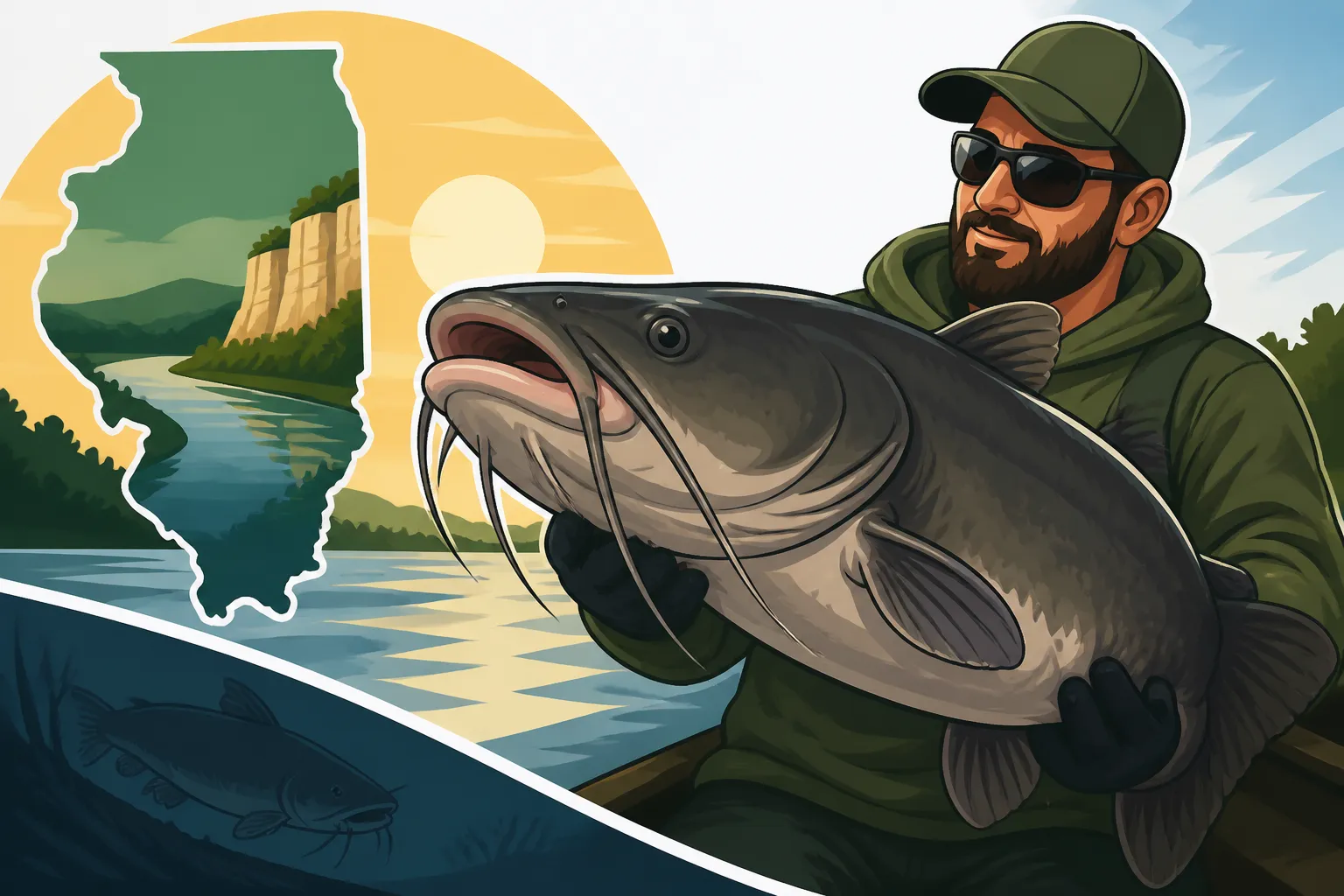
Next, the mighty Blue Catfish. These are the true giants of the Mississippi. Blues are often confused with Channels, but they lack the spots (usually), have a longer, more angular anal fin, and a more pronounced hump on their back, giving them a more robust, powerful appearance. They prefer strong currents and deep holes in the main channel, often congregating in large schools. Blues are carnivorous, primarily feeding on other fish. They grow to incredible sizes, with fish weighing well over 50 pounds being a realistic target in Southern Illinois, and state records pushing past 100! Catching a big Blue is an experience of raw power, a tug-of-war that will test your gear and your resolve. If you're looking for where to find these behemoths, you'll want to read Illinois Blue Catfish: Where the Biggest Fish Are Caught.
Finally, the elusive and powerful Flathead Catfish. These fish are distinct, with a flatter, broader head (hence the name), a mottled brown and yellow coloration, and a square or slightly rounded tail, not forked like their cousins. Flatheads are solitary ambush predators, preferring to hide in heavy cover like log jams, submerged trees, and undercut banks in slower moving, often murky, water. They are almost exclusively piscivorous, meaning they prefer live bait. A live bluegill, shad, or carp minnow is usually your best bet for a Flathead. Like Blues, they can grow massive, with 40-60 pound fish being a possibility, and even larger specimens occasionally landed. The fight is brutish and determined, often involving a battle to pull them out of their chosen woody cover. For the best live bait options, check out Best Live Bait for Flathead Catfish.
Prime Catfish Hotspots and Access Points
Navigating the vastness of the Mississippi River for catfish can be daunting, but Southern Illinois offers some legendary stretches and incredibly productive areas. It's all about understanding where the fish like to hold and knowing how to get there, whether you're in a boat or fishing from shore. The river here isn't a single, uniform entity; it's a collection of distinct ecosystems, each with its own character and potential.
Key River Stretches and Tributaries
When you're chasing catfish on the Southern Illinois stretch of the Mississippi, you're looking for structure and current, or a lack thereof in the right places. One of the most famous and productive areas is the stretch near Alton and Grafton, where the mighty Illinois River converges with the Mississippi. This confluence creates incredibly strong currents, deep scour holes, and vast eddies where baitfish gather, drawing in huge numbers of blue and channel catfish. The numerous wing dams and rip-rapped banks in this area are absolute magnets. These structures break the current, creating seams and slack water zones where catfish can ambush prey without expending too much energy.
Further south, past St. Louis, the river widens, and the character changes slightly. Areas around Chester and Grand Tower offer excellent opportunities, particularly around rock outcroppings and deeper bends. The vast backwater complexes and old river channels here are fantastic for flatheads and channel cats, especially those connected by smaller sloughs or creeks. You'll find plenty of submerged timber and brush piles that act as perfect flathead hideouts.
Don't overlook the impact of other major tributaries, like the Ohio River meeting the Mississippi near Cairo. This massive influx of water creates a whole new dynamic, with massive current changes, deep channels, and vast areas of rich habitat. The sheer volume of water and variety of structure make this area incredibly productive for all three species, especially the monster blue cats that patrol the deep main channel. Anglers often find success by targeting the transition zones where the tributary waters meet the main river, as these areas concentrate baitfish.
Best Boat Ramps and Shoreline Access
Accessing the Mississippi River, especially with a larger boat capable of handling the main channel, is crucial for serious catfish anglers. Fortunately, Southern Illinois has a number of good options, though you'll need to be mindful of water levels, which can fluctuate dramatically.
For boaters, the Alton Marina area offers excellent facilities, including concrete ramps and plenty of parking. From here, you can easily access the confluence with the Illinois River, a renowned catfish hotspot. Further upriver, the ramps near Grafton also provide access to excellent fishing grounds. These ramps are typically well-maintained and capable of handling larger fishing boats that are necessary for safely navigating the wide, commercial river.
As you move south, boat ramps in towns like Chester, Kaskaskia, and Cairo offer gateways to different stretches of the river. Always check local conditions and river forecasts before heading out, as low water can make some ramps unusable, and high water can create dangerous currents. Having a robust boat trailer and knowing how to handle large river currents is paramount here. For a detailed look at where to put in, you might find our guide Best Boat Ramps on the Mississippi River Near Alton, Illinois particularly helpful.
For those who prefer to keep their feet on solid ground, shoreline access can be a bit more challenging due to the river's dynamic nature and private land. However, there are still excellent opportunities. Public parks and access points in towns along the river, such as Alton, Grafton, Chester, and Cairo, often provide rip-rapped banks, levees, or small parks where you can cast a line. These areas are excellent for channel catfish, and if you can find spots with deep water close to shore or submerged cover, flatheads and blues are certainly within reach.
Additionally, many of the extensive backwater areas and oxbow lakes, particularly within state park or conservation areas, offer fantastic bank fishing. These locations are generally safer from barge traffic and strong currents, making them ideal for a more relaxed outing, though they might require a bit of hiking. Always be aware of your surroundings, especially with potentially unstable riverbanks. If you're planning a bank fishing trip, our article on Best Bank Access Points Along the Mississippi River in Illinois is a great resource.
| Catfish Species | Identification Key Features | Typical Habitat | Preferred Bait |
|---|---|---|---|
| Channel Catfish | Forked tail, spots (younger), sleek body | Rivers, lakes, varied structure | Cut bait, worms, stink bait, livers |
| Blue Catfish | Forked tail, no spots, humped back, long anal fin | Main channel, strong current, deep holes | Cut bait (shad, herring), live bait |
| **Flathead Catfish | Flat head, square/rounded tail, mottled brown/yellow | Heavy cover (logs), slow water, undercut banks | Live bait (bluegill, shad, perch) |
Essential Techniques and Gear for River Catfish
Successfully landing a big catfish on the Mississippi River is a blend of knowing where to fish and how to fish. It's not just about luck; it's about employing the right techniques and having the robust gear needed to tackle these powerful fish in a challenging environment. The Mississippi is not your average pond, and your approach needs to reflect that.
Tried-and-True Fishing Methods
River catfishing requires a versatile approach, as conditions and fish behavior can change rapidly. Here are some of the most effective methods:
1. Bottom Fishing (Anchored or Drifting): This is perhaps the most classic and widely used technique.
* Anchored: Find a promising spot—a deep hole below a wing dam, an eddy line, or a log jam—and anchor up. Use a heavy lead sinker (3-8 ounces or more, depending on current) to hold your bait on the bottom. A simple Carolina rig or a three-way swivel rig works wonders. This is especially effective for Channel and Blue Catfish, as they cruise the bottom for food. Patience is key here, and sometimes moving your anchor point just a few feet can make all the difference. Check out Catfish Bottom Fishing Techniques for more in-depth setup advice.
* Drifting: When anchored fishing isn't producing, or you want to cover more water, drifting can be incredibly effective. Let your boat drift with the current, allowing your bait to bounce along the bottom. This works well for covering long stretches of river, especially for active blue cats. You'll need enough weight to stay in contact with the bottom without snagging too often. This method can also be fantastic for finding concentrations of fish you might not otherwise locate.
2. Trotlining: For those who want to set multiple baits and maximize their chances, trotlines are a traditional and highly effective method on the Mississippi, especially for larger blue and flathead catfish. A trotline consists of a main line stretched across a productive area (often a deep channel or a backwater slough), with numerous baited hooks attached at intervals. It's a method that requires careful planning, adherence to regulations (including marking your lines clearly), and the right equipment. This is a very efficient way to fish, particularly overnight. Our article on Catfish Trotline Setup Guide offers detailed instructions for getting started.
3. Jug Fishing: Another popular method for covering a lot of water with multiple baits, particularly in slower currents or backwater areas, is jug fishing. This involves attaching a baited line to a floating jug or pool noodle. The jugs drift freely with the current, and when a fish bites, the jug starts to move erratically, making for an exciting chase. It's a highly visual and interactive way to fish, often done with multiple jugs at once. Jug fishing is excellent for both Channel and Blue Catfish, and can be a fantastic way to spend a day on the water. You can find more specific advice on this technique in Catfish Jug Fishing Techniques.
Rods, Reels, and Bait for River Monsters
When targeting Mississippi River catfish, you absolutely cannot skimp on your gear. These fish are big, strong, and the river itself is a formidable opponent.
For rods, you need something with backbone. Look for heavy to extra-heavy power rods, typically 7 to 9 feet in length. Longer rods help with casting heavy weights and provide better leverage for fighting big fish in strong currents. Ugly Stik Bigwater rods are a popular choice for their durability and power.
Your reels should be equally robust. For most catfishing, a heavy-duty baitcasting reel (often called a "catfish reel") is preferred. Look for models with a high line capacity (to hold plenty of heavy line), a powerful drag system that can withstand sustained pressure, and a strong retrieve ratio to pull fish out of cover. Brands like Abu Garcia and Penn make excellent reels for this purpose. If you're shopping for something like a high-capacity baitcaster or heavy braided line, Amazon is a great place to compare models and read reviews before committing.
Line choice is critical. For the main line, a heavy-duty monofilament (25-50 lb test) or braided line (50-80 lb test) is recommended. Braided line offers superior strength-to-diameter ratio, no stretch for better hooksets, and cuts through current better. A good quality, abrasion-resistant leader (fluorocarbon or heavy mono) is also a must, especially around submerged logs and rocks.
Now, for the all-important bait:
- Channel Catfish: These are the least picky. Cut shad, skipjack herring, chicken livers, nightcrawlers, and various prepared "stink baits" are all highly effective. Freshness often trumps all else, so catching your own baitfish or buying fresh cut bait from a local shop can make a huge difference.
- Blue Catfish: Blues are primarily piscivorous, meaning they prefer fish. Fresh cut bait from oily fish like shad, skipjack, or even carp is king. The fresher, the better. Whole small baitfish or large chunks of larger fish are excellent.
- Flathead Catfish: This is where live bait truly shines. Flatheads are ambush predators that prefer to attack live, struggling prey. Live bluegill, sunfish, shad, or carp minnows (check local regulations for baitfish legality) are your best bet. Hook them through the back or lips to keep them lively.
Having a good selection of terminal tackle is also important: heavy-duty circle hooks (sized 5/0 to 10/0 depending on bait and target species), swivels, and an assortment of no-roll sinkers or pyramid weights to combat the strong current. Remember, these are not just fish; they are river monsters, and your gear needs to be up to the challenge. For specialized heavy-duty fishing lines or those unique sinker styles, Amazon can often be a convenient source.
Navigating Regulations and Safety on the Mississippi
Fishing the Mississippi River is an incredible experience, but it comes with unique responsibilities. Because it's such a massive, dynamic waterway, and often borders other states, understanding the specific regulations and prioritizing safety are non-negotiable. Don't let a fantastic day turn into a costly mistake or, worse, a dangerous situation.
Illinois Fishing Regulations Specific to the Mississippi
One of the first things to wrap your head around when fishing the Mississippi is that it's often a border water. While the focus here is on Illinois fishing, it's worth noting that if you fish portions of the river that border Missouri, Iowa, or Kentucky, there might be reciprocity agreements that allow you to fish with an Illinois license, or specific rules about which state's regulations apply. Always verify these rules for your exact location, as they can be complex. However, for fishing strictly within Illinois waters or under Illinois jurisdiction, you'll need an Illinois Fishing License Guide for 2026 and to abide by Illinois Department of Natural Resources (IDNR) regulations.
Specifically for catfish, Illinois sets daily catch limits and sometimes size limits.
- Channel Catfish: Generally, there's a daily limit for Channel Catfish across the state, and this applies to the Mississippi River. It's usually quite generous, but it's crucial to know the current number. You'll want to review Illinois Channel Catfish Daily Limit Explained for the most up-to-date information.
- Blue Catfish: Similar to Channel Catfish, Blue Catfish will have a daily harvest limit. Given their potential for immense size, managing this population is important. Ensure you know the specific rules for Blues, as they can sometimes differ from Channels. Our article Illinois Blue Catfish Daily Limit: What You Need to Know has those details.
- Flathead Catfish: Flatheads, being apex predators and having a different growth pattern, often have specific regulations regarding their daily limit. These limits are typically more conservative than for Channel Catfish. Consult Illinois Flathead Catfish Daily Limit Rules for the precise numbers.
It's absolutely essential to consult the most current Illinois Fishing Information Guide published by the IDNR. This guide outlines all statewide and site-specific regulations. These rules can change annually, so never assume last year's rules are still valid. Failing to adhere to these regulations can result in fines and confiscation of your catch and gear. If you're looking for a general overview of all fishing rules, Illinois Fishing Regulations Overview is a good starting point.
River Safety and Best Practices
The Mississippi River is a powerful, unforgiving body of water, and safety should always be your top priority. It’s not a placid lake, and its hazards demand respect.
1. Understand Current and Barge Traffic: The most significant dangers on the Mississippi are its swift, unpredictable currents and constant commercial barge traffic. Barges create massive wakes and strong undertows that can easily swamp a small boat or pull a person from the bank. Always give barges a wide berth, and never try to cross directly in front or behind one. Be aware of wing dams and other submerged structures that create boils and eddies, which can also be hazardous.
2. Wear Your Life Jacket: This is non-negotiable, especially if you're in a boat, kayak, or wading near strong currents. Even strong swimmers can be quickly overcome by the river's power if they fall in unexpectedly. Children under a certain age are legally required to wear a personal flotation device (PFD) at all times while underway on an Illinois boat, but frankly, everyone should. Get a comfortable, well-fitting PFD and wear it. For detailed requirements, refer to Illinois Life Jacket and PFD Rules. Having extra Type IV throwable PFDs easily accessible is also smart. You can find durable, Coast Guard-approved life jackets and throwable PFDs on Amazon.
3. Check Weather and River Levels: Before every trip, check the local weather forecast and river gauges. Sudden storms can bring dangerous winds and lightning. Rapidly rising or falling water levels can create new hazards, uncover submerged obstacles, or make ramps unusable. A high-quality marine radio or weather app on your phone can be a lifesaver.
4. Have Proper Boat Safety Equipment: If you're fishing from a boat, ensure you have all the required safety equipment on board. This typically includes navigation lights (if operating after dark), a sound-producing device (whistle or horn), a fire extinguisher, distress signals, and a strong anchor with sufficient rope to hold your boat in the current. A well-stocked first-aid kit is also a must. Our Illinois Boating Safety Gear Checklist provides a comprehensive list of what you need. Investing in a powerful anchor and a long anchor rope designed for river currents is crucial—again, Amazon offers a good selection of specialized marine anchors.
5. Tell Someone Your Plans: Always let a friend or family member know where you're going, your planned route, and when you expect to return. This simple step can be life-saving in an emergency.
6. Stay Hydrated and Sun Protected: Long hours on the river, especially in summer, mean exposure to sun and heat. Bring plenty of water, wear sunscreen, a wide-brimmed hat, and appropriate clothing to protect yourself from the elements.
Fishing the Mississippi River for catfish in Southern Illinois is an incredible pursuit, but it demands respect and preparation. By understanding the regulations and prioritizing safety, you'll be able to focus on the thrill of the catch and enjoy everything this legendary river has to offer.
Disclaimer
This article is for general informational purposes only and does not constitute professional advice. Laws, prices and regulations vary by location and change over time. Consult a qualified professional for guidance on your specific situation.