Illinois Blue Catfish Daily Limit: What You Need to Know
There’s nothing quite like the thrill of feeling a big blue catfish on the end of your line, especially when you’re fishing the robust waters of Illinois. But once you’ve landed that beauty, a common question often pops up: how many can I actually keep? It’s a point of confusion for many anglers, and honestly, the rules can feel a bit like a moving target if you don't know where to look. This guide is here to untangle the daily catch limits for blue catfish in Illinois, making sure you can enjoy your time on the water without any nagging worries about accidentally breaking the rules.
Understanding Illinois's Daily Catch Limits for Blue Catfish
When you're out chasing those powerful blue catfish, it's easy to get caught up in the excitement. But before you fill your cooler, you need to be crystal clear on the rules. Illinois has specific regulations designed to protect our fisheries and ensure there are plenty of big blues for generations of anglers to come. These aren't just arbitrary numbers; they're based on scientific data about fish populations and their health.
The Statewide Standard for Blue Catfish
For much of Illinois, the general statewide daily limit for blue catfish is quite generous, often allowing anglers to take a good number of fish home. This limit is typically put in place to manage the overall population, ensuring that enough fish remain to spawn and keep the fishery thriving. Think of it as a balance: enough fish for sport and sustenance, but not so many that the population dwindles. These limits are especially crucial for a species like the blue catfish, which can grow to impressive sizes and is highly sought after by recreational and commercial anglers alike. You'll often find that the statewide rules are a good baseline, but they're not always the final word, which can definitely add to the confusion for a new angler or someone visiting from out of state.
When you compare these rules to other species, you'll see a clear strategy. For instance, the limits for blue catfish might differ significantly from those for, say, walleye or bass. This is because each species has its own unique biology, reproductive rates, and vulnerability to fishing pressure. What works for one fish won't necessarily work for another. The aim is always sustainability. If you're curious about how other species compare, diving into guides like Catfish Limits Compared to Walleye Limits in Illinois can really clear things up.
Site-Specific Regulations: Where Things Get Tricky
Now, here's where things can get a little tricky, and it’s a source of real frustration for many anglers. While Illinois does have statewide regulations, many lakes, rivers, and even specific stretches of waterways have their own unique, site-specific rules. This means that the daily limit you adhere to on the Mississippi River might be completely different from the one on a smaller, managed lake. These site-specific rules are often implemented by the Illinois Department of Natural Resources (IDNR) to address local fish population dynamics, habitat conditions, or specific management goals for a particular body of water.
Imagine you're fishing on the main channel of the Mississippi River, where blue catfish populations are robust and widely distributed. The daily limit there might be quite high to allow for substantial harvest. However, if you venture into a smaller backwater lake or a state park pond that's actively managed for a trophy blue catfish program, the daily limit could be much lower – perhaps just one or two fish, or even a slot limit. A slot limit means you can only keep fish within a certain size range, protecting both the smaller, growing fish and the large, prime breeding stock. This is why just knowing the statewide rule isn't enough; you absolutely have to check the local details for your fishing spot. Ignoring these specific rules is a common mistake that can lead to unnecessary trouble, so it's always best to be over-prepared.
Why Blue Catfish Limits Matter (And How to Stay Compliant)
It’s easy to think of fishing regulations as just more red tape, but trust me, they're designed with a much bigger picture in mind. These rules are the backbone of a healthy, sustainable fishery, and understanding why they exist can make following them a lot easier and more meaningful. Beyond conservation, adhering to limits is also about protecting yourself from unwanted legal headaches.
Conservation Efforts and Healthy Fisheries
At its core, the daily catch limit for blue catfish is about conservation. Illinois is blessed with incredible fishing opportunities, and we want to keep it that way. If every angler kept every fish they caught, especially the larger, more mature ones, it wouldn't take long before our blue catfish populations started to suffer. These magnificent fish are long-lived and can grow to truly epic proportions, making them a prize catch. Limiting the daily harvest helps ensure that enough breeding stock remains to replenish the population year after year. It prevents overharvesting, which can deplete fish numbers, shrink the average size of the fish, and ultimately diminish the quality of fishing for everyone.
Think about it this way: when you follow the catch limits, you're not just complying with a rule; you're actively participating in the stewardship of Illinois's natural resources. You’re helping to ensure that your kids, grandkids, and future generations of anglers will have the same chance to experience the thrill of battling a big blue cat. The health of our blue catfish populations, especially in key areas like the Mississippi and Illinois Rivers, depends on all of us doing our part. Understanding the ecosystem and the role these limits play really makes a difference.
Avoiding Penalties: The Cost of Ignoring the Rules
Let's be blunt: ignoring fishing regulations, especially daily catch limits, can land you in hot water. Game wardens and conservation police officers are out there on the water, and they take these rules seriously. They’re not there to ruin your day, but to enforce laws that protect our shared resources. Getting caught with more blue catfish than the legal daily limit allows can lead to a variety of penalties, none of which are fun.
Typically, you're looking at a citation, which is essentially a ticket. This can come with significant fines that can quickly turn your relaxing day of fishing into a very expensive outing. In more severe cases, especially for repeat offenders or egregious violations, your fishing equipment could be confiscated, and your fishing privileges suspended. Imagine having your prized rod and reel taken away, or being barred from fishing for a season or longer. It's a tough lesson to learn, and one that's easily avoided by simply knowing and respecting the rules. The old adage, "ignorance of the law is no excuse," definitely applies here. For a broader understanding of what could happen, reading up on Penalties for Fishing Without a License in Illinois will give you a good idea of the seriousness of conservation law enforcement.
Practical Tips for Managing Your Catch on the Water
It's one thing to know the rules, but it's another to practically apply them while you're actively fishing. When the bite is hot and those blue cats are coming in one after another, it can be a whirlwind. Having a system in place will help you stay compliant and enjoy your fishing trip without stress.
Counting Your Catch and Understanding "Daily Limit"
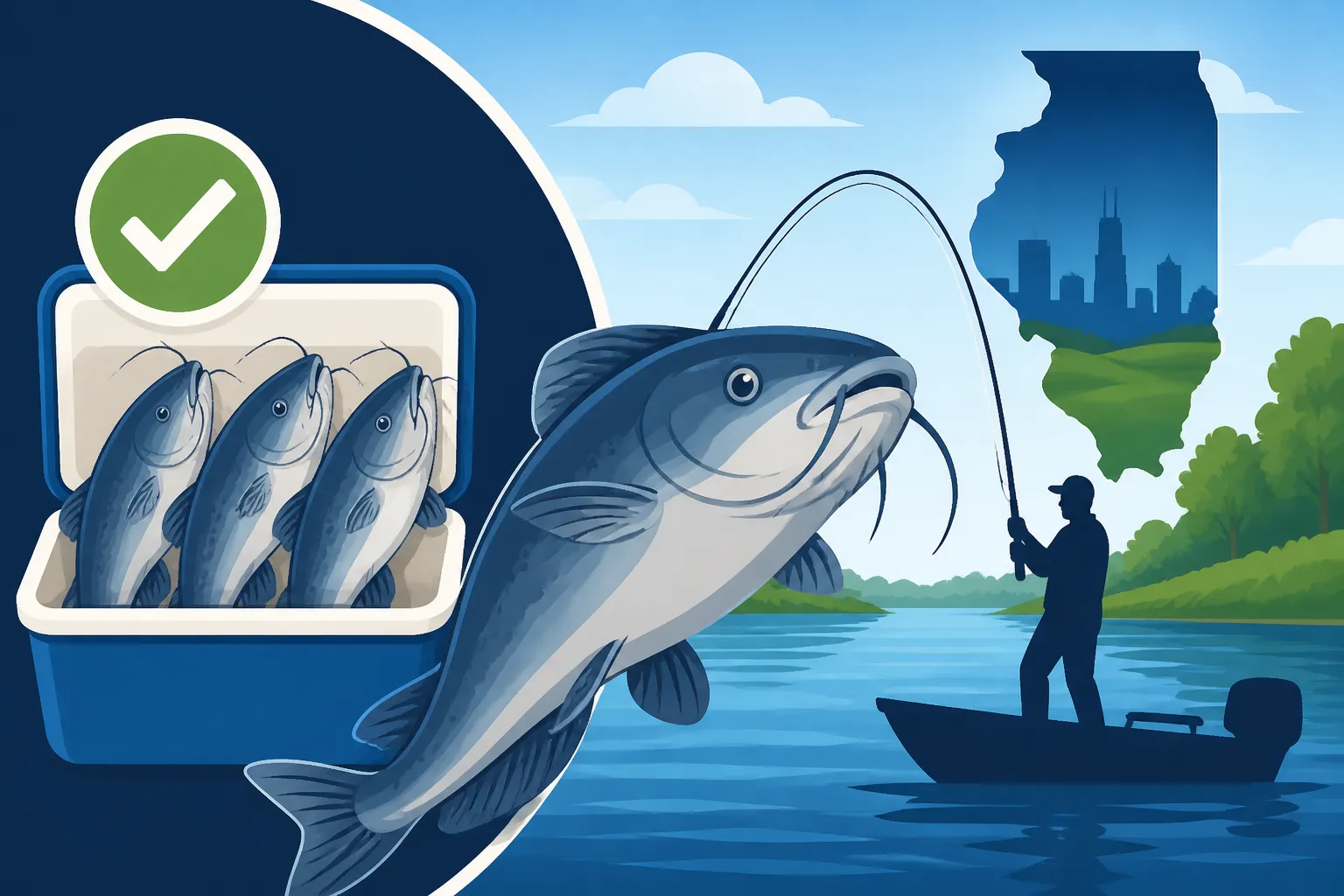
The "daily limit" refers to the maximum number of fish of a particular species that you can legally keep in your possession at any given time during a single day. This isn't just about what's in your livewell; it includes any fish you've already put on a stringer, in a cooler, or even brought back to your camp if you're still actively fishing that day. So, if the limit for blue catfish is, say, three, and you've already kept three, any additional blue catfish you catch must be immediately released, regardless of how big or small they are.
A good practice is to decide beforehand how many fish you intend to keep for a meal. Once you reach that number and it's within the legal limit, switch to catch-and-release fishing. For those you plan to keep, a sturdy stringer or a well-aerated cooler is essential to keep them fresh and to make it easy to count. Avoid keeping fish that are on the smaller side if you’ve already got a few good eaters, unless regulations specifically permit or encourage it. If you're targeting big blue catfish, understanding How Big Do Illinois Blue Catfish Get? can help you decide which ones are truly worth keeping.
Resources for Checking Current Regulations
The best defense against unintentional violations is up-to-date information. Regulations can change, so relying on what you heard from a buddy last year isn't always the safest bet. The absolute best place to find the most current and accurate fishing regulations for Illinois is the official Illinois Department of Natural Resources (IDNR) website. They publish an annual fishing information guide that covers all species, all waters, and all the specifics you'll ever need.
Before every trip, make it a habit to:
- Visit the IDNR Website: Navigate to the fishing section and look for the latest "Illinois Fishing Information Guide." This is your bible on the water.
- Download or Print: Seriously, download a PDF to your phone or print out the relevant pages for the body of water you'll be fishing. Cell service can be spotty on some lakes, and having a hard copy or an offline version is invaluable. The Illinois Fishing Information Guide Covers April 2026 Through March 2027 is the go-to document for the current season.
- Check Local Bait Shops: These are often fantastic resources. The folks working at your local bait and tackle shop are usually avid anglers themselves and stay very current on local rules and any recent changes. They might even have printed copies of the rules specific to their area.
- Use Fishing Apps: While not official, some fishing apps do a good job of aggregating regulations. Just be sure to cross-reference with the IDNR if you're ever in doubt.
Strategies for Catching and Releasing Blue Catfish Ethically
Catch and release fishing is an integral part of modern angling, especially when you've hit your daily limit or simply want to release a fish to grow bigger. For a strong, powerful species like the blue catfish, doing it correctly is crucial to ensuring its survival after release.
Gear and Techniques for a Smooth Release
To give a blue catfish the best chance of survival after release, your approach starts even before you net the fish. Using appropriate gear can make a huge difference. A heavy-action rod paired with a robust reel and strong line (like a 20-30 lb test monofilament or braid) allows you to land the fish more quickly, minimizing its fight time and, consequently, its stress and exhaustion. A prolonged fight, especially in warm water, can leave a fish too exhausted to recover.
When it comes to hooks, consider using circle hooks. These hooks are designed to naturally lodge in the corner of the fish's mouth, rather than deep in its throat or gut. This significantly reduces gut-hooking, which is often fatal for released fish. Compare this to J-hooks, which can be easily swallowed. We've talked about this before in Circle Hooks vs J-Hooks for Illinois Catfishing, and it's a difference-maker. Have tools ready on your boat or in your tackle box for quick and clean hook removal. Long-nose pliers, a de-hooker, or even a specialized hook remover can be incredibly helpful. You can find excellent options for these on Amazon, making it easy to stock up on the right tools for ethical fishing. The faster you can get that hook out without causing unnecessary damage, the better.
Handling Blue Catfish for Survival
Once you've brought a blue catfish to the boat or shore, proper handling is paramount. These fish are incredibly tough, but they can still be harmed by improper handling. Here’s a quick guide to increase their chances of survival:
- Wet Your Hands: Always wet your hands thoroughly before touching a fish. Dry hands can remove the fish's protective slime coat, making it vulnerable to disease and infection.
- Support the Fish: Blue catfish can be heavy, especially the larger ones. When lifting, support the fish horizontally with one hand under its belly and the other near its head or tail. Avoid holding a heavy fish by just the lower jaw or gills, as this can damage its internal organs and jaw structure.
- Minimize Air Exposure: Fish breathe water, not air. Keep the fish in the water as much as possible, especially during hook removal. If you need to take a quick photo, do it swiftly, holding the fish horizontally and close to the water's surface. A few seconds out of water is generally fine, but minutes can be deadly.
- Remove the Hook Gently: Using your pliers or de-hooker, carefully remove the hook. If the fish is deeply hooked and removing the hook would cause significant damage, it's often better to cut the line as close to the hook as possible. The hook will eventually rust away.
- Revive if Necessary: If the fish seems sluggish or disoriented after hook removal, gently hold it in the water, facing into the current (if applicable), until it regains its strength and can swim away on its own. It's often helpful to move it back and forth slightly to push water over its gills. Don't just toss it back; make sure it's ready.
By following these tips, you're not just practicing responsible angling; you're actively contributing to the health and longevity of Illinois's fantastic blue catfish fishery. It’s a rewarding feeling to watch a powerful blue cat swim strongly away, knowing it's there to fight another day, perhaps for you or another angler.
| Species | Statewide Daily Limit | Potential Site-Specific Variations | Average Size Range (Illinois) |
|---|---|---|---|
| Blue Catfish | Often 10-25 | Lower limits (1-5), slot limits | 15-40 lbs (trophies much larger) |
| Channel Catfish | Often 25 | Lower limits, 1-fish over 24" | 1-10 lbs (larger in rivers) |
| Flathead Catfish | Often 10 | Lower limits (1-5), minimum size | 5-30 lbs (trophies 50+ lbs) |
Disclaimer
This article is for general informational purposes only and does not constitute professional advice. Laws, prices and regulations vary by location and change over time. Consult a qualified professional for guidance on your specific situation.