Spotted Gar vs Bowfin: How to Tell These Prehistoric Fish Apart
Picture this: you're out on an Illinois backwater, maybe a quiet slough off the Mississippi or a weedy bay on a smaller lake, and you hook into something that just looks ancient. It fights hard, has a strange head, and you're left wondering if you just caught a gar, or perhaps that other prehistoric-looking fish, the bowfin. The confusion is totally understandable, but knowing the distinct features of these two incredible freshwater brawlers can really elevate your angling game. This guide is all about helping you confidently tell the difference between a spotted gar and a bowfin, so you can appreciate each catch for the unique creature it is.
Why These Fish Cause Confusion on the Water
It's easy to see why anglers often mix up spotted gar and bowfin, especially when you're just getting started or even if you've been fishing for years but haven't specifically studied these unique creatures. They both possess a certain primeval quality that makes them stand out from your typical bass or panfish. Their scales, body shapes, and even the way they inhabit sluggish, weedy waters can make them seem like two peas in a pod at first glance.
Ancient Looks and Similar Habitats
Both the spotted gar and the bowfin are often referred to as "living fossils" because their physical characteristics have changed very little over millions of years. This shared ancient lineage contributes heavily to the confusion. When you look at their elongated bodies, tough scales, and formidable mouths, it's hard not to group them together in your mind as simply "rough fish" or "prehistoric fish." They both tend to prefer the same kinds of hideouts, too – shallow, often weedy, slow-moving waters where they can ambush prey or hide from potential threats. Think oxbow lakes, quiet river backwaters, flooded timber, and dense lily pad fields. If you're drifting through a secluded slough off the Illinois River, for instance, there's a good chance you might encounter either species, which only adds to the identification challenge when one suddenly thrashes at the end of your line.
Common Misconceptions Among Anglers
Beyond their similar ancient appearance and preferred haunts, a lot of the confusion stems from common misconceptions. Some anglers might lump all long-bodied, toothy fish into the "gar" category without realizing there are different species of gar, let alone an entirely different fish like the bowfin. Others might mistakenly call a bowfin a "snakehead," which is an invasive species that, while visually somewhat similar in overall shape, has very distinct features and behavioral patterns. These kinds of misidentifications can lead to anglers missing out on understanding the unique biology and fishing potential of each species. Knowing the precise differences not only makes you a more knowledgeable angler but also helps with adhering to specific regulations that might apply to one species but not the other, even if both are often considered non-game fish.
The Spotted Gar: A Pike-Like Predator
The spotted gar is a truly fascinating fish, often recognized for its elongated, almost reptilian appearance. It's a master of ambush, perfectly camouflaged to blend into its watery environment, waiting patiently for an unsuspecting meal to swim by. Catching one is an experience, as they often put up a surprisingly strong fight with powerful headshakes. Are Spotted Gar Safe to Handle? is a good read if you're worried about their toothy mouths.
Distinctive Physical Traits of the Spotted Gar
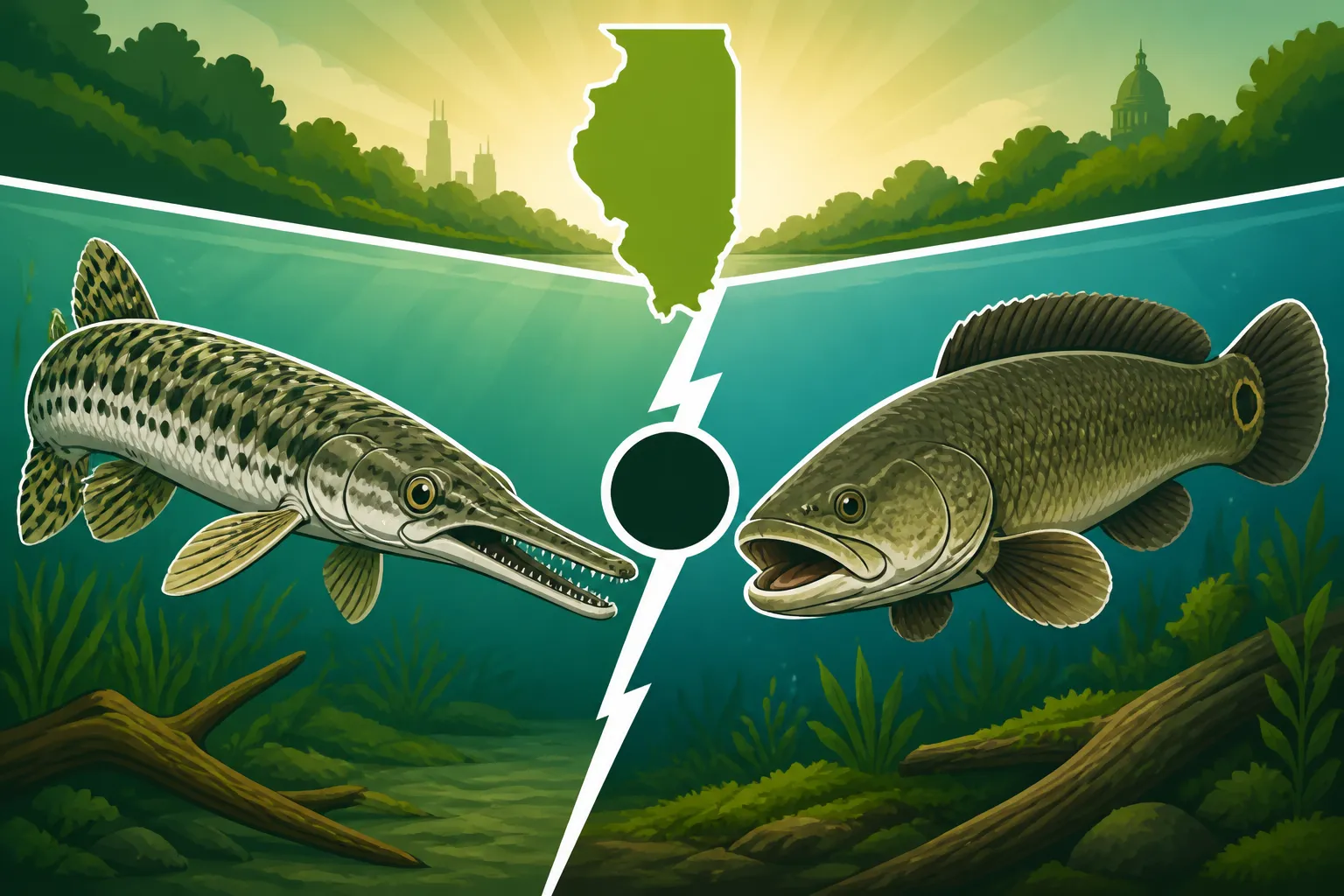
When you land a spotted gar, the first thing that usually catches your eye is its incredibly long, slender body, reminiscent of a northern pike, but with distinct differences. The most prominent feature is its elongated, duck-bill-shaped snout, which is filled with rows of needle-sharp teeth. This specialized mouth is perfectly designed for snatching quick-moving prey. Unlike many other fish, gar are covered in ganoid scales, which are thick, hard, diamond-shaped, and interlocking – almost like armor plating. These scales give them a rough, almost sandpaper-like feel.
Beyond the head and scales, the spotted gar gets its name from the prominent dark spots that cover its entire body, including the fins. These spots are usually round and clearly defined, providing excellent camouflage among submerged vegetation and dappled sunlight. Their dorsal and anal fins are set far back on the body, very close to the caudal (tail) fin. This rearward placement is a classic adaptation for burst speed, allowing them to propel themselves forward quickly to ambush prey. The combination of their long, narrow jaws, armored body, and distinct spot patterns really sets them apart once you know what to look for.
Where Spotted Gar Are Found in Illinois
In Illinois, spotted gar are quite common, preferring habitats that allow them to utilize their ambush hunting tactics. You'll typically find them in the quiet, sluggish backwaters of large rivers like the Mississippi and Illinois rivers. They love areas with plenty of submerged aquatic vegetation, brush piles, and fallen timber, which provide excellent cover for them to lie in wait. Think of those calm, shallow sloughs, oxbows, and marshy areas that are connected to the main river but have minimal current. They also inhabit larger natural lakes and reservoirs with abundant shallow, weedy bays.
While they can tolerate some turbidity, they often prefer clearer waters where their eyesight and camouflage are most effective. If you're exploring the remote corners of some of Illinois's larger lakes or the quieter stretches of rivers, looking for signs of baitfish near cover, you're likely in prime spotted gar territory. These fish are incredibly resilient and have adapted well to a variety of slow-moving freshwater environments throughout the state. Illinois Spotted Gar Fishing: What You Need to Know offers more specific tips on where and how to target these unique fish.
Behavior and Feeding Habits of Spotted Gar
Spotted gar are quintessential ambush predators. They spend much of their time lying perfectly still, often just below the surface or nestled within dense vegetation, waiting for an unsuspecting fish, frog, or even insect to swim within striking distance. When a meal presents itself, they make a sudden, lightning-fast sideways lunge, using their long jaws to clamp down on their prey. They don't typically chase prey over long distances; rather, they rely on patience and explosive bursts of speed.
Their diet consists primarily of smaller fish, but they're opportunistic and will eat almost anything they can catch, including crayfish and various invertebrates. It's truly fascinating to watch a gar hunt in clear water; their patience is remarkable. They often take their time manipulating their prey into a head-first position before swallowing it whole. This unique feeding strategy, combined with their armored bodies, makes them incredibly efficient predators in their chosen environments, dominating the food chain in many slow-moving, weedy areas.
The Bowfin: A Hard-Fighting Freshwater Brawler
The bowfin, often affectionately called a "dogfish" or "mudfish" by anglers, is another incredible ancient fish that deserves respect. These fish are renowned for their aggressive strikes and powerful, relentless fights, making them a true freshwater brawler. They might not be as widely targeted as bass or walleye, but once you hook into one, you'll know you've got a formidable opponent on your hands.
Key Identifying Features of the Bowfin
Unlike the gar's elongated, toothy snout, the bowfin has a much shorter, rounded, and somewhat blunt head. Its mouth is broad and equipped with strong, conical teeth, perfect for crushing and holding onto prey. One of the most distinctive features of a bowfin is its incredibly long dorsal fin, which extends over half the length of its back, undulating in a wavy motion as the fish swims. This serpentine dorsal fin movement is unique and instantly recognizable once you've seen it.
Another crucial identifier is the prominent black spot, or "ocellus," located at the base of the tail fin. This spot often has an orange or yellow halo around it, especially in males, and serves as a key differentiating mark from all gar species. Bowfin scales are cycloid, meaning they are smooth to the touch, unlike the gar's rough ganoid scales. Furthermore, if you look closely at the underside of a bowfin's head, you'll notice a hard, bony plate between the lower jaws, known as a gular plate – a feature completely absent in gar. This combination of a rounded head, long dorsal fin, distinct caudal spot, smooth scales, and a gular plate makes bowfin identification quite straightforward once you know these tell-tale signs.
Preferred Habitats of Illinois Bowfin
Bowfin are exceptionally hardy fish, known for their incredible tolerance to low-oxygen environments that would kill most other species. This resilience means they thrive in places where many other popular game fish struggle. In Illinois, you'll primarily find bowfin in densely vegetated, often murky, shallow waters, particularly in river backwaters, swamps, bayous, and quiet sloughs. They love areas with thick lily pads, submerged weeds, and plenty of decaying organic matter on the bottom.
Their ability to breathe atmospheric oxygen, using a unique lung-like gas bladder, allows them to survive in stagnant water that would suffocate other fish. This adaptation means they can often be found in isolated ponds or ditches that might be completely cut off from main water bodies during dry spells. If you're exploring the wetland areas or backwater lakes connected to the Mississippi or Illinois rivers, especially in areas with heavy vegetation, you're likely in prime bowfin territory. They are often found in the same areas as Where to Catch Bowfin and Spotted Gar Together in River Backwaters, but sometimes in even more oxygen-depleted zones.
Unique Bowfin Behaviors and Diet
Bowfin are truly unique in their behavior, most notably their ability to breathe air. You'll often see them "gulping" air at the surface of stagnant water, a survival mechanism that allows them to thrive in harsh conditions. This air-breathing capability means they can often be found in the shallows even during the hottest parts of summer when oxygen levels are at their lowest. When hooked, bowfin are legendary for their powerful, bulldog-like fights. They'll pull hard, roll, twist, and make aggressive runs, earning them a reputation as one of the hardest-fighting freshwater fish in Illinois.
Their diet is broad and opportunistic, consisting mainly of smaller fish, crayfish, frogs, and even insects. They are voracious predators and will strike aggressively at a variety of lures and baits. Unlike the gar's ambush style, bowfin are more active hunters, patrolling their vegetated domains in search of a meal. They are also known to be territorial and quite aggressive, particularly during spawning season. This combination of air-breathing, aggressive fighting, and varied diet makes the bowfin a truly captivating and challenging fish to encounter. If you’re wondering Is Bowfin Good to Eat?, you’ll find different opinions, but they are certainly a fun catch!
Side-by-Side Comparison: Spotting the Differences
Alright, let's put it all together and really pinpoint those crucial differences. When you have one of these unique fish in hand, knowing what to look for will make all the difference. Instead of just guessing, you can quickly scan for a few key features and confidently identify your catch. This clarity helps you appreciate the biodiversity of Illinois waters and understand the fish better.
Head Shape and Mouth Structure
This is often the easiest and most immediate way to differentiate between a spotted gar and a bowfin. Imagine holding both fish side by side. The spotted gar will immediately stand out with its exceptionally long, narrow, and somewhat flattened snout, resembling a duck's bill. This extended snout is packed with numerous small, needle-like teeth, making it look like a fearsome, prehistoric weapon. Its eyes are positioned towards the back of this long snout.
In contrast, the bowfin has a much shorter, broader, and distinctly rounded head. Its mouth, while still large and powerful, is more like that of a bass or pike, with strong conical teeth designed for crushing. There's no long, slender snout whatsoever. When you look at a bowfin head-on, it almost has a "dog-like" or "bull-headed" appearance compared to the gar's sleek, elongated profile. This difference in head and mouth shape is a fundamental distinguishing characteristic.
Scale Pattern and Body Markings
Another critical differentiator lies in their scales and body markings. The spotted gar is covered in ganoid scales, which are very thick, hard, diamond-shaped, and interlock like armor. These scales give the gar a distinct, rough texture. True to its name, the spotted gar's body, and especially its fins, are adorned with numerous dark, round spots that are well-defined and scattered irregularly. These spots are a key visual cue.
The bowfin, on the other hand, has cycloid scales, which are much smoother and more rounded, similar to what you'd find on a bass or sunfish. If you run your hand along a bowfin, it will feel smooth, not rough like the gar. The most defining marking on a bowfin is its prominent black caudal spot, or "ocellus," located right at the base of its tail fin. This spot often has a yellowish or orange margin, particularly in males, and is almost always present. While bowfin can have some mottled patterns on their flanks, they lack the distinct, widespread spotting seen on a spotted gar's body and fins.
Fin Placement and Dorsal Fin Length
The dorsal fin (the fin on its back) and anal fin (on its underside near the tail) provide another clear distinction. For the spotted gar, both its dorsal and anal fins are positioned very far back on its body, almost directly opposite each other and very close to the tail fin. This rearward placement is a characteristic of fish that rely on sudden bursts of speed.
The bowfin possesses a remarkably long, continuous dorsal fin that starts relatively close behind its head and extends over more than half of its back, often reaching almost to the tail. This dorsal fin has a distinctive undulating, wave-like motion when the fish swims slowly. The anal fin of the bowfin is much shorter and more triangular, and it is positioned further forward than the gar's anal fin. This long, flowing dorsal fin is arguably the most recognizable feature of a bowfin and immediately separates it from any gar species.
Here's a quick comparison table to help solidify these differences:
| Feature | Spotted Gar | Bowfin (Dogfish/Mudfish) |
|---|---|---|
| Head/Snout | Long, slender, duck-bill shaped, sharp teeth | Short, broad, rounded, blunt snout, conical teeth |
| Scales | Hard, thick, diamond-shaped (ganoid), rough | Smooth, rounded (cycloid), feels smooth to the touch |
| Body Markings | Numerous distinct dark spots on body and fins | Prominent black caudal (tail) spot (often with orange/yellow halo), sometimes mottled body |
| Dorsal Fin | Short, located far back on body, near tail | Very long, continuous, undulates, runs over half the back |
| Anal Fin | Located far back on body, near tail | Shorter, triangular, positioned further forward |
| Gular Plate | Absent | Present (bony plate under lower jaw) |
| Breathing | Primarily gills | Gills + ability to gulp atmospheric air (lung-like bladder) |
Why Accurate Identification Matters to Anglers
Beyond just satisfying your curiosity, knowing the difference between a spotted gar and a bowfin is actually really important for several practical reasons out on the water. It impacts everything from how you approach fishing for them to ensuring you're compliant with regulations and practicing responsible angling. It’s part of becoming a truly skilled and ethical fisherman or fisherwoman.
Understanding Fish Behavior and Locating Them
Each species has its own unique set of behaviors, preferences, and challenges. If you can correctly identify a gar versus a bowfin, you immediately gain insight into where that fish is likely to be and how it might react to your bait. For example, knowing a spotted gar is an ambush predator with a long, toothy snout might lead you to target clearer, weedy edges with a lure that mimics a quick darting baitfish. In contrast, understanding a bowfin's preference for oxygen-depleted, heavily vegetated areas and its aggressive, territorial nature might encourage you to use stout tackle and work noisy topwater lures through dense lily pads.
This accurate identification allows you to tailor your techniques, bait choices, and even your approach to specific types of water. It helps you understand their seasonal movements, feeding times, and preferred structures. For general information on when to target different species, check out Illinois Fishing Seasons Guide. By recognizing the fish, you're not just naming it; you're unlocking a wealth of knowledge about how to successfully find and catch it.
Adhering to Regulations and Catch Limits
While both spotted gar and bowfin are often considered "rough fish" or "non-game fish" in Illinois, and may not have the strict regulations of a largemouth bass or walleye, it's crucial to always verify current rules. Even for these species, there might be specific size limits, daily creel limits, or special regulations that apply to certain water bodies. For instance, while generally not heavily regulated, an isolated lake might have a specific management plan that applies differently to gar than to bowfin.
Mistaking one for the other could inadvertently lead to you violating a regulation. Imagine a scenario where a local regulation allows unlimited harvest of bowfin but limits gar to a certain number – if you don't know the difference, you could easily overharvest one species while thinking you're catching another. Penalties for fishing without a license or violating catch limits, even for rough fish, can be significant, so knowing your species is a fundamental part of responsible angling. Make sure you're always aware of the Illinois Fishing Regulations Overview for the specific body of water you're fishing.
Conservation and Respecting the Fishery
Finally, accurate identification is a cornerstone of conservation and respecting the natural world we cherish. Every fish plays a role in its ecosystem. While spotted gar and bowfin are often overlooked, they are important native predators that help maintain the balance of their aquatic environments. By correctly identifying them, you're better equipped to handle them properly upon catch, especially if you plan to release them.
For instance, understanding a gar's armored scales and long jaws means you might use specialized tools to safely remove a hook without harming the fish or yourself. Knowing a bowfin's aggressive fighting style means you're prepared for a spirited battle and can manage the fish safely at boat-side. It's about respecting each creature for what it is and ensuring its well-being, whether you keep it or release it. This respectful approach helps sustain healthy fish populations for future generations of anglers.
Gear for Targeting These Unique Illinois Fish
If you're looking to specifically target spotted gar or bowfin, you'll find that while some general tackle works, having the right gear can make a big difference. These fish are powerful, often toothy, and can put a real strain on your equipment. Don't go in with your ultralight panfish setup unless you're looking for a good laugh and a broken rod!
Rods, Reels, and Line for Gar
For spotted gar, you'll want something stout and durable. Their long, bony mouths can be notoriously difficult to hook effectively, and their tendency to roll and thrash can put a lot of torque on your rod. A medium-heavy to heavy action spinning or baitcasting rod, about 6.5 to 7.5 feet long, is a good starting point. Pair this with a sturdy reel that has a smooth drag system, capable of holding at least 150 yards of strong line.
When it comes to line, braided line is often the top choice. Its low stretch provides excellent sensitivity for detecting subtle bites and its abrasion resistance is crucial when fighting a gar in cover. A 30 to 50-pound test braided line should be sufficient. You might also consider using a wire or heavy fluorocarbon leader (50-80 lb test) because those needle-sharp teeth can make quick work of lighter lines. Some anglers even use a small section of frayed rope as a lure, which the gar's teeth get tangled in – a unique, barbless way to catch them if you're into conservation. You can find a wide selection of suitable rods, reels, and lines on Amazon to get you started.
Tackle and Baits for Bowfin
Bowfin are not quite as picky about their tackle as gar, but they are incredibly strong fighters, so durability is still key. A medium-heavy to heavy action rod with a good backbone and a robust reel are essential. Again, 30 to 50-pound braided line is an excellent choice, as it stands up well to their powerful runs and sharp teeth. A heavy fluorocarbon leader (at least 30-pound test) is also a wise addition to prevent bite-offs.
When it comes to baits, bowfin are aggressive and will strike a wide variety of offerings. Live bait like shiners, small bluegill, or even crayfish fished under a bobber or on the bottom can be incredibly effective. For artificials, consider chatterbaits, spinnerbaits with large blades, powerful topwater lures like frogs or buzzing baits, and even large plastic worms or swimbaits. The key is often to present something that makes a lot of commotion or looks like an easy meal in their weedy habitat. Don't be shy about throwing a bigger lure; a bowfin's mouth is surprisingly large, and they aren't afraid to inhale substantial prey.
Essential Handling Tools
When you're dealing with toothy, powerful fish like gar and bowfin, having the right handling tools isn't just a convenience – it's a safety measure for both you and the fish. A good pair of long-nosed pliers or, even better, jaw spreaders, are indispensable for safely removing hooks. These tools keep your fingers well away from sharp teeth. Gar, in particular, can be quite bony and slippery, making them hard to hold.
Heavy-duty fishing gloves are highly recommended, especially when handling gar, due to their abrasive scales and sharp teeth. For both species, a robust pair of bolt cutters or heavy-duty line cutters can be useful if a hook is deeply embedded and you need to cut it to save the fish. A large landing net with a rubberized mesh is ideal, as it's easier on the fish's slime coat and less likely for hooks to get tangled. You can easily find these essential tools for safe handling and release on Amazon, ensuring you're prepared for any encounter. A well-stocked Tackle Box Setup for Illinois Species will always include these items.
Disclaimer
This article is for general informational purposes only and does not constitute professional advice. Laws, prices and regulations vary by location and change over time. Consult a qualified professional for guidance on your specific situation.