Spotted Gar and Bowfin: The Strangest-Looking Freshwater Fish
Have you ever reeled in something from an Illinois lake or river and thought, "What in the world is that?" If you've spent any time fishing the backwaters or sluggish river channels, chances are you've encountered a creature that looks like it swam straight out of the Jurassic period. These aren't your typical bass or bluegill; we're talking about the truly unique, often misunderstood, and undeniably strange-looking freshwater fish that call Illinois home: the Spotted Gar and the Bowfin. This guide is dedicated to pulling back the curtain on these fascinating native species, helping you identify them, understand their habitats, and even how to catch them.
Unmasking the Ancient Anglers of Illinois: Spotted Gar and Bowfin
Illinois waters are teeming with diverse fish, from popular sport fish like bass and walleye to panfish that are perfect for a family outing. But lurking in the quiet, often overlooked corners are two species that stand out with their decidedly prehistoric vibes: the Spotted Gar and the Bowfin. These aren't just fish; they're living relics, carrying traits that trace back millions of years. For many anglers, encountering one of these can be a moment of awe, confusion, or even a little bit of apprehension, given their unusual appearance.
Why These Fish Feel Like Living Fossils
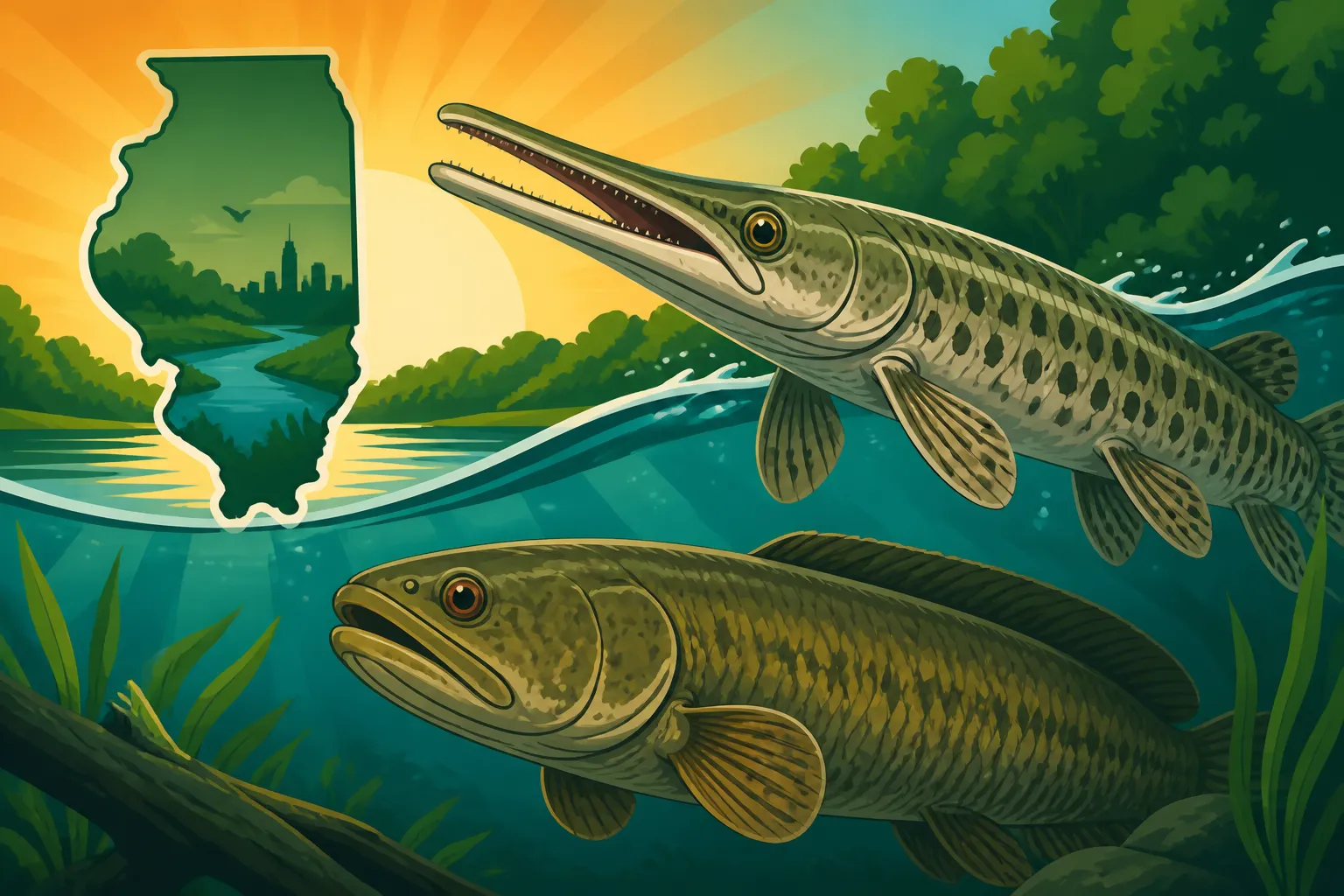
When you look at a Spotted Gar or a Bowfin, it's easy to imagine them swimming alongside dinosaurs. Their physical characteristics are a stark reminder of ancient times. The gar, with its long, toothy snout and a body covered in hard, diamond-shaped ganoid scales, looks like it's wearing a suit of armor. These scales aren't like the flexible, overlapping scales of most modern fish; they're tough, interlocking plates that offer incredible protection, a testament to a time when being tough meant survival. Their bodies are streamlined for ambush predation, lying perfectly still before a sudden, explosive strike.
Then there's the Bowfin, often called a "dogfish" or "mudfish" by locals. It boasts a long, undulating dorsal fin that runs almost the entire length of its back, giving it a serpentine movement in the water. This unique fin, combined with its robust, cylindrical body and a distinct spot on its tail, makes it unmistakable. Both species possess a primitive lung-like swim bladder, allowing them to gulp air directly from the surface, a remarkable adaptation that lets them survive in low-oxygen environments where other fish would perish. This capability is another evolutionary hand-me-down, hinting at a time when aquatic habitats might have been less stable. It's truly like looking at a creature from another era, perfectly adapted to persist through millennia.
The Allure of the Oddball Catch
For many anglers, the goal is often a trophy bass, a cooler full of crappie, or a tasty walleye dinner. But there's a growing appreciation for the "other" fish, especially those that offer a unique challenge or a story to tell. Catching a Spotted Gar or a Bowfin falls squarely into this category. The initial tug on the line might feel familiar, but as the fish gets closer, its distinct appearance sparks a different kind of excitement. It's not just another fish; it's an encounter with something ancient, something wild.
These fish are incredibly strong fighters. A Bowfin, in particular, is known for its aggressive, drag-peeling runs and head shakes, often punctuated by acrobatic leaps that can surprise even seasoned anglers. Gar, while perhaps not as overtly acrobatic, offer a tenacious battle, their powerful bodies straining against the line. There's a certain thrill in outsmarting a fish that has such formidable defenses and a reputation for being hard to hook. For those seeking diversity in their angling experiences, or simply wanting to experience a different kind of fight, targeting these oddball species can be incredibly rewarding. It adds another layer to the fishing narrative, moving beyond just species identification to a deeper appreciation for the full spectrum of aquatic life in Illinois.
Getting to Know the Spotted Gar: A Toothy Predator
The Spotted Gar is a marvel of evolution, a fish that perfectly embodies the phrase "if it ain't broke, don't fix it." They've been patrolling Illinois waters for ages, and their design is truly built for survival as a top-tier predator in their specific niche. You won't mistake them for anything else once you know what to look for, and believe me, they are an impressive sight when you finally bring one to the boat or bank.
Identifying a Spotted Gar in Illinois Waters
When you pull a Spotted Gar from the water, the first thing that will likely grab your attention is its incredibly distinct appearance. Imagine a torpedo with a long, narrow snout that's packed with an impressive array of needle-sharp teeth. Unlike its cousins, the Longnose Gar, whose snout is much longer and more slender, the Spotted Gar's snout is relatively broad and shorter, typically about half the length of its head. This is one of the key differentiators when you're trying to figure out which gar species you've encountered.
Their body is another giveaway. It's covered in those remarkable ganoid scales – hard, bony, diamond-shaped plates that interlock to form a protective armor, giving them a decidedly reptilian feel. These scales are tough, making them a challenge to clean if you ever decide to try eating one, but they also make the fish incredibly resilient. The most obvious identifying feature, however, is right in their name: dark, irregular spots cover their head, body, and fins. These spots are usually quite prominent, especially on their fins, and are much more numerous and distinct than on other gar species found in Illinois. Typically, a Spotted Gar will reach lengths of 2 to 3 feet in Illinois, though larger specimens are certainly out there, offering quite the fight. Spotted Gar vs Bowfin: How to Tell These Prehistoric Fish Apart is an excellent resource if you're ever unsure about your catch.
Where Spotted Gar Live and Thrive in Illinois
Spotted Gar aren't found just anywhere. They have a preference for certain types of aquatic environments, and knowing these habitats is key to finding them. You'll primarily encounter them in the slower-moving parts of large rivers, especially the mighty Mississippi and Illinois Rivers. They love the backwaters, oxbow lakes, and associated sloughs – those quiet, often stagnant or very slowly flowing areas that are rich in aquatic vegetation. Think shallow bays, old river channels cut off from the main current, or areas where lily pads and dense submerged weeds create perfect ambush points.
These fish are masters of camouflage, often lying perfectly still amidst the weeds or sunken timber, blending seamlessly with their surroundings. They'll wait for an unsuspecting baitfish or small panfish to swim by, then explode with incredible speed to snatch their meal. During warmer months, you might even see them rising to the surface to gulp air, an ancient adaptation that allows them to thrive in water with low oxygen levels that would spell doom for many other fish. If you're exploring the calmer, vegetated stretches of larger river systems, especially in central and southern Illinois, you're in prime Spotted Gar territory. For more specific locations, check out Illinois Spotted Gar Fishing in the Mississippi River Backwaters, which details some fantastic spots.
Fishing Techniques for Spotted Gar
Catching a Spotted Gar can be incredibly challenging, but that's part of the fun for many anglers! Their long, bony mouths and needle-sharp teeth make traditional hooksets difficult. Many times, you'll feel a solid strike, reel in, and find nothing but a messed-up bait. But don't despair, there are techniques that significantly increase your chances.
The most common and often effective method involves using live bait. Small minnows, shiners, or shad, presented under a bobber in those vegetated backwater areas, are classic gar attractants. The trick is to give them time. When a gar grabs the bait, it often swims off a short distance, turns the bait to swallow it head-first, and then pauses. This is your window! Resist the urge to set the hook immediately. Let them run for a bit, let them really commit to swallowing the bait. Some anglers even use a "rope lure," which is a fraying nylon rope tied around the line; the gar's teeth get tangled in the fibers, allowing you to reel them in without a hook. For traditional bait fishing, try a sturdy circle hook, which often catches in the corner of their mouth, improving hook-up ratios significantly. Due to their teeth, a heavy monofilament or fluorocarbon leader is a must, or even a steel leader, to prevent bite-offs. Slow-moving artificial lures like jigs, spinnerbaits, or even some plastic worms can also entice a strike, but again, the hookset can be tricky. Persistence and patience are your best friends when targeting these incredible fish. If you're looking for more in-depth advice on catching these prehistoric fish, Illinois Spotted Gar Fishing: What You Need to Know offers even more strategies.
Unraveling the Bowfin: The Dogfish Dynamo
The Bowfin is another one of Illinois's truly unique freshwater fish, and it often gets a bad rap, sometimes being mistaken for other, less desirable species. But make no mistake, the Bowfin is a powerful, aggressive, and highly adapted predator that deserves respect from any angler. Known by many local names like "dogfish," "mudfish," or "grinnel," this fish is a true dynamo when hooked, offering a fight that can rival many popular game fish.
Identifying a Bowfin: More Than Just a Funny Fin
When you finally get a Bowfin to the surface, its appearance is unmistakable, if not a little intimidating. They have a robust, cylindrical body, typically an olive-brown color on their back and sides, fading to a lighter cream or white belly. This coloration helps them blend into the muddy or vegetated waters they prefer. One of the most striking features is their incredibly long dorsal fin, which runs from just behind their head almost all the way to their tail. This fin undulates continuously as the fish swims, providing a mesmerizing, snake-like propulsion through the water. It’s truly a sight to behold and immediately sets them apart from most other freshwater fish.
Another key identifier, especially on males, is the distinct black spot, often ringed with yellow or orange, located at the base of their tail fin. While it might be faded on some fish, it's a very common characteristic. Their head is blunt and somewhat flattened, with a large mouth full of sharp, conical teeth – giving credence to the "dogfish" nickname! Their eyes are small and set high on their head. Like the gar, Bowfin also possess a primitive, vascularized swim bladder that acts like a lung, allowing them to gulp air at the surface. This is why you'll often see them breaking the surface, especially in stagnant or warm water. They can grow quite large in Illinois, with specimens exceeding 20 inches and several pounds not uncommon, and they put up a tenacious fight from start to finish. For a detailed comparison between these two unique species, refer to Spotted Gar vs Bowfin: How to Tell These Prehistoric Fish Apart.
Preferred Bowfin Habitats in Illinois
Bowfin are true survivors, and their preferred habitats reflect their adaptability to challenging conditions. Unlike some fish that require pristine, fast-flowing water, Bowfin absolutely thrive in environments that many other species struggle with. They love shallow, warm, and often stagnant waters that are dense with aquatic vegetation. Think oxbow lakes, backwater sloughs, drainage ditches, and the heavily vegetated coves of larger lakes and slow-moving rivers. These are often the places that warm up quickly in the sun and can experience significant oxygen depletion.
Their ability to breathe atmospheric oxygen by "gulping" air at the surface is a huge advantage in these low-oxygen environments. This means you'll find them lurking in the thickest lily pads, submerged weed beds, and around fallen timber where other predators might not venture as readily. They are ambush predators, using the dense cover to hide and then exploding outward to seize unsuspecting prey. If you're fishing a quiet, weedy section of the Illinois River, the backwaters of the Mississippi, or even a murky farm pond with plenty of cover, you're likely in prime Bowfin territory. They're often found in the same types of areas as Spotted Gar, making it possible to catch both unique species in one outing. If you're looking to target both, Where to Catch Bowfin and Spotted Gar Together in River Backwaters offers great insights.
Effective Bowfin Fishing Strategies
If you're looking for a serious fight, the Bowfin is your fish! They are incredibly aggressive and powerful, and once hooked, they'll put every ounce of their muscle into escaping. They're not particularly picky eaters, which makes them a fun target.
When it comes to bait, live bait is often king. Large shiners, chubs, or even robust worms can be incredibly effective. Present these under a bobber or on a bottom rig in areas with dense cover. They'll readily hit cut bait as well, especially if it's fresh. But don't count out artificials! Bowfin are notoriously aggressive and will strike a wide variety of lures with gusto. Spinnerbaits, chatterbaits, and even topwater frogs fished over and through lily pads are excellent choices. Retrieve these lures with a varied pace, sometimes fast, sometimes with pauses, to trigger their predatory instincts. When they strike, it's usually with a violent explosion, and they'll often leap and thrash on the surface, making for an exhilarating battle.
Because of their sharp teeth and powerful jaws, use strong gear – a medium-heavy to heavy action rod with a strong spinning or baitcasting reel loaded with 20-30 pound braided line is advisable. While they don't have the needle teeth of a gar, a stout fluorocarbon leader can prevent abrasion. When you hook one, be prepared for a sustained fight. They'll pull hard, head-shake violently, and often roll, trying to throw the hook. Landing them requires a firm hand and, ideally, a net, because trying to lip them like a bass is not advisable due to those teeth. They are truly an underrated sport fish for their fighting prowess. To learn more about specific techniques for these feisty fish, check out Illinois Bowfin Fishing: An Underrated Catch.
Gear Up for These Unusual Catches (and Handling Safely!)
Angling for Spotted Gar and Bowfin isn't quite like chasing panfish. Their unique biology and fighting styles demand a slightly different approach to your tackle and, most importantly, to how you handle them once they're on the line. Being prepared will not only increase your chances of landing these fascinating fish but also ensure a safe and respectful release.
Essential Tackle for Gar and Bowfin
When you're heading out to target these prehistoric-looking fish, it's wise to beef up your tackle a bit. You're not dealing with delicate mouths or gentle fights here.
- Rods: Opt for a medium-heavy to heavy power rod, typically in the 7 to 8-foot range. A fast action tip will give you the sensitivity to detect subtle takes (especially from gar) but still have the backbone to horse these powerful fish out of heavy cover. The extra length can help with casting larger baits and managing their runs.
- Reels: A sturdy spinning reel in the 3000-4000 series or a baitcasting reel designed for heavier lines and lures will serve you well. Ensure it has a smooth, reliable drag system, as both gar and Bowfin can make strong, sudden runs. Durability is key; these fish will put your gear to the test.
- Line: Braided line is often the best choice for its strength, lack of stretch, and abrasion resistance. A 30 to 50-pound test braided line will give you the pulling power you need. For gar, a heavy monofilament or fluorocarbon leader (at least 30-pound test), or even a steel leader, is almost essential to prevent bite-offs from their razor-sharp teeth. Bowfin can also abrade lines, so a stout leader is a good idea for them as well.
- Hooks: Strong, sharp hooks are paramount. For gar, many anglers prefer sturdy circle hooks (4/0 to 6/0) when fishing with live bait. These hooks tend to lodge in the corner of the gar's mouth, making for a more secure hookset and often easier removal. For Bowfin, a strong J-hook or the hooks on your artificial lures should suffice, but make sure they're not flimsy.
- Other Essentials: Don't forget a sturdy pair of long-nosed pliers or, even better, jaw spreaders, especially for gar. Wire cutters can be useful if a hook gets deeply lodged. A large, rubberized landing net is also a huge asset for safely bringing these powerful, often thrashing fish into the boat or onto the bank. Many anglers also find specialized fish-handling gloves useful, particularly when dealing with the rough scales of a gar or the sharp teeth of a Bowfin. You can find a good selection of these tools on Amazon. If you're wondering about the overall best gear for Illinois angling, Best Rods and Reels for Illinois Anglers is a great general resource.
Safe Handling and Release Practices
Handling a Spotted Gar or a Bowfin requires caution and respect. These are tough, wild animals, and they have defenses to prove it. Safety for both you and the fish is paramount.
- For Gar: Their mouths are full of needle-sharp teeth, and they can thrash violently. Never, ever put your fingers near a gar's mouth. This cannot be stressed enough. Use those long-nosed pliers or jaw spreaders to safely remove the hook. If the hook is deeply set and you plan to release the fish, it's often better to cut the line as close to the hook as possible rather than risk further injury to the fish or yourself trying to pry it out. Gar have incredibly tough skin, so a firm grip behind the head and just in front of the tail is usually needed to control them. Some anglers use specialized "gar gloves" which are reinforced to prevent punctures. For a deeper dive into safe handling, Are Spotted Gar Safe to Handle? provides crucial information.
- For Bowfin: While their teeth aren't quite as needle-like as a gar's, they are still sharp and can deliver a nasty bite. Bowfin are also incredibly strong and flexible, often trying to twist and roll. A firm grip just behind the head will help you control them. Use pliers to remove hooks carefully. They are known for their powerful tail kicks, so keep them away from your body. A rubberized net is ideal for landing them, as it minimizes scale damage and makes handling easier. Both species are incredibly hardy, and with proper handling, they have a high chance of survival after release. Always try to minimize their time out of the water, especially in warm weather.
The Culinary Question: Are They Good to Eat?
When you catch a fish as unique as a Spotted Gar or a Bowfin, one of the first questions that often comes up, especially among more traditional anglers, is "Can you eat it?" The answer, as with many things in fishing, is a bit nuanced and varies widely depending on the species and personal preference. Let's break it down for our ancient friends.
Eating Spotted Gar: The Challenges and Rewards
So, you've landed a Spotted Gar, and you're curious if it's destined for the dinner plate. The short answer is yes, you can eat gar, and many people do! However, there's a significant "but" involved: gar are notoriously difficult to clean due to their incredibly tough, bony, ganoid scales. These scales are like armor plating and require special tools and techniques that go beyond your typical filleting knife.
Most people use heavy-duty shears, a hatchet, or even tin snips to cut through the armored skin along the back and belly. Once you manage to get through the skin, the meat itself is often quite good. It's a white, firm, and flaky flesh with a mild flavor, often compared to cod or even chicken. It holds up well to frying, baking, or grilling. Many Cajun and Southern dishes feature gar, particularly in areas where they are abundant. If you're up for the cleaning challenge, there's certainly a reward in the form of a unique and tasty meal. Just be prepared for a bit of a battle in the kitchen before you even get to cooking! For a more detailed look at preparing this unique catch, check out Is Spotted Gar Good to Eat?.
Bowfin on the Plate: A Different Story
The Bowfin, on the other hand, presents a different culinary dilemma. While technically edible, their reputation as a table fish is generally poor among many anglers. The main issue lies with the texture of their flesh. Bowfin meat is often described as soft, mushy, or having a "cottony" consistency, which most people find unappetizing. This is particularly true if the fish isn't handled and cooked immediately after being caught. The common perception is that it doesn't firm up well, even with cooking.
That said, some cultures, particularly in parts of the Southern United States, do consume Bowfin, often pan-fried, stewed, or used in dishes where the texture might be less of a primary concern. They might be incorporated into a fish cake or a gumbo, where the seasonings and other ingredients can overshadow the meat's natural texture. Freezing Bowfin is often discouraged as it tends to exacerbate the mushy texture. So, while it's not strictly "inedible," most anglers who catch a Bowfin will choose to release it due to its poor reputation as table fare. They are primarily valued as a fantastic sport fish for their incredible fighting spirit. For more on the culinary aspects of this powerful fish, Is Bowfin Good to Eat? offers additional perspectives.
Conservation and Respect for Illinois' Native Oddities
Beyond their unique appearance and fighting prowess, both Spotted Gar and Bowfin hold important ecological roles in Illinois' aquatic ecosystems. Understanding and respecting these roles, along with practicing sustainable fishing habits, is crucial for ensuring these ancient fish continue to thrive for generations to come. They may be strange-looking, but they are vital components of our natural world.
Understanding Their Role in the Ecosystem
It's easy to dismiss fish like gar and Bowfin as "trash fish" or "rough fish" because they don't fit the typical mold of popular sport species. However, that couldn't be further from the truth. Both species are apex or top-tier predators in their preferred habitats, particularly in those slower, weed-choked backwaters and sloughs. They play a critical role in maintaining the health and balance of these ecosystems.
- Gar are primarily piscivores, meaning they eat other fish. They are incredibly efficient at hunting and consuming rough fish like carp, buffalo, and various stunted panfish populations. By preying on these abundant species, gar help to keep their numbers in check, which can benefit the overall health and growth rates of more desirable game fish. They're like the natural clean-up crew, ensuring no single species overwhelms the delicate balance.
- Bowfin also consume fish, but they have a slightly broader diet, including crayfish, frogs, and even insects. Their ability to survive in low-oxygen environments makes them key predators in habitats that might otherwise become overpopulated with less hardy species. They are indicators of resilient backwater systems, often thriving where other sensitive species might struggle. Both species are also quite long-lived, contributing to a stable, mature predator base in their respective niches. Their unique adaptations, like their lung-like swim bladders and armored scales, represent millions of years of evolutionary success, making them invaluable subjects for scientific study and a testament to the incredible diversity of life in our waters.
Promoting Sustainable Fishing Practices
Given their unique status and important ecological roles, promoting sustainable fishing practices for Spotted Gar and Bowfin is just as important as it is for any other species. While they might not have the strict harvest regulations of bass or walleye, treating them with respect and ensuring their future is paramount.
- Catch and Release: For most anglers, especially those targeting these fish for sport and curiosity, catch and release is the prevailing practice. Their fighting ability is their main draw, and safely releasing them ensures they can continue to contribute to the ecosystem and provide future angling opportunities.
- Proper Handling: As discussed earlier, safe and careful handling is critical. Using the right tools (long pliers, jaw spreaders, nets) and minimizing their time out of the water reduces stress and injury, greatly increasing their chances of survival after release.
- Respecting All Regulations: Even if there aren't specific size or creel limits for gar and Bowfin in some waters (though it's always wise to check the latest Illinois fishing guide!), it's important to adhere to general fishing regulations. Understanding Illinois Fishing Regulations Overview for your specific water body is always a good practice. This includes licensing requirements, which ensure that funds are available for habitat conservation and fisheries management for all species.
- Educating Others: Many people still view these fish negatively. By sharing your knowledge and enthusiasm for gar and Bowfin, you can help change perceptions and foster a greater appreciation for these truly remarkable "strangest-looking freshwater fish" that enrich Illinois's aquatic biodiversity.
Spotted Gar vs. Bowfin: A Quick Comparison
| Feature | Spotted Gar | Bowfin |
|---|---|---|
| Appearance | Long, toothy snout; diamond-shaped ganoid scales; distinct dark spots on body and fins. | Robust, cylindrical body; very long, undulating dorsal fin; distinct black spot (often ringed) on tail. |
| Mouth/Teeth | Long, narrow snout packed with needle-sharp teeth. | Blunt head, large mouth with conical, sharp teeth. |
| Dorsal Fin | Short, located far back on the body, near the tail. | Very long, continuous, extending almost entire length of back. |
| Body Shape | Elongated, torpedo-shaped. | Robust, somewhat rounded, powerful build. |
| Breathing | Gulp air (primitive lung-like swim bladder). | Gulp air (primitive lung-like swim bladder). |
| Primary Habitat | Vegetated backwaters, slow rivers, oxbows. | Dense vegetation, shallow backwaters, sloughs, stagnant water. |
| Fighting Style | Tenacious, strong runs, powerful head shakes. | Explosive, aggressive, strong runs, acrobatic leaps. |
| Edibility | Edible (white, firm, flaky meat), but very difficult to clean. | Edible, but flesh is often soft/mushy and not highly regarded. |
Disclaimer
This article is for general informational purposes only and does not constitute professional advice. Laws, prices and regulations vary by location and change over time. Consult a qualified professional for guidance on your specific situation.